
A morning cart run can feel effortless. The fairways are dry, the mail route is on schedule, and guests are moving between villas without thinking about the weather. Then a storm arrives before lunch. Golfers hurry for shelter, passengers press against wet seat cushions, and the maintenance team starts changing routes for the rest of the day.
That's when a golf cart rain enclosure stops looking like an accessory and starts looking like an operating decision. The right enclosure can keep a cart useful through rain, wind, cold snaps, and changing shoulder-season conditions. The wrong one can create fogged windows, mildew, loose flaps, difficult entry, and a cabin that smells damp even when the outside air is dry.
The buying decision comes down to three questions: Does it fit the cart, does it suit the climate, and can the team maintain it properly? Material matters, but it's only the beginning.
Table of Contents
- When the Forecast Changes Your Whole Day
- What a Rain Enclosure Actually Does
- The Three Main Styles and Where Each One Works
- Materials and Windows That Match Your Climate
- Getting the Fit Right Before You Click Buy
- The Ventilation Tradeoff Most Buyers Miss
- Maintenance That Actually Extends Enclosure Life
- Putting Climate, Fit, and Care Together
When the Forecast Changes Your Whole Day
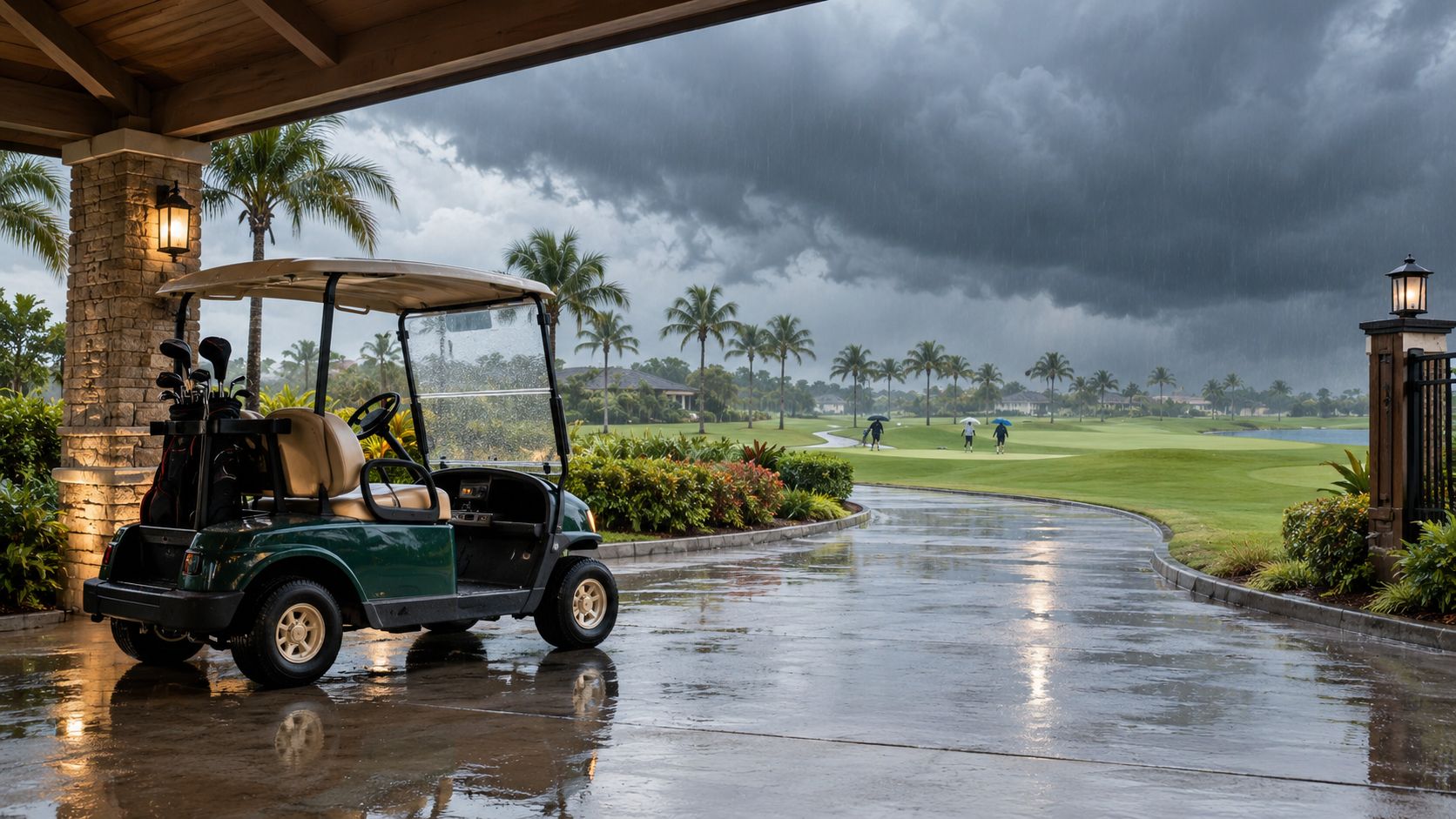
At a resort, the first storm rarely creates only one problem. A golf group may abandon the course, guests may delay a property tour, and staff may have to move equipment under cover. On a gated-community route, residents who rely on carts for errands may stop using them until the pavement dries.
The vehicle can remain mechanically sound while becoming operationally unreliable. Seat cushions absorb water, clear panels collect condensation, and wet floor areas expose components to repeated moisture. If the cart is part of a hospitality fleet, every weather-related interruption affects scheduling, guest comfort, and staff workload.
A rain enclosure helps change that calculation. It protects the passenger cabin from falling and wind-driven rain, making the cart more useful beyond perfectly clear days. Buyers in resorts, gated communities, and hospitality operations should think about year-round usability, not only summer showers. Demand for enclosures follows this broader use case. One industry estimate places enclosures at 16.7% of golf cart accessories revenue, or about $270.5 million in 2025, while the broader accessories market was projected at $428.7 million in 2025 and $884.4 million by 2035. Those figures are projections and estimates, but they show why weather protection has become a commercial category rather than a minor add-on. Read the golf cart accessories market estimate.
The costs of leaving the cabin exposed
An uncovered cart can still perform well in fair weather, but repeated exposure creates practical headaches:
- Wet upholstery: Cushions may remain damp long after the rain ends, especially when the cart is parked under a roof with poor airflow.
- Interrupted routes: Staff must delay trips, cancel informal tours, or find another vehicle for passengers who can't tolerate a wet ride.
- Moisture around the floor: Water can collect below the cabin and reach areas that an upper enclosure doesn't seal.
- Poor guest experience: A cart that looks and feels wet sends the wrong message in a resort or residential community.
An enclosure won't eliminate every weather-related issue. It gives the fleet manager control over the passenger environment, provided the product is fitted correctly and dried after use.
Practical rule: Buy for the weather that disrupts operations, not the weather that looks pleasant on the day you place the order.
What a Rain Enclosure Actually Does
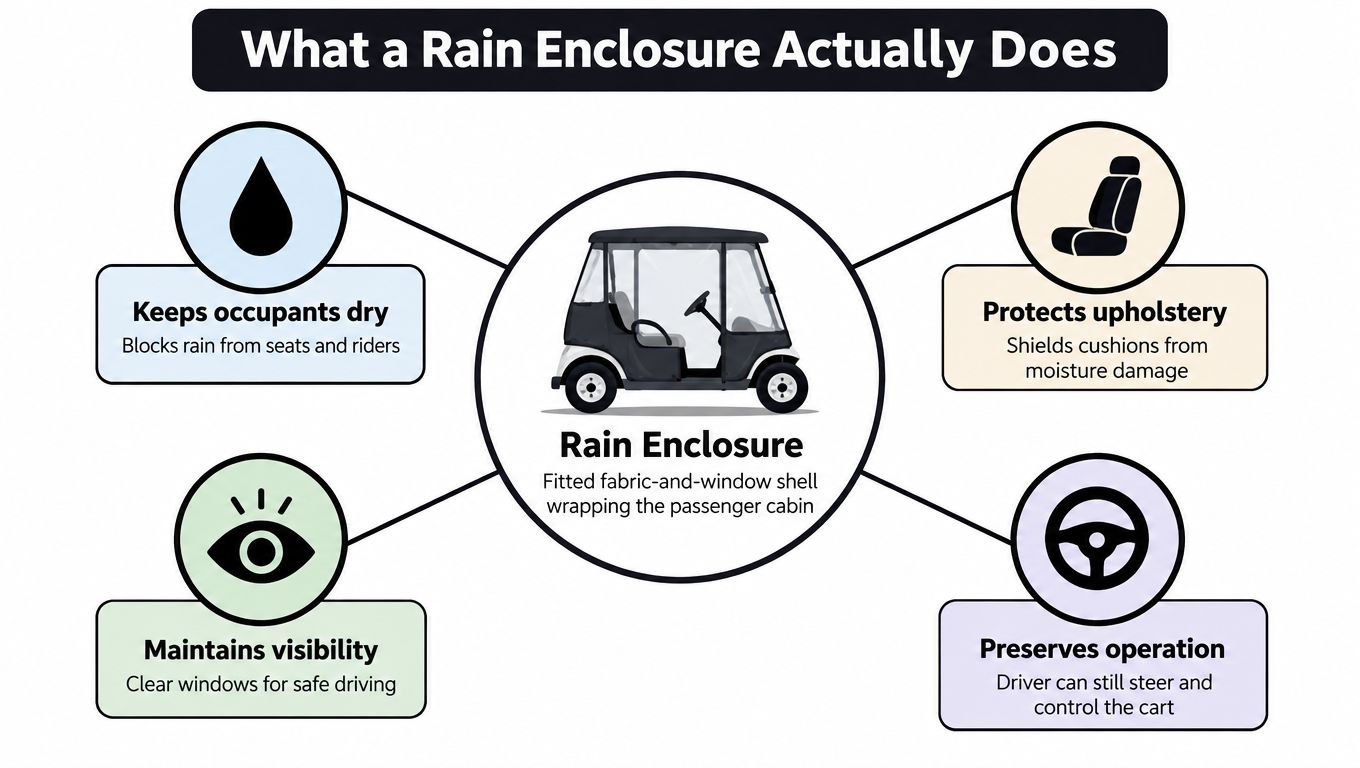
A golf cart rain enclosure is a fitted fabric-and-window shell that wraps around the passenger cabin. Think of it as a soft pop-up shelter attached to the cart. The roof is already in place, the sidewalls hang from or connect to the canopy, and clear panels occupy the areas where windows would normally sit.
The panels may zip closed, roll upward, fasten with snaps, or slide along a roof-mounted track. The driver should still have a clear view and access to the steering wheel, pedals, controls, and mirrors. If the cart is used on public roads, the enclosure doesn't replace the need to follow the requirements that apply to a street-legal vehicle in that location.
What it protects
A properly installed enclosure sheds rain away from the passenger compartment. It helps keep riders, seat cushions, and interior surfaces drier while reducing the amount of wind entering from the sides. Clear windows preserve outward visibility, although their clarity depends on the material, cleaning method, and exposure to sunlight.
The enclosure is not a complete vehicle shell. It usually doesn't waterproof the floor pan, under-seat battery compartment, wiring, or charger port. Those areas need their own inspection and weatherproofing measures. Water can still enter from below, through an open side, around an accessory, or through a poorly tensioned bottom edge.
This distinction prevents a common buying mistake. A buyer sees the word “waterproof” and assumes the entire cart is sealed. In practice, the product protects the cabin from overhead and lateral weather. It doesn't turn an open golf cart into a hard-sided automobile.
What to expect in steady rain
A well-sized enclosure with correctly secured hems should keep passengers and upholstery substantially drier during steady rain. It should also limit wind lift and prevent the zippers from pulling out of alignment. Installation matters as much as the fabric. A loose enclosure can flap, rub against the body, and allow water through gaps even when the material itself blocks water.
The concept is similar to improving a building's screening and weather protection. If you're assessing related work around a property, a single-visit screening service can help you understand how enclosure design affects airflow, visibility, and protection. The same principle applies here: closing every opening isn't always the same as creating a comfortable, usable space.
The Three Main Styles and Where Each One Works
The best style depends less on the lowest purchase price than on how often the cart is opened, how tightly it must seal, and how accurately the roof can be measured.
An over-the-top enclosure drapes over the canopy and hangs down around the cabin. It generally offers the simplest installation and can be forgiving when an older cart has slightly unusual dimensions. Rental operators and occasional users often appreciate that flexibility. The compromise is a less precise seal. Crosswinds can lift the lower edge, and repeated movement can make the fabric noisy.
Track-style enclosures attach to a rail along the roofline. Their panels slide or fold along the track, creating a cleaner appearance and a more controlled seal. They suit permanent residents and carts that remain equipped for weather protection throughout the season. The rail also means installation requires accurate measurement and compatible mounting hardware. For canopy design considerations before choosing a system, review this golf cart canopy guide.
Hinged or two-piece systems divide the enclosure into sections, often at the front and rear. Passengers can enter without unzipping the full cabin, which is useful when a resort cart loads and unloads repeatedly. More moving parts and seams mean more inspection points, and the system may cost more than a basic draped cover.
Enclosure style comparison
| Style | Install Time | Seal Quality | Best For | Main Trade-off |
|---|---|---|---|---|
| Over-the-top | Fast and simple | Moderate when tensioned correctly | Rentals, occasional use, older carts | Lower edge can flap in crosswinds |
| Track-style | More involved | Strong and consistent with accurate fit | Permanent residents and frequent use | Needs precise roof measurement and track hardware |
| Hinged or two-piece | Moderate | Good, with more seam locations | Resorts, campuses, and high-turnover fleets | More parts require regular inspection |
A resort manager should prioritize quick passenger access. A homeowner who leaves the enclosure installed for long periods may prefer the cleaner seal of a track system. A rental operation may accept some movement in exchange for easy replacement and straightforward installation.
Historical product development reflects this progression. Earlier covers were commonly simple over-the-top designs made from basic canvas or nylon, while track and hinged designs introduced easier handling, improved sealing, and more durable protection. Enclosed weather-proof carts are also projected to grow faster than the general cart market in some forecasts, even though open-top carts still hold roughly 77.71% to 78% of the overall market. Review the industry explanation of enclosure styles and market direction.
Materials and Windows That Match Your Climate
Material selection should start with the weather the cart sees. A cart used in cool, wet shoulder seasons needs a different balance than one operating through tropical downpours or intense sun.
600D to 800D Oxford polyester is a practical all-around category. The coated fabric blocks rain while remaining easier to handle than heavier vinyl systems. Breathable coated polyester can also reduce the condensation problem that appears when warm, damp air sits inside a fully closed cabin. It works well for mixed climates where rain protection matters but the enclosure must still be removed or opened regularly.
Marine-grade vinyl is more focused on water resistance. It suits heavy rain, coastal exposure, and operations where the enclosure spends much of its time closed. The trade-off is moisture management. A vinyl-heavy cabin can hold damp air against seats and seams, so ventilation and drying become essential rather than optional.
Reinforced PVC offers a more rigid, protective approach for demanding environments. It can provide a substantial barrier against weather, but it tends to be bulkier to roll or store. Buyers should also consider whether staff can remove and handle the panels without dragging them across concrete or folding them while wet.
Material versus climate fit
| Material | Best Climate | Key Trade-off |
|---|---|---|
| Coated 600D to 800D Oxford polyester | Mixed weather, cool rain, shoulder seasons | Balances water resistance and breathability, but still needs drying |
| Marine-grade vinyl | Heavy rain and coastal conditions | Strong water blocking can increase condensation inside |
| Reinforced PVC | High-exposure and demanding weather | More protective, but bulkier and less convenient to handle |
Clear windows create a separate decision. Most enclosures pair their fabric with clear PVC windows, which preserve visibility while keeping the cabin protected. The windows are also the first part many operators notice when an enclosure ages. PVC can haze, stiffen in cold conditions, or degrade under ultraviolet exposure. A window that remains attached but becomes cloudy is still a safety and usability problem.
Visibility comes before appearance. A dark tint may reduce glare in bright sun, but it can make dusk driving harder. Test the driver's view from the seated position, not from the display rack.
For a six-passenger cart, the long roof and extra passenger area make compatibility particularly important. A model-specific six-passenger golf cart enclosure can be a useful reference point when comparing roof coverage, panel layout, and entry access. Choose the heaviest material the team can handle comfortably, then pair it with windows that meet the fleet's clarity and scratch-resistance needs.
Getting the Fit Right Before You Click Buy
Fit is where many enclosure purchases succeed or fail. Start with the cart, not the product listing. Confirm the make, model, model year, roof configuration, passenger arrangement, windshield style, and rear-seat setup before comparing fabrics.
A four-passenger cart makes a useful example. Common four-passenger enclosure dimensions cluster around roughly 86.6 inches of roof length, 43.3 inches of roof width, and about 59 to 62 inches of overall side height. These are reference dimensions, not a substitute for measuring the actual cart. See a four-passenger fit example and measurement guidance.
Measure the cart in its working configuration
Measure the roof length and width at the canopy edges. Then measure the side height from the floor to the relevant roof edge, keeping the tape positioned consistently on both sides. Note whether the windshield folds, whether the rear seat is factory or aftermarket, and whether a utility bed or other attachment changes the enclosure's path.
Catalog labels such as “four passenger” or “universal” aren't enough. Different cart families and model years can use different roof shapes and mounting points. A long-roof cart needs an enclosure designed for that roof, not one designed for the same passenger count.
Dry-fit before tightening
Lay out every panel before fastening hardware. Check that the front, rear, and side sections meet naturally. A zipper should close without force. If you have to pull one panel hard to make the teeth meet, stop and check the roof dimensions rather than treating the zipper as a tensioning tool.
Look for these field signs:
- Even hems: The bottom edge should sit consistently around the cart instead of hanging low on one side.
- Controlled tension: Elastic hems, hooks, or tracks should hold the fabric close to the body without overstretching it.
- Clear openings: Doors and windows should open without catching on mirrors, seats, or supports.
- Stable hardware: Snaps, hooks, and straps should remain attached when the cart moves over ordinary uneven ground.
Poor fit causes flapping, gaps, zipper misalignment, and wind lift. It also puts extra strain on stitching and fasteners. A good fit chart is more valuable than a product title because it tells you whether the enclosure matches the cart's geometry.
The Ventilation Tradeoff Most Buyers Miss
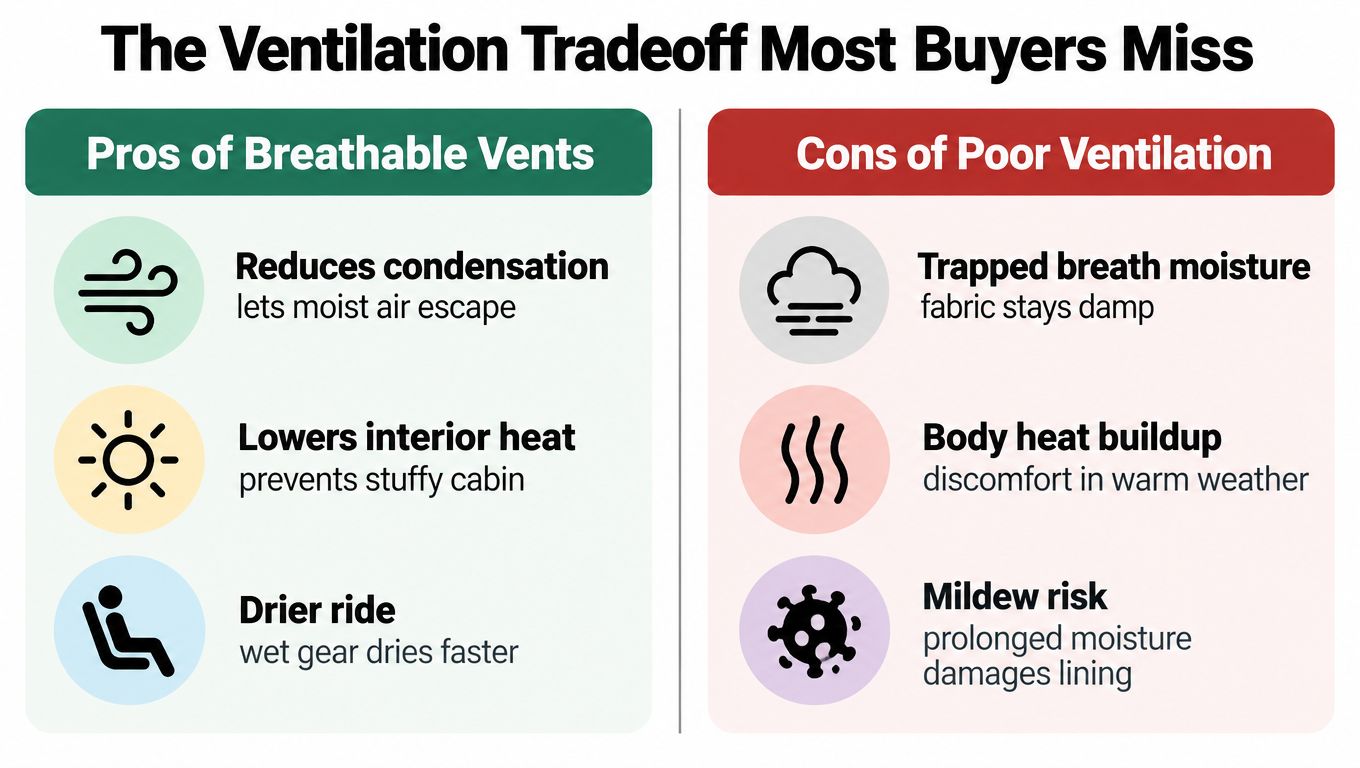
A fully sealed cabin sounds ideal until the windows fog, wet jackets stay damp, and the seams begin to smell. Riders release warm moisture into the enclosed space, while rain and wet footwear add more humidity. When that air meets a cold window, condensation forms and visibility falls.
The problem becomes more serious in warm, humid regions. Moisture can remain in curtains, seat gaps, and lower seams, creating conditions for mildew. Repeated dampness can also affect exposed metal and electrical areas, including battery terminals, particularly when water and residue remain in the lower parts of the cart.
Controlled airflow beats accidental leakage
Look for design features that let staff manage airflow without removing the whole enclosure:
- Roll-up rear windows: These allow air to escape while the front and side panels remain in place.
- Front vent panels: Zippered vents can reduce fogging during slow travel or loading.
- Mesh sections with closures: Mesh admits air, while a rain flap can limit direct spray.
- Accessible latches: Drivers should be able to open a vent without leaving the seat in a sudden change of weather.
The climate rule is straightforward. In a dry region or a cold winter climate, stronger sealing may be the priority, with regular wiping and drying after use. In warm, humid, or freeze-thaw conditions, controlled ventilation usually matters more than creating a perfectly closed cabin. You may accept a little spray during horizontal rain to avoid storing warm, wet air against the interior.
Independent enclosure guidance makes the same distinction between vinyl's water protection and coated polyester's lower condensation risk. It also points out that non-vented waterproof covers can contribute to condensation, mold, and corrosion. Review the climate and ventilation guidance for golf cart enclosures.
A small fan can help when a cart is parked under cover, but it doesn't replace opening panels and drying the enclosure. Ventilation is a maintenance habit as much as a product feature.
Maintenance That Actually Extends Enclosure Life
A rain enclosure needs a routine that matches the calendar and the way the cart is used. Waiting until mildew becomes visible usually means moisture has already remained in places the operator can't easily see.
Spring inspection and cleaning
When the enclosure returns to regular service, remove every panel and inspect the seams, hook points, snaps, Velcro, and zipper tracks. Wash fabric with mild soap, clean water, and a soft brush. Don't use bleach, aggressive solvents, or abrasive pads. They can weaken coatings and permanently cloud clear windows.
Lubricate zippers with a product made for zipper tracks, such as a silicone stick or suitable wax. Work the zipper gently after cleaning so grit doesn't remain embedded in the teeth. Check the lower curtains first, because they collect road spray and moisture.
Summer checks
During warm weather, inspect the enclosure regularly, especially after long periods of rain. Look for mildew spots along bottom edges, damp folds, and condensation that remains on PVC windows after the cart is parked.
Use a non-ammonia cleaner on clear panels and a compatible UV-protectant product on vinyl surfaces. Apply anything new to a small hidden area first. Never wipe a dusty PVC window aggressively while dry, because trapped grit can scratch the surface.
Fall storage
Before storage, wash and dry the enclosure completely. Leave panels open long enough for moisture to leave the seams and folds. Fold them loosely rather than stuffing them into a tight bundle, and store them in a breathable bag away from direct sun, heaters, and damp floors.
A golf cart winter cover can be useful as part of a broader off-season protection plan, but it shouldn't be placed over a wet enclosure or used to hide unresolved mildew.
Winter checks and replacement decisions
After freezing weather, snow, salt, or road grit, inspect the lower edges and attachment points. Remove residue with clean water and allow the material to dry before folding it again. Snaps and zippers often fail before the main fabric does, so replace damaged hardware when it starts pulling unevenly instead of waiting for a seam to tear.
Keep a simple service record for fleet carts. Note the last wash, window condition, zipper condition, and storage location. That makes it easier to identify whether a problem comes from the material, the fit, or a missed drying step.
Dry before storage, every time. That single habit prevents many of the odors, stains, and coating problems that owners later blame on the enclosure's material.
Putting Climate, Fit, and Care Together
The decision rule is simple: match the material to the dominant weather, the style to the cart's daily use, and the maintenance routine to the service life you expect.
A coastal or tropical operation may favor marine-grade vinyl, roll-up windows, and a track or hinged design that stays secure during heavy rain. A mountain or four-season operation may prefer coated Oxford polyester with reinforced attachment points and removable panels. A dry desert owner may need only seasonal protection, particularly if rain is rare and the cart is otherwise stored under cover.
Resort and gated-community managers should also weigh presentation against operation. Tinted windows may reduce glare but restrict visibility at dusk. Branded curtains can create a polished fleet appearance but cost more to replace if damaged. Locked or tightly secured zippers may discourage unauthorized access, yet they can slow passenger entry and emergency exit.
Climate-to-enclosure decision matrix
| Climate Zone | Recommended Material | Best Style | Window Type | Maintenance Cadence |
|---|---|---|---|---|
| Coastal and heavy-rain | Marine-grade vinyl with ventilation features | Track-style or hinged | Clear PVC with easy roll-up sections | Inspect after wet weather and dry after each damp operating period |
| Humid and warm | Breathable coated polyester or ventilated vinyl | Hinged or track-style | Clear PVC with vent access | Check lower seams and condensation frequently |
| Cold and mixed seasons | Coated 600D to 800D Oxford polyester | Track-style or removable over-the-top | Flexible clear PVC | Clean before storage and inspect after freezes |
| Dry and high-UV | UV-stable coated fabric or seasonal enclosure | Removable over-the-top | UV-resistant clear panels | Clean dust before folding and protect from direct sun |
| Resort or campus fleet | Material selected for local weather and daily turnover | Hinged or track-style | Clear, low-distortion panels | Use a documented fleet inspection routine |
Before you click buy, confirm the cart's exact model and roof dimensions, choose a material that fits the climate, check how passengers will enter, verify that the driver has an unobstructed view, and identify where the enclosure will dry between uses. If those answers are clear, the first real storm should test your preparation rather than expose a rushed purchase.
Solana EV offers street-legal golf carts and electric UTVs, along with all-weather enclosure options designed to support use around courses, neighborhoods, resorts, and campuses. Visit Solana EV to review vehicle options and find a nearby dealer for a climate-appropriate mobility setup.