
A six-seat golf cart looks like a fleet solution until the first hard rain arrives. The resort shuttle sits under cover, guests cancel a planned ride, and your open cart becomes an expensive fair-weather vehicle. A properly selected 6 passenger golf cart enclosure changes that equation, but only if the fit, materials, ventilation, and escape access work together.
The wrong enclosure creates its own problems. Loose panels flap, clear windows fog, zippers bind, and a fully sealed cabin can become hot and humid when all six seats are occupied. This buyer guide takes the fleet-manager view: choose an enclosure that matches the cart, the climate, and the way people use it.
Table of Contents
- Why Your 6 Passenger Cart Needs a Proper Enclosure
- Enclosure Types and Material Choices Explained
- How to Measure and Select a Compatible Enclosure
- Installation Overview and Achieving a Tight Seal
- Safety and Cabin Environment Considerations
- Maintenance Routines and Dealer Support Options
- Making Your Final Enclosure Decision
Why Your 6 Passenger Cart Needs a Proper Enclosure
A resort manager usually notices the problem during a busy operating day. Guests need transport from the parking area to the lodge, maintenance staff need to cross the property, and a private community still expects reliable neighborhood mobility. Then wind-driven rain arrives. The open six-passenger cart stays parked because nobody wants to expose passengers, upholstery, and electronics to the weather.
An enclosure gives that cart a practical operating role beyond sunny conditions. It can protect passengers from rain and cold, reduce direct exposure to wind, and make group transport more comfortable across resorts, campuses, gated communities, and large private properties. It also helps owners use the vehicle more consistently instead of treating the rear seats as occasional accessories.
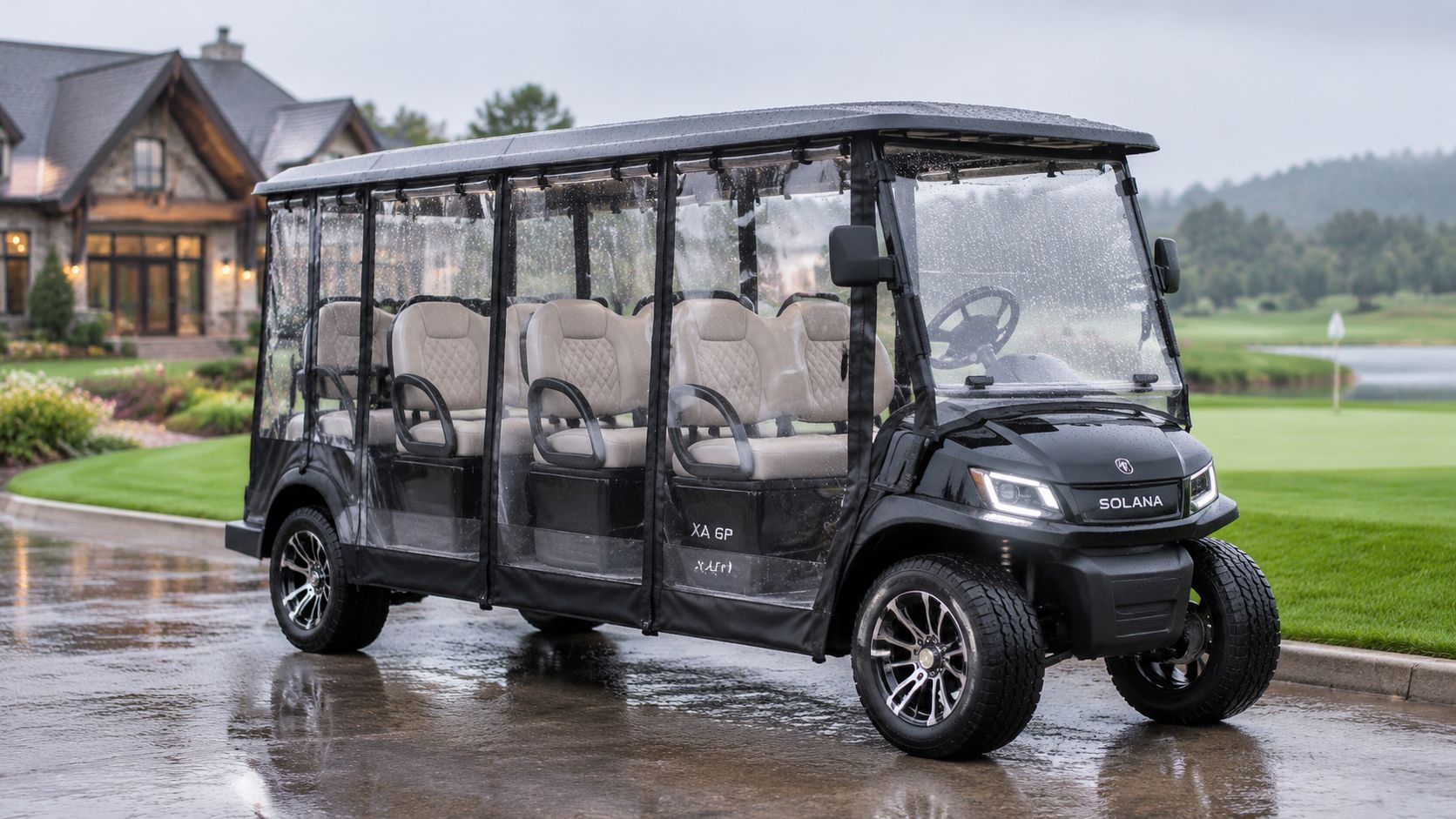
The commercial case is becoming clearer. One 2026 industry report estimated the broader golf cart market at USD 2.32 billion in 2025, with projections of USD 2.44 billion in 2026 and USD 3.24 billion by 2031. The same analysis forecasts enclosed weather-proof carts to grow at a 5.93% CAGR through 2031, while open-top designs represented 77.71% of 2025 volume (Global Market Insights golf cart accessories analysis). Enclosures remain a differentiated upgrade, not the default configuration.
Fleet rule: If weather regularly stops passenger transport, the cart isn't delivering its full value. Treat the enclosure as an operating accessory, not a decorative add-on.
A six-passenger cart also sits at an important classification boundary. The Federal Register notice summarized by the International Light Transportation Vehicle Association described a golf cart as a vehicle carrying golfers with a top speed of 15 mph or less, while an LSV was defined around a speed attainable in one mile that doesn't exceed 25 mph. The notice also recognized that some golf cars exceed the traditional 15 mph ceiling without exceeding 25 mph, which matters when a covered cart will serve roads, neighborhoods, resorts, or campuses.
For owners evaluating an enclosed Solana XA 6P, the enclosed electric golf cart range is a useful reference point. The enclosure should support the vehicle's intended role, but it won't replace proper route planning, passenger rules, or local requirements.
Enclosure Types and Material Choices Explained
The enclosure style determines how people enter, how quickly you can open the cabin, and how much control you have over airflow. For a six-passenger cart, access matters more than it does on a small two-seat vehicle because passengers board from multiple positions and operators may need to unload people quickly.
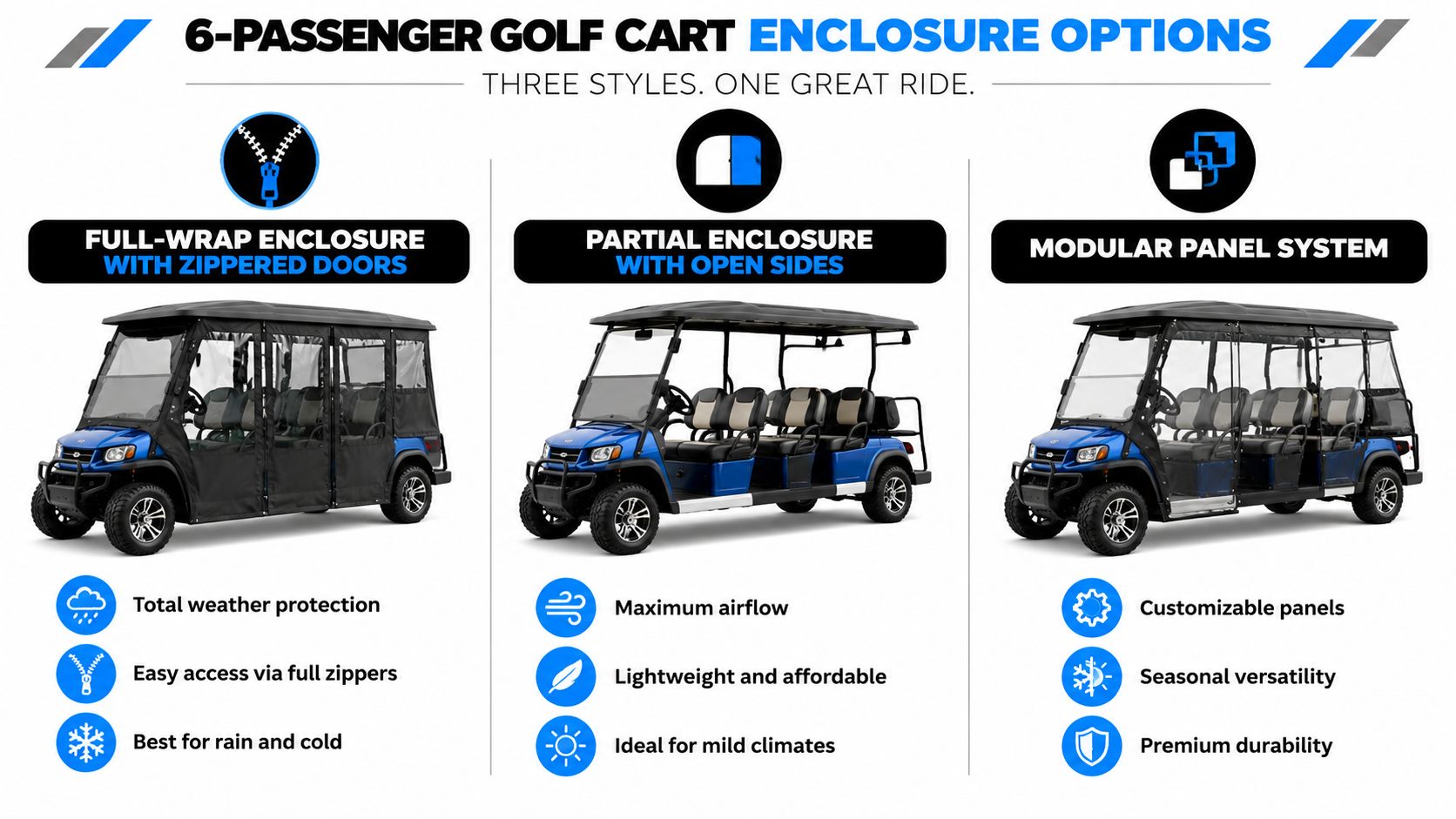
A full-wrap enclosure with zippered doors offers the strongest barrier against rain and cold. It surrounds the cart and gives passengers a defined entry point, but it also retains more heat and moisture. That makes adjustable openings, clear windows, and deliberate ventilation essential rather than optional.
A partial enclosure leaves some sides open. It suits mild climates where the main goal is wind deflection or light rain protection without creating a sealed cabin. It provides better airflow, though it won't offer the same protection during sustained rain or cold weather.
A modular panel system lets an operator add, remove, or reposition sections as conditions change. It costs more to engineer well, but it can make sense for resorts with seasonal weather because staff can configure the cart for rain, wind, sun, or maximum airflow.
Material selection controls cabin behavior
Independent enclosure guidance identifies 600D polyester with PU or PVC coating as a common balance between durability and manageable weight. Heavier vinyl provides stronger water resistance, while Sunbrella-type fabrics are used when UV durability and premium outdoor performance take priority (Golfible's golf cart enclosure guide).
The tradeoff is straightforward. Thicker, coated materials shed water and resist tearing more effectively, but vinyl can retain condensation. In a larger six-passenger cabin, that trapped moisture has more opportunity to cloud windows and make occupants uncomfortable. Clear PVC windows preserve sightlines, while stitched vents and cross-ventilation reduce the risk of a damp interior.
Look for double-stitched seams, reinforced corners, and window panels that remain clear when the fabric moves. A waterproof body with poor seam construction still leaks. A strong fabric with badly positioned windows still creates blind spots and frustrating entry points.
For buyers comparing roof and canopy accessories, the golf car canopy options can help clarify how the roof structure affects enclosure compatibility. Don't choose fabric in isolation. The material must work with the roof, attachment system, window layout, and climate.
Match the enclosure to the operating climate
A full-wrap system is the sensible choice for cold, wet, or windy routes. Partial panels suit warm areas where airflow matters more than complete weather sealing. Modular systems work best when the cart serves different users and conditions across the year.
The mistake is buying the heaviest material available and assuming more coverage always means more comfort. In hot weather, a sealed six-passenger cabin can become oppressive. In wet weather, an enclosure that breathes too freely may leave rear passengers exposed. Pick the system that manages the dominant risk on your property.
How to Measure and Select a Compatible Enclosure
Fitment failures usually start with a rushed order. The buyer enters “six passenger” into a search bar, finds a long-roof cover, and assumes the cart will match. That shortcut ignores roof length, base length, side height, windshield shape, roll-bar position, and rear-seat geometry.
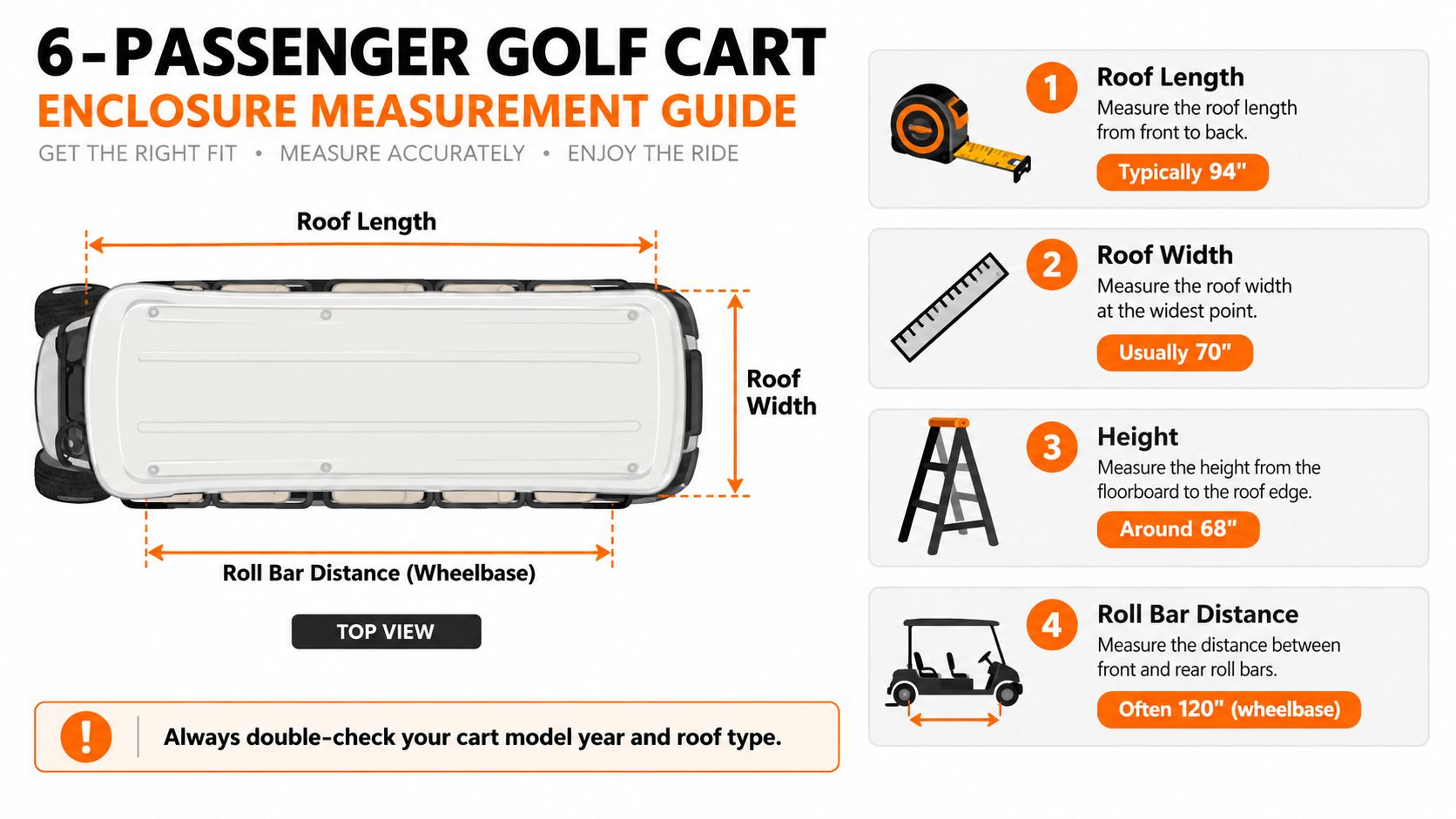
Start with the cart parked on level ground. Measure the roof from the front edge to the rear edge, not from the windshield to the seat. Then measure the base from the forward-most body point to the rear-most body point. Record the side-panel height from the attachment line or floorboard reference to the roof edge, following the supplier's measurement instructions.
A neutral supplier listing for a six-passenger enclosure specifies compatibility with a 110-inch roof length, a 125-inch base length, 54-inch enclosure sides, and a total cover weight of 15 lb (Golf Cart Search's weather-protection guide). Those specifications are an example of why you should compare your cart against the actual product dimensions rather than rely on passenger count alone.
Take the measurements that affect sealing
Use a tape measure and write the results down. Photographs of the roof corners, windshield header, rear seat, and side openings are also valuable when a dealer reviews compatibility.
-
Measure roof length. Include the complete roof platform. A six-seater's extended roof creates more perimeter to seal, and a short cover will leave the rear corners exposed.
-
Measure the cart base. The body can extend beyond the roof. If the base is longer than the enclosure pattern, rear panels may pull forward and place stress on the zippers.
-
Measure side height. Check the distance from the enclosure's intended attachment point to the lower edge of the body. Side panels that are too short leave gaps, while excessive fabric can drag or bunch.
-
Check openings and hardware. Note the windshield shape, door entry, steering area, seat belts, mirrors, lights, and any aftermarket roof supports. These details can interfere with windows or zipper paths.
-
Confirm the model and roof configuration. Record the cart make, model, model year, passenger layout, and roof type before ordering.
Why universal wraps often disappoint
Universal covers have a place for occasional use, but they must accommodate a range of body shapes. That usually means compromise at the windshield header, rear corners, and door openings. On a six-passenger cart, the larger panels and longer seams magnify the issue.
A model-specific pattern is the safer purchase for daily resort or campus use. A tighter perimeter reduces airflow infiltration, flapping, zipper strain, and driving noise. It also improves heat retention when the cart operates in cold or rainy conditions.
Solana XA 6P owners should verify the roof and body configuration directly before ordering. The aluminum chassis and modern body design don't eliminate fitment concerns, and the correct enclosure pattern still needs to match the installed roof, windshield, and passenger arrangement. General standard golf cart dimensions can provide orientation, but they shouldn't replace model-specific confirmation.
Installation Overview and Achieving a Tight Seal
A good enclosure can perform badly after a careless installation. The most common errors are simple: the installer pulls fabric tight before aligning the roof, closes zippers against tension, leaves a corner attachment loose, or folds a clear window into a sharp crease.
Begin by laying out the enclosure and identifying the front, rear, left, and right panels. Clean the roof edge and attachment points so dirt doesn't prevent the fasteners from seating. Place the main roof section over the cart without forcing it, then align the windshield header and rear corners before securing the side panels.
Adjust the panels before applying tension
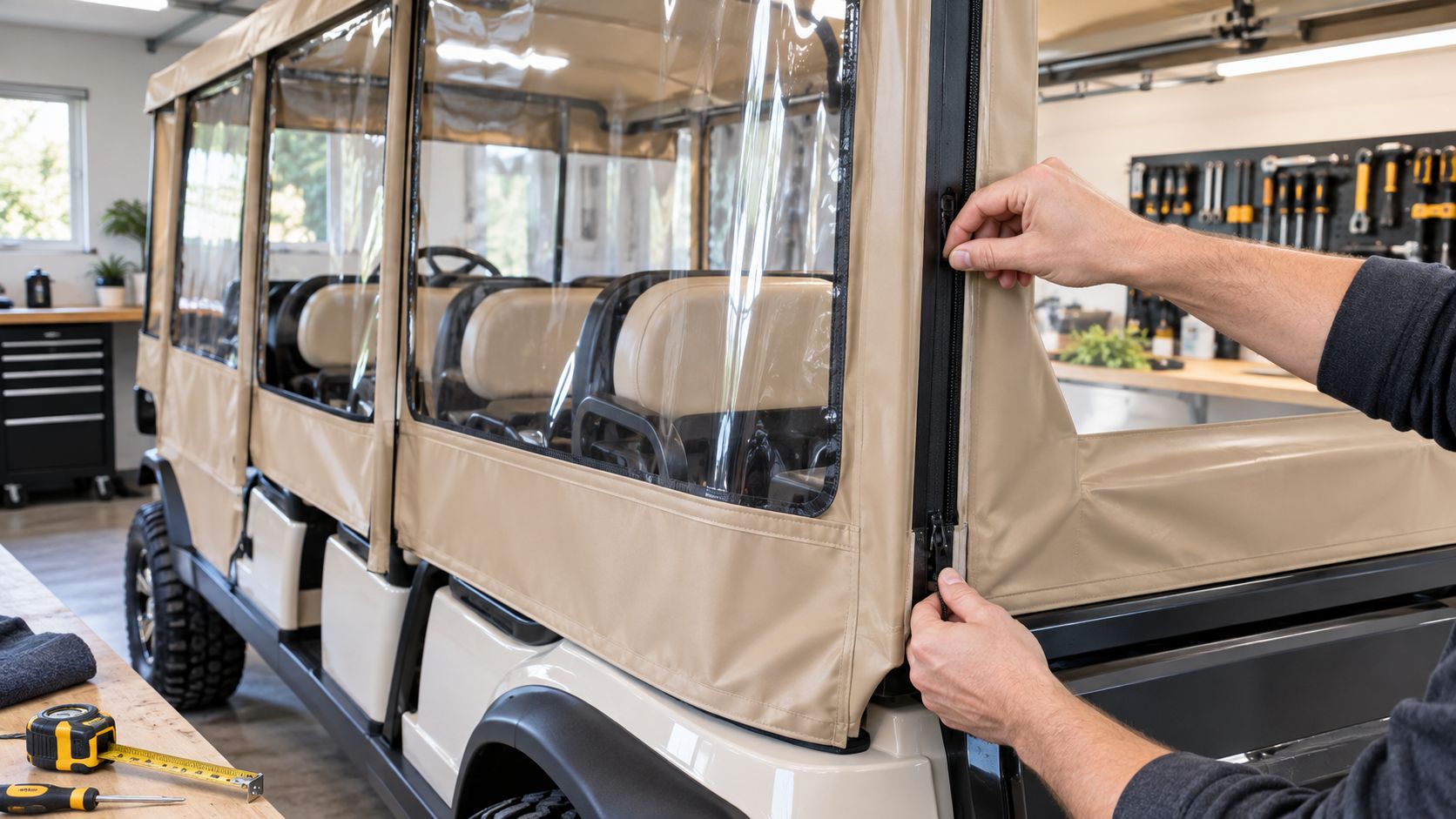
Attach the central points first, then work toward the corners. This distributes tension and helps the window sections sit flat. If you start at one corner and pull the opposite side into place, the enclosure can shift, leaving the windshield panel crooked and forcing the zipper to carry loads it wasn't designed to handle.
Close each zipper gradually while checking that fabric isn't caught in the teeth. A zipper that only closes when someone pulls hard is showing a fit or alignment problem. Don't lubricate a dirty zipper and call the issue solved. Clean the track, remove debris, and correct the panel position first.
Practical rule: The enclosure should be snug enough to resist movement, not so tight that every zipper becomes a lifting point.
Pay particular attention to the lower corners and rear seat area. Those locations receive direct airflow and often develop gaps when the fabric pattern doesn't match the cart's extended roof. Reinforced corners and properly seated fasteners matter more there than cosmetic smoothness.
Test the seal before putting the cart into service
After installation, inspect the full perimeter from outside and inside. Look for daylight around the windshield header, rear corners, door openings, and lower side edges. Run the zippers through their complete travel and open every intended emergency or passenger exit.
Use a controlled spray test rather than waiting for the first storm. Keep the spray gentle, observe where water collects, and mark any leakage for adjustment. Don't pressure-wash the enclosure, because excessive force can drive water through seams and damage windows or attachment points.
A short installation demonstration can help staff understand the correct sequence. Use the video below as a visual reference, then follow the enclosure manufacturer's model-specific instructions.
Fabric can behave differently as temperatures change. Recheck tension after the enclosure has been exposed to cold or heat, but don't keep tightening it to eliminate every wrinkle. A little movement is preferable to overstressed seams, distorted windows, and failed zippers.
Safety and Cabin Environment Considerations
An enclosure makes a cart more comfortable in poor weather, but it doesn't automatically make the vehicle safer. Passengers still need to remain seated, keep their limbs inside, and use seat belts when available. Nationwide Children's golf cart safety guidance states that children under six shouldn't ride, and an enclosure doesn't change that guidance.
The safety issue most buyers miss is cabin management. Six occupants produce more heat and moisture than a lightly occupied cart. When the enclosure is closed, humid breath can condense on clear PVC windows, especially when the outside air is cold. Fogged windows reduce driver visibility and can make boarding areas harder to see.
Control fogging before it becomes a visibility problem
Build ventilation into the operating routine. Use adjustable openings, crack a zipper when conditions allow, and avoid blocking vents with bags, blankets, or loose clothing. Fans can improve air movement, but they should supplement open ventilation rather than encourage staff to operate a completely sealed cabin in hot conditions.
Anti-fog treatments may help, but the surface must be clean and the product must be compatible with clear PVC. Test any treatment on an inconspicuous area first. A breathable material can also reduce moisture retention, although it may provide less complete water protection than heavy vinyl.
For broader principles around ventilation, cleanliness, and indoor air management, Renue Systems Four Points provides a useful guide from Renue Systems Four Points. The same practical mindset applies here: manage air movement, moisture, and occupant comfort instead of treating the enclosure as an airtight shell.
Plan for heat and emergency exit
Hot climates create the opposite risk. Solid panels and dark materials can trap heat, while multiple passengers limit the cabin's ability to cool quickly. Roll up side sections, use breathable panels where the climate permits, and set a clear rule for opening the enclosure whenever heat or discomfort rises.
Emergency egress deserves equal attention. Zippers, snaps, and roll-up panels should remain operable from the positions where passengers sit. Staff should know which openings provide the fastest exit, and they should inspect those closures before each operating period. Never let cargo, seat covers, or accessory straps obstruct the openings.
Safety reminder: Weather protection is not restraint protection. An enclosure can't replace seat belts, seated passengers, controlled speed, or a route appropriate for the vehicle.
Operators should also consider visibility at intersections, crossings, and reversing points. Clear windows need regular cleaning, and a fogged panel should be treated as a service issue, not an inconvenience to tolerate.
Maintenance Routines and Dealer Support Options
A six-passenger enclosure experiences more handling than a private cart used occasionally. Resort staff open doors repeatedly, fold panels during changing weather, and store the enclosure after wet shifts. That routine exposes seams, zippers, snaps, and clear windows to wear.
Clean fabric with mild soap, clean water, and a soft brush or cloth. Remove grit before folding the enclosure because trapped dirt can abrade coated fabric and scratch clear PVC. Let the enclosure dry fully before storage. Folding a damp cover creates a poor storage environment and encourages odor, clouding, and material deterioration.
Use a simple inspection cycle
Make inspection part of vehicle handover rather than waiting for a failure. Staff should look for:
- Seam separation: Check corners, roof attachments, and high-tension areas for lifted stitching or fraying.
- Zipper resistance: Open and close each zipper without forcing it. Binding usually signals dirt, misalignment, or fabric tension.
- Window damage: Inspect clear panels for scratches, clouding, loose edges, and distorted visibility.
- Fastener loss: Replace missing snaps, hooks, straps, or clips before wind turns a small gap into a torn panel.
- Storage condition: Keep the enclosure folded loosely or stored as directed, away from sharp equipment and unnecessary heat.
Small repairs are cheaper and less disruptive than replacing a complete enclosure after a seam tears in service. Don't use aggressive solvents or household glass cleaners on clear PVC unless the material manufacturer approves them. The wrong cleaner can leave the window brittle, hazy, or permanently marked.
Know when dealer support is worth using
Professional help makes sense when the cart has an unusual roof, aftermarket bodywork, modified seating, or a fleet schedule that can't absorb installation mistakes. Ask the dealer to verify the model, roof length, windshield, passenger configuration, and exactly what the enclosure package includes. Warranty coverage may depend on correct installation, approved cleaning methods, and documented maintenance, so retain the product instructions and purchase records.
For Solana EV owners, the company's dealer ecosystem includes compatible accessories, technical assistance, and a 24/7 parts portal. That's useful for fleet managers who need consistent replacement parts and support across multiple carts, but the specific enclosure and fitment should still be confirmed for the vehicle configuration before ordering.
A reliable support process protects more than the fabric. It reduces downtime, keeps passenger service consistent, and prevents a minor enclosure defect from becoming a visibility or safety problem.
Making Your Final Enclosure Decision
Choose the enclosure according to the job, not the product photo. A resort shuttle operating through rain and cold needs full coverage, strong seams, clear windows, and convenient access. A private cart in a warm climate may benefit more from adjustable panels and ventilation than from the heaviest waterproof fabric.
Prioritize the decision in this order:
- Verified fitment. Match roof length, base length, side height, windshield, roof type, and passenger layout.
- Climate control. Select coated polyester, vinyl, or premium outdoor fabric according to weather exposure, then require vents or adjustable openings where heat and humidity are concerns.
- Safe visibility and egress. Reject any design that fogs easily, blocks sightlines, or makes passenger exits difficult.
- Daily usability. A system that staff can open, close, and store without a struggle will perform better in real service than a theoretically stronger cover that gets left behind.
- Support and upkeep. Confirm parts availability, warranty conditions, installation guidance, and cleaning requirements before purchase.
For most high-occupancy operations, a model-specific full-wrap or modular enclosure with controlled ventilation is the responsible choice. Universal wraps can work for occasional use, but gaps and loose panels are a poor trade for a cart that carries guests or employees regularly.
Solana EV offers six-passenger electric cart models and enclosure-related accessory options for compatible configurations, supported through its dealer and parts network. Visit Solana EV to review the available vehicles and accessories, then contact an authorized dealer to verify fitment, ventilation needs, and installation requirements for your cart.