
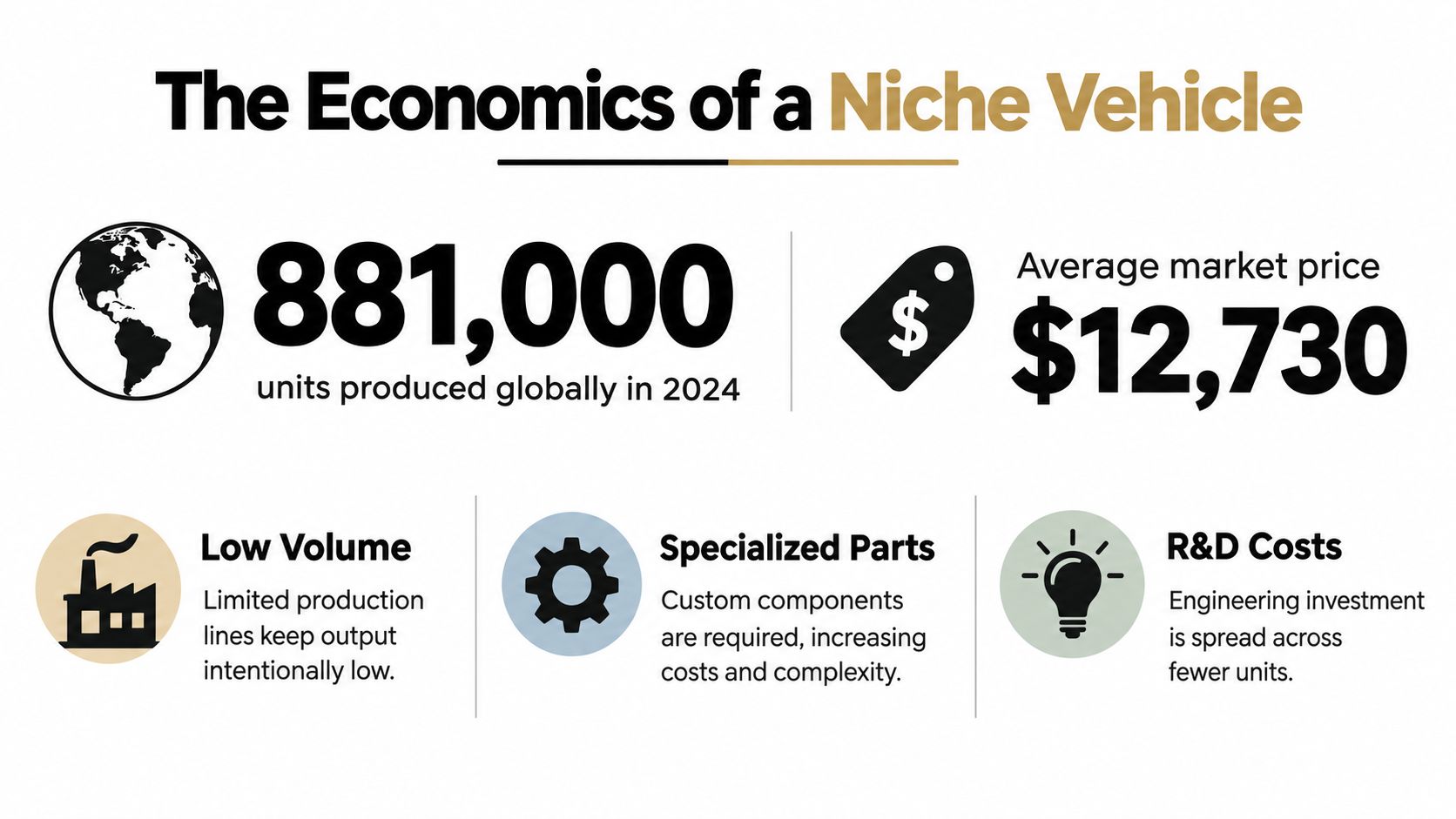
UTVs are expensive because they're low-volume, safety-engineered machines: global production was estimated at about 881,000 units in 2024, and a typical assembly line makes only 30,000 to 60,000 vehicles a year. But the sticker price doesn't tell you what a UTV will really cost; the number to judge is your three-year cost of ownership.
So why are UTVs so expensive, and when does the price make sense? A premium can reflect durable components, occupant protection, and equipment that keeps a vehicle working hard. It can also buy upgrades you don't need. For resort managers and gated-community buyers, uptime, passenger comfort, service support, and resale may matter more than horsepower or the most impressive trim.
The smart comparison isn't a higher-priced UTV against a cheaper one. It's the full bill: vehicle, freight and dealer preparation, essential accessories, financing, maintenance, downtime, and resale value. A less expensive machine can cost more over time if it needs upgrades or repairs, while a higher-priced one may earn its keep through reliability and utility.
Table of Contents
- The Sticker Price Is the Wrong Question
- Low-Volume Production and the Economics of a Niche Vehicle
- Built to Take a Beating Engineering and Materials
- Safety Standards You Are Actually Paying For
- Gasoline Versus Electric Powertrains and Battery Costs
- Supply Chain, Tariffs, Dealer Prep, and Warranty Support
- Cheaper Is Not Always Smarter Buying on Total Cost
- Smart Buyer Checklist and Common Questions
The Sticker Price Is the Wrong Question
Does the UTV's price cover the work you need it to do, or just the showroom trim? Judge the deal by its out-the-door cost and what you will spend over the first three years. Freight, setup, documentation fees, taxes, insurance, maintenance, accessories, financing, and depreciation all count. A UTV buyer's guide with ownership-cost estimates puts typical first-three-year add-on spending at 40–60% of the purchase price, though your costs will vary with the machine and how you use it (a UTV buyer's guide with ownership-cost estimates).
Use that range to build your own estimate, not as a promise about your bill. A roof or windshield may earn its cost on a resort shuttle; a screen may add little for property work where cargo capacity matters more. Pay for equipment that improves uptime, passenger comfort, or the job itself. Skip showroom upgrades that do none of those things.
Compare the job, not the badge
A cheaper UTV can need added equipment, more frequent repairs, or longer periods out of service. A higher-priced model may already include passenger space and weather protection, and could retain more resale value. Check the actual terms, inspect the included equipment, and compare resale listings for the same configuration before deciding.
For resort managers and gated-community buyers, a UTV is only one way to move people or gear. If your plans include towing or travel, browse Utah travel trailer floorplans and compare that setup with the UTV's passenger capacity, comfort, and operating needs.
Practical rule: Put the three-year costs on one page before you negotiate: required accessories, routine service, insurance, financing, and a realistic resale estimate. Compare that total, not the sticker alone.
Low-Volume Production and the Economics of a Niche Vehicle
A UTV doesn't get the pricing advantages of a mass-market car. Global UTV production was estimated at approximately 881,000 units in 2024, with an average market price of about $12,730 per vehicle (UTV market production and price estimate). That's a specialized market, and each manufacturer has fewer vehicles over which to spread the fixed costs of design, tooling, testing, factory operations, warranty support, and distribution.
The assembly-line scale is modest, too. Industry estimates put typical modern UTV production at 30,000 to 60,000 vehicles annually, while passenger-car platforms can serve far larger volumes and multiple body styles. A carmaker can distribute platform and factory costs across many vehicles. UTV manufacturers have fewer units to carry those costs, so more of the investment lands in each sale.
One market, several different machines
“UTV” covers utility and work models, recreational vehicles, crew versions, and specialized fleet configurations. Those aren't just paint choices. Each can call for different engineering, inventory, and supplier requirements. A longer crew model, for example, must be designed around its passenger layout and operating demands rather than treated as a standard vehicle with extra seats bolted on.
The hardware is specialized as well. Four-wheel drive, low-range gearing, high-clearance chassis components, reinforced suspension, cargo beds, towing structures, protective frames, and off-road tires all serve a different purpose from ordinary passenger-car parts. Manufacturers have to validate those systems for rough terrain and demanding loads, while producing them at niche-vehicle volumes.
That's why a UTV isn't a small car with a cargo bed. It's a purpose-built off-road machine produced in comparatively limited runs. Dealer margins, freight, taxes, and financing expenses add to the price after the factory economics have already done their work. Blame the price only on markup, and you miss the cost of building a vehicle for jobs passenger cars aren't designed to do.
Built to Take a Beating Engineering and Materials
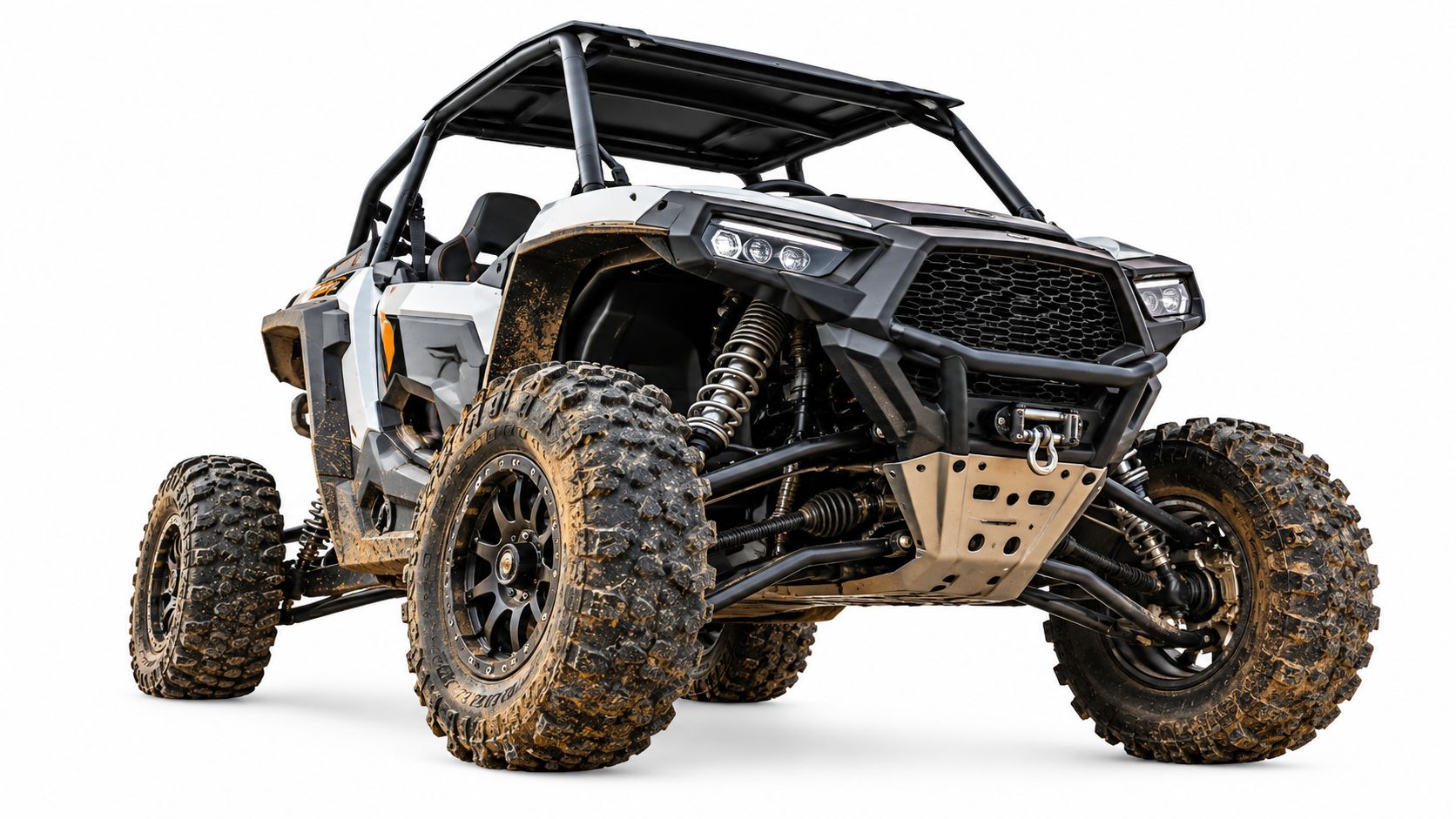
A UTV's price reflects the parts that let it carry people and cargo over terrain that can punish a lightly built vehicle. Start with the drivetrain. Four-wheel-drive hardware and low-range gearing help the machine put power to the ground and move at controlled speeds when traction or load demands it. Those systems need to work together, not just look impressive on a spec sheet.
Next, look underneath. Reinforced suspension and high-clearance chassis components are designed around rocks, ruts, mud, payloads, and repeated impacts. A part that works on smooth pavement may not survive the same use. Manufacturers must choose and validate components for the conditions the vehicle is meant to handle.
The build sheet behind the price
The frame and occupant structure carry their own engineering demands. A cargo bed and towing structure add utility, but they also affect what the chassis must support. Off-road tires need to serve the vehicle's intended terrain and load. Each component has to make sense as part of the complete machine.
Manufacturers also need to test how those parts hold up when the UTV is loaded and worked hard. That validation takes prototypes and engineering time, costs that get divided across a more limited production run than a mainstream automobile. The result is a higher per-vehicle share of development and testing.
An aluminum chassis can be a meaningful design choice, but the label alone doesn't prove value. Buyers comparing materials should consider how the chassis is built, what the vehicle is rated to carry, and what support is available if repairs are needed. For a closer look at how a boxed aluminum chassis is described, see this aluminum chassis overview. Don't pay a premium just because a brochure says “heavy duty.” Match the engineering to the work.
For a recreational rider, that may mean a setup suited to the terrain and driving style. For a property manager, it may mean prioritizing load capacity, durability, and service access. The right machine is the one whose components fit the job, not the one with the longest feature list.
Safety Standards You Are Actually Paying For
Safety engineering is a real cost, not a decorative extra. UTVs operate on uneven ground and face rollover and collision risks that don't look like ordinary road driving. Industry reporting cites more than 3,000 U.S. deaths related to off-road vehicles, including side-by-side UTVs, between 2018 and 2020 (UTV safety and market reporting). That's why occupant protection, braking, and stability testing matter when you compare models.
Updated ANSI/SVIA 1-2023 requirements were reported as taking effect in January 2025. Reported provisions include speed-limiting youth keys, steering-column crush zones, and mandatory rollover warnings. Safety-related equipment can include rollover-protective structures, reinforced frames, seat belts, doors or nets, occupant restraints, braking systems, lighting, and steering components. Manufacturers also need documentation, testing, supplier controls, and quality checks to verify that those systems work as intended.
What stability testing actually covers
ANSI/OPEI B71.9 testing evaluates braking, maximum speed, handling, and dynamic stability at different loading states, from curb weight to gross vehicle weight rating. The standard also specifies testing on substantial grades, including a recommended 20% slope. That variety matters. A vehicle's behavior changes with its load, so a stability claim based only on an empty machine tells you little about how it will perform carrying passengers or cargo.
CPSC rollover research used instrumented vehicles, autonomous steering and brake/throttle robots, and tests at approximately 25–28 mph. Separate CPSC-linked testing reported rollover thresholds ranging from 0.62g to 0.79g (CPSC rollover occupant-protection testing). Those results help show why center of gravity, track width, steering response, and loading can affect stability.
| Safety feature | Standard or test | What it protects against |
|---|---|---|
| Rollover-protective structure and restraints | ANSI/SVIA safety requirements | Occupant exposure during a rollover |
| Steering-column crush zone | Updated ANSI/SVIA 1-2023 requirements | Steering-column intrusion during an impact |
| Braking and handling | ANSI/OPEI B71.9 testing | Loss of control and inability to slow or stop |
| Dynamic stability at different loads | ANSI/OPEI B71.9 testing | Instability as passenger and cargo loads change |
| Rollover warning | Updated ANSI/SVIA 1-2023 requirements | Risk from operating conditions associated with rollover |
Check what's fitted and ask the dealer for the vehicle's safety and test documentation. Don't treat a protective frame or belt as a reason to ignore the manual, passenger limits, or safe operating practices. The safety architecture supports responsible use; it doesn't make rough terrain risk-free.
Gasoline Versus Electric Powertrains and Battery Costs
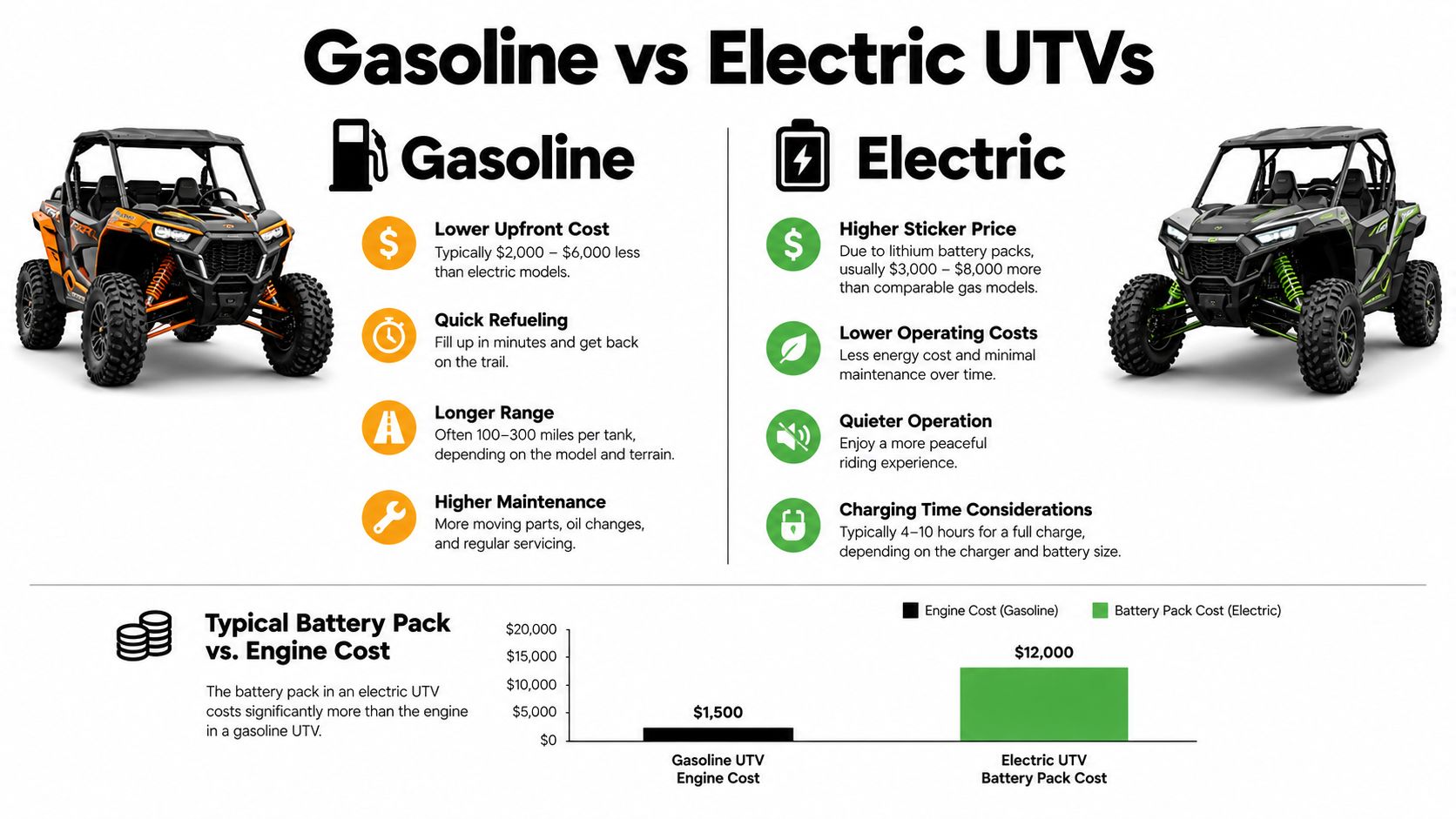
Powertrain choice can shift the price and operating trade-offs substantially. Gas models generally have a lower upfront price and can be refueled quickly, while electric models can carry a higher sticker price because of their lithium battery packs. Electric drivetrains also have fewer routine wear items and run smoothly, qualities that can matter more to a resort or gated community than peak performance.
| Consideration | Gasoline UTV | Electric UTV |
|---|---|---|
| Upfront cost | Often lower | Often higher because of the battery pack |
| Refueling or charging | Quick refueling | Charging time needs to fit the work schedule |
| Routine ownership | More engine-related maintenance | Fewer drivetrain wear items |
| Operating environment | Suits work where range and refueling access matter | Quieter operation can suit resorts, campuses, and neighborhoods |
Choose for the route, not the trend
Electric makes sense when the route is predictable, charging is practical, and noise or local emissions are a concern. A resort shuttle or campus vehicle may return to a known location between trips, which can make charging part of the operating routine. If a vehicle must work long days far from charging access, gasoline may be the more straightforward fit.
Don't assume lower maintenance automatically means lower total cost. Compare purchase price, charging or fuel access, service needs, expected downtime, and likely resale for the exact vehicle you're considering. The same logic applies to road equipment: buyers comparing electric and gasoline mobility more broadly can review electric scooter options from Punk Ride as a separate reference point, while remembering that a scooter and a UTV serve different jobs.
Street-legal equipment can add cost regardless of powertrain. Lighting, mirrors, horns, and harnesses may be needed for the intended use, but requirements vary by location and vehicle. Confirm what the package includes and what local rules require before treating a road-ready price as comparable to a base off-road model.
Here's a closer look at how gasoline and electric UTV trade-offs affect the buying decision:
Supply Chain, Tariffs, Dealer Prep, and Warranty Support
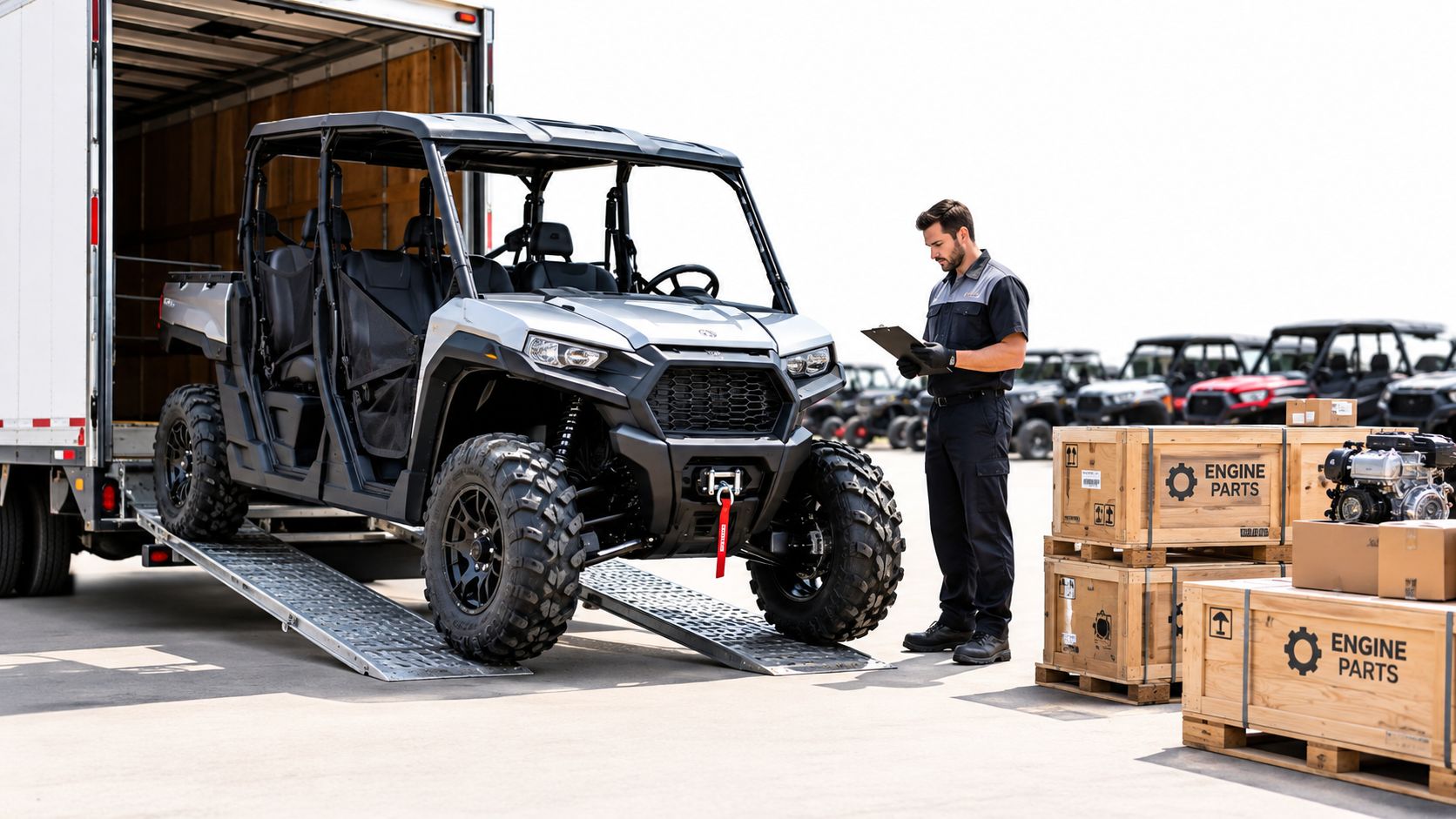
The price you pay includes more than the parts assembled at the factory. Engines, electronics, and finished vehicles can move across Mexico, the United States, Canada, and Asia, exposing manufacturers to cross-border logistics and tariff costs. One industry analysis reported $82 million in new tariff costs for Polaris in 2025 and projected an approximately $90 million headwind in 2026; the same analysis described a 25% Section 232 derivative tariff applying to UTVs (ATV and UTV market analysis). Those figures describe industry exposure, not a fixed fee added to every buyer's invoice.
Separate lasting costs from shifting costs
Low-volume production, purpose-built components, safety systems, dealer preparation, and warranty support are structural parts of the business. Tariffs, freight volatility, and inventory shortages can change over time. A tariff headline may explain pressure on manufacturers, but it doesn't tell you whether a particular dealer's freight and setup charges are fair. Ask for an itemized out-the-door quote.
Dealer preparation may include setup and inspection before delivery. Warranty support and parts availability also have value, especially for a commercial operator who needs vehicles back in service. But don't pay for vague assurances. Ask what the warranty covers, where service is performed, how parts are ordered, and who handles technical support.
The estimates for first-three-year add-ons show why advertised price and ownership cost can diverge. For your purchase, separate compulsory costs from optional accessories, and distinguish a one-time dealer charge from recurring service or financing costs. A resort manager should treat downtime and parts access as operating concerns, not just line items. If a vehicle sits idle when staff need it, the low sticker price won't make the operation cheaper.
Cheaper Is Not Always Smarter Buying on Total Cost
A low sticker price can turn into a costly choice if the machine lacks equipment you need, loses resale value, or spends too much time out of service. A higher-priced UTV earns its place when it fits the job, keeps passengers comfortable, and holds enough resale value to offset more of the purchase cost. Verify those advantages against a dealer quote and comparable resale listings, not a premium badge.
A three-year cost breakdown can show how ownership expenses and resale change the picture: a $25,000 UTV is estimated to have a $15,300 net cost after those factors are counted. Use that figure as an illustration, not a forecast for your purchase. The practical lesson is that depreciation and resale can outweigh a modest difference in sticker price.
Match the math to the job
Recreational riders should price the gear their terrain and riding plans call for. Property owners should focus on payload, towing, and service access. Resort managers need to weigh passenger capacity, comfort, uptime, and the cost of keeping a vehicle working. For gated communities, quiet operation, passenger space, and street-legal equipment may matter more than off-road performance.
Skip the accessory-count sales pitch. Ask whether the UTV will do the work, what upkeep and financing will cost, and whether the same trim can be resold without a steep loss. Buyers considering a protective finish can decide if ceramic coating is worth it, then judge the expense against how and where the vehicle will be used.
Put the numbers into a total cost of ownership framework. Count the purchase, required setup, insurance, service, financing, downtime, and likely resale. Compare machines with the same passenger capacity and equipment. For resort and community fleets, include the practical cost of a vehicle that cannot carry its passengers or return to service quickly. Buy for the work and uptime you need, not the trim that looks impressive.
Smart Buyer Checklist and Common Questions
Take this checklist to the dealer and get answers in writing:
- Confirm safety compliance: Ask about ANSI/SVIA 1-2023 compliance and request available braking and stability-test documentation.
- Get the full quote: Separate vehicle price, freight, setup, documentation, taxes, required equipment, and optional accessories.
- Model three-year cost: Include financing, insurance, maintenance, downtime, and a realistic resale estimate.
- Check the warranty and service route: Find out who handles repairs, how parts are ordered, and what support covers.
- Compare the exact trim: Check resale listings and equipment for the same model configuration, not just the same brand.
- Read financing terms carefully: A 0% APR offer can change cash flow, but compare eligibility, term, and total amount due.
Common questions
Is a used UTV a better value? It can be, if its condition, service history, and price make sense. Inspect the frame, suspension, drivetrain, and safety equipment, and compare the asking price with similar used listings. For an electric model, review used electric UTV options.
What will insurance cost? It varies by vehicle, location, use, coverage, and operator. Get a quote for the specific machine before signing.
Is street-legal equipment worth it? Only if your routes and local rules make it useful. Confirm what's included and check local requirements.
How often should a UTV be serviced? Follow the manufacturer's schedule and adjust for the work and conditions. Ask the dealer for the service plan for the exact model.
Solana EV offers electric UTVs and street-legal golf carts for resort, campus, neighborhood, and recreational use, with models including the XA 4P, XA 6P, F, and G. If quiet operation and passenger comfort fit your three-year ownership calculation, visit Solana EV to explore the lineup and find a nearby dealer.