
Aluminum chassis boxes weigh approximately 40% less than equivalent steel frames while maintaining high structural rigidity, making them ideal for electric utility vehicles. That advantage only holds when the box is designed for stiffness, fatigue, joint strength, and corrosion control, not when aluminum is treated as a simple steel substitute.
The vehicle's structural skeleton decides how well it carries batteries, passengers, suspension loads, and impact forces. Exterior styling gets attention, but the chassis determines whether an electric cart feels stable over uneven ground, whether fasteners stay tight, and whether repeated off-road vibration becomes a repair problem. The most useful way to evaluate an aluminum chassis box is therefore mechanical, not cosmetic. Look at its load paths, section geometry, welded areas, attachment points, and inspection access.
Table of Contents
- What Is an Aluminum Chassis Box
- The Engineering Behind 6061-T6 Alloy
- Components and Fabrication Methods
- Aluminum vs Steel Frame Analysis
- Impact on Electric Vehicle Efficiency
- Inspection and Maintenance Protocols
- Preventing Galvanic Corrosion
- Solana EV Chassis Application
- Conclusion and Key Takeaways
What Is an Aluminum Chassis Box
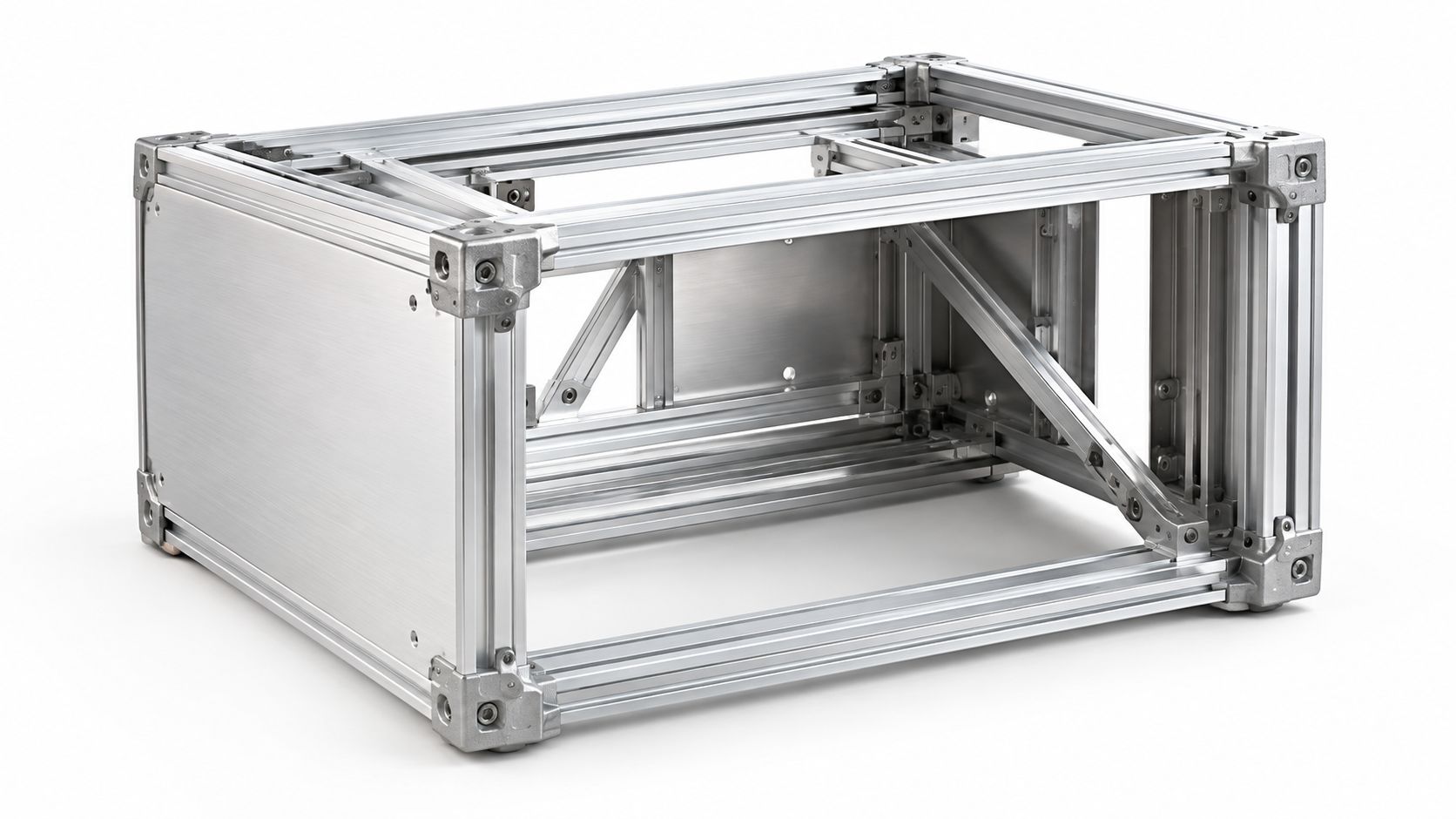
An aluminum chassis box is the vehicle's structural skeleton, built from connected sections that carry suspension, battery, seating, body, and towing loads. Typical assemblies combine aluminum extrusions, formed sheet, cast nodes, cross-members, and reinforced attachment points into a partially enclosed load path.
The design differs from an open ladder frame. Ladder frames depend mainly on two longitudinal rails joined by cross-members. A box structure closes or partly closes those sections, improving resistance to bending and torsional twist. Section geometry matters as much as alloy selection. A rectangular member can provide useful stiffness with less material than a comparable open section, provided its joints and load transfers are properly reinforced.
Why the architecture matters
Aluminum vehicle structures developed from specialist applications into production vehicles. Honda introduced the Acura NSX in 1990, widely recognized as the first mass-produced vehicle with an all-aluminum monocoque structure. Audi later showed how an aluminum framework could carry major body loads while its Space Frame weighed approximately 40% less than an equivalent steel frame, as documented in the Aluminum Association's automotive overview.
That history matters for off-road and utility vehicles because the chassis must handle repeated shock loads, not just reduce static mass. Designers need continuous load paths between suspension mounts, cross-members, and the central structure. Poorly supported joints can loosen, crack, or concentrate stress even when the overall frame appears substantial.
For an electric utility vehicle, lower structural mass can preserve carrying capacity and improve acceleration and braking response while offsetting part of the battery system's weight. The box still needs sufficient section depth, reinforced attachment points, and inspection access. A lighter chassis that flexes excessively or hides damaged joints is not a successful design.
The Engineering Behind 6061-T6 Alloy
6061-T6 is widely used for structural aluminum tube and profiles because it combines useful strength, availability, machinability, and weldability. For an aluminum chassis box, a practical material basis is approximately 240 MPa yield strength, 260 to 310 MPa ultimate tensile strength, and 68 to 69 GPa elastic modulus, depending on product form and governing specification. These values are summarized in the 6061-T6 structural profile reference.
Yield strength tells the engineer when permanent deformation begins. Ultimate tensile strength describes the maximum tensile stress before fracture in a standardized test. Neither value, by itself, tells you whether a chassis will remain quiet, straight, and durable over years of curb strikes and vibration.
Stiffness changes the design
Aluminum's elastic modulus is only about one-third that of steel. That means an aluminum member can meet a strength target yet still deflect too much under normal service loads. The solution is geometry. Designers increase section depth, use closed profiles, add internal webs, or combine several sections into a torsion-resistant envelope.
A shallow flat bar often performs poorly as a primary chassis rail because it bends and twists easily. A deeper rectangular tube can provide much better stiffness without just adding material everywhere. Internal webs can divide a large section into smaller panels, reducing local wall deformation and improving load transfer around suspension or battery mounts.
Where the alloy loses capacity
Welding 6061-T6 changes the local material condition. The heat-affected zone should be treated as lower-strength than the parent material unless the welding procedure and reduced joint properties have been specifically qualified. ASTM B221 covers extruded aluminum tube and pipe products, while ASTM B308/B308M addresses standard extruded structural profiles such as channels, angles, tees, and zees.
Specify the alloy, temper, wall thickness, tolerances, and certification. A purchase order that says only “6061 aluminum” leaves too much room for the wrong product form or temper.
Components and Fabrication Methods
A complete aluminum chassis box usually combines three families of parts. Extrusions create repeatable rails, cross-members, perimeter sections, and impact structures. Castings form complex nodes around suspension, steering, or major junctions. Sheet assemblies close larger areas, create floors, and distribute loads between the primary members.
Extrusions start as long profiles with consistent dimensions. A fabricator cuts them to length, machines holes or interfaces, and joins them through welding, bolting, bonding, or a combination of methods. Their repeatability supports production and makes replacement sections easier to define.
Cast aluminum nodes solve a different problem. A suspension mount or corner junction often needs several load paths to meet in one compact area. A casting can provide that three-dimensional transition more efficiently than a collection of flat plates, but it still needs careful inspection for porosity, cracking, and concentrated stress.
Sheet panels close the structure and spread loads. They aren't merely cosmetic covers when they form the floor or battery enclosure. Their thickness, bead geometry, weld pattern, and connection to the surrounding rails determine how effectively they contribute to torsional stiffness.
A practical fabrication sequence
- Define the load paths. Identify suspension, seat-belt, battery, seat, tow, and impact loads before selecting profiles.
- Prepare the sections. Cut and machine extrusions accurately, deburr holes, and maintain clean joint surfaces.
- Reinforce attachments. Use crush sleeves, doubler plates, bonded inserts, or formed nodes where fasteners pass through thin walls.
- Control welding. Use a qualified procedure and account for lower heat-affected-zone properties.
- Check the finished envelope. Verify alignment, hole position, weld coverage, drainage, and access for inspection.
For teams estimating material, labor, and operations, quoting sheet metal fabrication offers useful context on how part geometry and fabrication choices affect a quote. The important chassis lesson is simple: a low part price doesn't compensate for poor load transfer or difficult service access.
Aluminum vs Steel Frame Analysis
Steel remains a practical choice where repair access, familiar welding methods, and compact sections matter. Aluminum offers lower density and useful corrosion resistance, but it demands more deliberate structural design. Its lower elastic modulus means a comparable aluminum member may need greater depth, closed geometry, or internal webs to achieve the required stiffness.
The meaningful comparison is structural mass against the loads the vehicle must carry. A lighter frame can preserve payload and improve response, but only if its joints, weld zones, and attachment points transfer forces without local crushing or fatigue damage. Material choice alone does not determine durability.
| Design consideration | Steel frame | Aluminum chassis box |
|---|---|---|
| Structural mass | Typically heavier for an equivalent lightweight architecture | Can reduce structural mass when geometry is optimized |
| Section design | Compact sections can provide substantial stiffness | Deeper closed sections and internal webs are often necessary |
| Fabrication | Familiar welding and repair practices | Requires controlled welding, isolation, and heat-zone allowances |
| Corrosion | Can suffer from rust and coating breakdown | Needs careful protection at dissimilar-metal joints |
| Durability focus | Welds, fatigue, buckling, and corrosion remain important | Fatigue, weld zones, joints, and galvanic corrosion demand close control |
The owner-level question is simple: does the frame deliver the required stiffness while leaving enough capacity for passengers, equipment, and battery mass? A well-designed aluminum chassis box can do that, but poorly supported joints or thin walls can erase the weight benefit through repairs and premature fatigue.
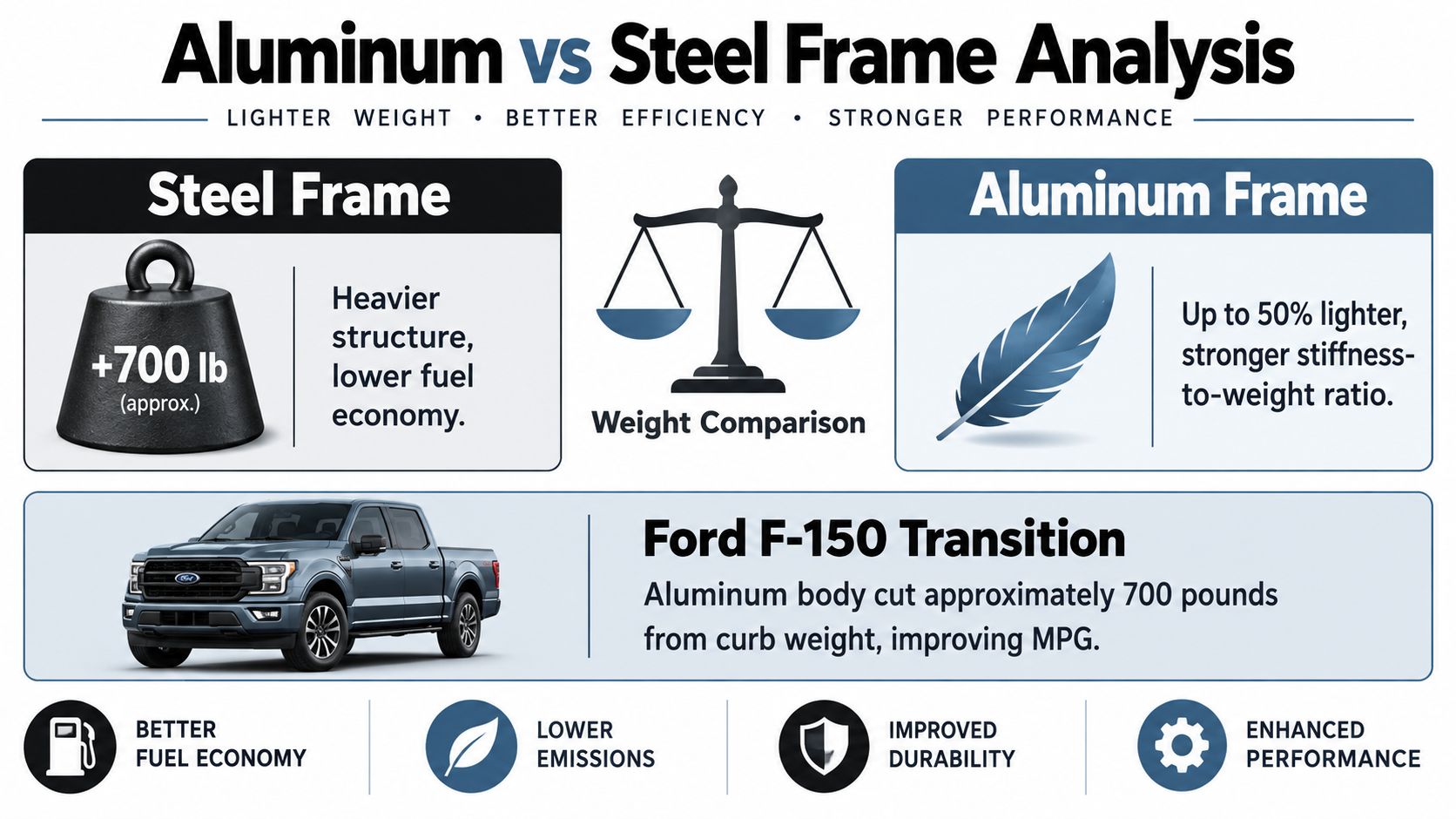
Engineering judgment: Aluminum earns its place when payload, battery mass, handling response, and corrosion exposure justify the added control over geometry, welding, and isolation. Steel remains attractive where straightforward field repair outweighs structural weight savings.
For a smaller recreational vehicle, inspect the frame as an ownership system rather than a material label. Check whether joints remain accessible, whether fasteners can be isolated from the aluminum, and whether damaged sections can be replaced without dismantling half the vehicle. This aluminum frame golf cart guide provides further context for lightweight recreational vehicle structures.
Impact on Electric Vehicle Efficiency
An aluminum chassis box improves electric-vehicle efficiency only when its weight saving survives real structural demands. Battery packs add substantial mass, so reducing frame weight lowers the work required for acceleration and leaves more capacity for passengers, cargo, or battery storage. The frame still needs adequate stiffness, controlled load paths, and joints that tolerate repeated impacts.
The market is moving toward greater use of aluminum extrusions. Ducker research reported by the Aluminum Extruders Council found average extrusion content across internal-combustion and battery-electric vehicles rose from approximately 41 pounds per vehicle in 2016 to 58 pounds in 2022, an increase of about 41%. The source projects nearly 92 pounds per vehicle by 2030, approximately 124% above 2016 and 59% above 2022. These figures are projections where stated, not measurements of every vehicle in service.
For battery-electric vehicles, projected extrusion content reaches approximately 71 pounds per vehicle by 2030. Extrusions suit chassis construction because manufacturers can cut and join repeatable rails and cross-members, then integrate them with castings and sheet. That repeatability helps control geometry, but it does not compensate for poor joint design or inadequate isolation from dissimilar metals.
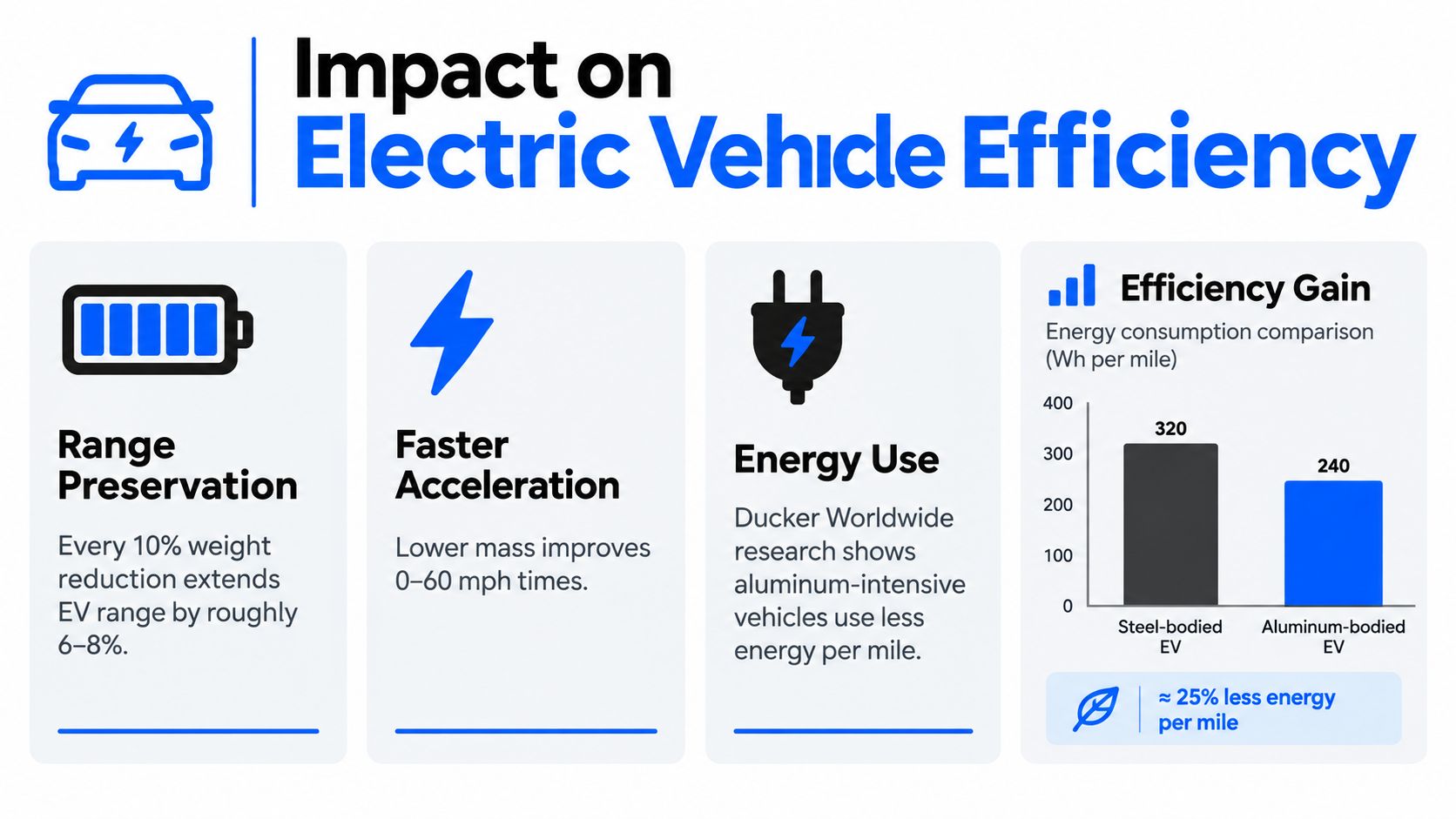
Vehicle-level results depend on the complete build. A lighter chassis can sharpen acceleration and braking response, while unsuitable tires, inefficient driveline calibration, or heavy accessories can consume the gain. Owners should compare vehicle curb weight with payload and battery specifications before judging efficiency.
Inspection and Maintenance Protocols
An aluminum chassis box needs a condition-based inspection routine. Nominal tensile strength rarely determines service life by itself. Fatigue at welds, holes, sharp transitions, and attachment points usually deserves more attention because repeated acceleration, braking, curb impacts, and off-road vibration act on the same details again and again.
Published 6061-T6 reference data reports fatigue strength of roughly 96 to 97 MPa at 500 million completely reversed cycles in a standardized specimen test, as summarized in the 6061 aluminum alloy reference. That value isn't a vehicle-design allowable. Welds, holes, residual stress, surface damage, corrosion, and variable-amplitude loads can reduce actual performance substantially.
A field inspection routine
- Clean before judging. Remove mud and packed debris from rails, weld toes, battery trays, and suspension mounts. Dirt can hide a crack or hold moisture against a joint.
- Start with distortion. Look for bent rails, displaced cross-members, uneven ride height, or doors and panels that no longer align.
- Inspect welds closely. Check for cracks, visible separation, unusual discoloration, and sharp transitions near suspension or seat attachments.
- Examine fastener joints. Look for ovalized holes, fretting marks, loose hardware, crushed tube walls, and movement between aluminum and steel parts.
- Check the underside. Curb strikes often damage lower rails, floor panels, and battery enclosures before the driver notices a handling change.
- Confirm drainage. Closed members need paths that prevent standing water. Trapped moisture accelerates corrosion and hides deterioration.
Use generous inside radii, continuous load paths, and smooth section transitions. Keep fastener holes away from unsupported edges, and reinforce areas exposed to bearing or tear-out. A short, repeatable safety pause before lifting or inspecting the vehicle can be supported by this Take 5 safety checklist guide.
Practical rule: If a joint moves under hand pressure, shows fresh fretting dust, or has a spreading crack, stop treating it as routine maintenance and have the structure assessed before continued use.
Preventing Galvanic Corrosion
Galvanic corrosion occurs when dissimilar metals contact each other while an electrolyte, such as wet road salt or coastal moisture, completes an electrical path. Aluminum can deteriorate around steel fasteners, brackets, washers, or mounting plates even when the visible surface still looks intact.
The highest-risk locations are usually joints where water can enter and remain. Battery trays, floor interfaces, suspension mounts, and exposed underside connections deserve particular attention because they combine mechanical load with contamination.
Isolation practices that work
- Separate the metals. Use nonconductive washers, isolating films, coated fasteners, or suitable bushings between aluminum and steel.
- Seal the joint. Apply compatible sealants to limit water entry without trapping moisture inside a closed cavity.
- Protect damaged surfaces. Restore coating coverage after drilling, grinding, or replacing a fastener.
- Provide drainage. A sealed-looking member can still collect water through a small gap or fastener hole, so inspect the lowest points.
- Rinse contamination away. Vehicles used around salt need regular cleaning, especially underneath and around battery hardware.
Do not rely on a thick bolt or a tight clamp to prevent corrosion. Mechanical security and electrical isolation are separate requirements. When replacing battery hardware, the same care applies to electric golf cart battery cables, where clean interfaces and protected connections support both electrical and structural reliability.
Solana EV Chassis Application
Solana EV applies the aluminum chassis approach to recreational and low-speed electric vehicles intended for courses, neighborhoods, resorts, campuses, and similar environments. The relevant engineering question isn't only whether a model has an aluminum frame. It is whether the frame, floor, roof supports, suspension mounts, and battery locations work together as a durable load-bearing system.

The XA 4P uses a corrosion-resistant aluminum chassis, with aluminum floorboards and roof struts. The XA 6P uses an extended aluminum chassis engineered to support up to 1,502 pounds of payload, according to the product information supplied by the manufacturer. That figure makes joint detailing especially important because passengers, accessories, and cargo all feed loads into the same structural envelope.
For an owner or fleet manager, the useful checks remain practical. Confirm that underbody areas are clean, inspect suspension and seat attachments, look for movement around fasteners, and ask the service provider how damaged structural sections are repaired. An aluminum chassis can remain light and rigid only when its joints, coatings, and load paths remain intact.
The vehicle's finished experience also depends on more than the frame. Street-legal equipment, comfort features, battery access, and body fit all determine how effectively the structural platform serves daily resort or neighborhood use. The chassis is the foundation, but the maintenance plan protects the investment.
Conclusion and Key Takeaways
An aluminum chassis box performs well when its low mass is matched with adequate stiffness, sound load paths, reinforced attachments, controlled joints, and corrosion protection. A thicker wall alone does not fix poor geometry, weld-zone softening, or a fatigue hotspot. Design must reflect actual payload, vibration, impacts, and service access.
Vehicle architectures have adopted more aluminum extrusion over time, but that trend does not remove the need for careful structural assessment. Alloy, temper, profile, wall thickness, and certification should be confirmed before judging a frame.
Use this owner checklist:
- Verify the material specification. A generic “aluminum” description says little about strength or repair requirements.
- Inspect high-load joints. Check welds, holes, inserts, suspension mounts, battery supports, and seat attachments for cracking, distortion, looseness, or fretting.
- Control corrosion. Keep drainage paths open, repair damaged coatings, and isolate aluminum from steel hardware.
- Track fatigue indicators. Repeated vibration can initiate cracks at attachments even when the broad frame surfaces appear clean.
- Match maintenance to use. Off-road impacts, payload, towing, and salt exposure increase inspection frequency.
A vehicle stored near salt water needs a stricter routine. Rinse the underbody after exposure, dry trapped areas, inspect dissimilar-metal joints and fasteners, and look for coating breaks around mounts. Corrosion hidden inside a joint can reduce its load-carrying capacity before exterior damage becomes obvious.
Structural repairs should restore the original load path, not merely close a visible crack. A qualified technician should determine whether static, torsional, durability, or joint-retention testing is appropriate.
Solana EV offers electric golf carts and utility vehicles built around aluminum chassis principles, including the XA 4P and extended XA 6P platform. Review each model's structural and payload specifications, then contact Solana EV about a vehicle or dealer for your intended route.