
Before you even start Googling “street legal gas golf carts for sale near me,” let’s get one thing straight: the term “street legal” isn’t just a fancy add-on. It’s a specific, federally regulated classification that turns a regular golf cart into a registered Low-Speed Vehicle (LSV), legally allowed on most public roads.
Getting this distinction right from the start is the most important part of your buying journey.
What Makes a Gas Golf Cart "Street Legal"?
There’s a world of difference between a standard course cart and a true street-legal model, and it all comes down to safety equipment and legal paperwork. A real LSV has been built or modified to meet strict federal safety standards, specifically those laid out in 49 CFR 571.500.
If you try to drive a cart that doesn't meet these rules on a public road, you're risking fines and a lot of legal trouble.
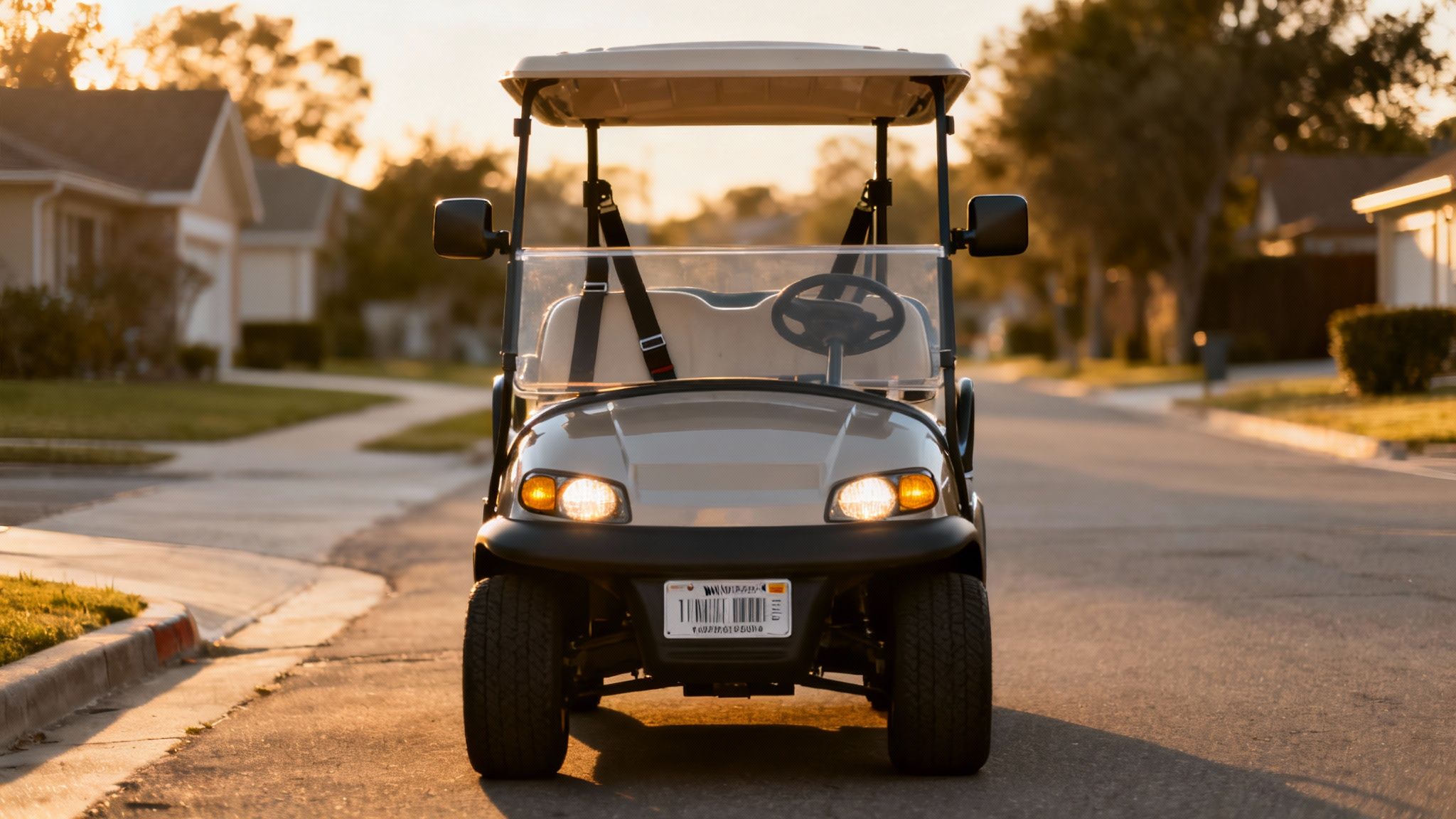
This official LSV classification is what allows you to get a title, register the cart with your local DMV, and secure proper insurance. Without it, you’re just buying a fun toy that’s legally confined to private property.
The Must-Have Equipment for Hitting the Road
For a gas golf cart to be considered a street-legal LSV, it absolutely must have a specific set of features. Think of this as the bare minimum for legal road use. Each piece of equipment is there for your safety and the safety of everyone else on the road.
Here's the essential checklist:
- Lights: This means headlights, taillights, and turn signals so other drivers can see you and know what you're doing.
- Brake Lights: A non-negotiable for showing drivers behind you that you're slowing down.
- A Real Vehicle Identification Number (VIN): Just like a car, it needs a legitimate 17-digit VIN for titling and registration.
- DOT-Approved Gear: The tires and the windshield must be approved by the Department of Transportation, meeting actual automotive safety standards.
- Mirrors: You'll need both rearview and side-view mirrors to keep an eye on traffic around you.
- Seat Belts: There must be a seat belt for every single seat. This is a critical safety feature, especially since many states now require them for child passengers.
I can't stress this enough: if a cart doesn't have a legitimate VIN, it can never be titled or registered as an LSV. It doesn't matter how many lights or mirrors it has. Always, always verify the VIN first.
Why Go With a Gas Engine?
Electric carts are definitely having a moment, but gas-powered models still hold some serious advantages that keep people coming back. The biggest one? Range. A tank of gas will take you a whole lot farther than a single battery charge, which completely eliminates that "range anxiety" you might feel on longer trips around town.
On top of that, gas engines often provide more consistent power and torque. This makes them a fantastic choice if you live in a hilly area or plan on hauling gear, coolers, or a few extra friends. The raw performance, combined with the simple convenience of a quick fill-up at any gas station, makes a gas cart a super practical option for many buyers.
Where to Find Carts and Reputable Sellers Nearby
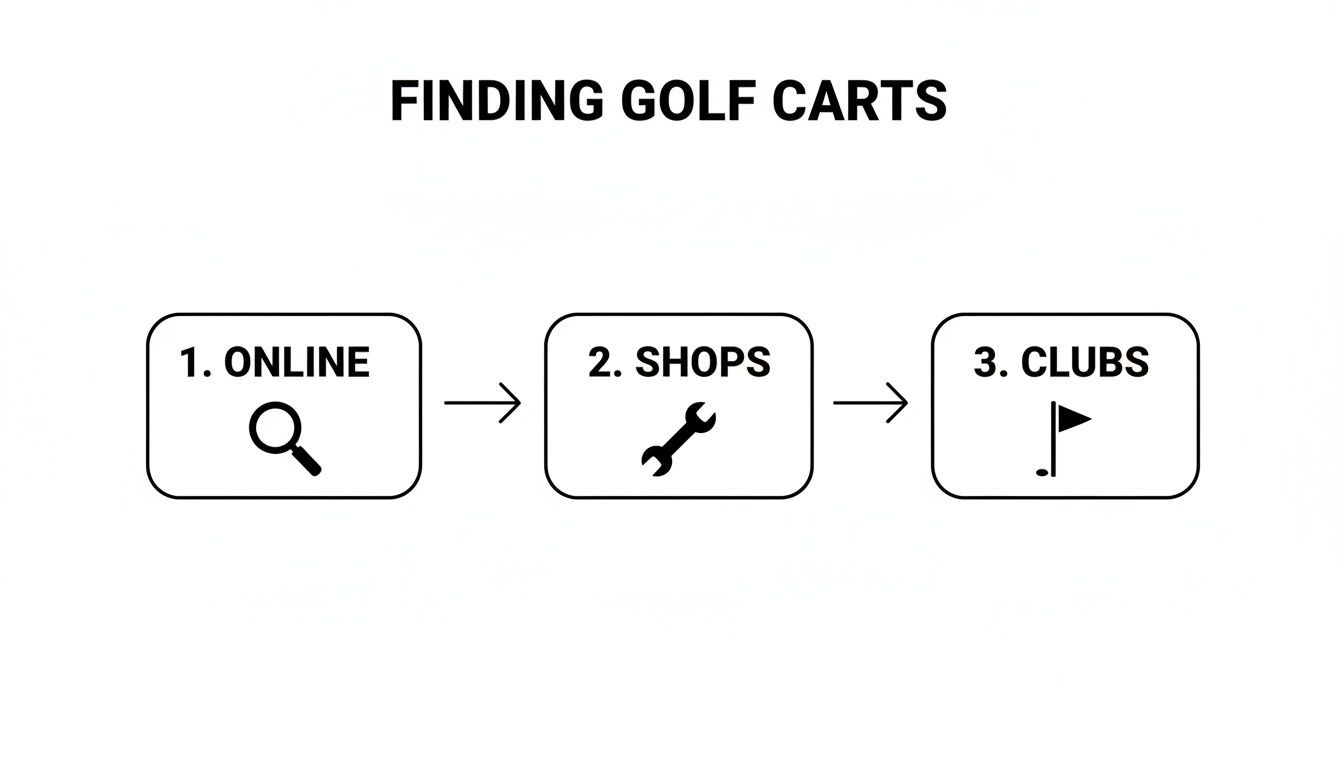
So, you're ready to find a street-legal gas golf cart. Your hunt will probably start online, but honestly, the best deals are often found by digging a little deeper into your local scene. Going beyond a simple Google search is how you'll uncover the real gems from both dealers and private sellers in your own backyard.
Online marketplaces are a solid first step, but you have to know how to work them. Let's be real, sites like Facebook Marketplace and Craigslist are flooded with junk. Smart filtering is your best friend here.
Mastering Online Marketplaces
Don't just search for "golf cart." That's a rookie mistake. Get specific with terms like "street legal LSV," "gas golf cart with title," or "registered golf cart." This simple trick instantly filters out all the standard course carts that will get you a ticket on a public road.
As you browse, keep an eye out for listings that specifically mention a 17-digit VIN. The photos should also clearly show the required safety gear—headlights, turn signals, mirrors, and seat belts. If they're missing, move on.
Pay attention to the seller, too. A private seller with a folder full of maintenance records is a fantastic sign. If you're looking at a dealer, a quick glance at their Google reviews will tell you everything you need to know about their reputation. Finding a good local golf cart dealership near me isn't just about the sale; it's about having support and peace of mind after you drive off the lot.
Uncovering Off-Market Opportunities
Believe it or not, some of the best-maintained carts never even make it to a formal online listing. This is where a little old-school networking can give you a serious advantage, letting you find a great pre-owned cart before anyone else knows it's for sale.
My best tip? Talk to the people who work with these carts every single day. The maintenance crew at a local country club or the mechanics at an independent repair shop are your secret weapon. They know exactly which carts have been babied and which members are about to upgrade.
These folks can often give you a heads-up on a private sale that’s about to happen. A cart that comes from a golf enthusiast is almost always a safer bet than one from a random online seller you know nothing about.
Here are a few places to start your local hunt:
- Dedicated Golf Cart Dealers: These are the specialists. They live and breathe golf carts and are your best bet for finding properly titled and inspected street-legal models.
- Powersports and ATV Dealers: Many shops that deal in ATVs and side-by-sides also stock new and used gas golf carts. It's worth a look.
- Local Repair Shops: Just stop in and chat. The technicians often know which of their customers are looking to sell and can give you an honest assessment of a cart's condition.
- Country Club Pro Shops: Don't be shy. Ask the staff if they know of any members selling their personal carts. These are usually well-maintained and haven't been run ragged.
By combining savvy online searching with these on-the-ground tactics, you'll massively boost your chances of finding the perfect street-legal gas cart from a source you can actually trust.
Your Essential Pre-Purchase Inspection Guide
So, you've found a few promising options in your search for street legal gas golf carts for sale near me. Great. Now comes the most important part: the in-person inspection. Online photos can be deceiving, and skipping this step is the fastest way to end up with a lemon.
Think of it this way—you’re not just kicking the tires. You're becoming a detective for an hour, looking for the real story behind the shiny exterior. Small clues on the outside can often point to much bigger, more expensive problems lurking under the seat. Let’s walk through exactly what you need to check to buy with confidence.
The Mechanical Walk-Around
Before you even think about turning the key, give the cart a thorough mechanical once-over. You don’t have to be a master mechanic to spot some obvious warning signs.
Start with the heart of the cart—the gas engine. Pop the seat and take a good look around. Are there any fresh oil or fuel leaks on the engine block or dripping from hoses? A bit of road grime is expected, but wet, oily patches are a major red flag. Pull the dipstick to check the oil. If it looks milky (like coffee with too much cream) or has tiny metallic specks in it, that could mean serious internal engine damage. It’s best to just walk away.
From there, continue your inspection:
- Tires: Look for uneven tread wear. If the inside or outside edges are worn down, it's a classic sign of an alignment problem. Critically, make sure the tires have the DOT (Department of Transportation) stamp on the sidewall—it’s an absolute must for any street-legal vehicle.
- Frame: Get down low and inspect the frame underneath. You're looking for rust, cracks, or any signs of previous damage that's been poorly repaired. A compromised frame is a non-starter.
- Suspension: Give each corner of the cart a firm push downward. It should bounce once and then settle. If it keeps bouncing like a pogo stick or makes a lot of groaning and creaking sounds, the shocks or bushings are likely shot.
Verifying It's Actually Street-Legal
This part is black and white—there's no room for "almost." Every single piece of safety equipment required for on-road use has to be there and work perfectly. This isn't just about avoiding a ticket; it's about your safety.
The push for properly equipped low-speed vehicles (LSVs) is a major reason the global golf cart market is projected to hit USD 7.2 billion by 2035. Federal safety standards, outlined in 49 CFR 571.500, mandate these features, and you need to verify them one by one.
To help you stay organized during your inspection, use this checklist. It’s a simple way to make sure you don’t miss anything crucial when you’re on-site.
On-Site Inspection Checklist
| Component to Inspect | What to Look For | Pass/Fail |
|---|---|---|
| Headlights | High and low beams function correctly | |
| Taillights | Both taillights illuminate when lights are on | |
| Brake Lights | Both brake lights activate when the pedal is pressed | |
| Turn Signals | Front and rear signals work for both left and right turns | |
| Horn | Horn is audible from a reasonable distance | |
| Seat Belts | All belts click securely and retract properly | |
| Mirrors | Side and rearview mirrors are intact and adjustable | |
| Windshield | No cracks or damage that obstructs vision | |
| Tires | DOT-approved with sufficient tread and no cracking | |
| Engine | No visible fluid leaks (oil or fuel) | |
| Frame | No significant rust, cracks, or visible damage |
Going through a physical checklist like this helps you stay focused and ensures you've covered all your bases before you start talking price.
A test drive is where everything comes together. You're listening for weird engine noises, feeling for any hesitation when you hit the gas, and paying attention to how it brakes and turns. It’s your chance to see if the cart feels as good as it looks.
For an even more detailed breakdown, our guide to buying a used golf cart has an expanded checklist that can help you spot issues like a pro. Taking the time to do a thorough inspection is the single best thing you can do to protect your investment.
Handling Local Laws, Titling, and Registration
You’ve found the perfect cart—that’s the fun part. Now comes the paperwork, the crucial step that makes it legally yours and ready for the road. It might seem like a hassle, but getting the titling and registration right from the start saves you from some serious headaches later on.
Two pieces of paper are king here: the title and the Vehicle Identification Number (VIN). A clean title is your proof that the seller actually owns the cart and has the right to sell it to you. The VIN, a unique 17-digit code, is the cart’s fingerprint, essential for everything from registration and insurance to checking its history.
If a seller gets dodgy about showing you a clean title, or if the VIN plate looks tampered with or is missing altogether, walk away. That’s not just a red flag; it’s a deal-breaker. A cart without a proper title is a nightmare to get registered legally.
Getting Right with the DMV
Here’s where things can get a little tricky. Every state, and sometimes even individual cities, has its own set of rules for what they call a Low-Speed Vehicle (LSV). Before you even think about handing over cash, get on the phone with your local DMV or pull up their website.
Understanding their exact requirements upfront can stop you from buying a cart you can't even drive in your own neighborhood.
While the specifics vary, you'll generally need this stack of documents to get your cart registered:
- A Signed Title: The seller’s signature, transferring ownership to you.
- A Bill of Sale: This is your receipt. It should lay out the sale price, date, and info for both you and the seller.
- Proof of Insurance: You'll need to get liability insurance that meets your state's minimums for any motor vehicle.
- Inspection Certificate: Some states will want a safety inspection to make sure the horn, lights, and other LSV gear are all working properly.
The local rules can feel all over the place. Honestly, the best thirty minutes you can spend is making a simple call to your DMV and asking, "What do I need to register a street-legal golf cart?" Don't just assume it's the same process as registering a car.
Insurance and Local Rules of the Road
Once that signed title is in your hand, your next call should be to an insurance agent. Most big auto insurance companies cover LSVs, but it pays to shop around for a few quotes. You’ll need to have proof of that insurance before you head to the DMV to finalize the registration.
For a more detailed look at the nitty-gritty, our guide on golf cart registration breaks down the common steps and potential roadblocks you might encounter.
And don't forget the final layer: local town or city ordinances. These rules dictate where you can actually drive. Some communities limit LSVs to roads with speed limits of 25 mph or less, while others are more lenient, allowing them on roads up to 35 mph. It's on you to know the local rules of the road before you hit the pavement.
Negotiating The Price And Finalizing Your Purchase

Alright, you’ve done the legwork. The cart has been inspected, and you've confirmed it's truly street legal. Now comes the part that makes most people sweat: agreeing on a price. Good negotiation isn't about throwing out a lowball offer and hoping for the best. It's about making a fair, well-reasoned case that leaves both you and the seller feeling good about the deal.
Your best ammunition here is that inspection checklist you just filled out. Every little thing you found—from worn tires to a slight oil leak—is a legitimate talking point. Frame it respectfully. Instead of just saying, "I'll give you $500 less," explain your thought process. Something like, "I've already factored in the cost of new DOT tires, which will run about $500. With that immediate expense in mind, I could offer you [your price]." This approach shows you're serious and have done your homework.
Building Your Case with Local Comps
Before you even make the call, do one last sweep of local online marketplaces for similar street legal gas golf carts for sale near me. Find carts with the same make, model, year, and overall condition. If you can pull up two or three examples of comparable carts that recently sold for less than the asking price, you’ve got some serious leverage.
Presenting this information calmly and politely builds a strong argument for your offer. It proves you're not just haggling for the sake of it—your price is based on the current market reality.
Dealer vs. Private Sale: What To Expect
This is a classic trade-off between price and peace of mind. Both dealers and private sellers have their pros and cons when you get to the final stages.
- Private Seller: This is almost always where you'll find the best price. The downside? The sale is "as-is." Once you drive away, you’re on your own. There’s no warranty and no support.
- Dealer: You'll likely pay a bit more, but what you're buying is confidence. A reputable dealer will often offer a limited warranty, guarantee the title is clean, and handle all the tedious registration paperwork for you.
The real value of a dealer is the post-purchase relationship. If a minor issue pops up a week after you buy, a good dealer is likely to help you out. With a private sale, you're entirely on your own once the cash changes hands.
The U.S. golf cart market has ballooned to USD 1.7 billion in 2024, and it's not just for the links anymore. Features like built-in GPS and USB ports are becoming common, and these modern upgrades can boost a cart's resale value by 20-30%. Keep this in mind during negotiations, as it's a key factor whether you're at a dealership or in someone's driveway. You can find more data on the expanding golf cart market from researchers like Global Market Insights, Inc..
The Final Handshake & Paperwork
Once you’ve shaken hands on a price, it's time to make it official. Whatever you do, don't leave without a properly filled-out bill of sale and the signed-over title.
The bill of sale is your proof of purchase. Make sure it includes:
- The full names and addresses of both you and the seller.
- The cart’s year, make, model, and VIN.
- The final sale price and the date.
Before you hand over any money, compare the seller's ID to the name on the title. Then, double-check that the VIN on the title perfectly matches the VIN on the golf cart's frame. With these documents squared away, the cart is officially yours. Now you're ready to head to the DMV and make it legal.
Exploring Electric Carts As A Modern Alternative
Even if you have your heart set on gas, it's worth taking a moment to look at the electric side of the aisle. Today's electric Low-Speed Vehicles (LSVs) aren't the slow, underpowered carts you might remember. They’ve evolved dramatically, offering a completely different ownership experience that’s winning over a lot of buyers.
The first thing you’ll notice is the silence. An electric cart, like a high-end model from Solana EV, just glides. There's no engine rumble or exhaust fumes, which makes for a far more peaceful and pleasant ride through your community. For many, that quiet operation is a huge selling point.
Understanding The Electric Advantage
Beyond the quiet ride, the maintenance is almost laughably simple. Forget oil changes, spark plugs, and fuel filters. Your main tasks are keeping the tires inflated and the battery charged. That simplicity saves a ton of time and money in the long run.
And what about range? That old "range anxiety" is largely a thing of the past for typical neighborhood use. Modern lithium-ion batteries pack enough power for a full day of errands, trips to the pool, or visiting friends across town.
If you’re still weighing the fundamental differences, digging into an electric car vs. gas car comparison can offer some really helpful insights that apply to carts, too.
The real game-changer is the daily convenience. Imagine waking up to a "full tank" every single morning. Just unplug and go. It’s a small luxury that completely changes how you use your cart.
The market is reflecting this shift in a big way. The entire street-legal cart market is projected to hit an incredible USD 4.18 billion by 2032. A massive chunk of that growth, about USD 1097.1 million, is in electric models as more people prioritize sustainability and lower running costs. The numbers don't lie.
This isn't about saying one is definitively better than the other. It's about making sure you’ve considered all your options. Think hard about your lifestyle—do you need the raw power and range of gas, or does the quiet, low-maintenance convenience of an electric LSV make more sense for you? Answering that is the final piece of the puzzle.
Answering Your Top Questions About Buying a Golf Cart
You've got questions, and I've heard them all before. Let's tackle some of the most common things people ask when they start hunting for the perfect street-legal golf cart.
What’s a Fair Price for a Used Street-Legal Gas Cart?
This is the million-dollar question, isn't it? The truth is, prices are all over the map. They really depend on the cart's age, brand, overall condition, and how tricked-out it is.
For a ballpark figure, you could find an older, no-frills model for around $4,000. On the other end, a newer, loaded cart with all the custom bells and whistles can easily push past $10,000.
You'll probably notice that dealer prices seem a bit higher than private sales. Keep in mind, that extra cost often buys you some valuable peace of mind, like a professional service inspection or even a limited warranty.
How Fast Do These Things Actually Go?
To be legally considered a Low-Speed Vehicle (LSV), a street-legal cart has to fit into a specific speed window. It needs to be able to hit at least 20 mph, but it can't go faster than 25 mph.
This isn't an arbitrary number. It's a key safety rule that allows them to share the road with regular traffic. Most towns will only let you drive them on streets with a speed limit of 35 mph or less, so that 20-25 mph range is what keeps everything moving safely and legally.
Here's something you really need to know: If you modify a cart to exceed 25 mph, it's no longer a legal LSV. That might sound fun, but it can open you up to a world of trouble with the law and your insurance company.
Can I Just Buy a Regular Golf Cart and Make it Street-Legal?
Technically, yes, you can. People do it. But it's not as simple as just slapping on a few lights and mirrors. You'd need to buy a full conversion kit and install everything required by federal safety standards.
After all that work, the cart still has to pass a state inspection and get properly titled and registered through the DMV. It can be a surprisingly complex and expensive project. Honestly, it's often much simpler—and sometimes even cheaper—to buy a cart that was built and certified as an LSV right from the factory.
Ready to explore a modern, low-maintenance alternative to gas? Discover the premium lineup of quiet, powerful, and stylish electric LSVs from Solana EV. See our models and find a dealer.