
A visually compatible tire isn't automatically a compliant or safe fit. An 18×8.50-8 setup means an approximately 18-inch overall tire diameter, 8.50-inch section width, and 8-inch rim, but rim diameter is only one variable among load capacity, aspect ratio, clearance, and vehicle classification.
That distinction matters when you're standing beside two nearly identical carts at a resort, neighborhood, or dealership. One rolls up the clubhouse hill without a sound, clears the fender during a tight turn, and feels predictable under braking. The other looks sharp in the showroom but scrapes at full steering lock, feels heavy on the drivetrain, or carries a wheel-and-tire combination that hasn't been evaluated for its road-use classification.
I've seen buyers fixate on the wheel number stamped into the rim and overlook the tire's overall height, width, load capacity, and suitability for the vehicle. The right golf cart rim and tires package starts with how the cart is classified and where it will operate, then moves to engineering compatibility. Style comes last.
Table of Contents
- Why the Right Wheel and Tire Setup Changes Everything
- Reading Golf Cart Tire and Rim Sizing
- Matching Rim Size to How You Actually Drive
- Street-Legal Fitment and Who Owns the Compliance Risk
- A Pre-Purchase Fitment Checklist for Any Cart
- Installation Basics and the First Test Drive
- Why Buying Through a Solana EV Dealer Matters
- Maintenance Habits That Extend the Life of the Package
Why the Right Wheel and Tire Setup Changes Everything
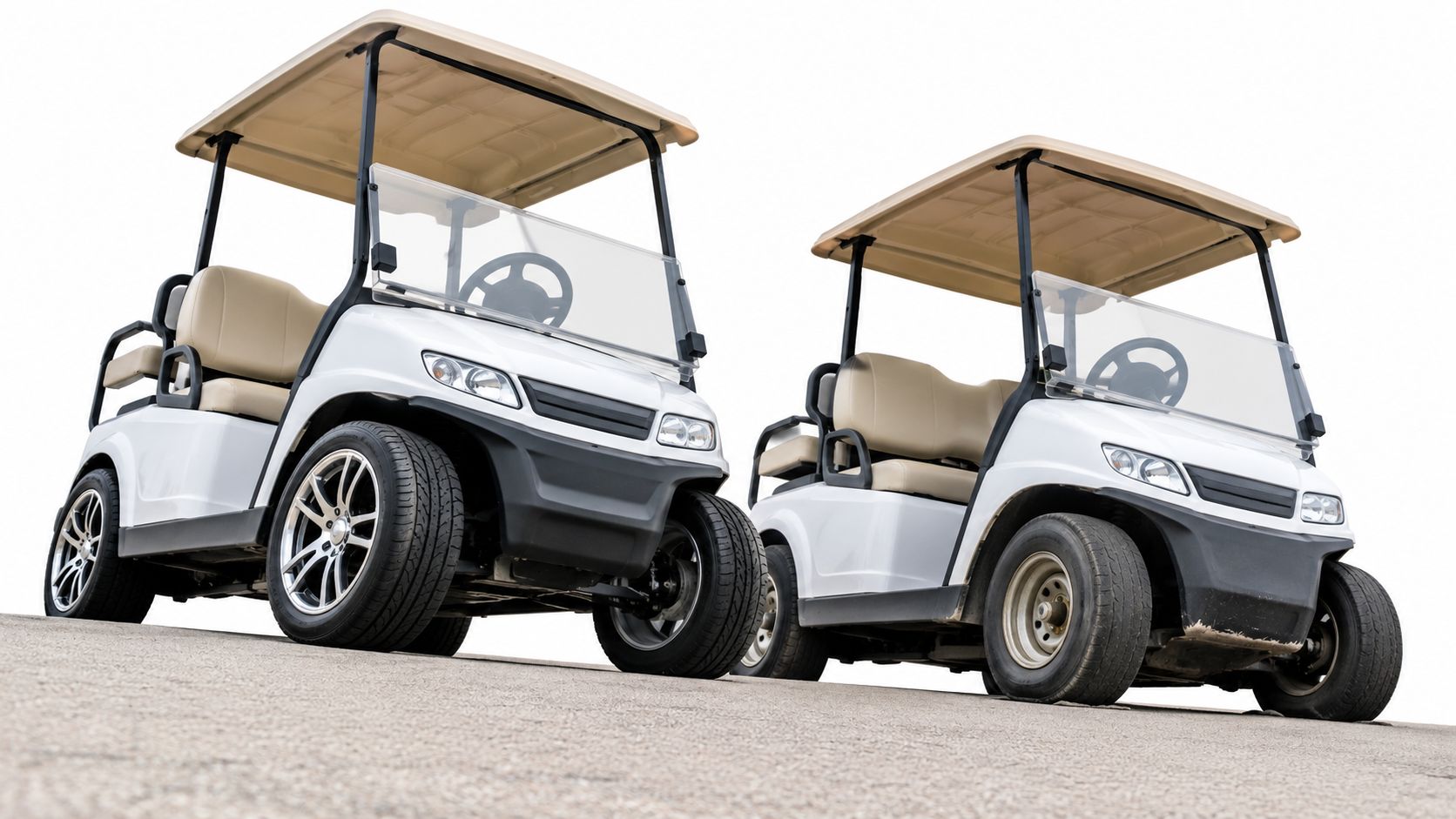
A property manager once had two carts parked outside a resort maintenance building. The bodies matched, the paint matched, and both appeared to wear similar upgraded wheels. Yet the carts behaved differently on the same route. One stayed composed over broken pavement and climbed cleanly toward the clubhouse. The other needed wider turns, transmitted every bump through the seats, and left visible contact marks near the fender area.
The difference wasn't the paint or the motor label. It was the relationship between tire height, section width, rim choice, clearance, and intended use.
The package changes the way the cart behaves
A tire with more sidewall can soften impacts on rough paths. A lower-profile tire can sharpen steering response while transmitting more road texture. A taller overall tire can improve ground clearance, but it can also alter gearing, steering clearance, and drivetrain behavior. A wider tire may look more planted, yet it can demand more attention to fender clearance and steering geometry.
The Solana EV golf cart wheel guide is useful as a starting point because buyers need to evaluate the wheel as part of a complete fitment package, not as an isolated styling accessory.
For fleet operators, the consequences multiply across every cart. A wrong package creates recurring rub checks, uneven wear, guest complaints, and avoidable parts questions. For a private owner, the same mistake usually appears on the first sharp turn or steep driveway.
Dealer rule: Specify the vehicle category and working environment before discussing wheel finish. A polished rim can't rescue an unsuitable tire.
Classification comes before appearance
A cart used only on private property has a different decision path from a cart that moves onto public roads. A modified cart may also carry a different compliance burden from a factory-certified low-speed vehicle. That distinction affects the tire's suitability, the rim manufacturer's approval, the required equipment, and the party responsible for the finished vehicle.
The safest buying process is simple. Identify the cart's classification, establish the target overall tire diameter, verify load and clearance requirements, and only then choose the visual package. That sequence prevents the expensive cycle of mounting a set, discovering interference, and buying again.
Reading Golf Cart Tire and Rim Sizing
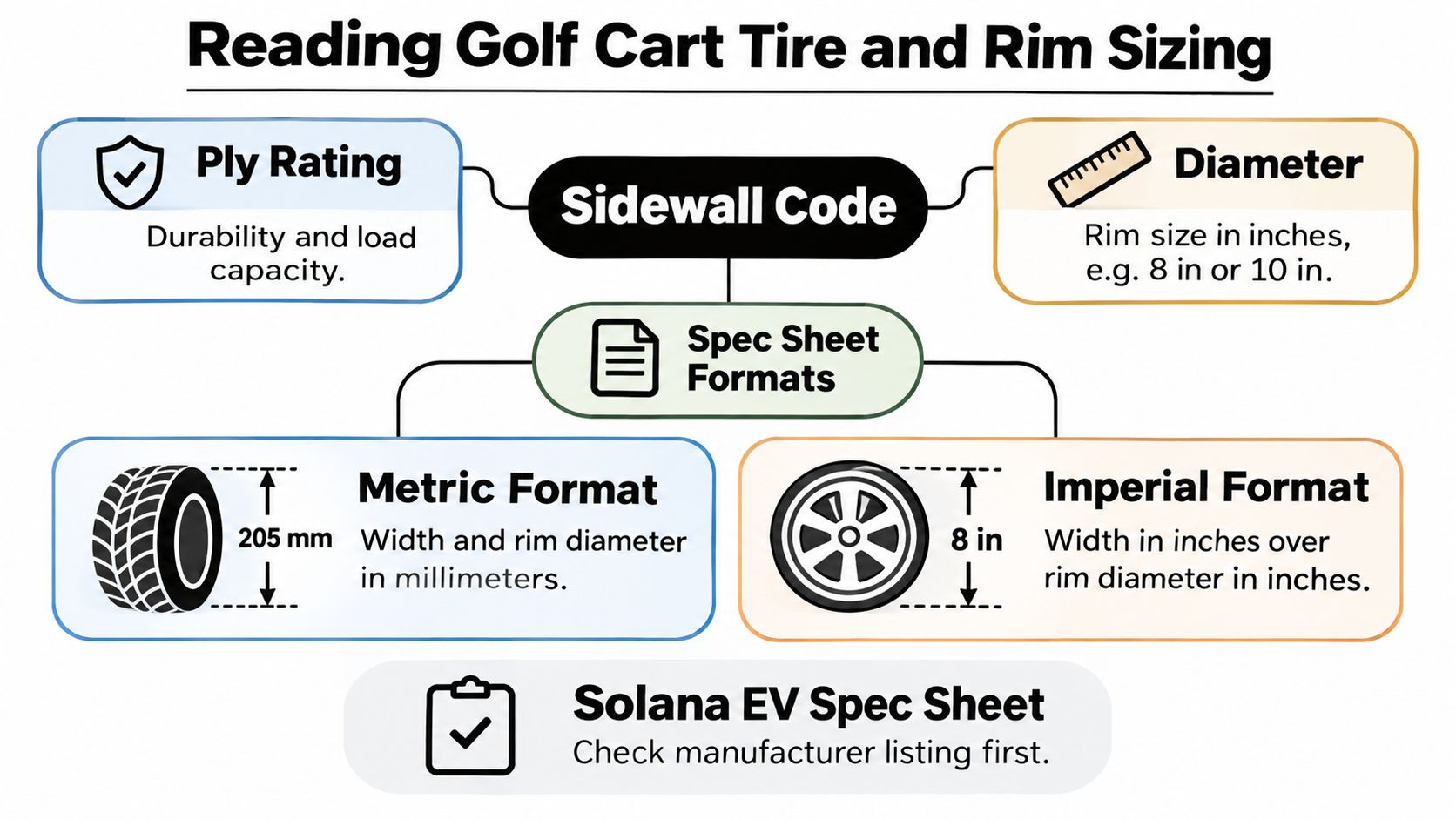
Sidewall codes look technical until you separate the numbers. The common imperial format 18×8.50-8 contains three practical measurements:
- 18 indicates an approximately 18-inch overall tire diameter.
- 8.50 indicates an approximately 8.50-inch section width.
- 8 identifies the rim diameter in inches.
This configuration is widely recognized as the conventional stock setup for many major golf-cart platforms. It gives dealers, fleet managers, and parts teams a shared language for ordering a replacement tire, a wheel, or a complete mounted package. The number on the rim alone doesn't tell you how tall or wide the mounted tire will be.
Imperial and metric formats say different things
Metric sizing uses a different sequence. 205/50-10 indicates a 205-millimeter section width, a 50-series aspect ratio, and a 10-inch rim. The aspect ratio describes the sidewall height relative to the section width, so a 10-inch rim does not automatically produce a tall tire or a larger overall package.
Two tires can mount to the same rim diameter and still differ materially in overall height, width, load capacity, and clearance. That's why a listing that says only “10-inch tires” isn't enough information for a responsible purchase.
Buyers comparing tire width should also distinguish the tire's stated section width from its mounted width. Wheel width, sidewall shape, offset, and manufacturer specifications can influence how the assembly occupies space inside the fender. For a focused explanation of the question what width tire fits a 10 inch, use the tire and wheel manufacturer's fitment guidance rather than relying on appearance.
Overall diameter controls the physical consequences
Many non-lifted carts use an overall tire diameter in the approximate 18-to-20-inch range, as documented in the golf-cart tire and rim sizing reference. Maintaining the original overall diameter helps preserve steering clearance, gearing, ground clearance, and drivetrain behavior.
A move from an approximately 18-inch stock tire to a 20- or 22-inch tire can require lift, suspension, or steering-clearance modifications. That isn't a cosmetic change. It changes the amount of tire moving through the wheel well and can affect how the vehicle responds under load.
Use the Solana EV golf cart tire-size guide alongside the exact cart specification and tire manufacturer data. Never approve a package from the rim diameter alone.
Matching Rim Size to How You Actually Drive
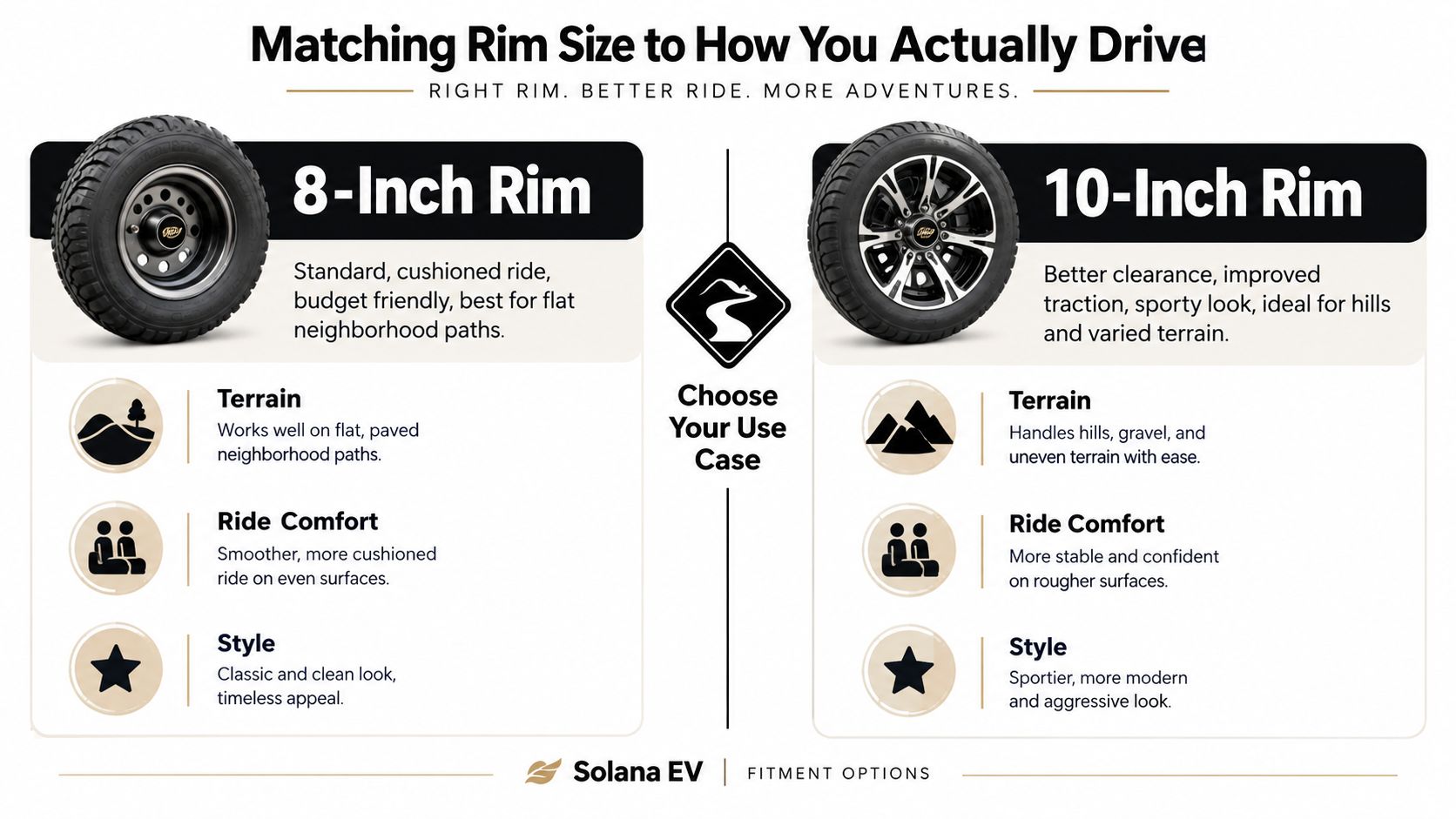
The right rim depends on the surface, passenger load, clearance available, and classification of the cart. An 8-inch rim remains the sensible choice for many stock and fleet applications. A 10-inch setup often suits street-oriented carts. A 12-inch package can deliver the low-profile appearance buyers want, but it leaves less sidewall and may demand closer attention to supporting components.
Private course and neighborhood use
For a cart that spends most of its time on turf, paved paths, and private neighborhood routes, 8-inch rims with a conventional stock-size tire are difficult to beat for simplicity. They generally preserve the original package's ride characteristics and make replacement sourcing straightforward. Resort fleets also benefit from a familiar setup because technicians can identify and rotate standard packages without managing excessive variation.
Choose this category when the priority is durable, predictable service rather than a customized stance. A stock package can be the most professional option when many guests, operators, or maintenance staff use the vehicle.
Lifted and off-road operation
A lifted ranch or trail cart needs more than a larger-looking wheel. It needs a tire with appropriate sidewall behavior, load capacity, and clearance under compression and steering movement. A wheel that clears the static fender may still contact suspension components or bodywork when the cart carries passengers and equipment.
For off-road work, protect the sidewall and verify the complete wheel offset before selecting a tread pattern. If the package increases overall diameter, review the lift and steering setup as one system. Don't assume that installing a lift automatically approves every tire combination.
Street-oriented driving
A 10-inch rim often provides a useful balance for street-oriented carts because it supports a more finished appearance without forcing the owner into the most aggressive low-profile setup. A 12-inch rim can suit buyers who prioritize a sportier visual treatment, but the reduced sidewall can make rough pavement feel firmer.
Load index, speed rating, and tire construction still matter more than visual presence. A package can look correct and remain unsuitable for the cart's classification or operating conditions. The wheel and tire must support the cart, its passengers, and its equipment, not just fill the fender opening.
The video below offers a visual companion for comparing wheel and tire choices in practical use.
Street-Legal Fitment and Who Owns the Compliance Risk
The most important question isn't “Will this tire bolt on?” It's “What vehicle is this after the wheel-and-tire change, and who is responsible for the finished specification?”
The NHTSA interpretation on golf carts and low-speed vehicles distinguishes conventional golf carts from vehicles used or modified for public-road operation. Conventional golf carts capable of 20 mph or less are generally outside Federal Motor Vehicle Safety Standards coverage. A modification intended for public-road use can change the regulatory treatment, with the modifier treated as the manufacturer for compliance purposes.
Private-use carts
A conventional private-use cart normally operates outside the federal motor-vehicle framework described above. That doesn't make fitment optional. The owner still needs a rim that corresponds to the tire size and is listed as suitable by the tire manufacturer under applicable tire-and-rim standards.
The practical checks remain physical and mechanical:
- Load capacity: Confirm that the tire and rim support the cart's intended passenger and equipment load.
- Clearance: Check the fender, suspension, and steering path, including full lock.
- Braking and control: Consider whether the changed tire dimensions alter the cart's behavior.
- Documentation: Keep the tire and rim specifications with the vehicle records.
Modified carts for public roads
A private cart modified for public-road use creates a sharper responsibility question. NHTSA indicates that the modifier may be treated as the manufacturer for compliance purposes. That means the person or business approving the conversion can't treat the wheel package as a harmless accessory.
The finished vehicle needs evaluation as a complete system. Tire suitability, rim compatibility, fender clearance, steering geometry, braking, speed capability, and required road equipment belong in the same conversation. A bolt pattern proves only that the wheel may attach. It doesn't prove that the vehicle is compliant or safe for the intended road.
Factory-certified low-speed vehicles
A factory-certified LSV follows a different path from a modified golf cart. The vehicle is built and certified according to applicable safety requirements from the start, subject to the laws and registration rules that apply where it operates. Buyers should preserve the original specification and ask the dealer whether a proposed wheel-and-tire change remains within the approved configuration.
The Solana EV street-legal golf cart information can help buyers frame that discussion, but no online listing replaces confirmation for the exact model, package, and jurisdiction.
A tire that fits the hub may still be the wrong tire for the road.
State and local requirements can differ, so owners should verify registration, equipment, and operating rules with the relevant authority before moving a modified cart into public-road service.
A Pre-Purchase Fitment Checklist for Any Cart
Don't order from a photograph. Use the cart, the tire sidewall, and the wheel specification as your evidence.
Verify the mechanical fit
Start with the existing package and record the details before removing anything:
- Confirm the bolt pattern. Count the lugs and verify the manufacturer's measurement. Similar-looking patterns can still differ.
- Check the center bore. The wheel must seat correctly on the hub or use an appropriate solution specified for the application.
- Record wheel width, offset, and backspacing. These measurements determine whether the tire sits inward toward suspension parts or outward toward the fender.
- Compare overall tire diameter. Use the full mounted tire dimension, not just the rim diameter.
- Test steering clearance. Check lock-to-lock movement and inspect the inner sidewall, tie rods, control arms, and fender area.
- Review the existing lift or suspension work. Document the kit, spindle, or other modification instead of assuming all lifts provide the same clearance.
Check the operating specification
The tire's load index and speed rating must suit the cart's classification and actual use. A resort cart carrying passengers and equipment has a different working load from an empty private cart. For a road-oriented vehicle, verify the tire manufacturer's suitability information and retain the documentation.
| Package | Typical Bolt Pattern | Tire Diameter Range | Best Fit |
|---|---|---|---|
| Stock 8-inch | Confirm for the specific cart | Approximately 18 to 20 inches | Turf, fleet, and standard private use |
| 10-inch low-profile | Confirm for the specific cart | Depends on tire construction | Street-oriented pavement and neighborhood driving |
| 12-inch street | Confirm for the specific cart | Depends on aspect ratio and package | Sportier street appearance where clearance is verified |
| 10-inch off-road | Confirm for the specific cart | Depends on tire construction and lift | Mixed terrain, trails, and utility use |
The table is a screening tool, not an approval certificate. Tire and rim manufacturers must confirm that the combination is suitable, and the cart's classification must remain clear.
Purchase standard: If the listing doesn't state overall tire diameter, load information, and wheel fitment details, you don't have enough information to buy.
Installation Basics and the First Test Drive
A correct package can still fail through poor installation. During a resort fleet rotation, the technician should identify each cart, inspect the studs and mounting faces, seat the wheels evenly, and tighten the fasteners in a star pattern to the cartridge or vehicle specification. The work isn't finished when the cart leaves the bay.
Recheck the fasteners after the first 10 to 25 miles, following the practical interval in the installation plan. If you use a shop for recurring service, comparing local seasonal tire swap rates can help you budget the labor without confusing a low price with proper fitment work.
Inspect the complete movement range
A technician should examine the package at full steering lock, during suspension compression, and under the expected passenger or equipment load. Look for contact at the fender, rocker area, suspension components, and steering hardware. A lift kit and a tire change are connected decisions because both determine the available operating envelope.
The first drive should take place at controlled speed on a familiar surface. Pay attention to three warning signals:
- Vibration: May indicate imbalance, mounting problems, or a wheel that isn't seated correctly.
- Pulling: May indicate unequal pressure, alignment concerns, or a mechanical issue.
- Rubbing noise: A noise that changes with steering or suspension movement demands an immediate inspection.
A street-legal owner should also confirm that the installed tires and rims match the documented configuration before carrying passengers on public roads. The installation is the first safety check, not the final administrative step.
Why Buying Through a Solana EV Dealer Matters
Generic online listings often present a wheel diameter and a photograph, then leave the buyer to resolve bolt pattern, offset, load capacity, clearance, and classification. That approach works only when the buyer already has the technical information and accepts responsibility for every missing detail.
An authorized dealer can match the package to the cart's chassis, intended use, and documented vehicle category. Solana EV's dealer ecosystem includes protected territories, dealer floor-plan financing through Dealer Direct, retail financing options including 0% APR for up to 60 months, a 24/7 parts portal, and technical assistance. Those resources matter when a fitment question appears after the order, not just during the sale.
The dealer channel reduces guesswork
A dealer should be able to explain why a particular rim diameter, tire construction, and overall height suit the cart. The dealer should also state whether the package is a factory specification, an approved option, or an aftermarket modification. That distinction protects the buyer from treating a generic visual match as a certified configuration.
I recommend buying the complete package through a dealer when the cart will carry passengers, operate across a resort or campus, or enter public-road service. The parts source, installation record, and compliance documentation then remain connected instead of scattered across unrelated listings.
Maintenance Habits That Extend the Life of the Package
Check tire pressure against the cart's classification, load, and tire specification, not a generic number copied from another vehicle. Inspect sidewalls, tread, bead seats, and rims for cuts, deformation, corrosion, or a slow leak before the cart enters service.
Rotate tires when the cart's terrain and loading pattern create different wear front to rear. Keep a simple log with pressure checks, rotations, repairs, and the installed specification. For a street-legal cart, retain the fitment and compliance records with the maintenance file.
Passengers, coolers, and course equipment change the working load, so the inspection routine should follow usage rather than memory. A dealer can confirm whether a replacement remains suitable before a worn tire turns into a clearance or compliance problem.
Solana EV offers street-legal golf carts and electric utility vehicles with dealer-supported parts and technical assistance, so buyers can address wheel-and-tire fitment as part of the vehicle decision. Review the available models and connect with a qualified partner through Solana EV before ordering a package.