
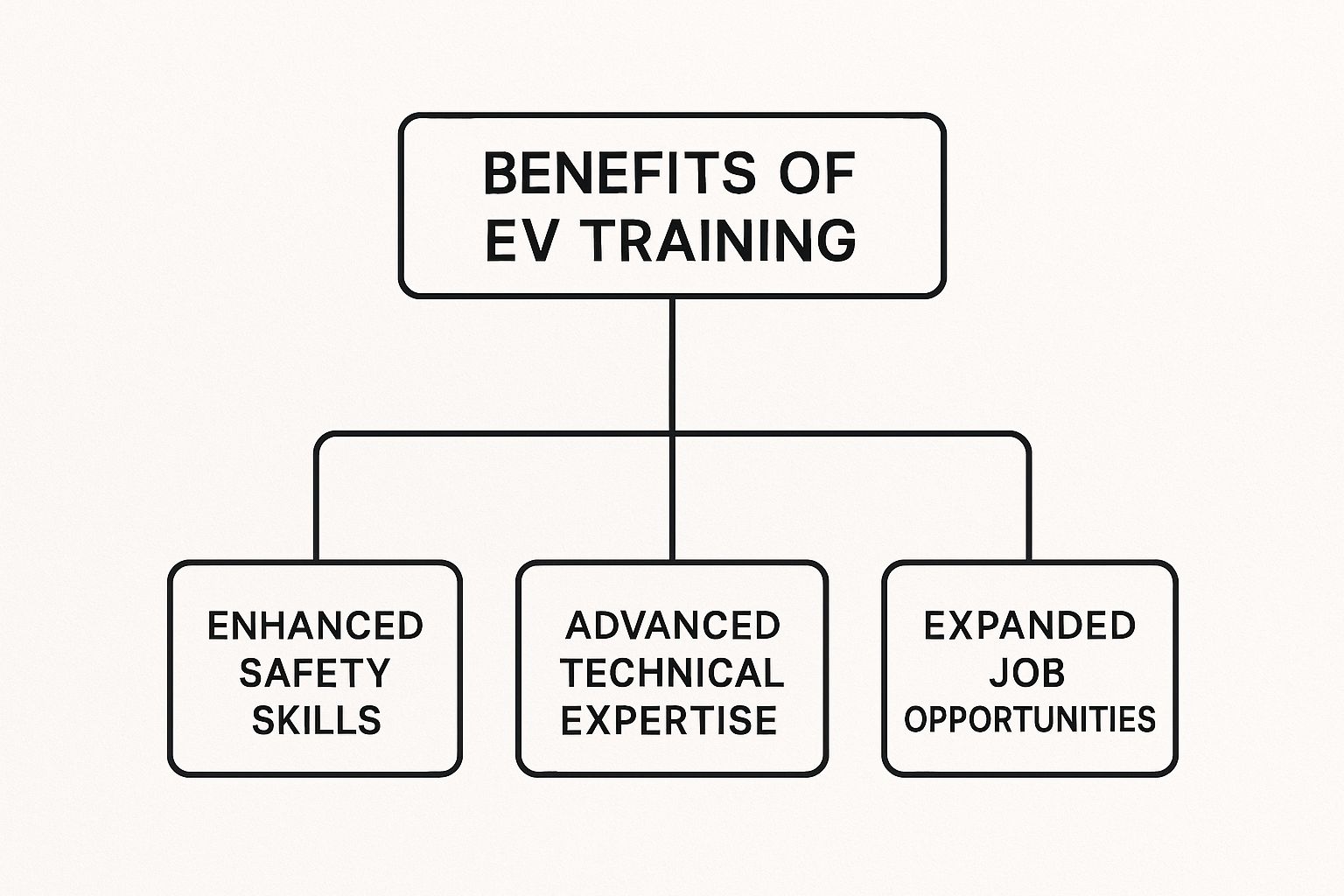
Electric vehicle training programs are specialized courses designed to get technicians, salespeople, and service advisors fully up to speed on servicing and selling EVs. They're not just a "nice-to-have" anymore; they are absolutely essential for any automotive business that wants to stay in the game as the industry pivots from traditional engines.
Why Your Shop Needs EV Expertise Now
The automotive world is in the middle of a massive change. The familiar rumble of a gasoline engine is being replaced by the quiet hum of an electric motor, and the skills that built a career servicing internal combustion engines (ICE) just don't cut it anymore.
It's like asking a seasoned ship captain to suddenly pilot a commercial jet. Sure, both are modes of transportation, but the underlying mechanics and the knowledge required are worlds apart. Sticking to the old ways is a surefire way to get left behind.

This new automotive era demands a completely different skill set. Technicians now need to master high-voltage battery systems, thermal management, and complex software diagnostics—things that feel more like consumer electronics than traditional car repair. Without the right training, even a simple battery health check becomes a dangerous and expensive guessing game.
Bridging the Knowledge Gap
The gap between knowing ICE and knowing EV is huge, and it affects every single part of your business. This goes way beyond what's under the hood; it touches the entire customer experience.
- For Technicians: Learning how to safely de-energize a 400-volt battery system isn't an advanced skill; it's a fundamental, non-negotiable safety procedure.
- For Sales Staff: Explaining the difference between Level 2 charging and DC Fast Charging is now just as critical as explaining miles per gallon used to be.
- For Service Advisors: You need to be able to confidently answer questions about battery degradation and range anxiety. That's how you build the trust that keeps customers coming back.
The hard truth is that unprepared shops risk a lot more than just lost service revenue. They're risking their reputation, customer safety, and ultimately, their place in a market that's going electric fast.
As the industry evolves, understanding the competitive edge EVs offer African enterprises provides a powerful lesson in adaptation for businesses everywhere.
For dealerships and service centers, electric vehicle training programs are the bridge to that future, making sure your team is ready for the next generation of vehicles. This is especially true for businesses running fleets, where vehicle uptime and efficiency are everything. You can dive deeper into those specific challenges on our guide here: https://solanaev.com/electric-vehicle-fleet-management/
Putting money into your team's skills today is the only way to guarantee your profitability tomorrow.
What's Really Inside a Modern EV Training Program?
A top-notch electric vehicle training program isn't just a safety meeting with a new set of PowerPoint slides. It's a deep dive that methodically transforms a technician who's an expert with wrenches and pistons into a specialist who speaks the language of high-voltage electronics, battery chemistry, and advanced software.
Think of it less like a software update for their existing skills and more like learning an entirely new trade from the ground up. The curriculum is carefully designed to build knowledge step-by-step, always starting with the most critical, non-negotiable element: safety.
First Things First: High-Voltage Systems and Safety
Before a technician ever touches an EV with a diagnostic tool, they have to develop a profound respect for the power they're dealing with. The foundational module of any legitimate electric vehicle training program is all about high-voltage (HV) systems and the strict safety protocols needed to work around them.
This goes way beyond just wearing the right gloves. It involves mastering the precise, step-by-step procedures for de-energizing a vehicle's massive battery pack, verifying it's at zero voltage, and creating a secure work zone. Getting these steps right, every single time, is the absolute prerequisite for any other service on an EV. It’s what keeps both the technician and the vehicle safe.
Getting to the Heart of It: Battery Technology and Diagnostics
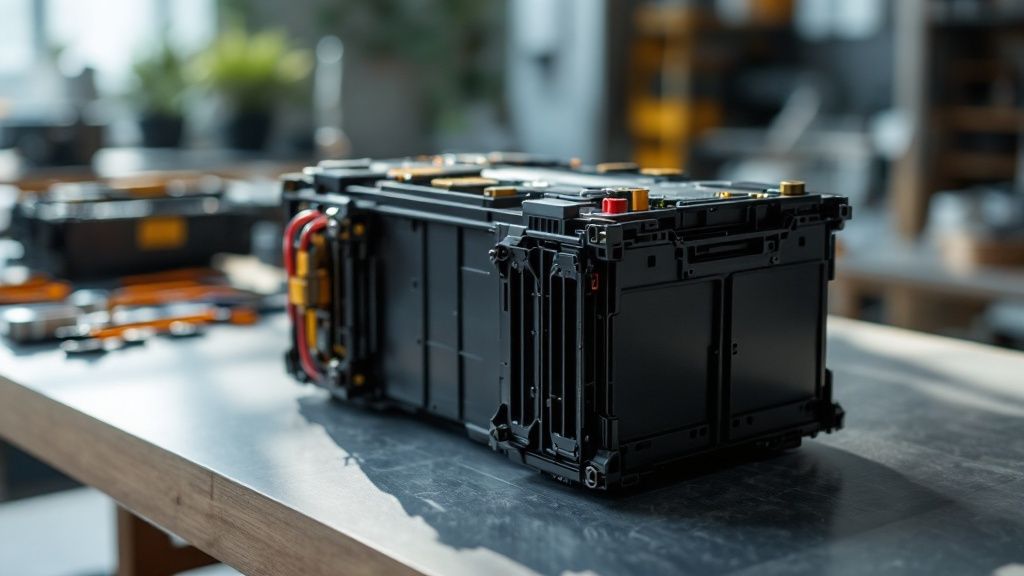
Once that solid safety foundation is in place, the curriculum shifts to the very core of the vehicle—the battery pack. This module is incredibly detailed because the battery is easily the most complex and expensive part of any EV. Technicians learn to diagnose problems that are far more nuanced than a simple "it won't charge" complaint.
Key areas of focus include:
- Battery Health Assessment: Using specialized tools to analyze a battery's state of health (SoH) and state of charge (SoC), which are like a person's long-term health and short-term energy levels.
- Thermal Management: Understanding the intricate cooling and heating systems that keep the battery working in its ideal temperature range to maximize life and performance.
- Cell and Module Diagnostics: Pinpointing issues with individual cells or modules inside the larger pack, which can mean the difference between an affordable repair and a full, costly replacement.
The technology here moves incredibly fast. Understanding the evolution of EV battery technology is essential, as the diagnostic methods for one generation of battery might not work for the next.
From the Drivetrain to the Charging Station
The final core modules connect the battery's stored energy to the road and the electrical grid. Here, technicians explore the unique components of electric motors, inverters, and onboard chargers. While an internal combustion engine has hundreds of moving parts, electric drivetrains are simpler mechanically but vastly more complex from an electronics standpoint.
This training also has to cover the entire charging ecosystem. A well-trained tech can diagnose problems not just with the car’s charging port but also with the external equipment—the EVSE (Electric Vehicle Supply Equipment). They learn to tell the difference between a problem caused by a Level 2 home charger and one stemming from a public DC fast charging station.
To truly grasp the shift in skills needed, it helps to see the old and new side-by-side.
Comparison of Traditional vs. EV Technician Training Modules
This table shows just how different the required knowledge is when moving from Internal Combustion Engine (ICE) vehicles to Electric Vehicles (EVs). The focus completely shifts from mechanical and fluid systems to high-voltage electronics and software.
| Knowledge Area | Traditional (ICE) Vehicle Focus | Electric Vehicle (EV) Focus |
|---|---|---|
| Power Source | Engine mechanics, fuel injection, exhaust systems, ignition timing | High-voltage battery packs, cell chemistry, battery management systems (BMS) |
| Safety Protocols | Handling flammable liquids, managing exhaust fumes, lift safety | De-energizing high-voltage circuits, lockout/tagout procedures, thermal runaway prevention |
| Drivetrain | Transmissions, clutches, driveshafts, differentials | Electric motors, inverters, single-speed gear reduction, regenerative braking systems |
| Thermal Management | Radiators, water pumps, coolant hoses, thermostats | Liquid cooling/heating for battery packs and power electronics, thermal management software |
| Diagnostic Tools | OBD-II scanners, compression testers, fuel pressure gauges | CAN bus analysis tools, high-voltage multimeters, insulation testers, battery health scanners |
| Charging/Fueling System | Fuel tanks, fuel pumps, injectors, fuel lines | Onboard chargers, charging ports (J1772, CCS, NACS), EVSE diagnostics |
As you can see, the core competencies are fundamentally different. It's not just a matter of learning a few new parts; it's about mastering a completely different technological ecosystem.
Training as a Competitive Advantage
It’s time to stop thinking about training as a cost. For dealerships serious about their future, electric vehicle training programs are not a line-item expense—they are a direct investment in your profitability, reputation, and long-term survival. A certified team doesn't just fix cars; they build unshakeable customer confidence.
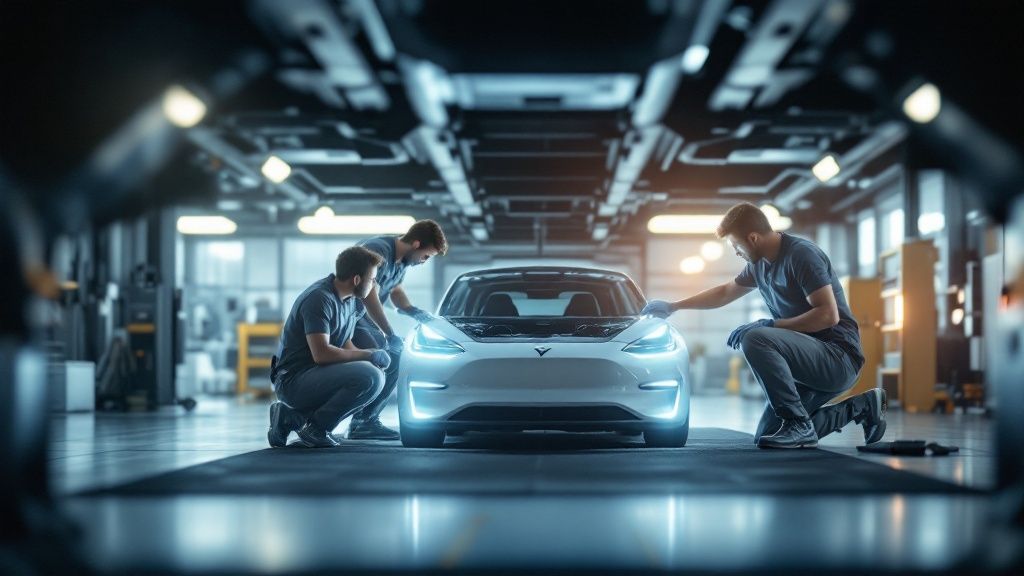
This investment pays off in real, measurable ways that you'll see right on your bottom line. When your technicians know their stuff, they get the diagnosis right the first time. This sends your first-time fix rate through the roof, which is a massive driver of both customer satisfaction and workshop efficiency.
Fewer comebacks mean more bays open for new jobs, which means more revenue. Even better, it creates happy customers who trust your expertise and will happily recommend your service center to friends and family.
From Service Bay to Showroom Floor
The ripple effects of a solid training strategy are felt far beyond the workshop walls. When your team is truly knowledgeable, your entire dealership becomes the go-to local authority on all things EV. That's a powerful edge.
Imagine your service advisors confidently explaining a battery health report, or your salespeople clearly articulating the real-world benefits of different charging levels. This kind of expertise makes customers feel secure and puts their anxieties at ease. It's a differentiator that online retailers and your less-prepared local competitors simply can't touch.
In an industry where trust is everything, being the most knowledgeable resource in your area is the ultimate marketing tool. It turns anxious first-time EV buyers into loyal, long-term clients who see your dealership as a true partner.
The High Cost of Inexperience
On the flip side, what happens if you don't invest in proper training? The costs are steep and often hidden. An untrained technician trying to diagnose a high-voltage system isn't just inefficient; they are a safety risk to themselves and can cause thousands of dollars in damage to a vehicle's sensitive electronics in the blink of an eye.
These aren't just hypotheticals. Think about these all-too-common scenarios:
- Misdiagnosing Battery Issues: A tech who doesn't understand battery management software might recommend a full pack replacement—a $15,000+ job—when the real problem is a simple sensor that costs a few hundred dollars to fix.
- Improper Charging System Repairs: Incorrectly diagnosing an onboard charger issue can lead to repeat visits, a frustrated customer, and a destroyed reputation for your service department.
- Damaging Sensitive Components: One wrong move, like mishandling a high-voltage connector or using the wrong diagnostic tool, can permanently fry expensive parts like inverters or the battery management system.
These mistakes don't just lead to warranty claims and rework. They destroy customer trust, fuel negative online reviews, and can permanently tarnish your dealership's name in the community. Investing in your team through a certified electric vehicle training program isn't just about avoiding mistakes; it's the smartest, most profitable move you can make to secure your future.
Choosing the Right Training Pathway
Let's be realistic: not every employee at your dealership needs the same level of EV training. A one-size-fits-all program just doesn't make sense. It’s like trying to teach a chef how to be a server—it’s inefficient, costly, and misses the point entirely. The real key is to map out distinct learning pathways that match what each person actually does day-to-day.
Think about it. The technicians in the service bay have a completely different set of needs than the sales advisors greeting customers. When you tailor the training, everyone gets the precise knowledge they need to be brilliant in their role without getting bogged down in technical details they'll never use. This is how you build a truly expert team, where every single person contributes to a seamless EV customer experience.
Tiered Certifications for Service Technicians
For the team that gets their hands dirty, the training needs to be structured and progressive. You can’t just throw them into a complex battery repair. The best approach is a tiered system, letting technicians build their skills logically from the ground up.
A smart, tiered structure usually breaks down like this:
- Level 1 Foundational Safety: This is the absolute non-negotiable starting line. It’s all about high-voltage system awareness, safety protocols, and the right way to de-energize a vehicle before anyone touches it. Every single technician has to master this.
- Level 2 Advanced Diagnostics: Here, techs move beyond the basics. They learn to use specialized diagnostic tools to pinpoint issues in the battery management system (BMS), electric drivetrain, and onboard chargers. These are your go-to problem-solvers for the most common EV issues that roll into the shop.
- Level 3 Master Technician Repair: This is the top tier, reserved for the most complex jobs. We’re talking about in-depth battery pack service and component-level replacement of high-voltage electronics. These technicians become your dealership's ultimate EV experts.
This system does more than just organize training; it creates a clear career ladder for your technicians and ensures you always have the right person with the right skills ready for any job. For a deeper dive into what these skills look like in practice, our guide on electric vehicle technician training breaks it all down.
Specialized Training for Customer-Facing Roles
Your service technicians aren't the only ones who need to speak EV fluently. Your sales team and service advisors are your front line. Their confidence—or lack of it—has a direct impact on customer trust and, ultimately, your sales.
Their training pathway is less about wrenches and multimeters and more about clear communication and confident consultation. The goal is to equip them to handle the questions and anxieties that new and potential EV owners always have.
Answering a question about battery degradation with confidence does more than just close a sale; it builds a long-term relationship based on trust and proves your dealership is a genuine authority in the field.
This curriculum should be packed with practical, real-world knowledge they can use every day:
- Charging Explained: They need to clearly articulate the difference between Level 1, Level 2, and DC Fast Charging, including what realistic charge times look like for the models you sell. No more vague answers.
- Range and Efficiency: Teach them how to explain the factors that actually affect a vehicle's range—like cold weather, aggressive driving, or hilly terrain—so they can set honest and realistic expectations.
- Total Cost of Ownership: This is a huge selling point. Train them to walk a customer through the long-term savings on fuel and maintenance. When they can show the actual numbers, it's incredibly powerful.
- Incentives and Rebates: They must be the experts on all current federal, state, and local incentives that can dramatically lower the sticker price for a customer.
This kind of holistic approach is gaining serious momentum. We're seeing educational institutions partner with industry leaders to build a more skilled workforce from the ground up. For example, some community colleges are getting funding to support clean vehicle tech courses that cover everything from vehicle repair to charger installation. You can discover more about these workforce development trends to see how the industry is adapting.
By upskilling every role, you’re not just training employees; you’re creating a dealership where expertise is the standard.
How to Implement Your Training Program
Putting an effective electric vehicle training program into action isn't about just signing everyone up for a class. It’s a deliberate process that starts with an honest look at where your team stands today and ends with a crew that’s confident and ready for the EV future.
The very first step is what we call a skill gap analysis. Think of it like taking inventory of your team’s collective brainpower. You need to figure out exactly what your technicians and advisors already know about EVs—which is often very little—and where the gaps are. This helps you see who needs basic high-voltage safety training versus who might be ready for advanced battery diagnostics.
This internal audit is what saves you from wasting money on a generic, one-size-fits-all program that doesn't actually address your team's specific needs.
Building Your Training Framework
Once you know what your team needs to learn, you can start building the actual training framework. The best programs I've seen use a blended approach, mixing flexible online learning with the hands-on practice that really makes the knowledge stick.
- Online Theory Modules: These are perfect for the foundational stuff, like high-voltage safety rules and the basics of EV electrical theory. It lets your staff learn at their own pace without having to pull them off the floor for days at a time.
- Hands-On Practical Labs: This is where the rubber meets the road. Technicians have to get their hands dirty—safely, of course. They need real-world practice with diagnostic tools, performing lockout/tagout procedures, and servicing actual EV components. This is what builds true competence and muscle memory.
The need for these skills is exploding. Projections show that by 2030, we could see nearly 245 million electric vehicles on our roads. That’s a massive wave of service appointments heading our way.
Scheduling and Equipping for Success
One of the biggest hurdles for any service manager is figuring out how to schedule training without bringing the shop to a screeching halt. The trick is to stagger it. Rotate small groups of technicians through the program so you always have a skilled team in the service bays to keep the daily work moving.
The goal is to upskill your team without creating downtime. A well-planned, phased rollout ensures continuous learning while maintaining business continuity, turning training into a seamless part of your workflow.
Finally, remember that training is useless if your team doesn't have the right gear. Investing in the proper tools isn't optional; it's essential. This includes:
- High-Voltage Safety Gear: We're talking insulated gloves, face shields, and proper lockout/tagout kits. This is the absolute bare minimum for safety.
- Specialized Diagnostic Tools: You'll need high-voltage multimeters, insulation testers, and scanners that can actually talk to EV-specific control units.
- Charging Station Equipment: Having at least one Level 2 charger in the shop is critical for both training and servicing vehicles. Your team also needs to understand the bigger picture, which is why a complete guide to electric vehicle charging infrastructure is required reading.
By systematically figuring out your needs, building a smart learning program, and getting the right tools in place, you can roll out a training plan that truly prepares your dealership for a very profitable electric future.
Common Questions About EV Training
Diving into any new business venture is bound to stir up some questions, and setting up an electric vehicle training program is no exception. I find that most business owners tend to have the same core concerns about time, cost, and the real long-term value. Let's tackle some of the most frequent questions head-on to give you the clarity you need.
One of the first things leaders want to know is how long it takes to get a technician certified. The honest answer is, it depends. A foundational safety course might only take a few days, but a truly comprehensive program covering advanced diagnostics and high-voltage battery repair can easily span several weeks of combined online and hands-on work.
The key is to think of it as a journey, not a single event. It’s a progressive path that builds skills over time, almost like a modern apprenticeship.
How Much Does EV Training Cost?
The investment is always a major talking point, but it’s far more productive to view it through the lens of return on investment, not just as a line-item expense. The price tag can run anywhere from a few hundred dollars for basic online safety modules to several thousand for an intensive, hands-on master technician course.
As a ballpark, a small team of three or four technicians aiming for a solid Level 2 diagnostic certification could be looking at an initial investment of $5,000 to $15,000, depending on the provider. That figure typically covers course materials and the initial hands-on lab sessions.
But here’s the thing: the real cost isn't the training—it's the lack of training. A single misdiagnosed battery pack or a damaged high-voltage component can easily wipe out your entire team's annual training budget in one go.
The most expensive training program is the one you skip. Investing in your team's skills is a direct investment in preventing costly mistakes, improving workshop efficiency, and building a reputation that attracts high-value customers.
Don't forget to budget for the necessary tools and safety equipment, either. They're every bit as crucial as the training itself.
The Value of Third-Party Certifications
Another common question I hear is about the credibility of different certifications. Are OEM-specific programs better than third-party ones? While manufacturer training is absolutely essential for doing warranty work on their specific models, third-party certifications like the Electric Vehicle Infrastructure Training Program (EVITP) offer incredible value.
These independent programs bring a few key advantages to the table:
- Brand-Agnostic Knowledge: They give your technicians a broad understanding of EV technology that applies across dozens of makes and models, making them far more versatile.
- Industry-Wide Recognition: Certifications from respected independent bodies are recognized across the industry as a true benchmark for competence and safety.
- Enhanced Credibility: Hanging these certifications in your service area sends a powerful message to customers: your team meets a rigorous, industry-vetted standard of excellence.
In the end, a blended approach is usually the smartest move. Use OEM training to nail down the brand-specific details and supplement it with respected third-party programs to build a deep, flexible knowledge base across your entire team. This dual strategy ensures you're ready for whatever EV rolls into your shop.
Keeping Skills Sharp in a Fast-Moving Industry
Finally, how do you make sure your team's knowledge doesn't go stale? EV technology is advancing at a blistering pace. What’s cutting-edge today will be standard-issue tomorrow. This reality makes continuous learning a non-negotiable.
The solution is to build a culture of ongoing training, not just a one-off event. This looks like:
- Annual Refresher Courses: Schedule short annual updates to keep everyone sharp on safety protocols and new diagnostic techniques.
- Subscription-Based Learning: Many top training providers offer access to constantly updated online modules and technical service bulletins.
- Encouraging Specialization: Let your senior techs pursue advanced certifications in specialized areas like battery repair or thermal management systems.
When you treat training as a continuous process, you're not just training your team—you're future-proofing your business and positioning your people as the go-to experts who are always ahead of the curve.
Ready to equip your dealership with the best in electric mobility? Solana EV offers a comprehensive dealer program with expert training, dedicated support, and the market's leading street-legal electric vehicles. Partner with us to drive your business forward. Learn more about our dealer programs.