
An electric side-by-side is, at its heart, a utility task vehicle (UTV) that runs on an electric motor and battery pack instead of a gas engine. That one simple switch completely changes the game. It delivers near-silent operation, instant torque for snappy acceleration, and dramatically lower maintenance bills. It’s a complete rethink of how an off-road vehicle should perform, trading engine noise for quiet capability.
The Quiet Revolution in Off-Roading
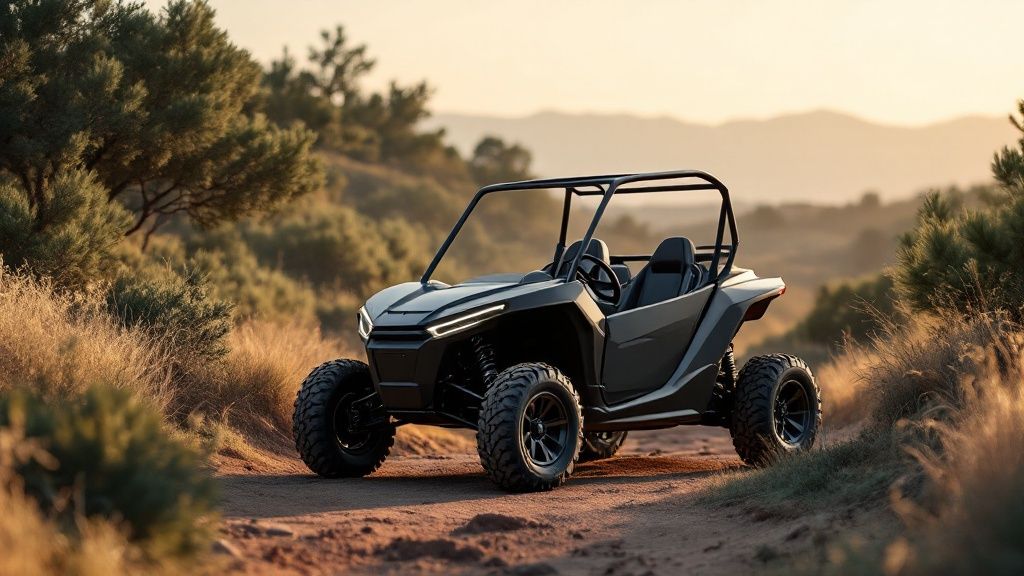
Think about the classic off-road adventure—the loud rumble of the engine, the smell of exhaust hanging in the air. For years, that was just part of the deal when exploring trails, working on a farm, or navigating rough terrain.
Now, imagine that same raw capability without all the noise and constant tinkering. That’s the new reality that electric side-by-sides are making possible.
This isn't just a minor update; it's a huge leap forward for utility and recreational vehicles. We're leaving the noise, emissions, and endless maintenance behind. This shift improves everything from hunting and land management to weekend trail rides by delivering serious performance, just without all the racket.
A New Era of Performance and Utility
The real magic of an electric UTV isn't just about being eco-friendly; it's about a fundamentally better experience. This "quiet revolution" stands in stark contrast to the old way of doing things, like you might find on traditional Kimberley 4WD tours. Instead of roaring through nature, these machines let you become a part of it.
This better experience is built on a few key advantages:
- Silent Operation: You can glide through wildlife habitats or work around a neighborhood without making a scene. For hunters, this is a game-changer, letting you get closer to your target. For property owners, it means getting an early start without waking everyone up.
- Instant Torque: Gas engines need to rev up to hit their powerband. Electric motors? They give you everything they've got, right from a standstill. This means incredible off-the-line acceleration, nimble handling on technical trails, and some serious towing power.
- Reduced Maintenance: Forget oil changes, spark plugs, and clogged filters. An electric UTV has far fewer moving parts, which slashes your service time and costs. You'll spend more time on the trail and less time in the garage.
- Lower Operating Costs: Charging a battery is a whole lot cheaper than filling up a gas tank. Over the vehicle's lifetime, the money you save on fuel alone is massive, making the total cost of ownership surprisingly low.
An electric UTV redefines what an off-road machine can be by merging rugged performance with stealth and efficiency. It’s not about replacing the gas engine so much as offering a smarter, more capable tool for both work and play.
This is just the start. We're about to dive deep into the technology, the cost savings, and all the unique benefits that make electric UTVs such a compelling choice. If you're curious about the wider world of green off-roaders, our guide to the best off-road electric vehicles is a great place to get more context. Consider this your roadmap to a quieter, more powerful way of exploring the outdoors.
How an Electric Side by Side Actually Works
To really get what makes an electric side by side so different, you need to look under the hood—or in this case, under the seat. Where you'd normally find a clunky gas engine with all its pistons, belts, and exhaust, an electric UTV runs on a much cleaner and more elegant system. It all comes down to three main parts working together perfectly.
Think of the battery pack as the fuel tank. It's a heavy-duty, protected unit that holds all the electrical energy you need for a day on the farm or a long weekend on the trails. Just like a bigger gas tank lets you go farther, a battery with a higher capacity (measured in kilowatt-hours, or kWh) gives you more range on a single charge.
Next up is the electric motor, which does the job of the engine. But that's where the similarities with a gas vehicle stop. An electric motor gives you power instantly, with zero lag.
Imagine a world-class sprinter exploding off the starting blocks. That’s an electric motor—all its power is available from a dead stop. A gas engine is more like a marathoner who needs to build up to top speed.
This instant torque is what gives an electric side by side its signature punchiness and incredible towing power, right from the moment you hit the pedal.
The Brains of the Operation
The last piece of the puzzle is the controller. This is the sophisticated "brain" that manages the whole show. When you press the accelerator, the controller pulls a precise amount of energy from the battery and zaps it to the motor. It’s in charge of how smoothly you accelerate, how much power you're using, and even how the vehicle reclaims energy.
This smart management creates a ride that feels smooth, predictable, and incredibly responsive. The controller makes sure there are no vibrations, no engine roar, and no jerky gear changes—just a seamless flow of power that gives you total control in any situation.
- Battery Pack: The energy tank, determining how far you can go.
- Electric Motor: The muscle, providing instant torque and acceleration.
- Controller: The command center, managing power for a smooth, responsive ride.
This powerful and efficient setup is causing a major shift in the off-road world. In fact, the electric UTV segment already makes up a 34.2% share of the entire global electric utility vehicle market. This growth points to a real demand for cleaner, quieter, and more capable machines. You can dig into the numbers yourself in this electric utility vehicle report on market.us.
The system's efficiency doesn't stop there. Many modern electric UTVs, including our Solana EV models, use a clever bit of tech to extend their range. You can learn more about how regenerative braking works in our guide, but the short version is that it turns your motor into a mini-generator when you slow down, sending a little power back to the battery. It’s a smart way to squeeze more miles out of every single charge, making your electric side by side an even more practical partner for work and play.
Understanding Key Performance Metrics
Diving into the spec sheet for an electric side-by-side can feel a bit like learning a new language. You'll see terms like kilowatt-hours, torque, and payload capacity thrown around, but what do they actually mean when you're out on the trail or getting work done on the farm?
Let's break down this tech-speak into real-world performance. Think of these numbers as the vehicle's resume—they tell you exactly how it will handle the jobs you need it to do. Getting a handle on them is the only way to match the right machine to your needs, whether you're a rancher who can't afford to run out of juice halfway through the day or a weekend warrior who lives for that instant punch of acceleration.
The heart of it all is the battery pack, which is what you're seeing in the image below.
This isn't just a box of batteries; it’s a carefully engineered power source designed for durability and holding as much energy as possible. How well it does its job directly impacts how far you can go and how much power you have on tap.
Battery Capacity and Range: The Electric "Gas Tank"
If there's one number to pay close attention to, it's the battery capacity, which is measured in kilowatt-hours (kWh). The simplest way to think about kWh is to see it as the size of your fuel tank. The bigger the number, the more energy the battery holds, and the farther you can go on a single charge. It's that simple.
A UTV with a 30 kWh battery, for instance, will have a much longer leash than one with a 15 kWh battery, assuming all else is equal. This is a massive deal for anyone covering a lot of ground, from farmers checking distant fence lines to property managers doing their rounds on a large estate.
Of course, just like with a gas truck, your mileage will vary. Pushing the vehicle hard, hauling heavy loads, climbing steep hills, or even operating in extreme cold will drain the battery faster. It's always best to view the manufacturer's range estimate as a starting point, not a guarantee carved in stone.
The Powerhouse: Motor Output and Towing
While the battery is the fuel tank, the electric motor is the engine—and it's a completely different beast than its gas-powered cousin. You'll see its output measured in two key ways: horsepower (hp) and torque.
- Horsepower (hp): This number gives you a sense of the motor's overall power. It plays a big role in top speed and the machine's ability to keep chugging along without losing steam when loaded down.
- Torque: This is the twisting force that gets you moving from a standstill. An electric UTV delivers incredible torque the instant you touch the pedal, which is what gives you that thrilling, neck-snapping acceleration and the raw muscle to pull heavy trailers and equipment.
The real magic of an electric motor is that it delivers 100% of its torque instantly. There's no waiting for the engine to rev up. This is why electric side-by-sides feel so incredibly responsive and are often surprisingly good at heavy-duty work.
Beyond the motor's raw power, you need to look at the practical, real-world limits: payload capacity (how much weight the UTV can carry in its cab and bed) and towing capacity. These figures are set by the manufacturer to ensure the frame, suspension, and brakes can handle the load safely.
Here’s a quick table to see how electric and gas UTVs stack up on these key metrics.
Electric vs Gas UTV Performance at a Glance
This table offers a side-by-side look at how a typical electric UTV compares to a similar gas-powered model in core performance areas.
| Feature | Electric Side by Side | Gasoline Side by Side |
|---|---|---|
| Torque Delivery | Instant, 100% at 0 RPM | Builds as engine RPMs increase |
| Acceleration | Very quick, immediate response | Lag while engine revs up |
| Towing Power | Excellent for pulling heavy loads from a stop | Strong, but requires higher RPMs |
| Noise Level | Nearly silent operation | Loud engine and exhaust noise |
| Maintenance | Minimal; no oil changes, spark plugs, or filters | Regular engine maintenance required |
As you can see, the electric UTV's strength lies in its instant power delivery and quiet, low-maintenance operation, while gas models are still defined by the characteristics of an internal combustion engine.
Charging and Battery Technology
"Refueling" an electric UTV is another key part of the ownership experience. How long it takes to charge really depends on the battery size and the type of charger you're using.
Most can be plugged right into a standard 120V wall outlet (Level 1), which is perfect for overnight charging—it might take 8-12 hours for a full top-up. If you have access to a 240V outlet (Level 2), like the kind used for an electric car or a clothes dryer, you can often slash that charging time in half.
The type of battery inside matters, too. The industry's shift to lithium-ion batteries—which already made up 58.3% of the market by battery type—has been a true game-changer. They pack more power, last longer, and charge faster than the old lead-acid technologies. If you want to dive deeper into how battery tech is pushing the market forward, you can discover more insights about electric utility vehicles on polarismarketresearch.com.
The Real-World Payoff of Going Electric
Deciding to switch from a gas UTV you know and trust to an electric side-by-side isn't just about trying out the latest tech. It's a practical move with real, everyday advantages. The benefits are much bigger than just a quieter ride or being "green." They completely change what it's like to own a UTV, making it cheaper, less of a headache, and often more effective for getting work done and having fun.
You really see the value when you break it down into four key areas: serious financial savings, easier ownership, a better overall experience, and a much lighter environmental touch. When you add them all up, it's pretty clear why electric is the smart way forward for today's UTV owner.
Cut Your Running Costs—Dramatically
The first thing you’ll notice in your wallet is how much less it costs to run an electric UTV. Just think about your weekly gas bill for a moment. Now, imagine swapping that out for the cost of plugging your machine in overnight. The difference is huge.
On average, the cost per mile on electricity is just a tiny fraction of what you'd pay for gasoline, which can easily add up to hundreds, if not thousands, of dollars saved every year.
And the savings go way beyond the gas pump. The beauty of an electric motor is its simplicity, which means you can cross a whole list of maintenance chores and costs off your list for good.
- No More Oil Changes: Forget about buying oil, finding the right filter, and dealing with the mess.
- Zero Spark Plugs or Belts: Electric motors don't have spark plugs that can foul up or belts that can crack and snap.
- A Simpler Drivetrain: With way fewer moving parts, there’s simply less that can wear out, break down, or need a pricey trip to the shop.
Over the life of the vehicle, the money you save on fuel and maintenance adds up to a much lower total cost of ownership. Your electric UTV literally pays you back every time you plug it in instead of filling it up.
Enjoy an Easier, More Reliable Machine
Beyond saving money, an electric UTV is just plain easier to live with. That complex, finicky internal combustion engine is gone. In its place is a dependable, sealed electric motor and battery system, which eliminates countless things that could go wrong.
You can stop worrying about old gas gumming up the carburetor, clogged fuel lines, or an engine that refuses to turn over on a cold morning. An electric side-by-side is ready when you are. Just unplug it, and you get instant, reliable power—no warm-up needed. That means less downtime on the job and more time on the trail.
This shift isn't happening in a vacuum. It's part of a bigger picture that includes a push for sustainable farming and the creation of low-emission zones in many areas. The growing adoption of electric UTVs is a sign of broader changes in how we think about efficiency and technology. If you're curious, you can read more about the growing electric UTV market on futuremarketinsights.com.
A Better Experience Behind the Wheel
The way an electric side-by-side performs and feels is completely different from its gas-powered cousin—and frankly, it's better. The first thing everyone notices is the near-silent operation. For hunters or wildlife photographers, this is a total game-changer, letting you move through the woods without scaring everything away. If you're a property owner, it means you can get work done early in the morning without waking up the neighbors.
That silence is matched with a smooth, vibration-free ride. Without the constant rumbling of a gas engine, you feel less tired at the end of a long day, whether you've been working or just exploring. Plus, the instant torque you get from an electric motor delivers a quick, responsive kick that’s not only fun but also incredibly useful for towing and hauling heavy loads.
Finally, with zero emissions, you aren't breathing in nasty exhaust fumes all day. This is a massive plus when you're working inside a barn or greenhouse, or for anyone who just prefers clean air while enjoying the outdoors.
How to Choose Your Solana EV Side by Side
Choosing the right electric side-by-side isn’t about picking the “best” one on paper. It’s about finding the perfect partner for the world you live and work in. The rig you need for a sprawling horse farm is a totally different beast from the one you'd take on a weekend trail adventure.
So, let's figure out which Solana EV is the right tool for your job. The process starts with one simple question: What will you be doing with it most of the time? Answering that honestly is the key to matching your daily grind or weekend fun to the right blend of power, range, and features.
Pinpoint Your Primary Use Case
Before you get lost in the spec sheets, let's get a clear picture of your core needs. Most people find their UTVs fall into one of three main camps. Figuring out which one describes you best is the most important step you'll take.
-
Property Management and Agriculture: You need a true workhorse. We're talking hauling feed, towing trailers across pastures, and checking fence lines from dawn till dusk. Your non-negotiables are durability, a hefty payload, and a battery that won’t quit before you do.
-
Recreational Trail Riding: Adventure is your middle name. You spend your free time carving up trails, climbing steep hills, and exploring rough country. You’ll need a machine that's nimble, with quick handling, great ground clearance, and enough juice to get you deep into the backcountry and back again.
-
Specialty Use (Hunting and Hospitality): Your work demands a lighter touch. For hunters, that means moving through the woods in near silence. For resort managers, it means a quiet, efficient vehicle for shuttling guests or tending to the grounds without disturbing the peace.
Once you know your category, you can start matching your needs to the specific strengths of each Solana EV model.
Match the Model to the Mission
Okay, you've got your primary use case nailed down. Now, let’s see how that lines up with what our Solana EV models are built to do.
The Solana F series, for example, is our undisputed utility champion. It was built from the ground up for the tough demands of farm and ranch life, boasting a class-leading towing capacity and a massive cargo bed. Its larger battery options are designed to give you the range for a full day's work, no problem.
On the other hand, we have the Solana XA. This machine is all about agility and exploration. It’s got a fine-tuned suspension and handles like a dream on tight, wooded trails and unpredictable terrain. While it can still do some light work, its real home is out on the trail.
The secret is to buy for the 90%, not the 10%. If you spend most of your time hauling heavy loads, don't get sidetracked by a trail-focused model. Matching the vehicle's core strengths to your daily reality is how you end up with a machine you'll love for years.
To make this even easier, we’ve put together a detailed Solana EV utility vehicle comparison where you can see all the specs side-by-side and make a truly confident choice.
Which Solana EV Model Is Right for You?
Still weighing your options? This table breaks it all down, connecting each model to its ideal job and key specs. Think of it as your cheat sheet for the Solana EV lineup.
| Model | Primary Use Case | Battery Capacity (kWh) | Towing Capacity | Key Feature |
|---|---|---|---|---|
| Solana F Series | Heavy-Duty Farm & Ranch Work | Up to 30 kWh | 2,500 lbs | Maximum Towing & Payload |
| Solana XA Series | Recreational Trail Riding | Up to 25 kWh | 1,500 lbs | Agile Handling & Suspension |
| Solana G Series | Groundskeeping & Hospitality | Up to 20 kWh | 1,200 lbs | Quiet Operation & Comfort |
As you can see, each model is purpose-built. It’s all about aligning the machine’s design with your specific needs to get the best possible experience.
Plan for Charging and Accessories
Your new UTV is just the beginning. A little planning for charging and accessories will make sure you’re ready to roll the moment it arrives.
Most Solana EV models will charge up just fine overnight on a standard 120V wall outlet. But if you’re putting in long, hard days, you might want to install a 240V Level 2 charger. It can slash your charging time and give you more flexibility.
Finally, think about the tools you'll need to get the job done right. A front winch, a sturdy roof, or a windshield can make a world of difference in your UTV's capability and your comfort. Building these into your purchase from the start ensures you get a machine that's perfectly outfitted for you.
Common Questions About Electric Side by Sides
Whenever a big technology shift happens, questions are bound to pop up. Moving from a gas-guzzler you know inside and out to an electric side-by-side is no different. It’s only smart to get a feel for the day-to-day reality of owning one before you take the plunge.
Here, we'll tackle the most common questions and concerns we hear from folks looking to make the switch. We want to give you clear, straight-up answers so you can feel confident about what it’s really like to own and operate one of these machines. Let's clear up any doubts and show you just how practical an electric UTV can be.
How Long Does Charging an Electric Side by Side Take?
This is usually the first thing people ask, and the honest answer is: it depends on your battery and your charger. Think of it like filling a gas can—a bigger can takes longer to fill, and a faster pump gets the job done quicker.
For most people, charging is a simple "set it and forget it" overnight job. Using a standard 120V wall outlet (Level 1), you can expect a full charge in about 8-12 hours. Just plug it in when you’re done for the day, and you’ll wake up with a full "tank" ready to go.
Need a faster turnaround? A 240V outlet (Level 2) is your best bet. This is the same kind of outlet you'd use for an electric dryer or a dedicated EV car charger. With a Level 2 setup, you can slash that charging time in half, getting it down to just 4-6 hours. It’s a fantastic option for commercial use or if you're pushing the machine hard all day long.
Can Electric Side by Sides Handle Mud and Water?
Absolutely. It’s a common myth that they can't, but electric UTVs are built from the ground up to be tough off-road workhorses. They’re designed to handle the same sloppy, harsh conditions as any gas-powered rig.
The most important parts, like the battery pack and electric motor, are sealed tight inside waterproof casings. This protects all the critical electronics from water, mud, and dust, so you can hit those creek crossings and muddy trails without a second thought.
In fact, electric UTVs often have a real advantage in the wet. There’s no air intake to suck in water and stall the engine. As with any vehicle, you should always know the manufacturer's recommended water fording depth, but don't worry—these machines aren't afraid to get dirty.
What Is the Lifespan of an Electric UTV Battery?
The battery is the heart of the machine, and today's lithium-ion batteries are built to last. It’s a lot like the battery in your phone—it will lose a bit of its total capacity over many years, but it's designed for a long, reliable service life.
Under normal use, you can realistically expect the battery pack in an electric side-by-side to last 8-10 years, maybe even longer. These batteries are rated for thousands of charge cycles while still holding onto most of their original juice.
While a battery replacement might be something you think about way down the road, the long lifespan and the money you save on gas and maintenance usually mean the total cost of ownership is a lot lower than a comparable gas vehicle.
How Do Electric UTVs Perform in Cold Weather?
This is a fair question, especially for those of us in colder climates. It's true that freezing temperatures can affect any electric vehicle. The chemical reactions in the battery slow down in the cold, which can temporarily cut your range, sometimes by up to 20-30% when it gets really frigid.
But they still work incredibly well and even have some big advantages in the winter. The best one? Instant startup. There's no cold engine to crank or oil to warm up. You just hop in and go, with all your power and torque available immediately.
To get the best performance in winter, a little planning goes a long way. Storing the vehicle in a garage or shed helps keep the battery warmer, and keeping it plugged in when not in use allows the charging process to gently warm the battery, ensuring it's ready for optimal performance.
When considering the long-term ownership of an electric side-by-side, many prospective buyers also inquire about security. Just like any valuable vehicle, protecting your investment is crucial, and you might want to explore how modern GPS vehicle security systems can offer peace of mind.
These systems provide real-time tracking and alerts, adding another layer of protection for your valuable asset, whether it's parked on a large property or at a remote job site. Addressing these practical ownership details helps ensure you can enjoy your vehicle for years to come with confidence.
Ready to experience the quiet power and unmatched efficiency of an electric side by side for yourself? At Solana EV, we've engineered a lineup of vehicles built to handle any challenge, from the toughest jobs to the most exciting adventures.
Explore our full range of Solana EV models and find the perfect fit for your needs today.