
Battery-powered golf carts have become the default choice for anyone needing smart, modern transportation. They're quiet, clean, and a whole lot cheaper to run than the old gas-guzzlers. You'll see them everywhere now, far beyond the golf course—cruising through neighborhoods, zipping across college campuses, and working hard on commercial properties.
Let's dive into what makes these electric workhorses tick.
The Quiet Revolution of Electric Carts
It’s funny to think that golf carts were once just for, well, golf. Now, they've quietly taken over as a go-to vehicle for all kinds of short-distance trips. This isn't just some passing fad; it's a smart shift toward transportation that's simpler, cleaner, and just plain more efficient. The journey of the electric cart, from a niche hobby vehicle to an everyday essential, really shows how we're rethinking getting around our own communities. You can read more about this journey in our article on golf cart evolution.
A huge reason for their popularity? Electric carts help you reduce operational costs in a big way. Think about it: no more oil changes, no spark plugs to replace, and definitely no more trips to the gas station. With fewer moving parts and zero fuel costs, the long-term savings really add up, whether you own one cart or manage an entire fleet.
Why Electric Is Now the Standard
The charm of battery powered golf carts comes down to a few core benefits that make them the obvious choice for so many people. Their near-silent operation is a game-changer in residential areas and resorts where peace and quiet are golden. Plus, running on zero emissions feels good and aligns with a growing desire to be more sustainable.
Here’s a quick rundown of what makes them stand out:
- Eco-Friendly Performance: No exhaust means cleaner air. This makes them perfect for indoor use or in sensitive natural environments where you don't want to leave a footprint.
- Lower Running Costs: Plugging in your cart costs a fraction of what it takes to fill a gas tank. Add in the minimal maintenance, and the total cost of ownership is significantly lower over time.
- Silent and Smooth Operation: The quiet hum of an electric motor makes for a much more pleasant ride. You can enjoy your surroundings without the disruptive rumble of a gas engine.
You don't just have to take my word for it—the market numbers tell the same story. The global golf cart battery market is expected to jump from around USD 158.0 million in 2025 to a massive USD 267.3 million by 2035. That kind of growth is a sure sign that the electric wave is here to stay. You can find out more details on the golf cart battery market growth.
Understanding Your Cart's Power Source
At the heart of every battery powered golf cart lies its power source. You can think of the battery as the engine and the fuel tank all rolled into one. Its technology, capacity, and overall health determine everything—how far you can drive on a single charge, how quickly you get up to speed, and whether you can tackle that steep hill on the back nine.
When you're looking at electric carts, you'll find two main players in the battery game: the old-school, reliable lead-acid batteries and the newer, high-performance lithium-ion batteries. Each one comes with its own set of pros and cons, kind of like choosing between a trusty, no-frills pickup truck and a sleek, modern EV.
The Classic Workhorse: Lead-Acid Batteries
For years, lead-acid batteries were the undisputed standard. They’re a proven, dependable, and affordable way to get your cart moving. Most carts run on a 36V or 48V system, which is achieved by stringing together a series of six or eight bulky batteries.
Their biggest selling point has always been the lower initial cost, which makes them an attractive option if you're working with a tighter budget. But that upfront saving comes with a trade-off: you’ll need to put in some work to keep them running.
- Regular Upkeep: These aren't "set-it-and-forget-it" batteries. You have to regularly check the water levels in each cell and top them off with distilled water. If you forget, you can permanently damage them.
- Heavy Lifting: Lead-acid batteries are seriously heavy. All that extra weight affects the cart's agility, can slow down acceleration, and even compacts the turf you’re driving on.
- Limited Lifespan: Even with perfect care, a set of lead-acid batteries will typically last you 3-7 years. After a few hundred charge cycles, you'll start to notice they just don't hold a charge like they used to.
The Modern Performer: Lithium-Ion Batteries
Lithium-ion is a total game-changer for golf carts. This is the same technology that powers your smartphone and high-end electric cars, just adapted for the golf course. Instead of a heavy collection of individual cells, you get one compact, lightweight lithium battery pack.
This approach is all about delivering better performance, hassle-free ownership, and a much longer lifespan, though it does command a higher price tag right out of the gate.
The real win with lithium comes over the long haul. It's a zero-maintenance system that provides consistent, fade-free power from a full charge down to empty, and it can last up to three times longer than a lead-acid setup.
This infographic neatly sums up why so many people are making the switch to electric power for their carts.
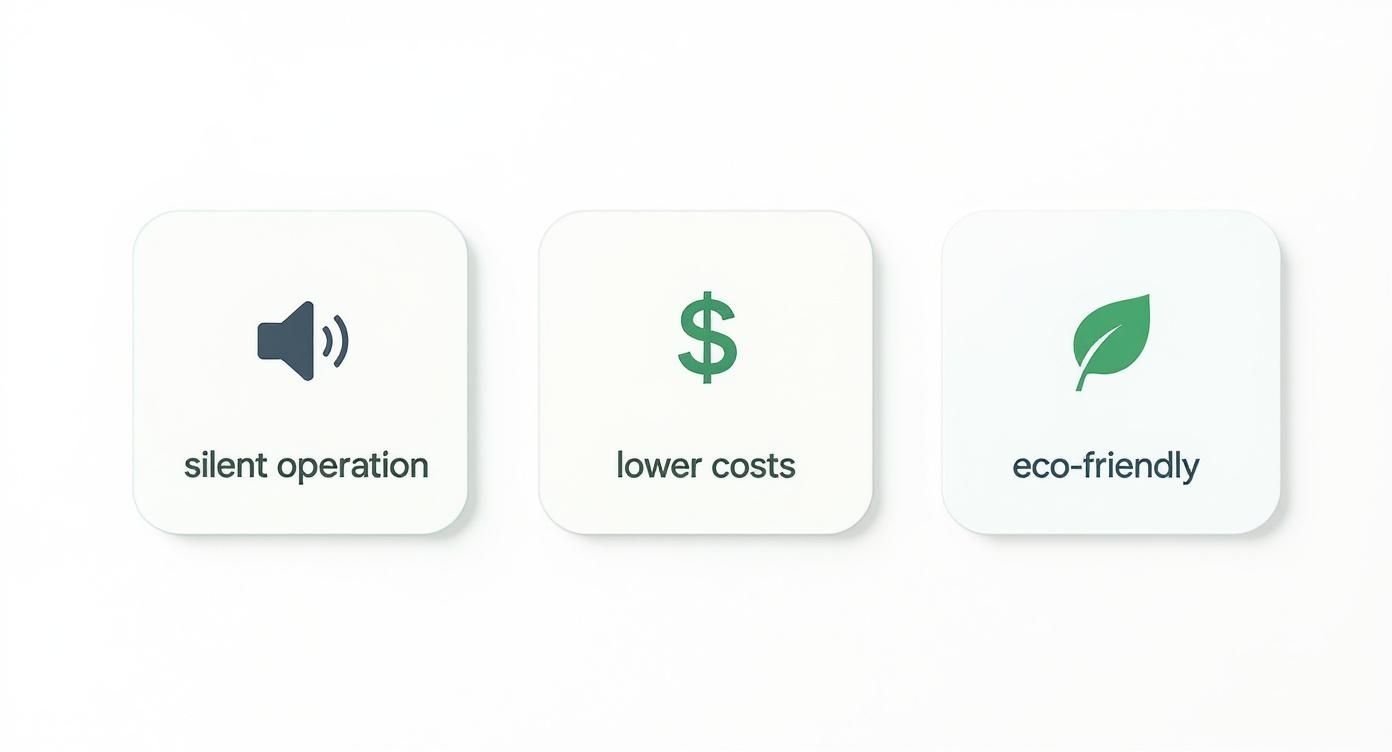
As you can see, the combination of quiet performance, lower running costs, and a smaller environmental footprint makes for a much better experience. So, which one is right for you? It really boils down to whether you prioritize a lower initial investment or long-term value and convenience.
To make the decision a bit easier, here’s a direct comparison of the two technologies.
Lead-Acid vs Lithium-Ion Golf Cart Batteries
| Feature | Lead-Acid Batteries | Lithium-Ion Batteries |
|---|---|---|
| Maintenance | High – Requires regular watering and terminal cleaning. | None – A sealed, maintenance-free system. |
| Lifespan | 3-7 years (300-700 charge cycles) | 8-12+ years (2,000-5,000 charge cycles) |
| Weight | Heavy – Typically 300-400 lbs for a full set. | Lightweight – Around 70-100 lbs for a single pack. |
| Performance | Power fades as the battery discharges. | Delivers consistent, strong power until fully depleted. |
| Charging Time | 8-12 hours | 2-4 hours |
| Upfront Cost | Low | High |
| Long-Term Cost | Moderate – requires replacement every few years. | Lower – one battery lasts the life of the cart. |
| Efficiency | Loses a significant amount of energy as heat. | Highly efficient with minimal energy loss. |
Ultimately, weighing these factors against your specific needs and budget will point you toward the best power source for your golf cart.
Why Everyone Is Switching to Lithium
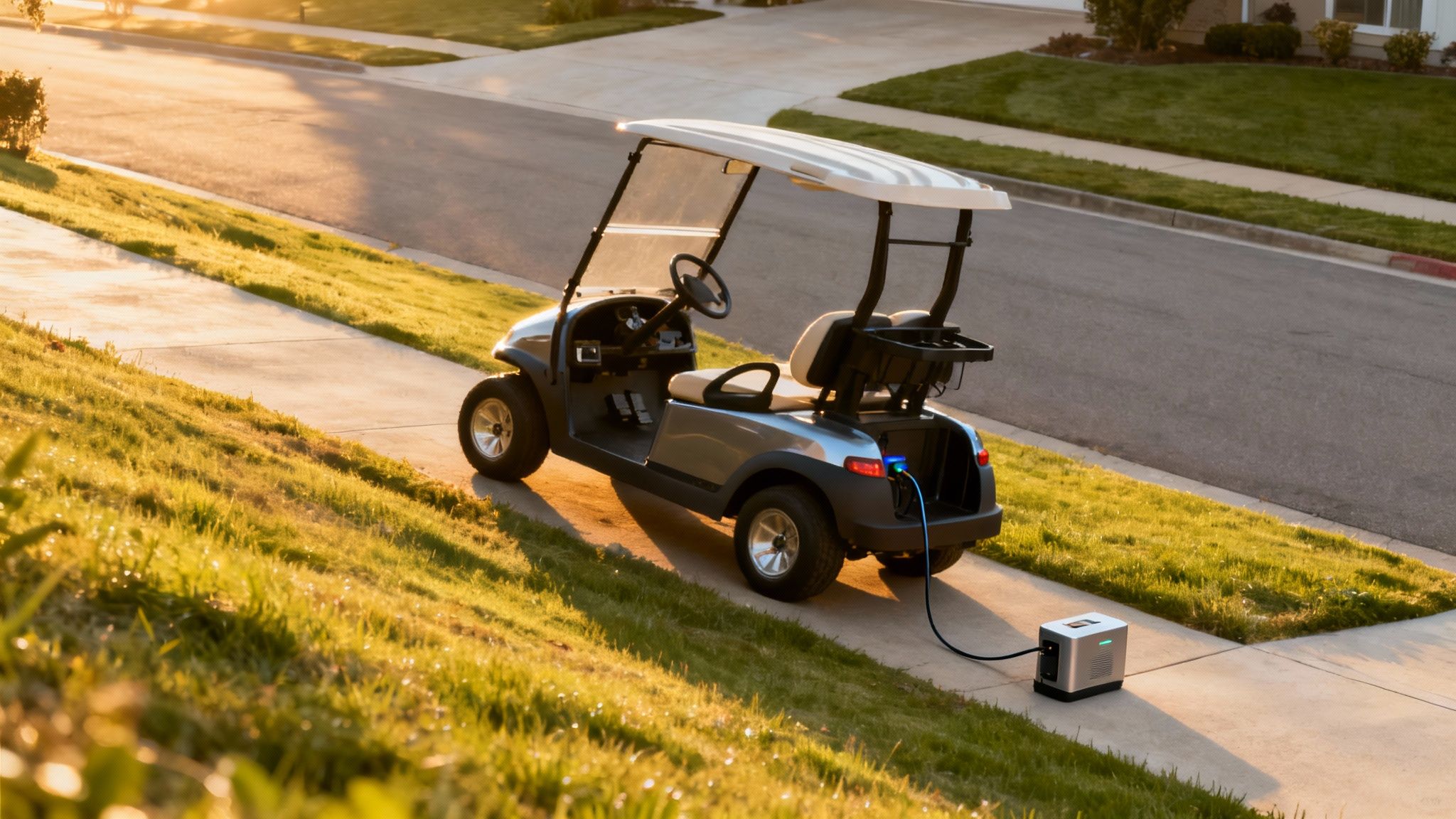
It seems like everywhere you look these days, people are making the switch to lithium batteries in their golf carts. This isn't just a trend fueled by clever marketing; it's a genuine shift driven by real-world performance gains you can actually feel every time you step on the pedal. It’s a fundamental upgrade to what a battery powered golf cart is capable of.
Think about the difference between an old, clunky window AC unit and a modern, whisper-quiet mini-split system. They both get the job done, but one does it with far less noise, energy, and fuss. That’s the kind of leap we're seeing with lithium technology. It’s turning the entire experience of owning and driving a golf cart from a chore into a real pleasure.
The market numbers back this up. The global lithium golf cart battery market is expected to balloon from around USD 793.8 million in 2025 to a whopping USD 2,500 million by 2035. That kind of explosive growth happens for one simple reason: the technology is just plain better.
The Performance You Can Feel
So what does this "better" technology actually feel like from the driver's seat? It's about more than just impressive stats on a website; it’s about a more responsive and enjoyable ride.
The most noticeable difference is how the power is delivered. With old-school lead-acid batteries, your cart gets progressively weaker as the charge drops. That hill you zipped up this morning becomes a real struggle by the afternoon. A lithium-powered cart, on the other hand, gives you consistent, strong acceleration right up until the battery is nearly depleted.
A lithium battery is a "what you see is what you get" power source. The power you have at 90% charge is the same power you'll have at 20%, ensuring a predictable and confident ride every time.
Then there's the weight. It's a true game-changer. A single lithium battery pack can be over 300 pounds lighter than the bulky set of lead-acid batteries it replaces. Shedding that much weight has a huge ripple effect on performance:
- Faster Acceleration: The cart just feels zippier and more responsive off the line.
- Improved Handling: With less weight to lug around, steering becomes much more nimble.
- Better Efficiency: The motor doesn't have to work as hard, which helps extend your range.
- Reduced Turf Impact: A lighter cart is much kinder to the grass, a major plus for golf course managers.
Freedom from Maintenance and Waiting
Beyond the thrill of a better ride, lithium batteries bring a level of convenience that lead-acid just can't match. Forget about topping off water levels, cleaning up nasty acid corrosion, and worrying about battery-killing sulfation. Lithium batteries are completely sealed, zero-maintenance units. You just plug them in, and you're good to go.
That convenience carries over to charging, too. A set of lead-acid batteries can take 8-12 hours to fully recharge. A lithium battery? You can often get a full charge in just 2-4 hours. For a busy golf resort that needs to get carts back on the course quickly or a family who decides on a spontaneous evening cruise, that speed makes all the difference. To learn more about what sets them apart, take a look at our complete guide on the advantages of a golf cart lithium battery.
How to Choose the Right Electric Cart
Picking out the perfect battery powered golf cart is about more than just comparing battery specs. It's about finding the one that genuinely fits your life. The goal isn't to find the "best" cart on the market, but to find the right cart for you.
So, where do you start? With one simple question: What will this cart actually be doing most of the time?
Getting a clear answer to that question will steer the rest of your decisions. A cart that’s just for cruising around a flat, quiet neighborhood is a totally different beast from one that needs to haul gear up steep hills at a sprawling resort.
Define Your Primary Use Case
Before you fall in love with a shiny new model, think about what you’ll be using it for 80% of the time. This little bit of honesty upfront helps you zero in on the features that matter and keeps you from paying for power or extras you’ll never use.
Think about these common jobs for a golf cart:
- Golf Course Play: Here, you’ll want turf-friendly tires that won't tear up the fairway, good bag holders, and enough range to get you through 18 holes with juice to spare. You also need to be mindful of the cart's weight to protect the delicate greens.
- Neighborhood Cruising: For zipping around town, street-legal features are a must—think headlights, turn signals, and a horn. Comfort and seating capacity for friends or family become the top priorities.
- Utility and Work: This is all about function over form. Do you need a cargo bed for hauling tools or supplies? A beefier motor for towing? Durability and a rugged build will matter far more than luxury touches.
Once you know your main mission, you can dive into the nitty-gritty details that make or break a cart's daily performance.
Calculate Your Real-World Needs
With your main purpose locked in, it’s time to get practical. This step is about matching the cart's specs to your environment so it never leaves you stranded.
1. Range and Terrain
How far are you really going in a single trip? Get a good estimate of your daily mileage. And don't forget the landscape. If your property has steep hills or rough trails, you'll need a cart with more torque and a bigger battery to keep it from bogging down. A cart rated for 30 miles on a flat sidewalk might only give you 15-20 miles in a hilly community.
2. Seating and Storage
Who’s riding with you? Carts come in all sizes, from classic two-seaters to larger four- and even six-person models. Think about what you’ll be carrying, too. Groceries, beach chairs, or landscaping tools all need a place to go, so look for models with smart storage compartments or a dedicated cargo bed.
Don't just plan for today; think about your needs a few years down the road. A two-seater might seem perfect now, but a four-seater could offer more flexibility for a growing family or changing lifestyle, making it a better long-term investment.
By thinking through your use, terrain, and capacity needs first, you create a solid checklist. It makes choosing the right battery powered golf cart much less overwhelming and ensures you end up with a vehicle you’ll be happy with for years to come.
Simple Maintenance for a Longer Cart Life
Great performance always starts with great care. When you own a battery powered golf cart, you've already dodged the mess and hassle of gas engines. But that doesn't mean you can just ignore it! A little routine upkeep is the real secret to keeping your cart happy and healthy for years.
Just a few minutes of attention each month can make all the difference, helping you sidestep expensive repairs and ensuring your ride is always ready to go when you are.
The kind of maintenance your cart needs really boils down to its battery type. Lead-acid and lithium systems are worlds apart in their care requirements, so the first step is knowing exactly what you've got under the seat.
Caring for Lead-Acid Batteries
If your cart has traditional lead-acid batteries, it helps to think of them like a small garden—they need regular watering to thrive. Consistent care isn't just a good idea; it's essential for getting your money's worth.
Here’s a simple checklist to keep them in top shape:
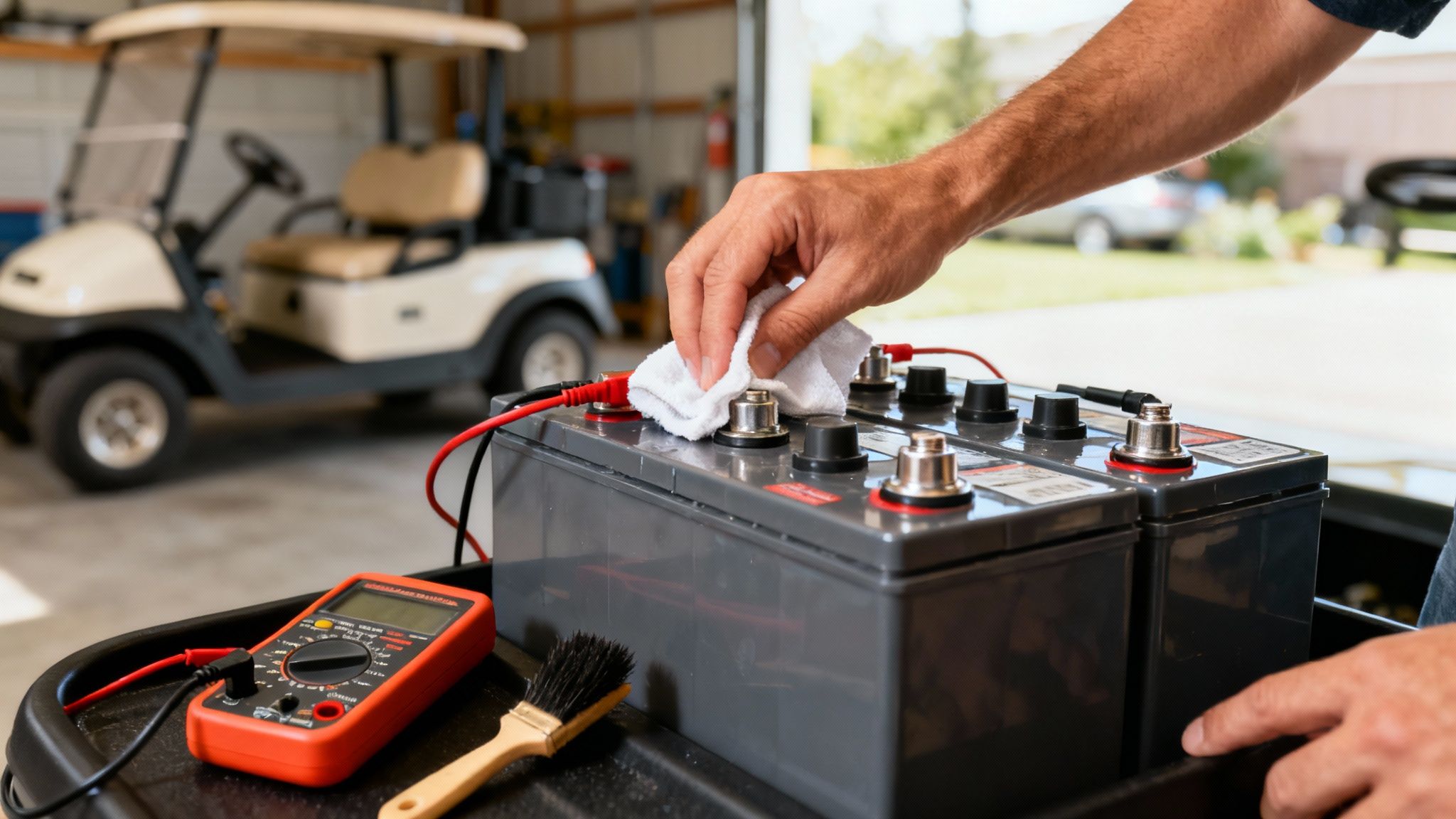
- Check Water Levels: Once a month or so, pop the caps and check the electrolyte levels in each battery cell. If the water has dropped below the plates, top them off with distilled water only. Never use tap water; its minerals will slowly kill the battery from the inside out.
- Clean the Terminals: Keep an eye out for any fuzzy, bluish-green buildup on the battery terminals. That’s corrosion, and it chokes off power flow. Scrub it away with a wire brush and a simple paste of baking soda and water to keep the connections clean and strong.
- Charge Smart: Get into the habit of fully recharging your batteries after every single use, no matter how short the trip was. Letting them sit partially discharged causes a problem called sulfation, which permanently cripples their ability to hold a charge.
A well-maintained set of lead-acid batteries can be your reliable workhorse for years. Neglect, on the other hand, is their worst enemy. Consistent upkeep is the only way to get the lifespan and performance you paid for.
Lithium Battery Best Practices
For those with a modern lithium battery setup, the maintenance routine is wonderfully straightforward. These batteries are sealed, maintenance-free units, so your job is less about getting your hands dirty and more about smart management.
Your main goal is to protect the battery from extreme temperatures. Lithium chemistry works best in a moderate climate. That means avoiding storing your cart in a sweltering garage all summer or leaving it exposed to freezing winter weather for long stretches. These conditions can seriously impact the battery's long-term health and performance.
Beyond your own upkeep, it's also helpful to understand the broader electric vehicle maintenance costs to get a full picture of long-term ownership.
General Cart Wellness Checks
No matter what kind of battery you have, the rest of the cart needs a little love, too. A few quick checks, just like you'd do with a car, can catch small problems before they turn into big, expensive ones.
- Tire Pressure: Check your tire pressure every month. Properly inflated tires not only give you a smoother ride and better range but also last much longer.
- Brake Inspection: Every now and then, give your brakes a good test. They should engage smoothly and firmly. If you hear grinding or the pedal feels "spongy," it's time to get them looked at by a pro.
- Keep It Clean: A regular wash does more than keep your cart looking sharp. Hosing down the body and undercarriage gets rid of dirt, salt, and grime that can lead to rust and corrosion over time.
For a more detailed breakdown of battery care, our guide to mastering golf cart battery maintenance has even more pro tips. Following these simple steps will keep your battery powered golf cart running like new for many seasons to come.
Where Battery-Powered Golf Carts Really Shine
It's time to stop thinking of them as just "golf carts." The modern electric cart has officially broken out of the country club and is proving its worth in all sorts of surprising places. Think of them more like compact, multi-purpose electric vehicles, perfectly designed for the way we live and work now.
What makes them so adaptable? It boils down to a few key benefits: they’re whisper-quiet, produce zero emissions, and are incredibly cheap to run. That simple formula makes them a no-brainer for a ton of applications far beyond the back nine.
You’ll see them zipping around master-planned communities as the go-to vehicle for a quick trip to the pool or a neighbor’s house. High-end resorts use them to ferry guests around in style without shattering the peaceful, vacation vibe. It's that silent operation that really gives them an edge over their noisy, gas-guzzling cousins.
Finding New Homes Everywhere
The list of places these carts are popping up just keeps growing. You can now spot battery-powered golf carts handling serious work in some unexpected settings.
- Sprawling University Campuses: Maintenance and grounds crews can glide between buildings, getting their work done without interrupting a lecture or startling students studying on the lawn.
- Massive Industrial Sites: In a giant warehouse or factory, they're the perfect shuttle for moving people and light equipment safely and efficiently across the floor.
- Farms and Ranches: Farmers are now using rugged, off-road versions to check fence lines and livestock, all without the roar and exhaust fumes of a traditional ATV.
This isn't just a trend; it's a fundamental shift in how we see these vehicles. The electric cart has evolved from a recreational toy into a practical workhorse for communities and businesses that value efficiency and a lighter environmental footprint.
Even as they conquer new territories, let's not forget their roots. Golf courses are still a massive market. In 2024, the golf industry alone accounted for a USD 300 million market for lithium batteries, a figure that's expected to nearly triple by 2035. This just goes to show their dominance on the fairway is as strong as ever, even as they find new roles to play everywhere else.
For a deeper dive into these numbers, you can explore the full lithium golf cart batteries market report.
Frequently Asked Questions
Even after diving into the details, you might still have a few questions buzzing around. That's perfectly normal. Here are some quick, straightforward answers to the things we get asked most often by both new and seasoned golf cart owners.
How Long Do Golf Cart Batteries Typically Last?
This is a big one, and the answer really comes down to the type of battery you have and how well you look after it. Your traditional deep-cycle lead-acid batteries, the kind that have been around for ages, will typically give you 3 to 7 years of service. Their lifespan is directly linked to your maintenance routine—things like keeping them properly watered and sticking to a smart charging schedule.
Lithium-ion batteries, on the other hand, are a different ball game entirely. These modern powerhouses can easily last 10 years or more. They're built to handle thousands of charge cycles, which makes them a fantastic long-term investment if you're looking for dependable, hassle-free performance.
The biggest difference is consistency. A well-cared-for lead-acid set can serve you well, but a lithium battery is designed from the ground up to outlast its traditional counterparts by a wide margin, often for the entire life of the cart itself.
Can I Upgrade My Old Golf Cart to Lithium?
Yes, absolutely! Swapping out an old lead-acid system for a new lithium battery is one of the most popular and impactful upgrades you can make. It's a common project, and plenty of companies offer complete conversion kits for all the major brands like E-Z-GO, Club Car, and Yamaha.
These kits usually come with everything you need to make the switch:
- The high-performance lithium battery pack itself.
- A new charger specifically designed for lithium chemistry.
- A crucial battery management system (BMS) to protect your new investment.
What Is the Average Range of an Electric Golf Cart?
How far your cart can go on a single charge is a classic "it depends" situation. Several key factors come into play: the type and capacity of your battery (measured in amp-hours), the terrain you're driving on, how much weight you're carrying, and even your own driving habits.
As a general rule of thumb, a standard cart with lead-acid batteries will get you somewhere in the ballpark of 15-25 miles on a full charge. A cart with a comparable lithium-ion setup, however, can often double that, pushing the range anywhere from 30 to 60 miles or even more, all thanks to its incredible energy efficiency.
Ready to experience the superior performance and convenience of a modern electric vehicle? Explore the full lineup of premium, street-legal golf carts at Solana EV and find the perfect model for your lifestyle. Visit us at https://solanaev.com to learn more.