
You've probably seen it happen on a showroom floor, in a resort lot, or parked outside a clubhouse. A golf cart that looks perfectly functional still feels generic, and the owner starts thinking about a better stance, cleaner lines, and a body that finally matches the way they use the vehicle. That's where body kits for golf carts become more than styling, they become a real design decision with fitment, durability, and ownership costs attached.
Interest in personalization isn't a fringe habit anymore. Global Market Insights estimates the golf cart accessories market at USD 428.7 million in 2025, rising to USD 884.4 million by 2035 at a 7.5% CAGR, which shows a broad willingness to spend on appearance and upgrade-driven changes in carts used for golf, resort transport, and neighborhood mobility Global Market Insights. For buyers comparing options, that matters because a body kit is not just a cosmetic swap, it's part of a larger upgrade path that often includes ride height, lighting, and street-ready details. If you're also planning related accessories, the right place to start is a curated accessories overview for golf carts.
Table of Contents
- Giving Your Golf Cart a New Identity
- What Exactly Is a Golf Cart Body Kit
- Choosing Your Armor Materials and Durability
- Ensuring a Perfect Fit on Your Cart Chassis
- DIY Installation vs Hiring a Professional
- Styling Customization and Street Legal Kits
- Calculating the True Cost and Long Term Value
- FAQs for Fleet Owners and Dealerships
Giving Your Golf Cart a New Identity
A standard cart can do the job and still feel unfinished. I've seen owners take delivery of a clean vehicle, then notice the flat front end, exposed edges, and panels that say little about the person driving it. A body kit changes that first impression fast, because the cart stops reading like basic transport and starts reading like a deliberate design choice.
From stock transport to designed object
That identity shift matters in real use. In a gated community, on a resort path, or beside a clubhouse, the cart is part of the property's presentation. A well-chosen kit can make the vehicle feel more premium without pretending it is something it is not.
The point is not flash for its own sake. It is fit, proportion, and how the exterior supports the cart's role in daily use. That is why many owners now look at a broader range of golf cart accessories before they commit to a full exterior change, especially when they want the finished vehicle to look planned rather than patched together.
What this guide is really solving
Most buyers do not need more glamour shots. They need to know whether the kit fits their chassis, how the material will hold up outside, what installation really involves, and whether the finished cart stays practical after the makeover. Those are the questions that separate a satisfying project from an expensive headache.
A good body kit should make the cart look intentional, but it should also make ownership easier to live with. That balance is where careful design earns its keep.
What Exactly Is a Golf Cart Body Kit
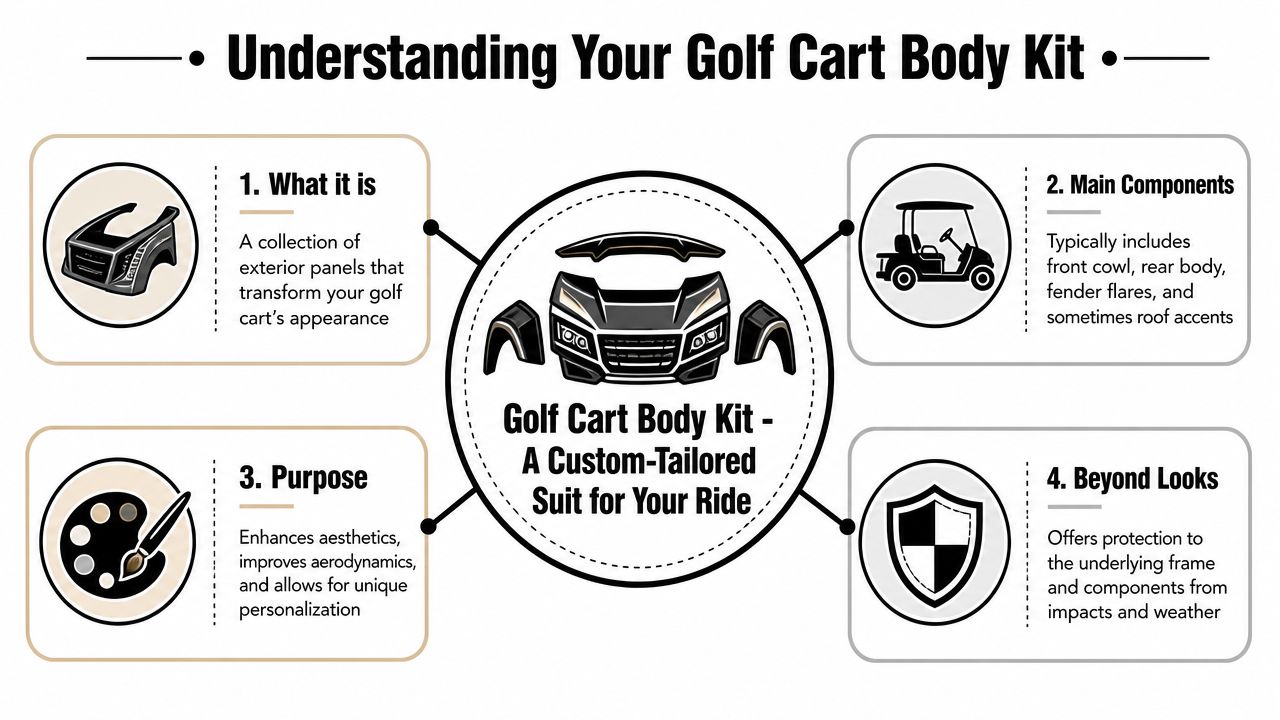
A golf cart body kit is closer to a custom-made suit than a trim package. It changes the exterior shape and character of the cart by replacing or covering major body surfaces, so the vehicle no longer looks like a stock platform with a few accessories bolted on. The effect is structural in appearance, even when the underlying chassis stays the same.
Full kits versus partial exterior upgrades
A full kit usually redefines the whole visual profile. It can make a cart read more like a miniature SUV, a utility vehicle, or a classic custom build, depending on the design language. Partial upgrades are narrower, such as a front cowl, rear body pieces, or fender flares, and they're useful when the goal is refinement instead of a complete transformation.
That distinction matters because buyers often use the same phrase, “body kit,” for very different parts. A front fascia alone won't deliver the same result as a kit that wraps the cart's full side profile and rear treatment. If the visual goal is a coherent redesign, the parts need to work together, not just sit next to each other.
The pieces you're actually evaluating
Typical components include the front cowl, rear body, side panels, fender flares, and sometimes roof accents or lighting integration points. Each one affects the final shape, but each one also affects service access, alignment, and how easily the cart can be maintained later. That's why a kit should be judged as a system, not as a pile of parts.
A body kit should solve two problems at once, it should improve the cart's appearance and make the exterior more durable to live with.
That's the practical lens that keeps the purchase grounded. It prevents buyers from confusing a visual refresh with a genuine exterior upgrade.
Choosing Your Armor Materials and Durability
The material choice determines how a kit holds up after the first season outdoors. A glossy panel can look right in a product photo and still disappoint once the cart spends its life in sun, rain, wash cycles, and vibration. Material quality matters more than styling language because long-term appearance depends on how the surface and structure age together.
ABS acrylic for daily use
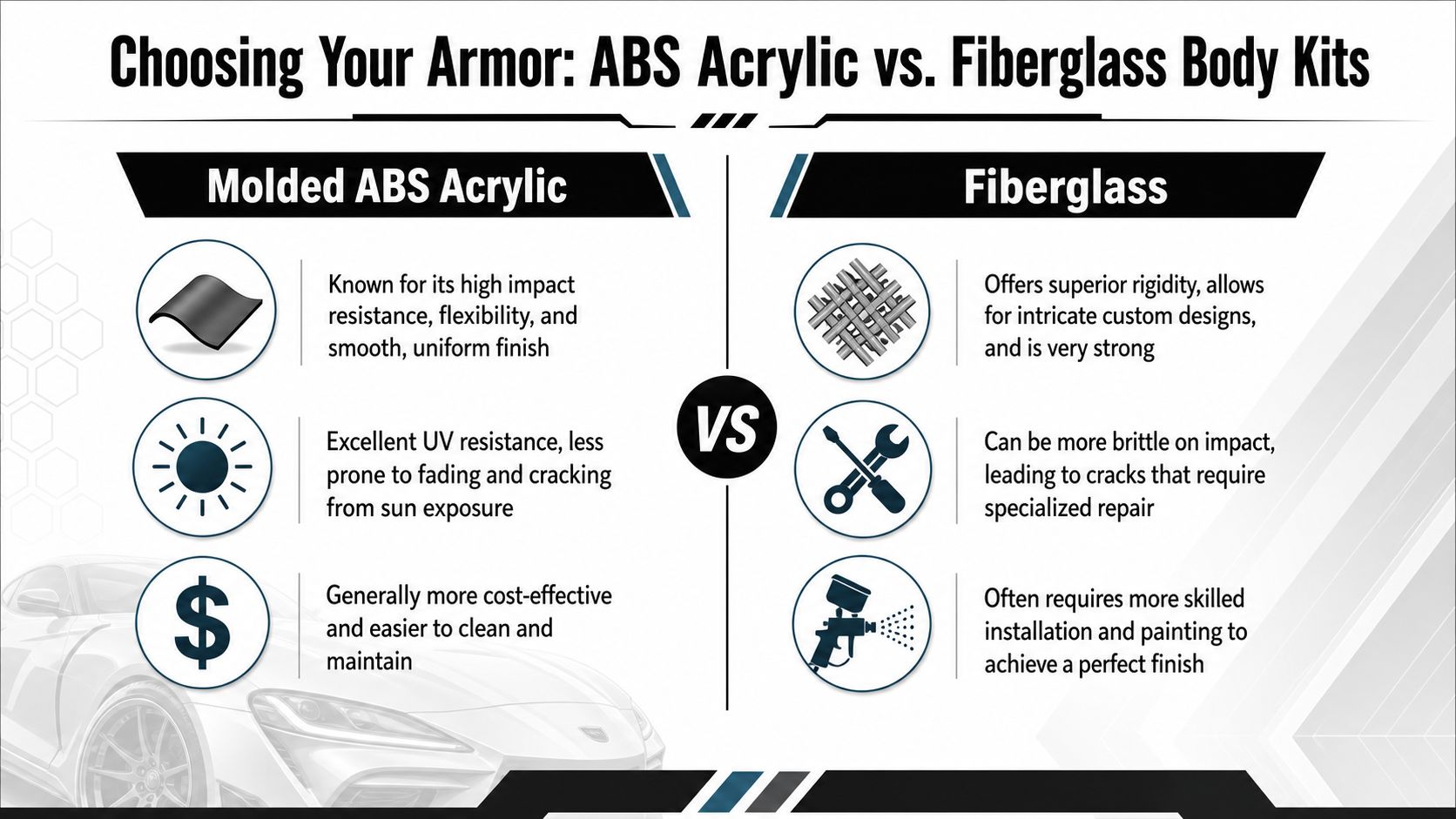
Molded ABS acrylic is usually the more forgiving choice for everyday ownership. It offers strong impact resistance, useful flexibility, and a smooth finish that tends to stay presentable without demanding show-car levels of care. That matters on carts that sit in the sun, get washed often, and spend their time absorbing vibration and the occasional bump.
For neighborhood cruisers and resort carts, that resilience is a real advantage. A panel that tolerates small knocks is less likely to create frustration for the owner or the maintenance team. In practical terms, ABS is often the safer pick when uptime matters more than a hand-built aesthetic Extreme Kartz.
Fiberglass for shape and finish control
High-grade fiberglass brings a different set of strengths. It is rigid, it supports more intricate forms, and it can deliver a sharper custom appearance when the finish work is done properly. The trade-off is that fiberglass can be less forgiving on impact and usually asks for more skilled prep and paint work to reach its full potential.
That makes fiberglass a stronger fit for buyers who prioritize form and are willing to treat the build like a custom project. If the cart lives a gentler life and the owner values a sculpted look, fiberglass can be the right answer. If the cart lives a harder life, the margin for error gets smaller Extreme Kartz.
Why UV stability and gel coat matter
The best kits use UV-stable shells and a gel-coat finish because outdoor exposure is part of the job for a golf cart. Sun, washdown chemicals, and everyday wear can chew through weaker surfaces faster than owners expect. A durable finish preserves color, protects the surface, and helps the cart look consistent over time.
Practical rule: if the cart will spend most of its life outdoors, buy for stability first and looks second.
That rule keeps disappointment low. It also helps owners avoid paying twice, once for the kit and again for premature cosmetic repairs. On an engineered platform like Solana EV's aluminum-frame golf cart, finish quality should also respect the chassis itself, because a good shell cannot compensate for poor material behavior or long-term surface breakdown.
Ensuring a Perfect Fit on Your Cart Chassis
Fitment is where many projects go sideways. A kit can look right in photos and still create headaches if it wasn't built for the exact chassis generation, mounting pattern, or accessory layout on the cart in the driveway. The myth of universal fit has cost enough people time and money that it's worth rejecting outright.
Model-year matching matters more than branding
A vendor name alone doesn't tell you enough. You need the cart's exact model, year range, and chassis family before you buy, because body lines, mounting points, and front-end geometry can shift between generations. That's true across major platforms and becomes even more important on engineered EV platforms where tolerances are tighter.
For buyers considering a modern platform such as Solana EV's aluminum chassis, the question is not whether the cart is premium, it's whether the kit is designed to preserve that factory-grade fit. The parts should match the platform, not force the platform to adapt to them.
Questions that should be answered before checkout
Ask the seller whether the kit is plug-and-play for your specific chassis generation, or whether it needs extra brackets, lighting pieces, or wiring changes. Also ask what labor is usually involved, because hidden adjustment work is often where the budget breaks. A clean-looking kit can still become expensive if the installer has to fabricate mounting solutions on the spot.
Practical rule: if the vendor can't explain fitment by model year and mounting point, the product isn't ready for a serious buyer.
That rule protects both owners and fleet operators. It's especially relevant for premium or street-legal carts, where downtime and warranty-safe modifications matter more than a quick cosmetic change.
The clearest buying habit is simple. Confirm fitment first, accessories second, and finish last. That order prevents the most common mistake, choosing a design before proving it belongs on the chassis.
DIY Installation vs Hiring a Professional
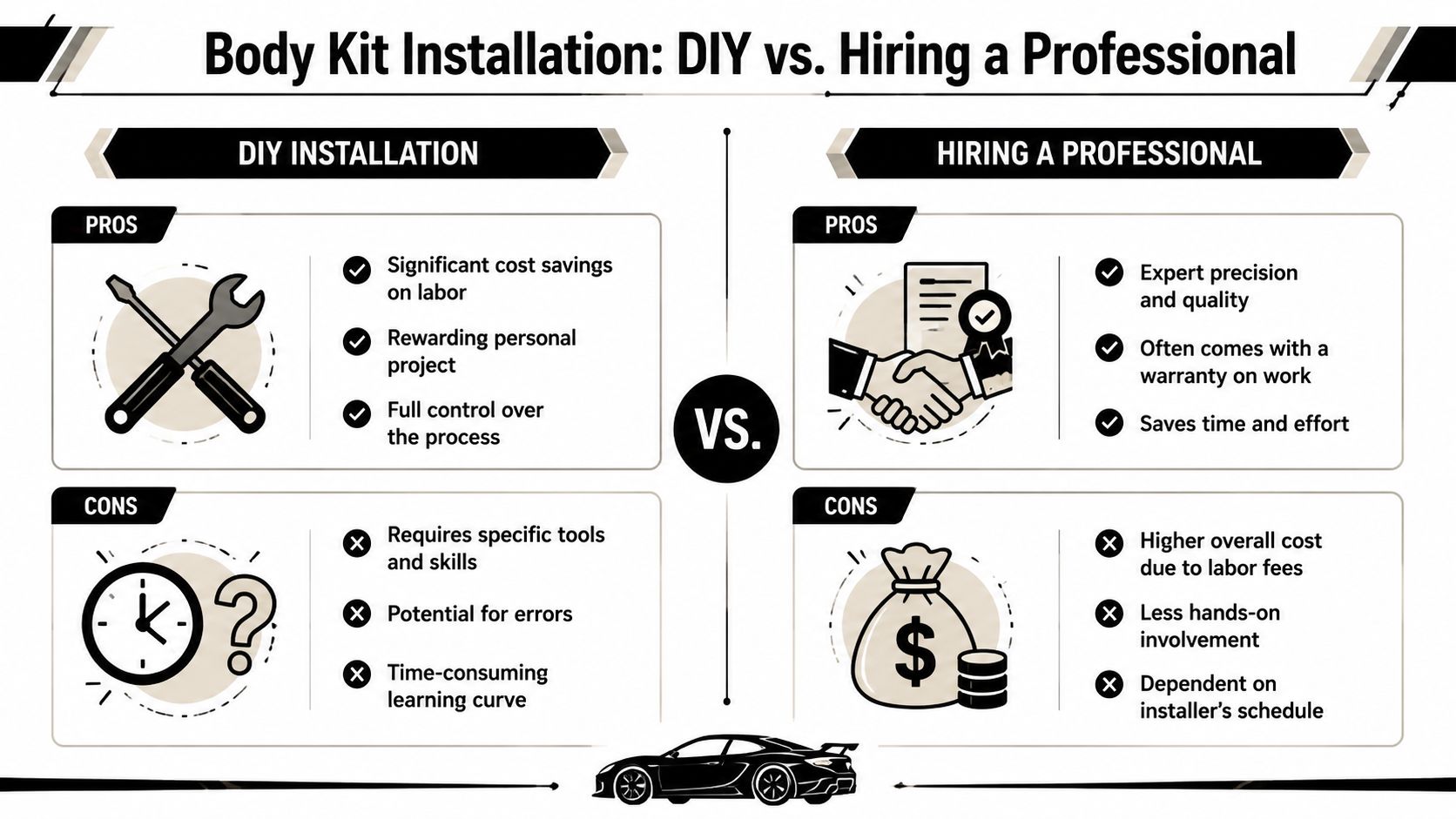
The installation decision is rarely about pride alone. It's a trade-off between labor savings, time, skill, and risk. A clean kit on the wrong install path can still look off, rattle, or create follow-up work that costs more than hiring the right technician in the first place.
What DIY really asks of you
DIY works best for owners who already handle basic mechanical tasks, read instructions carefully, and have the patience to test-fit panels before committing to final assembly. The job may involve standard hand tools, trim removal, light alignment work, and attention to detail around panel gaps and hardware. It's rewarding if you like doing the work yourself, but it's not the place to guess.
When a professional makes more sense
A professional installer is the safer route when the cart is new, premium, or tied to fleet uptime. The installer should know how to align body pieces, manage brackets, and avoid creating cosmetic damage during assembly. For buyers weighing that choice, SwiftJet's detailing choice insights offer a useful perspective on how project complexity changes the value of professional labor.
A professional install can also matter for warranty-sensitive vehicles. When the cart is still under coverage or managed by a property operator, a clean paper trail and careful installation are worth more than saving a few hours. The work should feel boring in the best way, predictable, repeatable, and easy to service later.
One point is easy to miss. A cheap install that requires rework is rarely cheap in the end.
Styling Customization and Street Legal Kits
A body kit gives the cart its shape, but the rest of the build tells the full story. On street-legal low-speed vehicles, that means the body has to work with lighting, reflectors, and the parts that make the cart usable beyond the path or course. On style-first builds, the same shell becomes the canvas for paint, wraps, and complementary hardware.
Building a street-ready package
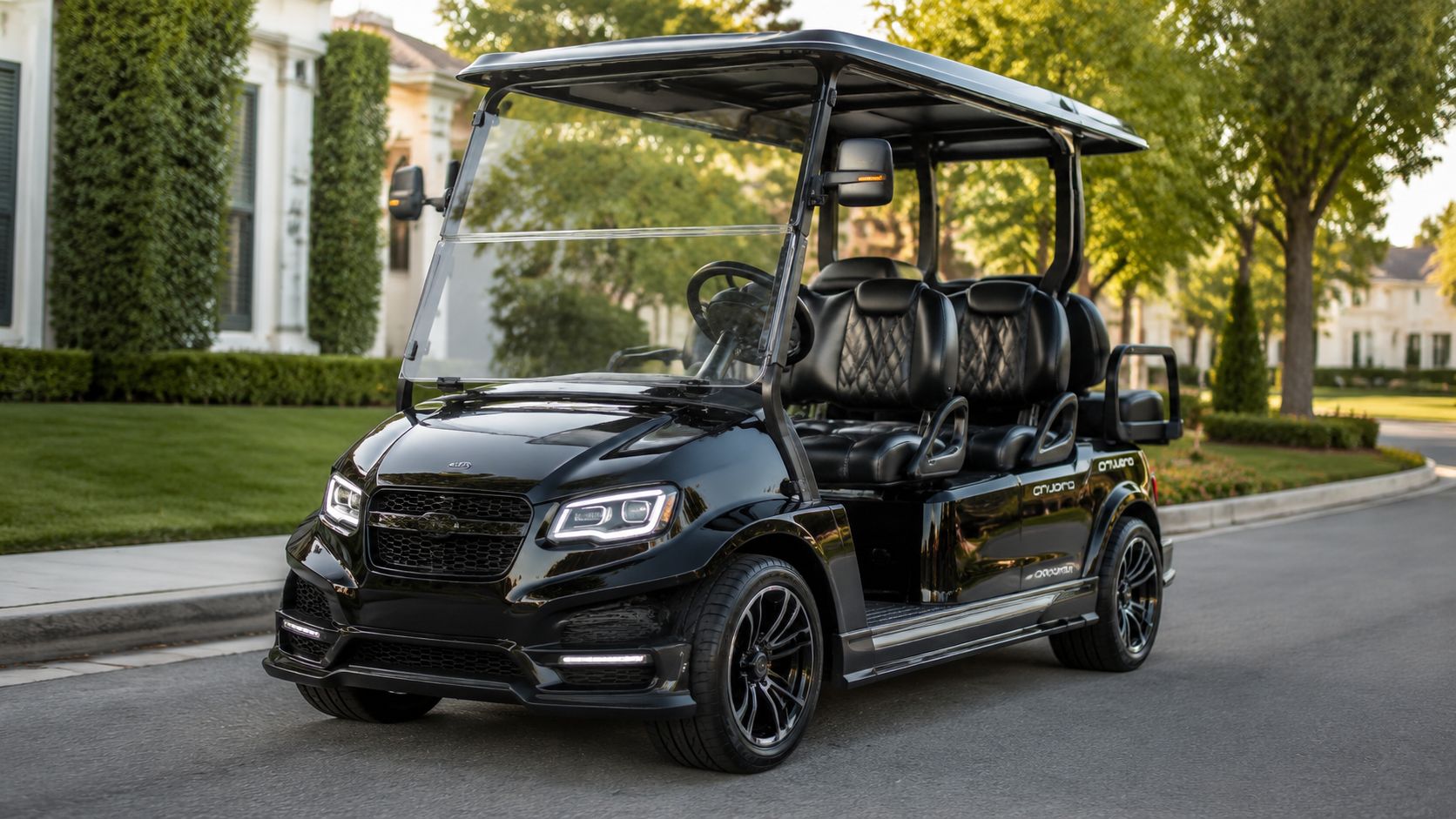
If the cart is intended for street use, the body kit has to leave room for headlights, tail lights, turn signals, and reflectors. Those components can't look like afterthoughts, because they affect both appearance and practical visibility. A well-integrated kit makes those parts feel designed, not bolted on.
A useful benchmark is the street-legal golf cart kit approach used by Solana EV, which frames lighting and compliance as part of the build, not an add-on. That mindset is the right one for buyers who want a cleaner result and fewer post-install surprises.
Personalization beyond the shell
Paint and vinyl wrap are where the cart starts to express a specific identity. Solana EV also publishes customization content that includes paint and vinyl wrapping for body panels, which reflects how many owners finish the build after the main exterior is in place. Those options are especially useful when the same kit needs to fit different properties, brand colors, or event environments.
A strong visual build doesn't stop at the body kit, it finishes when the lighting, wheels, seating, and exterior graphics all agree with each other.
That's also why some operators use carts as visible property assets. A well-finished vehicle can support presentation goals in the same way creating impressive event signage supports an event space. The point is consistency, the cart should look like it belongs to the property, not like it arrived by accident.
The best builds keep function and styling in the same frame. If the cart looks great but the equipment feels awkward or incomplete, the project isn't finished yet.
Calculating the True Cost and Long Term Value
The sticker price is only the opening number. Shipping, taxes, finish work, extra brackets, lighting components, and installation labor can change the budget quickly, especially if the kit needs correction after delivery. Buyers who only price the panels usually end up surprised later.
Budget for the whole project
A smart budget treats the body kit as one part of a larger upgrade package. If the finish needs paint or wrap work, that belongs in the plan. If the cart needs professional installation, that belongs in the plan too. The best builds are the ones where every cost is visible before the first wrench turns.
Think like an owner, not a shopper
The broader body kits market reached USD 1.8 billion in 2025 and is projected to grow to USD 2.7 billion by 2034, representing a 5.2% CAGR Market Intelo. That projection matters because it suggests sustained demand for vehicle customization, not a short-lived styling fad. For a golf cart owner, that means a high-quality kit can support curb appeal and resale presentation, especially in managed communities and resort settings.
A good kit should feel like an investment in how the cart is used and perceived. If it improves the vehicle's appearance, protects the exterior, and fits correctly, the value isn't just emotional, it's operational.
FAQs for Fleet Owners and Dealerships
Fleet buyers care about different things than individual owners. A resort manager wants durability and repeatability. A dealership wants packages that are easy to explain, install, and service. A property manager wants a fleet that looks consistent without becoming a maintenance burden.
Which material works best for high-use fleets
For heavy use, the safer default is usually the material that resists damage and keeps its finish without constant attention. That's why the material comparison above matters so much for fleets. If the vehicle gets used daily by many drivers, ease of cleaning and resistance to wear can matter more than extreme styling.
Can body kits improve branding across multiple carts
Yes, if the fleet uses a consistent body shape, color plan, and trim level. That consistency helps the property feel intentional, especially in hospitality, campus, or event settings. Dealerships can also package kits as a value-add by presenting a finished look instead of a bare cart.
What should dealers ask before stocking kits
Dealers should confirm model-year compatibility, hardware completeness, and how much installation support the vendor provides. They should also check whether the kit can be paired with lighting or signage without improvisation. A kit that is easy to explain and repeat is easier to sell and easier to service.
How should operators think about uptime
If a cart is part of a rental or hospitality fleet, the schedule matters as much as the design. Choose parts that reduce downtime and avoid unnecessary customization steps. The right kit supports operations instead of interrupting them.
A CTA for Solana EV.