
Ready to find the perfect street-legal electric golf cart in your neck of the woods? Whether you're an eco-friendly commuter, a resort manager, or just someone looking for a fun and efficient way to zip around the neighborhood, you've come to the right place. We'll help you cut through the clutter and lay out a clear path to your new ride.
Your Guide to Finding a Street Legal Electric Golf Cart
The search for street legal electric golf carts for sale near me is more popular than ever, especially in planned communities, coastal towns, and sprawling residential areas. These aren't your grandpa's golf course runabouts; they're fully-equipped, road-ready vehicles that offer a quiet, clean, and practical alternative for short-distance travel.
Before diving in, it's good to know where these carts fit in the bigger picture. Street-legal models, officially known as Low-Speed Vehicles (LSVs), are just one of the many different types of electric vehicles changing how we get around.
The Surge in Electric Cart Popularity
The buzz around these vehicles isn't just talk. The market is booming, with projections showing it will climb from USD 1.60 billion in 2025 to USD 2.58 billion by 2033. That’s a steady growth of 6.1% each year, largely fueled by their widespread use in resorts and retirement communities across North America.
To make things simple, think of the buying process in three main phases.
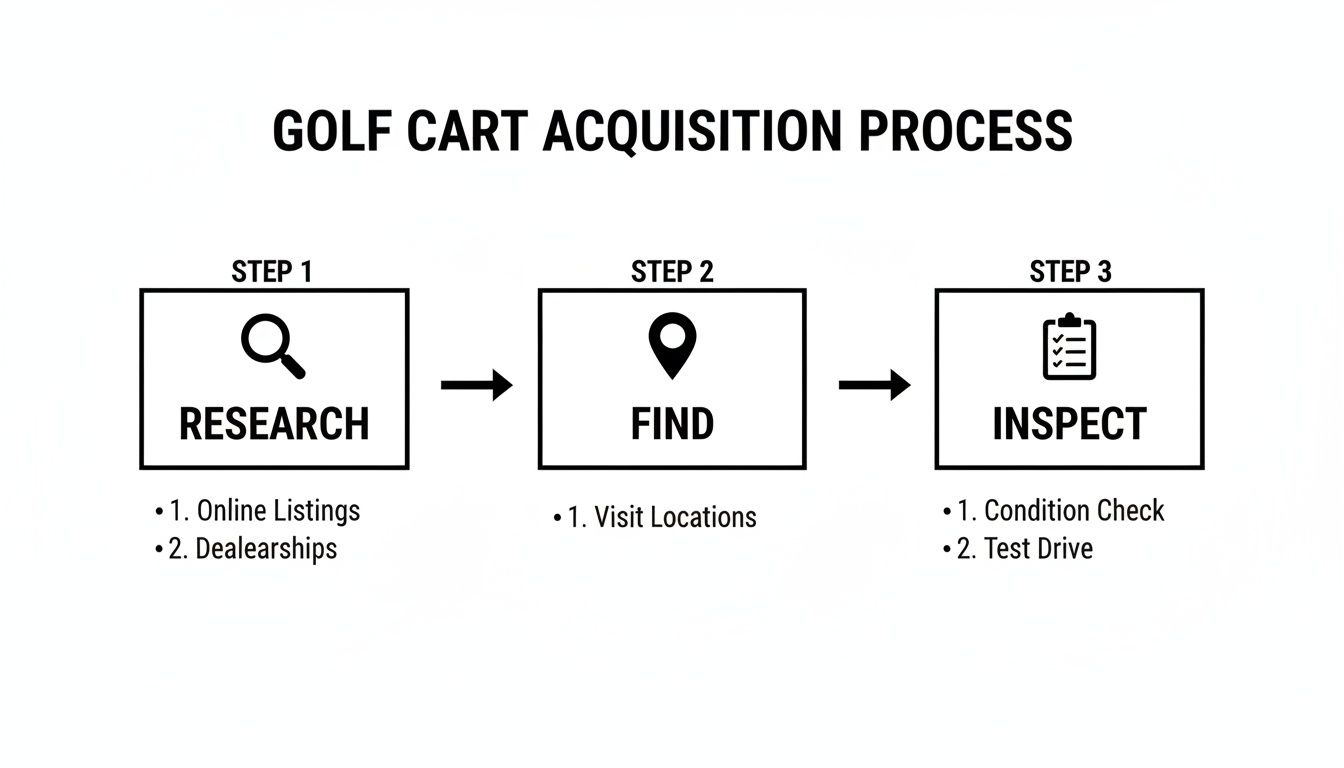
As you can see, the real work begins long before you set foot in a showroom. Proper research is the key to a smart purchase.
This guide is your step-by-step playbook. We'll walk you through everything from checking local regulations and vetting dealers to inspecting the cart and closing the deal. By the end, you'll have the confidence and know-how to find a reliable vehicle that's a perfect match for your needs.
Know the Rules of the Road: Local Laws for Street-Legal Golf Carts
Before you start hunting for the perfect street-legal electric golf cart, pump the brakes for a moment. The single most important thing you can do first is get a handle on your local laws. "Street legal" isn't a one-size-fits-all term—it's a tangled web of state, county, and even city-specific rules.
What’s perfectly fine in one neighborhood could land you a hefty ticket just a few miles down the road. Nailing this homework upfront saves you from the headache of buying a cart you can't legally drive or facing surprise costs just to get it up to code.
Golf Cart vs. Low-Speed Vehicle (LSV): What’s the Difference?
First things first, let's clear up some jargon. The vehicles we're talking about are typically classified as Low-Speed Vehicles (LSVs), not just "golf carts." From a federal standpoint, an LSV is a four-wheeled vehicle that can hit speeds between 20 and 25 mph. This is the key that unlocks its ability to be driven on public roads, but only if it’s decked out with specific safety gear.
Your average golf course cart is built for the fairway, with a top speed under 20 mph. While you can convert one, it's almost always easier and more reliable to buy a vehicle built from the ground up as an LSV. These come straight from the factory with a 17-digit Vehicle Identification Number (VIN), which is an absolute must-have for registration. No VIN, no title, no legal driving on public streets.
Where to Find Your Local Rules
So, how do you track down the laws for your specific area? It takes a bit of digital legwork, but it's well worth the effort.
- Start with your state's DMV: Head to your state’s Department of Motor Vehicles website. Search for terms like "low-speed vehicle," "neighborhood electric vehicle," or "golf cart regulations." This will give you the baseline rules for titling, registration, and equipment.
- Drill down to your city or county: Local governments often add their own flavor to state laws. Check your city or county clerk's website for ordinances that might restrict LSVs to certain roads (usually those with a speed limit of 35 mph or less) or require extra gear, like a slow-moving vehicle triangle on the back.
- Don't forget the HOA: If you're in a planned community, your Homeowners' Association has the final say. They often have strict rules about everything from paint colors and approved models to where you can park and what hours you can operate.
I know, navigating these layers of rules can feel like a chore. But a good, reputable dealer will be your best friend here. They should be absolute experts on the local laws and can guide you through what’s required in your neck of the woods.
The interest in these convenient, eco-friendly vehicles is exploding. The market is set to grow from USD 1,194.57 million in 2025 to a massive USD 2,029.44 million by 2034. This boom is powered by people who love the quiet ride and low-cost operation of electric models, which now command over 52% of the market. You can see the full breakdown in this detailed market analysis from Polaris Market Research.
The Must-Have Gear for Street-Legal Compliance
While local rules can add extra requirements, federal law sets a non-negotiable baseline for what makes an LSV road-ready. Any cart you look at must have this equipment. To get an even more detailed look at the legal side of things, check out our guide on whether golf carts are street legal.
Before you even think about talking price, walk around the cart and personally check that every single one of these safety features is present and works perfectly.
Here's a quick checklist of the bare minimum equipment an LSV needs to have to be considered for registration.
Essential Features for Street Legal (LSV) Compliance
| Required Feature | Purpose | Common Standard |
|---|---|---|
| Headlights & Taillights | Visibility in the dark and poor weather. | Must have functioning high and low beams. |
| Turn Signals & Brake Lights | To signal your intentions to other drivers. | Test all signals and confirm brake lights are responsive. |
| DOT-Approved Windshield | Protects you from wind, bugs, and road debris. | Must have an AS-1 or AS-5 rating stamped on the glass. |
| Seat Belts | Essential for occupant safety in a collision. | A dedicated seat belt is required for every seat. |
| Mirrors | To see traffic behind and beside you. | At a minimum, a rearview and a driver's-side mirror. |
| Reflectors | Helps other vehicles see you from all sides. | Red reflectors on the rear; amber on the sides. |
| Vehicle Identification Number | The 17-digit VIN is necessary for title and registration. | Make sure the VIN plate is present and matches the paperwork. |
A missing or broken safety feature isn't just a minor issue—it's a deal-breaker. It means the vehicle isn't legally an LSV and can't be registered for road use until it's fixed.
How to Find and Vet the Best Local Dealers
Once you've got a handle on the local laws, it’s time to find the right partner for the purchase. This is a big deal. The dealership you choose will shape your entire ownership experience, from the price you pay to the service you get years down the road. A great dealer is your guide; a bad one can turn your dream purchase into a real headache.
Start Your Search Smart
Finding a good dealer isn't just about a quick Google search. Sure, typing in "street legal electric golf carts for sale near me" is a decent starting point, but don't stop there.
Go straight to the source. Most manufacturers, like Solana EV, have dealer locators on their websites. This is the best way to find a list of authorized retailers in your area—the ones who are officially trained and supported by the brand. It’s a critical first step to find a reputable golf cart dealership near me.
After that, tap into your local network. Check out neighborhood social media groups or community forums. Even better, strike up a conversation with someone you see driving a cart in your town. Nothing beats a real-world recommendation from an actual owner. They'll give you the honest scoop.
Vetting Dealers: The Real Work Begins
Having a list of names is easy. Now comes the important part: figuring out who you can trust.
Start by digging into online reviews, but don't get hung up on one single rave or rant. You're looking for patterns. Are customers constantly praising the service department? Or are there recurring complaints about surprise fees and shoddy communication? Consistency is key.
You also need to understand the difference between an authorized dealer and everyone else.
- Authorized Dealers: These businesses have a direct line to the manufacturer. That means you get the full factory warranty, access to genuine parts, and service from technicians who are specially trained on the models they sell. This is your safest bet, period.
- Private Sellers: You might score a lower price, but you’re taking on all the risk. There’s no warranty, no professional inspection, and definitely no support after the money changes hands. If something breaks the next day, it’s your problem.
This market is booming. The global electric golf cart industry is expected to jump from USD 1,414.2 million in 2025 to a whopping USD 2,154.5 million by 2035. As you can imagine, that kind of growth brings all sorts of sellers out of the woodwork. Sticking with an established, authorized dealer is the smartest way to protect your investment. You can see the full market growth report from Future Market Insights for more on that trend.
Key Questions to Ask Every Single Dealer
Don't just wander into a showroom unprepared. Have a list of questions ready to go. Think of it less like an interrogation and more like a conversation to see if they’re the right fit for you. A good dealer will be transparent and happy to give you straight answers.
Here’s what you absolutely need to ask:
- "Are you an authorized dealer for the brands you carry?" This is non-negotiable. It confirms they can handle warranty claims and have properly trained technicians.
- "Can you walk me through the specific street-legal registration process for my town?" Their answer will tell you everything you need to know about their local expertise. If they give you a vague, "Oh, it's easy," that's a huge red flag.
- "What, exactly, does your pre-delivery inspection (PDI) involve?" A professional dealer should perform a thorough check of everything—brakes, lights, batteries, steering, the works—before you even think about driving it off the lot.
- "Do you handle all service and warranty repairs right here in-house?" The last thing you want is to find out they ship carts off to some other shop for repairs. A one-stop shop for sales and service makes life so much easier.
- "Can I speak with a few of your other local customers?" A dealer who’s confident in their service will have a list of happy clients ready to share their experiences.
A dealer’s real worth isn’t measured on sales day; it’s measured by their support after the sale. The purchase is just the beginning. You need a partner who’ll be there for maintenance, warranty work, and any other bumps in the road.
Your Essential Pre-Purchase Inspection and Test Drive
Okay, you've found a dealer you like and a cart that's caught your eye. This next part is arguably the most important: the hands-on inspection and test drive. I can't stress this enough—never, ever agree to buy a cart without putting it through its paces first. This is your one real chance to spot problems, gauge its true condition, and feel if it's the right fit for you.
Think of yourself as a detective for the next 30 minutes. A shiny paint job can easily hide a multitude of sins that could cost you a fortune later. A little due diligence now can save you a massive headache down the road. It's worth noting that many of the same principles for inspecting a used EV apply here, so that's a great resource to have in your back pocket.
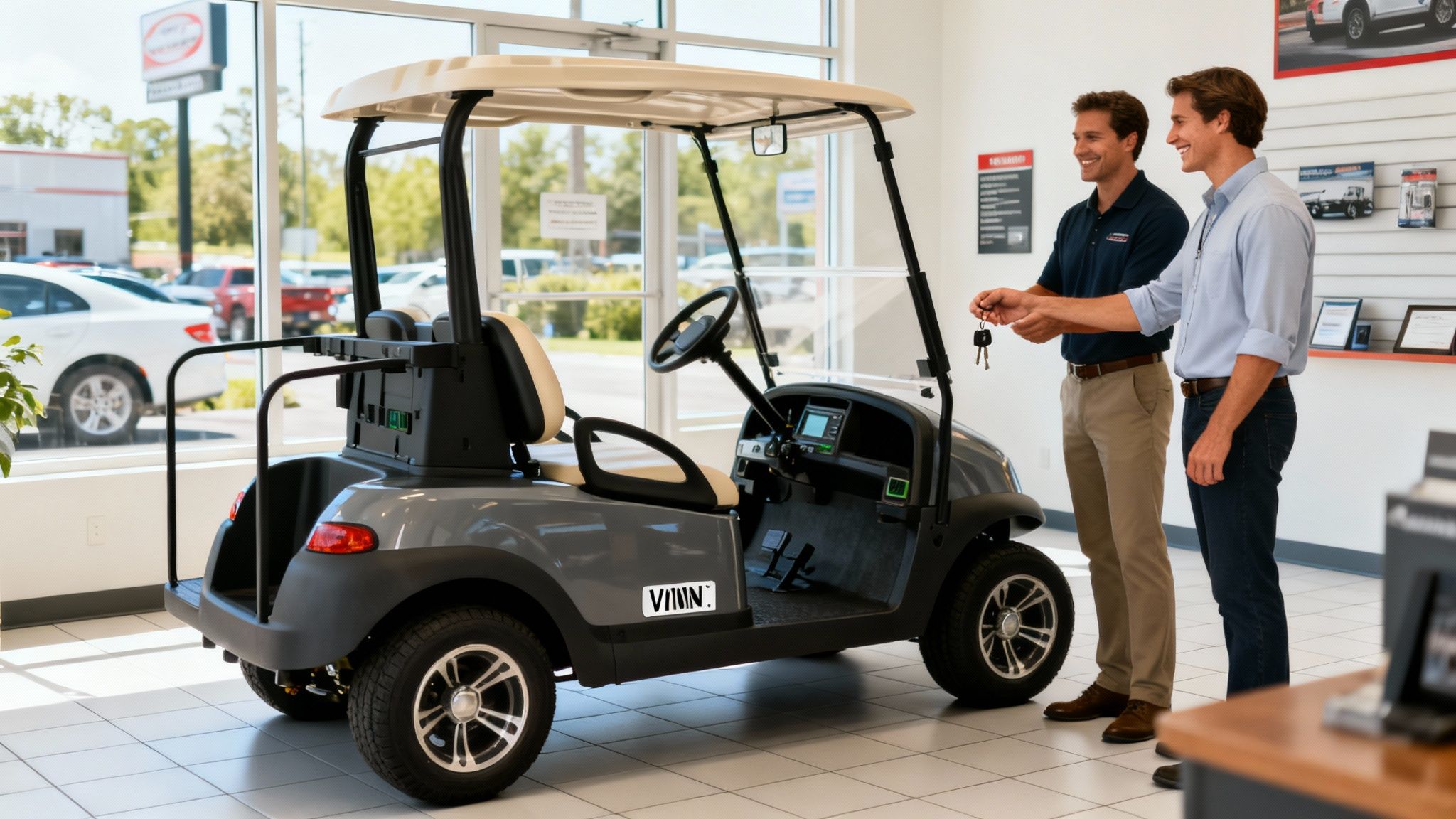
Your Visual Inspection Checklist
Before you even think about turning the key, do a thorough walk-around. Get your phone's flashlight out and really look at the bones of the machine.
- The Battery Pack is Everything: This is the heart of any electric cart. Pop the seat and look for the date stamp on the batteries. A typical set will last 4-6 years. Check the terminals for that fuzzy, white or bluish gunk—that's corrosion, a dead giveaway of poor maintenance. Also, keep an eye out for any swelling or cracks in the battery casings themselves.
- Frame and Undercarriage Integrity: Get down low and inspect the frame, paying close attention to the welds. You're looking for rust, cracks, or any bends that might hint at a past accident. A bit of surface rust is one thing, but deep, flaky corrosion is a deal-breaker.
- Tires and Suspension: Look at the tires. Is the wear even? If not, you might be looking at an alignment problem. Check for cracks in the sidewalls and make sure there's decent tread left. Give each corner of the cart a good push down; it should bounce back once and settle, not feel like a pogo stick or a rock.
Pro Tip: Don't be afraid to ask for the service records. A cart that's been cared for will have a paper trail of battery checks and routine maintenance. Any good dealer will have this info on hand and be happy to share it.
Testing the Street-Legal Essentials
Now, let's make sure it's actually "street legal." Hop into the driver's seat and run through this list methodically.
- Lights and Signals: Flip on the headlights (high and low beams), taillights, and press the brake pedal. It helps to have someone stand outside to confirm everything lights up. Test the turn signals, both left and right.
- Mirrors and Windshield: Make sure the mirrors are tight and give you a clear view. The windshield should be DOT-approved and free of any major cracks or chips that mess with your line of sight.
- Seat Belts and Horn: Click and unclick every single seat belt. They should latch and release smoothly. Finally, give the horn a solid press—it needs to be loud enough to be heard.
These are absolutely non-negotiable. If even one of these items doesn't work, the cart isn't ready for the road. This is especially critical when looking at pre-owned models. For a deeper dive into what to look for on used carts, our guide on finding used street legal golf carts near me has you covered.
The All-Important Test Drive
It's time for the fun part. A test drive needs to be more than a quick loop around the parking lot. Ask the dealer if you can take it on a road similar to the ones you'll be driving on.
As you drive, pay attention to what you hear and feel.
- Listen for Noises: A healthy electric cart should be nearly silent. Any grinding, whining, or clicking sounds could point to trouble with the motor, bearings, or differential.
- Feel the Acceleration: Punch it (gently). The cart should take off smoothly, with no sputtering or jerking. If it feels sluggish, you could be dealing with a weak motor controller or batteries that are on their last legs.
- Test the Brakes: In a safe spot, hit the brakes firmly. The cart needs to stop straight without pulling to one side. The pedal should feel solid under your foot, not mushy.
- Check the Steering: While cruising in a straight line, the steering wheel should be centered. Any pulling to the left or right means it needs an alignment. The steering itself should feel tight and responsive, not loose and sloppy.
By the time you're done, you'll have a much clearer picture of what you're really buying. This hands-on evaluation lets you make a smart choice based on solid evidence, not just a slick sales pitch.
Finalizing the Deal: Registration, Insurance, and Pricing
You've done the fun part—you’ve inspected the contenders, taken a few for a spin, and finally landed on the perfect street-legal golf cart. But before you can cruise down your neighborhood streets, there are a few final hurdles to clear. This is where we get into the nitty-gritty of paperwork, financing, and legal requirements.
Getting these details right from the start is the key to a stress-free ownership experience. A good dealer will walk you through it, but knowing what to look for yourself is your best defense against unexpected costs or legal snags down the road.
Getting the Paperwork Right for Registration
To make your cart official, you'll need to register it with the DMV, just like you would a car. The dealer should have a packet ready for you with all the necessary documents, but it's your job to double-check everything.
Pay close attention to two key documents:
- Manufacturer's Certificate of Origin (MCO): Think of this as the cart's birth certificate. It's the official document from the factory that proves it was built to federal LSV standards and, most importantly, includes the 17-digit VIN. You absolutely cannot get a title without the MCO.
- Bill of Sale: This is your proof of purchase. It lays out the transaction details—buyer, seller, final price, and that all-important VIN again.
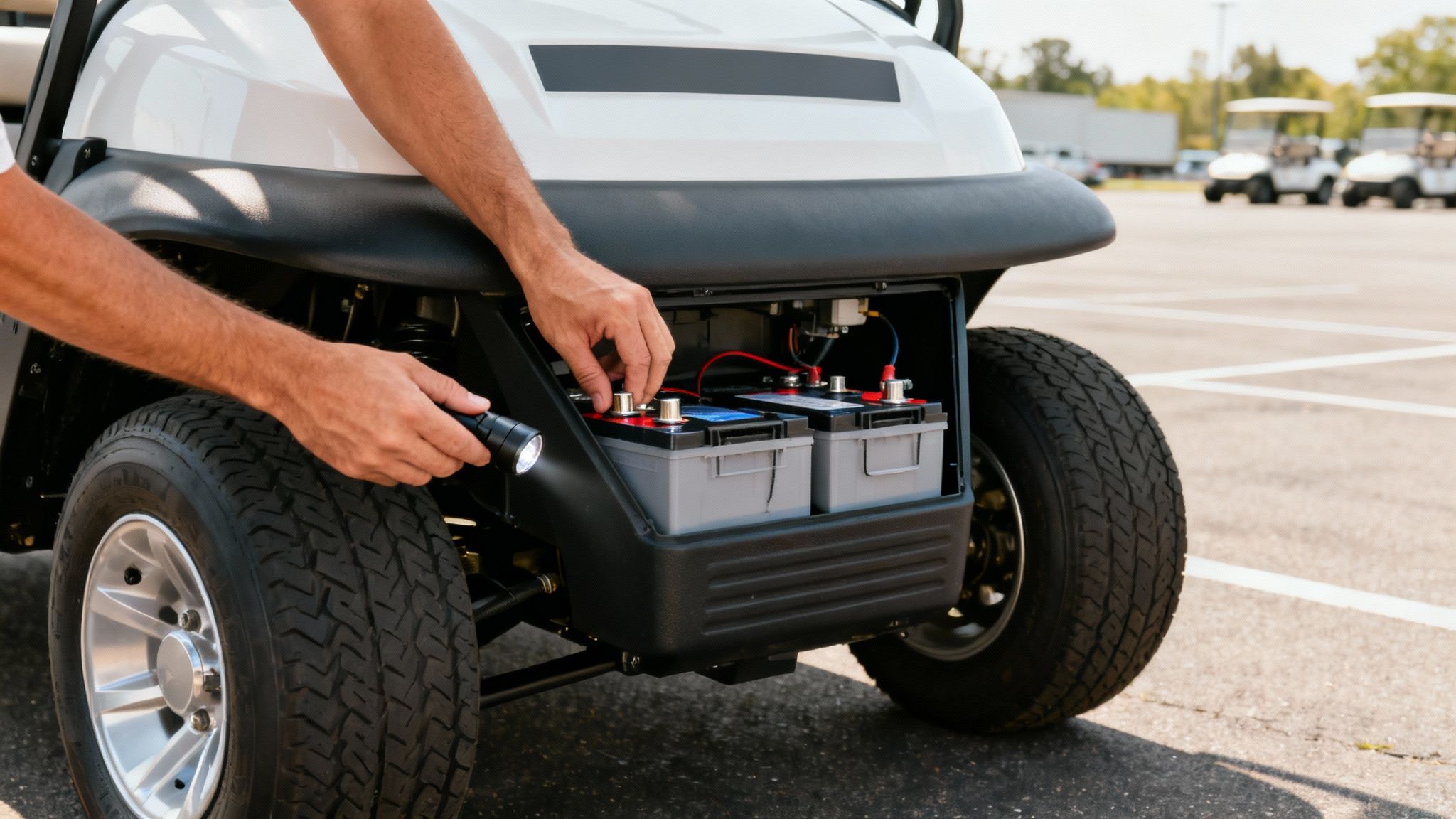
Before you sign anything, meticulously compare the VIN on the paperwork to the VIN plate on the cart itself. Even a single digit being off can bring your DMV trip to a screeching halt.
Securing the Right Insurance Coverage
Because it's sharing the road with cars, your LSV needs insurance. The tricky part is that not all insurance agents are familiar with street-legal carts, so a little legwork might be necessary.
Your first call should be to your current auto insurance provider. Adding the cart to an existing policy is often the simplest and cheapest route. If they don't cover LSVs, don't worry. Ask the dealer for a recommendation; they almost always keep a list of insurance companies that specialize in these types of vehicles.
You’ll need to meet your state's minimum liability requirements, but I strongly suggest looking into comprehensive and collision coverage. It’s a small price to pay to protect your new investment from theft, vandalism, or an unfortunate fender bender.
Pro Tip: Don't treat insurance as the last step. You'll need to show proof of insurance to get your plates and complete the registration. Get your policy locked in before you head to the DMV.
Understanding the True Cost and Avoiding Hidden Fees
The price you see on the sticker—the MSRP—is just the starting point. To understand what you'll actually pay, you need to ask for a detailed, "out-the-door" price quote.
This quote should break down every single cost. Keep an eye out for common fees, and don't be afraid to ask what they cover:
- Freight/Destination: This is a legitimate charge for shipping the cart from the factory to the dealership.
- Dealer Prep/PDI: This covers the pre-delivery inspection, assembly, and initial charging. It's a standard fee, but the amount can vary between dealers.
- Documentation Fee: This is for the dealer's time spent handling the title and registration paperwork. Some states cap this fee, so it's worth a quick search to see what's typical in your area.
While some fees are non-negotiable, a transparent dealer will happily explain each one. This clarity not only helps you understand the total cost but also gives you a better footing for any negotiation. It never hurts to ask if they can throw in a couple of accessories or if there's any wiggle room on the final price. Exploring financing through your own bank or credit union versus the dealer's options can also uncover some serious savings.
Making It Yours: Customization and Warranty
Alright, you've handled the paperwork and your new ride is almost ready to go. Now comes the really fun part: making the cart truly yours and making sure your investment is protected for the long haul.
A stock golf cart is basically a blank canvas. With the right personal touches, you can transform it from a simple utility vehicle into a ride that perfectly fits your lifestyle. But just as important as the fun stuff is the warranty—it’s your peace of mind in writing.
Dialing in Your Ride with Custom Upgrades
Customization goes way beyond just picking a paint color. It’s about adding real function and comfort that matches how you plan to use your cart every day. Are you cruising to the beach, running errands around the neighborhood, or making trips to the community pool? There's an upgrade for just about anything you can think of.
Here are a few of the most popular and practical additions I see people make:
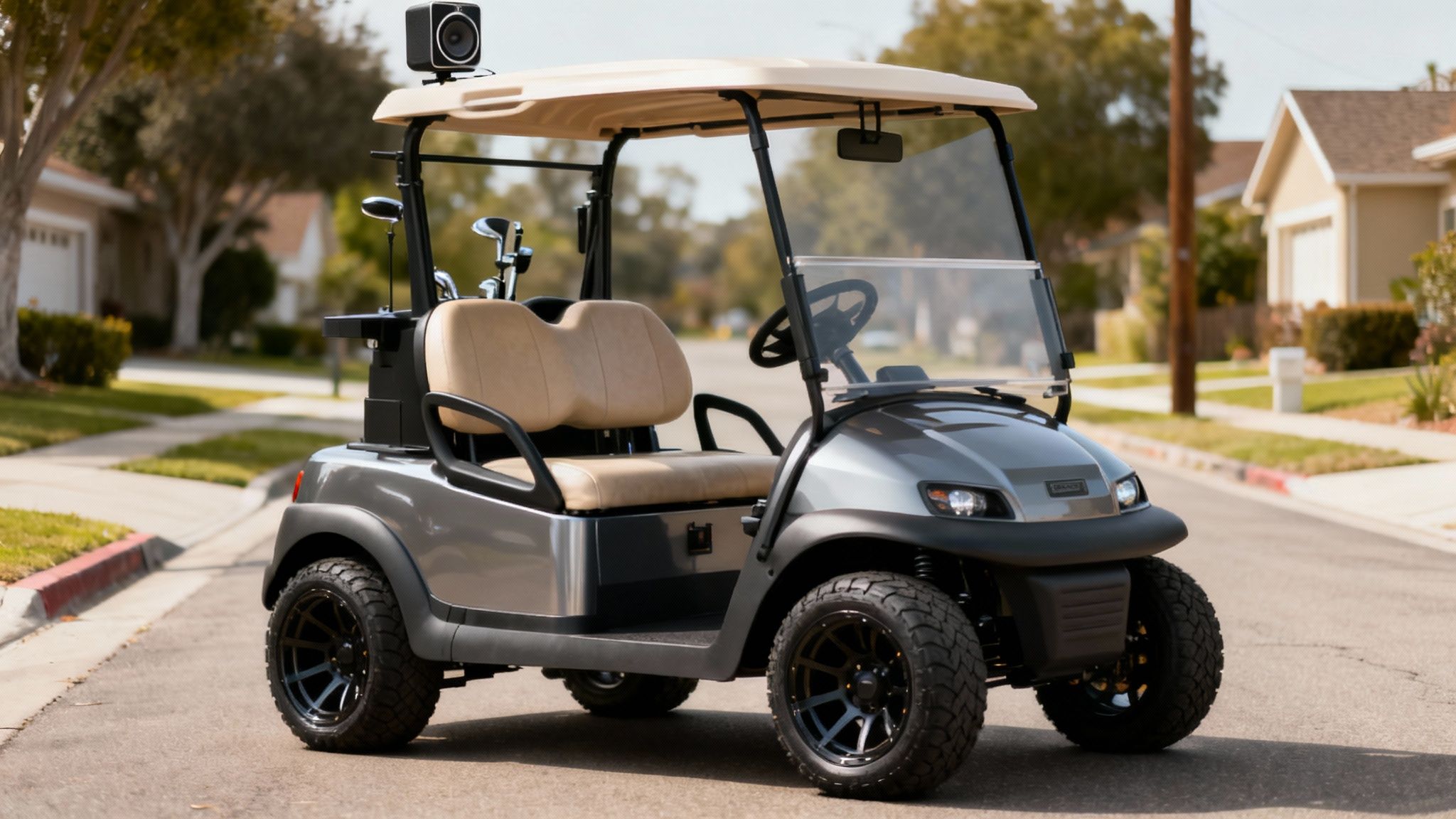
- Premium Seating: Ditching the standard vinyl for contoured, marine-grade seats with custom stitching is a game-changer. It adds a ton of comfort on longer rides and gives the cart a high-end feel.
- Upgraded Wheels and Tires: Nothing changes the look of a cart faster than a custom set of alloy wheels. Pairing them with more rugged, all-terrain tires also improves handling on grass, gravel, or uneven pavement.
- Integrated Sound Systems: Let's be honest, who doesn't like some tunes? Bluetooth-enabled speakers are a must-have for most owners, making it easy to stream music right from your phone.
- All-Weather Enclosures: A good enclosure with zip-down vinyl doors is a fantastic investment. It keeps you dry in a sudden downpour and extends your carting season into those cooler fall and spring months.
Dealers that carry brands like Solana EV usually have a massive catalog of accessories. You can add everything from rear-facing seats and cargo racks to custom floor mats, building a cart that’s perfectly kitted out for your needs from day one.
What Your Warranty Really Covers
While flashy accessories are exciting, the warranty is the safety net that protects your purchase. Don't just file it away—take a few minutes to actually read it. You need to know what’s covered, for how long, and—just as importantly—what actions could void it. A strong warranty is a telltale sign that the manufacturer has real confidence in its product.
A great warranty isn't just about getting things fixed if they break. It’s a direct reflection of the manufacturer's commitment to quality. It's the peace of mind that comes from knowing they stand behind their work.
Pay close attention to the coverage terms for the most critical (and expensive) components.
- Battery Warranty: This is the big one. Look for clear language covering premature failure or a significant drop in capacity. It’s common to see pro-rated coverage, where the replacement value decreases over time, so understand how that works.
- Motor and Controller: These are the heart of your cart's powertrain. Any reputable brand should offer a solid warranty on these core components for at least two years.
- Frame and Chassis: The cart’s structural integrity should be backed by a long-term warranty, often for several years, against any manufacturing defects.
Finally, have a direct conversation with the dealer about their service process. Do they handle all warranty work in-house? What’s the typical turnaround time for repairs? A dealer with a dedicated service center and factory-trained techs can make the warranty process painless, getting you back on the road fast if an issue ever pops up.
Your Top Questions Answered About Street-Legal Golf Carts
As you get closer to buying your own cart, you'll probably have a few final questions. It's totally normal. Getting these details sorted out is the last step before you can feel 100% confident in your choice.
How Far Can I Realistically Go on One Charge?
This is easily the number one question I hear. The simple answer is that most modern electric carts, especially those with lithium batteries, will get you 30-50 miles on a full charge.
But the real answer is… it depends. Think of it like the gas mileage in your car; your habits and environment matter. Your actual range can be affected by:
- Terrain: Constantly climbing hills is going to drain your battery much faster than a leisurely cruise along a flat coastal road.
- Load: A cart with four people and a cooler will have less range than a cart with just the driver.
- Your Driving Style: A lead foot who loves quick accelerations will need to charge more often than someone with a smooth, steady driving pace.
What Does Day-to-Day Maintenance Look Like?
Here's the great news: electric carts are incredibly low-maintenance. Say goodbye to oil changes, engine checks, and spark plugs. Your routine is much simpler.
You'll mainly want to keep an eye on tire pressure and check your brakes periodically. The biggest task is battery care. If you have older lead-acid batteries, you'll need to keep the terminals clean and top off the water levels. But if you opt for a modern lithium battery, it's almost completely hands-off. That convenience is a huge win for most owners.
A quick tip from my experience: a new street-legal cart is almost always a better investment. A used cart might seem cheaper upfront, but you could be inheriting an old battery that's about to die or other hidden problems. That initial savings can disappear fast with your first repair bill.
Ready to find a street-legal cart that combines style, performance, and peace of mind? The team at Solana EV is here to help you explore models that are built for the road and designed for your life. Find a dealer and start your journey today.