
Think of an electric utility vehicle as a purpose-built workhorse, not just a way to get from point A to point B. It’s powered entirely by batteries and designed for tough jobs. If a gas UTV is the loud, all-purpose hammer in your toolkit, an electric utility vehicle is the quiet, high-torque drill you grab for a specific, demanding task.
What Defines an Electric Utility Vehicle
At its heart, an electric utility vehicle, or EUV, is engineered from the ground up for work. These machines aren't just modified golf carts or scaled-down electric cars. They prioritize raw power and function over flashy looks or high speeds, making them a powerful alternative to traditional gas and diesel equipment in commercial, farming, and municipal settings.
This isn't just a niche trend—it's a major market shift. The global electric utility vehicle market was valued at around USD 22.37 billion and is on track to nearly double, reaching a projected USD 45.83 billion by 2032. You can dig into the full market projections to see just how fast businesses are making the switch. This boom is fueled by real-world benefits that make these vehicles a smart investment.
To better understand the differences, here's a quick comparison.
Electric Utility Vehicle vs Traditional Gas-Powered UTV
This table breaks down how electric utility vehicles stack up against their gasoline counterparts across the most important operational metrics.
| Feature | Electric Utility Vehicle | Gas-Powered Utility Vehicle |
|---|---|---|
| Fuel Source | Battery-powered (rechargeable) | Gasoline or diesel |
| Noise Level | Near-silent operation | Loud, disruptive engine noise |
| Torque Delivery | Instant torque from 0 RPM | Torque builds with engine speed |
| Maintenance | Minimal; no oil changes, belts, or spark plugs | Frequent; oil, filters, spark plugs, belts |
| Emissions | Zero tailpipe emissions | Produces CO2, NOx, and particulates |
| Operating Cost | Lower (electricity vs. gas, fewer parts) | Higher (fuel, oil, frequent maintenance) |
| Indoor Use | Safe for indoor use | Unsafe due to exhaust fumes |
As you can see, the advantages of going electric extend far beyond just the fuel source. It fundamentally changes how and where you can operate.
Core Components That Make a Difference
What really sets an EUV apart is its specialized construction. These aren't just golf carts with a bed bolted on; they're unique machines built for a purpose.
Three key elements define a true electric utility vehicle:
- Reinforced Frame and Suspension: The chassis is built tough to handle heavy loads and rough terrain day in and day out. It's far more robust than what you'd find on a standard golf cart.
- High-Torque Electric Drivetrain: EUVs are engineered to deliver maximum pulling power the instant you press the pedal. This is a must-have for towing heavy trailers, climbing steep grades, or powering through mud.
- Versatile Cargo and Payload Systems: They come equipped with large, durable cargo beds—often with hydraulic or electric dumping capabilities—and are rated for serious payloads. This focus on utility is what makes them perfect for hauling tools, materials, and equipment.
The image below gives a good visual of how these design elements translate into practical advantages on the job.
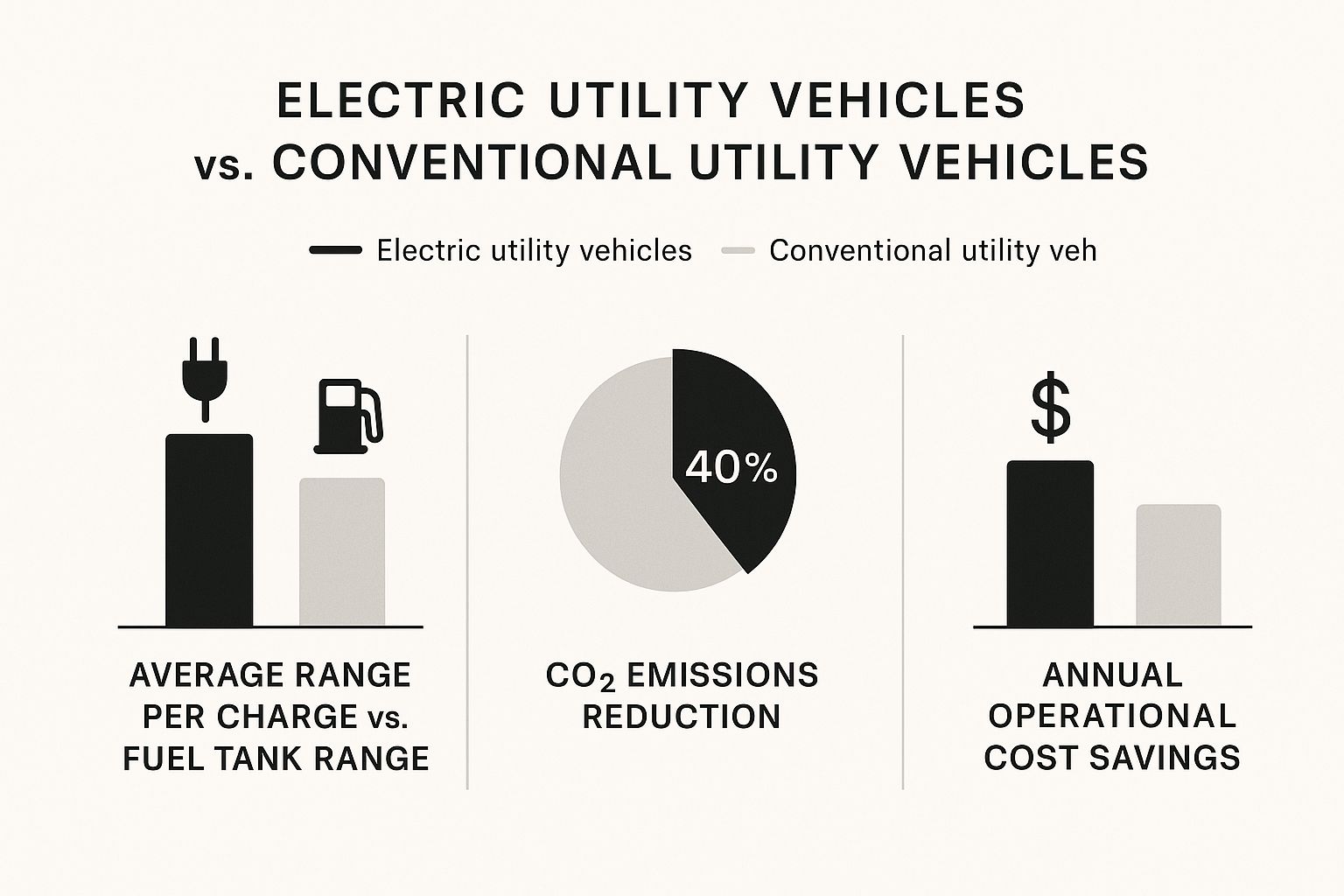
The data clearly shows that the savings in operational costs and the reduction in emissions create both an economic and environmental win.
More Than Just a Green Alternative
While cutting emissions is a huge plus, it’s the practical benefits that are really winning people over. An electric utility vehicle runs in near silence, which is a game-changer for places like resorts, college campuses, or residential communities. That quiet operation means crews can work early in the morning or late into the evening without disturbing anyone.
The real power of an EUV isn't just in its battery. It's in its ability to do demanding work quietly and efficiently, opening up new ways to operate that were simply impossible with a loud combustion engine.
Ultimately, an electric utility vehicle is a strategic tool. It's designed for performance, efficiency, and reliability in tough work environments, representing a shift toward smarter and more effective ways of getting the job done.
The Real Benefits of Going Electric
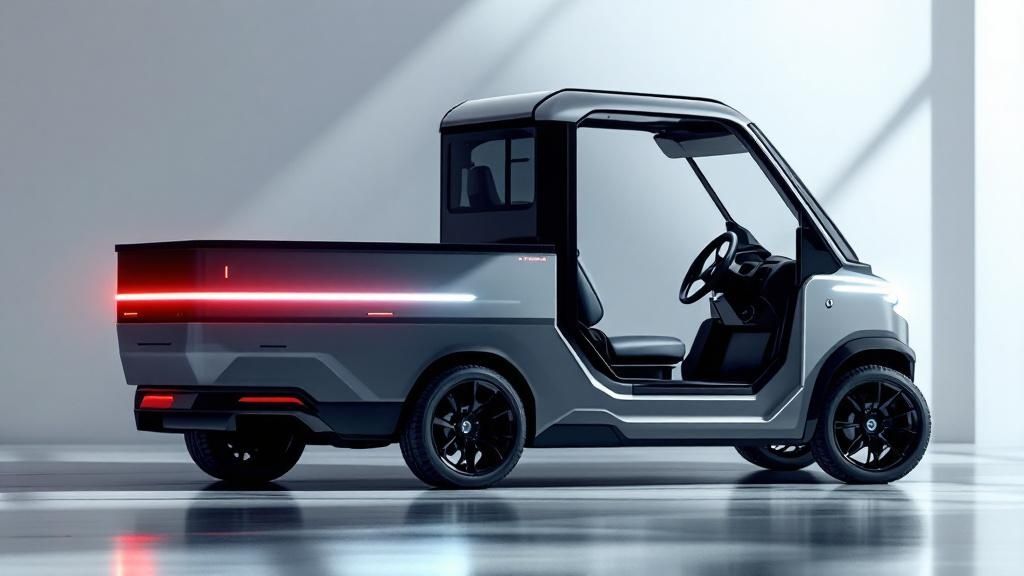
So, why are so many fleet managers and property owners switching to an electric utility vehicle? It’s about much more than just "going green." Moving to EUVs brings real-world business advantages that can strengthen your bottom line, make your operations run smoother, and get your fleet ready for the future.
The upsides really boil down to three things: clear financial wins, better performance on the job, and hitting those all-important sustainability goals. Let's dig into what you actually gain.
Slash Your Operating and Maintenance Costs
The first and most obvious benefit you’ll notice is the dramatic drop in what it costs to run these vehicles. Think about it: what would it mean to completely eliminate the fuel budget for your utility fleet? By trading gasoline for electricity, you’re swapping volatile, unpredictable fuel prices for the much more stable and affordable cost of a charge.
But the savings don't stop there. A gas engine is a complicated beast full of moving parts that need constant attention. An electric motor? It's a marvel of simplicity.
This simplicity means you can forget about:
- Regular oil changes and filter swaps.
- Replacing spark plugs, belts, and hoses.
- Expensive exhaust system repairs.
- Topping off or flushing engine-related fluids.
All of this translates directly into less downtime and more time getting work done. When your vehicles are working instead of sitting in the shop, your team is more productive, and your total cost of ownership plummets over the vehicle's life.
Gain a Powerful Operational Advantage
Beyond the money you save, an electric utility vehicle offers a few unique tricks up its sleeve that gas-powered models just can't replicate. The two biggest game-changers are silent operation and instant torque.
Silent Operation
Picture a maintenance crew starting their day at a resort or on a college campus at 6 a.m. A loud gas UTV is going to wake people up and cause complaints. An EUV, on the other hand, is nearly silent. This means your teams can work early mornings or late evenings without disturbing anyone.
This kind of flexibility is a massive advantage in noise-sensitive places like:
- Hotels, resorts, and golf courses.
- University and corporate campuses.
- Residential neighborhoods and parks.
- Indoor spaces like warehouses or event venues.
Instant Electric Torque
A gas engine has to build up revs to deliver power. An electric motor gives you 100% of its torque the second you touch the pedal. There's no lag.
This immediate power makes an electric utility vehicle incredibly capable when the job gets tough. It can pull heavy loads from a complete stop, climb steep hills without a hint of struggle, and push through mud or rough terrain with confidence.
Achieve Sustainability and Meet Modern Standards
Of course, the practical benefits are backed by a powerful statement about your company's commitment to the environment. With zero tailpipe emissions, EUVs help you create a cleaner, healthier space for your staff, your customers, and the wider community. This isn't just a feel-good measure; it can genuinely boost your brand's reputation and attract clients and employees who care about sustainability.
Let's be honest, this shift is also becoming a necessity. Governments are increasingly pushing to phase out gasoline and diesel vehicles, and when you combine that with the obvious cost savings and performance perks, the path forward is clear.
While the benefits are compelling, it’s smart to look at the full picture. We encourage you to weigh the pros and cons of electric vehicles in our detailed guide to ensure you're making the best possible choice for your fleet.
Where Electric Utility Vehicles Really Shine
An electric utility vehicle is more than just a piece of machinery; it's a problem-solver built for specific jobs. While the benefits of going electric are pretty universal, their real magic happens when you see them in their element. In certain industries, the unique advantages of an EUV—like its silent motor and zero emissions—give it a serious edge that gas-powered models just can't compete with.
From sprawling farms to five-star resorts, these vehicles are tackling real-world challenges every day. Let's walk through the key sectors where an electric utility vehicle has gone from being a "nice-to-have" to the absolute best tool for the job.
Agriculture and Farming
Picture a farmer needing to check on a herd of cattle in the middle of the night or inspect crops at the crack of dawn. The roar and rumble of a traditional gas UTV can spook livestock and ruin the quiet of the morning. This is precisely where an electric utility vehicle proves its worth. Its nearly silent motor lets farmers move across their property without causing a ruckus.
But this isn't just about keeping the peace. It's about smarter farming. You can mend a fence or apply spot treatments without startling the animals or waking up the neighbors, leading to better farm management overall. And that instant torque? It’s perfect for pulling a heavy feed trailer or hauling equipment through a muddy field without missing a beat.
Logistics and Warehouse Management
Walk into any modern distribution center, and you'll see why gas engines are a non-starter. The fumes from a combustion engine would create a hazardous, unhealthy environment for everyone working inside. An electric utility vehicle, with its zero tailpipe emissions, is really the only sensible choice for indoor transport.
They are the go-to workhorse for:
- Moving inventory: Zipping goods from the receiving dock to storage racks, quickly and quietly.
- Order fulfillment: Helping workers pick and pack orders across massive warehouse floors without getting fatigued.
- Facility maintenance: Letting crews carry tools and equipment indoors without worrying about air quality.
The agriculture and industrial logistics sectors have actually been huge drivers in the adoption of EUVs. As e-commerce continues to explode, so does the demand for efficient, clean vehicles inside warehouses and on factory grounds. This has made the electric utility vehicle a critical part of both productivity and compliance. You can see more on how these key sectors are driving market growth.
Hospitality and Resort Operations
For resorts, golf courses, and high-end properties, the guest experience is paramount. A noisy, smelly gas cart chugging past a guest's villa at 7 a.m. can completely shatter the peaceful vacation vibe. An electric utility vehicle helps preserve the exact serene atmosphere that people are paying for.
In the hospitality world, silence is a luxury. EUVs allow groundskeeping, housekeeping, and maintenance teams to operate almost invisibly, keeping the property pristine without ever disturbing a guest.
Crews can transport luggage, deliver room service, and maintain the landscaping without creating a racket. This kind of operational subtlety is a huge competitive advantage in such a customer-focused industry, making the electric utility vehicle a must-have for premier properties.
Municipal and Campus Management
Large campuses—whether it's a university, a corporate headquarters, or a government facility—are like little cities. They demand constant upkeep, personnel transport, and material hauling. An electric utility vehicle offers a clean, quiet, and incredibly cost-effective way to manage these sprawling grounds.
Their uses are all over the map:
- Park Maintenance: Hauling mulch, tools, and trash cans in public parks without the noise pollution.
- University Operations: Moving equipment between buildings, helping with event setup, and for campus security patrols.
- Groundskeeping: Maintaining athletic fields and landscaping across a huge area far more efficiently.
By making the switch to an electric fleet, like the models offered by Solana EV, municipalities and universities don't just shrink their carbon footprint. They also slash their fuel and maintenance budgets. This frees up funds for other essential services, delivering better value to taxpayers and students alike.
Choosing the Right Electric Utility Vehicle

When you're ready to buy an electric utility vehicle, the last thing you want to do is get lost in a sea of glossy brochures and slick marketing. The real goal is to find the right machine for the actual work you do every day. A smart purchase isn't about getting the most features; it's about matching the vehicle's capabilities to your specific job site demands.
Let's cut through the noise and focus on what really counts. Making the right choice means you'll get a workhorse that's powerful enough for your toughest tasks without paying extra for specs you'll never use. We'll walk through the critical factors to consider, starting with the very heart of the machine: its battery.
Assess Your Power Source: The Battery Decision
Think of the battery in an EUV as the engine and fuel tank all in one. It determines just about everything—how far you can go, how hard you can work, and what it'll cost to operate over the long haul. Your choice really boils down to two types of technology: the old-school lead-acid and the modern lithium-ion.
-
Lead-Acid Batteries: These have been around for a long time. They're cheaper upfront, which can be tempting, but they come with strings attached. You have to perform regular maintenance (like topping off water levels), and they have a much shorter lifespan. Under heavy, daily use, you might only get a few years out of them.
-
Lithium-ion Batteries: There’s a reason this is the standard for modern EVs and high-end electronics. Lithium-ion batteries are lighter, they charge up faster, and they last a whole lot longer—often 8-10 years. Best of all, they're completely maintenance-free. While they cost more initially, their longevity and efficiency mean you actually spend less over the vehicle's lifetime.
For any serious commercial job where you can't afford downtime, the lithium-ion battery is almost always the smarter long-term investment.
Match Payload and Towing to Your Real-World Needs
One of the biggest mistakes people make is underestimating how much they'll need to haul or tow. You have to plan for your most demanding days, not just your average ones. If you constantly overload a utility vehicle, you're going to put a massive strain on the motor and drain the battery in record time, which wears out the vehicle much faster.
Before you even look at models, get clear on these questions:
- What's the absolute heaviest load of tools, soil, or equipment I'll ever put in the cargo bed?
- What's the heaviest trailer I could realistically see myself pulling?
- Will I be doing this on flat ground, or do I need to tackle steep hills with that weight?
Always pick a vehicle with payload and towing ratings that are comfortably above your maximum needs. That extra buffer is what keeps the vehicle running smoothly without stress, protecting your investment for years.
A vehicle’s true power isn’t just a number on a spec sheet; it’s about having enough capability in reserve to handle your toughest day on the job with ease. This buffer is key to ensuring longevity and reliable performance.
Getting these requirements right is a huge part of smart electric vehicle fleet management, which helps you optimize your entire operation.
Select the Right Drivetrain for Your Terrain
The drivetrain is simply what gets the power from the motor to the wheels. Your choice here—between Rear-Wheel Drive (RWD) and All-Wheel Drive (AWD)—should be based entirely on where you'll be driving.
Rear-Wheel Drive (RWD): Power goes to the back wheels only. This is perfectly fine for most work on pavement, grass, or flat, dry ground. RWD systems are a bit simpler and more energy-efficient, which can sometimes mean you get a little more range out of a charge.
All-Wheel Drive (AWD): Power is sent to all four wheels, giving you a serious grip and much better stability. If your daily work involves mud, snow, loose gravel, or climbing up and down uneven hills, then AWD isn't just a nice-to-have, it's a necessity. It’s what keeps you moving and in control when an RWD vehicle would be spinning its wheels.
When you're shopping for an EUV, comparing the technical specs side-by-side is the best way to see which model truly fits your needs. This table breaks down the most important features to look at.
Key Specifications to Compare in an Electric Utility Vehicle
| Specification | What to Look For | Why It Matters |
|---|---|---|
| Battery Type | Lithium-ion vs. Lead-Acid | Lithium-ion offers a longer lifespan, faster charging, and zero maintenance. |
| Range | Real-world estimates based on load and terrain | The advertised range is often a best-case scenario; you need to know its daily limit. |
| Payload Capacity | A rating that exceeds your maximum anticipated load (in lbs) | Prevents strain on the motor and frame, ensuring longevity and safety. |
| Towing Capacity | A number higher than the heaviest trailer you'll pull (in lbs) | Ensures you can move heavy equipment safely without damaging the drivetrain. |
| Drivetrain | RWD for flat ground; AWD for tough, uneven, or slick terrain | Matches the vehicle's traction capabilities to your specific work environment. |
| Motor Power | AC (Alternating Current) motors for better efficiency & torque | AC motors are the modern standard, providing more power and better performance on hills. |
By using a clear framework like this, you can move past the sales pitch and focus on the hard data that defines how a vehicle will actually perform on your property.
Build Your Actionable Buying Checklist
Once you've narrowed down the big-ticket items, it's time to run through a final checklist. This will help you catch any small details that could make a big difference later on.
- Verify the Real-World Range: Don't just accept the sticker number. Ask how that range holds up with a full payload or on hilly terrain.
- Evaluate Charging Infrastructure: Do you have the right outlet handy? Most EUVs use a standard 110V outlet, but some might need a 220V. Make sure you have a convenient spot for overnight charging.
- Inspect Build Quality: Get hands-on. Look for a solid, fully welded steel frame, not a bolted one. Check the durability of the cargo bed and the quality of the suspension.
- Consider Essential Accessories: Think about what you'll really need. A windshield, roof, headlights, or a hydraulic dump bed can be game-changers. It's better to factor them into your budget now than to add them later.
By taking the time to think through these factors—from the battery to the build quality—you can confidently pick an electric utility vehicle that will be a dependable and valuable part of your operation for years to come.
The Technology Powering Modern EUVs
To really get what an electric utility vehicle can do for you, it helps to peek under the hood. Unlike the greasy, complicated maze of parts in a gas engine, the tech inside a modern EUV is surprisingly straightforward but incredibly effective. It’s a finely tuned system where every piece plays a specific role to deliver quiet, clean, and seriously reliable power.
Let's break down the core components that make these workhorses tick, from the battery holding the juice to the smart systems that squeeze every last bit of work out of a single charge.
The Heart of the Machine: The Lithium-Ion Battery
At the core of any modern EUV is its battery pack. Older electric carts often used bulky, high-maintenance lead-acid batteries, but today's gold standard is lithium-ion. It’s like comparing an old desktop computer from the 90s to a new lightweight laptop—both work, but the laptop is lighter, more powerful, and lasts way longer on a charge.
Lithium-ion batteries have a much higher energy density, which is just a fancy way of saying they pack more power into a smaller, lighter space. This is a game-changer for a utility vehicle, keeping it nimble while maximizing how far it can go. Even better, these batteries can handle 2,000 to 3,000 charge cycles. For most businesses, that translates to a solid 8-10 years of service life with absolutely zero battery maintenance.
Keeping It Safe and Smart: The Battery Management System
A powerful battery isn't much good if it isn't looked after. That’s the job of the Battery Management System (BMS). The BMS is the silent hero of the electric drivetrain, an onboard computer that acts as the battery's full-time bodyguard.
It constantly monitors the battery pack to protect it from the things that can shorten its life, such as:
- Overcharging: Pushing too much power in can damage the battery cells.
- Over-discharging: Draining the battery completely can cause permanent harm.
- Temperature Control: The BMS ensures the battery stays in its "happy zone"—not too hot, not too cold—for peak performance and safety.
By keeping all the cells balanced and managing the charging process, the BMS is what ensures your vehicle’s battery stays healthy and reliable for its entire lifespan.
Recapturing Energy with Regenerative Braking
One of the coolest innovations in an electric utility vehicle is regenerative braking. When you hit the brakes in your car, the friction creates heat, and that energy is just wasted into the air. Regenerative braking is the exact opposite—it captures that energy and puts it back to work.
When you ease off the accelerator or head downhill in an EUV, the electric motor temporarily reverses its role. Instead of using power to spin the wheels, the momentum of the wheels spins the motor, turning it into a mini-generator. This creates a gentle braking effect and, at the same time, sends electricity back to the battery.
Think of it as a small, automatic "top-up" for your battery every time you brake or coast. While it won't fully recharge your vehicle, this recaptured energy can extend your total range by up to 10-15% over a typical workday, helping you get more done on a single charge.
The Powerhouse: AC Motors and Drivetrains
Finally, let's talk about what gets the wheels turning: the electric motor. Modern EUVs almost always use AC (Alternating Current) motors. Why? They're more efficient, generate more torque for pulling and climbing, and are far more durable than older DC (Direct Current) motors. That instant "get up and go" torque is what gives an EUV its impressive ability to haul heavy loads or tackle steep grades without skipping a beat.
You can learn more about how this technology comes together in a modern electric utility truck by checking out our lineup. When you understand these key technologies, it's easy to see why an electric utility vehicle is simply a smarter, more capable choice for any demanding job.
Answering Your Top Questions About EUVs
Thinking about adding an electric utility vehicle to your fleet? It's a smart move, but it's also natural to have some questions. After all, this isn't just another gas-powered machine. You're looking at a different kind of technology, and you need to know how it stacks up in the real world before you invest.
Let's walk through the most common questions we hear from fleet managers and property owners. We'll give you straight, honest answers on battery life, power, maintenance, and even how these vehicles handle rough weather, so you can feel completely confident in your decision.
How Long Do Electric Utility Vehicle Batteries Really Last?
This is usually the first question out of anyone's mouth, and for good reason—the battery is the heart of the machine. The answer really comes down to the type of battery and how you take care of it. Modern lithium-ion batteries, which are the standard for any serious work vehicle today, are engineered for a very long life.
You can typically expect a quality lithium-ion battery to handle 2,000 to 3,000 full charge cycles. For a vehicle that's put to work every day, this translates to a solid 8 to 10 years of reliable service, and sometimes even more. It’s a huge leap forward from the old days of finicky, high-maintenance lead-acid batteries.
Getting the most out of your battery is a lot like caring for your smartphone. A few simple habits can make a big difference in its overall lifespan:
- Avoid deep discharges: Try not to run the battery all the way down to empty on a regular basis.
- Use the right charger: Stick with the manufacturer's recommended charger. It’s designed to charge your battery safely and efficiently.
- Store it smart: If the vehicle is going to sit for a while, keep the battery partially charged (around 50-70%) and store it in a cool, dry place.
Think of it as simple preventative care. These small steps ensure your EUV’s power source stays dependable for years to come.
Are EUVs Actually Powerful Enough for Heavy-Duty Work?
Yes, absolutely. In fact, for many of the tough jobs you need to get done, an electric utility vehicle delivers its power more effectively. The secret lies in something called instant torque.
A gas engine has to rev up to hit its power band. An electric motor is different—it gives you 100% of its pulling power the second you touch the pedal. There’s no waiting, no lag.
This immediate, on-demand power is what makes an EUV so incredible for real-world work. It means you can tow a heavy trailer from a dead stop, haul a full bed of gravel up a steep hill, or muscle through a muddy patch with total confidence and control.
So while an EUV might not have the top speed of a sporty gas UTV, its raw, functional power for towing, hauling, and climbing is often far superior. It's power built for work, not for the racetrack.
What Kind of Maintenance Do Electric Utility Vehicles Need?
Here’s where you’ll find one of the biggest, most welcome changes from gas. The maintenance schedule for an electric utility vehicle is incredibly simple and much, much cheaper. With no internal combustion engine, a whole list of chores just disappears from your to-do list forever.
Say goodbye to:
- Oil changes
- Spark plug replacements
- Fuel filter swaps
- Exhaust system repairs
- Air filter changes
Routine maintenance boils down to the basics: checking your tires, inspecting brake fluid and pads, and maybe an occasional look at the suspension and electrical connections. The only major component is the battery, and as we covered, a modern lithium-ion pack is designed to be maintenance-free for years. This drastic reduction in service means your vehicle spends more time working and less time in the shop, which directly lowers your total cost of ownership.
How Do Electric Utility Vehicles Handle Cold Weather?
This is a fair question, especially for those of us in colder climates. It’s true that all batteries are less efficient in freezing temperatures, and an EUV is no exception. You might see a temporary drop in your total range, usually around 10-20%, when the mercury really plummets.
However, manufacturers design their vehicles knowing they’ll face winter. Most modern EUVs with lithium-ion batteries perform just fine in the cold. For operations in places with consistently freezing weather, a couple of simple steps can all but eliminate the issue. Parking the vehicle in a garage or shed keeps the battery a bit warmer, and some premium models, like those from Solana EV, may even offer battery heating systems to guarantee peak performance no matter the season. With a little forethought, cold weather is a manageable factor, not a deal-breaker.
Ready to experience the power, quiet, and efficiency of a premium electric utility vehicle? The team at Solana EV can help you find the perfect model for your property or business. Explore our lineup and discover how our vehicles are built to outperform the rest.
Your point of view caught my eye and was very interesting. Thanks. I have a question for you. https://www.binance.com/pt-BR/register?ref=GJY4VW8W