
You're standing in a showroom between two carts. One is finished in a clean silver metallic that looks sharp without shouting. The other is a darker graphite or navy that feels more dramatic under the lights. The obvious question is which one looks better. The more useful question is which finish will still look right after dust, sunscreen, tree sap, wet grass, gravel, and two seasons of regular use.
Silver isn't automatically the right choice, but it's rarely a bad one. The finish can hide everyday dust and light marks, suit both resort and neighborhood settings, and pair well with modern electric-cart styling. The catch is that the color won't compensate for poor surface preparation, a weak clear coat, a rust-prone frame, or the wrong battery specification.
The practical promise: by the time you finish, you'll know whether to choose factory silver paint, repaint a current cart, or use a wrap, how silver really wears, and which chassis and battery decisions protect your investment.
Table of Contents
- Why Silver Golf Carts Are Having a Moment
- The Market Behind the Silver Finish Trend
- Paint vs Wrap for a Silver Golf Cart
- How a Silver Finish Is Actually Applied
- Does Silver Really Wear Better Than Other Colors
- Keeping a Silver Golf Cart Looking New
- Ordering and Customizing a Silver Golf Cart
Why Silver Golf Carts Are Having a Moment
A silver golf cart has the same appeal as a well-kept silver SUV. It looks contemporary, but it doesn't demand constant detailing to maintain its presence. In a dealer showroom, that matters because buyers usually aren't choosing a cart for one weekend. They're choosing something that may shuttle guests, carry family members, serve a gated community, or sit outside beside a house where every cosmetic flaw becomes visible.
The darker cart often wins the first glance. Under direct showroom lighting, deep metallic blue, black, or graphite can look richer and more expensive. After regular use, though, darker finishes tend to reveal dust, water spots, light swirls, and fine scratches more readily. Silver gives you a wider margin between washes, especially when the cart spends its days on dusty paths or near landscaping.
That doesn't mean silver is maintenance-free. A neglected silver cart can still develop chalking, stained trim, dull clear coat, and corrosion around hardware. Color affects what you see first. The quality of the finish, the material underneath it, and the care routine determine how long the cart stays presentable.
The showroom decision is about use
For a private owner, silver works when the cart needs to look polished without becoming a weekend detailing project. For a resort or hospitality operator, it has another advantage. Silver looks neutral enough to fit different properties, but distinctive enough to feel more intentional than a basic utility finish.
Silver also suits modern electric carts with automotive-style dashboards, LED lighting, premium seating, and enclosed body panels. It gives those features a coherent exterior rather than making the cart look like an upgraded work vehicle.
Four questions should guide the purchase:
- Which finish route fits the ownership horizon? Factory paint is the safest long-term choice, while a wrap makes more sense when reversibility matters.
- How will the finish age in your environment? Coastal air, irrigation, gravel, and intense sun place different demands on the coating and chassis.
- Will silver reduce upkeep enough to justify choosing it? Usually, yes, if you're comparing it with black or another dark glossy finish. It won't eliminate washing or paint protection.
- What should you specify before delivery? Battery chemistry, frame material, seating, street-legal equipment, and the finish itself deserve equal attention.
The best silver golf cart isn't just the one with the most attractive paint. It's the one whose finish, structure, and equipment match the way you'll drive it.
The Market Behind the Silver Finish Trend
Silver finishes are appearing at the right time for the category. Golf carts now serve more than fairways and maintenance crews. Resorts use them for guest transportation, campuses use them for short-distance mobility, and gated communities use them for everyday travel. In those environments, buyers care about curb appeal, perceived quality, and consistency with the surrounding property, not just basic movement.
The broader category is expanding as those use cases mature. The global golf cart market has been estimated at USD 2.3 billion in 2025 and is projected to reach USD 5.1 billion by 2035, according to Global Market Insights' golf cart market analysis. That projection implies long-run expansion of roughly 122% over the decade, and the same source reports that North America held 44.7% of the overall market in 2024.
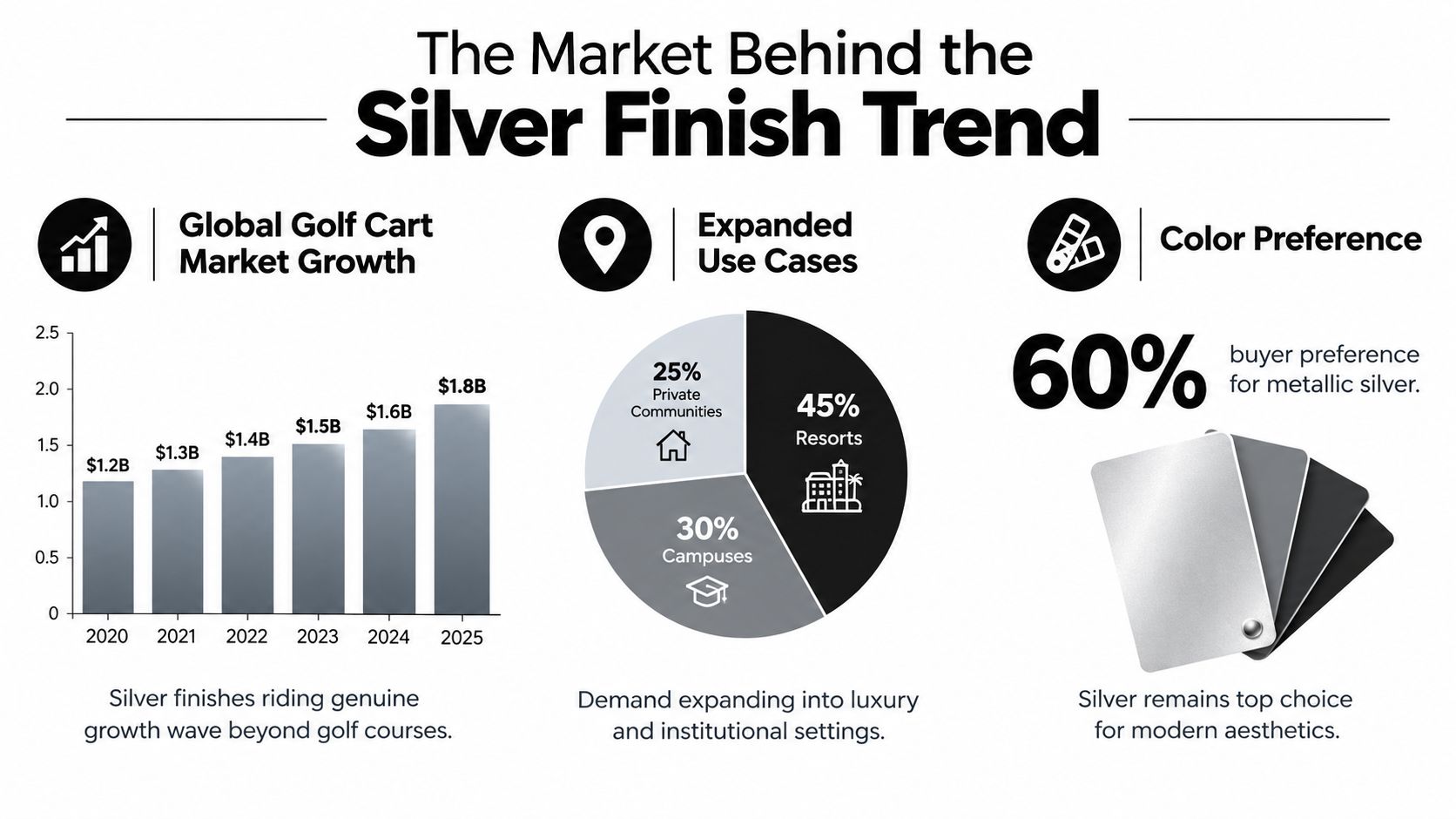
The important point isn't that silver itself has a separate proven market size. It's that a growing cart category creates more room for appearance-led specifications. When a cart operates at a luxury property, outside a modern home, or across a corporate campus, the finish becomes part of the vehicle's job.
Electric power changes the specification
Electrification is also reshaping the buyer's priorities. One market study reports that electric golf carts represented 95.0% of vehicle-type sales in 2026, while a U.S.-focused report says electric models captured 78% of demand in 2025. That U.S. study also estimates annual sales at about 185,000 units in 2025, rising toward 238,000 by 2031, and places the country's golf-facility count at more than 16,000, roughly 43% of global supply. Those figures come from Future Market Insights' golf cart market report.
Electric dominance makes finish selection more visible. Buyers aren't evaluating only motor noise, fuel stops, or course utility. They're comparing a vehicle-like ownership experience, including range, charging, cabin comfort, controls, technology, and exterior design.
That's why silver is more than a paint preference in this segment. It positions the cart as a refined mobility vehicle for locations where appearance matters. The finish won't create quality by itself, but it can reinforce a premium specification when the chassis, battery, trim, and build quality support it.
Paint vs Wrap for a Silver Golf Cart
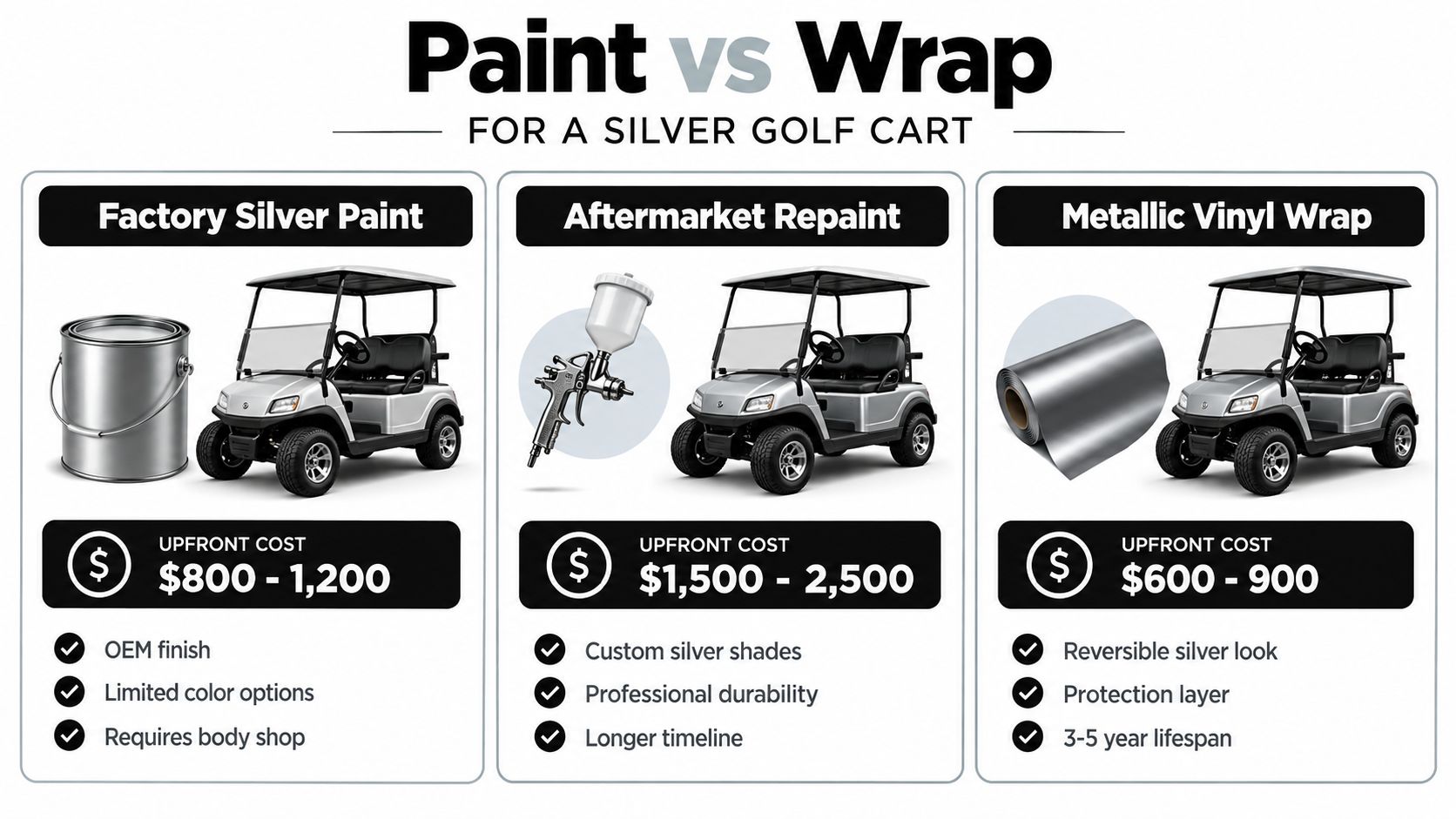
There are three sensible ways to get a silver cart: order factory silver, have an existing cart professionally repainted, or install a metallic vinyl wrap. The right choice depends less on the shade and more on how long you'll keep the cart, how hard it will work, and whether you may want to return it to another finish.
| Finish Route | Durability | Reversibility | Best For |
|---|---|---|---|
| Factory silver paint | Strongest starting point when applied by the manufacturer | Low | Long-term owners who want an integrated finish |
| Professional aftermarket repaint | Can be excellent when preparation and clear coating are done correctly | Low to moderate | Owners who want a custom shade or are restoring a body |
| Metallic vinyl wrap | Good surface protection, but vulnerable to edge lifting and damage from poor installation | High | Temporary styling, branding, or owners who value flexibility |
Factory paint usually wins for a cart you'll keep for years. The finish is applied as part of the original production process, and the body panels, trim, and hardware arrive designed to work together. Your color options may be narrower, but you avoid the uncertainty of discovering how a shop handled panel removal, masking, sanding, or reassembly.
A professional repaint earns its place when the original body is faded, damaged, or an uncommon silver shade is important to you. The shop must inspect the plastic or fiberglass, remove contamination, address chips and cracks, and apply the correct primer system. A beautiful metallic color sprayed over a poorly prepared surface is still a poor finish.
A wrap is the practical choice for a lease-style ownership period, an event fleet, a temporary brand treatment, or anyone who wants to reverse the decision later. It can protect the underlying finish from light exposure and minor surface wear, but it won't hide bad panel condition. Sharp edges, rough repairs, and contaminated surfaces telegraph through the film.
Make the choice by ownership horizon
Choose factory silver paint if you're buying new, plan to keep the cart, and care about the cleanest resale presentation. Choose professional repaint if the cart already has a sound chassis and body but needs restoration or a specific metallic tone. Choose metallic wrap if reversibility, short-term appearance, or event branding matters more than permanent finish integration.
For resort operators, exterior identification can be part of the operating plan. Resources on designing golf cart signs for events can help when a silver fleet also needs temporary wayfinding, sponsor branding, or event-specific identification.
Before selecting a shade, review the broader golf cart color guide and compare how the finish works with your roof, seats, wheels, and trim. Silver looks especially clean with black accents, but the wrong combination of bright trim and low-quality film can make a premium cart look pieced together.
How a Silver Finish Is Actually Applied
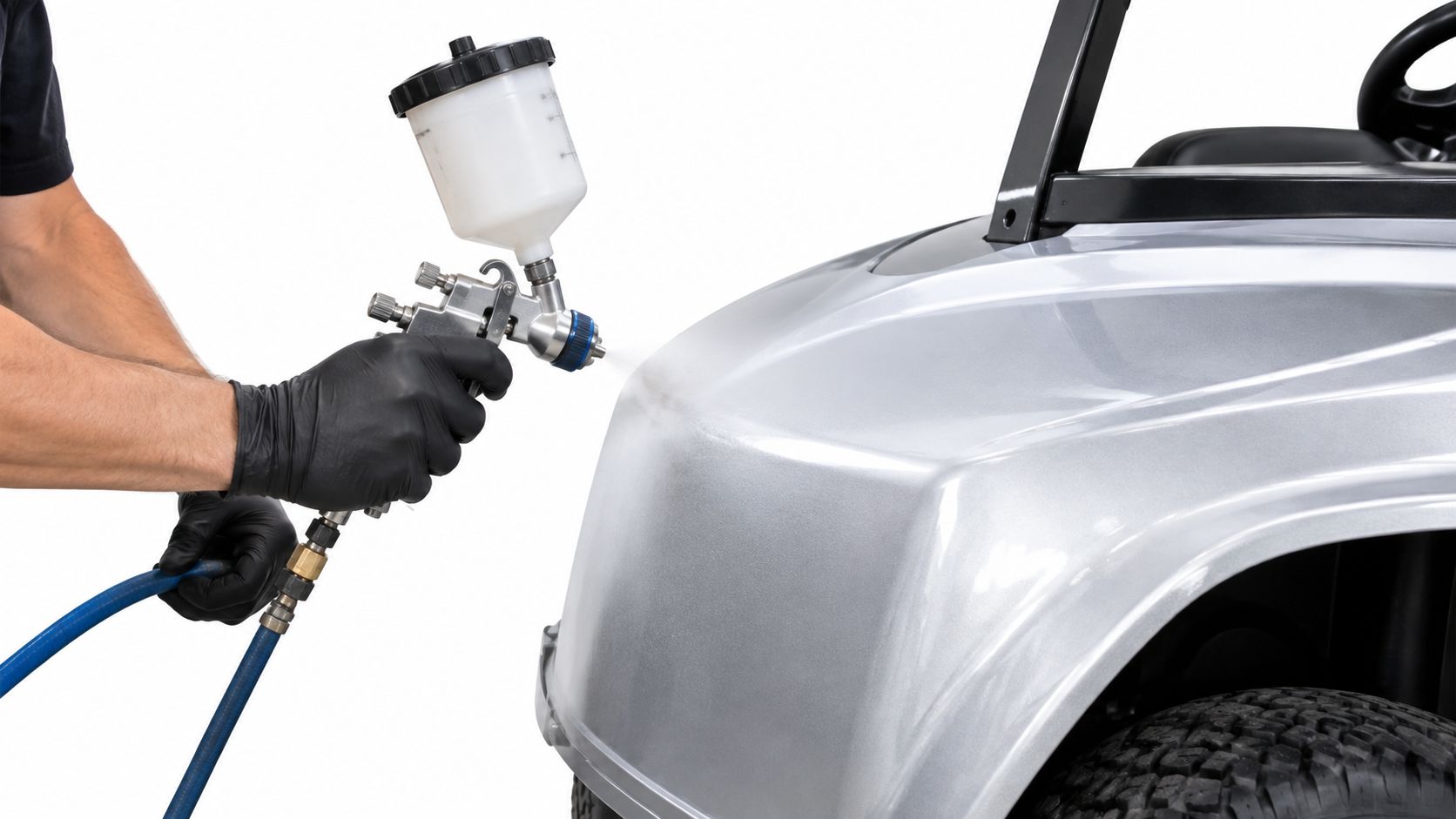
A durable silver finish starts before anyone opens a paint gun. A professional shop first checks the body for oxidation, stress cracks, old repairs, embedded dirt, and panels made from different materials. A cart that looks ready for paint from ten feet away may still need extensive preparation around fenders, wheel arches, hinges, and lower rocker areas.
Preparation determines adhesion
Plastic and fiberglass panels need particular attention. The surface is cleaned and degreased, then sanded so the coating has a mechanical bond. Recent application guidance recommends sanding in the 320 to 400 grit range, followed by 600 grit before paint, and using an adhesion promoter or bonding primer on plastic and fiberglass surfaces. Those preparation details are covered in this golf cart painting and wrapping guide.
The sequence usually looks like this:
- Remove or protect trim. Lights, badges, seats, hinges, handles, and vulnerable hardware should come off or be masked properly.
- Clean the body thoroughly. Wax, silicone, road film, sunscreen, and oily residue can cause fisheyes and poor bonding.
- Sand the existing surface. The goal is a uniform profile, not deep scratches that remain visible under metallic paint.
- Apply adhesion promoter where required. Plastic and fiberglass need a system suited to the substrate.
- Prime repairs and exposed areas. Primer creates a consistent base and helps prevent shade variation.
- Spray the metallic base coat. Silver can reveal uneven coverage, so a controlled spray pattern matters.
- Protect it with clear coat. The clear coat supplies gloss, chemical resistance, and much of the finish's practical protection.
DIY application is realistic for small trim pieces or a low-stakes utility cart when you have a clean workspace, suitable ventilation, and patience. A complete body repaint is different. Metallic pigments expose uneven technique, and mistakes around edges or panel gaps remain obvious. Pay a professional when the cart is valuable, the body needs repair, or the finish must represent a resort, dealership, or hospitality brand.
Wrap installation follows a similar preparation logic but replaces primer, base coat, and clear coat with controlled film application. The installer still needs a smooth, clean surface. Dust, wax, rough edges, and poorly repaired cracks reduce adhesion and create visible defects.
Fresh paint needs time to cure before aggressive cleaning. Pressure washing too early can damage the finish, lift edges, or drive water into seams and trim. Ask the shop for its exact wash and handling schedule rather than assuming the cart is ready for full service as soon as it leaves the booth.
The same rule applies to a wrap. Don't attack fresh edges with a pressure washer, stiff brush, or harsh chemical. Give the installer's bond time to stabilize, then wash with controlled pressure and a soft mitt.
Does Silver Really Wear Better Than Other Colors
Silver does hide daily wear better than most dark glossy finishes, but that benefit has limits. Dust blends into the metallic surface, light scratches are less conspicuous, and water spotting usually looks less severe than it does on black. A dark blue or navy cart can look spectacular when freshly cleaned, then show every swirl mark after a few routine washes.
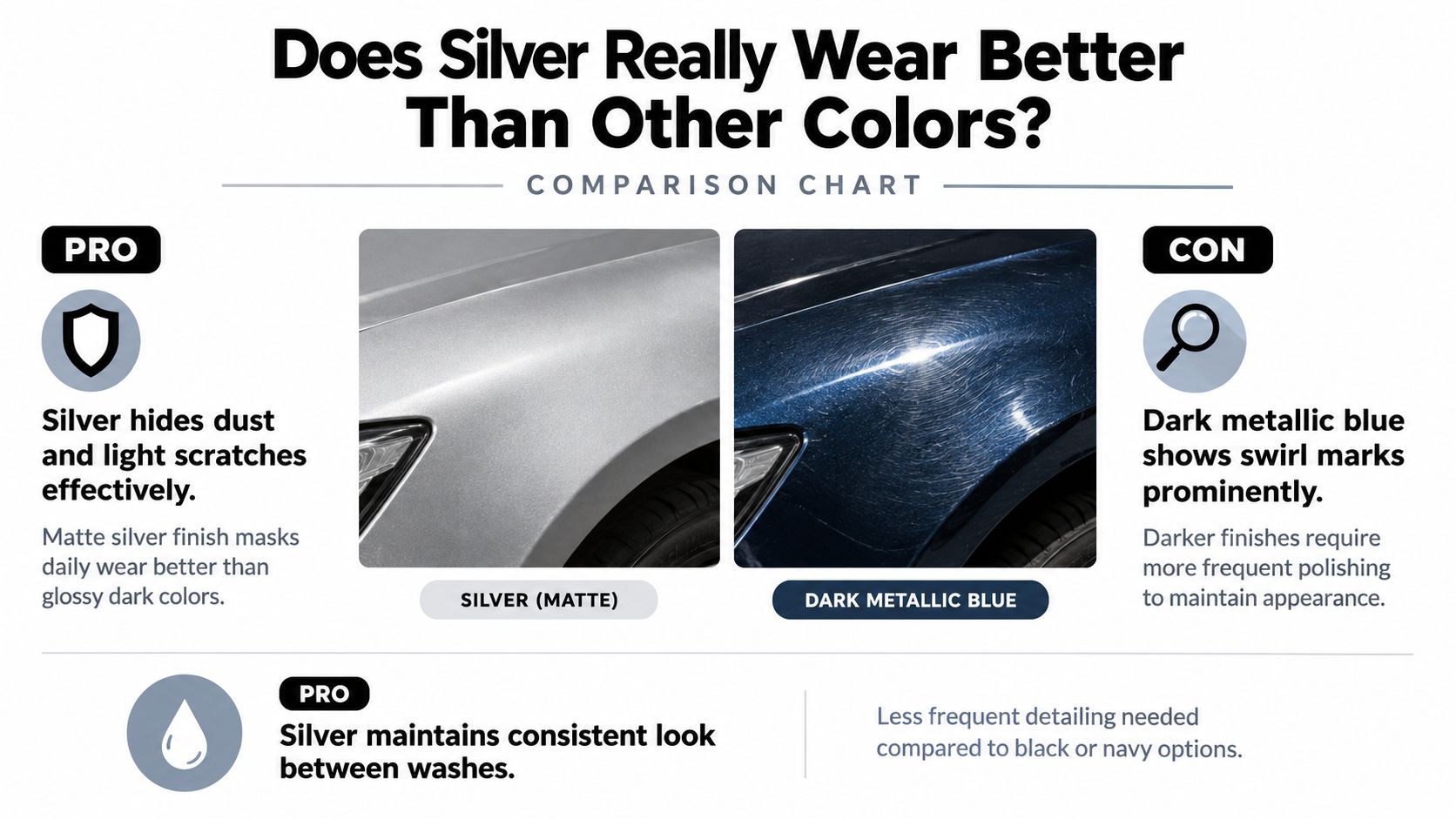
Silver's strongest advantage is consistency. It tends to look acceptably clean across a wider range of conditions, which matters when the cart is used daily and cleaned between scheduled operations rather than before every outing. That can reduce the pressure to polish the body constantly, but it doesn't protect against stone chips, paint failure, bird residue, or corrosion.
Where darker finishes still make sense
Darker metallics have a richer visual depth and can coordinate well with black wheels, tinted windshields, and dark upholstery. They also show defects sooner, which can be useful for an owner who wants to catch contamination or surface damage immediately. The trade-off is more visible maintenance, especially after dry-road use or repeated wiping without a proper wash.
Heat is another practical consideration in sunny climates. Darker exterior colors generally absorb more solar energy than lighter finishes, which can make exposed surfaces feel hotter. Silver isn't a substitute for a roof, windshield, ventilation, or shaded parking, but it's the more sensible direction when the cart regularly sits in direct sun.
Visibility favors silver in many neighborhood and resort settings because the cart presents a clear, neutral silhouette. That doesn't replace lights, reflectors, mirrors, or lawful equipment for street use. It makes the vehicle easier to distinguish from dark landscaping and shadowed driveways.
The genuine resale question is not whether every buyer prefers silver. Buyers value a finish that looks original, even, and properly maintained. Silver can help because it masks minor cosmetic wear, but a neglected silver cart won't outperform a carefully maintained dark one.
Recent care guidance emphasizes clear coats, ceramic sealants, and regular waxing rather than treating color as a substitute for protection. My recommendation is straightforward. Choose silver if you want lower visual upkeep and broad styling appeal. Choose a darker metallic only if you're willing to wash and correct it more often for the deeper appearance.
Keeping a Silver Golf Cart Looking New
The frame and coating stack matter more than the color. In a coastal, irrigated, or salt-exposed environment, an aluminum chassis has a corrosion-management advantage because aluminum forms a protective oxide layer. Steel frames typically begin to fail at coating breaches, welds, fasteners, and seams that hold moisture.
That doesn't make aluminum immune to neglect. Hardware, brackets, suspension parts, and mixed-metal contact points still deserve inspection. A powder-coated aluminum frame is far more resistant to rust staining and structural corrosion than exposed or poorly protected steel, but the owner must still keep the underside clean.
Use the environment to set the routine
The most important intervention after salt or irrigation exposure is a thorough rinse. It interrupts the corrosion chain before residue reaches suspension and steering mounting points. Don't wait for visible rust staining. By then, contamination may already be sitting in seams and around fasteners.
A practical care schedule looks like this:
- After salt or irrigation exposure: Rinse the body, undercarriage, wheel wells, and lower frame areas with clean water.
- During regular use: Wash with a mild automotive soap and a soft mitt. Don't use abrasive household cleaners on metallic paint or clear coat.
- After washing: Dry seams, trim, hinges, and hardware so trapped water doesn't sit against the finish.
- At inspection time: Check chips and breaches around the lower body, wheel arches, fasteners, and suspension mounts.
- Before storage: Clean the cart, charge or store the battery according to its chemistry, and leave the body dry and protected.
A silver finish benefits from a quality clear coat and can benefit from a ceramic sealant or wax. Those products make contamination easier to remove, but they won't repair a damaged coating or stop corrosion caused by a neglected frame. Use protection as a maintenance aid, not as permission to skip rinsing.
Battery weight affects the rest of the cart
Battery chemistry changes upkeep and driving behavior. Low-speed electric vehicle battery packs commonly fall in the 8 kWh to 15 kWh range, with lead-acid systems often weighing around 180 to 250 pounds and lithium packs around 50 to 90 pounds, according to this low-speed electric vehicle buying guide. That difference affects acceleration, braking demand, efficiency, and suspension load.
Lithium's lower mass can reduce the work asked of the suspension and make the cart feel more responsive. Lead-acid packs require more attention to water levels and compartment cleanliness, and electrolyte spills can cause corrosion, including pitting on aluminum components. Keep the battery area clean, inspect for residue, and treat any spill as a structural maintenance issue rather than a cosmetic one.
For a fuller routine covering cleaning, battery checks, tires, and storage, use this golf cart maintenance guide. The finish will stay attractive longer when the entire vehicle is maintained as a system.
Ordering and Customizing a Silver Golf Cart
Start with the use case, not the paint chip. Decide whether the cart will carry guests, family members, equipment, or a mixture of passengers and cargo. Then choose the seating configuration, required street-legal equipment, ground clearance, storage, and intended terrain before you compare silver shades.
Build the specification in the right order
- Browse suitable models. Look for the body style, seating, suspension, lighting, windshield, and safety equipment that match the property or route.
- Choose the finish route. Factory silver is the cleanest long-term purchase. Dealer customization makes sense when you need a particular shade, accessory package, or existing-cart conversion.
- Select the battery deliberately. Ask for the pack chemistry, usable range expectations, charging setup, warranty, and total battery weight. A lighter lithium system can change how the cart accelerates, brakes, and carries its rated load.
- Review the chassis material. Aluminum is the stronger choice for coastal or irrigation-heavy environments when corrosion resistance is a priority.
- Confirm the technology package. Premium electric carts may offer features such as Apple CarPlay and Android Auto, but those should support the driving experience rather than distract from battery, braking, and frame decisions.
- Get the complete delivered price. Include the finish, roof, windshield, mirrors, lights, tires, charger, delivery, registration requirements, and any dealer-installed accessories.
- Discuss financing with the dealer. Ask about current retail programs, including whether 0% APR terms are available for qualifying buyers. Promotional terms change, so confirm the exact duration, eligibility, and required down payment in writing.
Battery weight deserves special attention on a street-legal or resort-use cart. The published pack range and weight figures are not trivia. They help you understand how much mass the suspension and brakes will manage every day, especially with several passengers aboard.
Use the custom golf cart options to organize your preferred finish, seating, technology, and utility features before asking for a final quote. A dealer should be able to explain what is factory-installed, what is dealer-installed, and what affects the warranty.
Silver is the right call when you want a modern appearance with forgiving day-to-day presentation. Pair it with a corrosion-resistant chassis, a battery suited to the load, and a finish applied by people who respect surface preparation. That combination will age far better than an expensive color applied to the wrong platform.
Solana EV offers premium electric carts in silver, including configurations built around aluminum chassis construction and modern features such as Apple CarPlay and Android Auto. Visit Solana EV to review vehicle options, compare specifications, and connect with a dealer about a silver cart configured for your property or daily route.