
When you hear "electric cart," you probably picture perfectly manicured fairways and a quiet afternoon of golf. But that's a world away from today's off road electric carts. These are tough, capable machines engineered for serious work and play, from the backwoods to the back forty.
What we're seeing is a massive shift away from noisy, fume-belching gas engines. People who work and live outdoors—hunters, farmers, and trail riders—are quickly discovering the unique advantages of silent, electric power.
Why Off Road Electric Carts Are Taking Over
Let's be clear: we're not talking about a golf cart with bigger tires. The modern off-road electric vehicle is a different beast entirely, built from the ground up with powerful motors, aggressive all-terrain tires, and beefy suspension systems that can handle just about anything you throw at them.
This isn't just a niche trend; it's a full-blown movement. The market for off-highway electric vehicles, which includes these rugged carts, was already valued at USD 2.64 billion in 2024. Projections show it rocketing to USD 5.75 billion by 2030. That kind of growth signals a real change in what people demand from a utility vehicle. If you're curious about what's driving this surge, the data from Grand View Research offers a deep dive.
The Allure of Silent Power
One of the biggest draws is something you don't get with an electric motor: noise. For hunters tracking game or wildlife photographers trying to get that perfect shot, the ability to move through the woods without a roaring engine is invaluable. Farmers can check on their herds without spooking them, and property owners can work at dawn without waking the neighbors.
But stealth is only half the story. The other key ingredient is instant torque. Gas engines have to rev up to hit their powerband, but an electric motor gives you all its muscle the second your foot touches the pedal.
That immediate kick is what makes these carts feel so powerful. It gives you the confidence to crawl up steep, rutted hills and the grunt to tow heavy trailers without a moment's hesitation.
Blurring the Lines Between Work and Play
The sheer versatility of these carts is what makes them so popular. They're a perfect tool for a huge range of tasks, seamlessly blending utility with adventure.
- For Property Owners: They're a low-maintenance workhorse for hauling tools, fence posts, and feed across large acreages.
- For Outdoor Enthusiasts: They unlock access to remote trails and hidden fishing spots, all with a minimal environmental footprint.
- For Commercial Use: Resorts, event venues, and job sites rely on them to move people and gear quietly and efficiently.
It's this blend of silent operation, raw power, and clean performance that has pushed off-road electric carts from a curiosity into an essential piece of equipment for anyone needing true go-anywhere capability.
What Makes Your Off-Road Cart Tick?
Getting into off-road electric carts can feel a bit like learning a new language. You'll hear terms like torque, amperage, and AC vs. DC motors thrown around. But don't worry, it's simpler than it sounds. Think of it like knowing the difference between a four-cylinder and a V8 engine—it just helps you pick the right vehicle for how you'll use it.
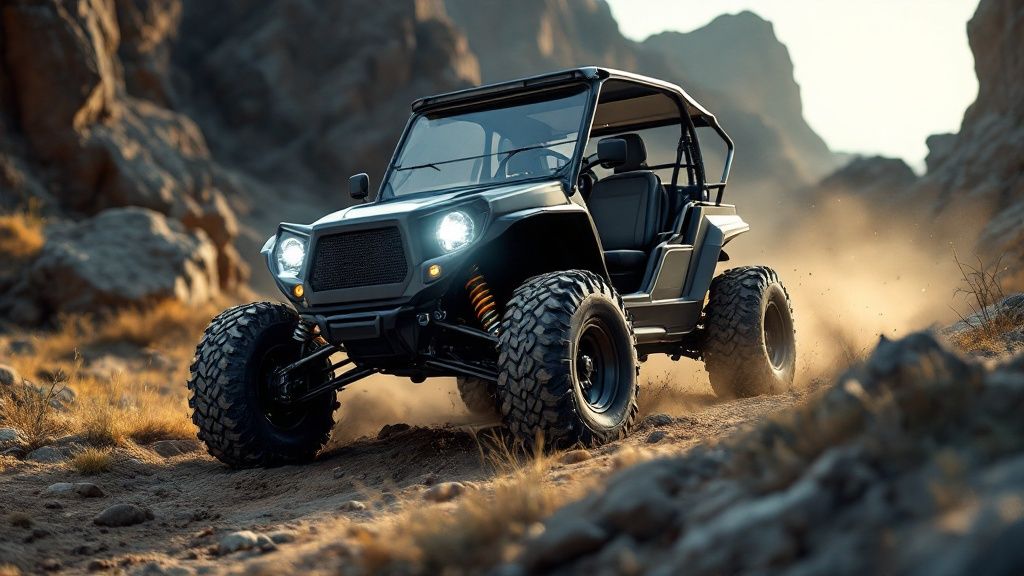
Let's pull back the curtain on the technology that gives these rugged machines their power. We’ll translate the technical jargon on the spec sheet into the real-world performance you’ll actually feel out on the trail.
The Heart of the Machine: The Motor
The electric motor is the engine of your cart. It’s what turns the juice from the batteries into raw, trail-conquering motion. In the world of modern off-road carts, you'll mainly see two types: Alternating Current (AC) and Direct Current (DC).
An AC motor is like a modern marathon runner—it's incredibly efficient, runs cool, and is virtually maintenance-free because it doesn't have brushes that wear out over time. This efficiency means you get longer run times and much better performance, especially when you need a burst of speed or are trying to climb a steep hill.
A DC motor, on the other hand, is more like an old, reliable farm truck. It's a simpler and often cheaper technology, but it’s not as efficient and the brushes will need to be replaced eventually. For anyone serious about hitting the trails, an AC motor is the way to go. It just delivers more consistent power and is far more reliable in the long run.
The Fuel Tank: The Battery System
Your battery is the cart’s fuel tank. It dictates everything from how far you can roam to how much punch you have when you hit the accelerator. The two main players here are the old-school lead-acid batteries and the newer, more advanced lithium-ion batteries.
Lead-acid batteries are the traditional choice. They’re heavy, require you to regularly check and top off water levels, and their power tends to fade as they run down. Imagine an old flashlight with dying batteries—the beam just gets dimmer and dimmer. That’s a lead-acid battery.
Lithium-ion batteries are the new standard for a reason. They are worlds lighter, completely maintenance-free, and deliver consistent, full power right until they’re nearly empty. Plus, they charge way faster and can last up to five times longer than lead-acid. For serious off-roading, the benefits are just too big to ignore.
The Bottom Line: While lead-acid batteries will get you moving, lithium-ion technology delivers a far superior experience. You get more power, longer range, and a much longer lifespan, making it the clear winner for any demanding off-road adventure.
From Specs to Performance: What the Numbers Really Mean
When you scan a spec sheet, you’ll see numbers for voltage, horsepower, and torque. These aren't just for show—they directly translate to how your cart will perform when the pavement ends.
Here’s a quick guide to what matters when you're looking at cart specs.
Key Performance Metrics of Off Road Electric Carts
| Specification | What It Means | Ideal Range for Off-Roading |
|---|---|---|
| Voltage (V) | Think of it as electrical pressure. Higher voltage means more power can be sent to the motor faster. | 48V is the standard, but 72V systems offer a significant boost in acceleration and climbing power. |
| Horsepower (HP) | This is all about top-end speed. More horsepower helps you reach and maintain higher speeds on flat sections. | 5-15 HP is common, but higher HP is better for covering ground quickly on open trails. |
| Torque | This is the raw twisting force that gets you moving. It's the "grunt" that powers you up steep hills and through mud. | Look for high torque ratings. For off-roading, torque is often more crucial than horsepower. |
So, what does this all mean for you? A cart with massive torque but average horsepower will be an absolute beast at climbing hills, but it might not be the fastest on a flat dirt road. Conversely, a high-horsepower cart with less torque might fly on the flats but struggle on a steep, rocky incline. Finding the right balance is the key to getting a cart that perfectly matches where you plan to ride.
You can get a better sense of how all these parts work together by exploring the real-world advantages of lithium battery golf carts and seeing the dramatic impact they have on overall performance.
How To Conquer Any Terrain
Let's be honest, the real test of an off road electric cart isn't how it looks parked in your driveway—it's how it handles mud, rocks, and steep hills. A vehicle’s true character comes out in the wild. The right features can be the difference between a great day out and a frustrating one spent getting stuck. It's all about matching the cart's capabilities to the challenges you plan to throw at it.
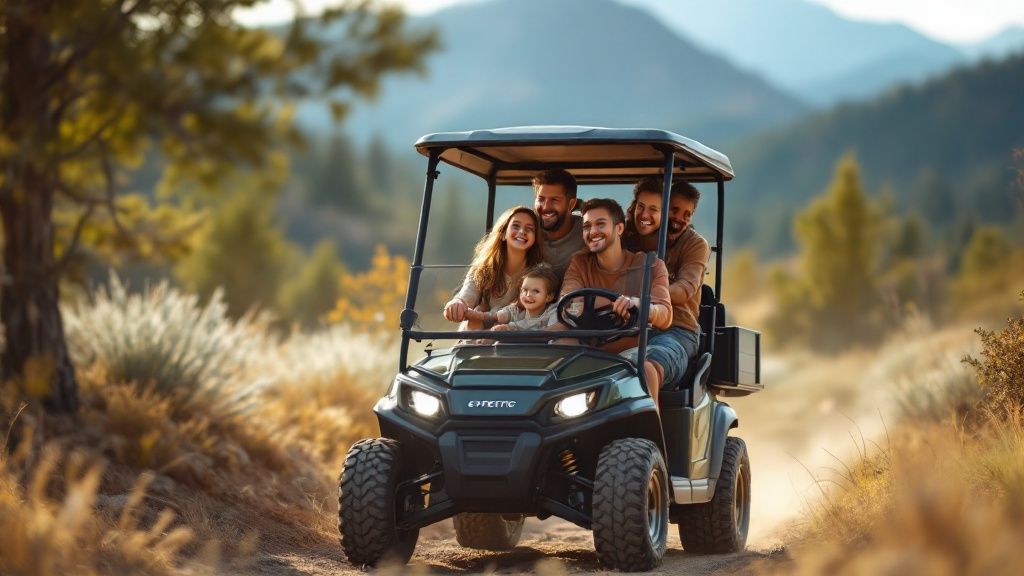
Once you understand how certain components work in the real world, you can pick a machine that won’t quit on you. This isn't just about horsepower; it's about having the right tools for the job.
Mastering Mud and Slick Surfaces
When the trail turns into a soupy mess or a slick, grassy slope, traction is king. This is where a Four-Wheel Drive (4WD) system is absolutely essential. Think of it as giving your cart four hands to grip the ground instead of just two.
A standard 2WD cart only powers the rear wheels, which is perfectly fine on dry pavement. But hit a patch of mud, and those two wheels can just spin and dig themselves into a hole. A 4WD system sends power to all four wheels, which massively improves your grip and gives you the pulling power to claw your way through the muck.
Of course, that 4WD system needs the right partners—tires with deep, aggressive treads. These act like cleats, digging into the soft ground to find a foothold. Without them, even the best 4WD cart is going to struggle.
Tackling Rocks and Uneven Ground
Navigating a rocky trail or a field full of deep ruts demands a different set of skills from your cart. Two things become critical here: ground clearance and a solid suspension system.
Ground clearance is simply the space between the ground and the lowest part of your cart’s frame. You wouldn't try to drive a low-slung sports car over a boulder field, right? The same logic applies here. A high ground clearance, typically 8 inches or more, lets your cart glide over obstacles without getting hung up or damaging the undercarriage.
An independent suspension system is your secret weapon on rough terrain. It allows each wheel to react to bumps on its own, absorbing the shock and keeping all four tires planted on the ground for maximum stability and control.
Conquering Steep Hills and Inclines
Climbing a steep grade is where an electric motor really gets to show off its strength. As we've touched on, this is where instant torque shines. A gas engine needs to build up RPMs to deliver power, but an electric motor gives you all its muscle the second you touch the pedal. That immediate grunt is exactly what you need to start up a sharp incline without rolling back.
For this kind of work, you’ll want a cart with a high-torque motor and a powerful 72V system. That combination gives you the raw strength to climb consistently without bogging down. It’s no surprise that demand for powerful machines like these is booming. The off-road vehicle market was valued at USD 22.9 billion in 2024 and is projected to hit USD 30.69 billion by 2030, all driven by people who need a vehicle that can perform.
Matching Your Equipment to the Environment
The trick is to think about where you'll be spending most of your time and choose a cart with features to match.
- Muddy Fields or Wetlands: Your top priorities should be a 4WD system and aggressive, mud-ready tires.
- Rocky Mountain Trails: Look for high ground clearance and a quality independent suspension.
- Hilly Farmland or Properties: Focus on getting a high-torque motor and a higher voltage battery system like a 72V.
Getting the components right, especially the tires, makes all the difference. For a deeper dive into picking the perfect set for your adventures, check out our comprehensive golf cart tire size guide. When you understand these core principles, you can confidently choose an off-road cart that's a true partner on any terrain.
Smart Maintenance for Your Electric Cart
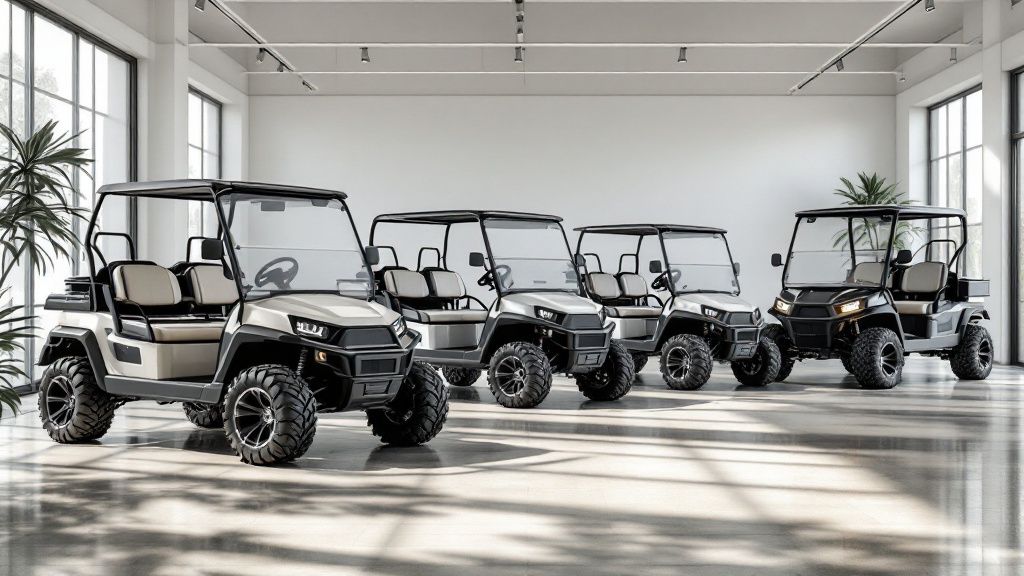
One of the best parts about owning an off-road electric cart is how little time you'll spend in the garage. Forget oil changes, spark plugs, or fussy fuel filters. Your focus gets to be on the trail, not on constant tinkering. That said, “low maintenance” isn’t the same as “no maintenance.”
A bit of smart, preventative care is all it takes to keep your cart running reliably for years. Think of it as a simple checklist—a few quick habits that will save you from surprise repairs and make sure your ride is always ready when you are.
The Power Source: Your Battery’s Health
Your battery is the lifeblood of the entire machine. Taking care of it is the single most important thing you can do to protect your investment. Whether it's a classic lead-acid or a modern lithium-ion system, good charging habits are everything.
With lithium-ion batteries, it's pretty straightforward. Just try to avoid running the battery all the way down to empty. It’s also a good idea not to leave it sitting at a 100% charge for weeks on end. If you’re storing the cart for the winter, aim for a partial charge—somewhere around 50-80% is the sweet spot for long-term health.
Lead-acid batteries need a bit more attention. You'll have to pop the caps and check the water levels in each cell every so often, topping them off with distilled water when they get low. If the plates get exposed to air, they can be permanently damaged, and you'll see a big drop in the battery's performance.
Pro Tip: Always use a smart charger made for your specific battery. These automatically shut off to prevent overcharging, which is one of the fastest ways to kill a battery and ruin its capacity.
Essential Pre-Ride Inspections
Before you hit the trail, do a quick walk-around. It literally takes 60 seconds and can save you from a major headache later. It's just a good habit to get into.
Here’s what I always check:
- Tire Pressure: Low tires hurt your range and make the cart handle poorly. Grab a simple gauge and make sure they’re inflated to the recommended PSI.
- Brake Functionality: Step on the brake pedal. It should feel firm, not mushy. It’s also worth taking a quick peek at the brake lines for any obvious leaks or damage.
- Lights and Signals: If you’re taking it on the road, flick on the headlights, taillights, and turn signals just to make sure everything is working as it should.
These simple checks give you confidence that your cart is safe and ready to perform. For a deeper dive, our complete guide to golf cart maintenance has all the details you’ll ever need.
Post-Adventure Cleanup
After a great day out, hosing down your cart isn't just about making it look good—it's about protecting it. Mud and grime hold moisture against the frame and suspension, which is a recipe for rust and corrosion.
Start with a light rinse to knock off the big chunks. You can use a pressure washer, but be smart about it—keep the nozzle a safe distance from any electrical connections, bearings, or the motor itself. A bucket of mild soap and a soft brush will handle the rest. Rinse it clean, let it dry, and your machine will be in top shape for the next adventure.
Finding the Perfect Off Road Electric Cart
Alright, you've got the basics down on what makes these carts tick and how they handle different terrain. Now for the fun part: picking the right one for you. It's easy to get sidetracked by the biggest motor or the gnarliest-looking tires, but the real secret is finding the machine that perfectly matches what you plan to do with it. This is where you go from just browsing to buying with confidence.
First things first, and this is the most important step: be brutally honest about your primary mission. A cart built for silent, stealthy hunting trips in the deep woods is a completely different beast from one designed to haul heavy feed bags across a wide-open farm. Once you define your main purpose, all the other decisions start falling neatly into place.
What Is Your Primary Mission?
Think about the top three things you'll be asking this cart to do day in and day out. Is it going to be a pure workhorse, a weekend fun machine, or a little bit of both? Answering that question will instantly shrink your list of options and put a spotlight on the features that are truly essential.
- For the Hunter or Wildlife Enthusiast: Stealth is everything. You'll want a cart with a whisper-quiet AC motor, plenty of range to last a full day out, and maybe even a camo finish. Things like a gun rack or a front basket for your gear move from "nice-to-have" to "must-have."
- For the Farmer or Property Manager: Here, it’s all about raw power and durability. Focus on models with a heavy-duty suspension, a big cargo bed, and a high-torque motor built for towing. A steel frame and a beefy 72V system are going to be your best friends.
- For the Trail Riding Family: Comfort and safety take the front seat. You should be looking at four-seaters with good seatbelts, a stable suspension for a smooth ride, and a solid lighting package for those adventures that run a little late.
As you can see, your intended use has a direct impact on the kind of maintenance you'll need to perform to keep your cart running strong for years to come.
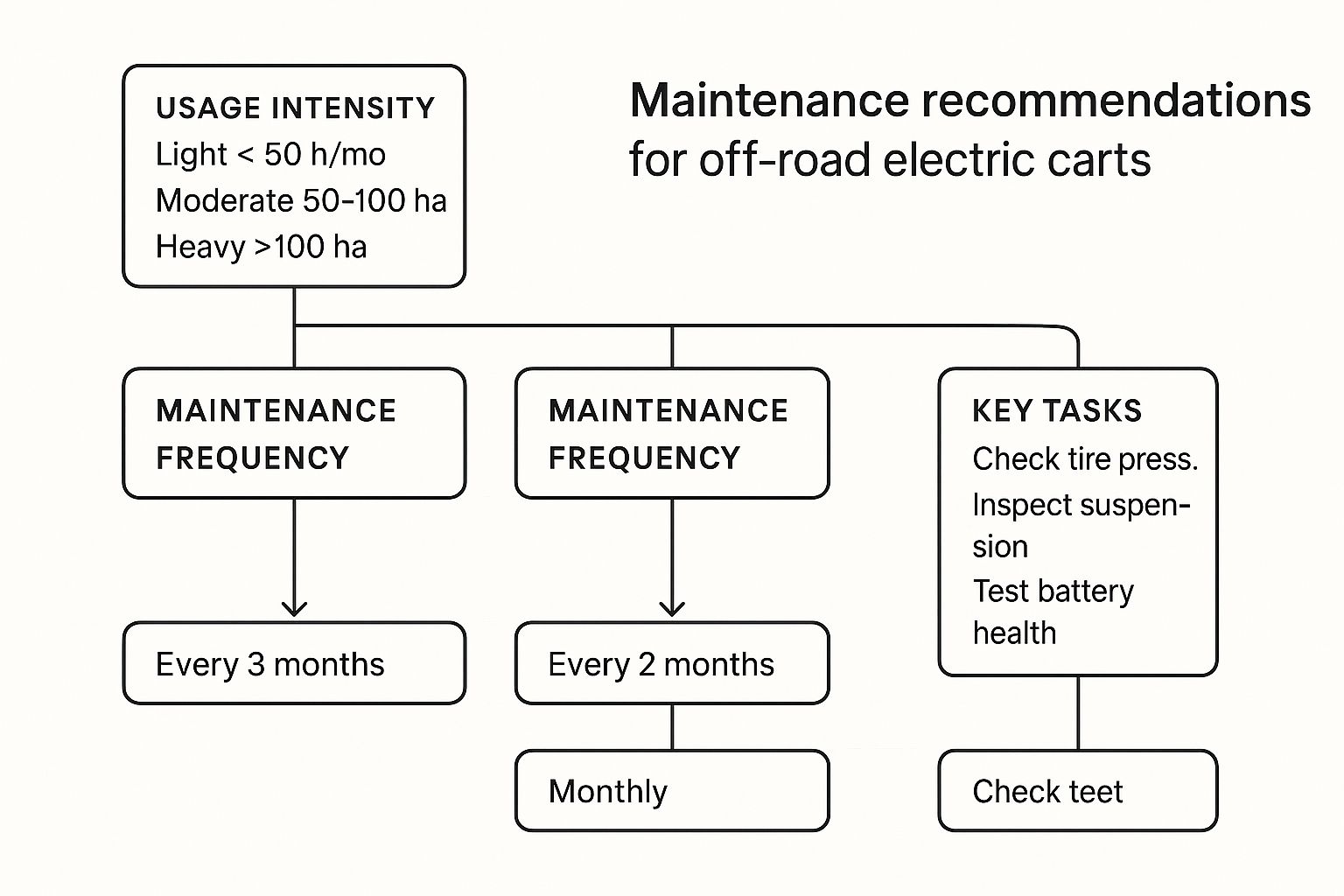
This graphic really drives home the point: the harder you work your machine, the more frequently you need to give it a thorough check-up to keep it in peak condition.
Comparing Your Options
Once you've zeroed in on your mission, you can start comparing different types of vehicles. The market for these carts is growing like a weed, which is great news for buyers. In fact, the U.S. electric off-road vehicle market was valued at about USD 190.5 million in 2024 and is expected to jump at a compound annual growth rate of nearly 14.7% through 2034. You can read more about this market growth to see just how popular these machines are becoming.
To make things a little easier, I've put together a quick comparison to show how different models stack up for specific jobs.
Comparing Off Road Electric Cart Models
This table breaks down the most common types of off-road carts to help you match your needs with the right features and budget.
| Use Case | Key Features to Look For | Typical Price Range | Example Model Type |
|---|---|---|---|
| Hunting & Wildlife | Silent AC Motor, 4WD, Camo Finish, Gun Rack | $12,000 – $18,000 | Rugged 2-Seater UTV |
| Farm & Utility Work | High Torque, Large Cargo Bed, Tow Hitch | $14,000 – $22,000 | Heavy-Duty 2-Seater |
| Family Trail Riding | 4+ Seats, Smooth Suspension, Full Lighting | $15,000 – $25,000 | 4-Seater LSV Style |
| Resort & Property | 6+ Seats, Quiet Operation, Street-Legal Kit | $18,000 – $30,000 | Multi-Passenger Shuttle |
As you can tell, there’s no single "best" cart out there. The best one is simply the one that has the tools you'll actually use.
Looking Beyond the Spec Sheet
The last few things to consider have less to do with horsepower and more to do with your long-term peace of mind. A great cart is only as good as the company that stands behind it. Before you pull the trigger, do a little digging on these crucial details.
A strong warranty and accessible dealer support are just as important as the vehicle's ground clearance. These are the things that turn a good purchase into a great long-term investment.
Look for a manufacturer that offers a solid warranty, especially on the big-ticket items like the battery and motor. Check for a local dealer network, like the one offered by Solana EV. Having skilled technicians nearby when you need service is worth its weight in gold. Lastly, ask about the available upgrades and accessories. Being able to add a winch, better lights, or an enclosed cab down the road means your cart can grow and adapt right along with you.
Your Top Questions About Electric Carts, Answered
As you get closer to picking out the right off-road electric cart, you probably have a few questions rolling around in your head. Getting straight answers is key to feeling good about your choice, so let's dig into some of the most common things people ask.
We’ll cover the nuts and bolts—from battery life and charging to what it takes to get your cart on the road legally.
How Long Do Batteries Last in Off Road Electric Carts?
This is a big one, and for good reason. The battery is the heart of your cart. High-quality carts today come standard with a lithium-ion battery, and these things are built to go the distance. You can expect to get between 2,000 and 5,000 charge cycles out of one.
What does that mean in the real world? For most people, that works out to a solid 8 to 15 years of reliable power before you even have to think about a replacement. It’s a huge leap from old-school lead-acid batteries, which usually give up the ghost in 3 to 5 years. For serious off-roading, lithium is really the only way to go.
Are Electric Carts Better Than Gas for Hunting?
If you're a hunter or just love watching wildlife, the answer is an absolute yes. The biggest edge an electric cart gives you is how quiet it is. We’re talking near-silent operation. You can glide through the woods without announcing your presence to every animal within a square mile, which you just can't do with a loud, clunky gas engine.
On top of that, there are no exhaust fumes or smells to give you away. An electric motor also delivers instant torque, which gives you incredible control when you’re creeping over rough ground or easing up a steep hill. It’s the perfect tool for getting in and out of your spot without disturbing a thing.
What Is the Typical Charging Time for an Off Road Cart?
How long you're tethered to an outlet depends on the battery and charger you’re using. A modern 48V or 72V lithium-ion battery can get a full charge in just 3 to 5 hours with a good fast charger. That means you can plug it in overnight and be ready for a full day of adventure by morning.
A fantastic perk of lithium batteries is what's called "opportunity charging." You can plug it in for a quick boost during your lunch break without damaging the battery's health—something you could never do with older lead-acid technology.
Those traditional lead-acid batteries are a different story. They need a much longer time to charge, often taking 8 to 12 hours to get back to 100%. That downtime can be a real pain if you need your cart ready to go on short notice.
Can I Make My Off Road Electric Cart Street Legal?
You bet. In many places, you can make your off-road cart street legal, but you have to jump through a few hoops set by your local and state authorities. The rules change a lot from one town to the next, so your first stop should always be the local DMV.
To get it road-ready, you’ll typically need to add a few key components:
- Headlights, taillights, and working brake lights
- Turn signals and a horn
- A proper windshield and seatbelts
- At least one rearview mirror
- A "slow-moving vehicle" emblem or light
Once it’s all kitted out, your cart is usually classified as a Low-Speed Vehicle (LSV). This typically allows you to drive it on roads with a speed limit of 35 mph or less. Just make sure you double-check your local laws before hitting the pavement.
Ready to feel the silent power and rugged performance of a top-tier electric vehicle for yourself? Check out the full lineup of Solana EV carts and find the right model to tackle your terrain. Visit Solana EV today!