
Before you even think about turning the key, let's talk about the single most important habit for any cart owner: the pre-ride check.
This isn't just for meticulous folks or safety fanatics. It’s a simple, quick routine that can save you from a major headache, whether you're heading to the first tee or just cruising down the block. We're talking less than a minute of your time to ensure your ride is smooth and, most importantly, safe.
Your Pre-Ride Checklist for a Safe Start
Knowing how to start a golf cart properly really begins before you're even in the seat. This quick once-over is pretty much the same for both gas and electric models, but it's especially critical for the electric carts that dominate the scene. With electric models projected to make up 95.3% of the market by 2025, these checks are just part of modern cart ownership.
Think of it like a pilot's pre-flight check—a non-negotiable step to make sure everything is good to go.
Visual Inspection Essentials
First things first, do a quick walk-around. Your eyes are your best tool here.
-
Check the Tires: Just give them a glance. Do they look low? A visibly flat or under-inflated tire is a problem you want to find now, not when you’re halfway down the fairway.
-
Look Underneath: Take a quick peek under the cart. You're looking for any drips or puddles. A small spot could be a sign of a fluid leak that needs attention before it becomes a bigger issue.
-
Clear the Cabin: Make sure the floorboard and seats are clear of any loose gear. A stray water bottle or scorecard can easily slide under the pedals and cause a real problem with braking or accelerating.
Key Takeaway: A 60-second visual scan for tire pressure, leaks, and obstructions is the most effective way to prevent common operational failures before they happen.
Final Safety Confirmations
Alright, before you hop in, there are just a couple more things to confirm.
Make sure the parking brake is firmly engaged. This sounds obvious, but it’s the number one way to prevent the cart from rolling unexpectedly as you get settled.
Next, glance at your battery meter. For an electric cart, knowing your charge level is everything. It's also a good way to keep tabs on your golf cart battery's lifespan over time.
Finally, give your surroundings a final check. Is your path clear of people, pets, or other obstacles? Once you’ve done that, you’re ready to roll with confidence.
Alright, the pre-ride checks are done, and you're ready to get moving. Good news: starting a modern electric golf cart is incredibly straightforward. There's no pulling a choke or wrestling with a finicky engine. It's a quiet, simple process you'll get the hang of in seconds.
First things first, get comfortable in the driver's seat. Before you even think about the key, adjust your mirrors. Since electric carts are nearly silent, you need to rely on your eyes—pedestrians and other drivers often won't hear you coming.
Now, with your foot firmly off the accelerator pedal, pop the key into the ignition.
Getting the Cart Ready to Roll
Turn the key one click to the "On" position. You should see the dashboard light up, and this is your first critical checkpoint: the battery gauge. Think of this as your fuel tank. Always glance at it to make sure you have enough juice for your trip.

The next step is telling the cart which way you want to go. Look for the forward/reverse switch, which is usually a rocker switch on the dash or a lever down by your leg.
- Forward (F): This is your main driving gear.
- Reverse (R): For backing up. You'll almost always hear a loud, rhythmic beeping sound when you select reverse. This is a crucial safety feature to alert anyone behind you.
- Neutral (N): While it acts like a "parking" gear, you should always set the parking brake when you stop.
Go ahead and select 'F' for forward. You'll probably hear a soft click from the solenoid engaging. That's the sound of the cart telling you, "I'm ready when you are."
Expert Tip: Never, ever flip the switch from Forward to Reverse (or vice-versa) while the cart is still rolling. Bring it to a complete stop first. Not doing so is one of the fastest ways to cause expensive damage to the motor and drivetrain.
For a quick reference, here's the entire sequence broken down into a simple table.
Electric Golf Cart Startup Sequence
| Action | What to Do | What to Check For |
|---|---|---|
| Ignition | Insert key and turn to the 'On' position. | Dashboard lights up; battery gauge shows a full charge. |
| Gear Selection | Move the switch to 'F' (Forward) or 'R' (Reverse). | A soft click or beep confirms the gear is engaged. |
| Brake Release | Press the accelerator slightly to release the parking brake. | The brake pedal pops up; the cart is free to move. |
| Acceleration | Gently and slowly press the accelerator pedal. | The cart moves forward smoothly without any sudden jerks. |
Following these simple actions in order will ensure a safe and smooth start every time.
The Secret to a Smooth Takeoff
Now for the final piece of the puzzle: the accelerator. The number one mistake I see new drivers make is stomping on the "gas" pedal. This gives you a whiplash-inducing jerk that's uncomfortable for everyone.
The key is finesse.
Apply slow, steady, and gradual pressure to the accelerator. Imagine you have a full glass of water on the dashboard that you don't want to spill. This smooth application of power gives you a seamless, comfortable start.
Thanks to electronic controllers that became standard in the 1990s and modern lithium-ion batteries, today's electric carts start instantly and reliably. For a deeper dive, you can learn more about the evolution of the golf cart market and the tech that makes them so easy to operate.
Getting a Gas-Powered Golf Cart Going
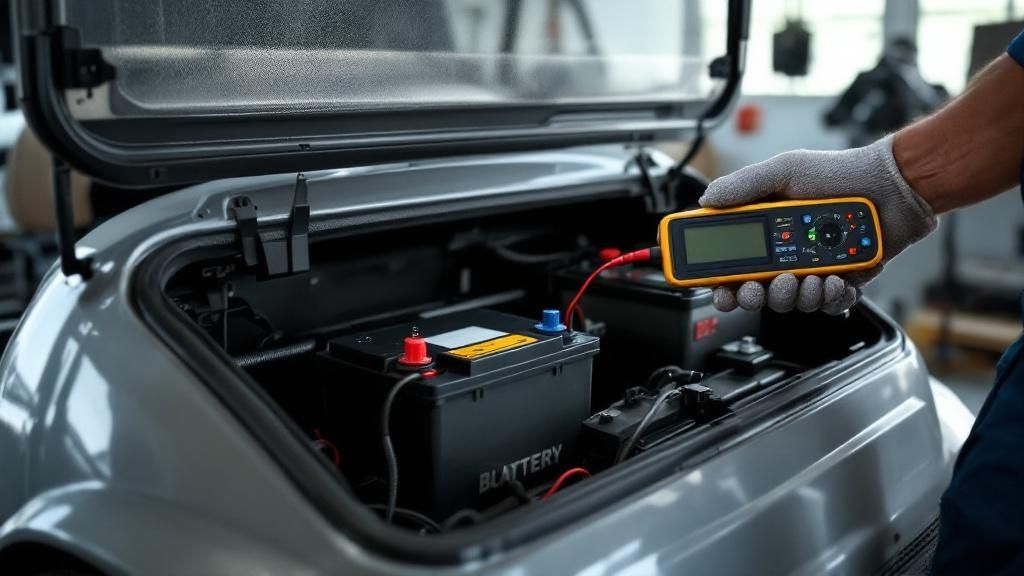
While the golf course is dominated by quiet electric carts, you'll definitely still find gas-powered models out there, especially for utility work or on older courses. Knowing how to fire one up is a handy skill because it takes a little more know-how than just turning a key. The biggest difference is getting the fuel and air mixture just right, particularly when the engine is cold.
Starting a gas cart feels less like a modern car and more like starting a trusty old lawnmower. The process starts with the key, just like any other vehicle. Pop it in and turn it to the 'On' position. But instead of a silent hum, get ready for a small combustion engine to roar to life.
Using the Choke on a Cold Engine
Here’s the step that trips most people up. If the engine hasn't been run for a few hours, it's considered "cold," and you’ll need the choke to get it started. The choke is usually a simple push-pull knob located somewhere on the dash.
- First, pull the choke knob all the way out. This reduces the air going into the engine, which creates a richer fuel mixture that's perfect for a cold start.
- Next, press down on the accelerator. This is what actually cranks the engine on a gas cart. You’ll hear that familiar turnover sound as the engine tries to catch.
As soon as the engine fires up and is running (even if it sounds a bit rough at first), you need to push the choke knob back in. If you leave it out for too long, you risk flooding the engine with too much gas, which is a surefire way to make it stall and refuse to restart.
Expert Tip: Don't leave the choke on for more than a few seconds after the engine is running. A very common mistake is forgetting to push it back in, which causes sputtering, poor performance, and can flood the engine. Just listen for the engine to even out, then slide the choke back in.
The entire golf cart market, valued between USD 1.86 billion and 2.85 billion as of 2025, leans heavily toward electric models for a reason—they are just simpler to start. These manual steps are a big part of why gas engines have a smaller slice of the pie.
If you're curious about the numbers, you can get more insights from the latest golf cart market research. And for a head-to-head comparison, check out our guide on choosing an electric or gas golf cart.
What to Do When Your Golf Cart Won't Start
You've done all the prep work, hopped in the driver's seat, turned the key, and… nothing. It’s a frustrating moment, for sure. But before you start thinking about a costly repair, take a breath. Most of the time, the reason a cart won't start is something simple you can fix yourself in just a few minutes.
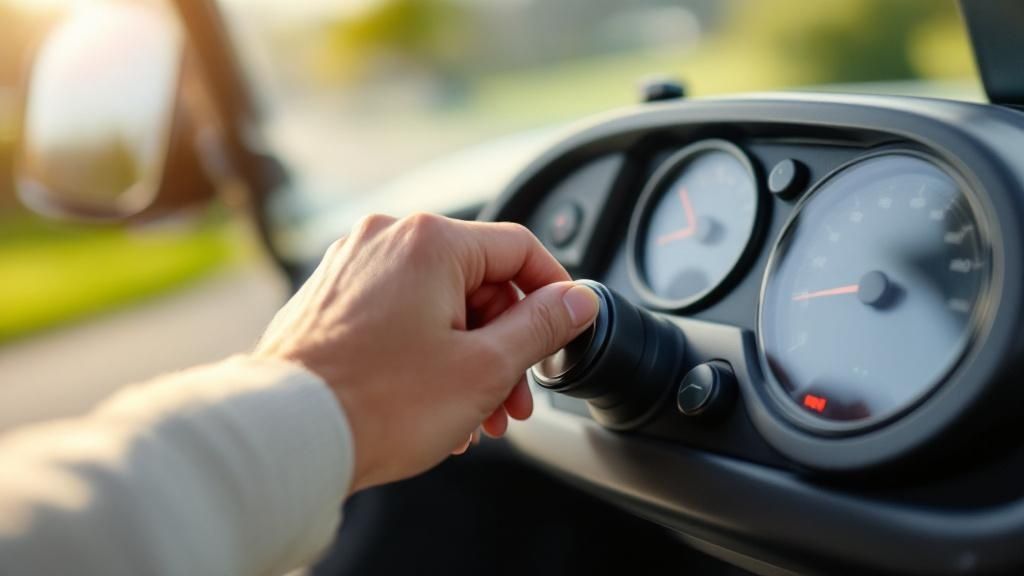
Whether you’re dealing with an electric or gas model, the troubleshooting path is pretty logical. For the vast majority of electric carts, the problem usually comes down to the power supply or a safety switch that’s been overlooked.
Electric Cart Won't Start? Check These First.
If your electric cart is completely silent when you push the pedal, your first suspect should always be the battery. A dead battery is, by far, the number one reason for a no-start scenario. A quick glance at the battery gauge on the dash will tell you a lot—if it's in the red or totally blank, you've probably found your answer.
But what if the gauge shows a decent charge? Don't panic. Your next stop should be the Tow/Run switch, which is usually tucked away under the seat. If this switch gets bumped into the 'Tow' or 'Maintenance' position, it cuts power to the motor as a safety precaution. It happens all the time.
Here's a quick checklist to run through:
- Find the Tow/Run Switch: Make sure it’s flipped firmly over to the 'Run' position.
- Check the Ignition: Try wiggling the key a bit. A worn-out ignition switch can sometimes lose its connection.
- Listen for the "Click": When you press the accelerator, you should hear a soft but distinct "click" sound. That's the solenoid engaging. If you hear silence, the solenoid might be the culprit.
A Quick Tip from Experience: Always check the simple stuff first. I can't tell you how many times a "major" problem turned out to be a forgotten Tow/Run switch or a key that wasn't pushed in all the way.
Troubleshooting a Gas-Powered Cart
With gas carts, the troubleshooting process looks a little different. If the engine doesn't even try to crank, you're likely looking at an electrical issue with the 12-volt starter battery (which is separate from the main system).
If the engine turns over but just won’t fire up and run, it’s almost always a fuel problem. The first and most obvious thing to check is the gas tank. Is it empty? It sounds silly, but it happens more often than you'd think. If you’ve got fuel, the next likely suspects are a clogged fuel filter or a pinched fuel line preventing gas from reaching the engine.
Walking through these quick checks will solve the most common starting problems. For a deeper dive into keeping your ride in perfect condition, our complete guide to golf cart maintenance has you covered.
Riding Smart: Tips for a Safe and Smooth Drive
Getting the cart started is one thing, but driving it well is what really counts. Think of it this way: smoothness is your best friend out on the course. You want to ease onto the accelerator and apply the brakes with the same gentle pressure. Jerky stops and starts are not just jarring for your passengers; they also put a lot of unnecessary wear and tear on the cart's motor and mechanical parts.
Your driving style will need to change depending on what the course throws at you.
Tackling Tricky Terrain
Let's break down a few common scenarios you'll run into:
- Going Up Steep Hills: The key here is momentum. Keep a steady pace as you climb so you don't stall out halfway up.
- Coming Down Steep Hills: Whatever you do, don't just coast. Gravity will take over faster than you think. Instead, gently pump the brakes to keep your speed under control all the way down.
- Dealing with Wet Grass: Treat wet patches with respect. Slow down before you get to them and make your turns wide and slow. This will help you keep traction and avoid sliding out, which can happen in an instant.
- Handling Sharp Turns: This one is simple but crucial: slow down before you enter the turn. Trying to take a corner too hot is one of the easiest ways to make the cart feel unstable and is a common cause of dangerous tip-overs.
The Golden Rule of Cart Driving: A smooth driver is a safe driver. Always think a few steps ahead, avoid any sudden movements, and keep a sharp eye on your surroundings. Leaving a safe distance between you and everyone else—whether they're walking or in another cart—is what separates a rookie from a seasoned, responsible driver.
Got Questions About Starting Your Golf Cart?
Even after you've got the basics down, a few common questions tend to pop up for both new and seasoned golf cart owners. Let's tackle some of the ones I hear most often.
Why Is My Electric Golf Cart So Jerky on Takeoff?
More often than not, a jerky start comes down to one simple thing: a heavy foot. Modern electric carts are incredibly responsive, and slamming the accelerator, even a little, will cause it to lurch forward. The trick is to apply slow, steady pressure to the pedal. Think of it like gently easing a car out of a parking spot, not launching off a starting line.
If you're being gentle and it's still bucking like a rodeo bull, you might be looking at a deeper issue. It could be a problem with the motor controller or the throttle sensor, which is probably a job for a qualified mechanic.
Can I Just Leave the Key On in My Electric Cart?
That's a definite no. Leaving the key turned to the "On" position keeps the cart's brain—all its electronics—powered up. This creates a slow but steady drain on your batteries, and you might come back to a cart that won't move an inch.
My Two Cents: Make it a habit. Every single time you park, turn the key all the way to "Off" and pull it out. It's the best way to protect your battery life and adds a little extra security, too.
Does a Gas Golf Cart Need to Warm Up Before Driving?
Thankfully, modern gas golf carts aren't like the carbureted cars of yesteryear; they don't need a long, formal warm-up. That said, giving the engine 30 to 60 seconds to idle after a cold start is a fantastic habit to get into.
This brief pause gives the oil a chance to get moving and properly lubricate all the internal engine parts before they're put under load. Just start it up, let it settle into a smooth idle, and then gently press the accelerator. Avoid the temptation to rev the engine right away—your cart’s engine will thank you for it in the long run.
Ready to experience the ultimate in smooth starts and reliable performance? The premium, street-legal electric vehicles from Solana EV are engineered for an exceptional driving experience every time. Discover our lineup and find your perfect ride.