
So, you're in the market for a golf cart. One of the first questions on your mind is probably, "How much is this actually going to cost me?" The short answer is: it depends.
A brand-new, no-frills golf cart will typically set you back somewhere between $9,000 and $13,000. If you're looking for a more budget-friendly option, a solid used model can often be snapped up for as little as $3,000 to $5,000. Splitting the difference, you'll find refurbished carts—professionally updated and restored—usually fall in the $6,000 to $9,000 range. Think of these numbers as your starting point, because the final sticker price really comes down to the bells and whistles you choose.
Your Quick Guide to Golf Cart Prices
Before we get into the nitty-gritty of what drives those prices up (or down), let's get a bird's-eye view of the market. The best way to start is by understanding the price gaps between new, used, and refurbished carts, and how gas and electric models stack up against each other.
This quick visual breaks down the average starting prices to give you a feel for where your budget might land.
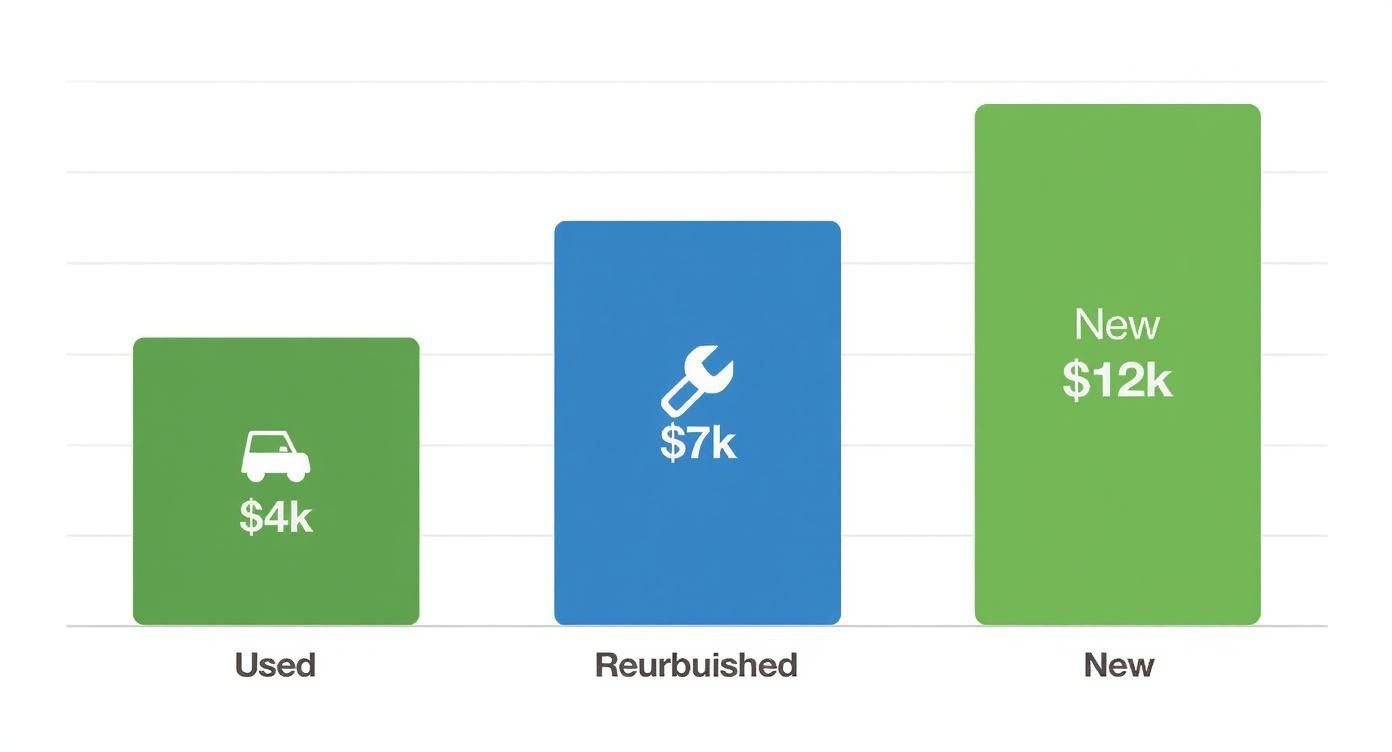
As you can see, opting for a refurbished cart can save you a good 40% compared to buying new. And if you go the used route? You could easily cut that cost by more than half.
Comparing Costs by Condition and Fuel Type
Now, let's add another layer: gas versus electric. The cart's condition and its power source create different price brackets, each reflecting the vehicle's age, technology, and how much life it has left in it.
To make this crystal clear, here’s a table that lays out the typical price ranges you'll come across.
Estimated Golf Cart Price Ranges by Type and Condition
This table provides a quick overview of what you can expect to pay for a golf cart based on its condition and power source, from basic used models to new, feature-rich carts.
| Cart Condition | Gas-Powered Price Range | Electric-Powered Price Range |
|---|---|---|
| Used | $3,000 – $6,000 | $4,000 – $7,000 |
| Refurbished | $6,000 – $8,500 | $7,000 – $9,500 |
| New | $9,000 – $12,000 | $10,000 – $14,000+ |
You might notice a trend here. In every category, electric carts tend to have a slightly higher upfront cost than their gas-powered cousins.
Key Takeaway: That price premium on electric carts is almost always tied to the battery system. High-quality, long-lasting batteries are a huge part of the vehicle's total value and one of the most expensive components to produce.
With this general pricing framework in mind, we can start digging into the details and figure out exactly why these numbers can vary so much.
Breaking Down What Really Drives the Price
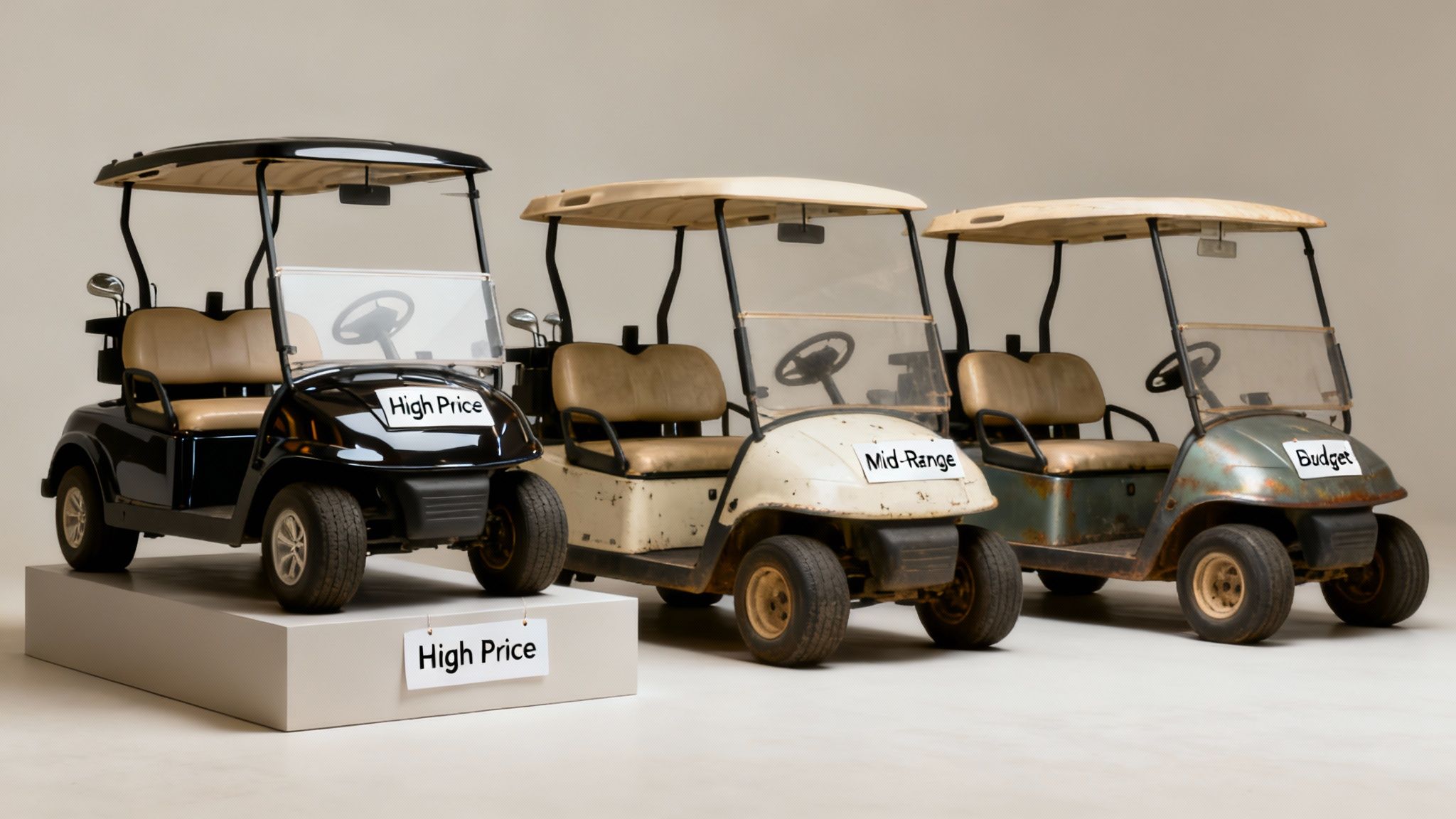
Trying to figure out why golf cart prices are all over the map can feel a bit like looking under the hood of a car for the first time. The sticker price isn't just one arbitrary number; it’s the result of several key choices you make as a buyer. The very first decision—and often the biggest one—is whether to buy new or used.
A new cart gives you that straight-from-the-factory peace of mind. You get a full warranty, the latest tech, and a flawless finish. It’s a clean slate, but you pay a premium for it. On the flip side, a used cart can deliver some serious savings, sometimes knocking more than 50% off the original price. The trade-off, of course, is that you're inheriting its history, which could include some wear and tear or even a few hidden problems.
Gas Power vs. Electric Quiet
The next fork in the road is the power source. This classic debate isn't just about how the cart performs—it directly impacts both your initial investment and what you'll spend down the road.
- Gas Carts: These models typically have a slightly lower upfront cost. They're the marathon runners of the group, offering a longer range and the ability to refuel in minutes, which is great for anyone covering a lot of ground.
- Electric Carts: You'll often find these have a higher initial price tag, mostly because of the powerful battery system inside. In return, you get a whisper-quiet ride, far less maintenance, and no messy oil changes.
It's clear which way the wind is blowing, though. The market is overwhelmingly shifting to electric. Recent research on the golf cart market valued the industry at USD 2.06 billion and shows electric models already making up over 80% of unit sales. Their lower running costs and greener footprint are big drivers behind that trend, and it definitely shapes the prices you see at dealerships.
Expert Tip: If you're looking at a used electric cart, pay close attention to the batteries. Their age and condition are everything. A cheap cart with a dying battery pack isn't a deal at all once you get a quote for replacement—that can run anywhere from $800 to $1,500 for standard lead-acid batteries, and even more for a lithium upgrade.
The Power of a Name Brand
Finally, the logo on the front of the cart matters more than you might think. Just like with cars, some manufacturers have spent decades building a reputation for rock-solid quality and new ideas. The "Big Three"—Club Car, E-Z-GO, and Yamaha—are the household names for a reason. They're known for their durability, and they command higher prices because of it, both new and used.
These established brands also tend to have a much wider network for parts and service, which adds a lot of value over the life of the cart. A lesser-known brand might catch your eye with a lower price, but you have to weigh that initial savings against the potential for headaches with maintenance and a lower resale value later on. The brand really does set the stage for both quality and cost.
How Upgrades and Customizations Add Up
Think of a base model golf cart as a blank canvas. It’ll get you from point A to point B just fine, but the real fun—and the added cost—comes from making it uniquely yours. The sticker price you first see is just the starting line. Once you start adding customizations, a simple cart can quickly become a personalized machine, often tacking on thousands to the final bill.
These upgrades aren’t just for show, either. They fall into a few key categories that improve everything from performance and comfort to day-to-day usability. It’s this level of personalization that transforms a standard vehicle into a true reflection of your lifestyle.
Performance and Power Boosts
Some of the biggest price jumps happen under the seat. Swapping out standard lead-acid batteries for a modern lithium-ion battery pack is a hugely popular upgrade. It's a significant investment, adding $1,500 to $3,000 or more, but you get a much longer lifespan, way faster charging, and practically zero maintenance in return.
Likewise, upgrading to a high-speed motor can push your cart from a leisurely 15 mph to a much zippier 25 mph or more. Just that one performance tweak can bump the price by $500 to $1,200. These are the kinds of foundational upgrades that completely change how the cart drives and feels.
Aesthetic and Comfort Enhancements
This is where you can really let your personality shine. A custom metallic paint job or a one-of-a-kind vinyl wrap can run anywhere from $700 to $2,000. And those premium, custom-stitched seats? They not only look incredible but are way more comfortable for longer rides, typically adding $400 to $900 for a full set.
Other popular ways to upgrade the look and feel include:
- Larger Wheels and Tires: Ditching the standard 8-inch wheels for custom 12-inch or 14-inch alloys with low-profile tires will set you back between $600 and $1,500.
- Lift Kits: A 3-inch or 6-inch lift kit gives your cart a tougher, more aggressive look and makes room for bigger tires. This usually adds $400 to $800 to the cost.
If you're looking for more inspiration on making your vehicle stand out, you can find dozens of great golf cart customization ideas in our detailed guide.
Functional and Tech Add-Ons
Looking beyond speed and style, functional accessories are what make your cart truly practical. A rear-seat kit that converts a two-seater into a four-seater is one of the most common additions, typically running from $400 to $750.
When you really start adding up the bells and whistles, it's easy to see how the price climbs. A high-quality Bluetooth sound system with marine-grade speakers can add $300 to $1,000, while a full all-weather enclosure to keep you dry might cost another $250 to $600.
Each choice builds on the last, turning a basic cart into something special. It's the combination of functional and fun tech that creates a fully loaded vehicle tailored perfectly to how you plan to use it.
To give you a clearer picture, here’s a quick breakdown of what some of the most common upgrades cost.
Common Golf Cart Upgrades and Estimated Costs
| Upgrade Category | Example Accessories | Estimated Cost Add-on |
|---|---|---|
| Performance | Lithium-Ion Battery Pack, High-Speed Motor | $1,500 – $4,000+ |
| Wheels & Suspension | Custom 14" Wheels, All-Terrain Tires, 6" Lift Kit | $1,000 – $2,500 |
| Aesthetics | Custom Paint/Wrap, Premium Stitched Seats | $1,100 – $2,900 |
| Seating & Utility | Rear Flip-Seat Kit, Storage Racks | $400 – $1,000 |
| Audio & Tech | Bluetooth Soundbar, LED Light Kit, USB Ports | $300 – $1,500 |
| Weather Protection | Full Enclosure, Extended Roof | $250 – $900 |
As you can see, a few key choices can easily add up. The key is to prioritize the features that matter most to you, whether that's raw speed, head-turning looks, or everyday convenience.
Calculating the Cost to Become Street Legal
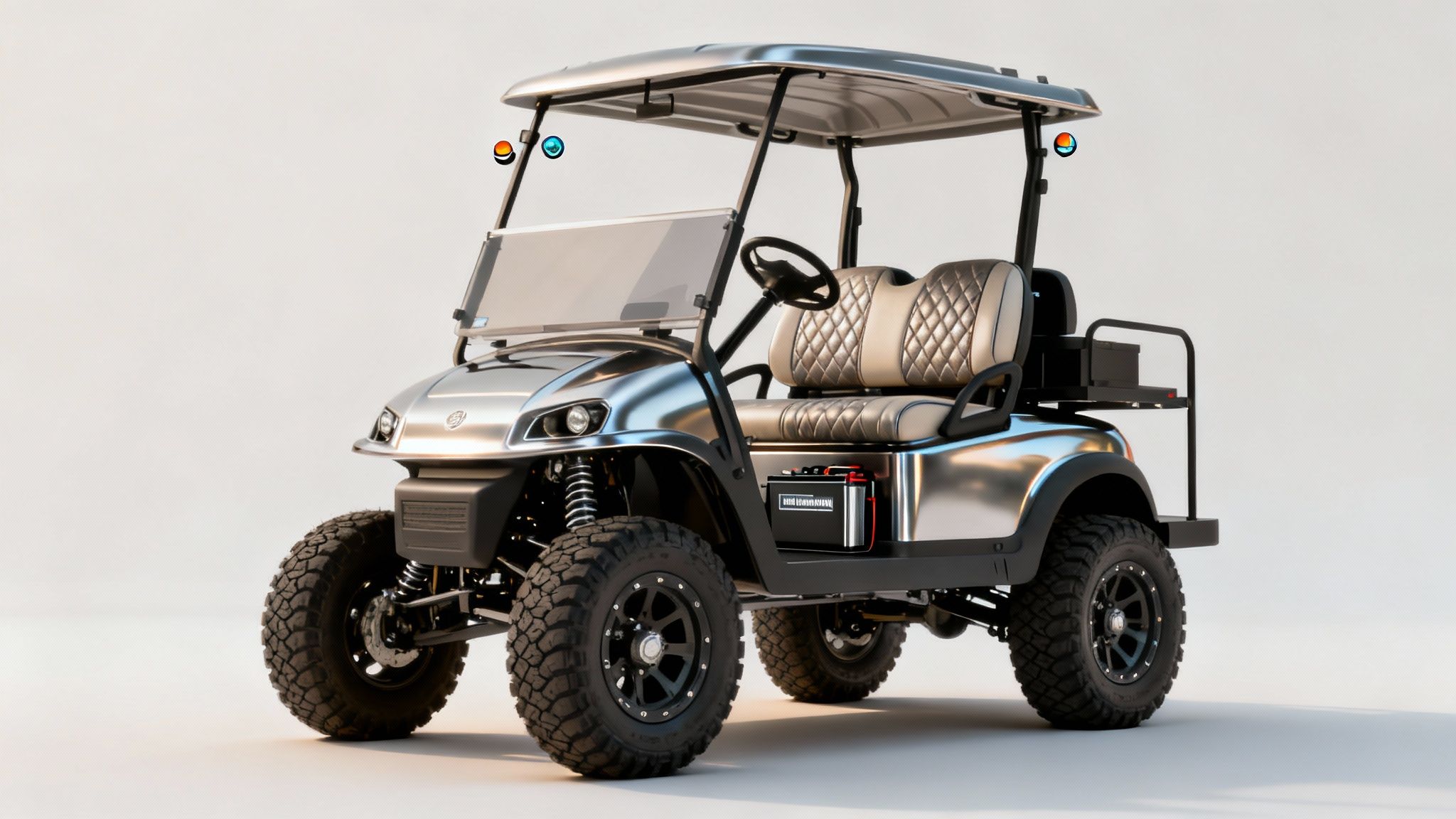
Taking your golf cart beyond the green and onto local roads is a fantastic way to get more use out of it. But it's not as simple as just driving it off the course. To do it legally, you have to upgrade your cart to a Low-Speed Vehicle (LSV), and that means adding specific safety equipment. These additions come with costs you'll need to build into your overall budget.
Think of it like getting a classic car ready for the highway. You wouldn't dream of driving it without proper headlights, mirrors, or seat belts, and the same logic applies here. The government has a checklist of required features to make sure your cart is safe for public streets, and each one adds a little more to the final price tag.
This desire for street-ready carts is a huge driver of the market's growth. The global golf cart market, currently valued at USD 1.86 billion, is expected to soar to USD 3.29 billion by 2034. A big reason for that jump is that more people are seeing these vehicles as practical, personal transportation. You can see the data for yourself in the latest golf cart market research.
Essential Upgrades for LSV Compliance
So, what exactly do you need to add? A basic street-legal conversion kit often bundles the essentials and will typically run you between $400 and $900. While it might be tempting to piece things together yourself, buying the parts individually can sometimes end up costing more.
Here’s a rundown of the non-negotiable safety features you’ll have to install:
- Headlights, Taillights, and Brake Lights so you're visible, day or night.
- Turn Signals to let other drivers know where you're headed.
- A Horn for alerting pedestrians and other vehicles.
- Rear-view and Side-view Mirrors to give you a full picture of your surroundings.
- Seat Belts for every single passenger.
- A DOT-approved Windshield that's shatter-resistant.
- A Vehicle Identification Number (VIN), which is assigned by your state.
These are the basics, but it's always smart to double-check local rules. For a complete breakdown, take a look at our guide to street-legal golf cart requirements.
Factoring in Labor and Administrative Fees
Once you've got all the parts, they need to be installed. If you're comfortable with a wrench, you can definitely save some cash by doing the work yourself. For everyone else, expect a professional installation to take 2 to 5 hours of labor. Depending on your local shop's rates, this could add another $200 to $500 to your conversion cost.
Important Note: The spending doesn't stop once the tools are put away. You also need to account for the paperwork. State inspection, titling, and registration fees can easily tack on an additional $100 to $300.
When you put it all together, the total cost to make a standard golf cart street legal usually falls somewhere between $700 and $1,700. It’s a real investment, but one that transforms your fun-on-the-fairway vehicle into a genuinely practical LSV, boosting its versatility and overall value.
Budgeting for Long-Term Ownership Expenses

The sticker price is just the beginning of your golf cart journey. To really wrap your head around "how much is a golf cart," you have to look past the initial purchase and think about the total cost of ownership. Things like fuel, maintenance, and eventual part replacements are all part of the deal.
It's a lot like owning a car—your golf cart will need some regular TLC to stay in top shape. Whether you go with a gas or electric model will send you down two completely different paths when it comes to these future costs. Planning for them now saves you from headaches later.
Gas Cart Operating Costs
With a gas-powered cart, your ongoing expenses are pretty straightforward and frequent. The big one, of course, is fuel. A golf cart sips gas compared to a car, but those fill-ups will definitely add up over a year, especially if you're using it all the time.
But it's not just about the gasoline. You've got to factor in routine engine maintenance to keep it performing well for years to come.
- Oil Changes: Just like your car, the engine needs fresh oil. Expect to do this once or twice a year, which usually runs about $50 to $100 a pop.
- Tune-Ups: An annual tune-up is a must. This involves swapping out spark plugs, filters, and belts, setting you back anywhere from $100 to $250.
These smaller, consistent costs are the trade-off you make for a gas cart's often lower initial price and longer driving range.
Electric Cart Operating Costs
Electric carts swap gas station visits for charging sessions at home. The electricity cost is tiny—we're talking pennies a day—but the one major expense you absolutely have to plan for is replacing the batteries down the road. The type of battery in your cart makes a world of difference here.
A cart's battery system is its heart, and its eventual replacement is the single largest maintenance cost an electric cart owner will face. Planning for this expense is non-negotiable for long-term budgeting.
Traditional lead-acid batteries will give you 3-5 years of service before they need to be replaced, which can cost between $800 and $1,500. On the other hand, a modern lithium-ion battery can last 8-10 years or even longer, but its replacement cost is higher, often starting at $2,000+.
Getting a clear picture of the golf cart battery replacement cost is essential for truly understanding the long-term financial commitment and making a smart investment.
Smart Strategies to Find the Best Deal
Alright, you've got the numbers down for "how much is a golf cart," but knowing the price ranges is only half the battle. Now for the fun part: using that knowledge to find the right cart without breaking the bank. Nailing a great deal takes a bit of strategy, whether you're walking the floor of a dealership or scrolling through online listings.
The first big choice you'll make is whether to buy from a dealership or a private seller. Dealerships are great for peace of mind—they offer certified pre-owned carts, warranties, and often have financing options ready to go. On the flip side, buying from a private owner can sometimes get you a lower price since they don't have the overhead of a big showroom.
Where to Look for Your Next Cart
The golf cart world is booming. Seriously. It’s not just for the links anymore; these things are everywhere. With the global market projected to hit USD 3.35 billion by 2032, there are more options out there than ever before. That means more chances for you to find a fantastic deal if you just know where to point your search. You can get a deeper dive into this market growth on databridgemarketresearch.com.
So, where should you start hunting? Here are the usual suspects:
- Official Dealerships: This is your best bet for new, refurbished, and certified used carts that come with a warranty.
- Online Marketplaces: Sites like Facebook Marketplace and Craigslist are teeming with listings from private sellers, offering a huge variety of carts at every price point.
- Golf Course Fleets: Keep an eye on local courses. They often sell off their rental fleets every few years. These carts have been used a lot, but they're typically well-maintained.
Used Cart Inspection Checklist
When you're buying used, a careful inspection is your number one tool against buyer's remorse. Don't be shy about getting up close and personal with the cart. A few minutes of checking key components can save you thousands down the road.
Here's a non-negotiable tip: always, always test drive the cart before you even think about making an offer. Listen for weird noises from the motor, feel if the steering pulls to one side, and give the brakes a good test. A quick spin can tell you things a visual once-over never will.
Be on high alert for these common red flags:
- Batteries (for electric carts): Find the date codes on the batteries. If they're pushing 4-5 years old, you'll likely need to replace them soon. Make sure you factor that significant cost into your offer.
- Frame and Undercarriage: Get down and look underneath. You're searching for rust, cracks, or any bends in the frame. A little surface rust might be okay, but serious corrosion can be a deal-breaker.
- Tires: Check for uneven wear patterns, as this can point to an alignment issue. Also, look for cracks or dry rot in the sidewalls, which means you'll be buying new tires sooner rather than later.
Doing a bit of homework on how to determine a vehicle's true value can be a game-changer. It gives you the confidence to know what a fair price is and helps you spot a genuinely good deal when you see one.
Your Top Questions About Golf Cart Costs Answered
https://www.youtube.com/embed/CDn3HaSMqZo
Even after breaking down all the numbers, a few questions always seem to pop up. Let's tackle some of the most common ones head-on so you can feel completely sure about your budget.
Is It Cheaper to Build Your Own Golf Cart?
You'd think building a cart piece by piece would be a great way to save a buck, but it rarely works out that way. In fact, it can easily end up costing you more than just buying a solid, pre-owned cart.
Think about it: the frame, motor, controller, body, wiring—all those individual components add up surprisingly fast. Unless you're a seasoned mechanic with a garage full of specialized tools, building from scratch is more of a labor of love than a smart financial move. For most people, a well-maintained used cart is the far more practical and affordable route.
How Much Does Golf Cart Insurance Typically Cost?
This one really depends on where and how you'll be driving. If your cart is just for cruising around your own property, you can often add it to your homeowner's policy for a pretty small fee, sometimes as little as $50 to $100 a year.
On the other hand, if you've got a street-legal LSV for driving on public roads, you'll need a separate auto insurance policy, just like you would for a car. This is required by law and will naturally cost more.
Heads up: The biggest "gotcha" with a used electric cart is almost always the batteries. A brand new set of lead-acid batteries can run you $800 to $1,500. That "great deal" you found can turn into a huge expense in a hurry, so always, always check the battery date codes before you buy.
Ready to find an electric vehicle that fits your budget and lifestyle? Explore the premium, street-legal lineup from Solana EV and discover the perfect combination of style, performance, and value. Check out our models at https://solanaev.com.