
A golf cart stereo system isn't just any old radio. It's a complete sound setup built specifically for the unique demands of an open-air golf cart and its 12-volt electrical system. Adding one can completely transform a quiet cruise into a full-blown audio experience, making it a must-have upgrade for today's low-speed vehicles.
Why Premium Audio Is No Longer Just an Accessory

Let's be honest, the gentle hum of an electric golf cart is nice, but it's also the perfect blank canvas for an amazing soundtrack. The days of tossing a tinny portable speaker in the cupholder and calling it a day are long gone. Now, a high-quality, fully integrated audio system is a defining feature that turns a simple ride into your personal entertainment hub.
This isn't just a fleeting trend. It reflects a real shift in how people think about their vehicles. Whether you're cruising through a resort community, zipping around the neighborhood, or hitting a local trail, a great sound system sets the vibe for the entire journey. We're not talking about grainy, low-volume background noise—we're talking about rich, crystal-clear audio that makes the whole experience better.
The Growing Demand for Enhanced Sound
The craving for better audio goes hand-in-hand with the explosion of the golf cart market. The industry shot up from $1.9 billion in 2023 and is on track to hit a whopping $3.5 billion by 2033. With golf tourism bouncing back, about 45% of club managers are already planning to upgrade their fleets by 2025, and entertainment features are high on their list.
This evolution has pushed vehicle designers to create carts ready for modern tech. Solana EV models, for example, are engineered from the ground up with advanced audio upgrades in mind, making stereo installation a smooth, seamless process. Customizations like these are now a huge part of the ownership experience. And it's not just about sound; there are tons of golf cart mod ideas to upgrade your ride out there.
Your vehicle is an extension of your lifestyle. A quality stereo system doesn't just play music; it crafts the soundtrack for your adventures, making every trip more memorable and enjoyable.
This guide will walk you through everything you need to know about choosing, installing, and enjoying the perfect golf cart stereo system. For even more inspiration, check out our guide on awesome golf cart customization ideas.
Decoding Your Golf Cart Sound System
Putting together a great sound system for your cart is a lot like assembling a live band. You've got the head unit as the bandleader calling the shots, the speakers as the talented vocalists, and the amplifier as the powerhouse drummer driving the beat. It all has to work in perfect harmony.
Don't worry, you don't need a degree in audio engineering to figure this out. This quick breakdown will walk you through each piece of the puzzle, so you can confidently read product specs and choose the perfect audio upgrade for your cart.
The Head Unit: The Brains of the Operation
The head unit, also known as the receiver or stereo, is your command center. It’s the part you’ll actually touch to pick a song, crank up the volume, or tweak the sound. Modern head units are far more than just a radio; they’re the central hub for your entire audio experience.
Think of the head unit as the quarterback of your sound system. It takes the signal—whether it's coming from your phone via Bluetooth, a USB stick, or a radio station—and tells the rest of the components what to do. Its features set the limit for what your system can ultimately do.
Key features to look for in a head unit:
- Source Options: Does it have Bluetooth for easy streaming? What about USB ports for playing music from a thumb drive or just charging your phone?
- Display Quality: A bright, clear screen that you can actually see in the sun is non-negotiable. Some of the higher-end models even come with full-color touch screens.
- Pre-Amp Outputs: These are critical if you ever plan on adding an external amplifier. The more outputs you have, the more control you have over different speaker zones (like front vs. rear).
Speakers: The Voice of Your System
If the head unit is the brain, the speakers are the voice. They do the real work of turning electrical signals into the music you hear. The quality, size, and type of speakers you pick will have the single biggest impact on your system's sound.
Not all speakers are built the same. A basic, small speaker will make noise, sure, but a well-made coaxial or component speaker will give you that rich bass, crystal-clear vocals, and crisp highs that make music enjoyable.
A world-class singer can't give their best performance with a cheap microphone. In the same way, a fantastic head unit is wasted if it's paired with speakers that can't do it justice.
When choosing speakers for golf cart stereo systems, pay close attention to the materials. Look for cones made from something durable like polypropylene, which holds up well against the moisture and temperature swings you’ll get in an open-air vehicle.
The Amplifier: The Muscle Behind the Music
The amplifier is the unsung hero of almost any great audio setup. Its job is straightforward but absolutely essential: it takes the low-power audio signal from the head unit and juices it up, sending clean, powerful energy to your speakers. This isn't just about being loud—it’s about being clear.
Without a dedicated amplifier, your speakers will likely sound weak or start to distort when you turn up the volume. That’s because the tiny amp built into a head unit just can’t keep up. An external amp ensures your speakers get all the power they need to perform their best.
Consider these benefits of adding an amp:
- Improved Sound Quality: A dedicated amp delivers cleaner power, which means less distortion and the ability to hear every detail in the music.
- More Volume: It gives you the headroom to turn things up without the sound getting harsh or breaking up, which is crucial when you're driving around outside.
- Better Speaker Performance: An amp drives your speakers more effectively, allowing them to hit deeper bass notes and deliver a more dynamic sound.
At the end of the day, every component has its part to play. The head unit brings the smarts, the speakers create the sound, and the amplifier supplies the power. When all three work together, your golf cart goes from being just a ride to a rolling concert hall.
How to Choose the Right Stereo System
Picking the perfect stereo system for your golf cart isn’t about finding the most powerful or expensive option. It's about finding the right one for you. Think of it like buying a grill—a small portable unit is perfect for tailgating, but you’d want something bigger and more permanent for your backyard BBQs. The best audio setup depends entirely on your cart, where you drive it, and what you want to hear.
This section will help you cut through the technical jargon and focus on what really matters. We'll look at everything from simple, all-in-one soundbars to more advanced component systems, so you can make a choice you’ll be happy with for years to come.
Start with Your Vehicle and Power Source
First things first, what kind of cart are you working with? Is it gas or electric? This is the most important question because it sets the stage for everything else. A gas cart has to compete with engine noise, so you’ll probably want a system that prioritizes pure volume and power over subtle, high-fidelity sound.
Electric carts are a completely different ballgame. Their quiet ride creates an almost perfect listening environment, letting you hear every detail in the music. This is especially true for modern rides like the Solana EV models, where the silence of the electric motor lets a quality sound system truly shine.
It's no surprise that electric golf carts made up 85.5% of the global market in 2023. Their quiet operation has opened the door for incredible tech integrations, from 10-inch touch screens to premium sound systems that work seamlessly with the vehicle's controls. If you're curious about where the market is headed, you can learn more about the latest golf cart industry findings.
The next piece of the puzzle is power. With an electric cart, every accessory you add sips from the same battery that gets you from point A to point B. A high-wattage stereo can definitely shorten your range. You'll need to either pick an energy-efficient system or think about adding a dedicated auxiliary battery to run your accessories.
Define Your Budget and Audio Goals
Of course, your budget is a big factor. But it’s crucial to match your spending to your expectations. Are you just looking for some background tunes while you cruise around the neighborhood, or do you want a system that thumps, capable of being heard clearly over the wind at top speed?
To get a clearer picture, ask yourself a few questions:
- Simplicity vs. Customization: Do you want something you can install in an hour, like a soundbar? Or are you the type who loves to tinker and fine-tune your sound with separate components?
- Listening Habits: Will you mostly be listening while parked and hanging out, or do you need a system that cuts through the noise of a windy day on the move?
- Future Upgrades: Are you looking for a starter system that you can build on later by adding an amplifier or a subwoofer?
Answering these helps you zero in on what you actually need. It's the best way to avoid paying for features you'll never use or, worse, getting a system that just doesn't deliver.
The best stereo system isn't the most expensive one; it's the one that seamlessly fits your lifestyle and your vehicle. Prioritize compatibility and your listening needs over flashy specs.
Comparing Your System Options
Alright, now that you have a handle on your cart, power needs, and goals, let's look at the main types of golf cart stereo systems. Each one has its own strengths and is built for a different kind of user.
Here's a quick breakdown to help you compare the most common setups for your golf cart.
Comparing Golf Cart Stereo System Types
| System Type | Best For | Pros | Cons | Typical Cost |
|---|---|---|---|---|
| All-In-One Soundbar | Simplicity and easy installation | Mounts easily; built-in amp and Bluetooth; great value | Limited sound customization; less powerful than component setups | $250 – $700 |
| Receiver & Speaker Combo | Balanced performance and features | Good sound quality; options for different media sources (USB, radio) | More complex installation; may still require an external amplifier for best results | $300 – $800+ |
| Full Component System | Audiophiles and maximum customization | Best possible sound quality; allows for fine-tuning with separate amps and subwoofers | Most expensive option; requires professional or advanced DIY installation skills | $800 – $2,000+ |
For most people, an all-in-one soundbar is the perfect sweet spot. It offers a huge upgrade over the stock sound (or lack thereof) without a complicated installation. But if you’re a true audiophile who won't settle for anything less than perfect sound, a full component system is the only way to go.
Essential Installation and Power Insights
So you've picked out a killer new stereo system for your golf cart. Now comes the part that separates a great-sounding, reliable setup from an electrical headache: installation and power. It's about more than just finding a place to put the speakers; it’s about smart mounting and, most importantly, intelligent power management.
It might seem simple enough to just tap into your cart's main power, but that's one of the biggest and most costly mistakes you can make. This is especially true for electric carts. We need to get the power right first, whether you’re tackling this yourself or just want to have an intelligent conversation with your installer.
Think of it like this: trying to wire a 12V stereo directly into a 48V or 36V electric cart is like trying to plug a toaster into an industrial power line. You'll fry the electronics in a split second. The trick is managing that power difference safely.
This flowchart breaks down the basic decision-making process for choosing the right system from the get-go.
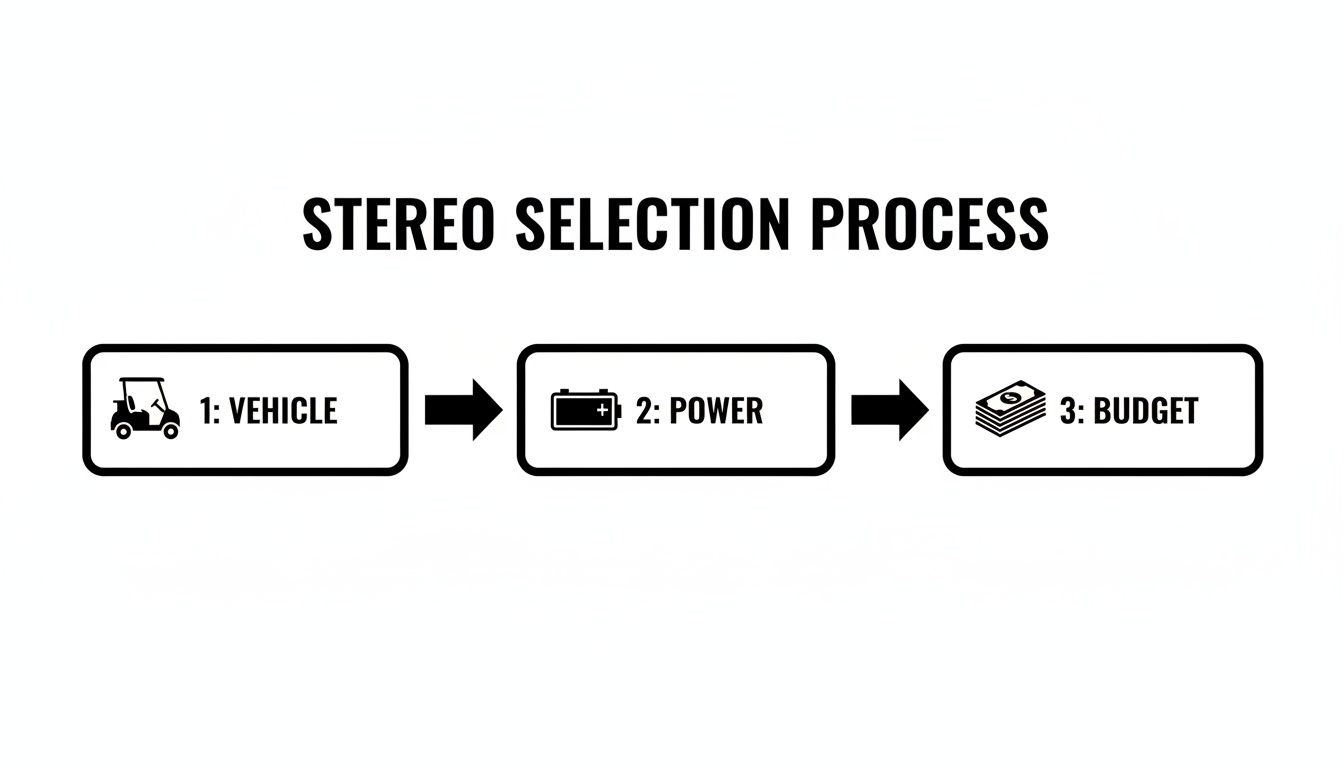
As you can see, starting with your vehicle, its power limitations, and your budget is the clearest path to finding the perfect audio solution.
Managing Power The Right Way
For electric golf carts, you have a couple of solid options for safely powering your audio gear. The one you choose really depends on how ambitious your sound system is.
-
Voltage Reducer: This is your absolute must-have for almost any accessory. A voltage reducer is a small but mighty device that connects to your cart's main 48V battery pack and steps the power down to a safe, stable 12V output. It's the perfect solution for most setups involving a head unit and a couple of speakers.
-
Auxiliary Battery: If you're going all out with a high-wattage amplifier and a subwoofer, a dedicated 12V deep-cycle auxiliary battery is the way to go. This approach creates an entirely separate electrical circuit for your audio, meaning your tunes will never impact your cart's driving range or put a strain on the main batteries.
Using one of these methods isn't just a suggestion—it's essential for protecting your new stereo and the cart's entire electrical system. If you want to dive deeper into your cart's power, our guide on the essentials of a 48 V golf cart charger is a great resource.
Think of a voltage reducer as a translator. Your cart's high-voltage battery and your 12V stereo speak different languages. The reducer allows them to communicate safely; without it, you just get smoke and silence.
Smart Mounting for Optimal Sound
Where you physically place your components is just as critical as how you power them. The endgame is to create an immersive "soundstage" without cluttering up your cart or making it look like a DIY project gone wrong.
Thankfully, modern carts are making this easier. The market for four-seat carts is booming, growing at a 7.09% CAGR among off-roaders and families in gated communities. That extra space is a huge bonus for creative and effective speaker placement. At the same time, solar-powered carts are seeing incredible growth at a 14.2% CAGR, giving you a way to extend your playtime on sunny days without draining your battery.
Here are some of the go-to spots for mounting your gear:
- Dashboard: This is the natural home for the head unit, keeping the controls right at your fingertips. Many carts even have cutouts ready to go.
- Overhead Console/Roof: A fantastic spot for speakers or an all-in-one soundbar. Mounting them here directs the sound down at the passengers, creating a really full, immersive experience.
- Under the Seats: This is the best place to tuck away the bulkier components like amplifiers and subwoofers. They stay hidden, protected, and close to the power source.
- Kick Panels: Don't overlook the panels down by your feet. Placing speakers here helps create a balanced sound that fills the whole cabin from top to bottom.
Ultimately, a good installation is clean, safe, and built to last. When you handle the power correctly and choose your mounting locations thoughtfully, you’ll be rewarded with an amazing-sounding system for years to come.
What Really Makes a Great Golf Cart Stereo System?
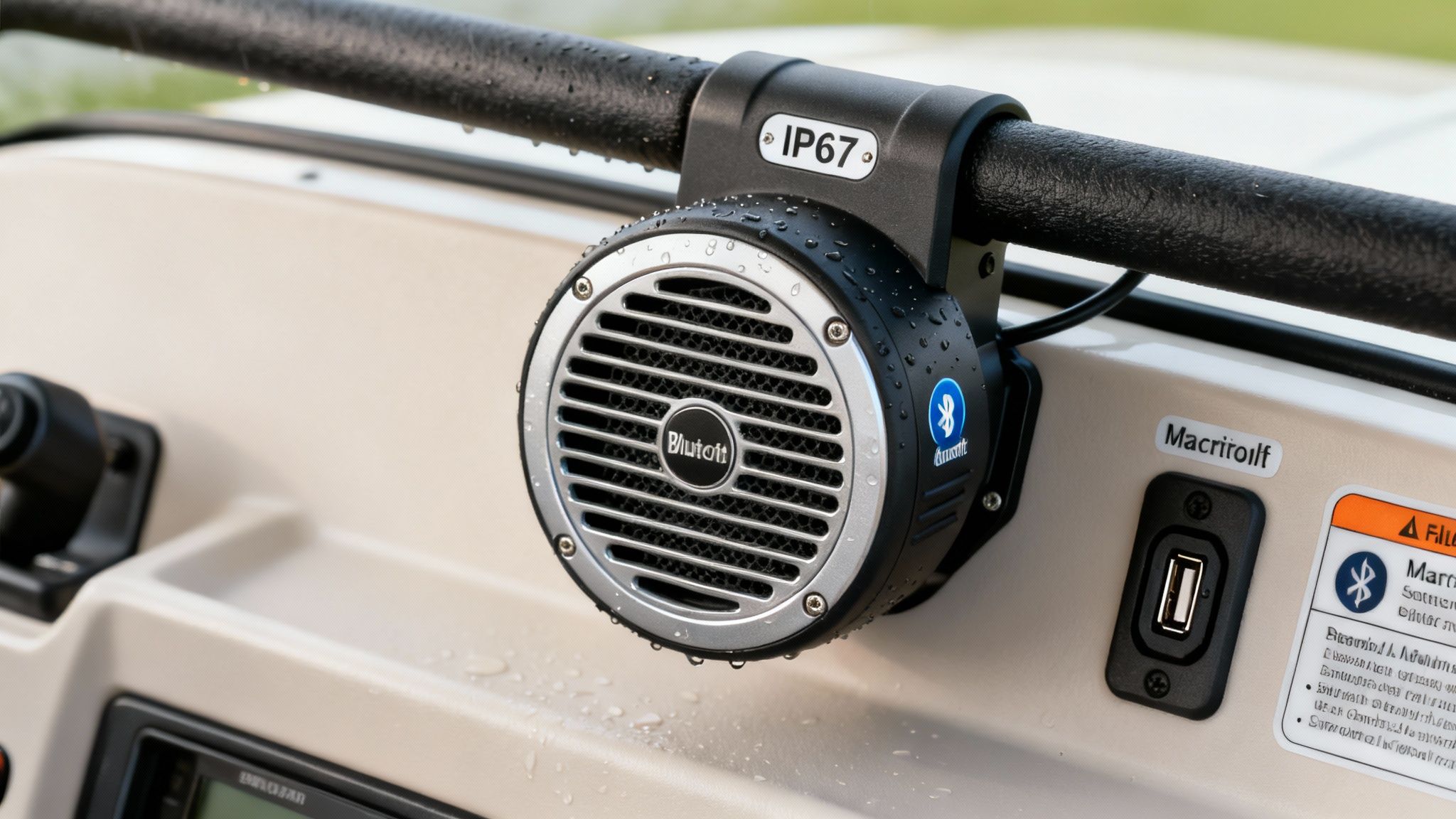
It’s easy to think that a great sound system is all about volume. But in the real world, what truly separates a fantastic setup from a frustrating one are the features that account for how and where you actually use your cart.
A golf cart is an outdoor vehicle, plain and simple. It gets hit with everything from morning dew and blazing sun to sudden downpours and dusty paths. Any electronics you add have to be tough enough to handle that reality.
Waterproofing: Don't Even Consider a System Without It
This is the big one. Your cart is exposed, so your audio gear will be, too. That’s why marine-grade waterproofing isn't just a nice-to-have feature; it’s an absolute must. Standard car audio components won't last a season.
When you're shopping, look for an Ingress Protection (IP) rating. This simple two-digit code tells you everything you need to know about how well a device is sealed against the elements.
- The first number is for solids like dust and sand. A ‘6’ is the best you can get, meaning it’s completely sealed.
- The second number is for liquids. A ‘7’ means it can be submerged in about three feet of water for 30 minutes without damage.
A rating of IP67 is the gold standard for a golf cart. It gives you total protection from both dust and water, so you never have to worry about a surprise rainstorm or a ride down a dusty trail. Settling for less is just asking for trouble.
Modern Connectivity is Key
A good stereo system shouldn't be a hassle to use. Forget about digging around for aux cords or—heaven forbid—CDs. Today, it’s all about seamless wireless connection.
Bluetooth is the hero here. It lets you instantly connect your phone and stream anything you want—music, podcasts, audiobooks—without plugging anything in. It just works.
The best systems feel like a natural extension of your phone. They connect fast, respond instantly, and never make you think twice.
You'll also want to look for head units with USB ports. Sure, you can play music off a thumb drive, but the real win is having a reliable place to charge your phone. That little convenience is something you'll be thankful for on almost every trip. If you're looking for more ways to outfit your cart, you can find other ideas in our guide on the best golf cart accessories.
Why a Quality Amplifier Matters
Finally, let's talk about amplifiers. It's an easy component to overlook, but it's the heart of your system. Speakers make the sound, but the amplifier gives them the clean, steady power they need to sound great.
A good amp is the difference between muddy, distorted noise and crisp, dynamic music you can actually enjoy. It ensures your audio stays clear and full, even when you’re cruising along and competing with wind noise. It’s not about being the loudest cart in the neighborhood; it's about having fantastic sound clarity at any volume, which is crucial in an open-air vehicle where sound dissipates so easily.
Sound Rules for Communities and Resorts
Your awesome new sound system comes with a responsibility to be a good neighbor. Sure, it's fun to crank up the tunes, but most golf cart driving happens in shared spaces—resorts, private communities, and neighborhood streets. The goal here isn't just about having great sound; it's about adding to a pleasant atmosphere for everyone.
It's really a simple balancing act: enjoying your music while being respectful of others. This just means being aware of your surroundings, especially where homes are close together or where people are trying to relax. A little bit of courtesy goes a long way in making sure your golf cart stereo system adds to the community vibe instead of ruining it.
Understanding Noise Ordinances and HOA Rules
Before you turn up the dial, you absolutely need to know the local rules of play. A lot of towns, gated communities, and resorts have specific noise ordinances or Homeowners' Association (HOA) rules you have to follow. These aren't just gentle suggestions; they're enforceable rules designed to keep the peace.
These rules often lay out specifics like:
- Quiet Hours: Most places have quiet hours, usually from late evening (say, 10 PM) to early morning (7 AM). During these times, if your music is audible from a distance, you're likely breaking a rule.
- Decibel Limits: Some communities get technical and set decibel (dB) limits. These rules define exactly how loud is too loud from a certain distance.
- General Nuisance Clauses: Even when it's not quiet hours, there are often rules against "unreasonably loud" noise. What's "unreasonable" can be subjective, which is why simple courtesy is your best bet.
Your best move is to check your HOA’s official documents or just ask the property management about their policies. A quick question upfront can save you from getting fined and keep you on good terms with your neighbors.
Best Practices for Responsible Listening
Beyond just following the written rules, a few common-sense habits can make a huge difference. Think of yourself as a "sound-conscious" driver, making sure your audio is for your enjoyment only and not something you're forcing on everyone else. This is the key to enjoying your system for the long haul.
A good neighbor gets that sound travels. Your personal concert should stay inside your cart, not echo through someone's living room or across the 9th green.
Here are a few practical tips to live by:
- Use the "25-Foot Rule": As a rule of thumb, if someone standing 25 feet away can make out the words to your song, it’s probably too loud for a residential street. It’s time to dial it back.
- Be Aware of Your Location: Turn the volume down when you're driving past homes, community pools, outdoor patios, or the golf course itself. A powerful system is fantastic on a back trail, but it needs a lighter touch in crowded areas.
- Create Guest-Friendly Policies: If you manage a fleet or resort, setting up a clear audio policy for rental carts is a must. A simple sticker on the dash reminding guests about quiet hours and general volume etiquette can cut down on complaints and make the experience better for everyone.
Your Top Golf Cart Audio Questions, Answered
As you start planning your audio upgrade, you're bound to have some questions. It's totally normal. Getting the right answers upfront is the key to avoiding a headache later and making sure you end up with a sound system you love.
Think of this as your quick-reference guide. We’ve pulled together the most common questions we get and laid out some straightforward, practical answers.
How Much Juice Does a Golf Cart Stereo Really Use?
This is probably the number one concern, especially if you're driving an electric cart. A simple setup with just a head unit and a couple of speakers will likely only pull around 5-7 amps. But if you're going for a bigger sound with a powerful amplifier, you could be looking at a draw of 20-30 amps when the music is turned up.
For any electric cart with a 36V or 48V system, a voltage reducer isn't just a good idea—it's mandatory. This little device steps your cart's main voltage down to a safe 12V for your audio gear. Skipping this step is a surefire way to fry your brand-new stereo. If you're planning a high-powered system, the best move is to install a separate 12V auxiliary battery. This isolates your audio from your cart's drive batteries entirely.
Can I Actually Install a Stereo System Myself?
Absolutely, as long as you're comfortable with some basic wiring and using a few tools. All-in-one soundbars are by far the easiest for a DIY project. Most of them just bolt on and connect to a 12V power source, and you can often get the whole job done in less than an hour.
Now, a full component system is a different beast. That involves running wires through the cart, possibly cutting holes for speakers in the dash or body, and wiring up an amplifier correctly. It's a much bigger commitment.
Look, if you’re even a little hesitant about drilling into your cart or tackling the electrical work, just hire a pro. It’s the safest bet and guarantees the job gets done right.
What Does "Marine-Grade" Really Mean Anyway?
When you see "marine-grade" or "weatherproof," it means the gear was built from the ground up to handle the outdoors. The most important thing to look for is an Ingress Protection (IP) rating, like IP67. This isn't just a marketing buzzword; it’s a universal standard for toughness.
Here’s the simple breakdown:
- The first digit (6 in IP67) tells you how well it keeps out solids like dust and sand. A "6" means it's completely sealed.
- The second digit (7 in IP67) rates its water resistance. A "7" means you could literally drop it in a meter of water for 30 minutes and it would be fine.
This gear uses UV-resistant plastics that won't get brittle in the sun and has special coatings on the internal circuit boards to fend off humidity and moisture. For a vehicle that's open to the elements, this level of protection is a must-have.
Is a New Stereo Going to Kill My Cart's Driving Range?
It's a valid question. Anything you add to your cart will use power, but the impact of a modern stereo is usually pretty small. When installed correctly with a good voltage reducer, a system playing at a reasonable volume barely makes a dent in your battery's charge over a day of cruising.
The story changes if you're running a big system with a powerful amp and like to play it loud for hours on end. That kind of setup will definitely draw more power. This is where that auxiliary battery we mentioned becomes the perfect solution. It powers your tunes without stealing a single foot of driving range from your main batteries.
Ready to transform your ride with a premium, street-legal electric vehicle designed for superior audio integration? The experts at Solana EV can help you choose the perfect model and accessories to build your ultimate sound experience.