
Think of a golf cart conversion kit as a complete powertrain makeover for your vehicle. It’s a package of parts that lets you swap out an old, noisy gasoline engine for a quiet, efficient electric motor. The whole point is to give your trusty cart a new lease on life with better performance, more reliability, and a much smoother ride.
What Are Golf Cart Conversion Kits
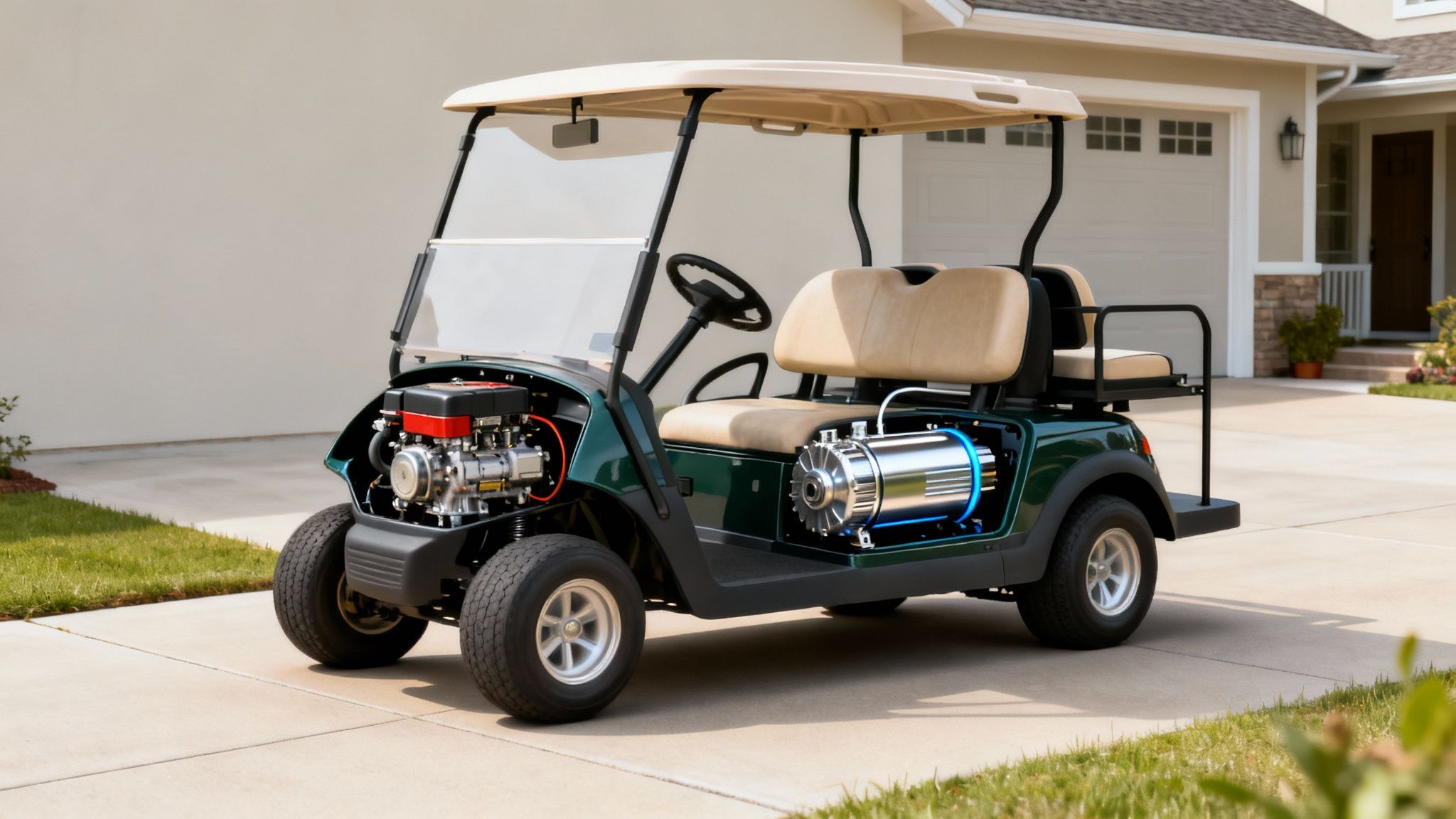
Essentially, a conversion kit is the ticket to bringing an older golf cart into the modern age. Maybe you're tired of the racket and upkeep of your gas-guzzler, or perhaps your old electric cart just doesn't have the "get up and go" it used to. These kits provide everything you need to overhaul the powertrain and completely revitalize the chassis you already own.
This isn't just a simple engine swap. It's a fundamental upgrade that changes the entire driving experience. You're trading loud, sputtering starts for the whisper-quiet, instant torque of an electric motor. No more oil changes, no more trips to the gas station—just plug it in and go.
Why Owners Choose to Convert
People decide to convert their golf carts for all sorts of reasons, but most motivations boil down to a handful of key benefits. Figuring out what matters most to you can help you decide if a conversion makes sense.
- Performance Enhancement: A lot of owners are just looking for more power. They want more speed to get around the neighborhood or more torque to climb steep hills without slowing to a crawl. A good AC motor conversion can leave a stock gas or DC electric system in the dust.
- Cost Reduction: Fuel, oil, filters, and spark plugs add up over time. Going electric gets rid of these constant expenses and replaces them with a much smaller, more predictable bump in your electricity bill.
- Environmental Responsibility: Switching from a gas engine to an electric motor is a big win for the environment. You cut your carbon footprint down to almost nothing and eliminate smelly exhaust fumes, which is great for quiet communities and green spaces.
- Noise Reduction: Let's face it, gas engines are loud. An electric cart offers a near-silent ride, a massive plus for early morning golf rounds, peaceful residential areas, and resorts where quiet is a luxury.
The decision to convert usually comes down to a mix of practical needs and personal wants. It’s perfect for the property manager who needs a fleet of low-maintenance, reliable vehicles, but it’s also great for the weekend enthusiast who wants a custom, high-performance ride without the brand-new price tag.
This corner of the market is booming, mirroring the larger trend toward all things electric. The global golf cart market, valued around USD 2.85 billion in 2025, is expected to climb to nearly USD 4.18 billion by 2032. Much of that growth is fueled by the move to electric power, with conversion kits—from basic 1000W setups to powerful 5000W systems—making it easier than ever to upgrade. You can find more insights about the growing conversion kit market and how it's shaking up the industry.
What Comes Inside a Conversion Kit
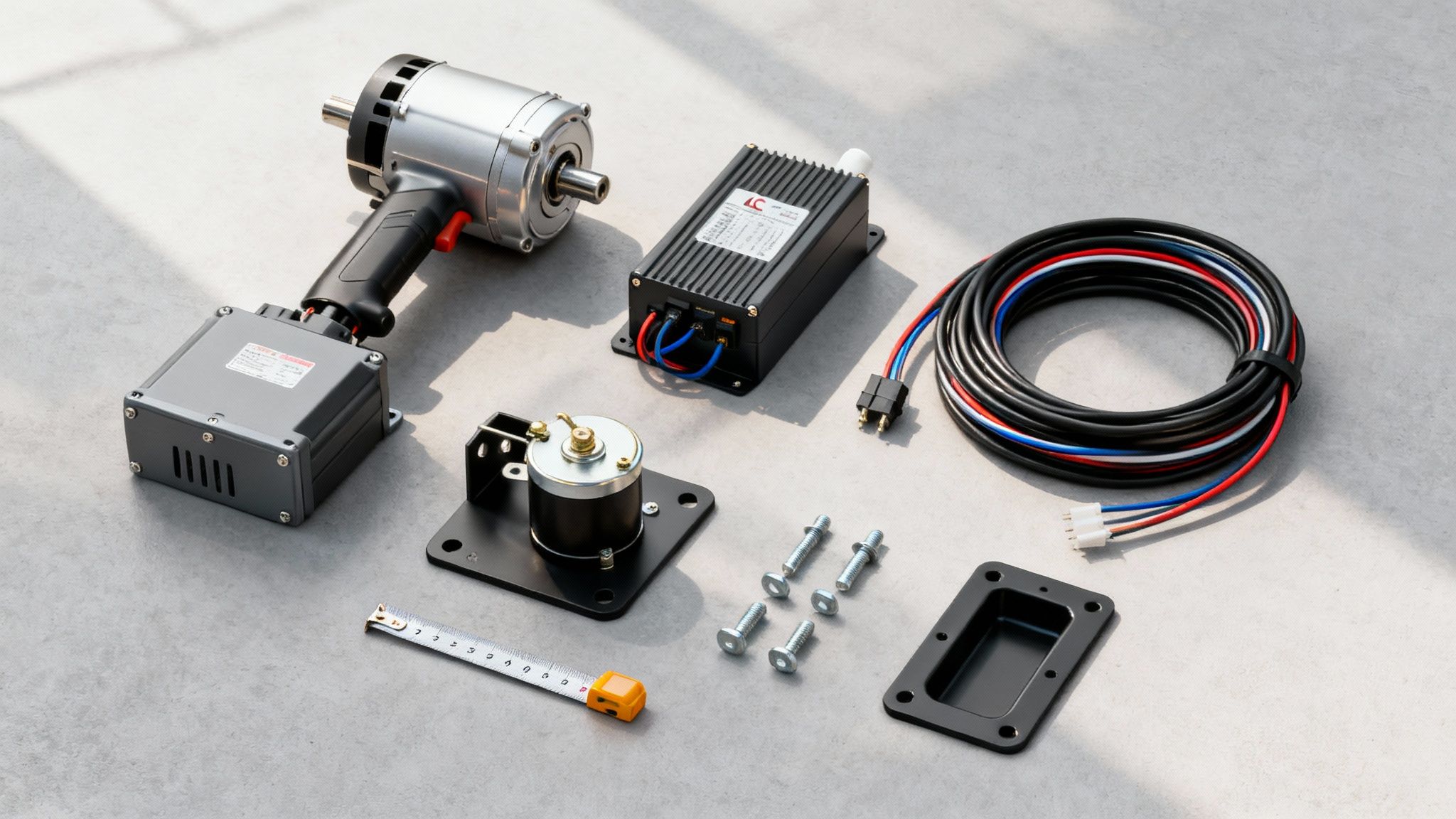
Opening up a golf cart conversion kit for the first time is a bit like unboxing a high-tech Lego set for adults. You’re looking at a collection of parts that, when put together, will completely transform your vehicle from the inside out. Knowing what each of these core components does is key to picking the right kit for your needs.
Think of it like an engine transplant. You’re not just swapping one part; you're replacing the entire powertrain—the heart, brain, and nervous system of your cart. Let's dive into the key players you'll find inside the box.
The Motor: The Muscle of the Operation
The electric motor is the star of the show. It's the powerhouse that takes electrical energy from the batteries and converts it into the raw rotational force that gets your wheels spinning. The motor you choose will define your cart’s personality, directly impacting its torque, top speed, and overall efficiency.
You’ll generally run into two main types of motors in these kits:
- AC (Alternating Current) Motors: These are the modern workhorses. They’re known for being more efficient, delivering incredible torque for climbing hills, and offering better regenerative braking, which can help recapture a little energy for your batteries.
- DC (Direct Current) Motors: Often simpler and more budget-friendly, DC motors are a solid, reliable choice for standard conversions. They get the job done without the bells and whistles of an AC system, but they still represent a huge leap forward from an old gas engine.
Your decision here really boils down to how you'll use the cart. If you’re tackling steep inclines or just want that neck-snapping acceleration, an AC motor is almost always worth the investment.
The Controller: The Brains Behind the Power
If the motor is the muscle, the controller is the brain. This is the sophisticated electronic command center that manages the conversation between your foot on the pedal, the batteries, and the motor. It takes your input and tells the motor precisely how much power to unleash, and when.
A quality controller is what makes a cart feel smooth and responsive rather than jerky and unpredictable. It governs your acceleration, sets the top speed, and ensures the power delivery is just right. In fact, upgrading the controller is one of the single best ways to tap into your motor's true potential.
A good controller isn't just about performance; it's about protection. It acts as a safeguard, preventing you from overworking the motor or draining the batteries too aggressively, which adds years to the life of your entire system.
The Supporting Cast: Essential Hardware and Wiring
Of course, the motor and controller can't do it alone. A good kit includes all the supporting components needed to tie the whole system together safely and securely.
Here’s a look at the other critical pieces you should find in any comprehensive conversion kit:
- Solenoid: Think of this as a heavy-duty relay or switch. When you hit the accelerator, the controller sends a small electrical signal to the solenoid, which then closes a much larger circuit, allowing the massive current from the batteries to flood into the controller and motor.
- Wiring Harness: This is the cart’s new nervous system. A well-designed harness comes with all the thick, high-amperage wires and pre-installed connectors needed to link everything up—batteries, solenoid, controller, and motor. This makes the installation much cleaner and safer.
- Mounting Hardware: You can’t just set a new motor in the old engine bay and call it a day. Kits must include the specific brackets, mounting plates, and bolts designed to fit your cart’s model, ensuring everything is locked down tight and free from vibration.
Balancing Performance Gains and Total Cost
So, you're thinking about a golf cart conversion kit. It really boils down to two things, doesn't it? “What am I actually going to get out of this?” and “What’s it going to cost me?” You’re weighing the thrill of a better ride against the reality of your budget, and that’s the smart way to approach it. The answer isn’t just a number on a price tag; it’s about understanding the whole picture—from how the cart feels the first time you drive it to the money it saves you down the road.
The performance boost is the first thing you'll notice, and it's a blast. The moment you step on the pedal, you feel the difference. A gas engine has to rev up, but an electric motor gives you instant torque. That means zippier acceleration and the power to climb hills that used to make your old engine groan. It’s the difference between a sluggish crawl and a confident surge forward.
But it’s not just about power. The entire character of the ride changes. That loud, vibrating chug of a gas engine is gone, replaced by a nearly silent hum. This isn’t just a small perk; it completely transforms how you can use the cart. Think about heading out early without waking the whole neighborhood, or gliding through a resort property without disturbing guests. The quiet ride just makes the whole experience more peaceful.
What Better Performance Actually Looks Like
To really get a feel for the benefits, let’s look at how they play out in the real world. A conversion kit truly shines when it’s solving a specific problem.
-
For the Property Manager: Running a large campus or resort is all about reliability. Electric carts mean no more last-minute fuel runs or taking a cart out of service for an oil change. Plus, the quiet operation is a huge win for keeping guests and residents happy.
-
For the Neighborhood Cruiser: Getting around your community is just more fun. With instant torque, you can easily keep pace with traffic (where it's legal, of course), and the silent motor makes you a much better neighbor.
-
For the Off-Road Adventurer: If you take your cart on trails, the consistent power of an AC motor conversion is a total game-changer. It delivers the low-end grunt you need to crawl over rocks and power up steep, loose trails without a hint of hesitation.
Calculating the True Cost of Conversion
The upfront price of the kit is a big number, but it’s only one part of the equation. To see the full financial picture, you have to think about the Total Cost of Ownership (TCO). This means looking past that initial purchase and adding up all the money you’ll save month after month, year after year.
You’re essentially trading a long list of unpredictable gas-engine expenses for one predictable, much smaller cost: a slight bump in your electricity bill.
The initial investment in a quality golf cart conversion kit is often recouped over several years through drastic reductions in fuel and maintenance expenses. It's a strategic shift from constant small expenditures to a single, value-adding upgrade.
Let’s break down the ongoing costs side-by-side to make it crystal clear:
| Expense Category | Gasoline Powered Cart | Electrically Converted Cart |
|---|---|---|
| Fuel | Regular gasoline purchases | Minor increase in electricity bill |
| Engine Oil | Regular oil changes | None |
| Tune-Ups | Spark plugs, filters, belts | None |
| Exhaust System | Potential muffler/pipe repairs | None |
| Repairs | Carburetors, fuel pumps, starters | Far fewer moving parts to fail |
This move to electric isn't just a niche hobby; it's where the whole market is headed. In the U.S., the golf cart market is expected to grow from USD 0.59 billion in 2024 to USD 0.92 billion by 2033. This boom is fueled by more communities, resorts, and campuses choosing electric. With companies like Kandi Technologies now assembling electric carts right here in the U.S., going electric is easier and more accessible than ever.
You can read the full research about this growing market and its key drivers. By running the numbers for your own use, you can figure out a pretty clear return on investment and see exactly when your conversion will have paid for itself.
Why Your Battery Choice Can Make or Break Your Conversion
If you think of the new motor and controller as the heart and brain of your upgraded golf cart, then the battery is its powerhouse. This isn't just a component you can skimp on—it's the single most important choice you'll make, dictating everything from your cart's range and power to its overall feel on the path.
You wouldn't put cheap, off-brand batteries in a high-end power tool and expect it to perform on a demanding job site. The same principle applies here. The battery is the foundation of your new electric system's performance.
This is especially true when you compare old-school lead-acid batteries to modern lithium-ion options. It’s a night-and-day difference, like swapping a heavy, high-maintenance car engine for a sleek, efficient electric motor. The improvement is immediate and obvious.
Getting a Handle on Voltage and Amp-Hours
Before we get into the different battery types, there are two key terms you need to understand: voltage and amp-hours. They are the core specs that determine what your cart can actually do.
-
Voltage (V): Think of this as the "muscle" or raw power. Higher voltage means more torque for climbing hills and faster acceleration. Most modern conversion kits are built for 36V or 48V systems, with 48V becoming the go-to standard for anyone serious about performance.
-
Amp-Hours (Ah): This is all about "stamina" or range. It’s the gas tank. A battery with a higher amp-hour rating holds more energy, letting you drive much farther before needing to plug in. A 100Ah battery, for instance, will give you significantly more mileage than a 60Ah one.
The trick is finding the right balance. You need enough voltage to make your new motor sing and enough amp-hours to handle your typical routes without constantly getting range anxiety. You can check out our guide on golf cart lithium battery options to get a much deeper look at these numbers.
The Lithium Advantage in a Nutshell
Switching to a lithium battery isn't just a minor upgrade; it’s a total game-changer for a converted golf cart. Lithium batteries solve nearly all the headaches that come with traditional lead-acid, making them the perfect partner for a high-performance kit.
The most dramatic benefit is the weight difference. A typical set of lead-acid batteries can easily top 300 pounds. A lithium pack with the same (or better) power can be up to 70% lighter. This massive weight reduction transforms how your cart drives.
Lighter weight means quicker acceleration, sharper handling, and far less wear and tear on your cart's suspension and brakes. Your cart doesn't just feel more powerful—it becomes more agile and cheaper to own in the long run.
This shift is why the market is booming. The global golf cart battery market, valued at USD 1.49 billion in 2024, is on track to hit USD 2.21 billion by 2030. That growth is almost entirely fueled by the demand for lithium's longer lifespan, zero maintenance, and quick charging. If you're curious, you can discover more insights about these market trends and see what’s driving the industry.
Ultimately, a great battery is what makes your investment in a conversion kit worthwhile. A powerful motor paired with a weak, heavy battery is like putting a race car engine on a bicycle—you’ll never experience its true potential. Choosing a quality lithium battery gives your cart the clean, sustained, and lightweight power it needs to truly perform.
Navigating the Installation and Compatibility
So, you're ready to take the plunge with a golf cart conversion kit. That's fantastic. But before you get your hands dirty, you've got a big decision to make: DIY or hire a pro?
Going the DIY route can be incredibly satisfying and will definitely save you some money on labor. If you’re confident with a wrench and have a free weekend, it's a great project. Plan on setting aside a good 12-20 hours if you're an experienced hand.
On the other hand, if high-voltage wiring makes you nervous, there's no shame in calling in an expert. A professional can knock out a conversion in a single day, ensuring everything is buttoned up safely and correctly. It really comes down to your skills, your schedule, and your comfort level.
When you're planning your new system, the battery is the heart of it all. Choosing the right one is crucial, and it involves balancing voltage, amp-hours, and lifespan to get the performance you want.
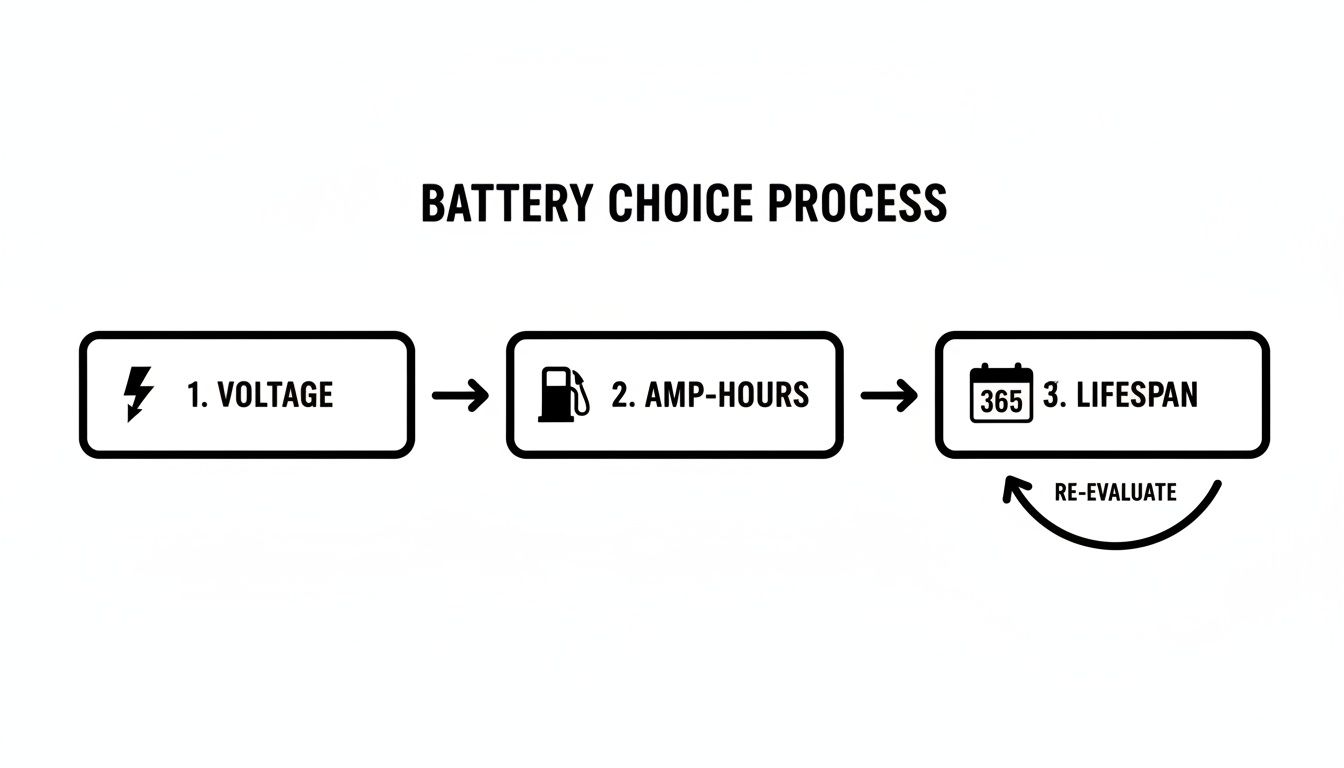
As you can see, it's a methodical process. A great conversion depends entirely on matching the battery's specs to how you actually plan to use your cart.
Your Pre-Purchase Compatibility Checklist
I can't stress this enough: compatibility is everything. Ordering a kit that doesn't fit your cart is a headache you don't want. It’s like buying engine parts for a classic car—you can't just guess. You need to do a little detective work on your specific golf cart.
Before you even think about clicking "buy," run through this quick checklist:
- Identify the Make and Model: Is it a Club Car? An EZGO? A Yamaha? Each brand builds its carts differently, from frame design to mounting points.
- Pinpoint the Year: The model year matters. A 2008 Club Car Precedent is a different beast from a 2018 model. Your best bet is to find the serial number to confirm the exact year.
- Confirm the Voltage: If you're upgrading an existing electric cart, you need to know its current system voltage, which is usually 36V or 48V. This single piece of information will narrow down your kit options significantly.
Once you have these details, you can shop with confidence, knowing the kit you choose was made to fit your cart like a glove.
Mapping Out the Installation Process
Whether you’re doing the work yourself or watching a pro, the conversion follows a pretty standard set of steps. You're basically taking out the old and bringing in the new, more powerful, and efficient system.
- Step 1: Decommissioning the Old System: This is where the real grunt work happens. For a gas cart, you’ll be carefully disconnecting fuel lines and pulling out the engine, exhaust, and gas tank. For an electric cart, it means hauling out all of those heavy old lead-acid batteries.
- Step 2: Mounting the New Powertrain: With a clean slate, you can now install the new motor using the mounting plates provided in the kit. This is where getting a compatible kit really pays off—the bolt holes should line up perfectly with your cart's frame.
- Step 3: Wiring the Brains: Next up is mounting the controller and solenoid. The wiring harness will connect these key components to the motor, the new battery pack, and the accelerator. Take your time here; attention to detail is critical to avoid any electrical gremlins. To dig deeper into this vital component, check out our guide on how to choose the right controller for your golf cart.
Key Takeaway: A smooth installation is all about prep work. Clean the battery bay, label every wire as you disconnect it, and read the instructions from start to finish before you even pick up a tool.
The final step is installing the new battery pack—hopefully a lightweight lithium setup—and connecting it to the system. This is the magic moment when your old cart roars back to life with a whole new attitude. A proper conversion isn't just a power boost; it's a complete system overhaul that will give you years of reliable, thrilling performance.
Staying Safe and Legal After Your Upgrade
So, you’ve dropped in a powerful golf cart conversion kit and unleashed a whole new level of performance. It’s an awesome feeling, but let’s be real: that extra speed and torque come with serious new responsibilities. The cart you had before is not the same machine you have now. Its handling, braking, and overall dynamics are completely different, and ignoring that shift isn't just risky—it's downright dangerous.
Think about it: all that new power puts a massive strain on your cart's original safety systems. The stock brakes, which were perfectly fine for cruising at 12-15 mph, just can't keep up when you're accelerating faster and hitting higher top speeds. This is why safety upgrades aren't just a good idea; they're an absolute must for any responsible owner.
Essential Safety Upgrades for Your Converted Cart
To make sure your upgraded cart is safe for you, your passengers, and everyone else on the path, you need to budget for a few non-negotiable additions:
- Upgraded Brakes: Hydraulic disc brakes are the gold standard here. They offer massively better stopping power compared to old-school drum brakes, which is critical when you’re moving faster.
- LED Lights and Signals: Make yourself seen. Bright LED headlights, taillights, and turn signals are essential for visibility, especially at dawn, dusk, or in bad weather.
- Seatbelts: It sounds basic, but it’s one of the most important things you can do. Install seatbelts for every single passenger. No exceptions.
After putting all that work into your conversion, the last thing you want is for it to get stolen. Installing a robust car security system, especially one with GPS tracking, gives you peace of mind and a real shot at getting your cart back if the worst happens.
Navigating the Road to Street Legality
You absolutely have to understand the legal difference between a standard golf cart and a street-legal Low-Speed Vehicle (LSV). A regular cart is meant for private property—think golf courses, sprawling estates, or campgrounds. An LSV, on the other hand, can legally be driven on public roads, typically those with a posted speed limit of 35 mph or less.
Turning your cart into an LSV is about more than just a speed boost. It means meeting specific federal and state safety standards that certify your vehicle is actually safe enough for public roads. This process protects you from big fines and serious liability.
Getting your cart street-legal requires a checklist of specific equipment. Our detailed guide covers all the street legal golf cart requirements, but the basics usually include a proper windshield, mirrors, headlights, taillights, turn signals, and a registered Vehicle Identification Number (VIN). Taking these steps ensures your high-performance cart isn't just a thrill to drive, but also a safe and fully compliant vehicle in your community.
Got Questions About Golf Cart Conversions? We've Got Answers.
When you start looking into golf cart conversion kits, a few key questions always pop up. Getting those answered is the first step to feeling confident about your project and making sure it goes off without a hitch. Let's dig into the common things people ask before they decide to upgrade.
First up is always the time commitment. How long is this actually going to take? If you're handy and tackling it yourself, plan on spending anywhere from 2 to 6 hours on the conversion. A professional mechanic who's done this before? They can usually knock it out in just 1 to 3 hours. The final time really hinges on your cart's specific model and the kit you're working with.
Will a Conversion Kit Work on My Cart?
This is a big one. People worry their cart might not be a good candidate. The good news is, if you have an electric cart from one of the big names—think Club Car, EZGO, or Yamaha—you're almost certainly in luck for a lithium battery swap or a full motor and controller upgrade. Their designs are fairly standard, which makes finding a compatible kit much easier.
Now, converting a gas-powered cart is a different beast altogether. It's a much bigger job that involves yanking out the entire engine and fuel system. It's definitely doable, but it's a project. For really old or obscure models, finding a simple bolt-on kit can be a real needle-in-a-haystack situation, and you might be better off just buying a new vehicle.
At the end of the day, it all comes down to compatibility. If your cart's frame and electrical system (especially the voltage) line up with a kit on the market, a conversion is probably in the cards. Just make sure to double-check your cart's make, model, and year before you buy anything.
Is It Cheaper to Convert My Cart Than to Buy a New One?
This is the million-dollar—or, well, thousand-dollar—question. At first glance, a quality conversion kit will set you back anywhere from $500 to over $2,000. That's not pocket change. But when you stack that up against the cost of a brand-new electric cart, which can easily top $10,000, the math starts to look pretty good.
The savings don't stop there, either. Think long-term. By upgrading a cart you already own, you sidestep the massive depreciation that hits a new vehicle the second it leaves the lot. Plus, going electric means you can say goodbye to buying gas and paying for engine maintenance, which adds up to a much lower cost of ownership over the years.
So, when you're looking at kits, what parts really matter?
- The Battery: This is your foundation. Don't skimp here. A top-notch lithium battery (LiFePO4 is the gold standard) with a solid Battery Management System (BMS) is crucial for a reliable conversion.
- The Controller: Think of this as the cart's brain. A modern controller gives you the power to tweak performance settings and makes sure the motor runs smoothly and safely.
- The Motor: Pick a motor that fits how you'll use the cart. Need to climb hills? Go for high-torque. Sticking to flat ground? A high-speed motor is your friend. Generally, an AC motor is the best all-around choice for performance.
Ready to see what the future of electric mobility looks like? At Solana EV, we're all about premium, street-legal electric vehicles that offer incredible performance and style. Find the perfect ride for your community, resort, or personal use. Check out our lineup today.