
Let's be honest, the term "golf cart" doesn't really do justice to the modern 6-seat models anymore. These vehicles have officially broken free from the back nine and are now the workhorses for large families, sprawling resorts, and busy event coordinators. If you need to move a group of people efficiently, this is your answer.
Why 6 Seat Golf Carts Are More Than Just for Golf

Think of the 6-seat golf cart as the minivan of the neighborhood—it’s practical, surprisingly roomy, and incredibly versatile. The core advantage is simple math: you can carry twice as many people as a standard four-seater, which instantly makes it the better tool for any group outing.
This extra capacity isn't just a minor upgrade; it completely changes how you can use the vehicle. Let's look at what that means in the real world.
Practical Benefits of Added Seating
The most obvious perk is moving more people at once, but that simple fact has a ripple effect. For families, it means no one has to stay behind during a trip to the community pool. For a business, it translates directly into better efficiency and happier guests.
- Family and Community Use: Forget taking two cars. You can pack up the whole family, and maybe a couple of friends, for a ride around the neighborhood or to a local farmers' market.
- Commercial Applications: Resorts, hotels, and event venues can shuttle guests and staff with ease. This cuts down on wait times and makes logistics a whole lot smoother.
- Enhanced Social Outings: A neighborhood cookout or a trip to the park becomes a shared journey. The extra seats make the ride part of the fun.
A 6-seat golf cart turns getting there into a shared experience. It’s built not just to transport people, but to bring them together.
Your Guide to Making a Smart Investment
This guide is designed to cut through the noise. We'll break down the specs that actually matter—like battery range and motor power—and show you how customizations can turn a basic cart into a specialized machine. We’ll cover everything from the different types of golf carts out there to the nitty-gritty of street-legal requirements.
Think of this as your playbook for making a smart purchase. We'll help you see how a 6-seat golf cart can become a key asset, whether you’re looking to improve a guest's stay or just create more lasting family memories.
Where 6-Seat Golf Carts Really Shine
A 6-seat golf cart is so much more than just a regular cart with a few extra seats bolted on. Its real value comes from what those seats let you do. Think about a sprawling resort shuttling a family from the lobby to a secluded villa, or a planned community where neighbors can easily hop over to a block party. That's where these larger electric vehicles prove their worth.
They’re the perfect solution for situations where you constantly need to move small groups of people. It’s less about a leisurely round of golf and more about solving everyday logistical puzzles with a quiet, simple, and surprisingly effective machine. That extra capacity directly translates to smoother operations and a better experience for everyone.
Hospitality and Moving Guests
In the world of resorts, hotels, and large vacation properties, the guest experience is everything. A 6-seat golf cart isn't just a utility vehicle; it's a critical part of creating a welcoming, seamless stay from the moment someone pulls into the driveway.
- Shuttle Service, Perfected: Move guests and their luggage from parking lots to their rooms, the pool, or on-site restaurants. No more long walks in the heat or waiting around.
- Engaging Property Tours: Give potential guests or new arrivals a guided tour of the grounds. It’s a fantastic way to show off all the amenities and help them get their bearings.
- Keeping Staff Mobile: Get your housekeeping, maintenance, and event staff across large properties in a flash. This improves response times and keeps the entire operation running like clockwork.
This isn't just about convenience—it's about delivering a premium service. A family arriving after a long travel day will remember the pleasant, open-air ride to their room far more fondly than a sweaty trek across a giant parking lot.
When you turn basic transportation into a genuinely pleasant part of the experience, you significantly boost guest satisfaction and make your own operations run that much smoother.
Event Management and Logistics
Coordinating a big event—whether it's a wedding, a music festival, or a corporate retreat—is a masterclass in managing moving parts. The ability to quickly transport key personnel, VIPs, or guests with limited mobility can make or break the day.
A golf cart 6 seat model hits that sweet spot between capacity and maneuverability. It can zip down crowded pathways and get into tight spots where a van or shuttle bus could never go, all without making a sound or disrupting the atmosphere. For event planners, it’s an absolute game-changer.
Real Estate and Property Management
Trying to show off a large estate or a master-planned community means covering a lot of ground. Real estate agents and property managers have learned that 6-seat carts offer a far better tour experience for potential buyers or renters.
Instead of a convoy of cars, everyone rides together. This creates a much more personal, conversational vibe, letting the agent point out unique features and answer questions on the fly. For sprawling apartment complexes or gated communities, these carts are also perfect for maintenance crews traveling between units with their tools and equipment.
There's a reason the market for these vehicles is booming. The entire golf cart market was valued at around USD 2.45 billion in 2025, and the 6-seater segment is leading the charge with a compound annual growth rate of about 7.1%. This demand is coming directly from resorts, communities, and industrial sites that have realized just how useful they are. You can dive deeper into this trend by exploring the full market research on golf cart growth on snsinsider.com.
Personal and Community Life
It's not all business, though. The golf cart 6 seat has become a huge hit for personal use in large neighborhoods and on private estates. It’s a practical, fun, and eco-friendly way to get around and connect with your community.
- Family Adventures: Load up the whole family for a trip to the community pool, the park, or a neighbor's barbecue—no car needed.
- The Neighborhood "Taxi": It's perfect for picking up friends or ferrying kids to and from activities around the block.
- Hauling and Errands: Many models have a rear seat that flips down, instantly creating a small utility bed for groceries, gardening supplies, or sports gear.
This flexibility makes it more than just a ride; it becomes a central part of family life and community fun, offering a relaxed, open-air alternative for all those short trips.
Breaking Down the Key Technical Specs
When you start comparing different 6-seat golf carts, the spec sheets can feel like a foreign language. You'll see terms like "AC motor" and "Lithium-Ion" thrown around, but what do they really mean for how the cart drives and handles day-to-day?
Let's cut through the jargon. Think of it like buying a car—you wouldn't just look at the paint job. You’d want to know what’s under the hood, how efficient it is, and how it handles on the road. The same logic applies here. Getting a handle on these key specs is what empowers you to pick a cart that’s a perfect match for your needs, whether you're tackling steep resort hills or cruising down flat community roads.
This infographic can help you visualize if a larger cart is the right starting point for your needs.
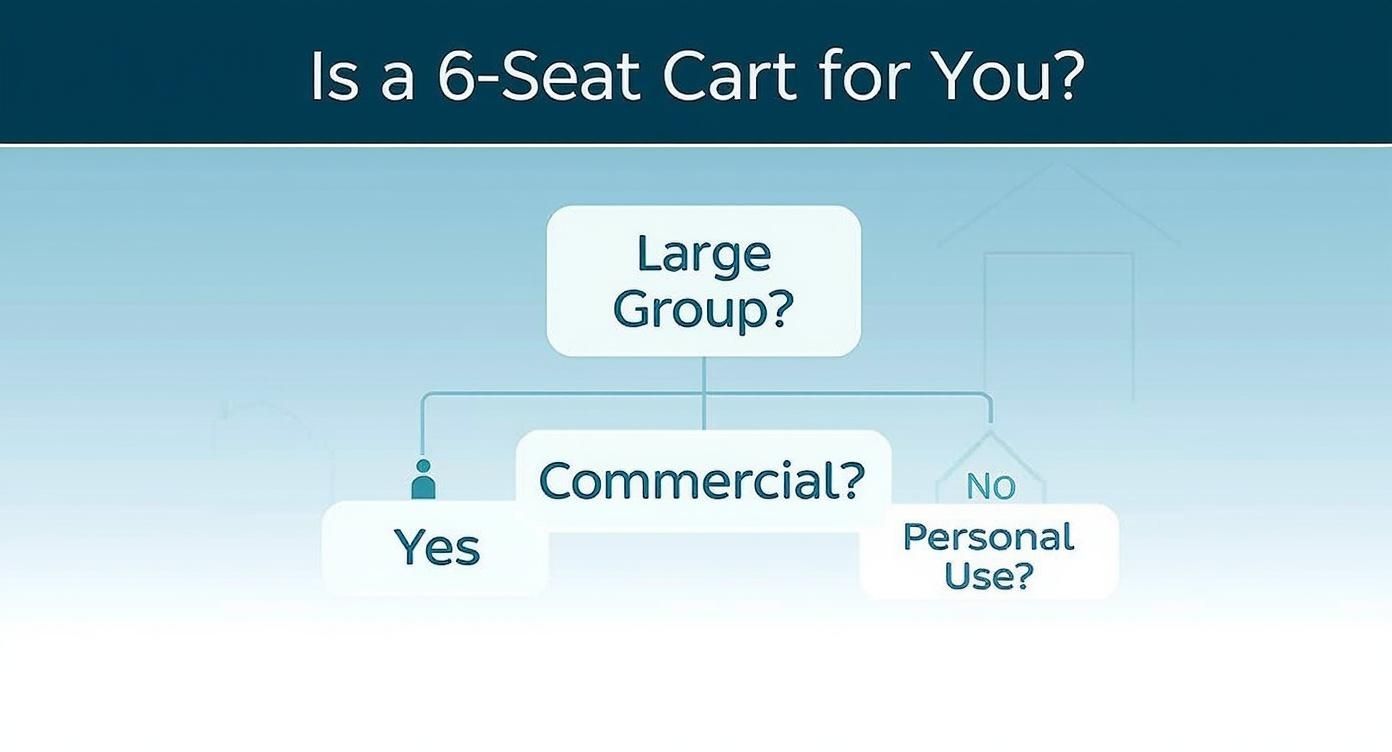
As the decision tree shows, the first question is always about group size, which then helps you narrow down whether your needs lean more toward commercial or personal use.
The Power Source: Understanding Battery Types
The battery is the heart of any electric golf cart. It dictates how far you can go on a single charge, how long you have to wait for it to recharge, and how much time you'll spend on upkeep. The two main players in this game are traditional Lead-Acid and modern Lithium-Ion batteries.
-
Lead-Acid Batteries: This is the old-school, tried-and-true technology. They’re cheaper upfront but come with homework—you have to regularly check water levels. They also have a shorter lifespan, typically lasting around 3-5 years before needing a replacement.
-
Lithium-Ion Batteries: This is the same advanced technology that powers your smartphone and modern electric vehicles. These batteries are lighter, charge significantly faster, require zero maintenance, and can last for 10 years or more. That longevity and convenience often make them a better value in the long run.
For a busy resort or a rental fleet, the fast charging and zero-maintenance nature of Lithium-Ion is a game-changer. It means less downtime and lower labor costs, which is a huge advantage for keeping vehicles on the move.
Motor Technology: AC vs. DC
Next up is the motor—the muscle of your cart. The motor determines the raw power and torque your vehicle has, which is a huge deal for a heavier 6-seat golf cart, especially when it’s loaded with people or navigating hilly terrain.
Think of it like a sprinter versus a weightlifter. A DC (Direct Current) motor is the sprinter; it’s highly efficient on flat ground but can start to struggle when faced with heavy loads or steep inclines.
An AC (Alternating Current) motor, on the other hand, is your weightlifter. It delivers more torque right from a standstill, giving it fantastic climbing ability and punchy acceleration, even with all six seats filled. For hilly communities or demanding commercial jobs, an AC motor is almost always the smarter choice.
Choosing between an AC and DC motor isn't about which is "better" overall, but which is right for your environment. An AC motor provides the raw strength needed for hills, while a DC motor is a perfectly efficient choice for flat, predictable routes.
Sizing It Up: Dimensions and Maneuverability
While it’s easy to get caught up in power and batteries, the actual size of the cart is just as critical. The dimensions, turning radius, and ground clearance directly impact where you can—and can't—go. A 6-seat golf cart is naturally longer than a standard 2- or 4-seater, and that length affects how nimble it is.
Key Dimensions to Keep in Mind:
- Overall Length: This is the big one. Will it actually fit in your garage, storage shed, or designated parking spot? Measure twice, buy once!
- Turning Radius: A smaller turning radius means the cart is more agile. It can handle tight corners in a crowded resort or navigate winding neighborhood streets without having to make a three-point turn.
- Ground Clearance: This is simply the space between the ground and the lowest point of the cart's undercarriage. Higher clearance is a must for handling uneven terrain, big speed bumps, or light off-road trails without bottoming out.
A cart designed for smooth, paved paths can get by with lower ground clearance. But if your property has rough patches or you plan on venturing off the asphalt, you’ll want a model that sits a bit higher.
6 Seat Golf Cart Feature Comparison
To make these technical choices clearer, let's compare how standard and premium options stack up and what the differences mean for your daily use.
| Feature | Standard Option (e.g., Lead-Acid) | Premium Option (e.g., Lithium-Ion) | What It Means For You |
|---|---|---|---|
| Battery Type | Lead-Acid batteries with a 3-5 year lifespan. | Lithium-Ion batteries lasting 10+ years. | Lithium costs more upfront but saves money and hassle over time with zero maintenance and a much longer life. |
| Motor | DC (Direct Current) motor. | AC (Alternating Current) motor. | An AC motor delivers superior torque for climbing hills and handling heavy loads. A DC motor is fine for flat terrain. |
| Charging Time | 8-10 hours for a full charge. | 3-5 hours for a full charge. | Lithium batteries get you back on the road in half the time, which is critical for commercial fleets or frequent personal use. |
| Maintenance | Requires regular watering and terminal cleaning. | Completely maintenance-free. | Lead-acid adds ongoing tasks to your to-do list, while lithium lets you just plug in and go. |
Ultimately, matching these technical specs to your real-world environment is the key. By doing your homework now, you can be confident your new vehicle is the perfect fit from the moment it arrives.
Navigating Street Legal Requirements
https://www.youtube.com/embed/dAxQkLZMEdQ
Taking your 6-seat golf cart off the resort path and onto a public road is a game-changer. Suddenly, you have a convenient, fun way to get around your community. But the moment your tires hit that public pavement, the rules change completely.
These regulations aren't just friendly suggestions; they're the law. What’s required can vary wildly from one state to the next, and sometimes even from one town to another. Think of your cart less like a recreational toy and more like a small car. You're sharing the road, and that means safety is everyone's responsibility. Skirting these rules can lead to big fines, legal headaches, or much worse.
The Essential Street Legal Checklist
Before you can legally drive your 6-seater on the street, it has to meet the criteria for a Low-Speed Vehicle (LSV). While federal standards create a baseline, your local municipality often adds its own specific requirements.
Here’s the essential gear almost every jurisdiction will demand:
- Headlights, Taillights, and Brake Lights: This is non-negotiable. You have to be visible, especially at dawn, dusk, or in bad weather. Brake lights are absolutely critical for letting drivers behind you know you’re slowing down.
- Turn Signals: Waving your arm out the side just won't do. You need working, visible turn signals on the front and back to show other drivers what you're planning to do.
- Seat Belts: Especially with a 6-seat golf cart, this is a must. Every single passenger needs their own seat belt, no exceptions.
- Mirrors: You’ll need a rearview mirror at a minimum, and most places require side-view mirrors, too. You have to know what's happening around you at all times.
- A Horn: A simple but vital safety feature. You need a horn that's loud enough to alert pedestrians and other drivers who might not see you.
The whole point of these rules is to make your golf cart act like a predictable and safe vehicle in traffic. Every piece of equipment helps you blend into the normal flow of the road.
From Cart to Registered Vehicle
Getting all the right equipment installed is only the first part of the journey. To make it official, you need to navigate a bit of paperwork to get your cart recognized as a legitimate, road-worthy vehicle.
The most important step is getting a Vehicle Identification Number (VIN). Your average golf cart doesn't roll out of the factory with one. A VIN is the unique 17-digit code that identifies your specific vehicle, and without it, you can't register anything. You'll likely need an official inspection to verify your cart meets all LSV standards before a VIN is issued.
Once you have that VIN in hand, you can move on to the next steps:
- Title and Registration: Head to your local DMV to apply for a title and get the vehicle registered, just as you would with a car.
- License Plates: Once it's registered, you'll get a license plate that has to be displayed on the cart.
- Insurance: You'll need to get, at minimum, the basic liability insurance your state requires for any motor vehicle on the road.
This process is what officially transforms your 6-seat golf cart from a private-property runabout into a registered LSV that's legally allowed on certain public roads.
Know Your Local Laws
I can't say this enough: the laws change dramatically depending on where you are. One town might allow LSVs on roads with speed limits of 25 mph or less, while the next county over might permit them on roads up to 35 mph. You'll also find specific rules about crossing major intersections or whether you can drive at night.
Your best friend here is your local DMV's website or your city's official government site. Don't take advice from a friend who lives in a different state—it probably won't apply. For a more detailed breakdown, our guide on street legal golf cart requirements offers a great overview of what to look for.
Thankfully, manufacturers are making this easier. Features like automotive-grade seat belts and better side-impact protection are becoming more common on larger carts, smoothing the path to getting them street legal. This shift is a big reason why you see them in more urban settings, as noted in this golf cart industry report. By following the rules, you can make sure every trip is safe, legal, and stress-free.
Customizing Your Cart with Accessories
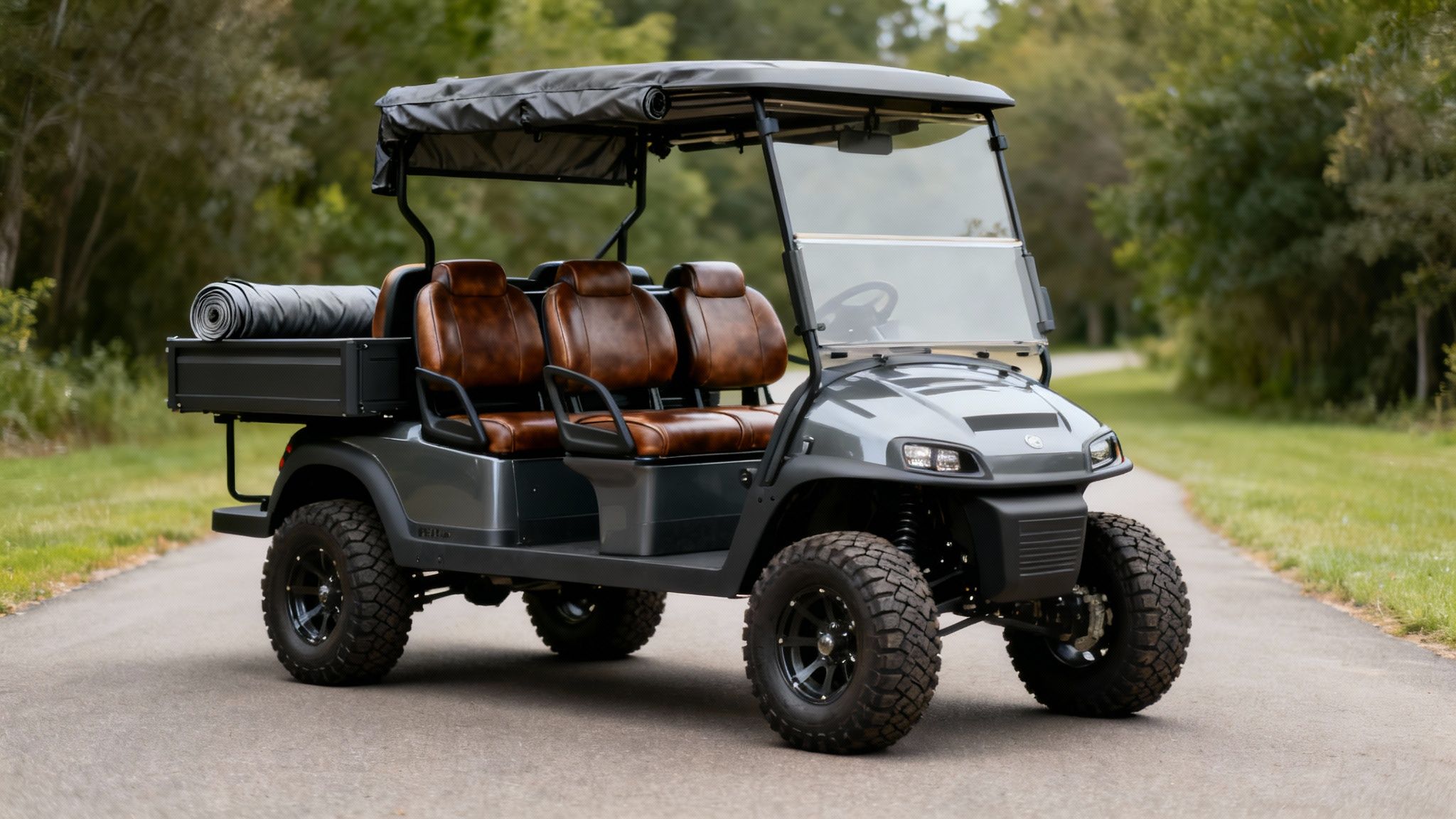
One of the real joys of owning a modern 6-seat golf cart is making it truly your own. A stock model is a great starting point, but the right accessories can transform it from a simple people-mover into a specialized vehicle built for your exact needs, whether for business or pleasure.
Think of your new cart as a blank canvas. Are you dealing with unpredictable weather? Need to tackle some light off-roading? Or maybe you just want to add a personal touch that stands out. No matter the goal, there's an accessory for that. This is where you get to dial in your investment and get the most out of it.
Practical Upgrades for All Conditions
Functionality should always come first. These are the kinds of add-ons that solve real-world problems and expand what your cart can do, making sure it’s ready for whatever the day throws at it.
- All-Weather Enclosures: A sudden downpour or a chilly wind can ruin a perfectly good outing. A quality enclosure zips into place in minutes, keeping all six passengers dry and comfortable. It's an easy way to extend your cart’s usability into the colder, wetter months of the year.
- Lift Kits and All-Terrain Tires: If your property has gravel paths, bumpy fields, or light trails, a lift kit is a game-changer. It gives you more ground clearance so you don't scrape the undercarriage. Pair it with some beefy all-terrain tires, and you’ll have the grip and stability to confidently venture off the pavement.
- Flip-Down Rear Seats: This is easily one of the most popular and clever accessories for a golf cart 6 seat. The back bench seat is designed to flip over, instantly creating a flat utility bed. It’s perfect for hauling everything from groceries and garden supplies to beach gear and work tools.
These upgrades aren’t just about looking cool; they’re about making your cart more versatile and capable, ready to handle the unique demands of your environment day in and day out.
Enhancing Comfort and Style
While practical gear is key, personalizing the look and feel of your cart is what makes it feel special. The right aesthetic touches can boost passenger comfort and give your vehicle a unique presence in your community or resort.
For example, swapping out the standard seats for premium, marine-grade vinyl ones adds a touch of class and holds up much better against sun and moisture. You can pick from tons of colors and stitching patterns to get the exact look you want.
Another fantastic option is a custom paint job or a vinyl wrap. This lets you break free from the standard factory colors. You can match your company's branding, show off your favorite sports team's colors, or just create a design that reflects your personality.
Customization is about creating a vehicle that works better and feels better. It's the difference between a generic tool and a personalized extension of your home or business.
Integrating Modern Technology
Today's golf cart accessories are about more than just utility and style. Modern tech can bring a whole new level of convenience and fun to every trip, turning a simple shuttle run into a full-on experience.
Bluetooth audio systems are a perfect example. With speakers built right into the cart, you can stream music or podcasts straight from your phone, setting the mood for a neighborhood cruise or a resort tour. Connecting is usually a breeze—just find the device in your Bluetooth settings and pop in a code like "0000" to pair.
Other popular tech additions include:
- LED Light Bars: Essential for better visibility and safety when you’re driving around at dawn or dusk.
- USB Charging Ports: A must-have to keep everyone’s phones and devices charged up while you're on the move.
- Digital Displays: Upgraded dashboards give you a clear, modern view of your speed, battery life, and other key stats.
When shopping for a golf cart 6 seat, it's smart to look at the manufacturer’s ecosystem of accessories. Brands like Solana EV offer a wide range of add-ons designed to perfectly fit their models, including the XA, F, G, and Campus E. This makes it easy to find and install upgrades down the road, ensuring your vehicle can grow with your needs and protect your investment for years to come.
What's the Real Cost of Owning a 6-Seat Golf Cart?
That initial price tag on a new golf cart 6 seat model? It’s just the starting line. To really understand what you'll be spending, you need to look at the total cost of ownership—all the little expenses that pop up after you drive it off the lot. Thinking about these now means no nasty surprises later.
It’s a lot like buying a car. You don't just budget for the monthly payment; you factor in gas, oil changes, and insurance. Your golf cart is no different. You'll have costs for charging, routine upkeep, and maybe even insurance and registration. Getting a clear picture of these future expenses helps you budget smartly from day one.
The big story here is the move to electric. Electric carts now make up over 80% of all sales, and for good reason: they're cheaper to run and better for the environment. This is especially true for the larger 6-seater models, where efficiency really starts to matter.
Breaking Down the Day-to-Day Running Costs
Your main ongoing expense will be keeping the cart powered and rolling. This is where your choice of battery technology isn't just a tech spec—it's a major financial decision.
- Charging Up: The best news? Charging an electric golf cart is cheap. We're talking just $1 to $2 for a full charge. That's a tiny fraction of what you’d spend on gas for a comparable vehicle.
- The Big One: Battery Replacement: This is the most significant long-term cost you’ll face. Old-school lead-acid batteries typically give up the ghost every 3-5 years, and replacing them can set you back thousands.
- The Lithium Advantage: A modern lithium battery costs more upfront, but it's built to last for 10 years or more. When you add in the fact that they need zero maintenance, they often end up being the smarter financial choice over the life of the cart.
When you're mapping out these long-term expenses, it's helpful to get a broader perspective by understanding EV maintenance costs. It really highlights the value of a low-upkeep lithium system.
A Little Maintenance Goes a Long Way
Like any vehicle, your 6-seat golf cart needs a bit of regular love to stay in peak condition. These simple checks are your first line of defense against big, expensive problems down the road.
Most of these tasks are easy enough to handle yourself with a quick weekend checklist:
- Tire Check: Keep an eye on the tire pressure and look for any obvious wear. Properly inflated tires give you a smoother ride and last a whole lot longer.
- Brake Test: Give the brakes a quick test now and then to make sure they're grabbing firmly. If you hear any squeaking or grinding, it's time to check the pads.
- Battery Care (for Lead-Acid): If you opt for lead-acid batteries, you'll need to top off the water levels every month and keep the terminals clean to stop corrosion in its tracks.
Think of routine maintenance as a small, regular investment in your cart's health. A few minutes of prevention each month can save you from major repair bills and unexpected downtime.
A Few Other Costs to Keep in Mind
Beyond charging and maintenance, there are a couple of other expenses that might come into play, especially if you’re planning on taking your cart on public roads.
If your 6-seat golf cart is street-legal, you'll absolutely need insurance. It's the law in most places and provides crucial protection if an accident happens. You might also have a small annual fee for registration, just like you would for any other LSV (Low-Speed Vehicle).
To get a complete breakdown of all the factors that go into the final price, take a look at our guide on how much a golf cart costs. Planning for these extras gives you a complete, realistic financial picture from the start.
Your Questions, Answered
Thinking about making the jump to a larger cart? It's a smart move for many, but it naturally comes with a few questions. Let's clear up some of the most common things people ask about 6-seat golf carts.
How Much Weight Can a 6-Seater Actually Handle?
You can generally expect a 6-seat golf cart to have a total carrying capacity between 800 and 1,200 pounds. That figure includes all your passengers and whatever gear you're hauling along with them.
Keep in mind, though, that this isn't a one-size-fits-all number; it really does vary from one model to the next. The best practice is always to crack open the owner's manual and confirm the specific payload capacity. Pushing a cart past its limit is a recipe for stressing the motor, wearing out the brakes, and putting a real strain on the suspension.
Are They Tricky to Drive Compared to Smaller Carts?
Good question. While a golf cart 6 seat model is definitely longer, most drivers get the hang of it in no time. The biggest thing you'll notice is the wider turning radius. You just can't take corners as tightly as you would in a little 2-seater.
It’s a lot like switching from a compact car to a big SUV. The fundamentals of driving are identical, but you have to be a bit more conscious of your space, especially when making tight turns or backing into a parking spot.
What Kind of Speed Can I Expect?
Most electric 6-seat golf carts top out somewhere between 19 to 25 miles per hour. This speed isn't random—it's intentionally set to meet the requirements for Low-Speed Vehicles (LSVs), which is what allows them to be registered for street use in many areas.
Carts built strictly for private property or off-road trails might be tuned differently, but if you plan on driving it on neighborhood roads, you can count on it staying within that safe and legally-approved speed range.
Ready to move more people with style and efficiency? Explore the premium lineup of 6-seat electric vehicles from Solana EV and find the perfect model for your community, resort, or family.
Discover Your Solana EV Today