
The electric vehicle industry is exploding, creating a modern-day gold rush for talented professionals. This isn't just a niche for engineers, either. It’s a massive, interconnected world with rewarding electric vehicle careers for everyone from technicians and manufacturing pros to sales experts. Getting in now is like joining a tech movement that's actively reshaping our world.
Why Your Next Career Should Be in the EV Industry
The move to electric vehicles is doing more than just changing how we get around—it's building an entirely new economy from the ground up. This shift is fueled by huge investments from both private companies and public initiatives, creating a wave of stable, high-paying jobs that extend far beyond the assembly line. The growth isn't a slow burn; it's a full-blown boom.
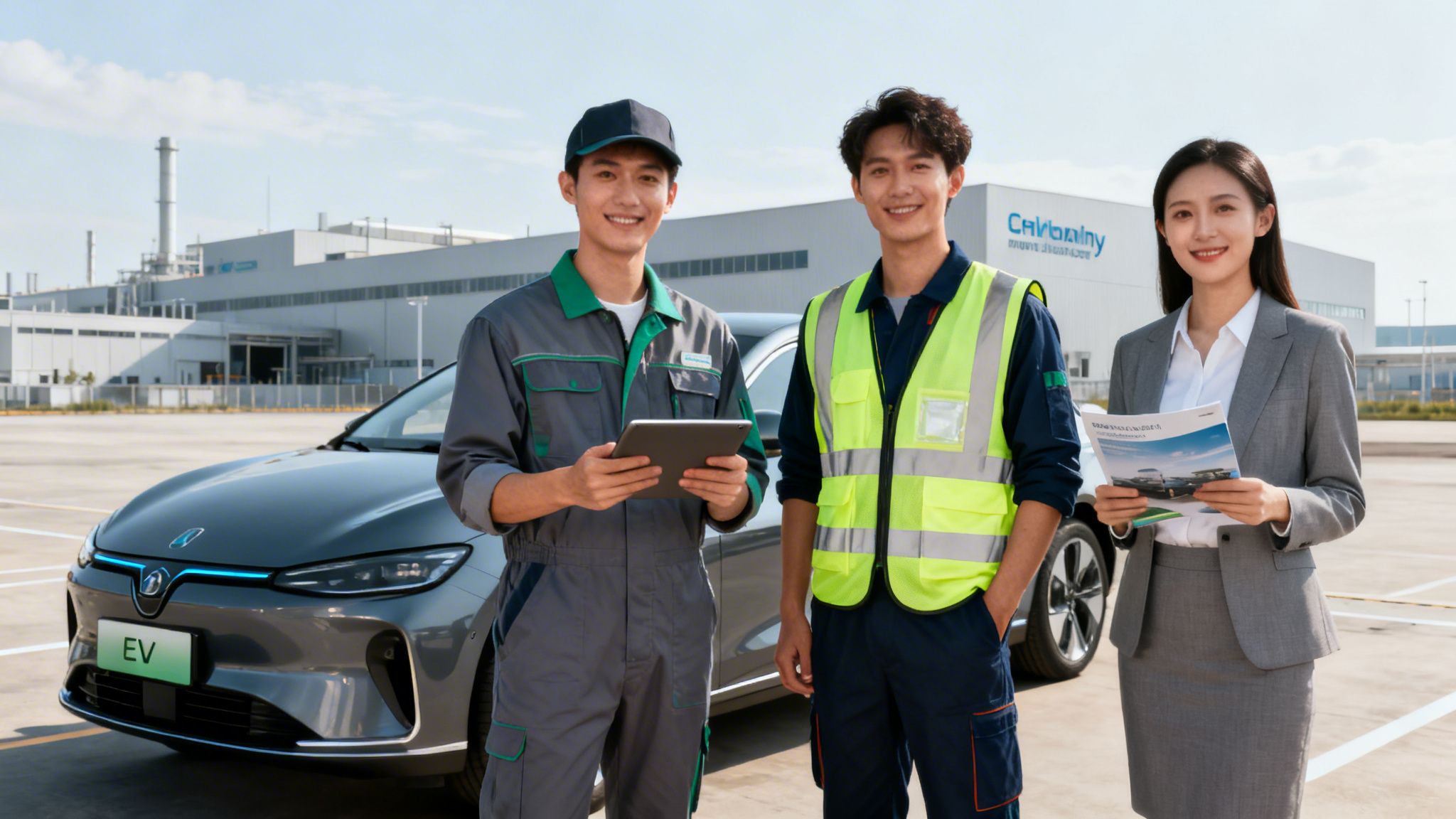
Think of this guide as your personal roadmap. We'll show you exactly where the real opportunities are and what you need to do to grab them. Whether you're interested in building the future on a production line or helping customers embrace this new technology at a dealership like Solana EV, there’s a spot for you.
A Diverse Ecosystem of Opportunity
The traditional auto industry was fairly straightforward. The EV world? It's a completely different beast, with careers spread across a wide range of connected sectors. This creates a much more resilient job market with multiple ways for people with different skills to get in on the action.
- Manufacturing and Production: This is more than just putting cars together. It’s about producing the high-tech components that make them run, like advanced batteries and powerful electric motors.
- Infrastructure and Energy: This is the backbone of the whole operation. These roles focus on building out and maintaining the vast charging networks that keep the entire ecosystem powered up.
- Sales, Service, and Support: These are the people on the front lines, connecting customers with EV technology, teaching them how it works, and providing ongoing service.
- Research and Development: This is where the innovators live, constantly pushing the limits of what's possible with battery tech, software, and vehicle performance.
If you're thinking about the bigger picture, it's also worth looking into whether utilities are a good career path in electric utilities, as they're critical to the EV transition.
The real opportunity lies beyond just manufacturing. A complete value chain—from vehicle design and battery production to smart infrastructure and recycling—presents diverse opportunities for employment and innovation.
This interconnectedness means that when one part of the industry grows, it pulls the others along with it. The more EVs that hit the road, the greater the demand for skilled technicians, charging station installers, and customer support staff. It’s this powerful synergy that makes a career in the EV field so solid and full of potential.
Finding Your Place in the EV World
To figure out where you fit in the electric vehicle industry, it helps to have a map. The EV space isn't just one giant blob; it's a living, breathing ecosystem with four main territories, all connected but distinct. Getting a handle on these key areas is the best first step to see where your skills and interests can really shine.
Think of it like a bustling city. You've got the industrial parks where things are actually built, the innovation labs dreaming up what's next, the essential utilities keeping the lights on, and the busy commercial centers that connect people with the final product. Each zone has its own vibe and its own set of opportunities.
Before we dive deep into each one, here’s a quick overview of how the industry is structured. This table lays out the main career pillars in the EV world and gives you a few examples of the jobs you'll find in each, helping you start to picture where you might belong.
Key Sectors in The Electric Vehicle Industry
| Career Sector | Description | Example Job Roles |
|---|---|---|
| Manufacturing & Production | This is the hands-on heart of the industry, where EVs and their components, like batteries and motors, are physically built and assembled. | Assembly Line Technician, Robotics Engineer, Battery Manufacturing Specialist, Quality Control Inspector |
| Research & Development (R&D) | The "brain" of the operation, where engineers and scientists innovate and design the next generation of EV technology. | Battery Chemist, Software Engineer, Automotive Designer, Mechanical Engineer, Vehicle Systems Analyst |
| Infrastructure & Energy | The essential backbone that powers it all. This sector focuses on building and maintaining the charging network and grid support. | Charging Station Installer, Electrical Engineer, Grid Technician, Project Manager, Urban Planner |
| Sales & Support | The public-facing side of the industry, focused on selling vehicles, educating customers, and providing maintenance and service. | EV Sales Specialist, Service Technician, Customer Support Advisor, Dealership Manager |
Now that you have the lay of the land, let's explore what it's actually like to work in each of these areas.
Manufacturing and Production
This is where the rubber literally meets the road. The manufacturing sector is all about turning designs and raw materials into the shiny new EVs you see driving around. It’s so much more than a traditional assembly line; we’re talking about advanced robotics, high-stakes precision engineering, and the incredibly specialized world of battery production.
Jobs here are for people who like to build things and see tangible results. With new factories and production hubs popping up all the time, this part of the industry is a massive source of new jobs.
Research and Development
Welcome to the lab. R&D is the think tank of the EV world, where engineers, designers, and scientists are constantly pushing the limits of what a car can do. Their whole job is to dream up more powerful batteries, write smarter software, and design vehicle parts that are lighter and more efficient.
If you land a career here, you're directly shaping the future of how we get around. It's the perfect place for creative thinkers and problem-solvers who get excited about new technology.
The real opportunity lies in a complete value chain—from vehicle design and battery production to smart infrastructure and recycling—which presents diverse opportunities for employment and innovation.
This is a key point. A breakthrough in battery chemistry doesn't just stay in the lab; it creates immediate needs for new manufacturing processes, updated charging infrastructure, and different sales tactics, pulling the entire industry forward.
Infrastructure and Energy
An EV is basically a high-tech paperweight without a place to plug it in. This sector is the critical backbone that makes the whole electric revolution possible. Professionals here are the ones designing, building, and maintaining the vast network of charging stations that drivers depend on.
This territory needs everyone from electricians and project managers to policy experts who work with city governments and utility companies. Their goal is to make sure the power grid can handle the growing demand for electricity and that charging is convenient and reliable for everyone.
Sales and Support
This is where the technology finally meets the customer. The sales and support sector is all about educating people, selling vehicles, and providing the service that keeps them running smoothly. In the EV world, this isn't your typical car sales job; it's a much more consultative role where you're helping people understand a whole new way of driving.
There's a common myth that you need an advanced engineering degree to work in the electric vehicle careers space, but that’s just not true. The reality is that most EV jobs are practical, hands-on roles in assembly, maintenance, battery tech, and charging station installation. As the National Governors Association highlights, many of these roles are wide open to people coming from apprenticeships and specialized training programs, making this an incredibly accessible field for just about anyone.
What Are the Most In-Demand Electric Vehicle Careers?
When you peek under the hood of the electric vehicle industry, you'll find a whole world of specialized roles that keep everything moving. It’s not just about the assembly line. The real action—the day-to-day work of building and supporting the EV revolution—happens in a few key areas that companies are scrambling to fill right now.
These jobs are the pillars holding up the entire industry, from the initial spark of an idea in R&D to the moment a happy customer drives off the lot. Think of it as an ecosystem where every part is connected and vital for growth.
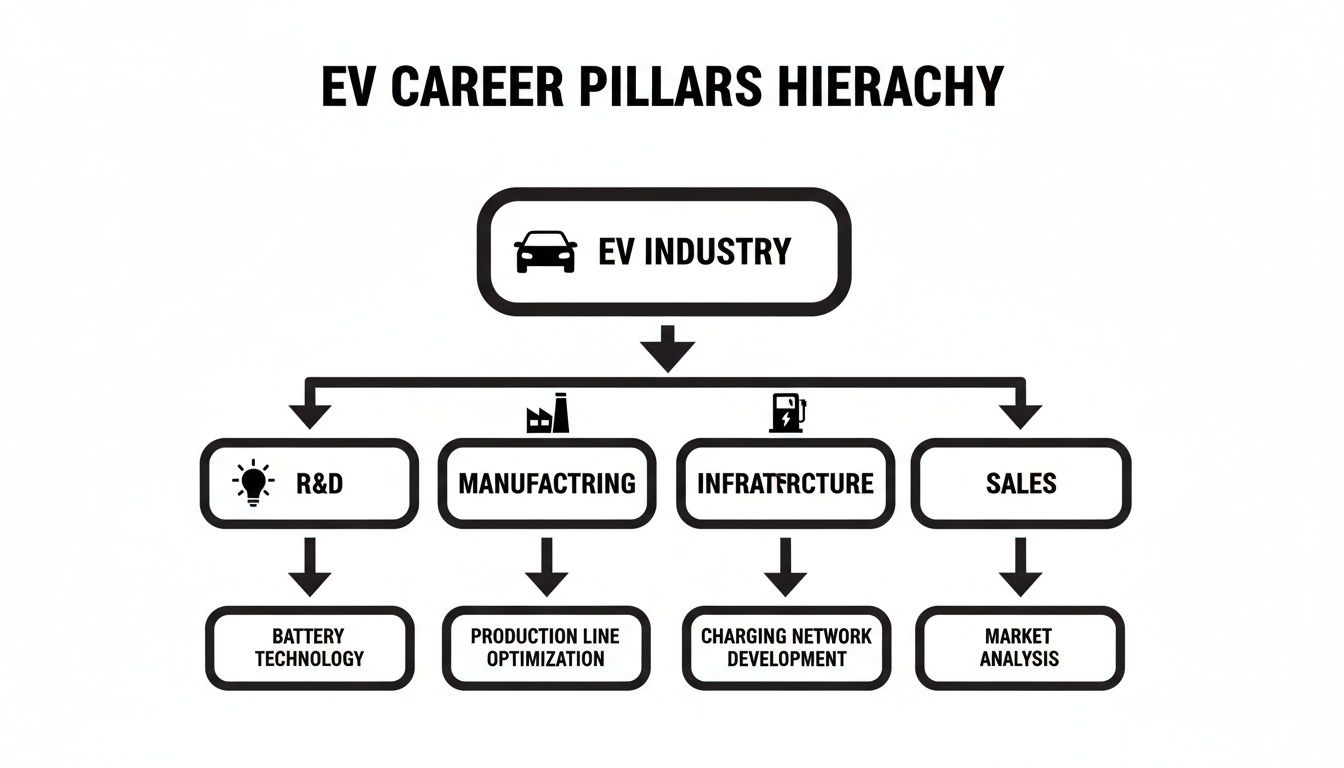
As the diagram shows, a healthy EV market depends on a seamless blend of innovation, high-tech manufacturing, robust infrastructure, and skilled people who can connect the technology with the customer. So, what’s it actually like to work in these roles? Let's take a closer look.
The EV Service Technician
Meet the master mechanic of the modern era: the EV Service Technician. Forget oil changes and clunky transmissions; their world is all about high-voltage batteries, intricate software, and silent, powerful electric motors. They are the go-to experts for diagnosing, repairing, and maintaining the complex systems that make an EV go.
A typical day might start with plugging a vehicle into a diagnostic computer to decode error messages from the battery management system (BMS). Or they might be troubleshooting a tricky issue with an onboard charger. Their toolkit is as much digital as it is physical, featuring insulated instruments and proprietary software alongside the traditional wrenches and lifts.
An EV technician is a unique hybrid of old-school automotive know-how and new-school tech savvy. They need to be just as comfortable navigating diagnostic software on a laptop as they are working under a car.
To succeed here, you absolutely need a solid grasp of electrical principles and high-voltage safety protocols. Certifications, like those from the National Institute for Automotive Service Excellence (ASE), are quickly becoming the industry standard. For anyone looking to break into this field, specialized training is a must. You can get a better sense of the required skills in our guide to electric vehicle technician training.
The Battery Manufacturing Specialist
Every great EV is powered by an incredible battery, and Battery Manufacturing Specialists are the people who bring these powerhouses to life. Working inside massive "gigafactories," these professionals oversee the incredibly precise process of assembling cells, building modules, and integrating the final battery pack.
Their day-to-day responsibilities are a blend of engineering and quality assurance:
- Overseeing Automation: They manage and monitor the sophisticated robotic systems that assemble battery cells with microscopic precision.
- Ensuring Quality Control: They run a gauntlet of tests on every battery pack to make sure it meets uncompromising safety and performance standards.
- Optimizing the Process: They are always looking for ways to make the manufacturing workflow safer, faster, and more cost-effective.
This career is a perfect fit for someone with a background in chemistry, electrical engineering, or advanced manufacturing. A sharp eye for detail isn't just a plus—it's essential. Even a tiny imperfection can affect a battery's longevity and performance.
The Charging Station Installer
As more drivers go electric, the need for a vast and reliable charging network is exploding. Charging Station Installers are the certified electricians and skilled technicians on the front lines, building out this critical infrastructure one station at a time. Their work ranges from installing simple home wall chargers to constructing complex DC fast-charging plazas on major highways.
This job demands a thorough understanding of local electrical codes, the ability to assess a site to find the optimal installation spot, and the confidence to work with both low- and high-voltage systems. Every charger they install makes owning an EV a little easier and helps put "range anxiety" in the rearview mirror for good.
The EV Sales Consultant
Selling an electric vehicle is a whole different ballgame than selling a gas-powered one. An EV Sales Consultant acts more like an educator and a guide than a traditional salesperson. Their job is to help customers understand a new kind of technology and embrace a new way of driving.
Instead of talking about horsepower and engine size, their conversations focus on new concepts:
- Charging Levels: Clearly explaining the real-world differences between Level 1, Level 2, and DC Fast Charging.
- Understanding Battery Range: Walking customers through how weather, terrain, and even driving style can impact a car's range.
- Home Charging Setups: Offering practical advice on the best charging solution for a customer’s home, whether it’s a house or an apartment.
This is the perfect role for a people person who is genuinely excited about technology. It's all about building trust and making sure a new owner feels completely confident as they make the switch to electric.
Why the EV Job Market Is Exploding
The surge in electric vehicle careers isn't just a slow burn; it's a full-blown explosion that's reshaping the entire job market. This incredible growth is fueled by a perfect storm of massive private investment and smart government incentives. It feels less like a typical industry shift and more like a tech revolution taking hold.
Getting into the EV field right now is like getting in on the ground floor of a massive movement. The amount of money pouring in is staggering, and it's creating tens of thousands of secure, well-paying jobs every single year. These aren't just temporary gigs; they're foundational roles in a brand new economic ecosystem.
The Forces Driving This Unprecedented Growth
Two main engines are firing up this expansion: huge financial commitments from automakers and powerful government support. Companies are investing billions to build new "gigafactories" for batteries and completely retooling existing plants to assemble EVs.
At the same time, government programs are kicking the transition into high gear. The Inflation Reduction Act (IRA), for example, has been a total game-changer, sparking $114.0 billion in private investment announcements. This funding alone has helped create or secure an incredible 195,000 direct jobs.
In fact, employment in hybrid and electric vehicle manufacturing is expected to grow by an average of 21.6 percent each year between 2020 and 2025. You can dig deeper into the numbers with the employment data for hybrid and electric vehicle manufacturing on IBISWorld.
The real story here isn't just about the number of jobs, but the breakneck speed at which they're appearing. This rapid expansion opens up huge opportunities for anyone ready to jump in, promising long-term stability and serious room for growth.
A Connected Ecosystem of Opportunity
This job boom isn't happening in isolation. The growth in vehicle manufacturing creates a powerful ripple effect that lifts related sectors right along with it. For every new EV that rolls off the line, there’s a need for more people in other key areas.
This interconnected demand builds a resilient job market with all sorts of entry points:
- Technicians and Service Professionals: More EVs on the road means more skilled technicians are needed to keep them running smoothly.
- Infrastructure Specialists: A growing EV fleet requires a massive build-out of the charging network, creating jobs for installers and maintenance crews.
- Sales and Support Staff: Dealerships need knowledgeable people to guide a new generation of buyers into their first electric car.
Each new factory or vehicle launch directly feeds the need for a strong support network. This synergy is a huge reason why electric vehicle careers hold such a promising future. The industry isn't just building cars; it's building the entire infrastructure around them. You can learn more about this vital support system in our complete guide to electric vehicle charging infrastructure.
How to Launch Your Career at an EV Dealership
The factory floor and R&D labs get a lot of attention, but they're only part of the story. The real front line of the EV revolution is the dealership, where incredible technology finally meets the person who will be driving it. This is a fantastic place to jump into the industry, with dynamic roles that mix sales, customer service, and a whole lot of education.
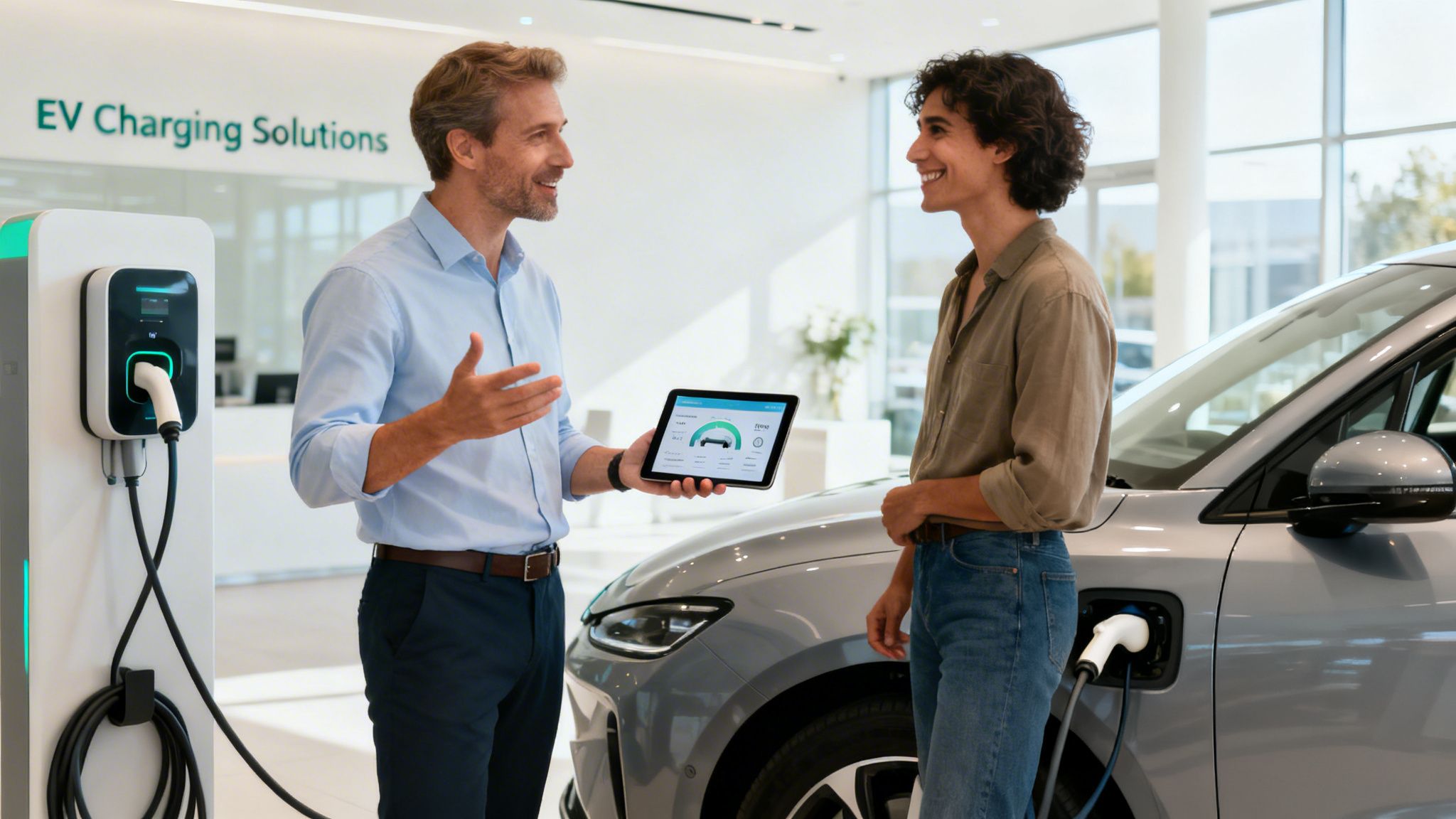
Today's EV dealerships, like the ones in the Solana EV network, feel more like tech hubs than old-school car lots. The conversation has completely shifted. Instead of talking about engine specs, you're discussing battery range, home charging setups, and how an EV can genuinely fit into a customer's life. Success here isn’t about high-pressure sales; it’s about becoming a trusted advisor.
When you're putting together your application, understanding what recruiters look for in resumes can make a huge difference. You'll want to highlight your knack for learning fast and breaking down complex ideas into simple, clear language.
Key Roles at the EV Dealership
If you want to break into the dealership world, it helps to know which roles will let your skills shine. These jobs are absolutely essential for building a great customer experience and, ultimately, encouraging more people to go electric.
- EV Sales Specialist: Think of this role as more of an educator than a salesperson. Your job is to walk customers through the unique perks of owning an EV, explaining everything from charging logistics and battery health to cool software features.
- Service Advisor: You're the main point of contact when a customer needs maintenance. You'll translate technical issues into plain English and schedule appointments for things like software updates, battery diagnostics, or routine checks.
- Operations Manager: This person keeps the whole dealership running like a well-oiled machine. You'd oversee everything from inventory and logistics to customer service, requiring sharp leadership and a solid grasp of the EV market.
Skills That Set You Apart
The skills needed for an EV dealership job are a bit different from what you'd find at a traditional dealership. Customer service is still king, of course, but now it's paired with a new kind of technical know-how.
The most valuable asset in an EV dealership is not just knowing the product, but being able to teach the lifestyle. It’s about building confidence in a new technology, one customer at a time.
To really stand out, you'll want to hone your expertise in these areas:
- Technical Aptitude: You don't have to be an engineer, but you do need to be comfortable explaining concepts like kWh, charging levels (L1, L2, and DC Fast Charging), and regenerative braking.
- Consultative Communication: This is all about listening. You need to understand a customer's daily commute, where they live, and their travel habits to recommend the perfect EV solution for them.
- Adaptability: EV technology changes constantly. A genuine passion for learning is a must-have to keep up with new models, software updates, and the latest battery advancements.
The best dealer networks offer specialized training to bring their teams up to speed, which creates an awesome environment for growing your career. And if you have an entrepreneurial streak, you might even want to learn more about how to start a dealership business to get a sense of the bigger picture.
Common Questions About Electric Vehicle Careers
Jumping into the world of electric vehicles can feel like a big leap, and it's totally normal to have a few questions. What does it really take to succeed? Where are the best opportunities hiding? Let's clear up some of the confusion and bust a few myths so you can map out your next move.
Think of this as your personal FAQ, built from the kinds of questions I hear all the time from people looking to break into this exciting field.
Do I Need an Engineering Degree to Work in the EV Industry?
Absolutely not. This is probably the single biggest misconception out there. While brilliant engineers are definitely needed to design the next generation of EVs, they’re just one part of a huge ecosystem. The truth is, the bulk of the jobs are for skilled technicians, manufacturing pros, salespeople, and the folks installing our charging infrastructure.
There are so many other paths into this industry that don't require a four-year engineering degree:
- Vocational Schools: These are fantastic for hands-on training to become an EV service tech or a battery specialist.
- Associate's Degrees: Many community colleges have great automotive technology programs with a specific focus on electric vehicles.
- Company-Sponsored Training: A lot of the big players—manufacturers and dealerships alike—run their own certification programs to train their teams from the ground up.
For example, to become a top-notch EV Service Technician, you'd typically get a certification in automotive tech with an EV specialization. You can find programs like that at technical schools all over the country.
What Are the Most Important Skills for an EV Career?
The specific skills you'll need obviously change from role to role, but a few core strengths will serve you well no matter what. If you're going for any technical job, a solid grasp of electrical systems and high-voltage safety protocols is the price of entry. It's the foundation for everything else.
Adaptability is the real superpower in the EV industry. The technology is advancing so quickly that a willingness to continuously learn is more valuable than knowing everything on day one.
Beyond the technical stuff, don't underestimate the power of good communication. This is especially true if you're in a role where you talk to customers. You'll need to break down complex ideas—like charging levels, "range anxiety," and battery health—for people who are brand new to all of this.
How Is Selling EVs Different from Selling Gas Cars?
It's a whole different ballgame. Selling a traditional car is often about features and horsepower. Selling an EV is more like being a guide or a consultant. You’re helping someone step into a new way of life, and that requires building a ton of trust.
An EV sales consultant has to be a genuine expert in things like:
- Home Charging Setups: You'll advise customers on the right gear and installation for their specific home.
- Charging Speeds: This means clearly explaining the practical differences between a Level 1, Level 2, and a DC Fast Charger.
- Lifestyle Integration: You're helping people figure out how to plan a road trip, how to get the most out of their battery, and how to feel confident behind the wheel of their new car.
At the end of the day, you’re not just selling a product; you’re helping someone embrace a new technology.
Where Can I Find Training for Electric Vehicle Careers?
Finding the right training program is easier now than it's ever been. Tons of community colleges and trade schools have rolled out specialized courses for EV maintenance and battery systems. Plus, big-name certifying bodies like the National Institute for Automotive Service Excellence (ASE) now offer EV-specific credentials that employers really value.
Don't forget to look at the manufacturers and forward-thinking dealership groups, too. They often provide their own in-depth training programs to make sure their technicians and sales teams are true experts on the vehicles they're working with. It's often a direct pipeline into a great job.
At Solana EV, we believe in giving our partners the knowledge and tools they need to win. Our comprehensive dealer program includes expert training, dedicated support, and exclusive access to a lineup of premium electric vehicles. Discover how you can build a thriving business and lead the charge in your community. Learn more about our dealer program at Solana EV.