
Riding in an electric golf cart is more than just a quiet trip around the course; it’s a glimpse into the future of how we get around. These vehicles run on rechargeable batteries, giving you a clean, efficient, and almost completely silent alternative to the loud, clunky gas models of the past.
Why Electric Carts Are Taking Over
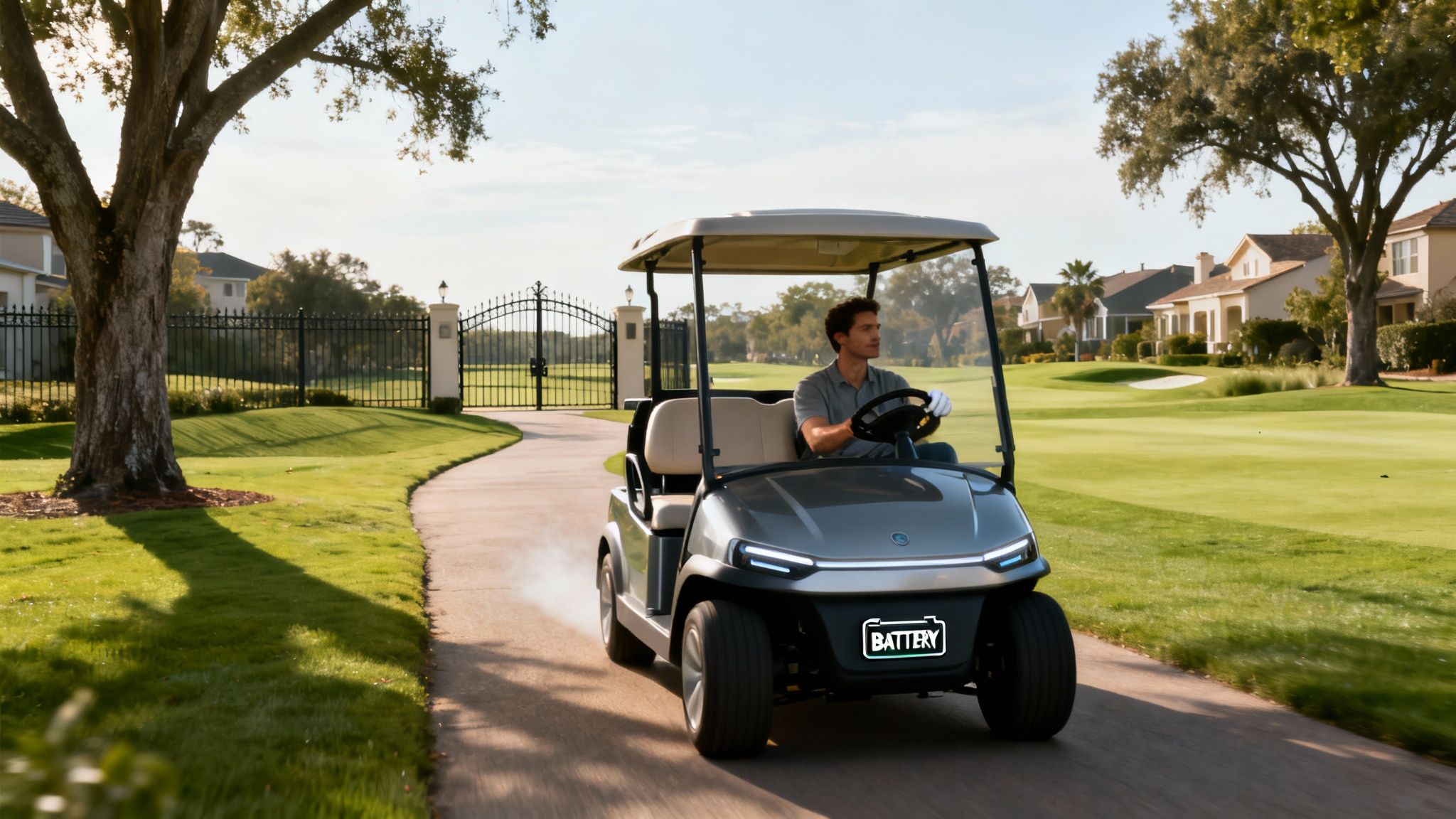
The rise of the electric golf cart is a story of quiet revolution. Once found only on the fairways, these versatile machines have broken out, becoming a familiar sight in gated communities, across sprawling university campuses, and as the go-to ride in charming seaside towns. This isn't just a fluke; it's happening because they offer some serious advantages over old-school gas carts.
Consider this guide your roadmap to understanding this massive shift in personal transport. We'll walk you through everything, from the basic technology that makes them go to how to pick the perfect one for your needs.
A Market That Runs on Efficiency
The numbers don't lie—people are overwhelmingly choosing electric. It's predicted that electric golf carts will command a staggering 95.3% of the global market share by 2025, a trend pushed by their eco-friendly nature and serious cost savings. In fact, the whole golf cart market is set to jump from USD 2.30 billion in 2025 to USD 3.68 billion by 2035.
This boom is part of a bigger move toward sustainable transportation. When you can cut your daily running costs by up to 50% just by plugging in instead of filling up, the choice becomes pretty clear. You can dig deeper into these market shift insights on Future Market Insights.
At its heart, the electric cart is the perfect mix of simplicity and performance. With fewer moving parts, zero emissions, and that instant get-up-and-go acceleration, it’s a smoother, more enjoyable ride that demands far less upkeep.
What This Guide Will Cover
To help you get your bearings in this expanding world, we're going to break down all the essentials. Think of this as your complete buyer's handbook, where we'll explore:
- Gas vs. Electric: A head-to-head look at how they stack up on performance, cost, and maintenance.
- Key Features: Everything you need to know about batteries, motors, and how far you can actually go on a charge.
- Real-World Uses: Discovering all the ways these carts are used way beyond the golf course.
- Street-Legal Rules: A simple guide to understanding local laws for driving on public roads.
- Total Cost of Ownership: Looking past the sticker price to see what you’ll really spend over time.
By the time you're done reading, you'll see why the electric golf cart isn't just a passing trend—it's the future of easy, local travel.
Gas vs. Electric Carts: A Clear Comparison
Not too long ago, choosing between a gas and an electric golf cart felt like a real debate. Today, that's rarely the case—the scales have tipped, and for good reason. This decision isn't just about how you power your ride; it's about finding a vehicle that fits your lifestyle, your wallet, and what you expect when you get behind the wheel.
Let's break down the real-world differences in the areas that actually matter to an owner.
The True Cost of Ownership
Looking at the initial price tag can be misleading. While gas and electric carts might seem close in cost at the dealership, that's only the first chapter of the story. The long-term costs are where you'll find a clear winner.
Think of it like buying a new appliance. You can get the cheap, old-school model that guzzles energy, or you can invest a little more in the efficient one that saves you money on every utility bill for years to come. Electric carts offer that long-term savings.
- Fuel vs. Electricity: Gas prices go up and down, but they always add up. Electricity is consistently and significantly cheaper. In fact, you could save as much as 75% on "fuel" costs. Charging your cart overnight costs next to nothing compared to a trip to the gas pump.
- Maintenance Expenses: A gas engine is a complex machine with hundreds of moving parts—belts, filters, spark plugs, and oil—all of which need regular attention and replacement. An electric motor is beautifully simple, meaning fewer breakdowns and much smaller service bills.
Gasoline vs Electric Golf Cart Feature Showdown
To make the choice even clearer, let's put these two options head-to-head. This table breaks down the key differences at a glance, helping you see where each type of cart shines.
| Feature | Electric Golf Cart | Gasoline Golf Cart |
|---|---|---|
| Upkeep & Maintenance | Minimal. Check batteries and tires. Lithium batteries are virtually maintenance-free. | Frequent. Requires oil changes, filter replacements, and spark plug swaps. |
| Operating Cost | Very low. Pennies per mile to charge with electricity. | High. Subject to fluctuating gas prices and more frequent repairs. |
| Noise Level | Whisper-quiet. Perfect for quiet communities and early morning rounds. | Loud. The constant engine rumble can be disruptive. |
| Performance Feel | Zippy and instant. Delivers immediate torque for quick, smooth acceleration. | Traditional power. More engine vibration and a slower, rumbling start. |
| Environmental Impact | Zero tailpipe emissions. A clean, green choice for any environment. | Produces exhaust fumes and contributes to air and noise pollution. |
| Towing & Hauling | Strong. Modern AC motors provide impressive, consistent torque for heavy loads. | Good, but can struggle under heavy loads without consistent RPMs. |
As you can see, the advantages of going electric stack up quickly, especially when you think about the day-to-day experience and long-term budget.
Performance and Power Delivery
There's a common myth that gas carts are just plain more powerful. While a gas engine provides that familiar rumble and might have a slight advantage in raw top speed, electric carts dominate in a much more useful area: instant torque.
The second you press the pedal in an electric cart, you get all its power, right away. This creates a zippy, responsive feel that's fantastic for getting up to speed or climbing hills. Modern AC electric motors deliver smooth, unwavering power that can easily tackle steep inclines—something older DC models and even some gas carts can struggle with.
Environmental Impact and Noise
This is where electric carts truly run away with it. The difference is night and day, and it affects both the planet and your immediate surroundings.
An electric cart offers a peaceful experience. It glides silently through a quiet neighborhood or across a resort property, allowing you to enjoy the sounds of nature without the disruptive noise and fumes of a combustion engine.
Gas carts pump out exhaust, contributing to local air pollution. Electric carts have zero tailpipe emissions, making them the responsible choice for communities and eco-sensitive areas. They're also 10-15 dB quieter than their gas-powered cousins. This massive reduction in noise pollution is a key reason why over 50% of carts in retirement communities are now electric.
Ongoing Maintenance Demands
The simplicity of an electric cart's design means you'll spend far less time and money on upkeep. A gas cart, on the other hand, needs a maintenance schedule a lot like a car's.
Gas Cart Maintenance Checklist:
- Regular oil changes
- Air and fuel filter replacements
- Spark plug checks and changes
- Belt inspections and adjustments
- Exhaust system maintenance
Electric Cart Maintenance Checklist:
- Checking battery water levels (only for older lead-acid types)
- Keeping terminals clean
- Ensuring proper tire pressure
If you have a modern cart with lithium-ion batteries, maintenance becomes almost an afterthought. It’s a true "plug-and-play" experience that lets you spend more time driving and less time tinkering.
The Overall Driver Experience
In the end, it really boils down to what kind of ride you prefer. A gas cart gives you that classic, mechanical feel complete with the engine's rumble. An electric cart delivers a smooth, quiet, and effortless glide with that satisfying, instant acceleration.
The market has already made its choice loud and clear. Projections show that electric golf carts are on track to capture a staggering 78.6% of the total market by 2035. This is part of a wider industry boom, expected to grow from USD 3.3 billion in 2025 to USD 7.2 billion. This shift is driven by smart buyers who recognize the lower operating costs and ability to meet modern eco-standards. You can explore the full market growth projections on Research Nester to see just how fast things are changing.
The Features That Really Make a Difference
When you start shopping for an electric golf cart, the spec sheet can look pretty intimidating. You'll see terms like "lithium-ion," "AC motor," and "payload capacity" thrown around, but what do they actually mean for how the cart drives and fits into your life?
Think of it like buying a new laptop. You wouldn't just grab the first one off the shelf. You'd check the processor speed (the motor), how long the battery lasts (the range), and how many programs you can run at once (the payload). Getting these details right is the key to finding a cart that you'll be happy with for years to come.
This simple diagram highlights the fundamental choice you're making between an electric and a gas-powered cart.
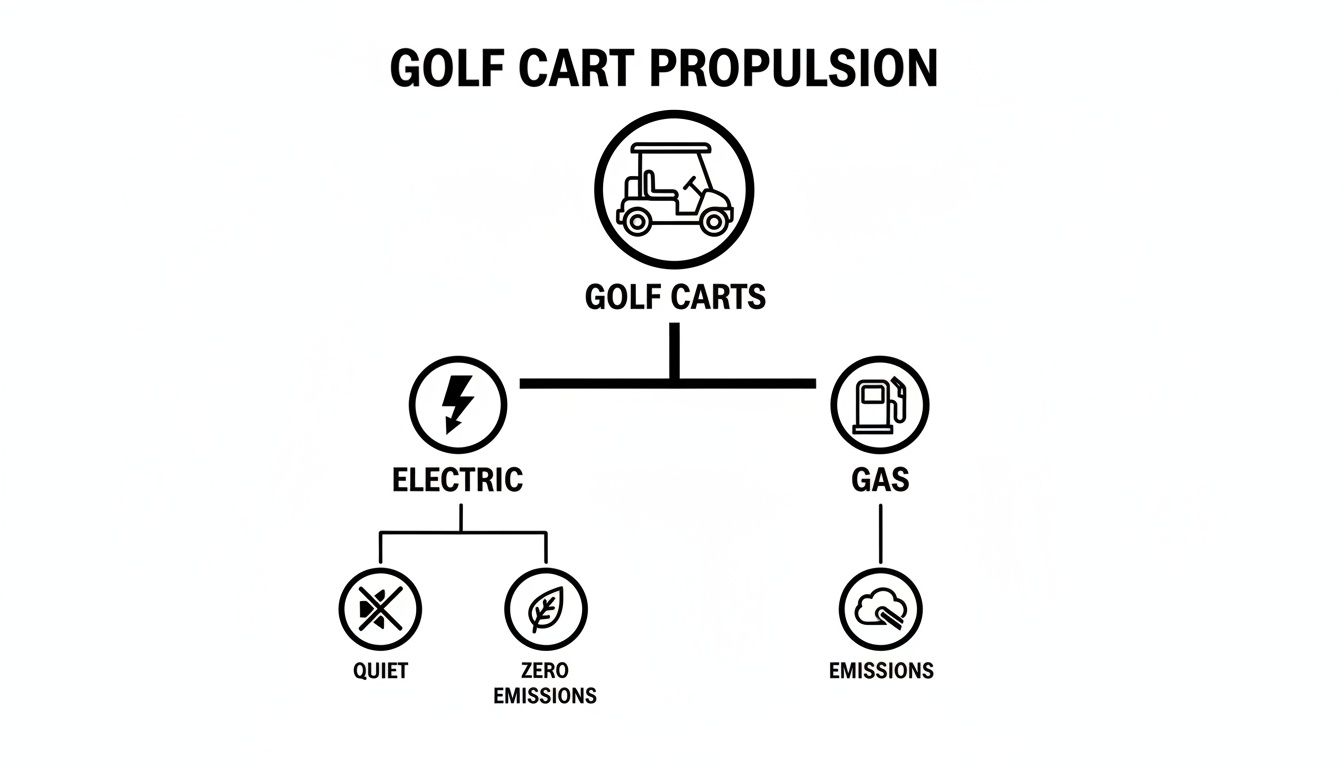
As you can see, the difference is night and day. Electric offers quiet, emission-free operation, while gas models are inherently noisier and produce exhaust.
The Heart of the Cart: The Battery
If there's one component that defines your entire experience with an electric cart, it's the battery. It determines how far you can go, how long you have to wait for a charge, and how much maintenance is on your to-do list. The market is really split between two main types: the old-school Lead-Acid batteries and the modern Lithium-Ion (Li-ion).
Lead-Acid Batteries:
- The Old Standard: This is the tech that's been around for decades. It's a proven workhorse and comes with a lower price tag upfront.
- Hands-On Maintenance: These aren't "set it and forget it." You have to regularly check and top off the water levels to keep them from getting damaged.
- Heavy and Short-Lived: Lead-acid batteries are seriously heavy and you can expect them to last about 4-6 years before they need a complete—and expensive—replacement.
Lithium-Ion (Li-ion) Batteries:
- The Modern Upgrade: This is the same technology powering your smartphone and today's electric cars. It's significantly lighter, charges way faster, and is much more efficient.
- Zero Maintenance: Seriously, none. Li-ion batteries are completely sealed. You just plug it in, let it charge, and you're good to go.
- Built to Last: A quality lithium battery will serve you well for 8-10 years or even longer. That longevity makes it a much better value over the life of the cart, even with a higher initial cost.
For almost every buyer these days, a lithium-ion battery is the smart move. The sheer convenience of having zero maintenance, a longer lifespan, and more consistent power delivery makes it an upgrade that easily pays for itself over time.
Motor Power: Why AC Beats DC
The motor is what turns that battery power into forward momentum. In the electric cart world, you'll find two types: Alternating Current (AC) and Direct Current (DC). While they both make the wheels turn, an AC motor gives you a much better ride.
AC motors are simply more efficient. That translates into quicker acceleration and much better performance when you're climbing hills. They also run cooler and require less maintenance than their older DC counterparts. It’s no surprise that all the premium carts designed for tough terrain and real work come standard with a powerful AC motor.
How Far and How Much? Range and Payload Explained
Okay, let's get down to the two questions I hear most often: "How far will it go on a charge?" and "How much stuff can it carry?"
Range Per Charge: This is your driving distance before you have to plug in. An older cart with lead-acid batteries might get you 20-25 miles, which is fine for a round of golf. But a modern electric cart equipped with a good lithium battery can easily go 40-50+ miles on a single charge.
Payload Capacity: This number tells you the total weight—passengers plus cargo—that the cart can handle safely. This is a big deal if you're planning to use it for hauling supplies, shuttling guests at a resort, or just loading up the family with beach chairs and coolers. Overloading a cart puts a huge strain on the motor and suspension, so always pick a model rated for your needs. If you really want to get into the details, our guide on what payload capacity means is a great resource.
The entire electric cart industry is booming, with its market value projected to jump from USD 1,127.09 million in 2024 to a staggering USD 2,029.44 million by 2034. This explosion is being fueled by better technology, like smarter motors that are 20-30% more efficient and falling battery costs that make electric carts 20-25% cheaper to own than gas models over their lifetime.
Don't Overlook These Essential Safety Systems
Finally, a modern cart isn't complete without some key safety features, especially if there's any chance you'll be driving near other vehicles.
Here are a few things that should be non-negotiable:
- Regenerative Braking: This is a brilliant feature that actually captures energy when you slow down or go downhill and uses it to recharge the battery a bit, giving you a little extra range.
- Lights and Signals: For visibility and safety, you need headlights, taillights, brake lights, and turn signals. These are an absolute must for any street-legal cart.
- Mirrors and Seatbelts: Just like in your car, mirrors are crucial for awareness, and seatbelts are there to keep everyone secure. Simple, but essential.
Thinking Beyond the Golf Course
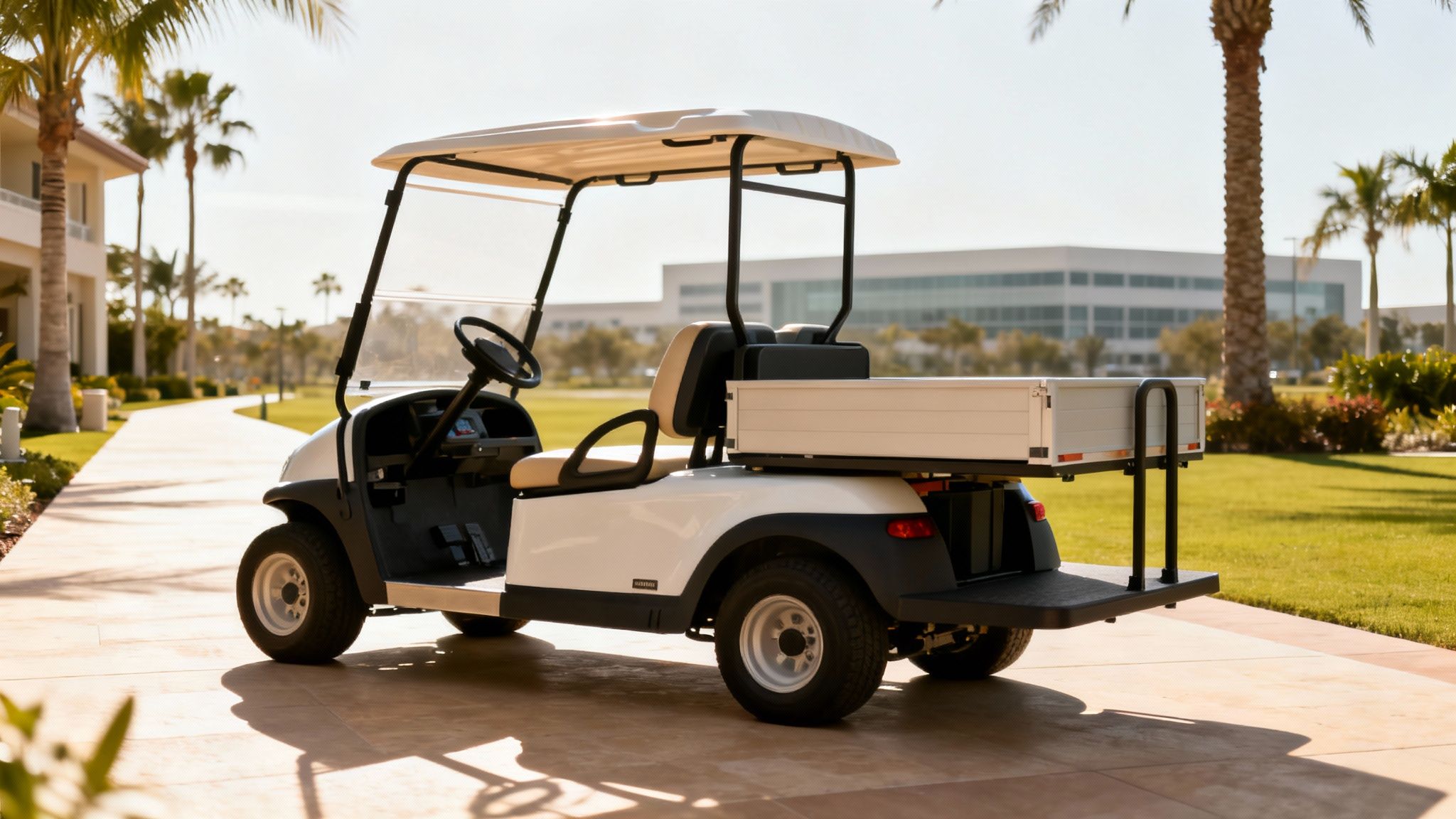
The modern electric cart has officially broken out of its original mold. While it still reigns supreme on the fairway, its real potential is being unlocked in neighborhoods, businesses, and sprawling properties all across the country. These days, they’re the go-to solution for short-distance travel, offering a quiet, practical, and efficient alternative to a traditional car.
Once you start seeing an electric cart as more than just golf equipment, a whole world of possibilities opens up. Let’s dive into some of the most common real-world scenarios where these versatile machines are truly making their mark.
Life in the Neighborhood
In gated communities and master-planned neighborhoods, the electric cart has basically become the family's second car. It's just so much easier for a quick trip to the community pool, visiting neighbors a few streets over, or taking the kids to the playground without firing up the SUV.
For this kind of lifestyle, a few features become absolutely essential. Residents are typically looking for:
- Four-to-Six Seater Models: You need enough room to bring the whole family or a few friends along for the ride.
- Street-Legal (LSV) Packages: This is a must-have for safely using public roads within the community. It includes essentials like lights, seatbelts, and mirrors.
- Customization Options: From premium seats and slick wheels to upgraded sound systems, owners love to personalize their carts to fit their style.
A huge part of the appeal here is how quiet electric carts are. They preserve the peaceful vibe that drew people to the neighborhood in the first place. It’s community transport that actually feels neighborly.
The Hospitality Workhorse
At resorts, hotels, and event venues, first impressions are everything. Electric carts offer a much classier guest experience, silently and cleanly shuttling visitors across large properties. There's no jarring engine noise or smelly exhaust fumes—just a smooth, relaxing ride.
Behind the scenes, they're indispensable tools. Maintenance, housekeeping, and groundskeeping crews depend on them to get work done efficiently without ever disturbing the guests.
A utility-focused electric cart with a cargo bed is a groundskeeper's best friend. It can haul tools, move supplies, and get into tight pathways a truck could never reach, all while operating in near silence.
For these commercial uses, the focus shifts from style to pure function and durability:
- High-Capacity Seating: Shuttles that can carry six or even eight passengers are vital for moving guests.
- Utility Beds and Cargo Boxes: These are non-negotiable for hauling luggage, supplies, and equipment.
- Robust Suspension: You need a tough suspension to handle constant use over everything from paved paths to manicured lawns.
Campus and Corporate Grounds
Large corporate campuses, universities, and industrial facilities are practically small cities. In these environments, an electric cart is a critical piece of the operational puzzle, connecting buildings and people with total ease. They pull double-duty as staff shuttles, security patrol vehicles, and maintenance workhorses.
The benefits are obvious: much lower fuel and maintenance costs compared to a fleet of trucks, zero emissions for better air quality, and the ability to operate indoors when necessary. For a facilities manager, the simplicity of plugging in a cart at the end of the day versus managing a fuel depot is a massive logistical win. Reliability is king here.
Recreation on Large Properties
If you've got a large private estate, a farm, or recreational land, an electric cart is the ultimate exploration tool. It’s a fun, easy way to tour the property, check fence lines, or get to a hunting blind without the noise and disruption of an ATV.
For this kind of use, off-road capability is the name of the game. You'll want to look for features that can handle more challenging terrain:
- Lifted Suspension: This gives you the ground clearance needed to get over rocks, roots, and uneven ground.
- All-Terrain Tires: These provide far better grip on dirt, mud, and grass.
- Powerful AC Motor: An AC motor delivers the instant torque you need to climb steep hills and power through the tough spots.
From suburban streets to rugged trails, the electric cart has proven it's far more than a one-trick pony. It’s a flexible, adaptable vehicle that solves real transportation problems in almost any environment you can think of.
How to Navigate Street Legal Rules
So, you want to take your electric cart beyond the golf course or the neighborhood loop and onto public roads? It’s a fantastic way to get around town, but it's not as simple as just driving off the fairway and into traffic. To do it right—and legally—your cart needs to qualify as a Low-Speed Vehicle (LSV).
Think of an LSV as a specific class of vehicle that bridges the gap between a recreational golf cart and a car. It's built for local trips and comes with a specific set of safety gear that makes it road-ready. Getting to grips with the rules is pretty straightforward once you know what the government is looking for.
The federal government lays down the baseline rules for what makes a vehicle an LSV. These aren't just suggestions; they're firm requirements that every cart must meet to be considered street legal on a national level.
Understanding Federal LSV Requirements
For an electric cart to earn that official LSV status, it needs to have certain safety equipment and hit a specific performance benchmark. The whole point is to make sure your vehicle is visible, predictable, and safe enough to mix with other cars on approved roads.
Here’s what the feds say your cart must have:
- Headlights, Taillights, and Brake Lights: Essential for being seen, day or night.
- Turn Signals: So other drivers know what you’re planning to do.
- Mirrors: You’ll need a rearview mirror and side-view mirrors to see what’s going on around you.
- Seatbelts: A non-negotiable safety feature for you and every passenger.
- A Valid Vehicle Identification Number (VIN): Just like any car, a true LSV needs its own federally recognized VIN.
It's not just about the gear, though. An LSV must be able to reach a top speed between 20 and 25 mph. It can’t go any faster than 25 mph, but it needs enough power to keep up with the flow of traffic in its designated zones.
It's crucial to understand that "street legal" isn't just a sticker you put on the side. It means your electric cart has been officially titled, registered, and insured for use on public roads—the same process a car goes through.
Local Laws Are The Final Word
While federal regulations set the foundation, your state, county, or even city government has the final say. This is where you need to do your homework. Some states add their own rules on top of the federal ones, and many towns restrict where LSVs can actually be driven.
Before you even think about buying a cart or upgrading one, check your local regulations. Seriously, a quick trip to your local DMV's website or a phone call to your city clerk's office is a must. They’ll give you the exact checklist for registration and tell you which roads are fair game—it's usually streets with a speed limit of 35 mph or less. For a complete rundown, check out our guide on how to make a golf cart street legal.
It’s also wise to understand local traffic enforcement. For instance, knowing how to beat a red light camera ticket can help you understand your rights if you ever find yourself in that situation.
You really have two options here. The easiest route is to buy a cart that the manufacturer already certifies as an LSV right from the factory. Or, you can buy a standard cart and upgrade it with an LSV kit, but be prepared for an official inspection to verify it meets all the requirements before you can get it titled and registered.
The True Cost of Owning an Electric Cart
When you’re looking at electric golf carts, the sticker price is just the first chapter of the story. To really understand the investment, you need to look at the Total Cost of Ownership (TCO). It’s the difference between buying a cheap printer and then getting hit with sky-high ink costs versus buying a quality one that sips ink.
An electric cart is that quality, efficient model. The real financial win comes over the long haul, especially when you stack it up against a gas-powered cart that constantly needs something. By looking at everything from charging to maintenance, you get a crystal-clear picture of what you’ll actually spend.
Breaking Down Your Ongoing Expenses
The first and most obvious win is fuel. Charging your cart is ridiculously cheap compared to filling up at the pump. Depending on where you live, a full charge might cost you less than a cup of coffee and get you dozens of miles.
Then there’s the maintenance—or rather, the lack of it. An electric cart’s drivetrain is beautifully simple, with very few moving parts to wear out or break down. Your regular to-do list is short and sweet.
- Battery Care: With modern lithium-ion batteries, you do… pretty much nothing. If you have an older lead-acid setup, you’ll just need to top off the water levels once in a while.
- Tire Checks: Just like with your car, keeping the tires properly inflated is key for getting the best range and staying safe.
- Brake Inspection: A quick, occasional look at the brake pads makes sure you have all the stopping power you need.
Compare that to a gas cart, which demands a steady diet of oil changes, new spark plugs, and fresh air filters. The savings in both money and hassle are huge. You'll spend your time enjoying the ride, not stuck in the garage.
The Long-Term Financial Picture
Looking down the road, the biggest expense you’ll face with an electric vehicle is replacing the battery. But here’s the thing: it’s a predictable cost you can plan for, not a sudden, wallet-busting surprise.
Think of a new battery as a planned investment every eight to ten years, not a constant drain on your wallet. A high-quality lithium battery pack can easily last over a decade, making the per-year cost remarkably low.
When you put it all together—the initial price, the tiny electricity bills, the minimal maintenance, and the eventual battery replacement—the TCO for an electric cart almost always comes out way ahead of a gas model. It’s an investment in a quieter, cleaner, and more affordable way to get around.
For a deeper dive, you can learn more about the complete benefits of an electric golf cart and see what makes it such a smart choice for the long term. This clear financial advantage is exactly why so many communities and individuals are making the switch.
Got Questions? We’ve Got Answers.
Alright, we've covered a lot of ground. But even with all the details on benefits and features, a few questions are probably still bouncing around in your head. Let's tackle the most common ones people ask before they go electric.
Think of this as your quick-reference guide to clear up any final doubts and help you feel totally confident in your decision.
How Long Do Electric Golf Cart Batteries Really Last?
This one comes down to the tech inside. The lifespan of your cart's battery pack truly depends on what kind it is.
For years, lead-acid batteries were the standard. You can expect them to last about 4 to 6 years, but only if you stay on top of maintenance—that means regularly checking and topping off water levels. Miss that, and their lifespan shrinks fast.
The new king of the hill is the Lithium-Ion (Li-ion) battery. It’s a total game-changer. These powerhouses last 8 to 10 years, sometimes even longer, and require absolutely zero maintenance. While they cost a bit more upfront, the longer life and freedom from upkeep make them the smarter, more economical choice in the long run.
Choosing a lithium battery is an investment in convenience and longevity. You get a lighter, more efficient cart that you can simply plug in and drive, without worrying about upkeep for a decade.
What’s the Actual Range on a Single Charge?
Your real-world mileage will always depend on a few things: the battery you have, the hills you're climbing, and how much weight you're hauling.
A standard cart with older lead-acid batteries will probably get you 20-25 miles, which is more than enough for a couple of rounds of golf.
But if you opt for a modern cart with a quality lithium-ion battery, you can easily cruise for 40-50 miles or more on one charge. Just remember, tackling steep inclines or loading up with passengers and gear will use more juice. It's always smart to pick a battery setup that gives you a comfortable cushion beyond what you think you'll need.
Can I Make a Regular Golf Cart Street Legal?
Absolutely. In many areas, you can upgrade a standard golf cart to meet the requirements for a Low-Speed Vehicle (LSV), making it legal to drive on public roads. This usually means installing a specific safety kit.
Typical upgrades include:
- Headlights, taillights, and turn signals
- A proper windshield and mirrors
- Seatbelts for every passenger
The cart also has to be capable of maintaining a speed between 20 and 25 mph. Before you do anything, though, you must check your local and state laws. The rules can vary significantly from one town to the next. Once it's properly equipped, you'll have to get it inspected, titled, and registered, just like a car.
Ready to find the perfect electric cart that fits your needs? Explore the stylish and powerful lineup from Solana EV and discover how our models can elevate your ride. Visit Solana EV to see our vehicles and find a dealer near you.