
When you start shopping for a "street-legal golf cart," the very first thing to get straight is that you're not actually looking for a golf cart in the traditional sense. What you need is a vehicle that's federally classified as a Low-Speed Vehicle, or LSV.
This is a critical distinction. A true LSV isn't just a standard cart with a few bells and whistles; it’s been specifically built or upgraded with a list of safety features required to legally share the road with other cars, typically on streets with speed limits of 35 mph or less.
What Turns a Golf Cart Into a Street Legal Vehicle
So, what does it take to get a vehicle from the fairway to the neighborhood blacktop? It's a specific, federally mandated transformation. Think of it like getting a classic car ready for modern roads—it needs key upgrades to be both safe and legal for everyone.
The core of this change lies in meeting the criteria for that Low-Speed Vehicle (LSV) designation. This isn't just a nickname; it's a formal classification from the National Highway Traffic Safety Administration (NHTSA). For a vehicle to earn this title, it must be able to hit a speed of at least 20 mph but no more than 25 mph.
The Non-Negotiable Safety Upgrades
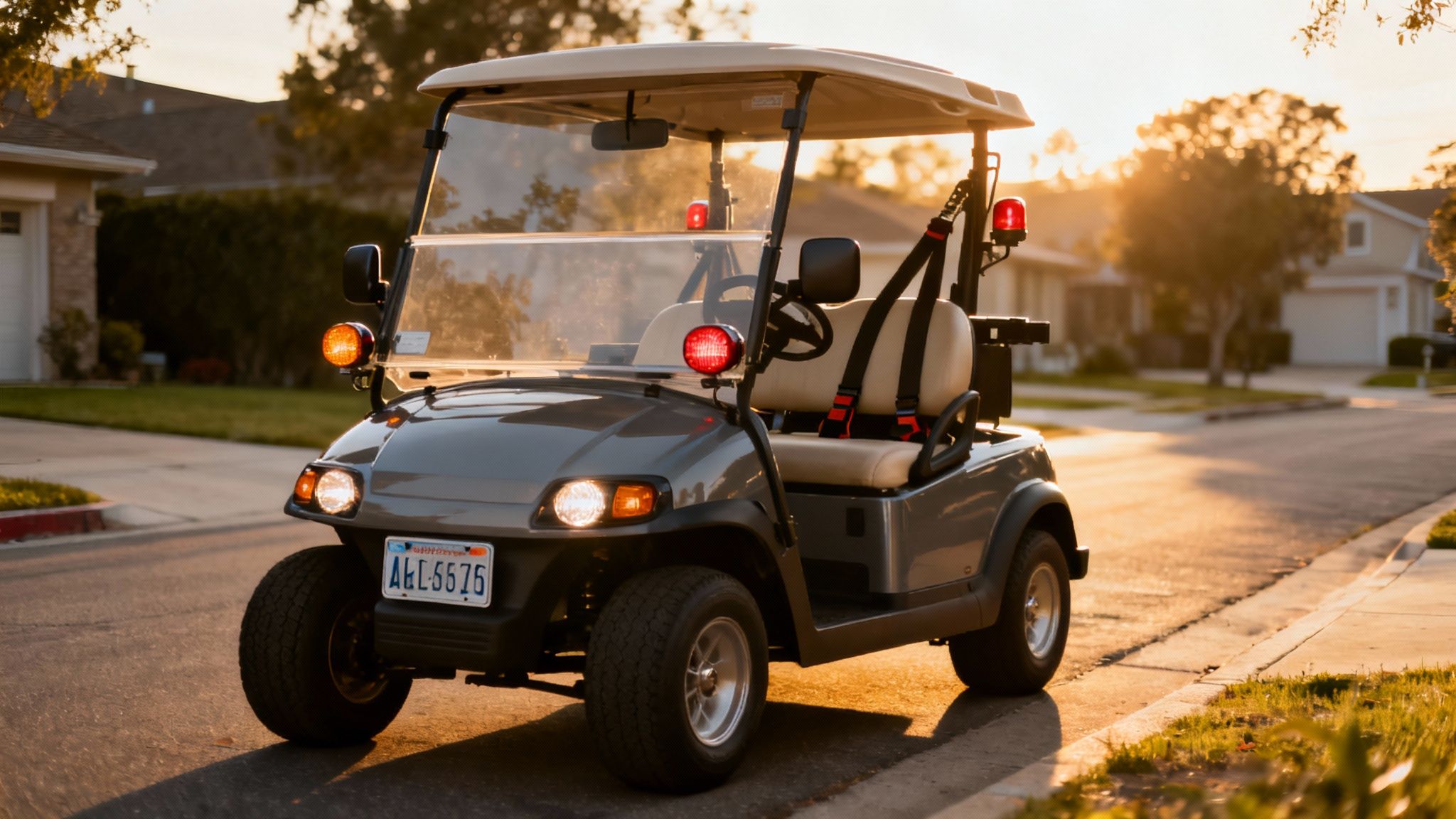
To comply with LSV standards, a golf cart needs a whole suite of safety gear. These aren't optional add-ons; they are the fundamental requirements for legal road use. The entire point is to make the vehicle visible to other drivers and provide basic protection for you and your passengers.
Let's break down the key differences between a standard cart and an LSV.
Standard Golf Cart vs Street Legal LSV at a Glance
| Feature | Standard Golf Cart | Street Legal LSV (Required) |
|---|---|---|
| Top Speed | Typically 12-15 mph | 20-25 mph |
| Vehicle ID Number (VIN) | No | Yes, a 17-digit VIN is required for titling/registration |
| Headlights & Taillights | Optional or basic | Yes, headlights, taillights, and brake lights are mandatory |
| Turn Signals | No | Yes |
| Windshield | Optional, often plastic | Yes, typically AS-1 or AS-5 safety glass |
| Mirrors | Optional | Yes, driver-side and either passenger-side or interior |
| Seat Belts | Optional | Yes, for every seating position |
| Reflectors | No | Yes, on all sides of the vehicle |
As you can see, the list of required features for an LSV is pretty comprehensive. These aren't just suggestions—they are federally mandated safety components.
This infographic gives you a quick visual summary of the core equipment that's absolutely essential for any street-legal LSV.

Think of headlights, a proper windshield, and seatbelts as the foundational trio for making a vehicle road-ready. If you're considering upgrading a cart you already own, you can learn more about the process by checking out our guide on the ideal street legal golf cart kit.
The demand for these vehicles is exploding. The global market for street-legal golf carts is expected to hit roughly $2.454 billion in 2025, jumping up from $2.06 billion in 2024. This isn't just a niche trend; it's driven by a real shift toward eco-friendly, convenient transportation, especially in planned communities and coastal towns.
Decoding Your Local Street Legal Golf Cart Laws
Getting your golf cart federally certified as an LSV is a bit like getting a passport—it makes your vehicle eligible for travel. But a passport doesn’t automatically get you into every country, and LSV certification doesn't grant you access to every road. This is where state and city laws step in, acting as the local border patrol for your cart.
The rules for where you can drive the best street legal golf carts can change dramatically from one town to the next. A quiet retirement community in Florida might have designated cart paths and pretty relaxed rules, while a bustling California beach town could have much tighter restrictions.
This patchwork of regulations can be a real headache for owners. For instance, as of early 2023, only 28 U.S. states had officially passed laws allowing LSVs on public roads, and even then, the rules are all over the map. You can dig into this trend in the U.S. Electric Golf Cart Market report. It’s a perfect example of why you have to do your homework locally before hitting the pavement.
Finding Your Local Rules
So, how do you figure out what’s allowed where you live? Your two best friends in this process are your local Department of Motor Vehicles (DMV) and the municipal police department. They’re the ones writing and enforcing the very rules you need to follow.
Don't just walk in and ask, "Can I drive my golf cart here?" That's too vague. You need to get specific if you want to avoid confusion and, more importantly, a potential fine.
Your street legal cart is a registered motor vehicle, not a toy. You need to approach the legal stuff with the same seriousness you would for a regular car to stay safe and out of trouble.
Before you even think about buying a cart, use this checklist of questions to guide your conversation with the local authorities. A little proactive research now will save you a world of frustration later.
Essential Questions for Your Local Authorities
Here’s a practical checklist to help you get clear, straightforward answers:
- Road Access: On which specific streets am I legally allowed to drive my LSV? Are there any roads I’m banned from, even if the speed limit is 35 mph or less?
- Registration and Titling: What’s the exact process for registering my LSV in this city/county? What specific documents will I need to bring?
- Insurance Requirements: What are the minimum liability insurance requirements for an LSV in our state? As you explore your local laws, it’s vital to understand the key differences between commercial vs personal auto insurance, since this will determine the kind of coverage you need.
- Local Ordinances: Are there any special city ordinances I should know about? Think about rules on nighttime driving, extra equipment beyond the federal minimums, or any designated "cart-only" zones.
Pro tip: Get these answers in writing. An email from the police department or a printout of the local statute is your best defense. This little bit of diligence ensures your new ride brings you freedom, not a stack of tickets.
How to Choose the Right Features for Your Cart
Once you’ve sorted through the legal requirements, you get to the fun part—choosing the features that will make your cart perfect for *your* life. It’s a lot like outfitting a new car. The engine, the suspension, and all the little comforts inside are what shape your day-to-day driving experience. The best street-legal golf carts really stand out in three key areas: performance, safety, and utility.
Your first big decision is the power source. This is the heart of your vehicle, and it’s going to determine your range, how much maintenance you’re stuck with, and what it costs to own in the long run. You’ve basically got two choices, and they are worlds apart.
Battery Showdown: Lead-Acid vs. Lithium-Ion
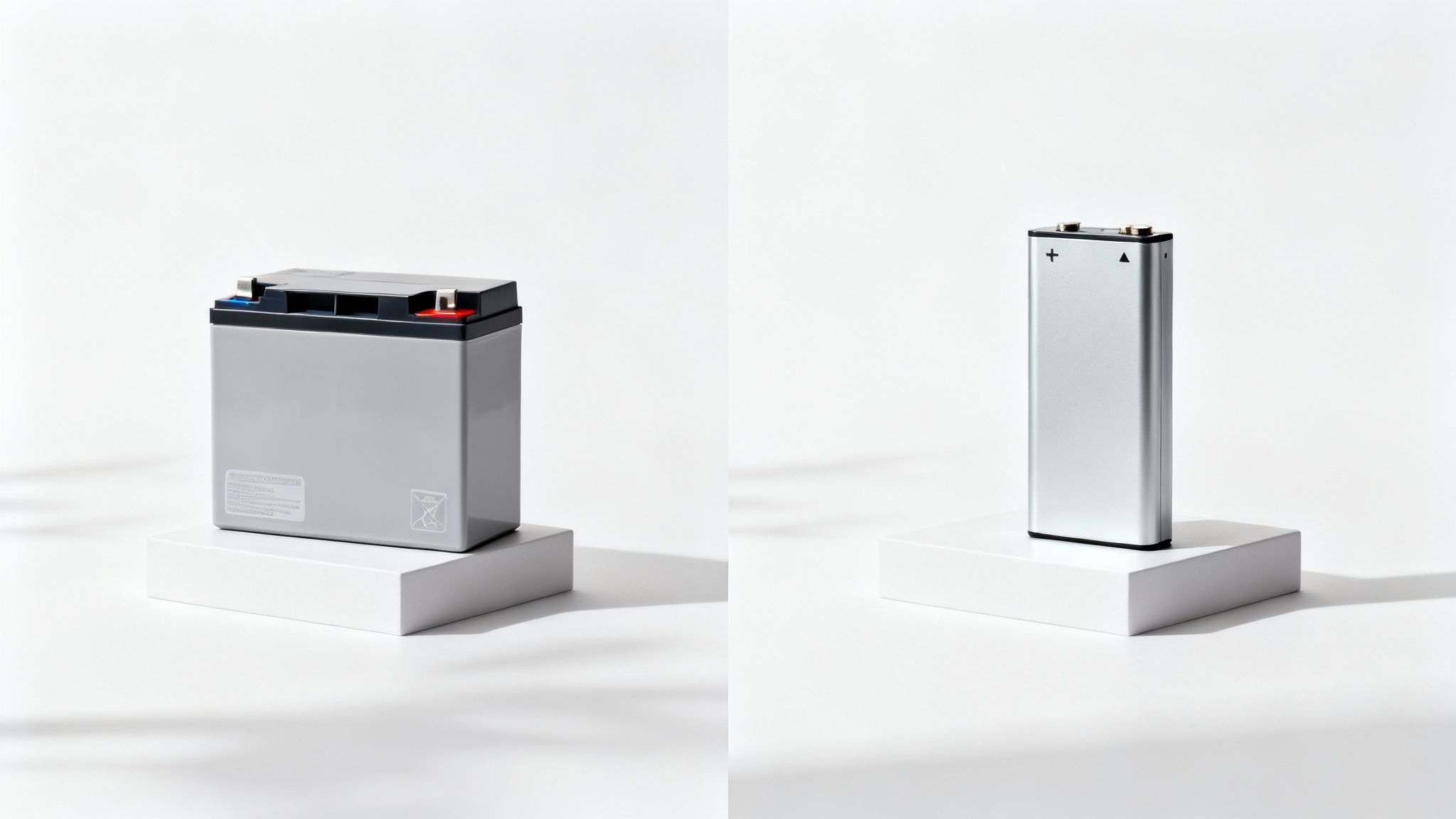
The battery you choose is one of the most important decisions you'll make. Lead-acid batteries have been around forever. They’re the budget-friendly, old-school option, but that lower price tag comes with some serious strings attached. You’ll be doing regular maintenance (like checking water levels), and you can only expect a range of about 15-25 miles per charge.
Lithium-ion batteries, on the other hand, have become the new standard for a reason. They deliver a better experience in just about every way.
- Go the Distance: You can expect to travel 30-50 miles or even more on a single charge. That’s a whole lot more freedom.
- Zero Maintenance: Forget about topping off water or any of that regular upkeep. Just charge and go.
- Charge Up Faster: They recharge way faster than their lead-acid cousins, getting you back on the road sooner.
- Built to Last: A good lithium battery can last up to a decade, which is miles ahead of lead-acid models.
While lithium costs more upfront, the longer lifespan and zero-maintenance lifestyle often make it the smarter, more cost-effective choice over time.
Performance and Safety Features
Beyond the battery, the motor is what gives your cart its get-up-and-go. An AC (Alternating Current) motor is what you want. It's more efficient, accelerates better, and has the muscle for hill-climbing that a DC (Direct Current) motor just can't match. If your neighborhood has any steep hills, an AC motor is non-negotiable for a smooth, confident ride.
When you're sharing the road with cars, you need to trust your brakes and suspension. Look for carts with hydraulic brakes, as they provide far more reliable stopping power than the old mechanical brakes on standard course carts. A solid, independent suspension system is also key for absorbing bumps and keeping the ride stable and comfortable.
The right combination of an AC motor, lithium battery, and superior suspension creates a vehicle that doesn't just meet legal standards but delivers a genuinely enjoyable and secure driving experience.
Comfort, Utility, and Smart Tech
Finally, think about how you'll actually use the cart every day. Seating is a big one. Do you need a 4-seater for family trips, or a 6-seater for taking the whole crew to the community pool? Smart storage options, like under-seat bins or a rear cargo bed, make life so much easier when you're hauling groceries or beach chairs. Our guide on golf cart dimensions can help you picture how different seating changes the vehicle’s footprint.
We're also seeing some pretty cool technology make its way into golf carts. Newer models are popping up with smart features like IoT sensors and cloud analytics, which can predict maintenance needs and cut down on downtime—a huge plus for anyone managing a fleet. You can learn more about how these smart features are shaping the market. By keeping these key features in mind, you'll be able to confidently pick one of the best street-legal golf carts out there.
A Closer Look at Solana EV's Street Legal Carts
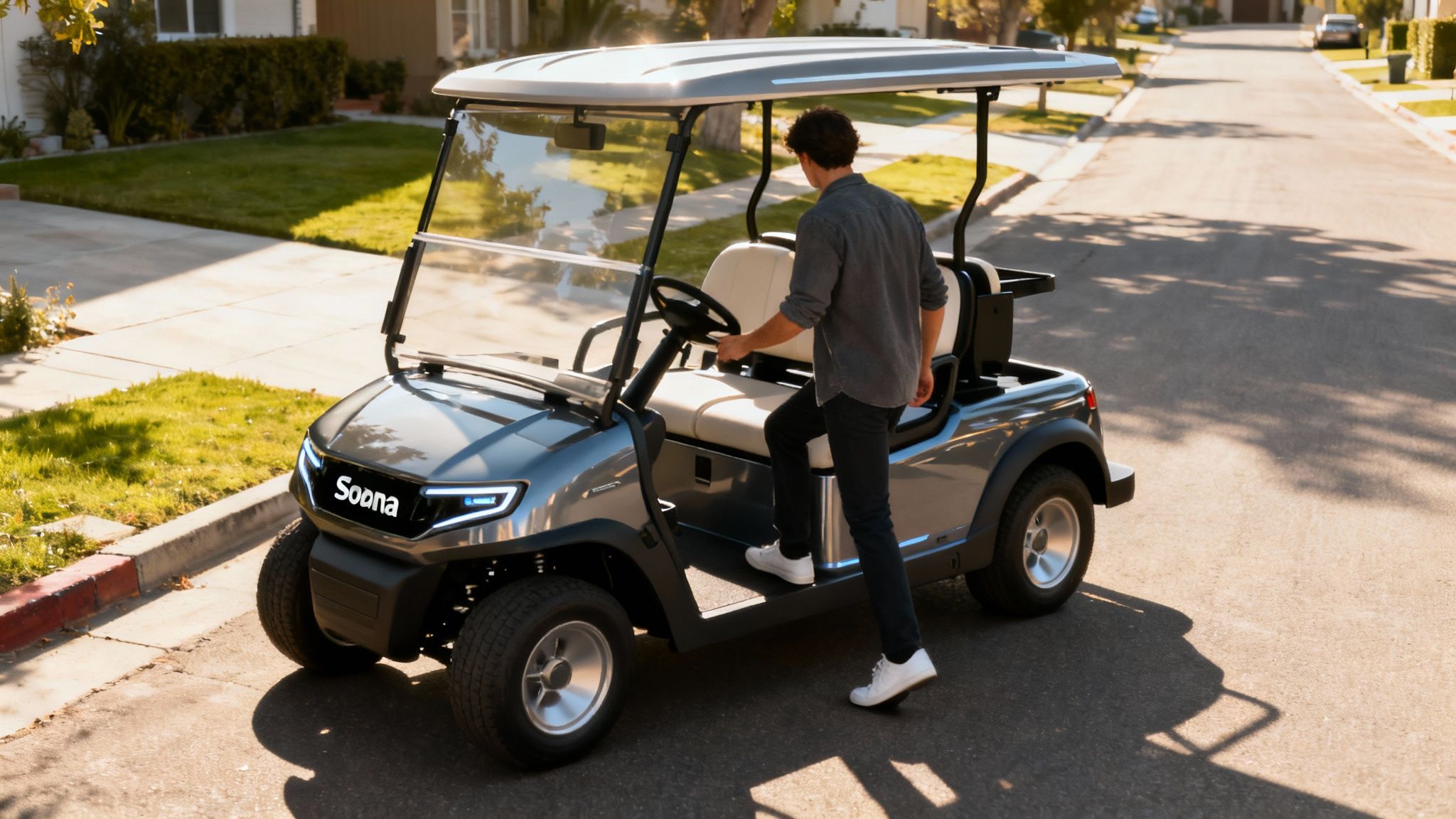
It’s one thing to talk about all the parts that make up a great Low-Speed Vehicle (LSV), but it's another to see how they all work together in a real-world machine. Solana EV is a perfect example of what to look for in the best street legal golf carts, bringing together serious performance, all the required safety gear, and a sharp, modern look.
By diving into their models, we can connect the dots between the technical stuff we've covered—like battery types and motors—and what you actually feel behind the wheel. Think of this less as a product pitch and more as a case study in how quality engineering translates into a dependable, fun-to-drive vehicle for your neighborhood.
Performance and Power You Can Feel
The heart of every Solana EV cart is its powerful AC drive motor. This is a big deal. Compared to older DC motors, AC technology gives you much smoother acceleration and way more torque, something you’ll really appreciate on hills. You get instant, consistent power without any of that frustrating lag or struggle.
That muscular motor is powered by a high-performance lithium-ion battery. The advantages here are massive and change how you use the cart every day:
- Go the Distance: You can realistically expect a range of 30-50 miles (or even more) on a single charge. That’s more than enough for a full day of errands and cruising without "range anxiety."
- Quick Pit Stops: These batteries charge up way faster than old-school lead-acid ones, so your cart spends more time on the road and less time plugged in.
- Forget Maintenance: You never have to worry about checking water levels or dealing with corrosion. It’s a true set-it-and-forget-it system.
This powerhouse combo of an AC motor and a lithium battery is what you should be looking for in any modern LSV. It’s what makes for a responsive, reliable ride every single time.
Choosing a cart with a well-matched AC motor and lithium battery is the single biggest decision you can make for long-term performance and satisfaction.
Uncompromising Safety and Smart Design
Solana EV doesn't just bolt on safety features; their carts are designed from the start to be road-ready and exceed federal LSV standards. Every model rolls out of the factory with all the essentials, like an automotive-grade glass windshield, three-point seatbelts for every passenger, and a full LED lighting package—headlights, taillights, and turn signals included.
But it’s the little things that really make a difference in your daily drives. Thoughtful touches like comfortable, ergonomic seats, plenty of legroom, and a simple, intuitive dashboard make every trip more enjoyable. From the hydraulic brakes that give you confident stopping power to a rugged frame and suspension that soaks up bumps, every component is chosen to make your ride on public roads as safe and smooth as possible.
Calculating the Real Cost of Owning Your Cart
The price on the tag is really just the starting line. If you want to make a smart buy, you have to think about the total cost of ownership—everything that comes after you take it home.
Understanding these ongoing expenses is the secret to making sure your new ride is a joy, not a financial headache. The real cost is a mix of that initial price and all the little things that keep your cart legal, safe, and running perfectly.
The Initial Investment
First things first: the price of the cart itself. This number can swing wildly depending on whether you're buying new, used, or thinking about converting an old-school golf cart.
- New Carts: A brand new, factory-built street legal LSV will typically set you back anywhere from $12,000 to over $20,000. The final price depends on the brand and any upgrades you choose, like high-performance lithium batteries or premium seats.
- Used Carts: Going the pre-owned route can save you some money upfront, but you need to be a careful shopper. Pay close attention to the battery’s health and the condition of all the safety gear.
- Converted Carts: You can upgrade a standard golf cart with an LSV kit, but be warned—the cost of parts and labor can pile up fast. In many cases, buying a new cart designed to be street legal from the start is the better value.
Ongoing and Hidden Costs
Once you own the cart, your budget needs to cover a few recurring expenses that are easy to forget about. These are the costs that really show you how affordable your cart is in the long run.
Insurance is mandatory for any registered vehicle, and an LSV is no exception. You can expect to pay between $100 to $300 a year for basic liability coverage. I'd strongly suggest looking into a comprehensive plan, though, for peace of mind against theft or damage.
You'll also have annual registration and titling fees from your local DMV. It’s not usually a huge expense, but it’s a consistent cost you need to budget for every year.
Think of ongoing costs like fuel for a car. Insurance, registration, and maintenance are the essential "fuel" that keeps your electric LSV legally on the road and in top condition.
Routine maintenance is the other big piece of the puzzle. Just like your car, your cart needs regular check-ups. This means checking the brake fluid, rotating the tires, and making sure all the lights and turn signals work properly.
Even though electric motors are much lower maintenance than gas engines, these basic safety checks are non-negotiable. Down the road, you'll also want to set aside some money for replacing parts that wear out, like tires and brake pads. For a much closer look at keeping these costs in check, we have a whole guide on reducing the total cost of ownership.
Alright, you've done the homework. You know the laws, you've got a wish list of features, and you’re close to making a decision. Before you pull the trigger, let's run through one last pre-flight check to make sure you're buying the perfect street-legal golf cart for your life.
This is the final gut-check moment that separates a good purchase from a great one.
First things first: get your local rules in writing. Don't just rely on a website or a verbal confirmation. Have a printed copy or an email from your local city or HOA officials spelling out exactly where you can and can't drive. Trust me, having that piece of paper can save you a world of trouble down the road.
Next, get serious about your "must-have" list versus your "nice-to-have" list. Is that premium, long-range lithium battery absolutely essential for your daily runs, or would a standard lead-acid setup work just fine for quick trips to the community pool? Nailing this down prevents you from overspending or, worse, getting a cart that doesn't fit your needs.
Final Steps to a Smart Purchase
Before any money changes hands, walk through these final, crucial steps. They're non-negotiable.
-
Test Drive Everything: Don't just take one model for a spin. Get behind the wheel of a few different carts to really feel the differences in how they accelerate, brake, and handle bumps. Pay close attention to how it tackles a hill or a tight corner. The feel of the ride is something you just can't get from a spec sheet.
-
Size Up the Dealer: A great cart from a bad dealer is a recipe for frustration. Look for a reputable dealership with a solid service department. Ask them point-blank about their warranty process and what you can expect when you need maintenance. A dealer who is proud of their service support is a dealer you can trust.
-
Scrutinize the Warranty: What, exactly, does the warranty cover, and for how long? A strong, comprehensive warranty that covers the big-ticket items—the battery, motor, and controller—is a huge vote of confidence from the manufacturer in the quality of their cart.
Your relationship with the dealer shouldn't end the moment you drive away. Think of them as your long-term partner for keeping your cart running perfectly. A good dealer is just as important as the cart itself.
Frequently Asked Questions
Got questions about street-legal golf carts? You're not alone. Let's run through some of the most common ones that pop up when people start looking into getting a Low-Speed Vehicle (LSV).
Do I Need a Special Driver's License?
Nope, you don't need any special kind of license to drive a street-legal golf cart. If you have a standard, valid driver's license for a car, you're good to go in just about every state.
Think of it this way: since an LSV has a VIN and a license plate just like a car, the person behind the wheel needs to be a fully licensed driver. It’s always smart to give your local DMV a quick call just to be sure about the specific rules in your town.
Can I Drive My Street-Legal Golf Cart on Any Road?
This is a big one: definitely not. Just because your cart is "street legal" doesn't mean it's legal for every street.
State and local laws are the final word here, but the general rule of thumb is that LSVs must stick to roads with a posted speed limit of 35 mph or less. That means major highways, interstates, and other fast-moving roads are completely off-limits. Before you hit the road, do a little digging into your local rules to know exactly where you can and can't drive.
The 35 mph rule is a great guideline, but local exceptions often exist. Some towns may have designated "cart-only" zones or prohibit LSVs on specific busy streets, even if the speed limit fits.
What Is the Typical Range of an Electric Cart?
How far you can go on a single charge really comes down to the battery. The gap between old-school lead-acid and modern lithium batteries is huge.
- Lead-Acid Batteries: These are the traditional option. You can typically expect to get about 20-25 miles out of them before needing to plug in.
- Lithium-Ion Batteries: Carts with lithium batteries get a serious upgrade in range, often hitting 50 miles or more on a full charge.
Of course, your actual mileage will vary based on things like steep hills, the weight of your passengers, and even how you drive. If you want the most freedom to roam, a lithium-powered cart is the clear winner.
Ready to experience the ultimate in style, performance, and reliability? Explore the full lineup of premium street-legal electric vehicles from Solana EV and discover the perfect model for your lifestyle today. Visit us at https://solanaev.com.