
Picture this: you're gliding silently through your neighborhood or across the green, with the only sounds being the soft whir of the wheels and friendly conversation. That’s the experience a modern electric golf cart offers—a quieter, cleaner, and simply more pleasant way to handle short-distance travel. This guide is your complete roadmap to understanding this quiet revolution.
The Quiet Revolution of Electric Golf Carts
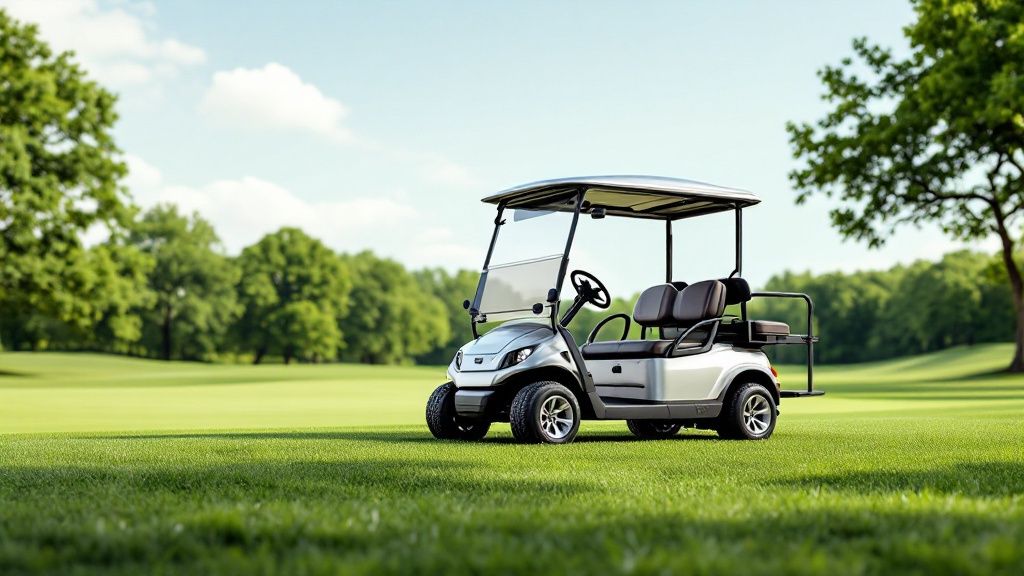
The rumbling, gas-powered golf cart is steadily making way for its sleeker, eco-friendly cousin. A battery powered golf cart is no longer just for the golf course; it’s become a go-to vehicle for getting around planned communities, navigating large properties, and even for light commercial work.
This shift isn't just about following a trend. It's a commonsense move toward cleaner air and less noise pollution. In fact, many master-planned communities have had electric-only rules for years, creating a much more peaceful atmosphere for everyone. The rising popularity of electric carts fits perfectly into the broader movement toward more sustainable living practices.
What This Guide Covers
Think of this as your all-in-one playbook for making a smart, modern choice. We'll go beyond the surface to explore the impressive technology that makes these vehicles so capable. You'll get a real-world understanding of what makes them tick, so you can confidently pick a cart that fits your lifestyle like a glove.
We’ll walk through several key areas to give you the complete picture:
- Battery Technology: We'll get into the heart of the cart, comparing the old-school, reliable lead-acid batteries with the newer, more powerful lithium-ion options.
- Must-Have Features: You'll learn to spot the difference between essential safety and performance features and the ones that are just nice extras.
- Maintenance Plans: We’ll lay out a simple maintenance schedule to protect your investment and keep your cart running smoothly for years.
- Buying Confidently: We'll take the mystery out of the buying process, whether you’re looking for a brand-new model or a dependable used one.
Think of a battery powered golf cart as more than just a way to get around. It's an investment in a quieter, cleaner lifestyle that lowers both your carbon footprint and your day-to-day running costs.
By the time you're done here, you won’t just know how to buy the right cart—you'll know exactly how to care for it, ensuring you get years of reliable service.
Understanding Your Cart's Power Source
The engine in a regular car is obvious, but the real heart of a battery powered golf cart is hidden away under the seat. This power source is the single biggest factor determining your cart's range, how it accelerates, what kind of maintenance you'll be doing, and ultimately, your total cost of ownership. To make a smart choice, you first need to get to know the two main players: the classic Flooded Lead-Acid (FLA) battery and the modern Lithium-Ion (Li-ion).
Think of FLA batteries as the trusty old V8 engine. They've been the standard for decades, they're reliable, and they get the job done. But just like that old engine needs its oil checked and changed, FLA batteries demand a bit of regular attention—specifically, adding water—to keep them running strong.
Lithium-ion batteries, on the other hand, are the sleek, high-tech electric motors of the golf cart world. They are worlds lighter, charge up in a fraction of the time, and are completely maintenance-free. That convenience does come with a higher price tag upfront, but as we'll see, the long-term benefits often make it a worthwhile investment.
Flooded Lead-Acid: The Traditional Powerhouse
For years, FLA batteries were the only real option for electric golf carts, and for good reason. They're affordable to buy and offer very dependable performance when you take care of them. The technology is so well-established that finding someone to service them or getting a replacement is never a problem.
That said, owning a cart with FLA batteries means committing to a little bit of upkeep. It's not hard work, but skipping it will definitely shorten the life of your batteries.
- Monthly Watering: The cells in these batteries need to be checked and topped off with distilled water roughly once a month. Letting them run dry is a recipe for permanent damage.
- Terminal Cleaning: You'll notice fuzzy, colorful corrosion building up on the battery terminals over time. This stuff chokes off performance, so you need to clean it off regularly with a simple baking soda and water paste.
- Serious Weight: A standard set of six 8-volt FLA batteries can easily tip the scales at over 350 pounds, adding a lot of heft for your cart to haul around.
This image highlights the key reasons why so many people are making the switch to electric carts for getting around their communities.
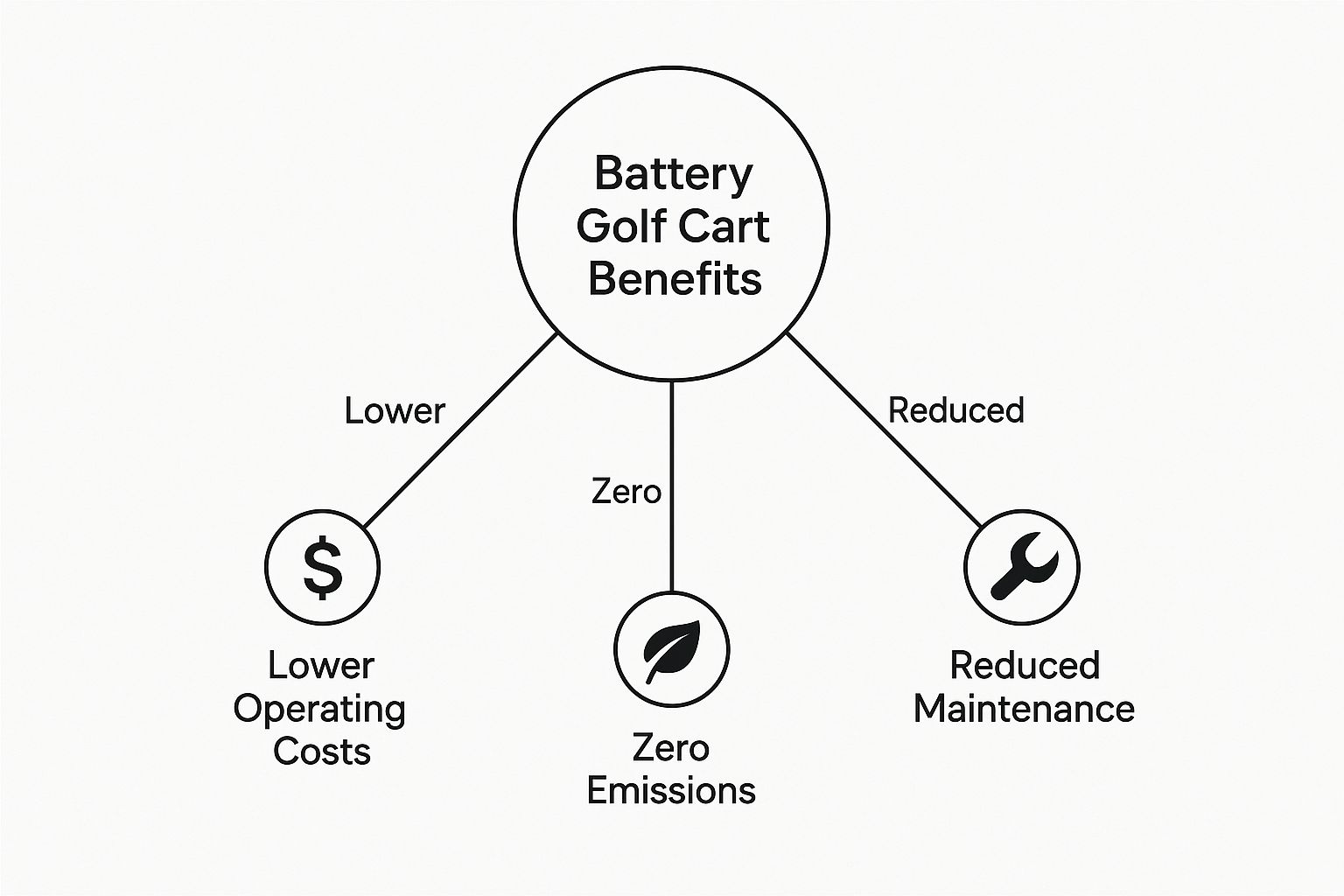
As you can see, it really boils down to lower running costs, no exhaust fumes, and far less mechanical maintenance, creating a compelling case for going electric.
Lithium-Ion: The Modern Contender
Lithium-ion technology has completely shaken up the world of the battery powered golf cart. These are sealed units, which means no watering, no cleaning, and no fumes. It's a true "set it and forget it" solution that busy owners absolutely love. And the performance boost is something you can really feel.
The moment you switch to a lithium-ion battery, your cart feels like a different machine. The weight savings of over 300 pounds makes it feel quicker off the line, and the power stays strong right up until the battery is empty, unlike the gradual fade you get with lead-acid.
Perhaps the most impressive part is their lifespan. A good Li-ion battery pack will last up to 10 years—that's easily double or even triple the typical 3-5 year life you'd get from a set of FLA batteries. To dive deeper into what makes them tick, take a look at our complete guide to the https://solanaev.com/lithium-battery-golf-cart/.
This technological leap is fueling huge growth in the market. The global golf cart battery market was valued at around $145.1 million in 2024 and is on track to hit $262.3 million by 2034, which shows just how many people are upgrading.
Comparing Your Options Head-To-Head
So, which one is right for you? It really comes down to weighing the initial cost against the long-term value and day-to-day convenience. If you want to get into the nitty-gritty of the science behind these power sources, a comparative overview of EV battery technologies like Lithium-Ion, LiFePO4, and Lithium Titanate is a great resource.
To make things simple, we've put together a quick comparison table.
Lead-Acid vs Lithium-Ion Battery Comparison
This table breaks down the key differences to help you see at a glance which battery type aligns with your needs and priorities.
| Feature | Flooded Lead-Acid (FLA) | Lithium-Ion (Li-ion) |
|---|---|---|
| Upfront Cost | Lower | Higher |
| Lifespan | 3-5 Years | 8-10 Years |
| Maintenance | Regular watering and cleaning | None |
| Charging Time | 8-10 hours | 2-3 hours |
| Weight | Heavy (approx. 350+ lbs) | Lightweight (approx. 60-80 lbs) |
| Performance | Voltage drops as it discharges | Consistent power until fully discharged |
Ultimately, there's no single "best" answer, only the best answer for you. If a lower initial price is your top priority and you don't mind a bit of monthly tinkering, FLA batteries are a perfectly fine, traditional choice. But if you're looking for hassle-free ownership, better performance, and a lower total cost over the life of your cart, Lithium-Ion is definitely the way to go.
Customizing Your Ride: Key Features to Consider
A modern battery powered golf cart is so much more than a way to get from the first tee to the eighteenth green. Think of it as a blank canvas, ready for you to create a vehicle that perfectly suits your life. Turning a stock model into something that’s uniquely yours is half the fun of owning one.

This desire for personalization is a huge reason why the electric cart market is booming. Here in the United States, the market hit a value of USD 529.4 million in 2024 and is on track to reach USD 886.7 million by 2033. That growth comes from people just like you, looking for personalized, clean-energy vehicles for their communities, resorts, and private properties. If you want to dive deeper into the numbers, you can check out the full U.S. electric golf cart market report on GlobeNewswire.
So, where do you start? Let’s break down the most popular upgrades into three main buckets.
Essential Safety and Functional Features
Before you even think about paint colors or sound systems, you have to nail the basics. These are the non-negotiable features that keep you safe, legal, and make your cart practical for real-world use.
- Headlights and Taillights: Absolutely critical for being seen at dawn, dusk, or on cloudy days. Most people opt for bright, energy-efficient LEDs.
- Turn Signals and Horn: If you plan on driving anywhere near a public road, these are usually required to make your cart street-legal. They’re just common sense for letting others know what you’re doing.
- Battery Meter: This is your fuel gauge. A good digital meter gives you a clear, accurate reading of your battery life so you don't get stranded a mile from home.
- Windshield: A simple folding or solid windshield makes a world of difference, protecting you from wind, rain, and the occasional bug.
Think of these as the foundation of your build. Once you’ve got them covered, you can move on to the more exciting stuff.
Performance and Comfort Upgrades
This is where you can seriously improve how your cart drives and feels. These upgrades are all about giving it more muscle, a smoother ride, and the ability to handle more than just pristine pavement.
For instance, if your property has any hills at all, an AC motor upgrade is a night-and-day difference. Unlike a standard DC motor, an AC motor delivers the torque needed to climb steep grades without slowing to a crawl. Many even come with regenerative braking, which sends a bit of power back to your batteries on the way down.
Here are a few other popular performance tweaks:
- Lift Kits and All-Terrain Tires: A lift kit gives your cart more ground clearance for navigating bumpy trails or uneven ground. Pair it with some beefy all-terrain tires, and you’ve basically got a mini off-roader.
- Upgraded Suspension: If you’re adding a rear seat or plan on hauling heavy loads, heavy-duty leaf springs or coil-over shocks will give you a much more stable and comfortable ride.
- High-Speed Controller: Want a little more get-up-and-go? A new controller can unlock a higher top speed and give you noticeably quicker acceleration.
These are the mods that tailor your cart's capabilities to what you’ll actually be doing with it.
Lifestyle and Personality Customizations
Alright, now for the really fun part—adding the features that show off your personal style and make daily life a little easier. These are the touches that make the cart truly yours.
Your cart should be an extension of your lifestyle. Are you the family that loads up for the community pool every weekend? The avid gardener hauling tools and soil? The right accessories make all the difference.
Consider some of these popular additions:
- Premium Seating: Swapping out the standard bench for cushioned, marine-grade vinyl seats with custom stitching adds a huge dose of comfort and a high-end look.
- Sound Systems: A Bluetooth soundbar or a full speaker system lets you bring your favorite playlist along for every trip.
- Rear Flip Seat: This is one of the most versatile upgrades out there. It can seat two extra passengers or flip down into a utility bed for coolers, beach chairs, or bags of mulch.
- Cooler Racks and Storage: From custom-fit cooler racks to under-seat storage trays, adding dedicated cargo space is always a smart move.
By mixing and matching features from these categories, you can build a battery powered golf cart that isn't just a vehicle, but a perfect reflection of you.
A Practical Maintenance Plan for Your Electric Cart
https://www.youtube.com/embed/A6mKd5_-abk
Just like your car, your battery powered golf cart needs a bit of regular attention to keep it running smoothly and reliably for years to come. Think of it less as a chore and more as a simple wellness routine for your cart. A little proactive care goes a long way in preventing surprise breakdowns and expensive repair bills.
The great thing about electric carts? The maintenance is worlds easier than dealing with a gas engine. You can forget about oil changes, spark plugs, and fuel filters. Here, the main event is the battery pack, along with a few basic mechanical checks.
The key is to get into a simple rhythm. By breaking down tasks into weekly, monthly, and yearly checks, you make the whole process feel effortless and ensure nothing important gets missed. It’s all about catching the small stuff—like a loose cable or underinflated tire—before it spirals into a real problem that leaves you stranded.
Your Weekly Wellness Check
This is your quick, two-minute once-over, perfect for doing right before you head out for a weekend of driving. The goal is to build the simple habit of looking things over and spotting any obvious issues.
- Check Tire Pressure: Properly inflated tires are a bigger deal than most people think. They ensure a smooth ride, help your battery last longer on a single charge, and prevent uneven wear. Just use a standard tire gauge to make sure they match the recommended PSI found on the tire’s sidewall.
- Give the Batteries a Quick Look: Pop the seat and take a peek. You're just looking for anything that seems off—any nasty corrosion building up on the terminals, cracks in the plastic casings, or signs of a leak.
- Plug It In: Get in the habit of plugging your cart in after every significant use. Modern smart chargers are brilliant; they’ll top off the battery and then maintain it without overcharging. For most batteries, keeping it plugged in is the healthiest thing you can do.
These little steps take virtually no time but are your first line of defense in keeping your battery powered golf cart in prime condition.
The Essential Monthly Routine
About once a month, it's time to dig in just a little deeper. This is where battery care becomes the star of the show, especially if your cart runs on traditional Flooded Lead-Acid (FLA) batteries. Honestly, these next few tasks are the single biggest factor in how long your batteries will last.
Neglecting monthly battery care is the #1 reason I see batteries fail way too early. A new set can easily cost over $1,000, which makes this quick 15-minute checkup one of the best investments you can make as a cart owner.
For a complete breakdown, our guide on essential golf cart battery maintenance dives even deeper. But here’s what you need to do every month:
- Top Off Your Batteries (If They’re Lead-Acid): This is the big one for FLA batteries and it’s non-negotiable. After your batteries are fully charged, pop the caps and check the water level in each cell. If it’s low, add only distilled water until the level just covers the lead plates inside. Never use tap water—its minerals will build up and ruin your batteries for good.
- Clean the Battery Terminals: See that fuzzy, colorful gunk growing on the terminals? That’s corrosion, and it chokes off the flow of electricity. Mix up a simple paste of baking soda and water, and use an old toothbrush to gently scrub it all away.
- Check All Connections: While you’re cleaning, give each battery cable a gentle wiggle right at the terminal. Everything should be snug and tight. A loose connection can cause all sorts of performance headaches and create dangerous heat.
Good news if you have a newer Lithium-Ion battery: you can skip all of this! They are completely sealed units that require zero watering or cleaning.
The Annual Deep Dive
Once a year, it’s a good idea to give the cart a more thorough inspection, or have a local shop do it for you. This is all about checking the systems that ensure your cart is safe and operating correctly for the year ahead.
Before you put your cart away for the winter or at the start of a new season, a simple maintenance schedule can make all the difference. Here’s a checklist to follow.
Golf Cart Maintenance Schedule
| Frequency | Task | Notes |
|---|---|---|
| Weekly | Check Tire Pressure | Inflate to the PSI listed on the tire's sidewall. |
| Weekly | Visual Battery Inspection | Look for corrosion, leaks, or cracks. |
| Weekly | Charge After Use | Plug in the cart to keep batteries topped off and healthy. |
| Monthly | Water Lead-Acid Batteries | Use distilled water only, after charging is complete. |
| Monthly | Clean Battery Terminals | Use a baking soda and water paste to remove corrosion. |
| Monthly | Tighten Battery Cables | Ensure all connections are secure. |
| Annually | Brake Inspection | Test for firm engagement and listen for squealing or grinding. |
| Annually | Check Steering & Suspension | Look for excessive play or visible wear. |
| Annually | Lubricate Moving Parts | Apply grease to all zerk fittings as needed. |
Following this simple schedule is the best way to protect your investment and make sure your battery powered golf cart is always ready to roll when you are.
How to Confidently Purchase the Right Golf Cart
Stepping into the world of battery-powered golf carts can feel like learning a whole new language. You're hit with different brands, models, and a dizzying number of options, making the whole process feel a bit intimidating. But think of this as your personal buyer’s playbook, designed to turn that overwhelming search into a confident, informed decision.
We're going to walk through a simple, step-by-step process that helps you find the perfect vehicle. Forget the confusing jargon and high-pressure sales pitches—this is all about matching a cart to your actual, real-world needs and budget. By the end, you'll be ready to make a purchase you’ll be happy with for years to come.
Define Your Primary Use Case
Before you even glance at a single model, the most critical question to ask yourself is this: "What am I really going to do with this cart?" Your answer will steer every other decision you make. A cart built for manicured golf course fairways is a totally different beast from one designed to haul equipment around a farm.
Think about your daily and weekly routines and be honest about how the cart will fit into your life.
- Golf Course Dominance: If you’re a dedicated golfer, you'll want features like a bag holder, sand bottle, and maybe a cooler. Here, quiet operation and turf-friendly tires are far more important than raw speed or off-road muscle.
- Neighborhood Cruiser: Is this going to be your go-to for visiting friends, heading to the community pool, or making a quick run to a local shop? Safety features like headlights, turn signals, and a horn become non-negotiable, along with comfortable seats and a smooth ride.
- Utility Workhorse: For anyone with a large property, your focus will shift to durability and pure function. Look for a rear utility bed, a lift kit for better ground clearance, and a powerful motor for towing or tackling hills.
Once you have a crystal-clear picture of its main job, you can start filtering your options and get down to the fun part.
New Versus Used: A Big Decision
One of the first forks in the road you'll encounter is whether to buy a brand-new cart or a pre-owned one. There are great reasons to go either way, and the right choice really comes down to your budget and how much potential maintenance you're comfortable with.
A new cart delivers pure peace of mind. It comes straight from the factory with a full manufacturer's warranty, the latest technology, and the simple satisfaction of knowing you’re the first one behind the wheel. You also get the entire menu of customization options directly from the dealer.
On the other hand, a used cart can offer tremendous value. You can often snag a well-equipped model from a top-tier brand for a fraction of what it cost new. This path just requires a bit more homework—you’ll need to carefully inspect the batteries, frame, and motor, since any original warranty has likely run its course. For a deeper analysis, our guide on choosing an electric or gas golf cart can provide some extra perspective.
A strong warranty is your safety net. Look for comprehensive coverage that includes not just the frame and major components, but especially the battery pack—it's the single most expensive part of your cart. A 3-year or longer warranty on a lithium battery is a great sign of quality.
The All-Important Test Drive
You wouldn't buy a car without driving it, and the exact same logic applies to a battery powered golf cart. The test drive is your chance to get a real feel for how the vehicle handles and to listen for any potential red flags.
Here’s a quick checklist to run through on your test drive:
- Listen Carefully: Turn the key and pay attention. You should hear a soft click from the solenoid, but absolutely no grinding or whining noises as you press the accelerator.
- Test the Brakes: Do they feel firm and responsive, or are they spongy? The cart should stop smoothly in a straight line without pulling to one side.
- Feel the Steering: Is there a lot of "play" in the steering wheel, or does it feel tight and responsive? You want the latter.
- Check for Power: If you can, find a small hill or incline. The cart should be able to climb it without sounding like it's struggling.
This hands-on experience is priceless and will tell you more than any spec sheet ever could. This growing interest in reliable electric vehicles is reflected in market trends. The global golf cart battery market is set to expand from an estimated USD 158.0 million in 2025 to USD 267.3 million by 2035, driven by wider adoption in residential and commercial settings. You can discover more insights about these market trends on Future Market Insights.
The Future of Personal Electric Mobility
If you own a battery powered golf cart, you're already part of a major shift in how we get around. These aren't just for the back nine anymore; they're quickly becoming a key part of a smarter, greener transportation network. The innovations just around the corner are set to make these carts even more essential to our daily routines.
The most exciting developments are happening inside the battery pack. Lithium-ion was a huge leap forward, but the next generation of battery tech is where things get really interesting. We're talking about batteries that can charge in minutes instead of hours and deliver a range that makes "range anxiety" a thing of the past for trips around the neighborhood.
The Rise of Smart Carts
The next big thing is connectivity. Just like our cars, golf carts are getting "smart," with integrated tech that once felt like science fiction. This isn't just about adding gadgets; it's about fundamentally changing how we interact with our vehicles.
So, what makes a cart "smart"?
- GPS and Geofencing: Imagine getting an alert if your cart leaves a designated area. This is huge for fleet management at resorts or just for keeping an eye on the family vehicle.
- Onboard Diagnostics: Your cart can now tell you what it needs. You’ll get real-time updates sent straight to your phone about battery health, motor performance, and when it’s time for a check-up.
- App Connectivity: Lock and unlock your cart, check the charging status, or even turn on the lights from an app on your smartphone.
This is a game-changer. The golf cart is evolving from a simple mode of transport into an intelligent, connected device. It's less about just driving and more about a seamless experience that gives you total control and insight.
Expanding Roles in Modern Communities
As these little vehicles get more capable, their place in our world is growing. Many master-planned communities are now designed from the ground up with golf carts in mind, certifying them as official Low-Speed Vehicles (LSVs). Think dedicated cart paths connecting homes to local shops, parks, and schools—it's already happening.
This trend makes the battery powered golf cart a central piece of the puzzle for sustainable living. They offer a quiet, zero-emission solution for that "last mile" of a commute or for quick errands around town.
When you buy an electric cart today, you’re not just getting a fun ride. You're investing in a forward-thinking way to travel that is actively shaping the future of our communities.
Got Questions? We’ve Got Answers.
When you're thinking about buying a battery powered golf cart, a few key questions always pop up. It's a big decision, and you want to get the details right. We've heard them all, so we’ve put together straight answers to the most common things people ask. Let's clear up those final lingering thoughts.
How Many Years Do Golf Cart Batteries Actually Last?
This is the big one, isn't it? The batteries are the heart of your cart and the most significant maintenance cost you'll face. The real answer depends on the type of battery you have and how you treat it.
- Flooded Lead-Acid (FLA) Batteries: These are the old-school standard. If you're diligent with maintenance—topping them off with water, keeping them clean, and charging them properly—you can realistically get 3 to 5 years out of a set. If you slack on that care, that lifespan can drop off a cliff.
- Lithium-Ion (Li-ion) Batteries: Think of these as a long-term play. A good lithium pack is built to go the distance, typically lasting 8 to 10 years, sometimes even longer. That's more than double the life of lead-acid, and the best part? Zero maintenance is required.
What Is a Realistic Driving Range on a Single Charge?
How far can you actually go before needing to plug in? It's not a single number, as things like hilly terrain, how many people are on board, and even tire pressure can change the outcome. But here’s a good rule of thumb.
A typical cart with a fresh set of lead-acid batteries will get you somewhere between 15 to 25 miles. If you have a lithium-ion setup, that number jumps up quite a bit, often into the 30 to 50-mile range or more. Just remember, climbing steep hills will eat up your charge much faster than a leisurely cruise on a flat path.
Think of it this way: Your cart's range is a lot like your car's gas mileage. Your driving style makes a huge difference. Punching the accelerator and carrying heavy loads will drain the battery faster, while smooth and steady driving helps you squeeze out every last mile.
Can I Upgrade My Older Lead-Acid Cart to Lithium Batteries?
You bet. In fact, it's one of the best upgrades you can give an older battery powered golf cart. Swapping out that heavy bank of lead-acid batteries for a sleek lithium pack is a common job for any decent cart technician.
The difference is night and day. You’ll instantly drop over 300 pounds of weight, making the cart feel peppier and handle better. Plus, you get that incredible battery lifespan, way faster charging, and you can say goodbye to the chore of checking and watering batteries forever. For many people, the upfront cost is easily justified by the long-term benefits.
Is It Safe to Drive an Electric Golf Cart in the Rain?
Yes, absolutely. Modern electric carts are built to handle the weather, with important electrical parts sealed up to keep water out. So, a little rain shouldn't stop you. That said, use some common sense.
A heavy downpour can make it hard to see, and just like in a car, wet pavement means it takes longer to stop. So, slow down, be a bit more careful, and try to avoid driving through any deep puddles that could splash up into the motor or battery area. A good windshield and a solid roof go a long way in keeping you dry and comfortable, too.
Ready to see what a modern, premium electric vehicle feels like? At Solana EV, we build street-legal carts that blend cutting-edge performance with standout style and a commitment to sustainability. Come find the perfect ride for your lifestyle.