
You've got the cart, the blank driveway, and a head full of ideas. Maybe you're thinking about better seats, a lift, brighter lights, or a cleaner tech setup that feels more like a modern EV than a basic neighborhood runabout. That's the right instinct, because the best custom carts aren't built by chasing parts, they're built by making smart choices in the right order.
The customized golf carts market backs that instinct. One market study valued the category at USD 324 million in 2024 and projected it to reach USD 406 million by 2032, which shows that customization isn't a side hobby, it's a measurable market with multi-year momentum, driven by adoption beyond golf courses themselves. If you want inspiration before you start, these golf cart customization ideas are a useful place to compare styles and directions.
Table of Contents
- Your Golf Cart Your Vision
- Phase 1 Planning Your Perfect Cart Build
- Navigating Rules Regulations and Street Legality
- Choosing Your Upgrades Aesthetic and Performance
- Installation The DIY Route vs Professional Services
- Maintaining Your Custom Cart for Safety and Longevity
Your Golf Cart Your Vision
A stock cart is just a starting point. The first real decision is what you want the cart to do on an ordinary day, because that answer changes everything from wheel choice to wiring layout to how much you should spend on comfort items. If you're building for a resort path, a gated community, or a campus route, the cart needs different priorities than a toy built for occasional weekend use.
The market tells the same story. The customized golf carts market is already a serious category, valued at USD 324 million in 2024 and projected to reach USD 406 million by 2032 according to this market report. That scale matters because it supports a real ecosystem of batteries, lighting, seating, wheels, enclosures, and tech integrations, not just decorative accessories.
Why the platform matters first
A good build starts with a cart that can carry the upgrades without turning into a maintenance headache. Modern electric platforms are especially attractive because they're already aligned with the kinds of changes owners want, better electrical access, more integrated tech, and cleaner packaging for lighting and accessories. That's why an advanced EV base is a better canvas than a platform you have to fight at every step.
For owners who want a clean, modern result, the most useful question isn't “what looks cool,” it's “what will still feel right after a year of use?” A thoughtful build starts with that filter. It keeps the project grounded in function, which is what separates a polished cart from a pile of expensive add-ons.
Practical rule: If the cart's purpose isn't clear, the budget won't be either.
Phase 1 Planning Your Perfect Cart Build
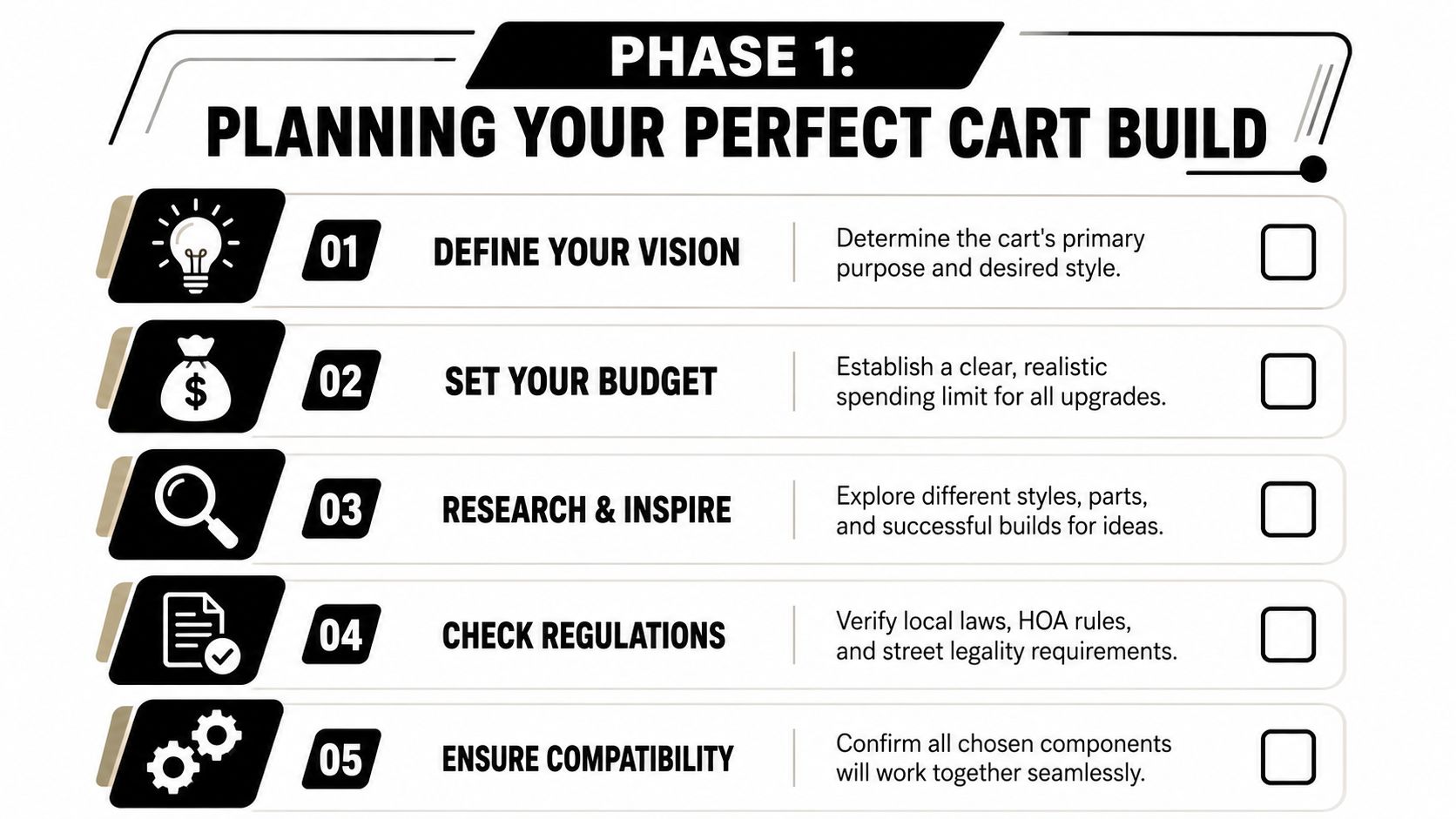
A solid plan saves money because it keeps you from buying parts that don't fit the way you use the cart. A resort fleet needs durability and easy service access. A neighborhood cart needs compliance, comfort, and predictable day-to-day charging. An off-road build needs suspension and tire choices that won't create noise, rubbing, or unstable handling.
Start with use case, not accessories
Define the cart's primary job before anything else. If the cart will carry guests across a property, it needs different priorities than a personal cruiser used for short trips around a gated community. That decision shapes battery choice, tire size, suspension needs, seating layout, and whether you should prioritize utility over flair.
Budget should follow the same logic. First set the ceiling for the full build, then reserve room for labor or professional setup if you're not doing everything yourself. A lot of owners underestimate the cost of the “small stuff,” then end up trimming the very upgrades that make the cart work well day to day.
Build in the right order
A practical customization workflow is to first define the use case and budget, then handle core systems like the battery and tires, add comfort items, and finish with cosmetics as recommended here. That order keeps you from spending on visual changes before the platform is ready for them.
Smart sequencing beats impulse buying every time. A cart that rides right, charges right, and handles the load you expect will always age better than one built around aesthetics first.
The same logic applies to compatibility. Tires, lift height, seating, and electrical accessories should work as one system, not as separate decisions made on different weekends. If you choose parts in isolation, you usually end up paying twice, once for the part and once to fix the mismatch.
A simple planning filter
Use this quick filter before you order anything:
- Purpose: What job does the cart do most often.
- Budget: What can be spent without cutting corners later.
- Platform: What the chassis and electrical system can support.
- Compliance: What local rules or community standards apply.
- Serviceability: How easy it'll be to maintain after the build.
That list keeps the project honest. It's the difference between a cart that looks complete in photos and one that's ready for real ownership.
Navigating Rules Regulations and Street Legality

A custom cart can look finished and still be non-compliant. That's the part too many buyers miss. HOA rules, community restrictions, and state low-speed vehicle requirements can change what you can legally drive, where you can drive it, and what equipment has to stay on the cart after modifications.
Compliance is part of the build
If the cart will ever leave private property, rules matter. A build that works perfectly in a resort service lane may face different expectations in a neighborhood or public-road setting. The legal side doesn't care how good the upholstery looks, it cares whether the cart meets the requirements where it's used.
The bigger issue is total cost of ownership. A major gap in customization advice is the total cost of ownership and compliance. How a build affects insurance, registration, inspection, and resale value is critical, since U.S. low-speed vehicle regulations aren't uniform and modifications can create unexpected operating costs as noted in this buyer-focused guide.
Don't treat street legality as a sticker package
A street-legal appearance isn't the same thing as actual street legality. Lights, mirrors, signals, and other visible equipment matter, but so do the underlying registration and local-use rules. If the cart is intended for mixed use, the smartest move is to confirm the legal path before you buy the parts, not after the build is done.
For a deeper look at how road use changes the ownership equation, this street-legal golf cart guide is worth reviewing alongside your local rules. The point is simple. The more you customize for road use, the more you need to think like an owner, not just a modifier.
A cart that looks compliant can still cost you time and money if the paperwork, inspection path, or insurance expectations don't match the build.
What to verify before you finish
- HOA and neighborhood rules: Check whether your community restricts carts, lifts, lighting, or tire changes.
- State and local use rules: Confirm whether the cart can be used on roads where you plan to drive it.
- Insurance impact: Ask how modifications affect coverage before you install them.
- Resale implications: Keep receipts and document changes so the next owner can understand the build.
Custom work should make the cart more useful, not harder to own. If a choice creates uncertainty around legality, it's usually the wrong first choice.
Choosing Your Upgrades Aesthetic and Performance
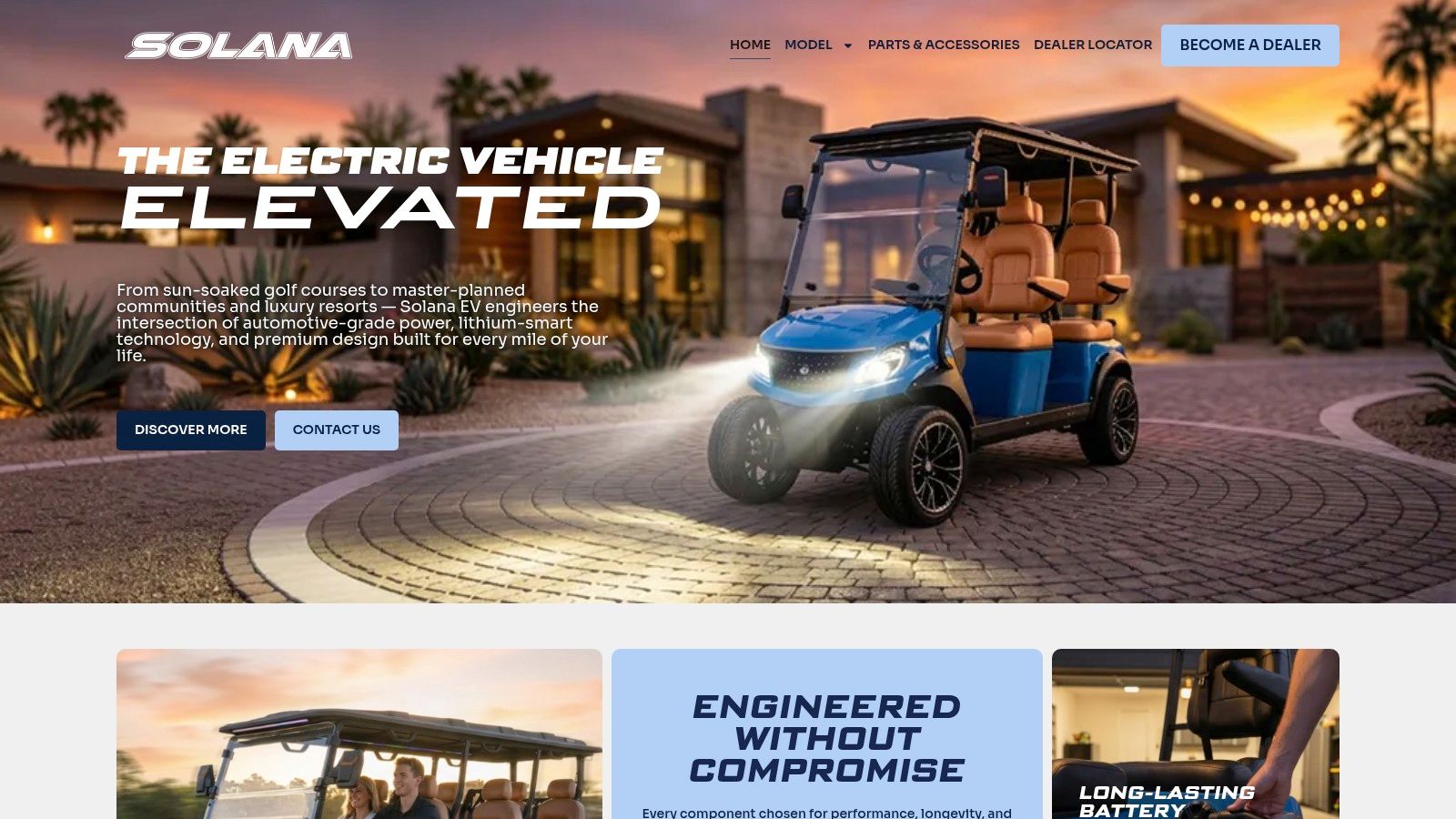
The best carts don't feel like a collection of random upgrades. They feel coherent. That comes from choosing parts that work together, especially when the cart is electric, because most meaningful upgrades touch the battery system, wiring, lighting, seating, or chassis geometry.
Electric carts hold about 62% of the U.S. market share, so most customization demand naturally centers on batteries, lighting, tech integrations, and other electrical components rather than engine upgrades as shown in this market forecast. That shift matters, because modern customization is less about exhaust notes and more about clean electrical integration, range confidence, and comfortable daily use.
Aesthetics should support the build, not fight it
Wraps, seat upholstery, premium steering wheels, and enclosures can completely change the feel of a cart. They're worth doing when the rest of the build is settled. If you start with cosmetics, though, you can end up reworking panels or tearing into trim later when you add lighting or electrical accessories.
Materials matter here. Marine-grade upholstery holds up better than bargain vinyl in sun and moisture. Enclosures matter more in resort and community use than most owners expect, because they extend the season the cart feels usable. The goal isn't to make the cart loud, it's to make it feel intentional.
Performance changes the cart's character
Lift kits, tires, and suspension tuning decide how the cart rides and how usable it stays on different surfaces. Larger tires can improve stance and capability, but they also need to match the lift and the intended ground clearance. If the combo is off, the cart can rub, ride poorly, or feel unstable.
That's why a modern platform with strong electrical architecture is such a good fit for customization. A clean EV base makes it easier to focus on the upgrades that matter most. For a practical look at how the platform changes performance options, this electric golf cart performance resource adds useful context without sending you down a generic parts rabbit hole.
Tech belongs in the plan, not as an afterthought
Tech is where modern carts really separate from older builds. LED lighting, integrated audio, charging ports, and dash displays all improve the experience if they're wired cleanly and supported properly. If you're comparing battery or system upgrades for property use, latest battery innovations for hotels is a useful lens for thinking about uptime and fleet reliability in hospitality settings.
The right approach is to treat the cart like a system. Pick upgrades that reinforce each other, then stop before the build becomes overcomplicated. That's how you get a cart that looks sharp, drives well, and stays serviceable.
Installation The DIY Route vs Professional Services
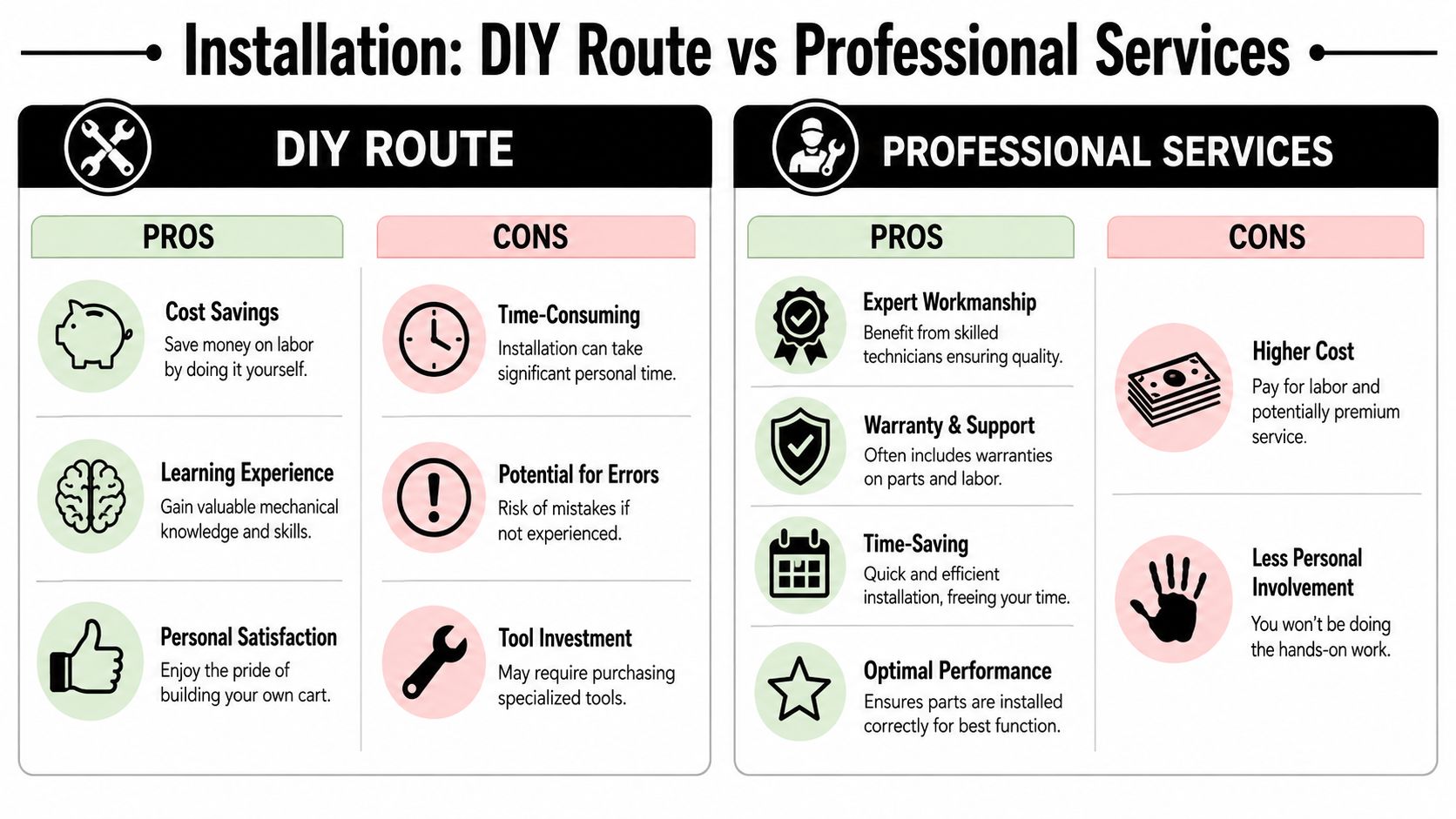
DIY makes sense for some owners. So does professional installation. However, the mistake is assuming every upgrade belongs in the same category. A simple seat swap is one thing. A full electrical rework or a lift-and-tire package is something else entirely.
What DIY handles well
If you're comfortable with basic tools and careful measurement, you can manage straightforward cosmetic work and some bolt-on accessories. That includes simple seating changes, mirrors, trim, and other parts that don't alter the cart's geometry or electrical load. DIY also gives you direct knowledge of the vehicle, which helps later when you're troubleshooting wear or noise.
The problem starts when the work affects structure, power distribution, or safety-critical systems. That's where experience matters more than enthusiasm. A clean-looking install isn't enough if wiring is stressed, components sit in the wrong place, or suspension geometry changes without proper alignment checks.
Why the technical sequence matters
The key engineering sequence for a build is chassis, powertrain, batteries, steering and suspension, wiring, and finally the body as laid out in this DIY guide. That order matters because the powertrain and battery placement determine weight distribution and packaging constraints for everything that follows, and high-amperage connections have to be perfect to prevent fire hazards.
Practical rule: If the electrical work is high-current or the suspension geometry is changing, professional installation is usually the safer call.
A dealer or experienced service shop brings more than labor. They bring diagnostic tools, familiarity with the platform, and a better chance of preserving fitment and safety. That matters more on modern carts with integrated tech, where a clean install often depends on knowing how the entire system talks to itself.
How to decide honestly
If you're asking whether you can do it yourself, use these questions:
- Do I understand the wiring path well enough to test it properly?
- Will this change weight, clearance, or handling?
- Do I have the tools to fix mistakes if something doesn't fit?
- Would a bad install affect safety or legality?
If the answer to any of those is unclear, professional support is the better investment. The less guesswork in the build, the longer the cart stays reliable.
Maintaining Your Custom Cart for Safety and Longevity
A custom cart isn't finished when the last part is bolted on. That's when ownership starts. The first month after a build matters a lot, because parts settle, fasteners loosen, and wiring can reveal problems that weren't obvious during the install.
Run a post-build checklist
Start with the wheels and tires if you changed them. Re-torque lug nuts after the initial install, then check for any tire rub during turns and over bumps. If the cart has been lifted, inspect suspension points and steering components after a few rides, not weeks later.
Then move to the electrical system. Check every new connection for heat, corrosion, or looseness. Lighting should work consistently, and signals should be tested in daylight and low light. If you added audio or charging ports, confirm they shut off and power up the way you expect.
Protect the finish and the comfort upgrades
Cosmetic work needs care too. Vinyl wraps last longer when they're cleaned gently and kept out of harsh abrasion. Upholstery lasts longer when moisture doesn't sit in seams and when owners avoid cleaners that break down the material. None of that is glamorous, but it keeps the cart looking new instead of tired.
The same mindset applies to the mechanical side. A cart that gets used on rougher terrain or in mixed weather deserves periodic checks, not a “set it and forget it” attitude. The faster you catch a small issue, the less likely it becomes a repair that interrupts use.
Keep the maintenance schedule tighter right after the build, then relax into a routine once the cart has proven itself.
A custom cart should feel better than stock in every way that matters, safer, more comfortable, and easier to live with. If it doesn't stay that way, the build wasn't complete enough.
If you want a modern electric cart platform that's built for thoughtful upgrades, take a look at Solana EV. Their lineup is designed around clean EV architecture, integrated tech, and the kind of support that makes a custom build easier to own after the excitement of day one fades.