
You're probably at the point where the stock cart no longer matches how you use it. Maybe the front end scrapes entering a trail, maybe you want a more planted stance with taller tires, or maybe your premium electric cart looks sharp but still sits too low for the roads, gravel, and property edges you drive every week.
That's where lift kits stop being a styling accessory and start becoming a practical chassis upgrade. The right setup gives you clearance, tire room, and a better match for the terrain you're asking the cart to handle. The wrong setup creates steering issues, extra wear, and a cart that looks tougher than it drives.
Table of Contents
- What Is a Golf Cart Lift Kit and Why Install One
- Choosing Your Lift Kit Type and Height
- A Guide to Compatibility and Fitment
- How Lift Kits Impact Performance Ride and Safety
- Cost Breakdown and Installation Options
- Maintaining Your Lifted Golf Cart
- Finding Your Lift and Planning Your Next Steps
What Is a Golf Cart Lift Kit and Why Install One
A lift kit is the part that turns a golf cart from slippers into hiking boots. It changes the suspension or front-end geometry so the cart sits higher, clears obstacles better, and has room for larger wheels and tires.
That matters because low carts run out of clearance fast. Curbs, roots, washouts, driveway transitions, and rough property edges don't look dramatic, but they're exactly where undercarriage parts get hit. Riders in golf cart forums describe getting a “couple inches” of extra ground clearance from a lift, and some report they've even “shattered their differential” when trying to drive rough terrain without one, which is why this upgrade is functional before it's cosmetic in this owner discussion about lift kit advantages.
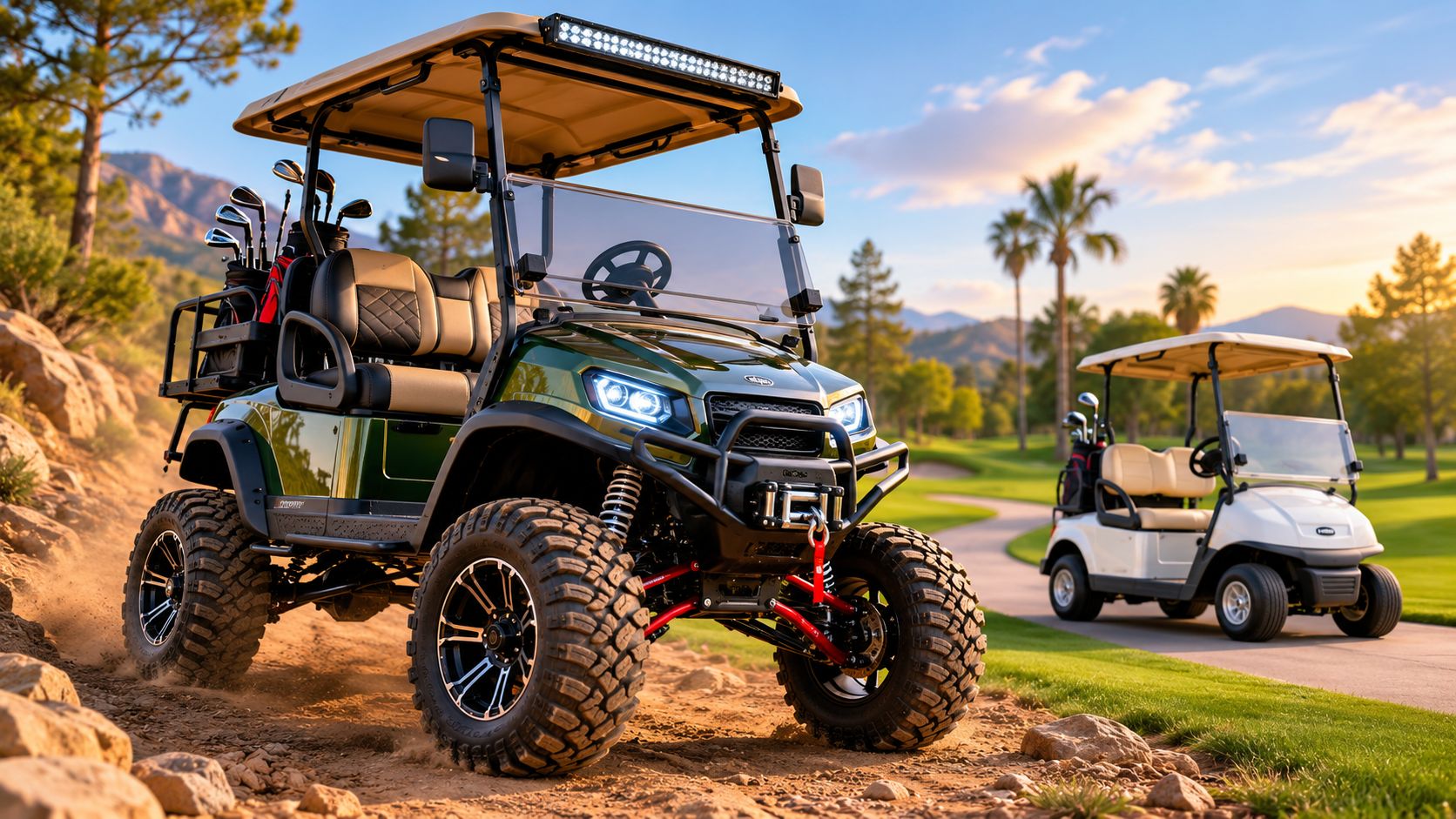
Most first-time buyers install golf cart lift kits for three reasons:
- Clearance for real terrain: Trails, gravel lanes, ranch property, resort back paths, and uneven neighborhood shoulders are easier to drive when the chassis sits higher.
- Room for larger tires: A lift kit is often the step that makes your wheel and tire plan possible.
- A better stance: The cart looks more balanced and capable, especially once the tire diameter matches the new ride height.
A lot of owners start with looks and end up appreciating the mechanical benefit more. That's normal. Bigger tires and more clearance change what the cart can do day to day.
Practical rule: If your cart regularly touches the ground where you drive, the stock setup is already telling you it's undersized for the job.
For golfers and property owners who cross rougher ground, this is also where tire choice and terrain strategy come together. If your use leans more toward mixed surfaces than smooth paths, Caddie Wheel's guide for rough golf courses gives useful context on what rougher terrain demands from a cart setup.
Choosing Your Lift Kit Type and Height
A cart that looks right in the driveway can feel wrong on the first rough path. I see that with first-time lift-kit buyers all the time. They buy by height, then find out the steering got heavier, the ride got harsher, or the tires still rub at full lock. Height matters, but the suspension design and the tire plan decide whether the cart is usable.
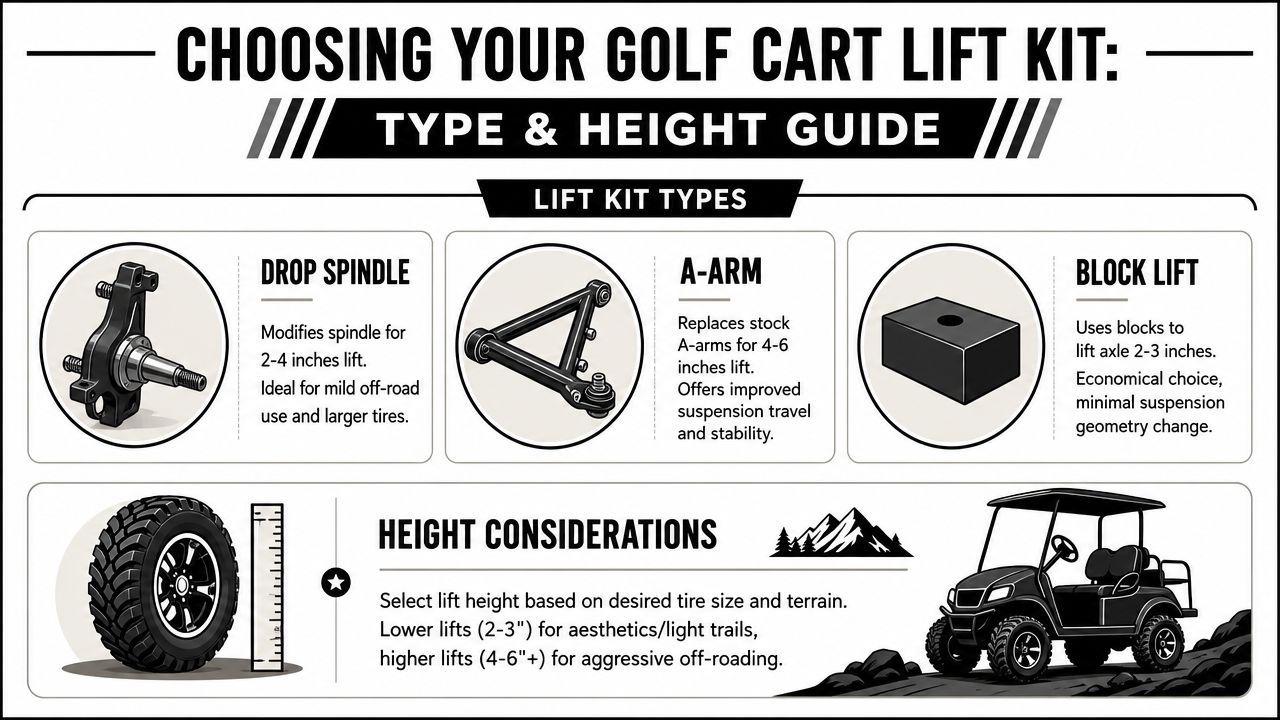
The three lift styles most owners consider
Spindle lifts are a common starting point because they usually cost less and keep the build fairly straightforward. For neighborhood carts, campground use, and light dirt or gravel driving, they often do the job without turning the project into a full front-end rebuild. The trade-off is ride quality and steering feel. A spindle lift adds clearance, but it does not usually improve how the front suspension behaves over repeated bumps.
A-arm lifts cost more because they replace more hardware, and that extra parts cost usually buys a better driving cart. Owners who use their cart on uneven property, long private roads, or mixed pavement and trail surfaces tend to notice the difference. On a modern electric cart, including premium models like Solana EV, that matters over the full ownership cycle. A cart that tracks straighter and handles weight transfer better is easier to live with for years, not just easier to photograph the day it gets installed.
Block lifts are the price-first option. They can work on simple builds where the goal is basic height for appearance or a mild tire change. They are not my first recommendation for an owner who expects better control, more suspension travel, or a polished ride after the install.
Here is the practical breakdown:
| Lift type | Best fit | Main upside | Main trade-off |
|---|---|---|---|
| Spindle | Light trail use, moderate tire upgrade | Lower entry cost, simpler install path | Ride and steering refinement stay closer to stock limitations |
| A-arm | Premium builds, rough property, frequent mixed-surface driving | Better suspension geometry and more composed front-end behavior | Higher parts cost and more installation complexity |
| Block | Budget-first builds, appearance-focused carts | Lowest-cost path to added height | Few handling gains and less capability than other lift styles |
For owners planning to keep the cart for several seasons, A-arm kits usually make more sense than they first appear. The upfront bill is higher, but the cart often drives more predictably with larger tires, especially after accessories, passengers, and cargo add weight.
Matching lift height to tire size
The right sequence is simple. Choose the job first, then the tire, then the lift.
A cart used on paved resort property has different needs than one crossing washboard paths, gravel shoulders, or jobsite access roads. If the cart will spend time on rough ground, the wheel and tire package matters as much as the lift itself. Tread type, tire weight, and overall diameter all change steering effort, braking feel, and battery range on electric carts. Owners comparing tread styles can get a better sense of what works on harder-use surfaces by looking at durable all-terrain wheels for worksites.
A practical fitment reference from Performance Golf Carts' tire and lift height guide gives a solid baseline:
- 3-inch lift: fits 20-inch tires
- 4-inch lift: fits 22-inch tires
- 6-inch lift: fits 23-inch off-road tires
- Anything over 23 inches: usually needs at least a 7-inch to 8-inch lift
- Overall lift range: lift kits typically add 3 inches to 8 inches of ride height and can allow tires up to 25 inches
Those numbers are a starting point, not a guarantee. Fender shape, wheel offset, steering stop settings, and the exact front suspension layout still affect clearance. Electric-cart owners need to be extra careful here because a taller, heavier tire package can reduce range and put more load on steering and braking components over time.
If you are still deciding between wheel and tire combinations, Solana EV's golf cart tire size guide is a useful fitment reference before ordering parts.
A Guide to Compatibility and Fitment
Fitment is where a lot of lift projects go sideways. The box might say it fits your brand, but that's not the same as fitting your exact model, year range, steering layout, and front suspension design.
The broader market tells you how important this category has become. The lift kit segment was valued at USD 109 million in 2025 and represented about 25.4% of the total golf accessories market size of USD 428.7 million that year, with the broader accessories market projected to expand at a 7.5% CAGR from 2026 to 2035 according to this golf accessories market analysis. Lift kits dominate because they accommodate larger wheels and tires, and that directly supports the growing demand for off-road and street-legal recreational mobility.
What fitment really means
For a buyer, compatibility checks should be specific:
- Match the exact make and model: A kit designed for one chassis family may not fit another, even when the carts look similar.
- Confirm the production year range: Steering and front suspension details can change within a model line.
- Check what the kit replaces: Some kits work with stock front-end parts. Others replace major suspension components.
- Verify wheel and tire requirements: The lift may fit, but the wheel offset or tire width may still create rubbing.
Universal kits can work, but they usually belong in experienced hands. Model-specific kits are the safer path for most owners because they reduce guesswork and keep steering geometry closer to what the manufacturer intended.
For owners comparing wheel setups after lifting, this wheel overview for electric golf carts is a practical place to review wheel options before ordering.
Electric cart details that matter more than most buyers expect
Electric carts deserve a more careful fitment check than older gas carts. That's especially true with premium platforms used as neighborhood vehicles, resort shuttles, or street-legal runabouts.
Battery packaging, wiring runs, body design, and wheel-tire weight all matter. On a modern electric cart such as the Solana XA 4P or XA 6P, you're not just lifting a simple utility chassis. You're working around a more integrated vehicle with bodywork, electronics, and customer expectations that are closer to an LSV than a basic course cart.
Wider, tougher wheel setups help in rough environments, but the wheel itself is only one part of the equation. Material quality, load demands, and terrain all need to match the job. For buyers thinking in worksite terms, durable all-terrain wheels for worksites provide a useful comparison mindset.
It also helps to watch a fitment walk-through before ordering hardware:
How Lift Kits Impact Performance Ride and Safety
A lifted cart usually feels more capable right away. You sit higher, the tires clear obstacles better, and the cart stops feeling vulnerable every time the surface changes. That's the upside people notice in the first drive.
The trade-off shows up in the physics. Raising the cart raises the center of gravity. That doesn't automatically make the build unsafe, but it does change how the cart reacts in turns, on side slopes, and when a driver carries too much speed into uneven ground.
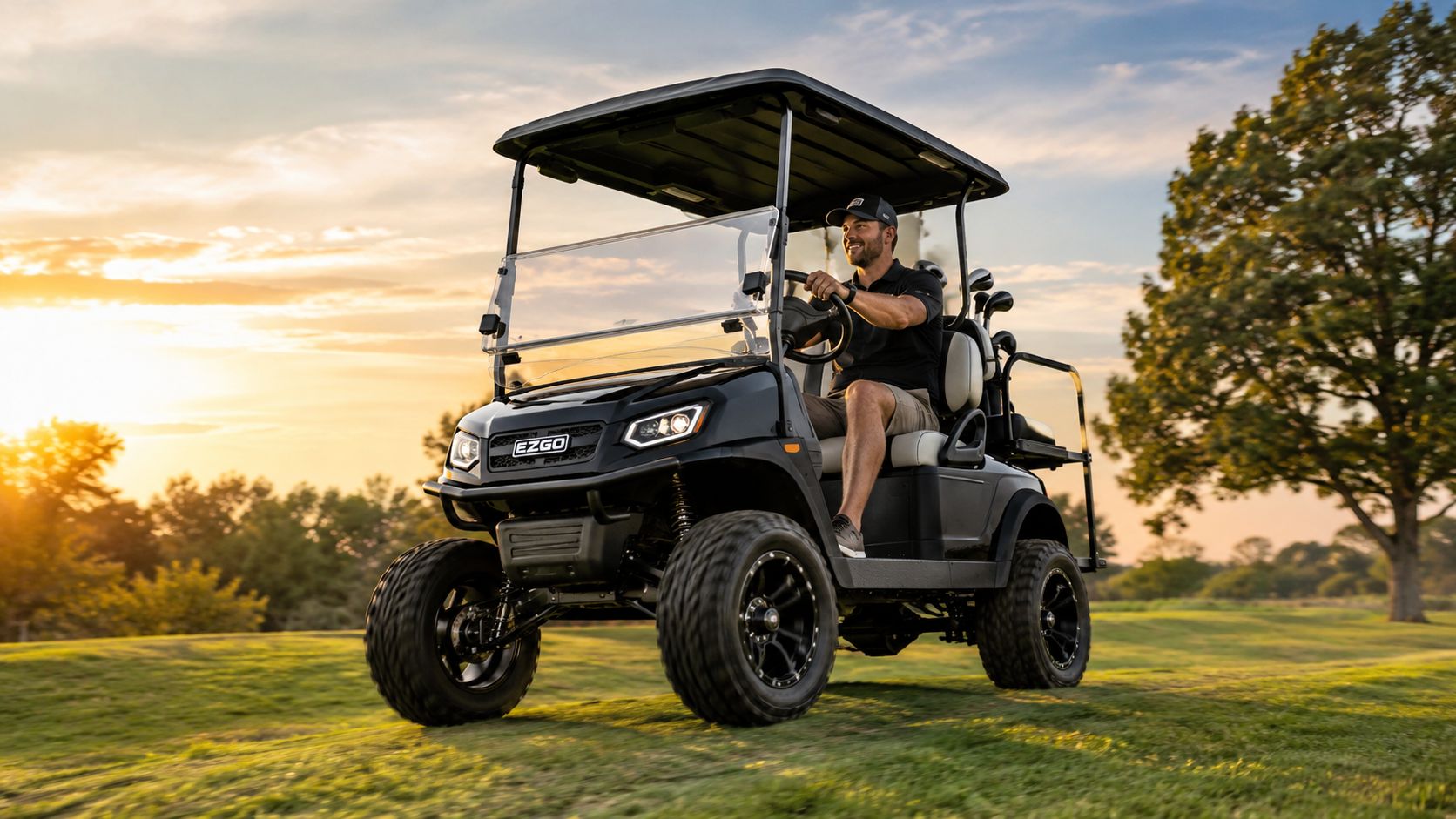
What improves once the cart is lifted
The first improvement is obstacle clearance. Approach and departure angles get better in practical terms, even if most owners never describe it that way. You notice it when climbing onto packed gravel, dropping off pavement edges, or crossing drainage cuts without scraping the underbody.
The second improvement is tire capability. A properly lifted cart can run a tire that better matches where the cart drives. For resort maintenance routes, acreage, hunting property, and mixed neighborhood terrain, that's often the whole reason for the project.
A lifted cart also tends to look proportionate once you move away from stock tires. That part is cosmetic, but it matters to owners spending real money on a premium build.
What changes in the way the cart feels
The harder part is telling new owners what won't feel the same. This analysis of lift kits, ride quality, and stability makes an important point. There are no peer-reviewed studies quantifying handling degradation in the 3-inch to 6-inch lift range, even though owners regularly ask about it. The same source notes that a lift raises the center of gravity and can make the ride firmer, but the exact effect on steering radius, braking feel, and handling hasn't been measured in controlled testing.
That matches real shop experience. You feel the difference, but the result depends heavily on the whole build:
- A quality kit drives better than a cheap one: Geometry and component quality matter.
- Tire choice changes behavior fast: Sidewall stiffness, tread style, and diameter all affect steering feel.
- Driver habits have to change: A lifted cart shouldn't be hustled through turns like a stock cart on smooth pavement.
A good lifted cart feels more capable. A poorly planned lifted cart feels taller, heavier, and less predictable.
One more safety point gets missed. A lift kit doesn't automatically make a cart street legal or non-street legal. Local requirements still govern lighting, equipment, speed classification, and registration. The lift changes the chassis. It doesn't replace the need to verify the rules where the cart will operate.
Cost Breakdown and Installation Options
A lot of first-time owners budget for the lift kit, then get surprised by everything attached to it. The box on the porch is only one line item. The full cost shows up after you match tires, confirm fitment, and set the cart up so it drives correctly.
As noted earlier in the A-arm versus spindle comparison, A-arm kits usually cost more than spindle kits. The bigger mistake is stopping the estimate there. On a modern electric cart, especially a premium platform like Solana EV, the final bill often depends more on the supporting parts and setup work than on the kit itself.
A realistic budget should account for four categories:
- Lift kit price: Cost rises with suspension design, component quality, and how much of the front end gets replaced.
- Wheel and tire package: Many owners lift the cart because they want more tire clearance. That adds cost fast.
- Alignment and fitment checks: Tire rub, steering angle, and ride height need to be verified after installation, not guessed at during checkout.
- Shop tools or labor: If you do the job at home, plan for safe lifting equipment, hand tools, and enough space to work carefully.
If you are setting up your garage before starting, this golf cart jack guide for safe lifting equipment helps you sort out what you need under the cart before you pull suspension parts apart.
When DIY makes sense and when it doesn't
DIY installation works on the right cart with the right owner. A basic lift on a common older platform is one thing. A suspension change on a newer electric cart with tighter clearances, integrated bodywork, and premium wheels is a different job.
Do it yourself if you already have solid mechanical habits, can follow torque specs, and know how to spot a fitment problem before it ruins a tire. Pay a shop if any of that is uncertain.
Professional installation usually makes more sense when:
- The cart is a newer premium electric model: Replacement parts cost more, and body or wheel damage gets expensive quickly.
- The kit changes steering or suspension geometry: Bolting parts on is not the same as setting the cart up correctly.
- You are installing wheels and tires at the same time: Clearance at full lock and under compression has to be checked on the finished cart.
- You use the cart beyond flat neighborhood paths: Hunting property, rough private roads, and heavier passenger loads expose weak installs fast.
Shop labor can feel expensive up front. It is often cheaper than correcting the wrong kit choice, replacing rubbed tires, or chasing steering problems that started with a rushed install.
Maintaining Your Lifted Golf Cart
Most owners treat the install as the finish line. It isn't. Once you lift the cart, you've changed how the front end sits, how the tires load the suspension, and how steering components live under stress.
The job is not finished after installation
That's why post-install maintenance matters more than most lift guides admit. This maintenance-focused look at golf cart lift kits points out that hidden costs often show up after the install, especially through alignment issues, premature tire wear, and suspension component failure caused by improper installation. The same source notes there's no full data tracking how often those problems happen or what long-term repair costs look like.
That lack of hard data doesn't make the risk theoretical. It just means owners have to be disciplined instead of reactive.
The first sign of a bad lift install is often uneven tire wear, not a dramatic failure.
A simple maintenance routine that prevents expensive mistakes
A lifted cart doesn't need constant attention, but it does need regular checks. Focus on the parts that changed and the parts now bearing more strain.
- Recheck fasteners: Suspension and steering hardware should be inspected after the initial break-in period and periodically afterward.
- Watch tire wear patterns: Cupping, edge wear, or one-sided wear usually means alignment or pressure needs attention.
- Inspect bushings and joints: A lifted cart asks more from these parts, especially on rough terrain.
- Listen for new noises: Clunks and pops after the install usually mean something has loosened or shifted.
- Confirm wheel clearance: Turn lock to lock and check for rubbing after any tire-pressure, wheel, or load change.
If the cart starts pulling, the steering wheel sits crooked, or the front tires scrub in turns, don't keep driving it and hope it settles in. It won't. Lifted carts reward owners who inspect early.
Finding Your Lift and Planning Your Next Steps
The right lift comes down to one question. What does the cart need to do after the install that it can't do comfortably now?
Use case should decide the build
A neighborhood cruiser that occasionally crosses grass needs a different setup than a resort property cart, and both are different from a trail-focused build. Most mistakes happen when owners buy for appearance first and only later discover the cart drives farther, turns sharper, or carries more passenger weight than the parts were chosen for.
Use this framework:
- Choose budget second, not first: Start with terrain and tire goals.
- Keep the whole build in view: Lift, wheels, tires, alignment, and long-term maintenance all work together.
- Be honest about electric-cart priorities: On modern EVs, efficiency and fitment deserve more attention than they get on old gas-cart advice.
- Plan for ownership, not just installation: The cleanest builds are the ones that are easy to inspect and maintain later.
For owners taking a lifted cart onto roads or into higher-value communities, it's also smart to think past parts. Coverage matters once a cart becomes a serious property vehicle, and insurance for your golf cart is worth reviewing before you put a modified cart into regular use.
What to do before you order parts
Measure your current tires. Confirm your exact model and year. Decide where the cart will spend most of its time. Then talk to someone who installs lift kits regularly, not someone who only sells them in a catalog.
For buyers comparing premium electric platforms and accessory paths, Solana EV offers street-legal electric golf carts and related upgrade options through its dealer network, which gives you a practical route if you want model-specific guidance instead of piecing the project together blindly.
If you want help matching a lift kit, wheels, and long-term use case to a premium electric cart, start with Solana EV. You can browse vehicles, compare fitment possibilities, and connect with a dealer who can help you plan the build and install it correctly.