
You're probably here because your cart is doing two jobs badly instead of one job well. A standard two-seater works fine until you need to move grandkids, guests, groceries, maintenance supplies, or golf bags without making two trips. That's when a golf cart back seat stops being an accessory and starts being a practical upgrade.
I see this most often with resort managers and neighborhood owners who bought a cart for short hops, then realized the use case is mixed. One day it's guest transport. The next day it's luggage, coolers, or tools. A good rear seat setup fixes that, but only if you choose the right type, mount it correctly, and understand the safety trade-offs instead of guessing.
Table of Contents
- From Two Seats to More The Need for a Golf Cart Back Seat
- Choosing Your Back Seat Type Flip Fixed and Beyond
- Will It Fit My Cart A Compatibility and Measurement Guide
- Installation Insights and Material Choices
- Critical Safety Specs and Street Legal Requirements
- Advanced Use Cases and Customization
- Long-Term Care and Maintenance for Your Back Seat
From Two Seats to More The Need for a Golf Cart Back Seat
A two-seat cart usually feels adequate right up until it doesn't. A resident wants to bring neighbors to dinner. A property team needs to move one more worker and a few pieces of equipment. A family wants to take one cart to the pool instead of splitting up. The cart hasn't changed, but the job has.
That's why the rear seat kit became so common in the first place. The biggest appeal isn't style. It's flexibility. A golf cart back seat lets one vehicle cover daily passenger use and light hauling without replacing the cart you already own.
One detail matters more than many buyers expect. A rear seat changes how you use the entire vehicle, not just where two more people sit. You start thinking about parking space, roof coverage, rear visibility, suspension feel, and how often the cart needs to switch between passenger duty and utility duty.
Practical rule: Buy for the job your cart does most often, not the job it does once a month.
For a resort, that often means durable materials and easy cleanup. For a gated community resident, it usually means comfort, safe handholds, and enough room for casual errands. For someone using the cart around acreage or trails, frame material and corrosion resistance quickly matter more than upholstery color.
A rear seat also solves a common ownership problem. People don't want a cart that's permanently committed to one role. They want one that can carry people on Saturday morning and bags, boxes, or supplies later that day. That's where the seat design you choose makes all the difference.
Choosing Your Back Seat Type Flip Fixed and Beyond
A resort cart that carries guests in the morning often needs to haul towels, tools, or supply bins by afternoon. That daily switch is what separates a smart rear seat choice from an expensive inconvenience.
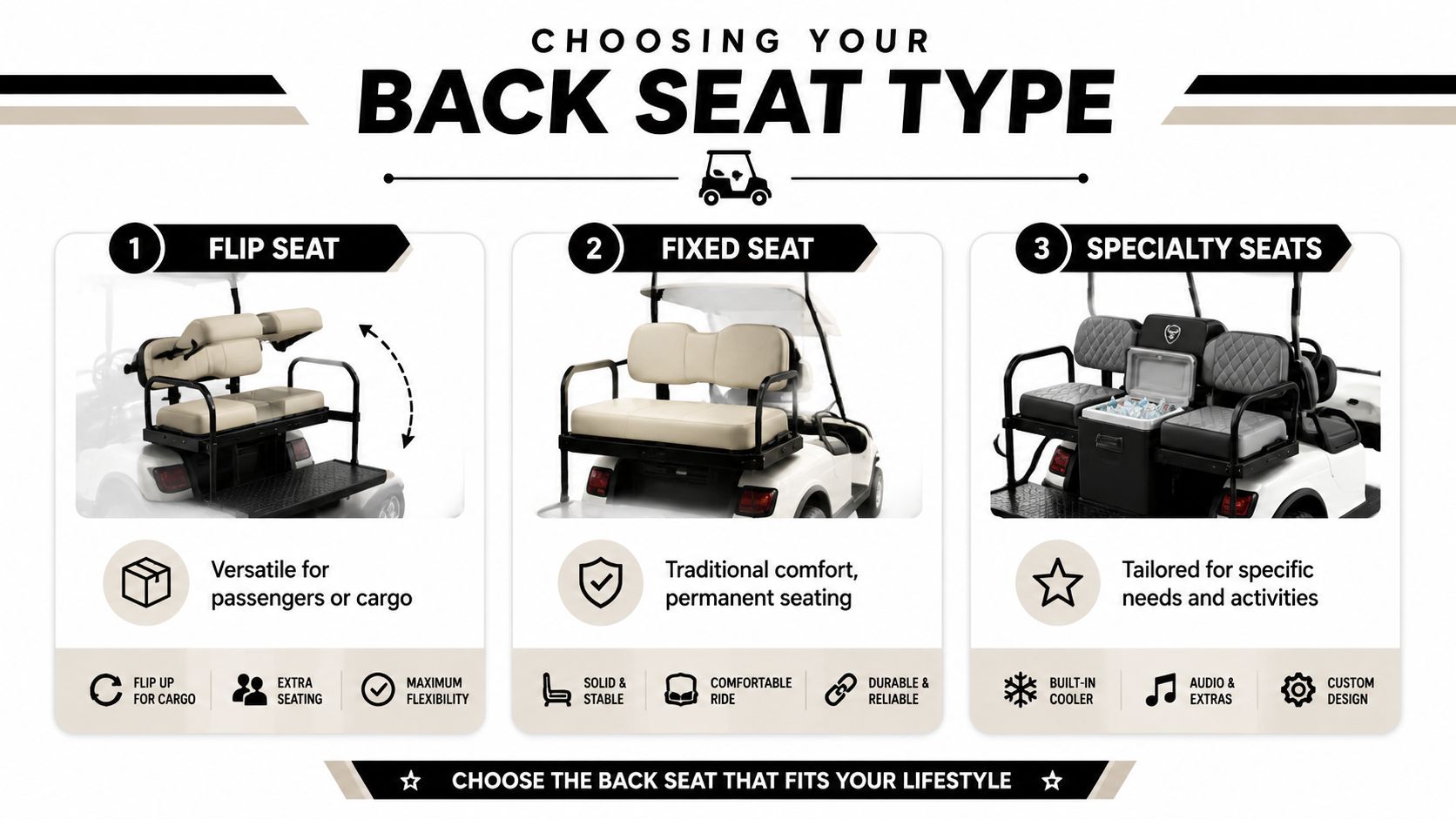
Flip seats for mixed use
A flip seat fits the way many carts are used. It adds rear passenger capacity, then converts to a cargo deck for bags, coolers, maintenance gear, or groceries. For most community residents and property teams, that flexibility is the main advantage.
It also answers a concern that still comes up too often. Some buyers worry that adding a rear seat makes the cart unstable. On older carts with poor installation, weak brackets, or overloaded rear weight, that concern had some basis. On a modern cart with a properly matched kit, sound mounting points, and the right springs or suspension support, a rear seat does not automatically make the cart unsafe. The problem is usually bad setup, not the rear seat itself.
That matters most with flip seats, because they change roles during the week. A good one lets you switch from people to cargo without removing hardware or giving up rear safety features. If your cart alternates between a back seat and a golf bag rack setup, look closely at how fast that conversion happens and whether the platform stays flat and secure in both positions. Buyers often overlook that point, then end up with a cart that can carry passengers well but makes golf-day loading awkward.
Good flip seat kits usually include:
- A rear grab bar so passengers have a secure handhold
- A stable footrest area that keeps rear riders from bracing against the frame
- UV-resistant cushions that hold up better in sun and rain
- A rigid cargo deck that supports real utility use instead of light-duty storage only
Cost is the trade-off. A flip seat usually costs more than a simple fixed bench, and the better kits cost more for a reason. Thicker brackets, better cushions, cleaner hinge action, and stronger deck materials hold up longer under commercial or neighborhood use.
Fixed seats for carts that stay in passenger mode
A fixed rear seat works well when the cart's job is straightforward. Shuttle residents. Move guests. Carry family members around the property. Sit down and ride.
That simpler layout can be more comfortable over time because the seat base and backrest are built only for passengers, not for converting into a platform. There are fewer moving parts too, which can mean less rattling and less wear. If the cart will almost never carry cargo, fixed seating is a reasonable choice.
The downside shows up fast once needs change. A fixed seat takes up that rear space full-time. If you later want to carry landscaping supplies, luggage, maintenance parts, or golf bags, your options shrink.
Specialty and removable options
Specialty seats cover everything outside the usual flip-versus-fixed decision. That includes removable rear benches, custom upholstery layouts, fold-down armrest packages, and purpose-built rear seating for hospitality or neighborhood cruising.
These setups can be useful, but they are easier to overbuy. I usually suggest them only when the cart has a clear role and stays in that role. A resort may want a more polished passenger setup. A homeowner may want a cleaner custom look. A golf-first buyer may prefer a system that changes between passenger seating and a bag-friendly rear arrangement without much effort.
Cart size affects this choice too. On shorter chassis, every extra inch in the rear changes access, storage, and turning clearance. Reviewing standard golf cart dimensions for common 2-seat and 4-seat layouts helps set expectations before you choose a seat style that adds bulk behind the axle.
| Seat Type | Primary Use | Pros | Cons |
|---|---|---|---|
| Flip Seat | Mixed passenger and cargo use | Converts quickly, keeps one cart useful for more jobs, usually the best fit for homes, resorts, and light property work | Higher cost, more moving parts, quality differences matter a lot |
| Fixed Seat | Passenger transport | Comfortable, simple, clean layout, fewer conversion parts | Rear space stays committed to passengers |
| Specialty Seats | Niche or custom applications | Can match a specific use case or appearance goal | Easy to spend more than the cart's actual job justifies |
Buy for your normal week.
If the cart needs to switch between carrying people and carrying gear, a flip seat usually makes the most sense. If it will stay in passenger duty nearly all the time, a fixed rear seat can be the better long-term fit.
Will It Fit My Cart A Compatibility and Measurement Guide
The biggest ordering mistake isn't buying a cheap kit. It's buying the wrong kit. A golf cart back seat has to match the cart's frame layout, body style, and support structure. If it doesn't, the install turns into drilling, shimming, frustration, or a return.
Before you order anything, get the cart on level ground, park it where you can walk around it, and measure the rear area carefully.
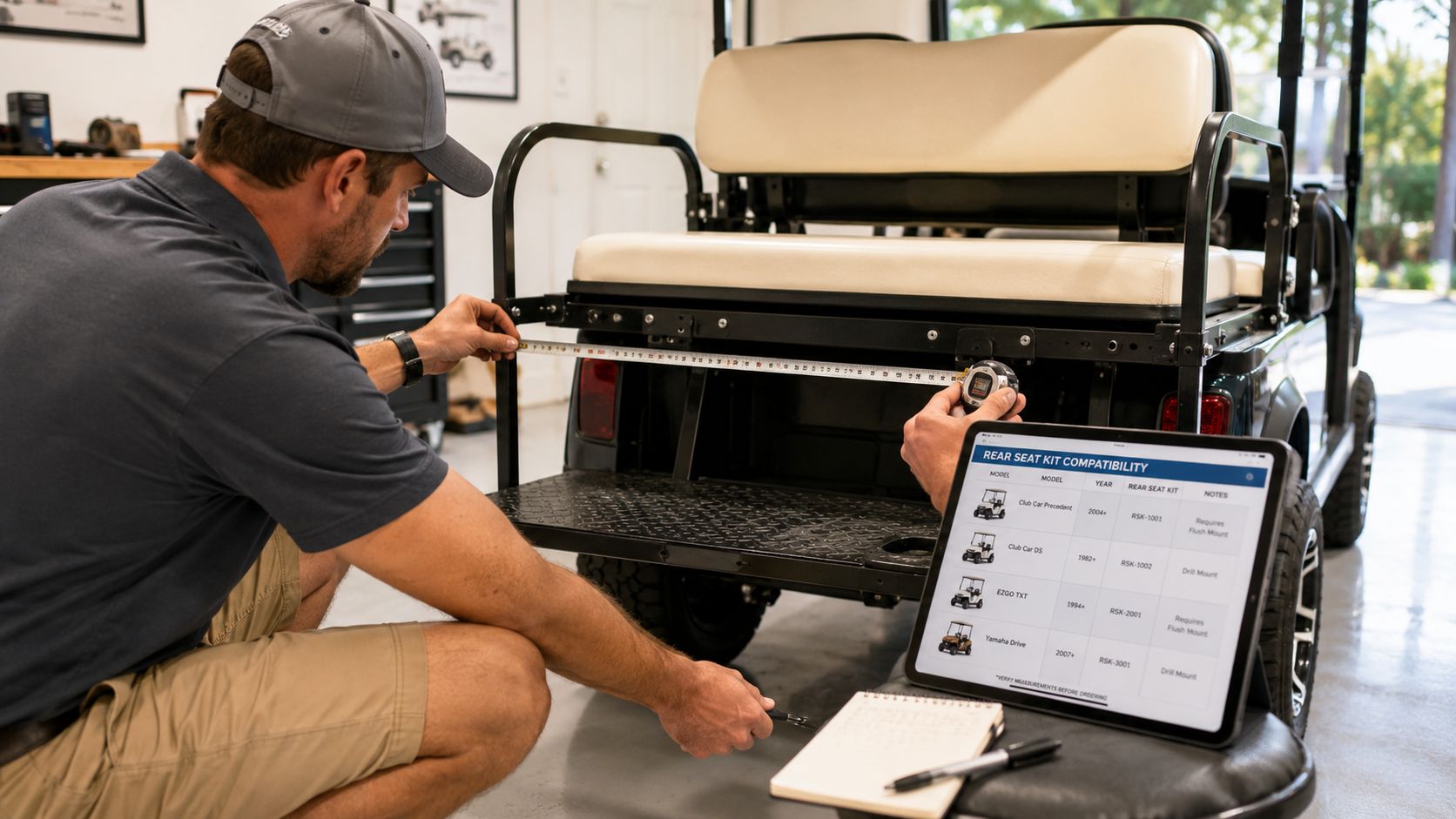
What to measure before you order
Start with overall size. Adding a rear seat kit changes the cart's total length from an average 92–108 inches for a two-seater to 108–144 inches for a four-seater, while width stays nearly the same at 48–54 inches, based on this guide to standard golf cart dimensions.
That matters for more than fitment. It affects trailer loading, garage storage, maintenance shed space, and whether the cart still clears the area behind a parked vehicle.
Check these areas before you buy:
Rear frame pickup points
Look at where the kit will bolt to the chassis. You need clear access and solid mounting surfaces.Distance behind the seat base
Some carts leave less usable room at the rear than owners expect, especially once body panels and supports are factored in.Roof support alignment
If the rear seat sits under a short roof, you may need an extension or at least need to confirm head coverage.
Common fit mistakes
Most bad installs start with assumptions. Owners assume “universal” means universal. It usually doesn't in practice. Model-specific fit is safer and easier.
Another common issue is forgetting the cart gets longer even though it doesn't get much wider. That sounds minor until the cart no longer fits the trailer, storage bay, or tight turn-in area where it used to live comfortably.
Measure the cart for where it's stored and transported, not just where it's driven.
If you're managing a small fleet, write these dimensions down by vehicle before ordering. It saves time and keeps one incompatible kit from stalling the whole job.
Installation Insights and Material Choices
A rear seat install usually looks simple until the cart is on stands and the hardware is spread across the floor. For a homeowner with basic tools, the job is manageable. For a resort or HOA fleet, I usually treat it as a half-day service task per cart because alignment, hardware torque, and repeatability matter more than speed.
The main mistake is treating the rear seat like trim instead of a passenger structure. The kit has to sit square on the frame, clear body panels, and carry live weight without loosening over time. That matters even more if you plan to switch between passenger duty and cargo duty with a flip seat or convertible setup. A well-installed kit makes that change practical. A sloppy one turns the rear platform into a source of rattles, uneven wear, and passenger complaints.
What a good installation actually requires
Start with the cart on level ground and keep every fastener sorted before the first bracket goes on. Leave bolts slightly loose until the frame, seat base, and footplate are aligned, then tighten in sequence. That prevents the common problem where one bracket gets locked down early and pulls the whole assembly out of square.
A clean install usually comes down to a few habits:
- Confirm bracket orientation before tightening. One reversed bracket can shift the seat base and load the frame unevenly.
- Check access panel and body clearance. Some kits fit the chassis well but interfere with panels once everything is fully seated.
- Torque hardware evenly. Over-tightening one side and guessing on the other is how squeaks and movement start.
- Cycle the flip function several times. If the seat converts to a cargo deck or golf bag position, test that motion before the cart goes back into service.
That last point gets missed in a lot of guides. The ability to switch between a back seat and a bag rack is one of the best reasons to choose a convertible setup, especially in mixed-use communities and resort operations. One cart can carry guests in the afternoon and golf bags the next morning without a second vehicle or a permanent compromise in utility.
If rear passengers will ride often, pair the seat install with proper golf cart seat belt installation so the restraint points match the final seating layout.
Steel versus aluminum in real service conditions
Material choice decides how the seat ages. Steel costs less up front and can hold up well on a privately owned cart that stays indoors, sees light weekend use, and gets cleaned and touched up when paint chips appear. It is the budget pick for a reason.
Aluminum costs more, but it solves a problem that never goes away once corrosion starts. In coastal properties, humid storage areas, wash-down environments, and high-turnover resort fleets, aluminum usually earns back the higher price in lower maintenance and better appearance over time.
Here is the trade-off in plain terms:
- Steel fits tighter budgets and lighter use, but it needs more attention to rust prevention.
- Aluminum costs more at purchase, but it is the better long-term choice for weather exposure and frequent service.
- Padded cushions and marine-grade vinyl matter just as much as the frame if the cart carries adults regularly. Cheap cushions flatten fast and crack sooner in sun.
I also look at how the cart will be used. A neighborhood family cart can accept a few compromises in finish and convenience. A property-management cart cannot. If guests, residents, or older passengers climb in and out all day, spend more on the frame, hinge hardware, and upholstery now. It is cheaper than dealing with loose platforms, torn cushions, and avoidable service calls later.
One more practical point. Rear-seat instability is still treated like a built-in flaw by some buyers, but the actual issue is poor installation and weak hardware choice, not the idea of a back seat itself. On a modern cart with the right kit mounted correctly, the rear seat is stable enough for normal passenger use and far more useful when it can convert back to golf-duty without fighting the hardware.
Critical Safety Specs and Street Legal Requirements
Most buyers ask about comfort first, then safety later. That's backwards. A rear seat changes passenger count, rear weight distribution, and how people hold themselves in the cart when it starts, stops, or turns. If you're buying one for regular use, safety needs to drive the decision.
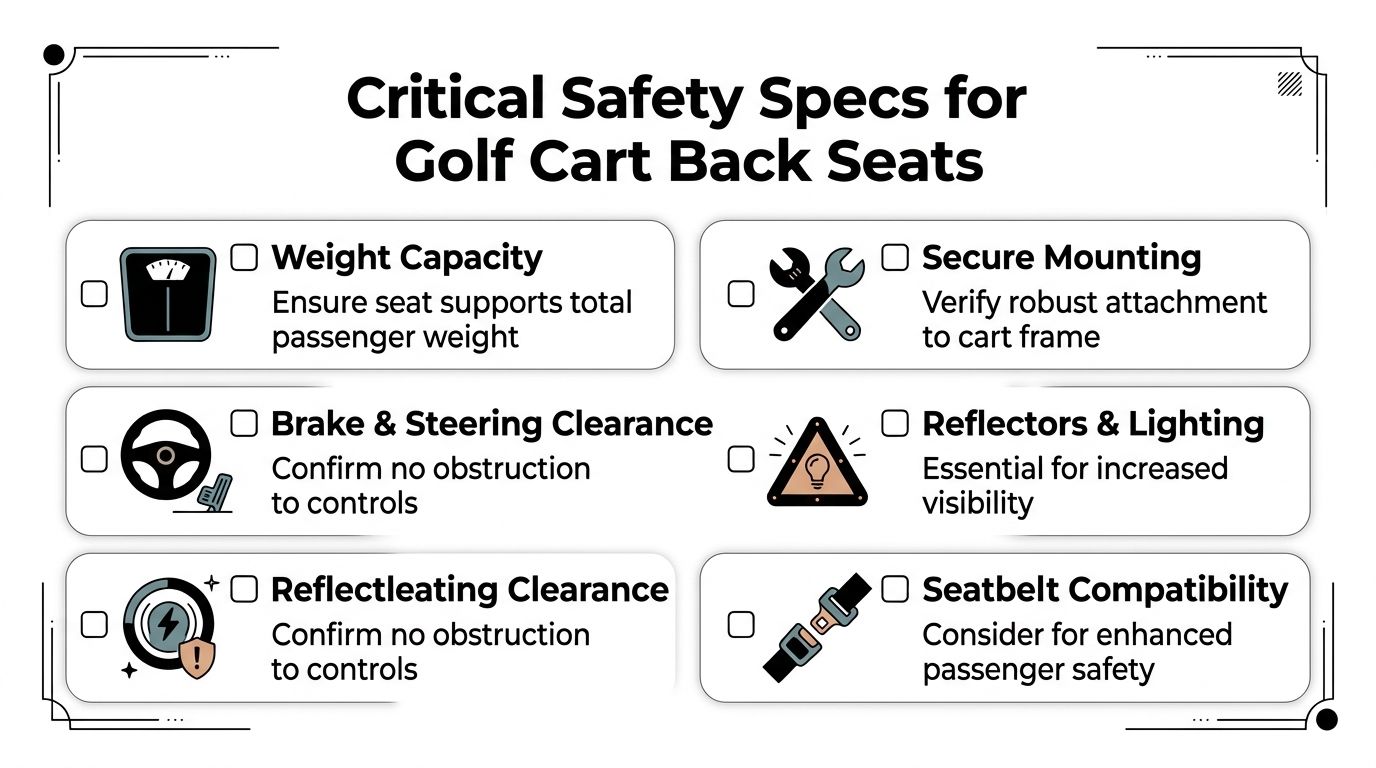
The stability myth buyers still hear
A lot of owners still hear some version of this: four-seater carts are heavier in back and not as stable. That concern keeps people from upgrading, especially in retirement communities and resort settings where cautious driving matters.
The problem is that the claim lingers long after better cart design made it outdated. A discussion summarizing industry guidance notes that the myth persists, but modern forward-facing double-row carts are designed to be stable and safe for rear passengers, as reflected in this community discussion about rear-seat stability.
That doesn't mean every modified cart is automatically safe. It means stability should be judged by engineering, proper installation, and sensible use, not by an old blanket assumption.
Stability problems usually come from poor setup, bad loading habits, or sloppy installation. Not from the mere fact that a cart has a rear seat.
What actually matters for safety
If I'm inspecting a golf cart back seat setup, these are the first things I look at:
- Secure passenger handhold: A sturdy rear grab bar matters because rear passengers need something solid during movement.
- Tight frame mounting: The seat structure has to stay rigid under normal use, not flex or shift.
- Clear brake and steering function: Nothing about the rear install should interfere with vehicle control.
- Lighting and visibility: If the cart operates in low light or around vehicle traffic, rear visibility equipment matters more once you're carrying extra people.
- Seatbelt planning: Some buyers assume rear belts are automatic. They aren't always.
There's also a legal wrinkle that gets missed. If the cart is being used or configured as an LSV, seatbelt requirements matter. For buyers sorting out what belts should be added or checked, this guide to golf cart seat belt installation is a useful starting point.
A rear seat kit shouldn't be treated as furniture. It's a passenger-carrying structure. Evaluate it that way and you'll ask better questions before anyone climbs aboard.
Advanced Use Cases and Customization
Once the back seat is on the cart, most owners start seeing what else needs to change. Shade, storage, suspension feel, and golf bag access all come up quickly. That's normal. A rear seat tends to expose the next weak point in the setup.
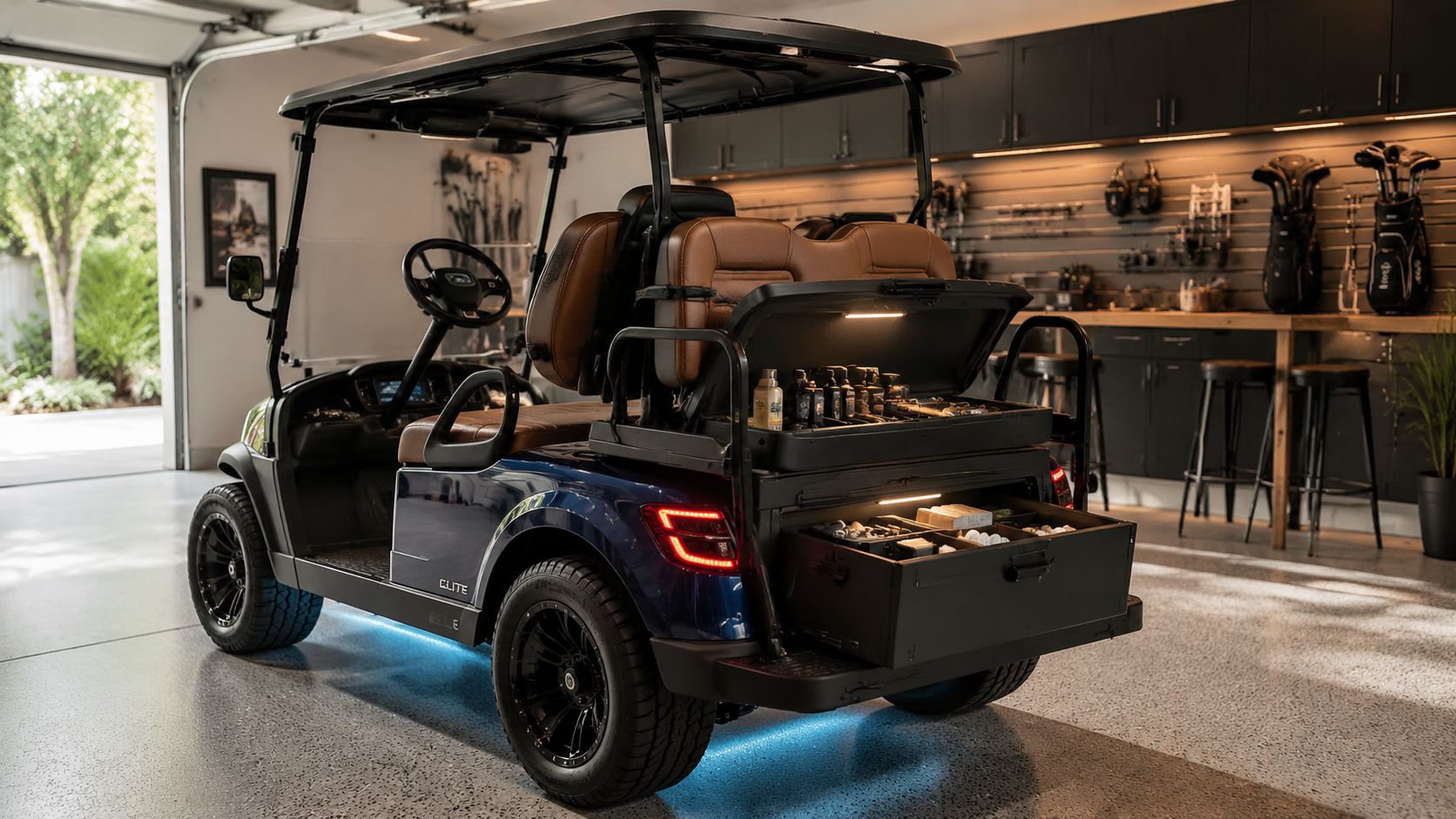
Switching between a back seat and a golf bag rack
This is one of the most common practical questions, and it's also one of the least well answered. Owners want a cart that can carry passengers some days and function as a golf setup on others. User discussions show people regularly ask how to switch between rear-facing seats and golf bag racks, while also noting confusion around seatbelt requirements because LSV standards require them, but they aren't always standard on every four-passenger model, as seen in this discussion on rear seat versus golf setup.
The mechanical issue is simple. Repeatedly swapping major rear hardware only works well if the mounting system was designed for it. If it wasn't, each change introduces more chances to loosen fasteners, misalign brackets, or create wear around attachment points.
A practical approach looks like this:
- Use one primary configuration: Pick seat-first or golf-first. Don't build around constant swapping unless the hardware supports it cleanly.
- Inspect mounting points each time: If you remove and reinstall components, check every fastener before use.
- Avoid improvised adapters: Homemade spacer stacks and off-angle brackets create problems faster than they solve them.
Upgrades that make the seat work better
A rear seat often works best as part of a package, not a standalone add-on. Depending on the cart's job, owners often pair it with an extended roof for rear passenger coverage, storage solutions for loose gear, and suspension upgrades to better support added use.
For appearance and comfort upgrades, browsing examples of custom golf cart seats can help you think through color match, cushion style, and overall layout before you commit.
Three common use cases make the choices clearer:
- Resort carts: Prioritize easy-clean materials, passenger comfort, and shaded rear seating.
- Neighborhood family carts: Focus on simple access, secure handholds, and seating that feels inviting for regular short trips.
- Property and trail carts: Put durability ahead of looks. A tougher frame and practical cargo flexibility matter more than decorative trim.
Long-Term Care and Maintenance for Your Back Seat
A golf cart back seat lasts longer when owners treat it like a working component instead of a one-time install. Most maintenance is simple. The key is doing it before looseness, stains, or corrosion turn into replacement costs.
Use this checklist a few times a year:
- Clean the cushions: Wipe down vinyl regularly, especially on carts that stay outdoors. If the seat gets grimy from sunscreen, spills, or ground-in dirt, this guide on tackling stubborn car seat stains offers practical cleaning methods that also apply well to golf cart upholstery.
- Check the hardware: Put a wrench on the main fasteners and confirm nothing has backed off with vibration and use.
- Inspect the frame: Steel frames deserve extra attention for early signs of corrosion. Aluminum needs less worry here, but it still deserves a visual check.
- Test the flip mechanism: If the bed or seat doesn't move smoothly, inspect the hinges and lubricate where appropriate.
- Look at the cushions in full sun: UV-resistant materials hold up better, but dirt, neglect, and constant exposure still shorten seat life.
A rear seat usually wears out from neglect before it wears out from use.
If the cart carries different passengers through the week, set a routine. Quick cleaning, bolt checks, and hinge inspection go a long way toward keeping the seat safe, presentable, and trouble-free.
If you're shopping for a street-legal golf cart or a premium multi-passenger model built for neighborhood, resort, or off-road use, Solana EV is worth a look. Their lineup focuses on modern design, aluminum chassis durability, and practical features for buyers who want more than a basic cart.