
So, you're ready to find the perfect golf cart. Punching "golf cart dealers near me" into a search bar is the easy part. The real work—and where you’ll find the most value—is in choosing the right local partner. Think of a great dealer as more than just a salesperson; they’re your long-term resource for test drives, navigating local laws, and keeping your cart running smoothly for years.
Starting Your Search for the Best Local Golf Cart Dealer
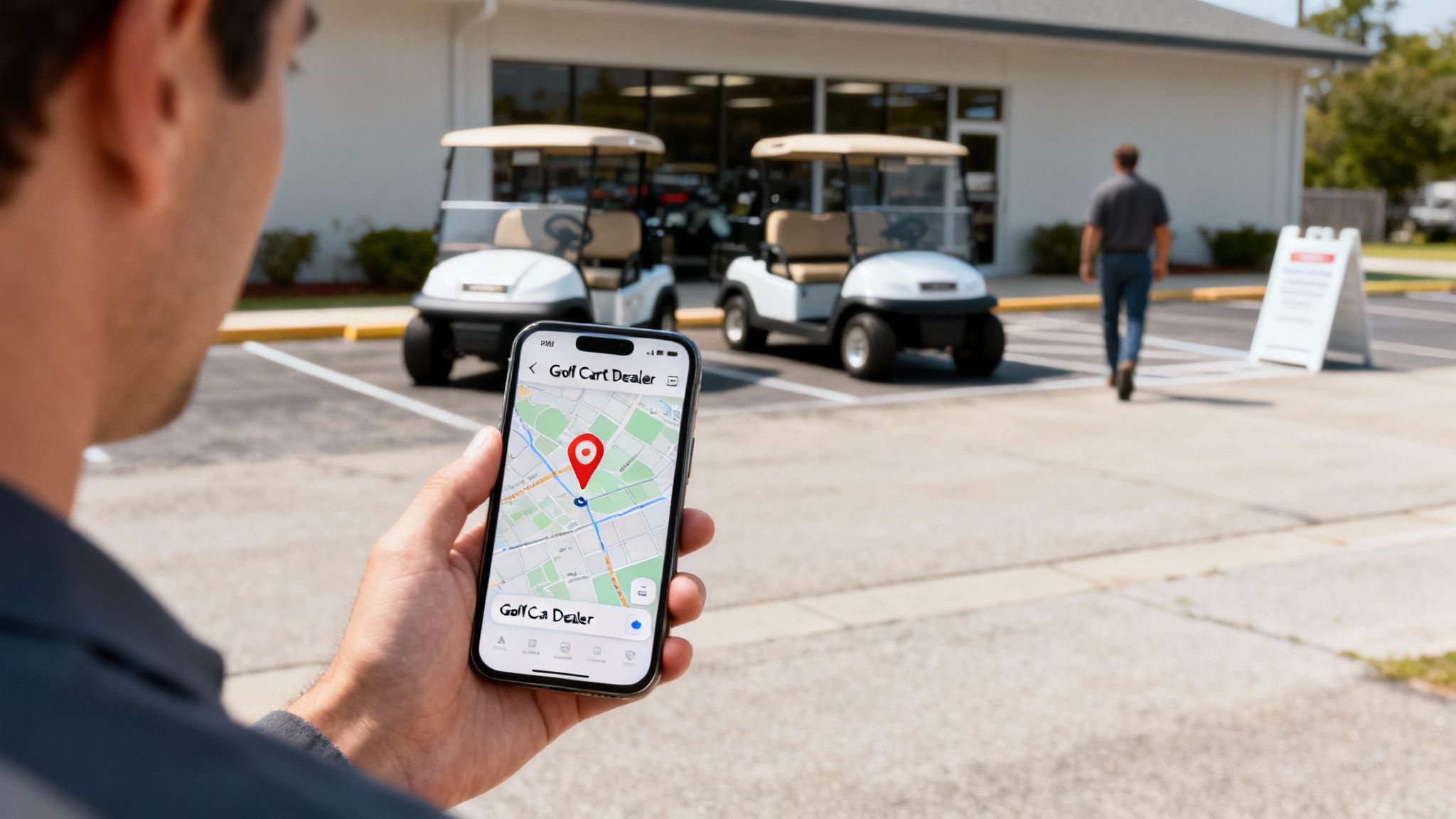
The journey to buying a golf cart is exciting, whether you're outfitting a resort, cruising your neighborhood, or tackling tough terrain on your property. While you can learn a lot online, nothing beats the hands-on experience and local expertise you get from a dealer right in your area.
An online-only seller simply can't compete with what a local dealer offers. You get to physically see, touch, and, most importantly, test drive the models you're eyeing. They also know the local scene—the regulations, the terrain, and what people in your community are actually using their carts for—so their advice is genuinely useful.
Why a Local Dealer is Your Greatest Asset
Going with a nearby dealer isn't just about making your life easier; it's a smart play that pays dividends down the road. Local businesses live and die by their reputation in the community, which usually means you'll get better service, a more straightforward deal, and real commitment after the sale.
Here’s what you get with a good local partner:
- Personalized Service: They'll listen to what you need—a street-legal LSV for running errands or a rugged utility cart for hauling—and point you to the right model.
- Test Drive Opportunities: This is non-negotiable. You need to feel how a cart handles, how the suspension feels on bumpy ground, and if the seats are comfortable before you buy.
- After-Sale Support: When it's time for a tune-up or a battery replacement, having a trusted service shop nearby is a huge relief.
- Local Law Navigation: Street-legal rules can be a maze, changing from state to state and even town to town. A local dealer knows the specifics and will make sure your cart is compliant from day one.
These versatile vehicles are more popular than ever. The global golf cart market is booming, with a projected value of USD 1.87 billion by the end of 2026. North America is leading the charge with a 44.70% revenue share, and the U.S. market alone is expected to hit USD 1.25 billion by 2033. This isn't just about golf anymore; it's a major shift in how we get around resorts, planned communities, and commercial properties.
Creating Your Shortlist of Potential Dealers
Your first move is to gather a list of contenders. Don't just browse aimlessly; be strategic. Firing up Google or Google Maps for a "golf cart dealers near me" search is the perfect starting point. It gives you an instant lay of the land, complete with customer reviews, hours, and directions.
A dealer’s online presence is often a good clue to their real-world professionalism. Dive into the reviews on Google. Are they recent? Detailed? Look for patterns in what people praise or complain about, whether it's the sales process, service quality, or the carts themselves.
Go beyond a simple map search. Check out industry directories and, even better, the manufacturers' own websites. Brands like Solana EV usually have a "Find a Dealer" tool that points you to authorized partners who meet their standards for quality and service. This is a fantastic way to find shops that are certified to work on the exact models you're interested in. You can also get more ideas by exploring our comprehensive guide on finding a golf cart for sale near you.
By combining these different search methods, you’ll build a solid, well-researched list of dealers to start visiting.
What to Look For in a Dealer's Inventory and Expertise
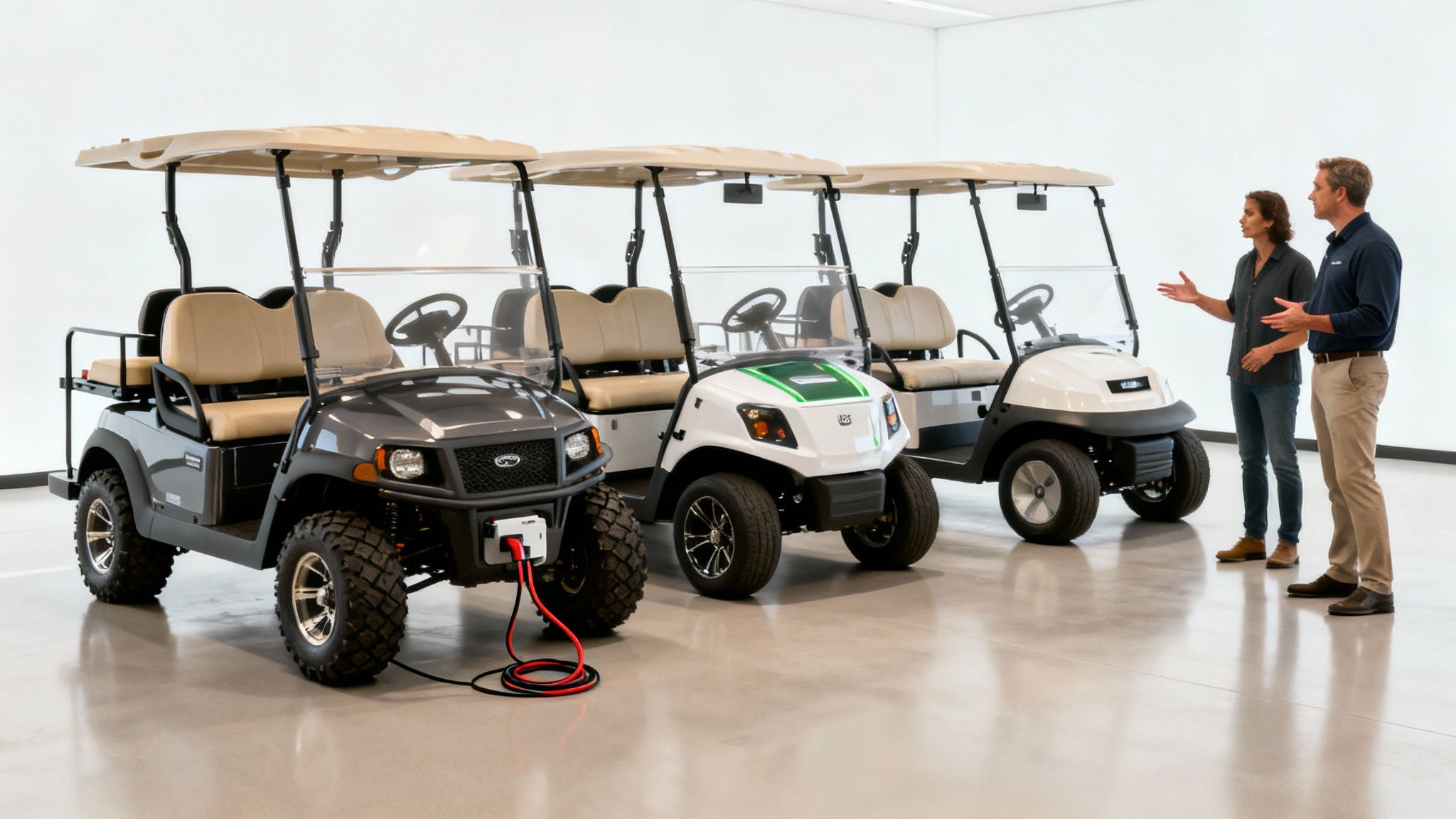
Once you have a shortlist of local dealers, the real work begins. It’s time to shift your focus from where to buy to what they actually have on the floor. A dealer's showroom is more than just a place to park some carts; it’s a direct reflection of their expertise and commitment to quality.
The first thing to notice is the variety. Are they pushing just one or two basic models, or do they offer a range that caters to different needs? A diverse inventory tells you they understand the market and have experience outfitting everyone from golfers to groundskeepers.
Gauging the Quality of the Inventory
When you walk into a dealership, don't just gravitate toward the shiniest new models. The condition of their used or refurbished carts can tell you a whole lot about their standards. A first-rate dealer puts just as much care into their pre-owned selection as they do their brand-new stock.
Here's what to keep an eye on as you browse:
- New Carts: Look for reputable brands known for performance and reliability. A dealer who partners with a quality manufacturer like Solana EV is signaling that they care about long-term customer satisfaction, not just a quick sale.
- Used Carts: Are they clean and well-maintained, or do they look like they were just dragged in off the street? A quick check for consistent tire quality and clean battery terminals across their used inventory speaks volumes.
- Refurbished Carts: A properly refurbished cart should feel almost new. Ask about their process—is it just a cosmetic touch-up, or are they actually replacing critical components like batteries, controllers, and wiring?
A well-chosen inventory is a sign of a dealer who knows their stuff. For instance, seeing a rugged model like the Solana XA for trail use parked next to a luxurious Solana G for resort transportation shows they can match the right vehicle to a specific lifestyle. That's the kind of specialization you want.
How to Evaluate a Dealer’s Technical Expertise
A slick sales pitch is one thing, but real expertise comes out when you start digging into the details. The biggest tell is how well they understand the power source. The industry is moving electric, fast, so a dealer’s fluency in battery technology is a non-negotiable indicator of their competence.
This isn't a minor trend. Projections show that electric models will capture over 81% of the market share in 2025 and are expected to climb to 85% by 2026. This shift is happening for a reason, and a good dealer should be able to explain why.
Don't be afraid to put them to the test. Ask direct questions about the differences between old-school lead-acid batteries and modern lithium-ion options. A true expert will be able to clearly walk you through the pros and cons of each, touching on lifespan, maintenance, charging speed, and performance in your specific climate.
An expert dealer doesn't just sell you a cart; they help you make the right investment. They should be able to explain precisely why a lightweight, efficient model like the Solana Campus E is ideal for a sprawling university, while the versatile Solana F might be the better fit for a gated community with hills.
Their ability to connect a cart's features to your day-to-day needs is the ultimate test of their expertise. Before you head out, it’s a good idea to familiarize yourself with the main types of golf carts available so you can walk in with confidence.
Key Questions to Ask a Golf Cart Dealer
To really vet a dealer, you need to go in armed with the right questions. This isn't about being confrontational; it's about making sure you're partnering with someone who is knowledgeable, transparent, and can support you long after the sale.
This table gives you a checklist to cover all the important bases, from sales to service.
| Category | Question to Ask | Why It Matters |
|---|---|---|
| Inventory & Expertise | Can you explain the pros and cons of lithium vs. lead-acid batteries for my specific use? | Tests their technical knowledge on the most critical component of an electric cart. |
| Inventory & Expertise | Which brands do you carry and why did you choose them? | Reveals their commitment to quality and if their philosophy aligns with your needs. |
| Service & Support | Who handles your service and repairs—is it in-house or outsourced? What is your typical service turnaround time? | In-house service departments often provide faster, more reliable support. |
| Service & Support | Do you stock common replacement parts for the models you sell? | A "yes" means less downtime for you if a repair is needed. |
| Pricing & Financing | Can you provide a detailed, itemized quote including all fees, taxes, and delivery charges? | Ensures full transparency and helps you avoid surprise costs. |
| Pricing & Financing | What are the warranty details for both the cart and the battery? Is it a manufacturer or dealer warranty? | Clarifies who is responsible for what and for how long. |
| Legal & Compliance | Do you help with the process of making a cart street-legal in my specific town/county? | A knowledgeable dealer understands local laws and can save you major headaches. |
Asking these questions will quickly separate the seasoned professionals from the casual sellers, ensuring you find a dealer you can trust for years to come.
The Inspection and Test Drive: Kicking More Than Just the Tires
So you've narrowed it down to a dealer with a great reputation and a lineup that catches your eye. This is where the real fun begins—the hands-on part. But don't just take it for a quick spin around the lot. This is your chance to dig in and really see what a cart is made of.
Think of it this way: a proper inspection and test drive is the best way to avoid buyer's remorse later on. It's about simulating how you'll actually use the cart, day in and day out, to make sure it's the right fit. This is where you separate the contenders from the pretenders.
The Pre-Ride Walkaround Checklist
Before you even think about putting the key in the ignition, give the cart a thorough walk-around. This is especially crucial if you're looking at a pre-owned or refurbished model, as a close look can tell you a lot about its past life.
Don't be afraid to get down and look under the cart. A good dealer will expect you to be thorough.
- Tires & Suspension: Are the tires worn evenly? If not, that could be a red flag for alignment problems. Give each corner of the cart a good push down. It should rebound and settle quickly, not feel like a pogo stick or a stiff board.
- Frame & Body: Get a look at the frame underneath. You're searching for rust, cracks, or any shoddy-looking weld repairs. A few cosmetic scratches on the body are one thing, but major cracks could point to a previous accident.
- Lights & Gadgets: Flick every switch. Test the headlights, taillights, and turn signals (if it’s a street-legal model). Check the horn, USB ports, and any other accessories to make sure they all work as they should.
Pop open the battery compartment—this is a big one. On traditional lead-acid batteries, look for that tell-tale fuzzy corrosion on the terminals. Find the date sticker, too. If those batteries are more than a couple of years old, you might be looking at a hefty replacement cost in the near future.
This initial check gives you a solid baseline and a mental list of things to pay extra attention to once you're on the move.
Putting the Golf Cart Through Its Paces
Now, it’s time to drive. The goal here is simple: try to replicate the conditions you'll face at home. If your neighborhood has steep hills, don't just stick to the flat parking lot. Find an incline. If your community paths are a bit rough, seek out a bumpy patch.
Once you start driving, tune in your senses. Is that a normal hum or a weird whine? Do you feel a vibration in the steering wheel? How does it respond when you hit the pedal?
Here’s a practical game plan for your test drive:
- Power & Acceleration: Mash the pedal from a dead stop. You want smooth, confident acceleration, not a jerky or hesitant start. If you’re testing a more rugged model like the Solana XA, see if the dealer will let you find a patch of grass or a small hill to feel that low-end torque.
- Braking: Try braking from different speeds. The cart should stop in a straight, predictable line. Any pulling to one side, squealing, or grinding noises are immediate red flags.
- Steering & Handling: Find enough space to do a few tight figure-eights. The steering should feel connected and responsive—not sloppy and loose, but also not uncomfortably stiff. Listen for any clicking or popping sounds from the front end during sharp turns.
- Ride Quality: This is where you find those bumps. Drive over a few imperfections in the pavement. A quality suspension will soak them up, giving you a smooth ride. If you feel every single crack and the whole cart rattles, the suspension components might be on their way out.
Honestly, treat the test drive like you're interviewing the cart for a job. You need to know it can handle the work you're going to give it. Any dealer who stands behind their product will welcome this level of scrutiny. Getting this hands-on feel is the final piece of the puzzle, giving you the confidence to know you're making the right choice.
Understanding Warranties, Service, and Street-Legal Rules
Your search for "golf cart dealers near me" shouldn't stop at the price tag. The best dealers see the sale as the beginning of a relationship, not the end of a transaction. After-sale support is what separates a great ownership experience from a frustrating one.
You need a partner who can help you navigate the fine print on warranties, keep your cart running smoothly, and make sure you're legally cruising the streets. This is where a dealer's true value shines through.
Decoding Warranties and Service Plans
When you buy a new golf cart, it comes with a manufacturer’s warranty. Think of this as the factory’s promise that their machine is built to last. But you have to know exactly what’s covered.
Most factory warranties protect major components like the motor, controller, and frame for a specific time, usually two to four years. The battery, the heart of any EV, almost always has its own separate (and hopefully longer) warranty. Get a clear breakdown of these terms before you sign anything.
Many dealers will also offer their own service plans or extended warranties. These can be a fantastic value, covering things like labor or routine maintenance that the factory warranty skips. The trick is to compare the dealer's plan against the manufacturer's coverage to make sure you aren't paying twice for the same protection. A dealer with an on-site service department is a huge advantage—it means the people who sold you the cart are the same people who will fix it.
The Importance of Reliable Local Service
What happens when you need a tune-up or something goes wrong? This is the moment a local dealer with a skilled service department proves their worth. Having factory-trained technicians who know your specific model inside and out is priceless.
Look for a dealer that offers:
- On-Site Technicians: An in-house service team can diagnose and fix problems far more quickly than a dealer who has to send your cart somewhere else.
- Genuine Parts Inventory: A well-stocked parts department means less waiting. A dealer with authentic parts on hand can get you back on the road in days, not weeks.
- Mobile Repair Services: This is a game-changer. For smaller issues, some top-tier dealers will send a technician right to your driveway. It’s an incredible convenience you’ll appreciate.
A dealer’s commitment to service is a direct reflection of their commitment to you. If their service bay is clean, organized, and staffed by knowledgeable technicians, it’s a strong sign that they value long-term relationships over quick sales.
A quality service department will have a systematic approach to maintenance, focusing on the most critical areas to ensure your cart is safe and reliable.
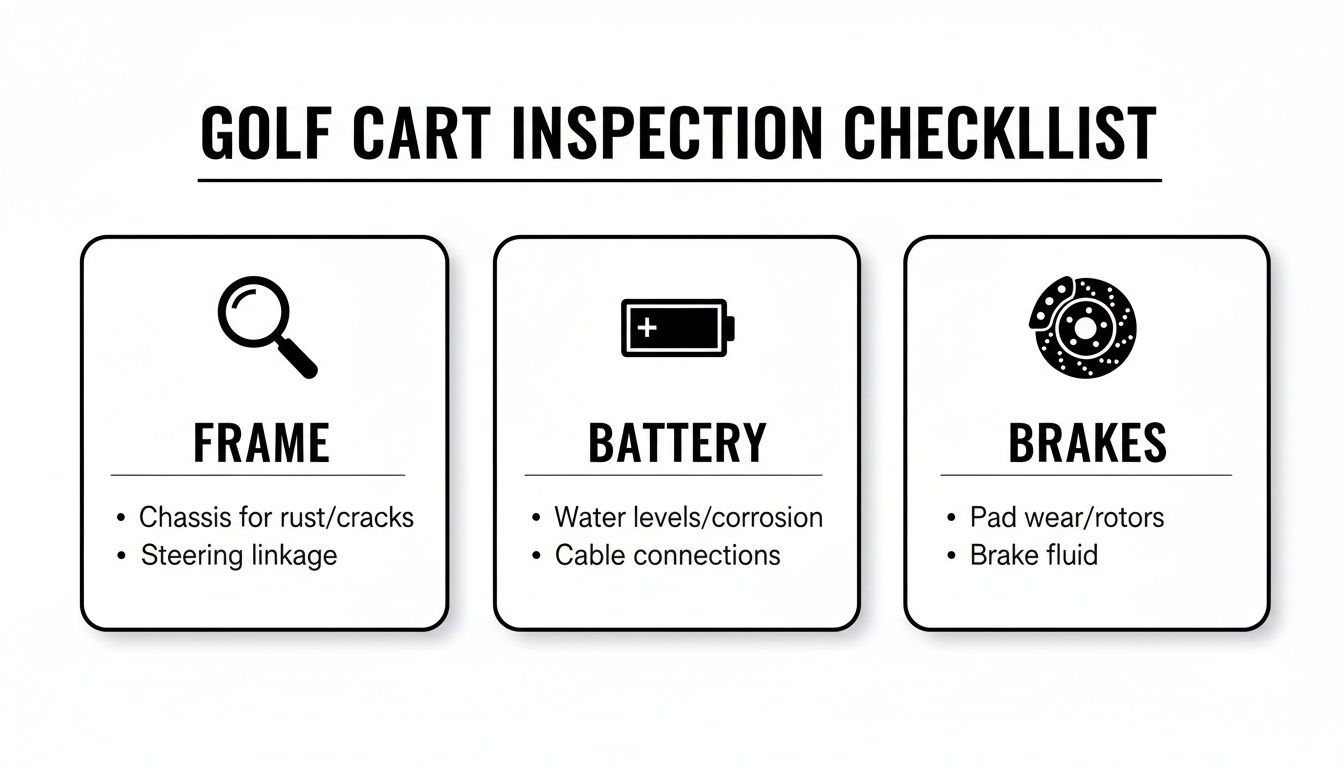
This checklist highlights the non-negotiables: the frame's integrity, the battery's health, and the brakes' performance. These are the foundations of a safe ride.
Navigating Street Legal Requirements
Planning to drive your cart on public roads? Then it needs to be a street-legal Low-Speed Vehicle (LSV). The rules for what makes a golf cart road-ready are strict and can change from one town to the next. A good local dealer isn't just helpful here—they're essential.
A standard golf cart is built for the fairway, not the roadway. To legally become an LSV, a cart must be equipped with specific safety features.
It's easy to get confused about the differences. This table breaks down what separates a standard cart from a true LSV.
Street-Legal LSV vs. Standard Golf Cart Checklist
| Feature/Requirement | Standard Golf Cart | Street-Legal LSV |
|---|---|---|
| Top Speed | 12-14 mph | 20-25 mph |
| Headlights & Taillights | Often optional | Required |
| Brake Lights & Turn Signals | Typically not included | Required |
| Windshield | Basic acrylic screen | Required (DOT-approved) |
| Seat Belts | Optional | Required for all seating |
| Vehicle Identification Number (VIN) | No | Required (17-digit VIN) |
| Mirrors | Optional side mirrors | Required (rearview/side mirrors) |
| Reflectors | Basic | Required on all corners |
A trustworthy dealer does more than just sell you a vehicle. They ensure it meets every single local ordinance, handle the paperwork, and walk you through the registration and titling process. This expertise protects you from fines and legal headaches down the road. For a closer look at the regulations, check out our guide that asks, "Are golf carts street legal?" to get the full picture.
How a Top-Tier Dealer Program Benefits You
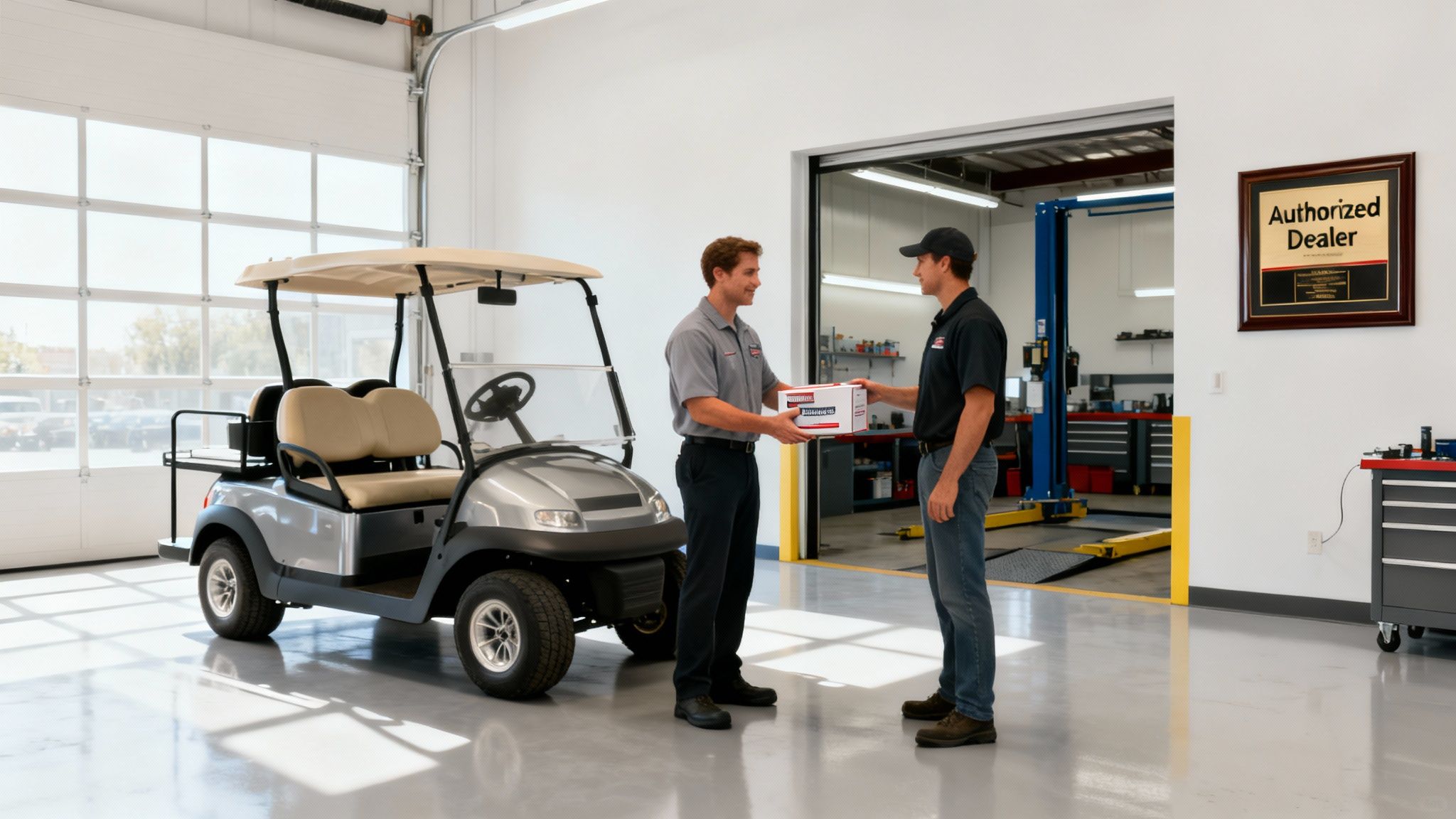
When you start searching for "golf cart dealers near me," it's natural to get caught up in the models, colors, and features. But one of the most critical factors for your long-term happiness with a cart happens behind the scenes: the dealer's relationship with the manufacturer.
A strong dealer program, like the one Solana EV offers its partners, is far more than a simple sales agreement. It’s a mark of quality that directly impacts everything from your buying experience to service appointments years down the road.
Think of an authorized dealer as a true extension of the factory. They aren’t just moving inventory; they've been vetted, trained, and equipped to be brand experts. This partnership creates a support system that you, the owner, can rely on.
Access to Specialized Knowledge and Training
The biggest advantage of working with an authorized dealer is their expertise. Manufacturers with serious dealer programs don't just ship crates of carts—they invest heavily in making sure the dealer's team knows the product inside and out. The technician working on your cart isn't just a general mechanic; they're a specialist trained at the factory level.
This kind of in-depth training covers things you won't find at a generic repair shop:
- Complex Diagnostics: They're fluent in the specific error codes and electrical systems unique to the brand.
- Proper Assembly: They know the precise torque specs and assembly steps needed for peak performance and safety.
- The Latest Updates: These technicians are the first to know about new software, service bulletins, and model-year tweaks.
When a dealer is part of the Solana EV network, for instance, their team gets ongoing training on the unique engineering of models like the rugged Solana XA or the refined Solana G. This means whether you're in for routine maintenance or a tricky repair, the job gets done right the first time, protecting your investment.
Choosing an authorized dealer means your cart is being serviced by someone who understands its engineering from the ground up. They aren't guessing or learning on your vehicle; they're applying proven, factory-approved methods.
Guaranteed Genuine Parts and Faster Repairs
There's nothing worse than having your golf cart stuck in the shop waiting on a back-ordered part. Dealers in an official program have a direct line to the manufacturer's supply chain, which gives you a huge advantage. They are required to keep a healthy stock of genuine OEM (Original Equipment Manufacturer) parts.
Using genuine parts is non-negotiable for keeping your cart running like new. These are the components it was designed with, ensuring a perfect fit and function. Aftermarket parts can be a gamble, sometimes causing more problems than they solve.
This direct parts pipeline means:
- Less Downtime: With common parts in stock, repairs happen much, much faster.
- Warranty Protection: Using genuine parts is often required to keep your manufacturer's warranty valid.
- Peak Performance: OEM parts ensure your cart performs exactly how the engineers intended.
This direct relationship cuts out the middleman, guaranteeing the parts used for your service are the same quality as those used to build the cart.
A Better Buying Experience from Start to Finish
Finally, a strong dealer program simply creates a better, more professional environment for you. Manufacturers often give their authorized partners exclusive resources, from better financing options to marketing support, which results in a smoother buying process.
These dealers are held to a higher standard. They’re the first to get new models and have the deepest knowledge of what’s coming next. When you buy from an authorized dealer, you’re not just buying a cart; you’re gaining access to a support network that runs all the way back to the manufacturer, ensuring you get the world-class experience you deserve.
Wrapping Up: Your Final Questions Answered
Even with all your research done, a few questions often pop up right before you’re ready to pull the trigger. It’s completely normal. Think of this as your final checklist to clear up any lingering doubts and help you walk into that dealership with total confidence.
Let’s tackle some of the most common questions I hear from buyers.
Is It Better to Just Buy a Used Cart from a Guy on Facebook Marketplace?
I get it, the temptation to snag a cheap cart from a private seller is real. But this route is packed with risk. A private sale is almost always "as-is," meaning the second you hand over the cash, that cart—and any of its hidden problems—is 100% yours. If the motor dies the next day, you’re out of luck.
Buying used or refurbished from a real dealer gives you a safety net. Here’s why:
- They've Inspected It: Reputable dealers put their used carts through a full inspection and service before they ever hit the showroom floor.
- You Might Get a Warranty: Many dealers will offer at least a limited warranty on their pre-owned inventory. That alone is worth its weight in gold.
- They Know the History: A good dealer might even have the cart's full service records, especially if it was a trade-in from a local customer.
You might save a few hundred bucks with a private sale, but one major repair can wipe out those savings in a heartbeat. The peace of mind a dealer provides is something a private seller just can't offer.
How Much Can I Haggle on the Price?
Everyone wants a great deal, but it helps to be realistic. The profit margins on brand-new golf carts aren't nearly as high as they are in the car world, so you won’t see thousands of dollars knocked off the sticker price. You’ll usually find a bit more wiggle room on used carts or custom builds.
Here’s a pro tip: instead of fixating only on the final price, try negotiating on the extras. Dealers have much better margins on accessories. You'll have more luck asking them to throw in a custom enclosure, upgrade the wheels, or add a Bluetooth sound system at a discount. It's a win-win.
Remember, the cheapest deal isn't always the best deal. A dealer who provides fantastic service and stands behind their product offers value that lasts long after you've forgotten the price. Poor after-sale support can make a "bargain" very expensive.
What If I Don't Live Close to the Dealership for Service?
This is a fantastic question and one you absolutely need to ask. The best golf cart dealers near me have already solved this problem by offering mobile service. They have dedicated vans stocked with parts and tools, and their technicians can come right to your driveway for routine maintenance or minor repairs.
Before you commit, get the details on their mobile service program:
- What’s their service radius? How far will they travel?
- Do they charge a trip fee?
- What kind of work can they actually do on-site versus in the shop?
Knowing this can make a dealer 30 miles away feel just as convenient as one that's 5 miles down the road. A strong mobile service program is a game-changer for long-term ownership.
Do I Really Need Insurance for a Golf Cart?
Yes, you absolutely do. This is a common and costly mistake. Your homeowner's insurance policy almost certainly does not cover your golf cart, especially once it leaves your property.
For a street-legal LSV, insurance is non-negotiable—you'll need to show proof of it to get the vehicle registered, just like a car. This policy primarily covers liability if you're in an accident. But even for standard carts used in a golf community, many HOAs are now requiring owners to carry their own liability insurance.
A good dealer can be a great resource here, as they can usually recommend local insurance agents who specialize in golf cart and LSV policies and can get you set up quickly.
Ready to connect with a dealer who offers premium vehicles and world-class support? Solana EV partners with the best in the business to ensure you get an exceptional experience from your first test drive to your ten-thousandth mile. Find a certified dealer near you and discover the difference quality makes. Learn more at https://solanaev.com.