
Choosing the right golf carts for your course is one of the most critical decisions you'll make as a manager. It's an investment that echoes across your entire operation, shaping everything from the guest experience to your bottom line. Your fleet isn't just a utility expense; it's a mobile extension of your brand, capable of either elevating a visitor's day or leaving a sour taste.
Why Your Fleet Strategy Matters More Than Ever
Picking the right vehicles goes far beyond a simple comparison of spec sheets. You have to think about how each cart acts as a roving ambassador for your course.
Imagine the quiet, smooth glide of a high-performance electric cart across the fairway. That experience communicates quality and serenity. A clean, comfortable, well-maintained fleet sends a clear message to your guests: we care about your enjoyment, from the moment you arrive until you sink that final putt. It's an impression that sets the tone for the entire round.
A smart fleet investment really comes down to a few key areas we'll dig into:
- The quiet efficiency of electric power versus the old-school rumble of gas.
- The kind of durable engineering that can handle the grind of daily use for thousands of hours.
- The modern features that separate a premium experience from a merely functional one.
The Growing Market for Golf Carts
The demand for top-tier golf carts isn't just something you feel on a busy Saturday; the numbers back it up. The U.S. market hit USD 812.1 million in 2024 and is on track to reach a staggering USD 1.23 billion by 2032.
This boom is fueled by the constant need for fleet renewals across the country's 16,000+ courses and the rising use of carts in planned communities. You can learn more about the U.S. golf cart market trends to see how this growth opens up new opportunities for your business.
This isn't just a fleeting trend; it's a fundamental shift in the industry. Electric carts are at the forefront, with a projected $365.7 million in absolute dollar growth expected between 2024 and 2032. Sustainability is no longer a buzzword—it's a core demand from top resorts and courses.
Ultimately, this guide is here to show you how modern, high-performance electric options—like the ones we build at Solana EV—are engineered from the ground up to meet the demands of today's premier golf destinations. By getting a handle on these dynamics, you can build a smarter, more profitable fleet strategy that will pay off for years.
Electric Versus Gas Carts: A Fleet Manager's Comparison
For any fleet manager, the choice between electric and gas power is one of the most fundamental decisions you'll make. It’s a choice that goes far beyond the engine, shaping the entire operational DNA of your course. This isn't just about how the carts move; it's a strategic call that ripples through guest satisfaction, long-term budgets, and even your brand's reputation.
Think of it as picking between two distinct philosophies. The gas-powered cart is the traditional workhorse—it's familiar and powerful, no doubt. But it brings along the constant noise, the fumes, and the headaches of fuel management. An electric cart, on the other hand, represents a more modern, refined approach. It offers a silent, smooth glide that can completely transform the atmosphere of a peaceful morning round.
The Financial Equation: Cost Versus Value
It's easy to get fixated on the upfront purchase price. Gas carts can sometimes look more appealing with a lower initial sticker price, which is always tempting for operations watching the budget. But that initial number is just the first chapter of a much longer financial story.
The real metric to watch is the total cost of ownership (TCO), and that’s where the picture starts to change dramatically. Electric carts almost immediately pull ahead with significantly lower running costs. Fuel is a major, and often volatile, expense for a gas fleet. Electricity, by comparison, is considerably cheaper and its price is far more stable.
A study from the National Golf Foundation found that an average 18-hole course can pocket $2,500 to $4,000 in savings per year just by switching from gas to electric carts, thanks to lower fuel and maintenance costs. This reframes the decision from a short-term expense to a long-term investment.
Maintenance is the other arena where electric fleets really shine. Gas engines are complex, with hundreds of moving parts—belts, spark plugs, oil filters, you name it—all requiring regular, skilled service. An electric motor is beautifully simple with very few moving parts. That translates directly to less downtime, fewer repair bills, and lower labor costs.
Deciding between electric and gas often comes down to a handful of core priorities. This table breaks down the key considerations to help you weigh the pros and cons for your specific fleet.
Electric vs Gas Golf Cart Fleet Analysis
| Consideration | Electric Golf Carts (e.g., Solana EV) | Gas-Powered Golf Carts |
|---|---|---|
| Upfront Cost | Typically higher initial purchase price per cart. | Often a lower initial investment per cart. |
| Operating Costs | Significantly lower; electricity is cheaper than gas. No oil changes or fuel filters. | High and volatile due to fluctuating gas prices, plus costs for oil, filters, and spark plugs. |
| Maintenance | Minimal. Fewer moving parts mean less frequent and less complex servicing. | Regular and extensive. Requires engine tune-ups, oil changes, and belt replacements. |
| Guest Experience | Superior. Near-silent operation preserves course tranquility. No exhaust fumes. | Poor. Engine noise disrupts the peaceful environment. Unpleasant exhaust fumes. |
| Performance | Excellent. Modern AC motors provide instant torque for powerful hill-climbing. | Strong, consistent power, but often with jerky acceleration. |
| Environmental Impact | Zero on-site emissions, enhancing the brand's eco-friendly reputation. | Produces greenhouse gas emissions and can lead to fuel spills. |
| Daily Operations | Simple plug-and-charge routine at the end of the day. | Requires managing fuel storage, refueling carts, and handling flammable liquids. |
Ultimately, while the initial price tag for gas carts can be tempting, the long-term operational savings and superior guest experience of an electric fleet often provide a much stronger return on investment.
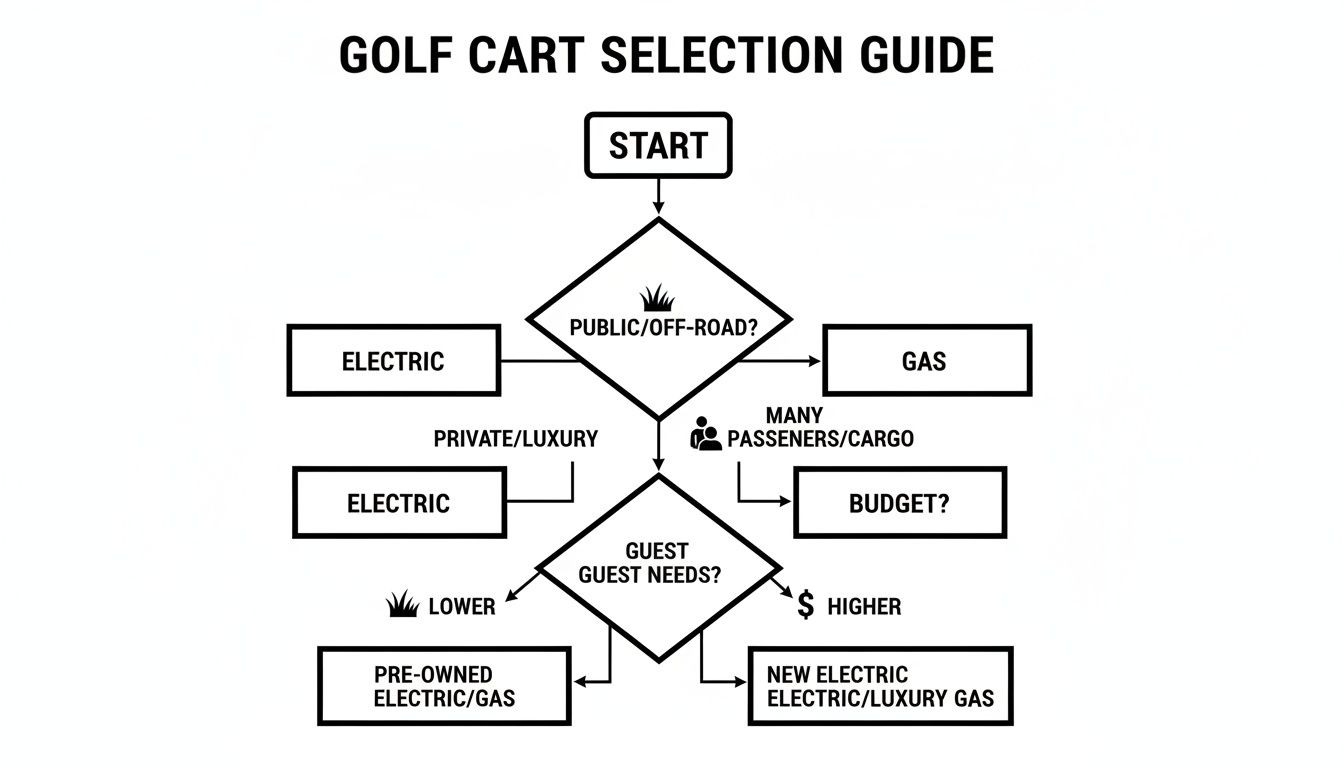
As the flowchart shows, for premium, private courses where the guest experience is everything, the silent, eco-friendly ride of an electric cart is almost always the deciding factor.
The On-Course Experience and Brand Impact
Beyond the balance sheet, your choice of cart has a massive impact on the golfer's experience. Let's face it, people come to a golf course for tranquility and focus. Noise pollution is a huge detractor, and the constant rumble and sputter of a gas fleet can shatter that peaceful environment.
Electric carts operate in near silence, preserving the natural sounds of the course. It’s a subtle difference, but a powerful one that elevates the premium feel of your property. It sends a clear message to your guests: you care about their experience, right down to the smallest details.
What's more, environmental responsibility isn't just a buzzword anymore—it's a core expectation for many customers. Running an electric fleet of golf carts for golf is a highly visible commitment to sustainability. With zero on-site emissions, you shrink your course's carbon footprint and appeal to an increasingly eco-conscious clientele. This forward-thinking stance can become a powerful marketing tool that sets your brand apart. For a more detailed breakdown, check out our complete guide on whether an electric or gas golf cart is the right fit for you.
Performance and Operational Simplicity
There’s a stubborn myth out there that gas carts are simply more powerful. That might have been true years ago, but modern electric motors—especially the AC drive systems found in Solana EV models—deliver instant torque. The result is incredible hill-climbing ability and a smooth, responsive acceleration that often leaves their gas-powered cousins behind.
From an operational standpoint, managing an electric fleet is just plain easier. Forget coordinating fuel deliveries and dealing with messy oil changes. Your staff's main task becomes plugging the carts in at the end of the day. With modern battery management systems and smart chargers, the whole process is efficient and virtually automatic, ensuring your fleet is 100% ready for that first morning tee time. This streamlined workflow frees up your maintenance crew to tackle other critical needs around the course.
What Really Makes a Great Fleet? Decoding the Features
What’s the difference between a good golf cart and a great one? It’s all in the details. A truly high-performance fleet delivers a real return on your investment while giving your guests an experience they'll remember. When you're assessing golf carts for golf, the small things add up, and they generally fall into three key areas.

Performance and Durability
First and foremost, the foundation of any reliable fleet is its raw power and the toughness to handle thousands of hours on the course. A cart that groans its way up a hill or feels flimsy under a player’s weight instantly cheapens the experience and creates a maintenance nightmare for your crew.
Think of the motor as the heart of the cart. Modern AC motors deliver instantaneous torque—that's the force that gets the cart moving and powers it up steep inclines without hesitation. No more sluggish starts or worrying about rolling backward on hilly fairways. For a deeper look at what separates the best from the rest, our guide breaks down the technology behind high-performance golf cart motors.
But it’s not just about the motor. You also need to look at the bones of the vehicle:
- Advanced Suspension: A quality suspension system is non-negotiable. It smooths out the bumps and divots, making the ride between shots as enjoyable as sinking a long putt.
- Robust Frame Construction: Look for frames built from high-strength steel or, even better, rust-proof aluminum. A solid frame is critical for longevity and safety, especially for a commercial fleet that's in constant motion day in and day out.
Modern Battery Technology
The power source is arguably the most critical component in today's electric golf cart fleets. The old-school lead-acid batteries are quickly becoming a thing of the past, and for good reason. Lithium-ion is the new standard, and it’s not just an upgrade; it’s a complete game-changer for how you manage your fleet.
Lithium-ion batteries have a much higher energy density, packing more power into a lighter frame. This translates directly into more range, easily getting your carts through 36 holes or more on a single charge.
They also charge incredibly fast. A lead-acid battery might take 8-10 hours to fully juice up, but a lithium-ion pack can be ready to go in just a few hours. That means less downtime and more carts available when you need them most. Plus, they deliver consistent power right up until they're nearly empty, so the cart feels just as zippy on the 18th hole as it did on the 1st.
From a fleet manager's perspective, the benefits are crystal clear. Lithium-ion batteries can last up to five times longer than traditional ones and require zero maintenance—no more watering cells. This dramatically lowers your total cost of ownership over the life of the cart.
Guest-Centric Amenities
Finally, a truly top-tier fleet thinks about the golfer. The small comforts and conveniences are what elevate the experience from average to premium, keeping players coming back and telling their friends.
These aren't just bells and whistles; they're thoughtful touches that turn the cart into a comfortable home base for the entire round. It shows your guests you’ve thought about their enjoyment from the moment they tee off.
Consider adding features that create that premium feel:
- Ergonomic Seating: Contoured, cushioned seats make a huge difference over a four-hour round, offering far more comfort than a standard flat bench.
- USB Charging Ports: In a world where everyone is connected, giving players a spot to charge their phone or rangefinder is a simple amenity they’ll genuinely appreciate.
- Integrated Coolers: A built-in cooler for drinks and snacks is an easy win, adding a touch of luxury and practicality.
- Premium Sound Systems: Bluetooth-enabled speakers let golfers play their own music, personalizing their day on the links.
By focusing on these three pillars—tough performance, modern power, and guest-focused amenities—you’ll build a fleet that not only runs like a dream but also becomes a standout feature of your course.
Smart Fleet Management to Maximize Your Investment
A top-tier fleet of golf carts for golf is a massive asset for any course, but its real value comes from a smart, proactive management plan. Buying the carts is just step one. The real work is in protecting that investment by maximizing their lifespan, keeping downtime to an absolute minimum, and ensuring every single cart is ready to roll when you need it. This isn't about just fixing things when they break; it's about building a system that stops problems before they ever start.
Think of your fleet like a roster of professional athletes. You wouldn't wait for an injury to happen before you started training and conditioning. The same goes for your carts. A "wait-and-see" approach, where you only service a cart after it fails, is a surefire way to run into expensive emergency repairs and—even worse—have carts out of service on a packed Saturday.
Building a Proactive Maintenance Schedule
The heart of great fleet management is a solid preventative maintenance schedule. While modern electric fleets are much simpler to maintain than their gas-powered cousins, being disciplined about upkeep is still critical. The whole point is to catch small, easy-to-fix issues before they turn into major, course-disrupting headaches.
A well-structured schedule makes sure nothing falls through the cracks and keeps your fleet in fantastic shape. Here’s a simple framework to get your team started:
- Daily Checks: These are quick, visual once-overs that staff can do in minutes. Check tire pressure, give the brakes a quick test, and make sure the lights work. This is your first line of defense.
- Weekly Tasks: Once a week, get a little more hands-on. This is the time to check battery water levels (if you have traditional lead-acid batteries), clean off any corrosion on the terminals, and give the suspension a look for wear and tear.
- Monthly Routines: Every month, dig a bit deeper. Check the steering and suspension alignment, test the charging system to confirm it's delivering a full, proper charge, and lubricate all the moving parts.
- Annual Service: A full, professional service once a year is non-negotiable. This should include a complete brake system inspection, a motor check-up, and a detailed battery health analysis to see how much life it has left.
Setting aside just a few hours each week for these proactive checks can add years to the life of your fleet. It flips maintenance from an unpredictable expense into a predictable, value-adding activity.
Streamlining Operational Logistics
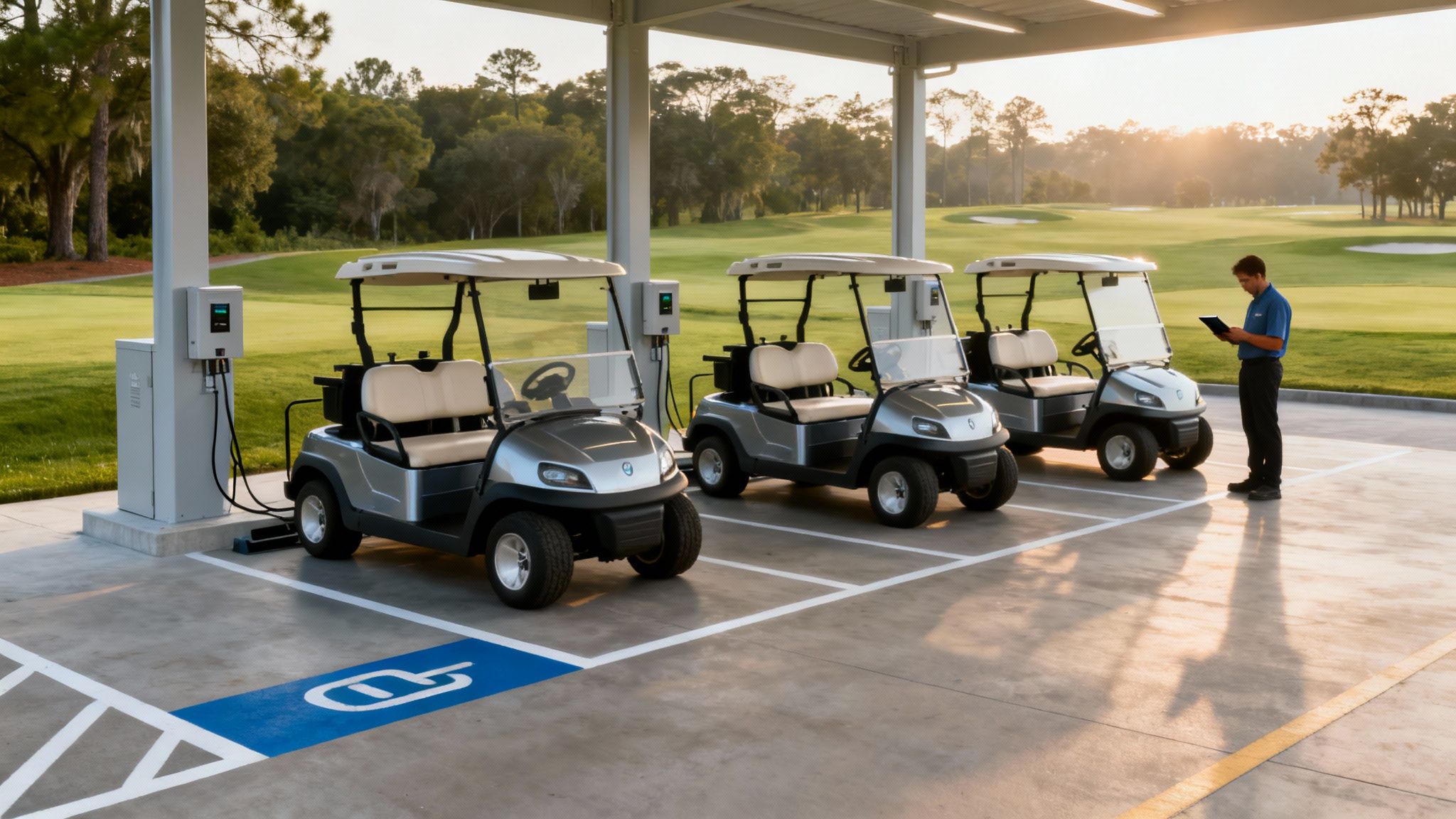
Smart management goes beyond wrenches and check-ups; it's also about how you handle the day-to-day flow. Something as simple as the layout of your charging and storage area can have a huge impact on your efficiency. A well-designed charging station, with clear access and no tangled mess of cords, makes the end-of-day routine quick and easy. It cuts down on labor and guarantees every single cart is fully charged and ready for the morning rush.
Putting a digital tracking system in place can also be a total game-changer. By assigning a unique number to each cart and using a simple spreadsheet or software to log its usage hours, service dates, and any reported issues, you start building an incredibly valuable history. This data helps you spot trends—maybe one cart always seems to have battery trouble or another is chewing through tires faster than the rest.
This kind of information allows you to make decisions based on data, not just guesswork. You can rotate carts to even out the wear and tear across the entire fleet. To dive deeper into setting this up, check out our guide on fleet management best practices for more advanced strategies. This methodical approach ensures your fleet runs like a well-oiled machine, not just a collection of carts, maximizing the return on your investment.
Preventative Maintenance Checklist for Electric Golf Cart Fleets
A consistent checklist is the best tool for keeping your team on track and your fleet in peak condition. Use this as a starting point and adapt it to your specific models and usage patterns.
| Maintenance Task | Daily Check | Weekly Check | Monthly Check | Annual Service |
|---|---|---|---|---|
| Check Tire Pressure | ✓ | |||
| Test Brakes & Lights | ✓ | |||
| Visual Inspection for Damage | ✓ | |||
| Clean Battery Terminals | ✓ | |||
| Check Battery Water Levels | ✓ | |||
| Inspect Suspension & Steering | ✓ | |||
| Lubricate Moving Parts | ✓ | |||
| Full Brake System Inspection | ✓ | |||
| Motor & Controller Check | ✓ | |||
| Professional Battery Health Test | ✓ |
Sticking to a schedule like this turns maintenance from a chore into a powerful tool for asset protection, ensuring your carts deliver reliable performance for years to come.
Making Safety and Compliance Your Top Priority
When you're building a fleet of golf carts for a golf course or resort, it's easy to get caught up in performance specs and cool features. But the real foundation of a successful operation is an absolute, no-compromises commitment to safety and following the rules. Think of it less as a box-ticking exercise and more as a shield that protects your guests, your staff, and your business from risk.
After all, one preventable accident can do more than just cause a headache—it can tarnish your reputation and open you up to serious liability. Getting a handle on the rules of the road, both on your private paths and any public streets your carts might cross, is non-negotiable. A safe, compliant fleet is a professional fleet, and that's exactly the impression you want to make.
Golf Carts vs. LSVs: What's the Real Difference?
It’s a common point of confusion, but it's vital to understand that not all "golf carts" are the same. The distinction between a standard golf cart and a street-legal Low-Speed Vehicle (LSV) is a big deal, especially for sprawling resorts where vehicles might need to use public roads to get from one area to another.
A traditional golf cart is built for one thing: driving on a golf course. Its top speed is usually under 20 mph, and it doesn't have the safety equipment needed to legally mingle with regular traffic.
An LSV, on the other hand, is a specific federal vehicle classification. These vehicles are designed to be driven on most public roads with speed limits of 35 mph or less. To earn that "street-legal" status, an LSV has to come factory-equipped with a whole host of safety gear.
The must-haves for an LSV typically include:
- Headlights, taillights, turn signals, and brake lights
- An impact-resistant windshield (often polycarbonate)
- DOT-approved seat belts for all passengers
- A horn and both rearview and side-view mirrors
For a resort with guest villas, a spa, and restaurants connected by public streets, an LSV-compliant fleet isn't a luxury—it's a must-have for operating legally and safely. That's why many of the models from Solana EV are built to these higher standards right out of the box.
The Non-Negotiable Safety Features for Your Fleet
Whether you're running standard carts or a full LSV fleet, some safety features should be standard issue across the board. Outfitting your carts correctly from the start is the first step toward building a culture of safety that permeates your entire property.
Look at each cart as its own little safety bubble. Your goal is to give staff and guests total peace of mind every time they turn the key.
A well-equipped cart is proactive, not reactive. You're not just trying to meet the bare minimum; you're showing guests that their well-being is your top priority, which goes a long way in preventing incidents on your property.
This focus on safety is fueling major growth in the industry. The global golf cart market is expected to jump from USD 2.30 billion in 2025 to USD 3.68 billion by 2035. A huge driver of that growth is the demand from resorts and large communities that need safer, more versatile vehicles for their guests. You can get a deeper look into the booming global golf cart industry to see where things are headed.
Putting Your On-Site Safety Rules into Practice
Great equipment is just one piece of the puzzle. You also need a clear, enforceable set of rules for how your fleet is actually used. Think of these protocols as your operational playbook for safety, making sure every driver knows what's expected of them.
A great place to start is with a simple pre-ride inspection checklist for your staff. Before a cart goes out, a team member should do a quick once-over to confirm the brakes, steering, lights, and tires are all good to go. It's a two-minute task that can catch a small issue before it becomes a big problem.
Next, lay out a clear set of rules for your guests. Post them in every cart, at the rental desk, and maybe even in your welcome packet.
Your house rules should cover the basics:
- Driver Requirements: Set a minimum age and always require a valid driver's license.
- Occupancy Limits: Make it crystal clear how many people are allowed in each cart. No exceptions.
- Safe Operation: Simple stuff—no reckless driving, and everyone stays seated while the cart is moving.
- Paths and Boundaries: Clearly mark where carts are allowed to go to protect your grounds and keep pedestrians safe.
When you pair properly equipped vehicles with common-sense rules that are consistently enforced, you create a complete safety system. And that system is what protects your most important assets: your guests and your good name.
How Solana EV Can Power Your Golf Operations
Choosing the right fleet of golf carts for golf operations is about more than just buying equipment; it’s about finding a partner you can count on. You need a perfect mix of rugged performance, top-tier comfort for your guests, and operational support that lasts for the long haul. That’s exactly where Solana EV comes in.
We designed our entire lineup to solve the real-world problems that courses and resorts deal with every single day. We build vehicles that can tackle tough terrain without making a sound, all while delivering the kind of premium experience people expect from a high-end property.
More Than Just a Golf Cart
Here at Solana EV, we don’t just see a vehicle; we see an essential part of your course’s reputation and bottom line. That’s why our carts are built from the ground up to deliver on what truly matters to fleet managers and serious golfers.
Every model in our fleet comes standard with:
- Powerful Performance: Our AC motors provide instant torque, which means no struggling on steep hills and smooth, consistent speed across the entire course.
- All-Day Range: Forget about range anxiety. Our advanced lithium-ion batteries are built to handle 36+ holes on a single charge with power to spare.
- Guest-Focused Comfort: We’ve thought about the little things, from supportive, ergonomic seating to smart, integrated amenities that make the ride part of the experience.
This approach ensures your fleet isn't just a way to get from tee to green—it becomes a memorable part of a fantastic day on the course.
A Partnership for Long-Term Success
Beyond the carts themselves, our real mission is to support your operation through the Solana EV dealer program. We know that managing a fleet is a huge undertaking, so we provide end-to-end support specifically for commercial clients. We’re not just trying to sell you a cart; we want to make sure you get every bit of value out of your investment for years.
We believe a strong partnership is the foundation of a successful fleet. Our goal is to equip your team with the tools and knowledge needed to run a smooth, efficient, and profitable operation.
Our dealer program gives you dedicated resources to help your business grow. We offer expert maintenance training to bring your staff up to speed, reliable operational support whenever you need a hand, and strategic fleet planning to help you scale smartly. We’re in this for the long run—committed to being a partner who helps you power your operations and wow your guests, round after round.
Got Questions? We've Got Answers.
When you're talking about investing in a new fleet of golf carts, a lot of questions come to mind. It’s a big decision. Let’s walk through some of the most common things course managers and operators ask, so you can get the straightforward answers you need.
How Long Will a New Electric Golf Cart Fleet Really Last?
This one boils down to two things: what you buy and how you treat it. A high-quality electric cart from a reputable brand like Solana EV, combined with a solid maintenance plan, should easily give you 7 to 10 years of reliable service. I've even seen well-cared-for fleets push beyond that.
The secret is staying on top of it. If you're diligent with battery care, routinely check brakes and tires, and store the carts properly, you'll get the most out of your investment. On the flip side, if you let things slide, you could be looking at major repairs and declining performance in as little as 3 to 5 years.
How Do I Figure Out the ROI on Switching to Electric?
Calculating the return on investment (ROI) for going electric is simpler than you might think. First, pull the numbers on what you're spending on your gas fleet for a full year. That means every gallon of fuel, every oil change, all the spark plugs and filters, and, crucially, the labor hours your team spends on engine work.
Now, look at the electric side. Your big new expense is electricity, which is a fraction of the cost of gas. Plus, maintenance costs plummet because you're getting rid of all those moving engine parts.
When you pit the annual savings against the initial investment for the new carts, the math becomes pretty clear. Most courses see a complete return on their investment within just 3 to 4 years. It’s one of the smartest long-term financial moves a course can make.
Can Modern Electric Carts Actually Handle Hilly Courses?
Absolutely. That old reputation for weak electric carts is completely outdated. Today's electric carts are built for power, especially those with high-performance AC motors, which come standard in every Solana EV model. They deliver torque the second you press the pedal.
What does that mean on the course? It means your carts won't hesitate or struggle on steep hills. They just go. Honestly, they often out-climb their gas-powered cousins, giving your golfers a smooth, powerful ride no matter how challenging the terrain gets.
What are the "Must-Have" Custom Features for a Great Guest Experience?
If you want to make a lasting impression on your golfers, it's the little things that count. Focus on upgrades that add real comfort and convenience—that's what turns a good round into a great one and gets people talking.
Here's what I always recommend prioritizing:
- Better Seats: Ditch the standard flat benches. Upgraded, contoured seats made from marine-grade vinyl are way more comfortable and hold up better over time.
- USB Charging Ports: This isn't a luxury anymore; it's an expectation. Golfers need a place to charge their phones and GPS devices.
- Built-In Coolers: An integrated cooler is a huge plus. It’s a simple feature that guests absolutely love, especially on a hot day.
- Good Sound Systems: A set of Bluetooth speakers lets guests play their own music and personalize the experience. It adds a modern, fun vibe to their round.
Investing in these details shows you care about the guest experience, and that's how you build a stellar reputation.
Ready to build a fleet that elevates your course and impresses your guests? Explore the full range of high-performance electric vehicles at Solana EV and discover how our dealer program can support your operational goals. Learn more at solanaev.com.