
At its core, a handicap golf cart is a vehicle thoughtfully redesigned to give people with physical limitations their mobility and independence back. It’s far more than just a ride from one place to another; these carts are specifically engineered for accessibility. They often include key modifications like swivel seats, hand controls, and even wheelchair lifts, all to make sure everyone can enjoy the golf course, resort grounds, or their own community.
Redefining Freedom and Inclusivity
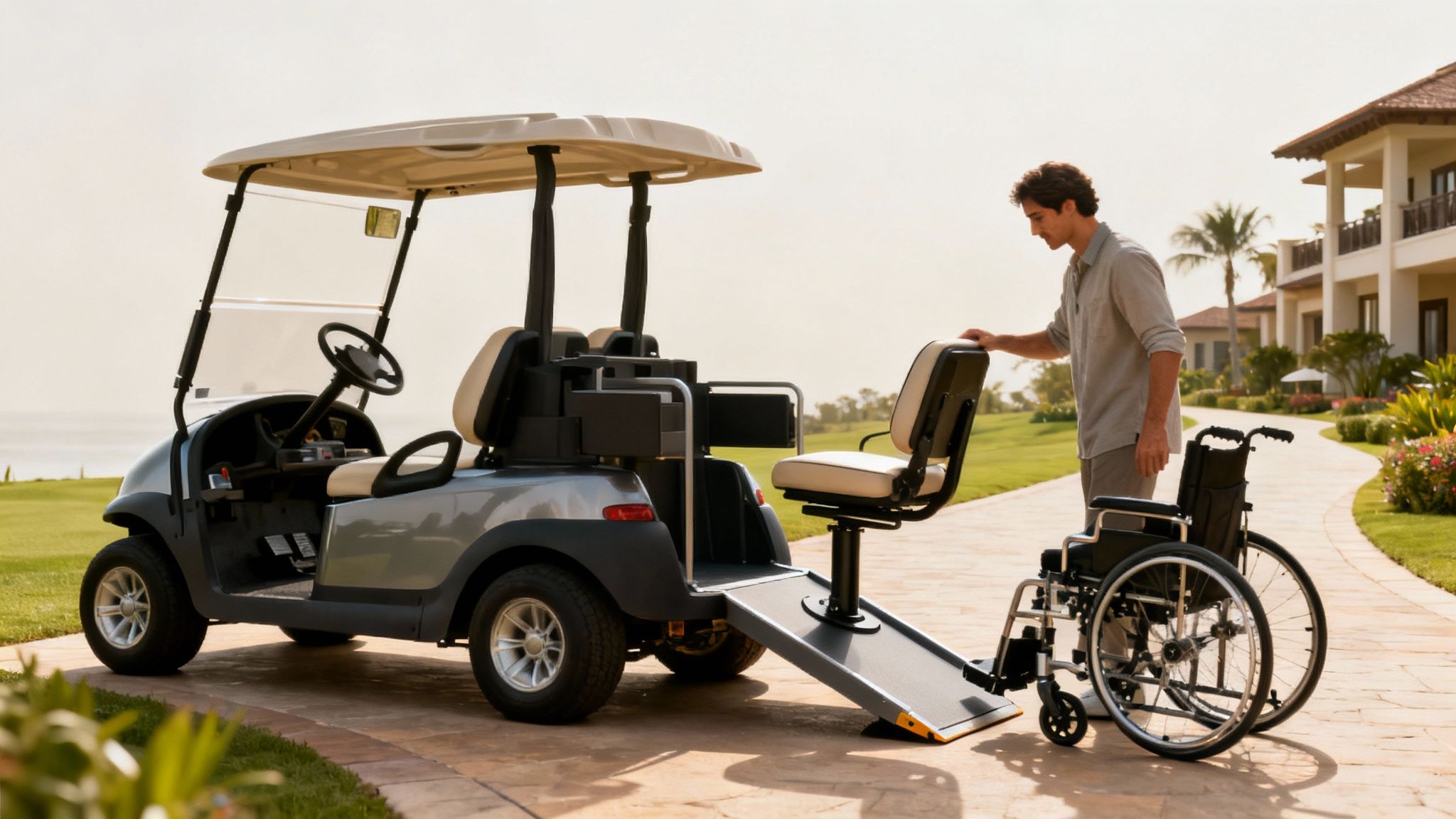
A handicap golf cart takes a standard vehicle and turns it into a powerful tool for independence. Think of it this way: a regular golf cart is like an off-the-rack shirt—it works for most people just fine. An accessible cart, on the other hand, is like a custom-tailored suit. It's built to fit the specific needs of its user, ensuring a perfect, comfortable, and safe experience.
These vehicles are crucial for building more inclusive environments, whether on a sprawling golf course, within a gated community, or across a luxury resort. By breaking down mobility barriers, they empower people to participate in activities they might otherwise have to skip. For a resort manager, offering a fleet of accessible carts isn't just a nice gesture; it's a direct investment in the guest experience, showing every visitor they are welcomed and valued.
The Growing Need for Accessible Mobility
In recent years, the demand for accessible golf carts has really taken off. This isn't surprising when you consider aging populations, more inclusive policies at resorts, and the simple fact that golf carts are now used for general transport in many communities. With over 15,000 golf courses in the U.S. alone, these vehicles have become essential.
The numbers back this up. The American golf cart market was valued at $1,191.2 million in 2018 and is projected to climb to $1,627.6 million by 2026, according to research from Allied Market Research. This trend points to a clear shift: golf carts have evolved from a niche sports accessory to a mainstream mobility solution.
A truly accessible golf cart isn't an afterthought. It's a deliberate design that puts safety, comfort, and independence first, making every journey seamless and empowering for the rider.
Key Distinctions Between Standard and Accessible Carts
To really appreciate the value of an accessible cart, it helps to see how it differs from a standard model. While a regular cart gets you from point A to B, a handicap golf cart is packed with specialized features to solve specific mobility challenges.
These aren't just bolt-on accessories; they are fully integrated systems designed for reliability and intuitive use. These upgrades are critical because they need to safely support not just the passenger but also their equipment, which is why it's so important to understand a vehicle's payload capacity.
This table breaks down the fundamental differences at a glance.
Standard vs Handicap Golf Cart Key Differences
| Feature | Standard Golf Cart | Handicap Golf Cart |
|---|---|---|
| Seating | Fixed, forward-facing bench seats | Swivel seats for easy transfer, or open space for a wheelchair |
| Controls | Standard foot pedals for acceleration and braking | Hand-operated controls for users with limited leg mobility |
| Accessibility | High step-in height with no assistance features | Ramps or lifts for wheelchair access; grab bars for stability |
| Security | Basic seatbelts (often optional) | Securement systems for wheelchairs and mobility devices |
As you can see, every modification on a handicap golf cart is designed with a specific purpose in mind—to remove an obstacle and make movement easier and safer.
What Really Makes a Golf Cart Accessible?
Turning a standard golf cart into a vehicle that genuinely offers independence is about more than just bolting on a few accessories. The best handicap-accessible carts are thoughtfully designed from the ground up, with specialized features that work together to create a seamless, dignified experience.
These are the core components that transform a cart from just a vehicle into a gateway for freedom. Each one solves a specific mobility challenge, from the moment you approach the cart to the second you park it.
Effortless Entry and Exit Systems
The first, and often biggest, hurdle is simply getting in and out of the cart. For anyone with limited mobility, this can be a real struggle. That’s where specialized seating and lifts make all the difference.
- Swivel Seats: Picture a seat that turns to face you. That’s exactly what a swivel seat does. It can rotate up to 90 degrees, letting someone sit down from a standing position or transfer from a wheelchair much more easily. Once they're settled, the seat locks securely back into a forward-facing position.
- Powered Lift Systems: For wheelchair users, a hydraulic or electric lift is a game-changer. These systems gently raise the person and their wheelchair right into the cart, completely removing the need for a difficult physical transfer. They’re operated by simple controls and always include safety features like railings and non-slip surfaces.
True accessibility starts at the curb. The goal is to make getting into the cart as smooth and safe as possible, giving the user confidence from the very beginning.
Intuitive and Adaptive Driving Controls
Once someone is safely inside, they need to be in full command. Standard foot pedals just don't work for everyone, which is why adaptive hand controls are a non-negotiable feature.
These systems move the core driving functions—accelerating and braking—from the floor to the steering column. A common setup is a simple push/pull lever: push to brake, pull to go. It’s an intuitive design that doesn't require much hand strength, giving drivers precise and confident control over the cart.
This single adaptation is what makes it possible for individuals with lower-body mobility challenges to operate the vehicle completely on their own.
Secure Mobility Device Transport
A truly accessible cart has to carry more than just the person—it needs to transport their mobility aids, too. When you’re thinking about accessibility, you have to consider how to safely store essential equipment like walkers or wheelchairs.
Secure transport isn't just a convenience; it's a critical safety feature. Solutions can range from simple, heavy-duty straps for walkers to dedicated rear platforms designed to hold a folded wheelchair in place. A well-designed system ensures the device won't shift, rattle, or fall out while driving.
These features are becoming more common as the low-speed vehicle (LSV) market continues to boom. Accessibility is a major driver of this growth, especially as LSVs become a popular, street-legal choice in resorts and private communities. The global LSV market is projected to jump from USD 11.1 billion in 2026 to USD 21.8 billion by 2035, and in North America alone, the golf cart market hit USD 729 million in 2024.
Understanding ADA Considerations
While the Americans with Disabilities Act (ADA) doesn't say every single golf cart needs to be accessible, it does require places like golf courses, resorts, and public parks to provide equal access. In practice, this means they must have "single-rider" adaptive golf carts available for guests with disabilities.
The ADA has a few key expectations for these carts:
- Hand Controls: So the cart can be operated without using foot pedals.
- Swivel Seats: To make transfers into and out of the cart easier.
- Secure Bag Holders: To keep golf bags and other equipment stable.
For any course or resort manager, offering ADA-compliant carts isn't just about following the rules. It’s about creating a genuinely welcoming environment for every single guest, which is always good for business.
Customizing and Retrofitting Your Fleet
When it comes to building an accessible fleet, resort managers and dealers face a big decision: should you buy factory-built handicap golf carts right off the lot, or is it better to retrofit your existing vehicles with aftermarket kits? There's no single right answer. Each path has its pros and cons, and the best choice really comes down to your budget, how quickly you need them, and your long-term plans.
Going with a factory-built model means it arrives ready to go, with every accessibility feature fully integrated and usually covered under one comprehensive warranty. This gives you peace of mind, knowing all the adaptive parts were designed to work together from the start. On the other hand, retrofitting can be a smart, budget-friendly way to upgrade a fleet you already own and maintain, letting you add accessible options in phases without a huge upfront cost.
Starting with a Solid Foundation
No matter which route you take, the success of any customization lives and dies by the quality of the base vehicle. You want to start with a cart that has a robust frame, an adaptable electrical system, and plenty of room to work with—it’s like having the perfect blank canvas. A solid foundation makes it so much easier to install heavy-duty equipment like lifts and ensures the final product is safe and dependable.
This is where carts like the ones from Solana EV really shine. Their sturdy construction and smart engineering provide an excellent starting point for any modification. When you begin with a strong, versatile platform, you run into fewer headaches during installation and get much better performance in the long run. You can dig deeper into how quality components make a difference by reading about options for custom seats for golf carts.
Factory Direct versus Aftermarket Kits
The choice between a pre-built accessible cart and a retrofitting kit often boils down to a balance of cost, reliability, and warranty coverage. A factory-built handicap cart is usually the more reliable choice over the long haul since every component has been tested together as a complete system. Aftermarket kits give you more flexibility, but they can sometimes create compatibility problems or even void the original manufacturer's warranty.
Here’s a quick breakdown to help you weigh the options:
| Factor | Factory-Built Accessible Cart | Aftermarket Retrofit Kit |
|---|---|---|
| Initial Cost | Higher upfront investment | Lower initial cost per unit |
| Reliability | High, as systems are fully integrated | Varies based on kit quality and installation |
| Warranty | Typically covered by a single manufacturer warranty | May void original warranty; separate warranties for parts |
| Installation | None required; arrives ready to use | Requires professional installation and labor costs |
For large-scale operations like resorts, where guest safety and vehicle uptime are everything, the integrated systems of a factory-built fleet often provide better peace of mind and a stronger return on investment.
This diagram shows the three core features that are at the heart of any customization or retrofitting project.
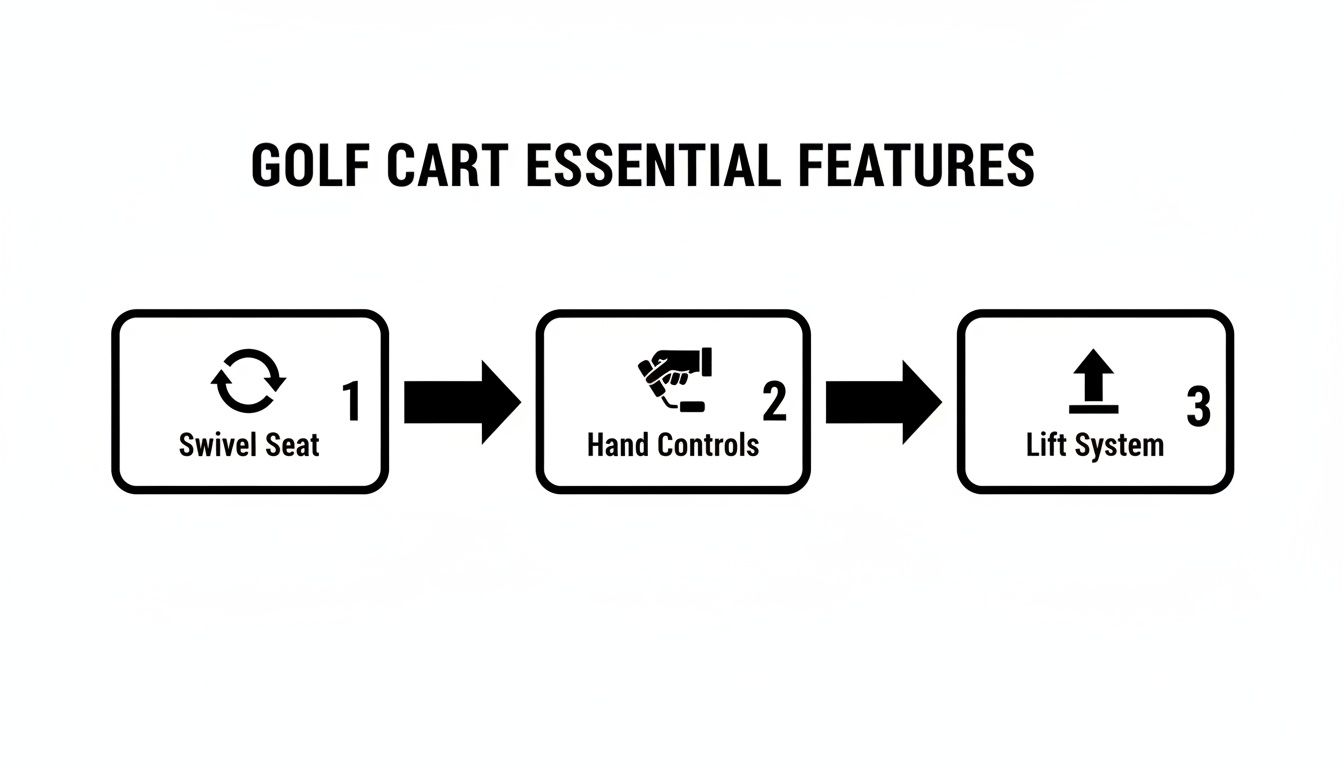
Whether you’re buying new or modifying an existing cart, features like swivel seats, hand controls, and lift systems are the fundamental building blocks for creating a truly accessible vehicle.
The Customization Journey Step by Step
Putting an accessible fleet in place, whether by buying new or retrofitting, is a process. Following these steps helps ensure the final result perfectly meets the needs of your guests or customers.
- Figure Out What You Need: Start by identifying the specific mobility challenges you want to solve. Are you mainly serving guests who can transfer from a wheelchair, or do you need full lift capabilities?
- Take Stock of Your Fleet: If you're thinking about retrofits, look closely at the age, condition, and frame of your current carts. Not every model is a good candidate for heavy modifications.
- Choose the Right Partner: Find a reputable manufacturer or installation expert. You want someone with a proven track record in accessibility solutions and great customer support.
- Oversee Installation and Testing: Make sure all modifications are installed to the highest safety standards. Before any cart goes into service, test every single feature—lifts, controls, and securements—thoroughly.
- Train Your Staff: This is crucial. Your team needs to know how to operate all the adaptive features safely and how to assist guests with confidence.
For a resort, just retrofitting a few carts can completely change the guest experience. Positive reviews that mention your inclusive amenities can directly boost bookings and build a powerful reputation for outstanding hospitality.
Your Smart Buyer's Guide to Accessible Carts
Investing in accessible mobility is a big move for any resort manager or dealership, and it’s about more than just the sticker price. Whether you're buying a single handicap golf cart or building out an entire fleet, you need to think about performance, durability, and the long-term payoff. Let's break down what really matters so you can make a smart, informed choice.
First things first, change your mindset. An accessible cart isn't just another line item on an expense report. Think of it as a powerful tool for elevating your guest experience and tapping into a significant market. As older fleets start to show their age, upgrading to accessible electric vehicles is quickly becoming the new standard.
Evaluating Performance and Durability
For a busy resort, durability is everything. These carts aren't just for a leisurely Sunday drive; they'll be in constant use by all sorts of guests, zipping across everything from smooth pathways to rolling hills. The frame and body have to be tough enough to handle that daily grind without falling apart.
Look for carts built on a solid, commercial-grade chassis. Pay close attention to the suspension, because that’s what ensures a comfortable ride and helps the vehicle handle uneven ground gracefully. And don't forget the adaptive features—the lifts, swivel seats, and hand controls. These are the touchpoints for your guests, so they need to be just as tough as the rest of the cart.
A cart that's constantly in the shop isn't just an inconvenience; it’s a broken promise to your guests. Investing in solid engineering from the get-go protects both your customers and your bottom line.
Battery Life and Terrain Capability
Let's be honest: a cart with a dead battery is just a heavy lawn ornament. When you’re looking at your options, battery performance has to be at the top of your list, especially if your property has steep hills or long distances to cover. Don't just take the manufacturer's word for it on range; ask for real-world performance data.
Here are a few questions you should be asking:
- What’s the cart's real climbing power? Can it tackle your property's steepest grades without slowing to a crawl, even with a passenger and their gear?
- How does a full load affect the battery? A cart’s range can drop significantly when it's operating near its maximum weight capacity.
- How long does it take to charge? If you're managing a fleet, you need a quick turnaround to make sure a cart is always ready to go.
These details are becoming more important as the market expands beyond the golf course. The global golf cart market, valued at USD 2.08 billion in 2025, is on track to hit USD 3.8 billion by 2034. A huge chunk of that growth is coming from resorts and planned communities. With North America expected to hold a 58.5% share by 2035, more and more properties are upgrading to modern, accessible electric fleets. You can dig deeper into these market trends by checking out the analysis on the Business Research Insights website.
Calculating the Return on Investment
The return on an investment in handicap-accessible golf carts goes way beyond rental fees. The real value is in the guest experience. Happy guests leave glowing reviews, come back for repeat visits, and build your brand's reputation as a place that truly welcomes everyone. An accessible property naturally becomes the top choice for multi-generational families and groups with different mobility needs.
When you're crunching the numbers on ROI, be sure to factor in:
- Increased Bookings: Look at the potential bump in reservations from guests who specifically search for accessible amenities.
- Positive Online Reviews: Keep an eye on mentions of your accessible features on travel sites and social media. That’s powerful, free marketing.
- A Competitive Edge: Set your property or dealership apart as a leader in accessibility, and you'll attract a loyal customer base that others can't.
Thinking about a fleet purchase? It's a major decision, and having a clear framework helps you weigh all the critical factors. This checklist is designed to guide you through the process, ensuring you cover all your bases before making a commitment.
Fleet Purchasing Checklist for Accessible Golf Carts
| Consideration | Key Questions to Ask | Solana EV Advantage |
|---|---|---|
| Durability & Build Quality | Is the frame commercial-grade? Are adaptive components robust enough for frequent use? | Built on a rugged, commercial-grade chassis with reinforced components designed for high-traffic resort environments. |
| Performance & Range | What's the real-world range on varied terrain? Can it handle steep inclines without losing power? | Engineered for superior hill-climbing torque and extended battery life, ensuring reliable performance across your entire property. |
| Guest Safety & Comfort | Are safety features like seatbelts and secure handholds standard? Is the ride smooth? | Features a state-of-the-art suspension system and integrated safety mechanisms to deliver a secure and comfortable ride for all guests. |
| Maintenance & Support | How accessible are replacement parts? What level of technical support does the manufacturer provide? | Backed by a comprehensive dealer support program, including ready access to parts, technical training, and dedicated support. |
| Total Cost of Ownership | Beyond the purchase price, what are the long-term maintenance and battery replacement costs? | Designed for efficiency and low maintenance, delivering a lower total cost of ownership and a faster return on investment. |
Ultimately, a thoughtful purchase process leads to a better investment—one that serves your guests and strengthens your business for years to come.
Partnering for Success with the Solana EV Dealer Program
Picking the right cart is half the battle; picking the right partner is the other half. The Solana EV dealer program was built to be much more than a simple supplier relationship. We see it as a genuine partnership to help your business become a leader in accessible mobility.
When you join, you’re not just getting premium, durable vehicles. You get access to a full suite of resources, including expert training for your staff, dedicated technical support, and powerful marketing materials to help you get the word out. It’s a collaboration that gives you the tools, knowledge, and products you need to meet the growing demand for accessibility with total confidence.
Mastering Safety and Maintenance Practices
As a resort manager, you know that a handicap golf cart is far more than just another vehicle in your fleet. It’s a promise—a commitment to providing a safe, reliable, and welcoming experience for every single guest. Like any vehicle, consistent upkeep is the secret to making sure it runs perfectly, but for an accessible cart, that diligence means so much more. You're not just protecting an asset; you're building trust.
This isn't your standard tune-up. Proper care demands a sharp focus on the very adaptive features that make the cart accessible in the first place. You can even borrow some great ideas from a standard routine car maintenance checklist to build your own process. At the end of the day, a well-maintained fleet is a safe fleet.
Essential Checks for Adaptive Equipment
The specialized gear on a handicap golf cart—the lifts, seats, and controls—is what makes it work. These aren't just add-ons; they are the heart of its purpose. A small hiccup with a lift can become a massive barrier for a guest, so these components need to be at the top of your inspection list.
Make these checks a non-negotiable part of your maintenance routine:
- Hydraulic and Electric Lifts: Give all hoses a good look for any cracks or leaks. Run the lift through its full motion—up and down—and make sure it moves smoothly, without any jarring, stuttering, or weird noises.
- Swivel Seats: Test the locking mechanism. Does it click firmly into place when facing forward? How about when it's rotated? A seat that wobbles or doesn't lock securely is a serious safety risk, especially when a guest is getting in or out.
- Hand Controls: Get a feel for the push/pull lever. It should be responsive, with no lag when you accelerate or brake. Check that all the connections are tight and nothing feels loose.
Standard Maintenance for Peak Performance
While you’re focused on the adaptive tech, don't forget the basics of electric vehicle care. A cart with a perfectly working lift is useless if the battery is dead. The core components are the foundation for the whole experience.
- Battery Health: Keep those battery terminals clean to stop corrosion in its tracks. If you have lead-acid batteries, check the water levels often. A good rule of thumb is to always ensure a full charge before the cart goes out to get the most life out of your batteries.
- Brake System: Listen. Any grinding or high-pitched squealing is a red flag that your brake pads are worn. Test the brakes to make sure they engage firmly and bring the cart to a crisp, smooth stop.
- Tire Condition: Check tire pressure every week. Properly inflated tires are critical for stability, especially when a cart is carrying the additional weight of a wheelchair or scooter. Look for any bald spots or uneven wear, too.
A proactive maintenance schedule does more than just prevent breakdowns. It shows your guests a real commitment to their safety and comfort, turning a simple ride into a trusted, positive part of their stay.
Crucial Safety Protocols for Operators and Passengers
Great maintenance is half the battle; proper use is the other. Having clear, simple safety rules for both your staff and your guests is absolutely essential to keeping risks low. Training your team is not optional—they need to know exactly how to operate the cart and assist passengers with confidence.
Set a few hard-and-fast rules for safe operation:
- Secure All Devices: Always, always double-check that wheelchairs, walkers, or other mobility equipment are properly secured with the cart's restraint systems before you even think about moving.
- Safe Boarding and Alighting: Drivers must bring the cart to a complete stop on flat, level ground before a passenger gets on or off. No exceptions.
- Driver Training: Make sure every staff member who might drive the cart is fully trained on how it handles and how every single accessibility feature works.
On top of training, make sure your carts are equipped with the right safety gear. We dive deeper into the importance of restraints in our guide to golf cart seat belt installation. When you combine meticulous maintenance with straightforward safety rules, you create an environment where everyone can get around with total peace of mind.
How Solana EV Powers Inclusive Mobility
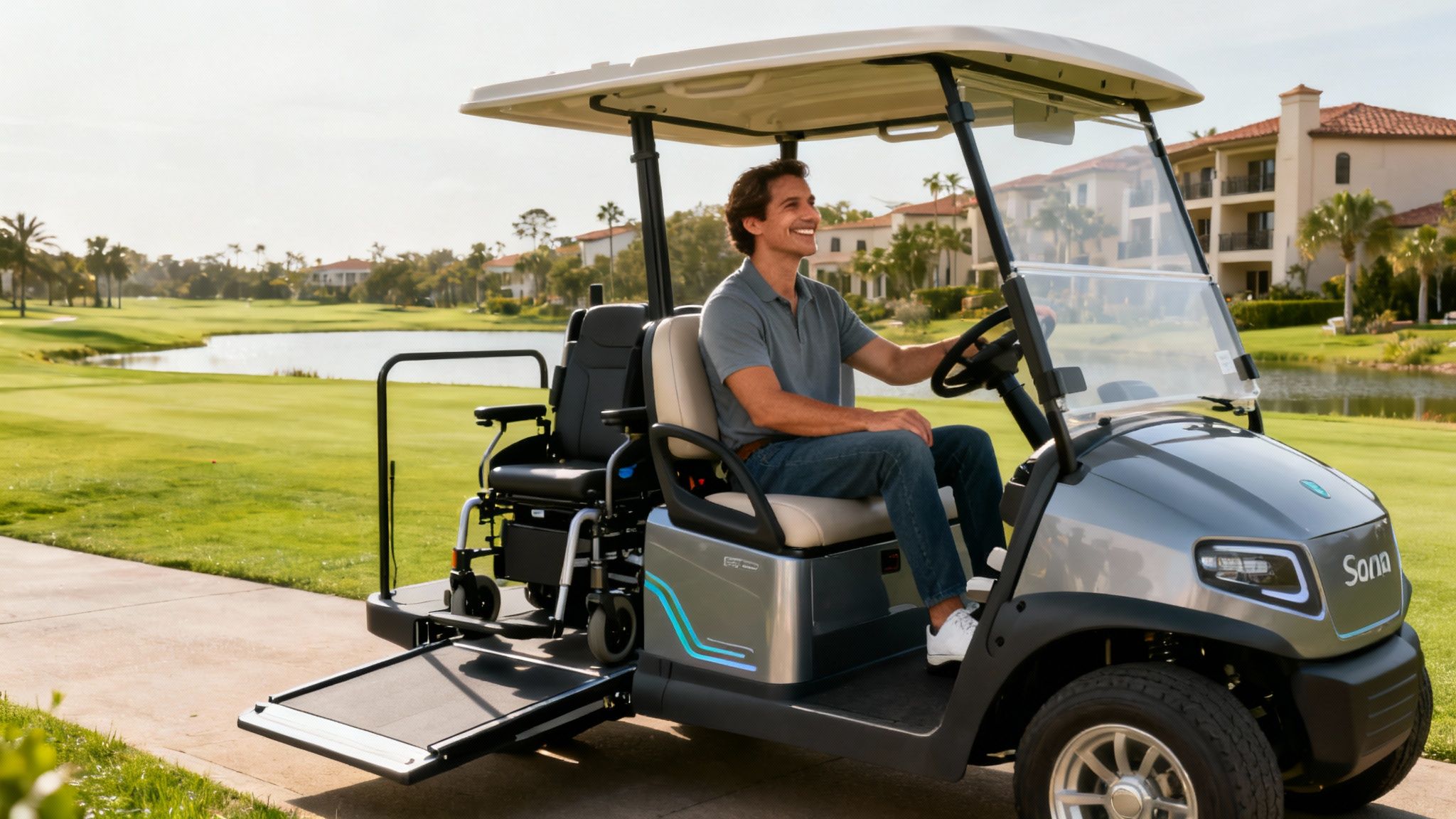
When we talk about accessibility, we're talking about more than just checking a box. It’s about creating an environment where every single guest and resident feels seen, valued, and able to participate fully. The right handicap golf cart doesn't just move someone from point A to point B; it tears down barriers and helps build a real sense of belonging.
That's where Solana EV comes in. We don’t just sell vehicles; we provide the foundation for genuine, thoughtful mobility solutions. Our carts are engineered from the chassis up to be a perfect platform for any accessibility modification, marrying smart design with the tough performance needed for busy resorts and communities.
The Solana EV Difference
So, what really sets a Solana EV cart apart? It all comes down to how we blend power, style, and adaptability into one package. Our vehicles start with a commercial-grade chassis built for the long haul, so you know it can stand up to the daily grind of a high-traffic property.
This incredibly strong base is what makes our carts so perfect for customization. Whether you're adding integrated lift systems, easy-to-use swivel seats, or specialized hand controls, you're starting with a vehicle that's ready for it. We operate on a simple belief: an accessible vehicle should never feel like an afterthought.
That’s why every one of our carts delivers on:
- Real-World Performance: We use powerful motors that have no trouble with steep hills and pair them with long-range batteries. Your guests get reliable transportation across the entire property, every time.
- Quiet, Clean Technology: Our all-electric fleet gives a smooth, silent ride. It not only improves the guest experience but also helps you hit your sustainability targets.
- A Premium Feel: Every detail, from the seats to the dashboard, is designed for comfort and class. Your accessible fleet should look just as good as the rest of your vehicles and reflect the quality of your brand.
Choosing a partner for your accessible fleet isn’t just a business transaction. It’s an investment in a shared vision for a more inclusive future, ensuring every person feels welcomed from the moment they arrive.
Partnering for a More Accessible Future
For resort managers who need a top-tier fleet or dealers looking to stand out, Solana EV is a natural fit. We offer the products, support, and know-how you need to become a leader in the growing market for accessible transportation.
When you choose Solana EV, you're doing more than just upgrading your fleet. You're investing in a quieter, cleaner, and more welcoming experience for everyone.
Got Questions? We've Got Answers
Stepping into the world of accessible golf carts can bring up a lot of questions, whether you're buying for yourself or managing a fleet for a resort. To help you get clear on the details, we've put together answers to the questions we hear most often. Think of it as your go-to guide for the essentials.
Let’s clear up the common points of confusion so you can move forward with confidence.
How Much Does a Handicap Golf Cart Cost?
The price tag on a handicap golf cart can really swing depending on what you need. If you're retrofitting a standard cart, a basic accessibility kit might add $2,000 to $5,000 to the initial cost.
But if you're looking at a brand new, factory-built accessible cart with more advanced systems—like a powerful hydraulic lift—the price can range anywhere from $15,000 to over $25,000. It's a big jump, but you're getting a purpose-built vehicle.
Don't forget to consider the quality of the cart itself. A well-built, durable cart costs more upfront, but it almost always pays for itself with better reliability and fewer maintenance headaches down the road.
Investing in a higher-quality cart from the start often translates to a lower total cost of ownership and, more importantly, a safer and more dependable experience for the user.
Are Handicap Golf Carts Street Legal?
This one is a definite "it depends." For a handicap golf cart to be street legal, it has to meet your local and state rules for Low-Speed Vehicles (LSVs). This usually isn't about the accessibility features, but about standard safety equipment.
To be considered an LSV, a cart generally needs things like:
- Headlights, taillights, and turn signals
- Mirrors and a windshield
- Seatbelts for all passengers
It also needs to hit a top speed of 20-25 mph. Many accessible carts can be built to meet these specs, but you absolutely have to check with your local DMV first to learn the specific laws in your area.
Can I Make Any Golf Cart Handicap Accessible?
Theoretically, yes, but practically, no. While you can retrofit many standard golf carts, not every cart is a good foundation for a conversion. The best candidates have a solid, sturdy frame and an electrical system that can handle the extra draw from a lift or other powered accessories.
Starting with a strong platform is non-negotiable. Trying to add adaptive equipment to a cart with an older, weaker chassis is just asking for trouble. The frame might not handle the mechanical stress or added weight, leading to poor performance and serious safety risks. It's always a smart move to talk to an accessibility expert or the cart manufacturer before you start a project like this.
Ready to offer a top-tier mobility solution for your guests or community? The team at Solana EV is here to help you build the perfect accessible fleet with vehicles that blend luxury, performance, and reliability. Explore our customizable options and learn more about our dealer program.