
Think of a quality golf cart winter cover not just as an accessory, but as essential insurance for your vehicle. It’s the single best tool you have for protecting your cart from the costly damage that snow, ice, and freezing temperatures can inflict over the off-season. This simple step is crucial for preserving your cart's battery, frame, and overall value through the harsh winter months.
Why a Winter Cover Is a Smart Investment
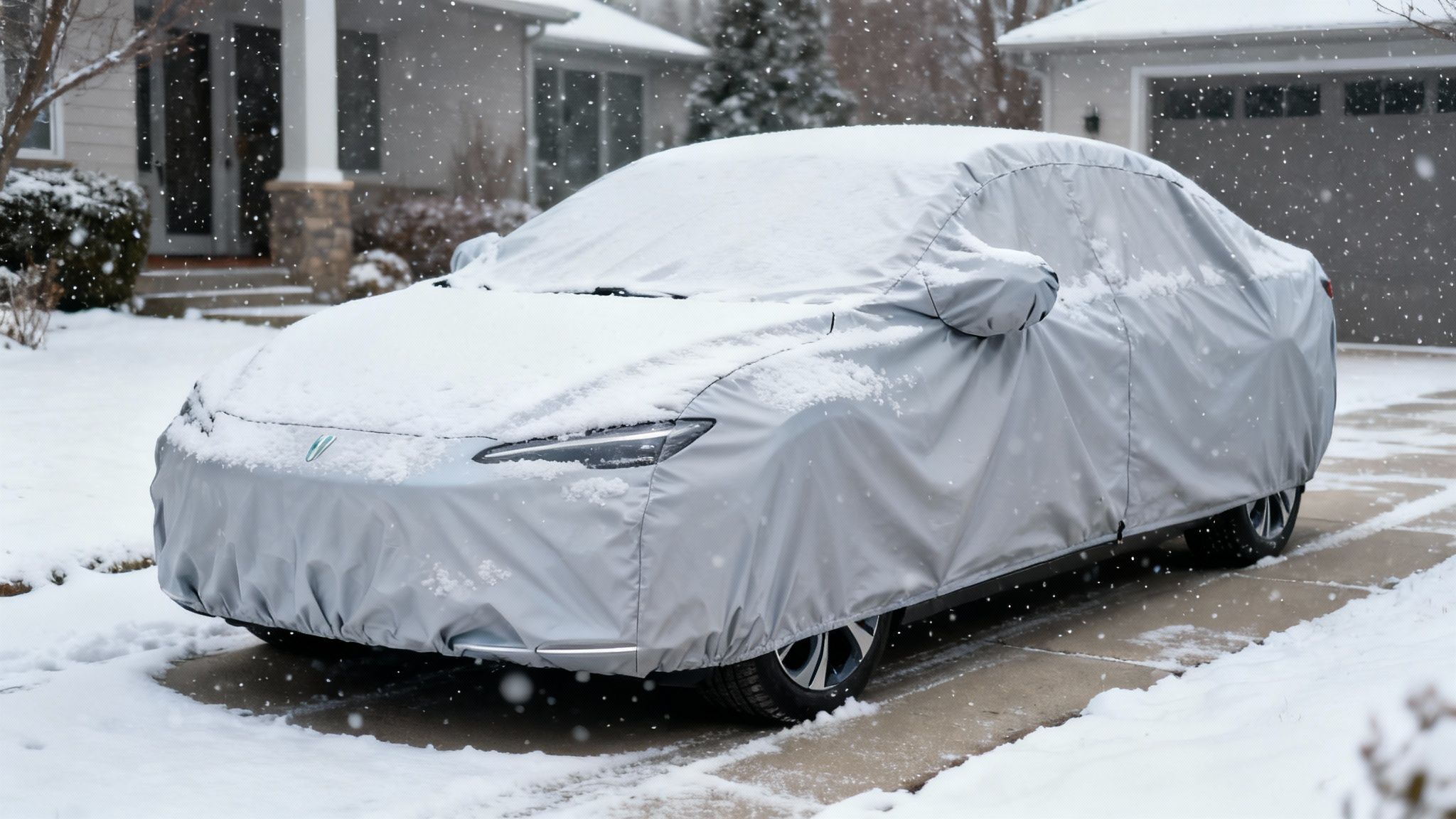
Your Solana EV is a big investment, and leaving it exposed to the elements is a gamble you don't want to take. Winter delivers more than just a pretty snowfall—it brings a constant assault that can seriously degrade your vehicle's performance and appearance. Without that protective layer, you're setting yourself up for a frustrating and expensive spring startup.
Picture this: you pull the cart out after a long winter, only to find cracked upholstery from the constant freeze-thaw cycles. Or maybe you spot rust creeping into the frame from months of dampness, or worse, a battery that just won't hold a charge. These problems aren't just cosmetic; they hit your cart's longevity and resale value right where it hurts.
Shielding Your Cart From Core Damage
A high-quality golf cart winter cover does a lot more than just keep your vehicle dry. It’s actively working to prevent the specific kinds of damage that happen during long-term storage.
Here’s what a good cover really does:
- Battery Longevity: Extreme cold is the enemy of any EV battery. A cover acts as a vital insulating layer, shielding it from frigid winds and helping to regulate the temperature swings that kill battery efficiency and shorten its life.
- Frame and Component Integrity: Constant moisture from snow and ice is a perfect recipe for corrosion. A waterproof cover keeps metal components dry, stopping rust before it starts and preserving the structural integrity of your cart.
- Upholstery and Finish Protection: Even winter sun contains damaging UV rays, and the sheer weight of heavy, wet snow can put a ton of stress on your cart’s seams. A durable cover saves your seats from cracking and protects the paint from fading or getting scratched up by icy branches.
A cover isn't just about preventing a little rust. It’s about making sure your electric vehicle is ready to perform at its best the moment spring arrives. Think of it as a proactive step to maintain the most critical systems of your Solana EV.
The impact of severe weather is no joke. In the North American golf cart market, valued at USD 0.68 billion in 2024, regions like the Northeast and Midwest saw a 12% year-over-year drop in new cart registrations during Q1 2023, largely due to winter's effects on existing vehicles. Investing in a proper golf cart winter cover is a proven way to shield your investment from this kind of damage. You can read more about these market dynamics in this report on the North American golf cart market.
For more detailed prep tips, don't miss our complete guide to golf cart winter storage.
Navigating the world of winter golf cart covers can feel a bit like learning a new language. You'll hear phrases like "600D polyester," "marine-grade," and "polyurethane coating" tossed around, but what does any of that actually mean for keeping your Solana EV safe through the winter? Let's break it down into what really matters.
The fabric is your cover's first and most important line of defense against the elements. A basic vinyl cover might look good on the shelf and feel even better on your wallet, but I’ve seen them become brittle and crack in the first deep freeze. You’re much better off with a heavy-duty polyester, something in the 300D to 600D range. This gives you a fantastic blend of strength and flexibility that resists tears and punctures way better than cheaper options.
That "D" stands for denier, which is just a fancy way of measuring the fabric's thickness. A higher number means a tougher, more durable material. Trust me, when a foot of wet, heavy snow is sitting on top of your cart, you’ll be glad you have a cover that won't stretch or rip under the weight.
Coatings and Treatments: The Unsung Heroes
Beyond the fabric itself, the real magic is in the treatments. A polyurethane (PU) coating is a non-negotiable feature; it creates a waterproof barrier that stops rain, sleet, and melting snow from seeping through. Likewise, UV-stabilized fabric is essential. Even weak winter sun can degrade material over time, and this treatment acts like sunscreen for your cover, extending its lifespan.
To get a better sense of what to look for, it helps to understand the different types of winter covers available for other vehicles, like boats. The core principles are the same: you need to repel water, block UV rays, and let the vehicle breathe.
The market for these accessories is huge. With the global golf cart industry projected to hit USD 3.29 billion by 2032, it's no surprise that protective covers make up a whopping 27.6% of all accessory sales. For a Solana EV owner, a quality cover isn't just about protection—it’s about preserving your investment and extending the life of your cart.
Winter Cover Material Comparison
To make the choice a little clearer, here's a quick look at the most common materials you'll encounter. Each has its place, depending on your local climate and how you plan to use it.
| Material Type | Best For | Pros | Cons |
|---|---|---|---|
| Heavy-Duty Polyester (300D-600D) | Harsh winters with snow and ice | Excellent tear resistance, waterproof with coating, UV resistant | Can be bulky to store, higher initial cost |
| Solution-Dyed Polyester | Sunny climates with mild winters | Superior fade resistance, good water repellency | More expensive, may be less abrasion-resistant than coated polyester |
| Vinyl | Light-duty, budget-conscious use | Inexpensive, initially very waterproof | Becomes brittle and cracks in cold, poor breathability |
| Canvas (Treated) | Dry, windy conditions | Highly breathable, very durable and abrasion-resistant | Heavy, requires regular re-treatment to stay waterproof |
Ultimately, for most Solana EV owners facing a real winter, a coated, heavy-duty polyester is going to be the most reliable all-around choice.
Features That Make a Real Difference
A great cover is more than just good fabric. From my experience, a few key design features are what separate a cover that works from one that excels.
- Air Vents: These are an absolute must. Without them, moisture gets trapped underneath, creating a perfect environment for mold, mildew, and even rust on your cart’s metal components.
- Soft Inner Lining: Look for a non-abrasive inner layer, like fleece or soft cotton. In windy weather, a rough cover can constantly shift and rub, causing tiny scratches on your cart's finish. A soft lining prevents that.
- Reinforced Seams: Seams are the natural weak points. The best covers have double-stitched or heat-welded seams that won't split under the weight of snow or the constant pull of strong winds.
- A Solid Fastening System: An elastic hem is great for a snug fit, but it's not enough. You need adjustable straps with buckles to cinch the cover tightly under the cart. This is what keeps it from billowing up and flying off in a winter storm.
Think of it this way: a cheap, loose cover acts like a giant sail in a heavy storm. A properly secured, heavy-duty cover with vents is what truly keeps your investment safe and looking new, not just dry.
These features all work together as a complete system of protection. To round out your setup, check out our guide on the best golf cart accessories to see what else can enhance your vehicle's durability and performance.
Getting a Perfect Fit for Your Solana EV
There's nothing more frustrating than wrestling with a cover that’s too tight or, worse, watching a loose one billow like a sail in a winter storm. A perfect, snug fit is non-negotiable for a golf cart winter cover. A poor fit can lead to paint scuffs from flapping fabric or leave sections of your cart completely exposed to the elements.
Taking a few precise measurements is the only way to get it right the first time.
Even within the Solana EV lineup, dimensions can vary quite a bit. A cover designed for a sporty, compact F-Series won't come close to fitting a 4-seater XA, especially if you've added customizations. Aftermarket additions like a rear-facing seat, a cargo box, or an extended roof completely change your cart's footprint. This is where a "one-size-fits-all" approach really falls short.
Taking the Right Measurements
Grab a flexible tape measure and let's get the three critical dimensions you'll need. I'd recommend having someone help you hold the tape steady—it makes a huge difference in accuracy.
- Length: Measure in a straight line from the very front of your bumper to the absolute back. If you have a rear seat kit or a cargo box, make sure you measure to its furthest point.
- Width: Find the widest part of your cart. This is usually across the front seat or from the outer edge of the driver's side armrest to the passenger's side. Don't just measure the body.
- Height: Start your measurement from the ground and go all the way up to the highest point of the roof. Make sure the cart is on level ground for this one.
For a great starting point, you can find the standard factory sizes for our models on the official Solana EV golf cart dimensions page. Just remember to account for any custom parts you've added on top of those base numbers.
Once you’ve got the right fit, you can focus on the features that really protect your cart.
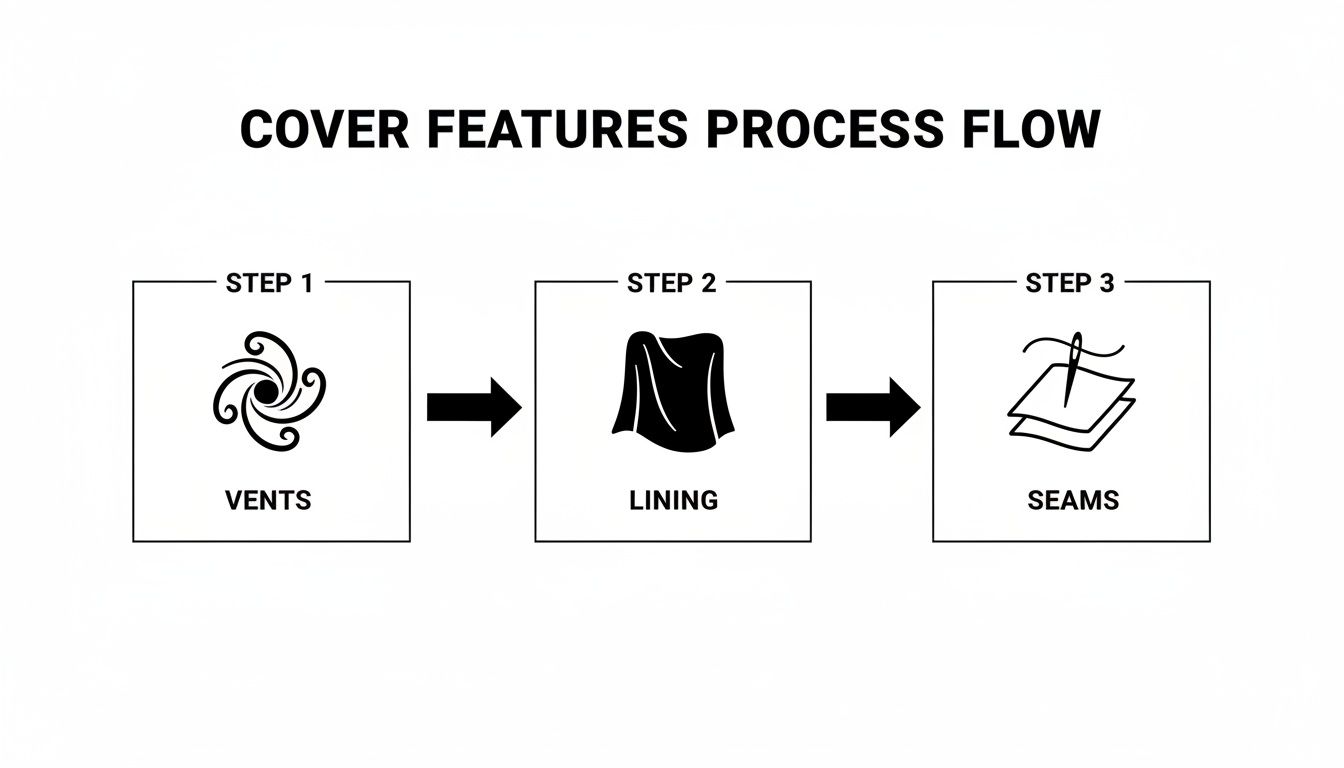
This shows how critical things like proper venting, a soft interior lining, and durable seams are in a high-quality cover.
The Two-Inch Rule for a Perfect Fit
Once you have your three core measurements—length, width, and height—here’s a pro tip that makes all the difference: add two to three inches to each number. This isn't about buying a baggy, oversized cover; it's about creating just enough slack to work with.
This small buffer provides essential "wiggle room," making it so much easier to pull the cover on and off without a fight. It also prevents the fabric from stretching too tightly over sharp corners, which is a major cause of stress on the seams and can lead to premature tearing. Most importantly, it ensures the cover drapes correctly without being so loose that it catches the wind.
Mastering the Installation for a Perfect, Weatherproof Seal
Getting your new golf cart winter cover out of the box is one thing, but getting the installation just right is what really counts. A loose, sloppy fit can leave your EV vulnerable to the exact elements you’re trying to keep out. But don’t worry, with a few pointers from the field, you can create a tight seal that stands up to anything winter throws at it.
Before you even start unfurling the fabric, there's a quick prep step that's easy to overlook but makes a huge difference: clean your cart. Seriously. Any dirt or grit left on the surface can get trapped under the cover. When the wind inevitably causes the cover to shift and rub, that trapped debris acts like fine-grit sandpaper, leaving you with a finish full of micro-scratches come spring.
A simple wash and dry is all it takes to avoid sealing in an abrasive enemy for months on end.
Getting the Fit Snug and Secure
First things first, find the front of the cover. Most manufacturers include a tag or a distinct shape to help you orient it. Drape the cover over the roof, then ease it down over the front and back of your Solana EV. The goal here is a snug fit, not a tourniquet-tight one. Proper alignment is crucial, especially if your cover has zippered doors or built-in air vents—you want them right where they’re supposed to be.
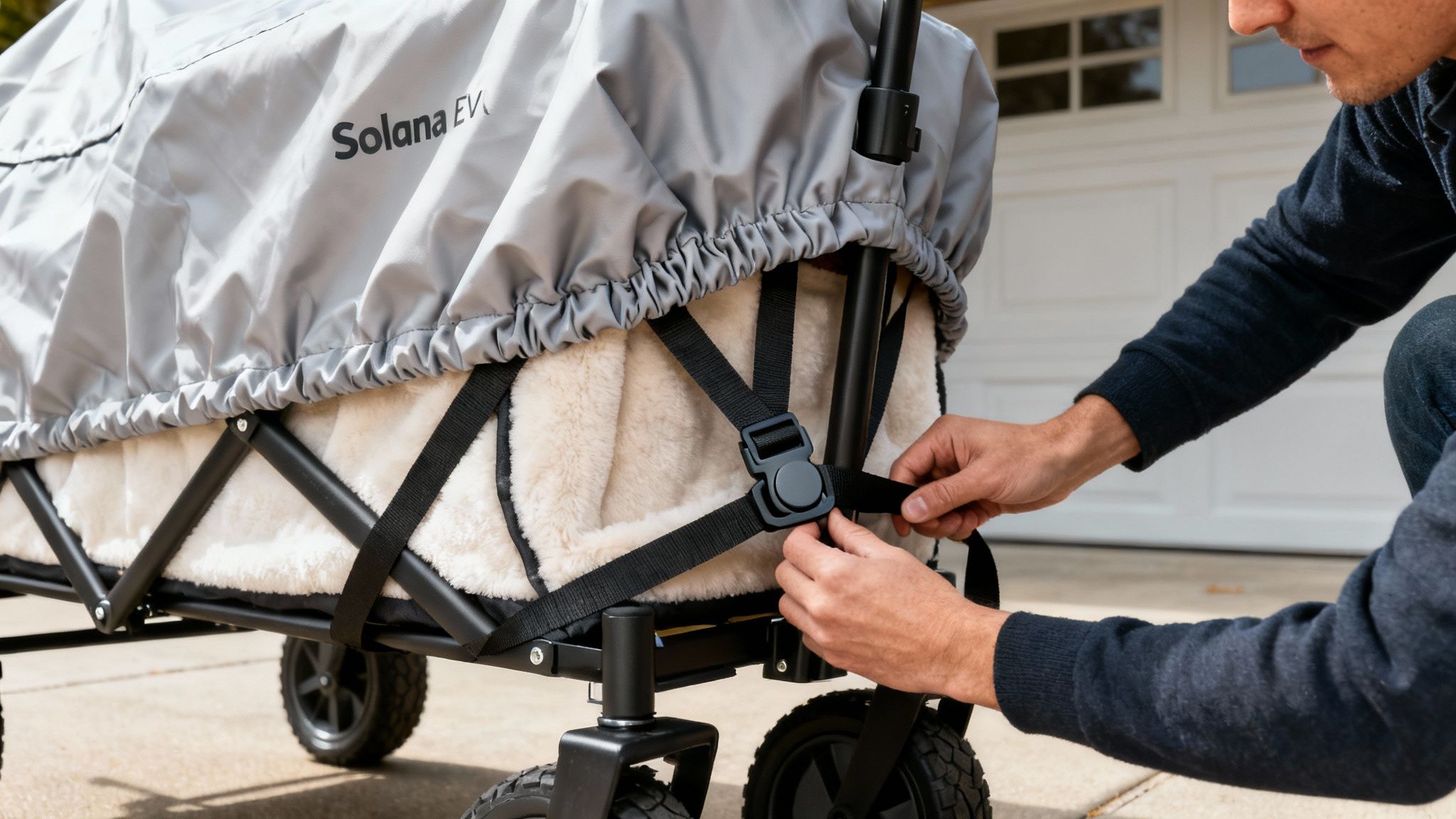
With the cover in place, it’s time to lock it down. This is what makes the difference between a protective shield and a giant parachute on a blustery day.
Your cover will probably come with a few different ways to fasten it:
- Elastic Hem: This is your first line of defense, creating a snug grip around the base of the cart. It's great for getting the initial fit, but it's not enough on its own.
- Click-Close Buckle Straps: These are your best friends for winter security. You’ll want to pass these straps under the cart, connecting them on the other side and cinching them down tight. You should have at least two or three to stop wind from getting underneath and turning your cover into a sail.
- Drawstrings or Tie-Downs: If you live in an especially windy area, look for covers with extra grommets or drawstrings along the bottom edge. They offer that extra peace of mind when a storm rolls in.
Pro Tip: A properly installed cover should be taut across every surface, especially the roof. If you see any sagging spots, that’s a welcome mat for water and snow. The added weight will strain the seams and fabric over time, leading to leaks and a shorter lifespan for your cover.
The Smart Way to Stop Water Pooling
One of the biggest headaches with any vehicle cover is the dreaded water puddle on the roof. After a heavy rain or snowmelt, that standing water puts a ton of stress on the material.
Here’s a simple trick I’ve used for years: create a high point. Before you put the cover on, place something on the roof of your cart to create a tent-like effect. An inverted five-gallon bucket or even an inflatable beach ball works perfectly. This little bit of elevation forces water to run off the sides instead of collecting in a heavy pool.
This kind of attention to detail is what keeps your investment safe. As the global golf cart market is projected to hit USD 3.5 billion by 2033, high-quality accessories that protect that value are a massive part of the equation, making up a 27.6% share. A properly installed cover prevents the kind of damage from snow and freeze-thaw cycles that can sideline a cart, ensuring your Solana EV stays in prime condition. You can dive deeper into these golf cart market trends to see just how valuable smart protection can be.
Caring for Your Cover Through Every Season
Your golf cart winter cover is out there battling the elements all season long, taking a constant beating from snow, ice, and wind. To make sure it survives for many winters to come, a little routine care goes a very long way.
Don't worry, regular maintenance isn't a huge chore, but it’s absolutely essential for getting the most out of your investment.
When you notice your cover is looking a bit grimy, a simple cleaning is usually all it needs. Most dirt and dust can be brushed off with a soft brush and a mix of mild soap (think standard dish soap) and lukewarm water. Just make sure you rinse it completely to get all the soap off—any residue left behind can start to break down the waterproof coating over time.
Handling Tougher Messes
Every now and then, you'll run into something more stubborn, like bird droppings or that dreaded sticky tree sap. The trick here is to act fast. Letting these things sit can lead to permanent stains or even damage the fabric itself.
- Bird Droppings: Gently scrape off any solid bits first. Then, tackle the spot with your mild soap solution and a soft cloth, rinsing well when you're done.
- Tree Sap: This one can be a real pain. A good first step is to try freezing it with an ice cube. This often makes the sap brittle enough to just flake off. If some sticky residue is left, you can use a small amount of rubbing alcohol on a cloth to dissolve it. Just be sure to test it on a hidden spot first to make sure it doesn't mess with the fabric's color.
Harsh chemical cleaners and strong detergents are the enemy of a good cover. They will strip away the protective UV and waterproof coatings, leaving the fabric exposed to the very elements it's supposed to be blocking. Always stick to the simple, gentle stuff.
Smart Off-Season Storage
When spring finally rolls around and it's time to store your cover, don't just cram it into a corner of the garage. I've seen too many good covers ruined by improper storage, leading to mold, mildew, and deep-set creases that never come out.
Before you put it away, give your golf cart winter cover one last good cleaning. Most importantly, make absolutely sure it is 100% dry. Even a tiny bit of moisture trapped in the folds will turn into a nasty mildew problem over the warm summer months.
Once it's perfectly clean and dry, fold it neatly and pop it into a breathable storage bag—not a sealed plastic bin that traps air and moisture. Find a cool, dry spot away from direct sunlight, and it’ll be fresh and ready to protect your Solana EV when the cold weather returns.
Common Questions About Golf Cart Winter Covers
Got questions? We've got answers. It’s smart to do your homework before buying a cover, and over the years, we’ve heard just about every question in the book. This section cuts right to the chase, tackling the most common things golf cart owners ask.
We’ve pulled these questions directly from conversations with customers, so you can get straightforward advice without the fluff.
Can I Just Use a Generic BBQ or Motorcycle Cover?
I get this one a lot. It seems like a clever way to save a few bucks, but trust me, using a generic cover from a big-box store is a recipe for disappointment. Think of it like wearing shoes that are three sizes too big—sure, they’re on your feet, but they aren't offering any real protection.
Modern carts, especially models like the Solana EV series with their unique rooflines and body shapes, need a cover that fits like a glove.
A generic cover will be loose and baggy. The first decent gust of wind will get right underneath it, causing it to flap and whip against your cart's finish. After a few months of that, you're looking at dulled paint or even permanent scuff marks. Plus, those generic covers are missing the features that actually matter, like properly placed straps that anchor to the cart’s frame or air vents to prevent moisture buildup.
Worst-case scenario? The poor fit means it rips or just blows away in the first major winter storm, leaving your cart completely exposed right when it needs protection the most.
Do I Need a Cover If I Store My Cart in a Garage?
Even if your cart is tucked away in a garage or shed, a cover is still a really good idea. Let's be honest, garages are rarely the pristine, climate-controlled environments we imagine. They get dusty, they can be surprisingly damp, and they’re prime real estate for pests looking for a winter home.
A quality cover acts as your cart’s first line of defense against all that.
- Dust and Grime: It stops that fine layer of dust from settling everywhere, which can work its way into electronics and scratch the paint when you go to wipe it down in the spring.
- Moisture: Garages get humid, especially with cars tracking in melting snow. A breathable cover stops that damp air from settling on metal parts and causing rust.
- Pests: A snug-fitting cover makes it a whole lot harder for mice or insects to chew through wiring or build a nest in your seats.
- Oops-Proofing: It also shields your cart from accidental dings and scratches from shovels, bikes, or whatever else you have stored in there.
The bottom line is, if you want to keep that factory-fresh finish and know your cart is ready to roll in the spring, using a cover indoors is a no-brainer.
How Do I Prevent Mold and Mildew Under the Cover?
This is all about moisture control, and it's non-negotiable for long-term storage. The number one rule is simple: always make sure your golf cart is completely clean and bone-dry before you put the cover on. Trapping any moisture under there is just asking for trouble.
Next, look for a cover that has built-in air vents. They’re designed to let condensation and moisture vapor escape without letting rain or snow in. That little bit of airflow makes a huge difference. If you know your garage or shed gets particularly damp, you can go a step further and toss a few moisture-absorbing desiccant bags inside the cart before covering it up.
And here’s a pro tip: if you get one of those weirdly mild, sunny days in the middle of winter, take advantage of it. Pull the cover off for a few hours to let everything air out completely.
Will a Winter Cover Really Protect My EV Battery?
Yes, absolutely—maybe not directly, but in a way that really matters. Extreme cold is the enemy of any EV battery. It can sap its efficiency, reduce its ability to hold a charge, and shorten its overall lifespan. While a cover isn't a heater, it does provide a critical layer of insulation.
This buffer shields the battery, terminals, and wiring from the rawest elements like freezing wind, frost, and direct contact with snow and ice. By evening out the extreme temperature swings, the cover helps prevent corrosion on sensitive connections and ultimately protects the long-term health of your battery. For any Solana EV, keeping that battery in top shape is priority number one, and a good golf cart winter cover is a key part of the equation.
Ready to give your Solana EV the all-season protection it deserves? Explore the full range of durable, custom-fit covers and accessories from Solana EV and ensure your vehicle stays in peak condition, no matter what the weather brings. Visit us at https://solanaev.com to find the perfect fit for your model.