
When you start shopping for an electric golf cart, you'll quickly see that prices can be all over the map. A straightforward, no-frills model might start around $8,000, while a high-end, street-legal machine with all the bells and whistles can easily climb past $20,000. The final price tag really comes down to what's under the hood—and the seat—from the battery and motor to custom upgrades.
Decoding Electric Golf Cart Prices at a Glance
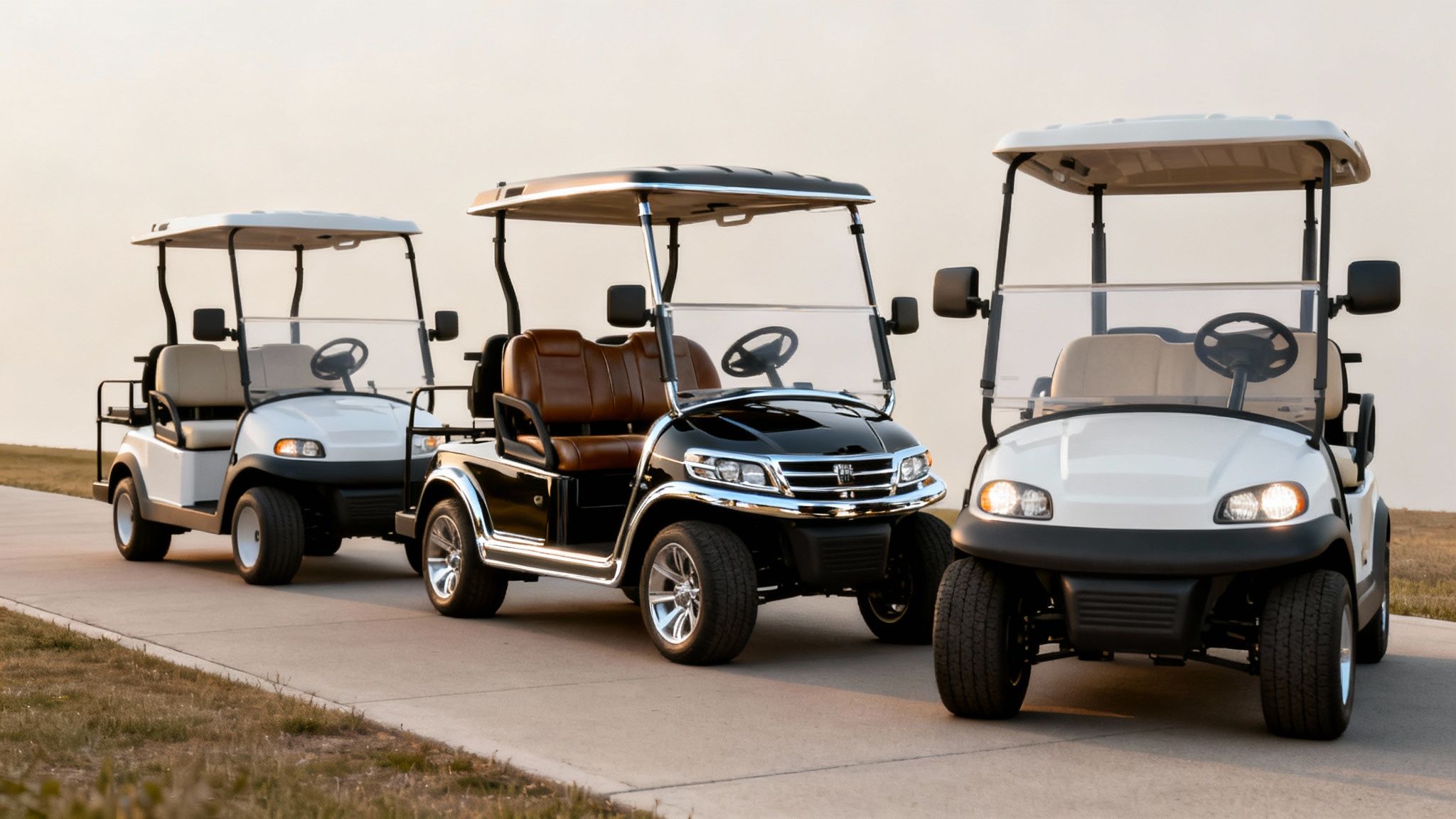
There’s no single price for an electric golf cart because you're not just buying one thing; you're buying into a specific level of performance, comfort, and capability. It’s a lot like buying a car. A base model gets you from A to B, but a fully-loaded version gives you a totally different experience with more power, luxury, and features.
Knowing the different tiers helps you make a smarter choice. You wouldn't use a sports car to haul equipment, and you wouldn't expect a basic utility cart to be your daily commuter on public roads. By understanding these price brackets, you can match your budget to what you actually need and avoid paying for features you'll never use.
Common Price Brackets for New Carts
To get a clearer picture, let's break down new electric golf carts into a few key categories. Each step up in price brings a significant jump in what the cart can do. This gives you a great starting point for figuring out which type of vehicle, like one from the Solana EV lineup, is the right fit.
-
Basic Carts: Think of these as your reliable workhorses. They’re perfect for getting around the neighborhood, the back nine, or a large property without any fuss. They have standard features and are built for simple, dependable transport.
-
Premium & Upgraded Carts: This is the sweet spot for many buyers. These carts come with better seating, improved suspension for a smoother ride, more powerful motors, and custom touches. They offer a major upgrade in comfort and performance.
-
Street-Legal Low-Speed Vehicles (LSVs): These are the top-of-the-line models. They roll off the factory floor ready for public roads (typically those with speed limits of 35 mph or less), complete with safety features like headlights, turn signals, and a Vehicle Identification Number (VIN).
Remember, the Manufacturer's Suggested Retail Price (MSRP) is just the starting point. The final price you pay will also include dealer prep, taxes, and any extra accessories you choose.
To help you visualize the landscape, here’s a quick overview of what you can generally expect to pay for a new electric golf cart.
Typical Price Ranges for New Electric Golf Carts
This table provides an at-a-glance look at the estimated Manufacturer's Suggested Retail Prices (MSRP) for new electric golf carts, broken down by their primary use and feature set.
| Cart Category | Typical Price Range (USD) | Ideal for |
|---|---|---|
| Basic Recreational Model | $8,000 – $11,000 | Neighborhoods, golf courses, basic property transport |
| Premium Upgraded Model | $12,000 – $16,000 | Gated communities, resorts, users wanting more comfort |
| Street-Legal (LSV) Model | $17,000 – $25,000+ | Public road travel, commercial fleets, daily commuting |
Think of these ranges as a starting point. Later in this guide, we’ll dig into the specific factors—like battery technology and custom add-ons—that shift a cart’s price from one end of the spectrum to the other. Understanding what drives the cost is key to finding that perfect balance between price and long-term value.
What Really Drives the Cost of an Electric Golf Cart?
Ever wondered why two electric golf carts that look almost identical can have price tags thousands of dollars apart? The real story isn't about the paint job or the cup holders. It’s about what’s under the hood—or in this case, under the seat.
The final sticker price comes down to a handful of key factors, from the battery that powers the whole operation to the warranty that gives you peace of mind. Getting a handle on these components is the first step to making a smart buy. It lets you look past the price tag and see the true value you're getting for your money, making sure the cart you choose actually fits what you need.
Battery Technology: The Heart of the Cart
The single biggest factor dictating the price of an electric golf cart is the battery. This isn't just a box of power; it's the heart of the vehicle, defining its range, its weight, and how much time you'll spend tinkering with it. The main choice you'll face is between old-school lead-acid batteries and modern lithium-ion technology.
Think of it this way: a lead-acid battery is like the trusty, reliable engine in an older car. It gets the job done, but it's heavy and needs regular check-ups, like topping off water levels. That extra weight can impact performance and even be tough on the turf.
A lithium-ion battery, on the other hand, is like the powertrain in a brand-new EV. It's a bigger investment upfront, no doubt. But in return, you get way more power, a much longer lifespan (often lasting 2-3 times longer than lead-acid), zero maintenance, and seriously fast charging. If you want to get into the nitty-gritty, our complete guide to lithium-ion golf cart batteries breaks it all down.
Key Takeaway: Lead-acid batteries will get you a lower initial price, but lithium-ion often delivers a much better total cost of ownership thanks to its incredible lifespan and zero maintenance.
The whole industry is moving in this direction. The electric golf cart market was valued at a massive USD 1.7 billion, and it's projected to grow at an impressive 8.7% clip every year through 2034. While lead-acid batteries still hold a big piece of the market—over 60%—the shift to lithium is happening fast because the performance benefits are just too good to ignore.
Motor Power and Performance
If the battery is the heart, the motor is the muscle. For cruising around a flat neighborhood or golf course, a standard AC (alternating current) motor is perfectly fine. But if you’ve got hills to climb, heavy loads to haul, or a need for speed, you’ll want something with more oomph.
High-performance motors, like those you’ll find in premium and street-legal LSV models such as the Solana XA, can add $1,000 or more to the price. That extra cost gets you the torque and power needed to tackle just about anything you throw at it.
- Standard Motors: Perfect for level ground and casual, everyday use.
- Upgraded Motors: A must-have for hilly terrain, commercial work, or off-road fun.
Seating Capacity and Custom Accessories
It’s simple math: the more people you want to carry, the more the cart is going to cost. A classic two-seater is your most budget-friendly option. As soon as you jump to a four- or six-passenger model, you’re talking about a longer frame, extra seats, and usually a beefier suspension system to handle the load, all of which adds up.
And then there's the fun part: customization. This is where the price can really start to climb. Some of the most popular add-ons that affect the final price include:
- Premium Seats: Upgraded materials and ergonomic designs for a more comfortable ride.
- Lift Kits & Custom Wheels: Gives the cart an aggressive look and better ground clearance.
- Sound Systems: Integrated Bluetooth speakers to bring your music along.
- Enclosures: Full or partial covers to keep you dry and warm in bad weather.
Each accessory you add turns a basic cart into a vehicle that’s uniquely yours, and the final price will reflect that.
Street-Legal Features and Build Quality
Turning a golf cart into a Low-Speed Vehicle (LSV) that you can legally drive on public roads isn't as simple as slapping on some lights. It requires a specific set of factory-installed safety features that meet federal and state rules. The cart has to be engineered for it from the start.
Essential LSV components include:
- Headlights, taillights, and turn signals
- Brake lights and a horn
- DOT-approved tires and a shatter-resistant windshield
- Seat belts for every passenger
- A unique Vehicle Identification Number (VIN)
Getting a cart street-legal ready will typically add $1,500 to $3,000 to the price, but it's an absolute necessity for road use.
Beyond the features, brand and build quality are huge. Premium brands like Solana EV invest more in high-grade steel frames, better suspension parts, and a cleaner fit and finish. The result is a cart that not only looks better but lasts longer. When you're looking at the price, don't forget to ask about potential dealer fees, as things like freight and setup can affect your final out-the-door cost. Lastly, look at the warranty. A long, comprehensive warranty is a manufacturer's vote of confidence in their own product, adding real value and peace of mind to your investment.
Calculating the True Cost of Ownership Over Time
The sticker price on an electric golf cart is just the beginning of the conversation, not the end. If you've been around the block a few times, you know the real cost isn't what you pay on day one—it's the total investment you make over the life of the vehicle. Thinking about the long game is what separates a good purchase from a great one.
To get a real handle on electric golf cart prices, you have to look past the initial price tag and factor in the ongoing costs that come with ownership. This means everything from the electricity you use to charge it to the eventual replacement of big-ticket items like the battery pack.
Breaking Down the Ongoing Expenses
The day-to-day and year-to-year costs can certainly add up, but they're not all created equal. The technology in your cart and how you use it will make a huge difference. Planning for these predictable expenses means no surprises down the road and helps you make a smarter choice between different models.
- Charging Costs: This is your most frequent expense. While it's a fraction of what you'd spend on gas, your electricity bill will tick up a bit. The exact amount really depends on your local utility rates and how much you're driving.
- Routine Maintenance: Electric carts are famous for being low-maintenance, but that doesn't mean no maintenance. You'll still need to budget for things like tire wear, brake checks, and keeping the suspension in good shape over the years.
- Insurance: If you're driving a street-legal LSV, insurance isn't just a good idea—it's the law. For carts used on private property, it's still a smart move for liability protection. Rates vary, so it pays to shop around for a quote.
The chart below shows the big-three cost drivers that affect not just the initial price, but also the long-term expenses you can expect.
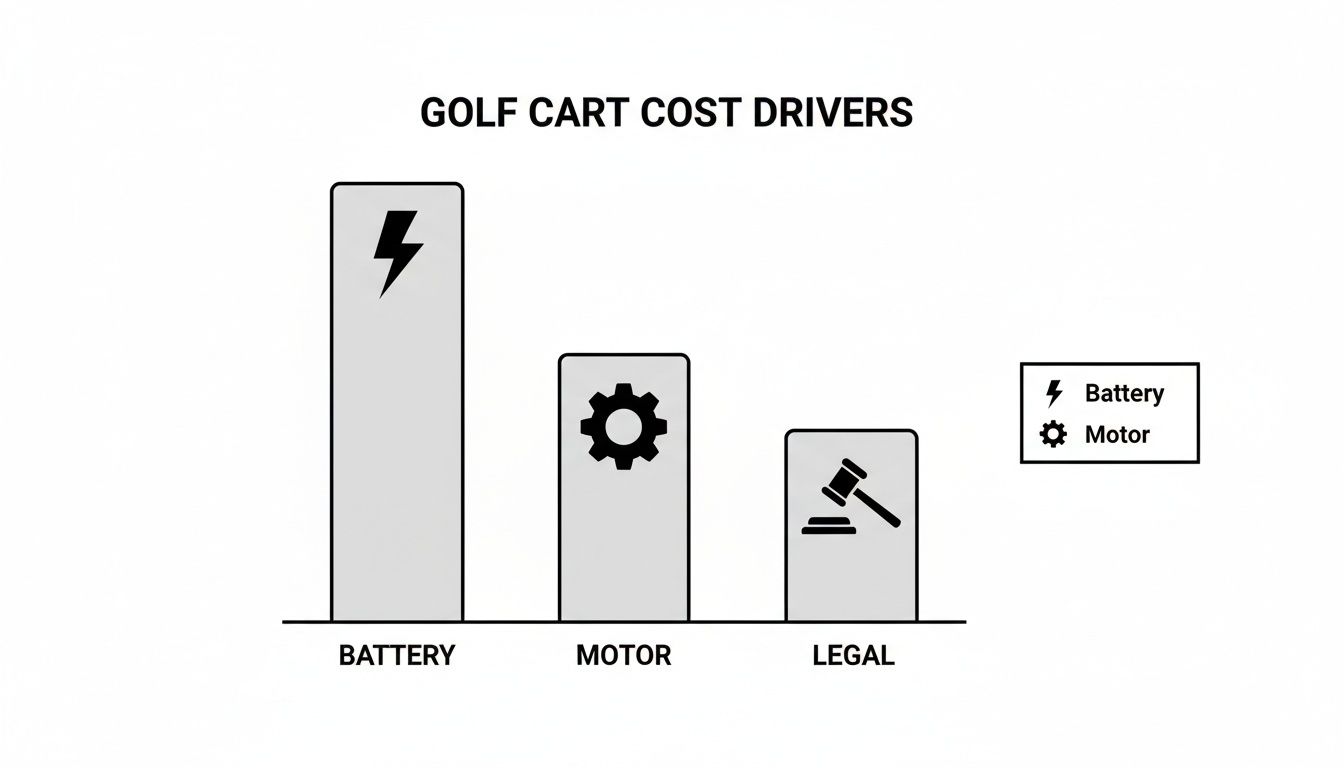
As you can see, the battery is the single heaviest hitter here. It has a massive impact on both the upfront cost and what you'll spend on replacements later on.
The Big One: Battery Replacement
Let’s be direct: the single largest long-term expense you’ll face is replacing the batteries. This is where your choice between old-school lead-acid and modern lithium-ion technology has the most dramatic financial impact.
A set of traditional lead-acid batteries might last 3-5 years if you treat them perfectly. When it's time for a new set, you're looking at a bill that can easily top $1,000 to $2,000. Over a decade, you could be doing that two, maybe even three times.
On the other hand, a premium lithium-ion battery, like the ones we use in Solana EV models, is built to last 10 years or more. Yes, the initial cart price is higher, but you completely sidestep those repeated replacement costs. For a deeper dive, we've broken down the numbers in our guide to the real golf cart battery replacement cost.
The Long-Term View: Paying more upfront for lithium technology often means paying significantly less over the lifetime of the cart. It's a classic case of investing now to save later.
A 5-Year Cost Comparison: Lead-Acid vs. Lithium-Ion
To make this crystal clear, let's look at a side-by-side cost projection over five years. This really shows how a higher initial investment can pay dividends down the line.
Estimated 5-Year Total Cost of Ownership
| Cost Factor | Standard Lead-Acid Cart (Estimate) | Premium Lithium-Ion Cart (Estimate) | Key Difference |
|---|---|---|---|
| Initial Purchase Price | $9,000 | $12,500 | Lithium carts have a higher upfront cost. |
| 5-Year Charging Cost | ~$450 | ~$375 | Lithium is more efficient, lowering energy use. |
| 5-Year Maintenance | ~$750 (Includes battery watering) | ~$400 (No battery maintenance) | Lead-acid requires regular, hands-on upkeep. |
| Battery Replacement (Year 4) | ~$1,500 | $0 | Lithium batteries are designed to last the decade. |
| Estimated 5-Year Total | $11,700 | $13,275 | The gap closes, and savings begin to emerge. |
In this example, the lithium cart’s total cost is still higher at the five-year mark, but look closely. The real savings are about to kick in during the second half of the cart's life, right when the lead-acid model would need another expensive battery transplant. For a broader perspective, it's worth understanding the principles of reducing the total cost of ownership.
The market is speaking loud and clear: electric golf carts are set to command a 55.3% share by 2025 as the industry grows to USD 2.45 billion. Why? It comes down to reliability and minimal upkeep, leading to 70% less downtime than gas models. For businesses, federal incentives like the Qualified Plug-In Electric Drive Motor Vehicle Tax Credit sweeten the deal even more, driving down the true cost of ownership.
Matching Price Tiers to Your Specific Needs

Let's be honest: an electric golf cart isn't a one-size-fits-all purchase, and its price tag proves it. The real secret to getting a great deal is twofold: don't overpay for features you'll never use, but don't skimp on the performance and durability your lifestyle actually demands. It’s all about matching the machine to the mission.
When you see how different people use their carts, it's easier to find your own scenario and figure out what’s truly essential. Are you making a quiet trip to the community pool, or are you managing a whole fleet of vehicles for resort guests? The answer changes everything.
The Gated Community Resident
If you live in a planned community, your golf cart often becomes your go-to vehicle. It's how you pop over to a neighbor's house, head to the clubhouse, or run a quick errand. For you, comfort and reliability are king. Extreme off-road power or a massive cargo bed? Probably not necessary.
- What Really Matters: A smooth ride is non-negotiable. You’ll also want comfortable seating for two or four, enough battery range for your daily rounds, and quite often, street-legal (LSV) status to legally drive on designated roads.
- Best Fit: A Premium Upgraded Model or a base-level Street-Legal (LSV) is your sweet spot. Think of something like the Solana F series—it has the polished look and safety features you need without the overkill of a heavy-duty commercial build. You're looking for that perfect blend of style, comfort, and compliance.
The Resort and Hospitality Manager
For a resort manager, a golf cart isn’t a personal luxury; it's a critical piece of operational equipment. These things are workhorses, running nonstop to shuttle guests, haul luggage, and move staff across sprawling properties. Every minute of downtime costs money and hurts the guest experience, so durability is the name of the game.
- What Really Matters: You need a rock-solid build. Look for extended seating for six or even eight people, powerful motors that won't bog down on hills with a full load, and high-capacity batteries that can last the entire day with minimal charging breaks.
- Best Fit: This calls for a Commercial/Resort Model, period. Vehicles like the multi-passenger Solana G or the work-focused Campus E are engineered specifically for this kind of constant, heavy use. The higher electric golf cart prices on these models are a direct result of reinforced frames, tougher suspension, and industrial-grade parts built to survive the grind.
The commercial market is a huge reason this industry is booming. Valued at USD 1.55 billion in 2024, the global electric golf cart market is on track to hit USD 2.58 billion by 2033. A big part of that is the rapid adoption in U.S. resorts—spiking by over 15% annually—as properties shift toward sustainable transportation. You can dive deeper into the electric golf cart market's expansion to see the full picture.
The Off-Road Enthusiast and Property Owner
This buyer needs a machine that’s not afraid to get dirty. Whether you're navigating hunting trails, managing a large property, or just looking for some backwoods adventure, a standard golf course cart just isn't going to survive. You need something built for the rough stuff.
- What Really Matters: Key features include a lifted suspension for better ground clearance, chunky all-terrain tires that can grip anything, a high-torque motor for climbing power, and a frame that can take a beating from uneven terrain.
- Best Fit: A Specialized Off-Road or Performance Model is the only way to go. These carts are purpose-built for toughness, often featuring beefed-up controllers and heavy-duty drivetrains. A model like the Solana XA, kitted out with a lift and rugged tires, gives you the confidence to tackle dirt, mud, and whatever else the trail throws at you. The higher price tag here is a direct investment in real-world capability and resilience.
Smart Strategies for Purchasing Your Golf Cart
Getting a handle on the numbers behind electric golf cart prices is one thing, but turning that knowledge into a smart purchase is the real win. Now that you understand the pricing landscape, it’s time to focus on getting the absolute best value for your money. This means looking past the sticker price and starting to think like a seasoned buyer.
The trick is to walk into the showroom armed with the right questions and a clear game plan. It’s all about knowing where you have room to negotiate, what financing should look like, and how the dealer you choose will shape your ownership experience for years to come.
Financing and Negotiation Tactics
Financing is a popular way to buy a new golf cart, but don't just jump at the first offer. Most dealers have in-house financing options or work with lending partners. My advice? Get pre-approved by your own bank or credit union first. This gives you a solid benchmark to compare against whatever the dealer puts on the table.
Negotiation is the next step, and it’s not just about haggling over the price. While premium brands like Solana EV tend to have firm pricing on the carts themselves, there’s often flexibility in other areas. Don’t be shy about discussing accessory packages or an extended warranty. Always ask for a final "drive-away" price that rolls in all fees, taxes, and prep charges so there are no surprises later.
A great negotiation tactic is to focus on value, not just price. Asking "What can you include to make this the best deal?" can often yield better results than simply asking for a discount. This might mean free delivery, a complimentary windshield, or a discount on future service.
New vs. Used: Which is the Right Move?
It's the classic debate: should you buy new or used? A brand-new cart gives you the latest tech, a full factory warranty, and a vehicle that's all yours, from the first charge. If you want total peace of mind and a blank canvas for customization, new is the way to go.
On the other hand, a used cart can save you a significant amount of cash upfront. This path just requires a bit more homework. You’ll need to be meticulous when inspecting the cart's condition, paying special attention to the age and health of the batteries. For a deep dive, our complete overview of buying a used golf cart has a thorough checklist to help you buy with confidence.
The Importance of Dealer Support
Your relationship with the dealer doesn't stop once the check is signed. Really, it's just getting started. A good dealer is your long-term partner, providing service, support, and expertise for the life of your cart. Before you buy, ask about their service department. Are their technicians certified? How quickly can they get parts?
Excellent dealer support, like what you’ll find through the Solana EV dealer program, is a massive part of the value equation. It’s the assurance that you have a reliable expert to call when you need routine maintenance or have a problem. That kind of long-term support is often worth paying a little more for upfront.
Questions to Ask Any Dealer
Never walk into a negotiation unprepared. Having a list of questions ready ensures you cover all your bases and can accurately compare what different dealers are offering.
Your Dealer Checklist:
- Warranty Details: What, exactly, does the manufacturer's warranty cover, and for how long? Does it include both parts and labor?
- Service Packages: Do you offer any prepaid maintenance plans or service specials for new buyers?
- Accessory Bundles: Can you offer a package discount if I purchase a cover, sound system, or other accessories with the cart?
- All-In Pricing: Can you give me a final, out-the-door price that includes freight, prep, taxes, and any other fees?
- Parts Availability: How long does it typically take to get common replacement parts in stock?
Asking these questions proves you’ve done your research and puts you in the driver's seat. You’ll go from being a casual shopper to an informed buyer, fully prepared to land a great vehicle at a fair price.
Your Final Checklist Before You Buy
Alright, you’ve done the homework. You've seen everything from basic neighborhood runabouts to decked-out, street-legal LSVs. You know how a lithium battery can save you money down the road and which features are truly essential.
Now, let's pull it all together. This final checklist isn't about throwing new information at you. It’s about making sure you have solid answers to the most important questions before you sign on the dotted line. A quick run-through here will make sure you’re buying with confidence, focusing on real value instead of just the sticker price.
Confirming Your Core Needs
First things first, let’s lock in what this cart is actually for. A cart designed for quiet loops around a gated community is a totally different beast from one that needs to haul gear all day at a resort. Nailing this down is the bedrock of a smart purchase.
- My Primary Use: Is this for leisurely community travel, heavy-duty commercial work, or maybe some light off-road fun? Be honest about what you'll be doing 90% of the time.
- Seating and Capacity: Do I really need a 6-passenger model, or will a 2 or 4-seater do the job? There's no sense paying for seats that will just sit empty.
- Must-Have Features: Have I made a clear list separating the absolute essentials (like street-legal compliance for road use) from the "it would be nice" accessories?
Answering these helps you find a model that fits your life perfectly. It's the easiest way to avoid overspending on features or power you simply won't use.
Reviewing the Long-Term Investment
Thinking past that initial handshake is where you find the real value. The best electric golf cart prices aren't always the lowest upfront—they're the ones that lead to fewer headaches and lower costs over the years.
Your final decision should feel less like a purchase and more like a long-term investment in reliability and enjoyment. The right cart delivers years of dependable performance, making the initial cost a distant memory.
So, have you really crunched the lifetime numbers?
- Battery Technology: Have I seriously compared the 10-year cost of a lead-acid setup (including a few battery replacements) versus a maintenance-free lithium-ion cart? That initial savings on lead-acid can disappear fast.
- Ongoing Budget: Have I budgeted for the other costs of ownership? Think insurance, routine maintenance like new tires and brake checks, and the electricity for charging.
- Dealer Reputation: Have I looked into the dealer’s service department? A great price from a dealer with no post-sale support can turn into a major regret. You want a partner for the long haul.
By checking these final boxes, you can move forward with total clarity. You’re not just buying a golf cart; you’re picking a vehicle that fits your budget, matches your lifestyle, and comes with a support system you can count on. That’s how you guarantee years of fun and adventure.
Answering Your Top Questions About Golf Cart Costs
As you narrow down your choices, you'll likely have a few specific questions pop up. Getting straight answers to these common sticking points is key to locking in your budget and feeling great about your final decision. Let's dig into what people most often ask about electric golf cart prices.
How Much More Is a Street-Legal Package?
Turning a standard golf cart into a road-ready Low-Speed Vehicle (LSV) is a serious upgrade, and the price reflects that. Expect to add anywhere from $1,500 to $3,000 for a factory-installed street-legal package.
Why the extra cost? It’s far more than just bolting on a few accessories. This is a comprehensive safety and compliance upgrade that includes essential gear like headlights, turn signals, mirrors, and seatbelts. Most importantly, it comes with a unique Vehicle Identification Number (VIN) and the official certification you need to legally drive on public roads.
Is a Lithium-Ion Battery Really Worth the Extra Money?
For almost everyone, the answer is a resounding yes. It's true that you'll pay more upfront for a lithium battery, but the long-term savings and convenience are undeniable. Think of it as investing in a better ownership experience from day one.
The true value of lithium isn't just about speed or range; it's about what you don't have to do. You get a battery that lasts 10+ years, charges faster, and requires absolutely zero maintenance. Over the life of the cart, that convenience easily pays for the initial investment.
If you plan on using your cart regularly or just want the most dependable power source available, the economics of a lithium battery make it a no-brainer.
Can I Get a Better Deal in the Off-Season?
You might find some small discounts, but this really depends on where you live. Top-tier brands usually keep their pricing steady year-round to maintain the value of their vehicles.
That said, dealers in seasonal climates might offer modest price reductions on last year's models during the late fall and winter. They're trying to make room for new inventory, so it can be a good time to check for deals. Just don't expect a massive fire sale—but a little savings is definitely possible.
Ready to find an electric vehicle that fits your budget and your lifestyle? Explore the premium lineup at Solana EV and discover the perfect combination of style, performance, and long-term value.