
If you've been searching for a "dach golf cart" and ended up here, let's clear things up right away. You’re on the right track, but "dach" isn't a brand name—it's simply the German word for "roof." So, when people talk about a "dach golf cart," they're really just talking about the cart's roof or canopy.
It's an easy mistake to make, but it highlights just how important that single component really is for your cart's performance, safety, and overall feel.
What Exactly Is a Dach Golf Cart?
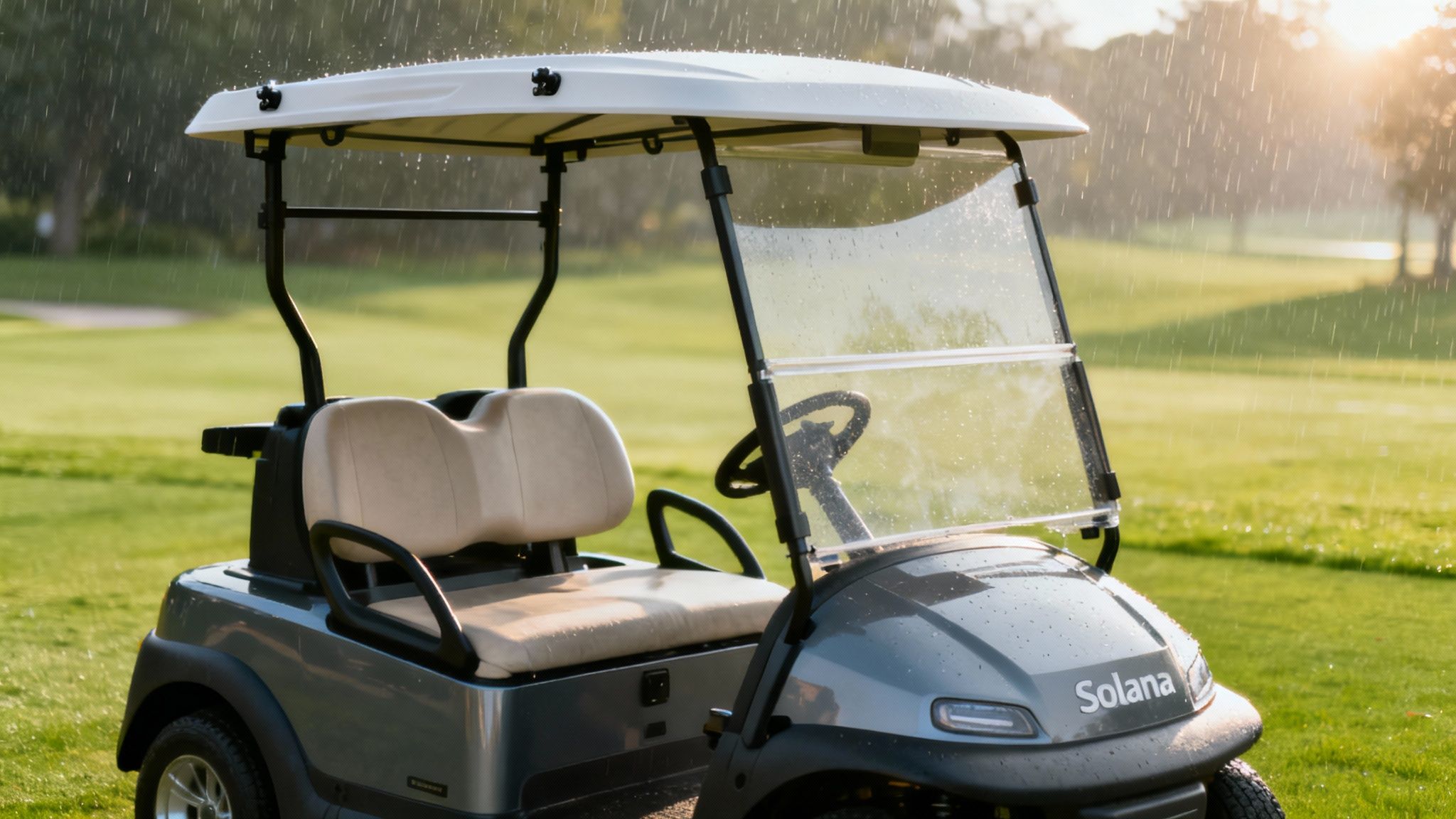
It’s tempting to see a golf cart roof as just a shield from a sudden downpour or a hot sun. But in reality, it’s the vehicle's first line of defense and a key part of its structure. A well-made roof completely changes the ride, giving you essential protection while adding to the cart’s strength and stability.
This is especially true for premium vehicles like the Solana EV series, where every piece is built to last. The roof isn't just an add-on; it's a fundamental feature that directly affects the cart's lifespan and the safety of everyone inside. Whether you're a casual rider or a fleet manager, getting this right is the first step to a smart investment.
Understanding the Terms
With so many names for the same thing, the language around golf cart roofs can get a little confusing. A quick look at the common terms can help you know exactly what you're looking for.
Quick Guide to Golf Cart Roof Terminology
| Term | Common Meaning | Primary Function |
|---|---|---|
| Dach | A German term for "roof" often used in searches. | General protection from elements. |
| Canopy | The most common industry term for a standard golf cart roof. | Provides shade and basic rain cover. |
| Top | An informal, interchangeable term for the roof or canopy. | Same as canopy; provides cover. |
| Extended Roof | A longer roof that covers both front and rear passengers. | Offers full coverage for 4+ passenger carts. |
| Sun Top | A lightweight roof, often made of fabric or thin plastic. | Primarily provides sun protection (shade). |
| Weather Enclosure | A full system including a roof and vinyl side curtains. | Creates a fully enclosed cabin for all-weather use. |
Basically, whether you call it a dach, a canopy, or a top, you're talking about the same essential part. The key is to focus on its quality and how it’s built.
The Growing Importance of Quality Components
The demand for solid, reliable low-speed vehicles is growing fast. The global golf cart market is expected to hit around USD 2.0 billion by 2030, and electric models are on track to make up nearly 78.6% of that market by 2035. This isn't just a trend; it's a shift in how people get around in communities, resorts, and on large properties. A durable "dach" is no longer a luxury—it's a standard expectation for a safe and comfortable ride.
A really good roof system gives you a few major advantages:
- Better Safety: It’s your first barrier against falling branches, stray golf balls, and nasty weather.
- Structural Support: A solid roof and its support struts add rigidity to the cart's frame, which means less flexing and better, more predictable handling.
- A Platform for Accessories: It’s the perfect, stable spot to mount extras like light bars, speakers, or even storage racks.
- Serious Comfort: Good shade and protection from the elements just make every trip more enjoyable.
At the end of the day, the quality of a cart's roof tells you a lot about the quality of the entire vehicle. Taking a moment to understand the different types of golf carts and what comes standard will show you why a well-built canopy is something you just can't compromise on.
How to Choose the Right Roof Material
Think of picking a golf cart roof like choosing a good jacket. You need to know where you're going and what the weather's going to be like. A light windbreaker is great for a breezy day, but it’s useless in a blizzard. The same logic applies here—the right roof depends entirely on how and where you'll be using your cart.
Each material offers a different mix of protection, durability, and style. A standard plastic roof is like that basic, functional raincoat you keep in the car. It’ll keep the sun and a light drizzle off, which is often all you need on a manicured golf course. It gets the job done without any fuss.
Comparing Common Roof Options
When you start looking at roofs, you’ll find they generally fall into three material categories. Each has its own pros and cons when it comes to strength, weight, and price, all of which can subtly change how your Solana EV handles.
Let's break them down:
- Standard Plastic (Polyethylene/Polypropylene): This is your bread-and-butter option. It's the most common and cost-effective choice, offering decent protection from sun and rain. The downside? Over time, constant sun exposure can make it brittle.
- ABS Plastic (Acrylonitrile Butadiene Styrene): Here's where we get into higher-performance gear. ABS is a much tougher material, standing up better to impacts, scratches, and UV rays that fade and weaken other plastics. It’s like the GORE-TEX jacket of cart roofs—durable enough for more demanding use without being overkill.
- Aluminum: If you need the toughest protection available, this is it. Aluminum roofs are surprisingly lightweight but incredibly strong, easily shrugging off falling debris or harsh weather. For a hard-working cart like a Solana XA that sees action on rugged property, an aluminum roof is like wearing a suit of armor.
Here's something most people don't think about: noise. Softer, thinner plastics can sometimes vibrate and rattle, especially at speed. A well-installed aluminum or thicker ABS roof, on the other hand, often quiets things down, giving you a more solid and pleasant ride.
Matching the Material to Your Needs
So, what's the right roof material for your "dach golf cart"? It really comes down to the job at hand. A resort manager with a fleet of Solana G models will probably lean towards ABS plastic. It offers a clean, uniform look that holds up to daily guest use, striking that perfect balance between a professional appearance and long-term durability.
But for a property owner using a Solana XA to do maintenance work across a large, wooded estate, the choice is different. In that scenario, an aluminum roof is the only way to go. It can take a hit from low-hanging branches and gives you a solid base to mount work lights or equipment racks without a second thought.
Before you decide, ask yourself a few key questions:
- Where is the cart living? On paved resort paths, bumpy off-road trails, or near the coast where salt air is a factor?
- What’s the weather like? Intense sun day after day? Frequent heavy rain? The occasional hailstorm?
- Will you be adding accessories on top? Think light bars, speakers, or storage racks.
Answering these will lead you straight to the material that gives you the best blend of protection and performance for your money. Making the right choice upfront means your cart is ready for anything, and your investment is well-protected.
The Real Benefits of a Quality Golf Cart Roof
It's easy to think of a golf cart roof as just a simple cover for sun and rain, but that's really selling it short. A well-built "dach" brings some serious, practical advantages to the table that can completely change how you view your vehicle. It's less of an accessory and more of an upgrade to the entire cart.
One of the biggest, and most overlooked, benefits is how a quality roof stiffens up the entire cart. Think of it like a roll cage in a race car—it ties the whole structure together. This added structural integrity reduces how much the frame twists and flexes when you're making a sharp turn or driving over bumpy terrain, giving you a much more solid, predictable ride.
More Than Just a Cover
A sturdy roof is also the perfect foundation for adding all sorts of useful accessories. Suddenly, your basic cart becomes a customized machine built for a specific job, whether that's work, play, or a little of both.
- Entertainment Systems: You've got a solid place to mount speakers or a sound bar, perfect for creating a better experience for guests at a resort or just enjoying tunes on your own property.
- Enhanced Lighting: Need to get around safely before sunrise or after sunset? A good roof can easily support powerful LED light bars to light up the path ahead.
- Utility Racks: Why sacrifice seat space? Install an overhead rack to carry everything from landscaping tools to beach chairs.
- Solar Panels: Some of the more advanced roofs are even designed to hold solar panels, which can give your battery life a nice boost and cut down on charging time.
Speaking of solar, if you're considering that route, it's worth taking a moment to calculate the potential solar return on investment to see the long-term savings.
For fleet managers running a commercial operation, this all translates directly to the bottom line. A tougher roof lasts longer, meaning fewer costly replacements. Better yet, the added comfort and features create a premium experience for guests, which often leads to rave reviews.
This flowchart gives you a quick visual breakdown of the most common materials and where they stand.
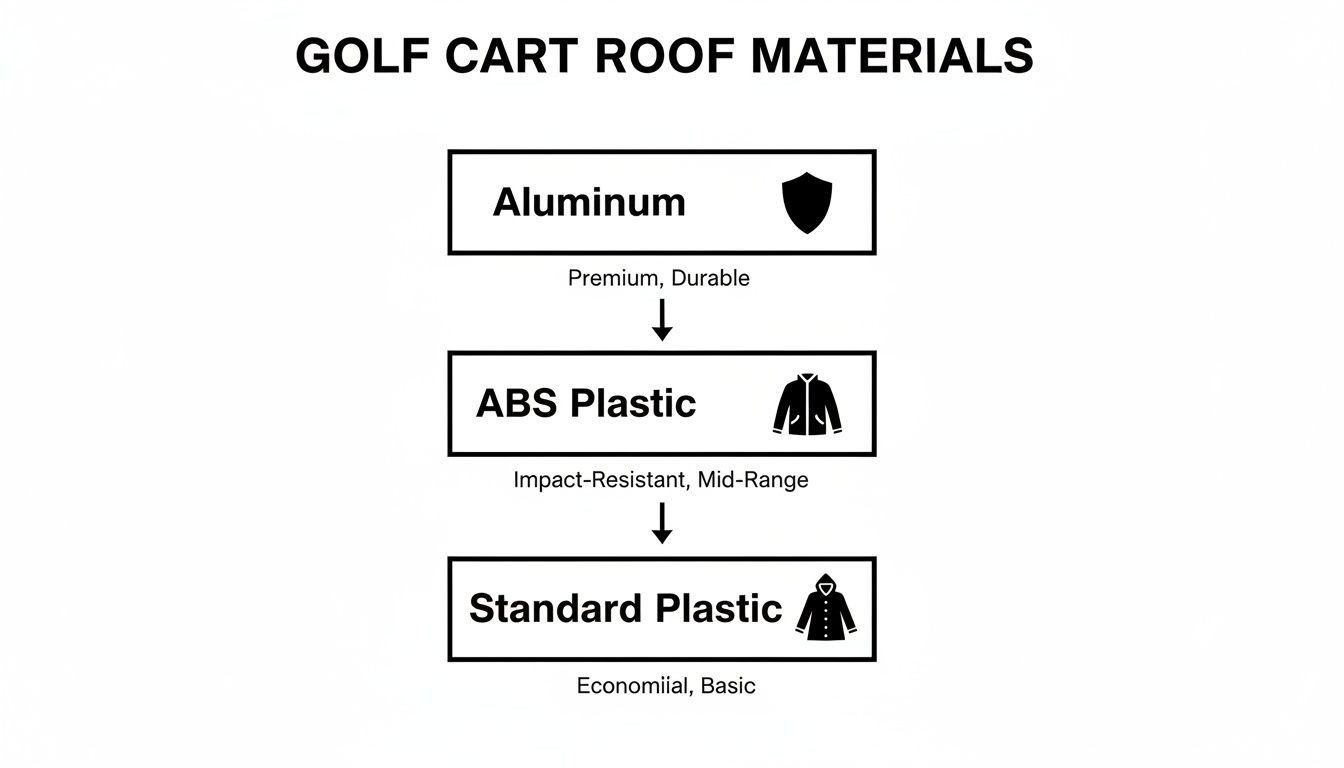
As you can see, something like aluminum is top-tier for durability, while a material like ABS plastic hits that sweet spot between strength and cost. When you invest in a better canopy, you're really investing in the future performance and versatility of the cart itself.
Installing a Roof on Your Solana EV
Putting a new roof on your Solana EV is one of the most practical upgrades you can make, protecting both your passengers and your investment. Whether you're a hands-on owner or a fleet technician, getting the installation right is key. This is true for all our models, from the Solana XA and F to the Campus E.
Before you even touch a wrench, the single most important step is making sure you have the right roof for your specific cart. It’s a bit like putting a lid on a container—if it’s not the exact right size, it’s not going to seal properly. An ill-fitting roof can cause all sorts of headaches, from rattling noises and water leaks to bigger structural problems down the line.
The best way to start? Double-check your vehicle's manual or give your dealer a quick call to confirm the part numbers.
Why Sticking with OEM Parts Makes a Difference
When it comes to parts, choosing an Original Equipment Manufacturer (OEM) or a certified accessory isn't just about getting a perfect fit; it's about protecting the long-term health and warranty of your vehicle. Sure, you might find cheaper aftermarket options, but they often come with hidden costs you don’t see at first.
- A Guaranteed Fit: OEM roofs are engineered to the exact specifications of your Solana EV. That means every bolt hole lines up just right, with no forcing or jerry-rigging required.
- Built to Our Safety Standards: Certified accessories have been through the wringer. We test them to make sure they meet Solana EV's strict standards for safety and durability.
- Keeps Your Warranty Intact: Using unapproved, non-certified parts can actually void your vehicle's warranty. That could leave you on the hook for expensive repairs later on.
This is a big deal, especially considering the America golf cart market is expected to hit USD 1,627.6 million by 2026. A huge part of that growth comes from professional fleets at resorts and on large campuses where reliability is everything. You can learn more about how market trends are shaping fleet management.
The Right Tools and Steps for a Solid Installation
The good news is that most roof installations only require a few basic hand tools, so it's a job most people can handle themselves. Just make sure you have your gear ready before you start.
Your Installation Toolkit:
- Socket Wrench Set: You'll need this for the main mounting bolts.
- Screwdriver Set: Good for any smaller brackets or accessory attachments.
- Rubber Mallet: Perfect for gently nudging components into place without scratching or breaking anything.
- A Helping Hand: Seriously, don't try to do this alone. Having a second person to help lift and align the roof makes the whole process safer and much, much easier.
Typically, the process starts with attaching the support struts to the cart's frame. Once those are in place, you’ll carefully set the roof on top and fasten it with the hardware that came with it. A great technique is to tighten the bolts in a crisscross or star pattern—this spreads the pressure evenly and keeps the roof from warping.
For a deeper dive into which accessories work best with your model, take a look at our complete Solana golf carts review.
Here’s a pro-tip from our technicians: don't over-tighten the bolts! They just need to be snug and secure. Using too much force can crack the roof material or strip the threads. A firm, steady hand is all it takes for a safe installation that will last.
Understanding Street Legal Roof Requirements
When you take your golf cart from the back nine onto a public road, its roof suddenly has a much bigger job to do. It’s no longer just a "dach" for shade—it becomes a core part of a vehicle’s safety system. For any golf cart to earn its classification as a Low-Speed Vehicle (LSV) and be truly street legal, it has to meet a whole host of federal and state rules, and you might be surprised how central the roof is to all of it.
Think of the roof as the foundation for all the other safety gear you need. A flimsy or poorly mounted roof just can't provide the solid platform required for essential components. Without that sturdy structure, you simply can't install the equipment needed to pass inspection and meet legal standards.
The Roof as a Safety Anchor Point
The regulations for street-legal LSVs are strict, and many of them rely on the vehicle having a robust frame and roof. The "dach golf cart" you choose has to be strong enough to hold several key pieces of equipment without shaking, flexing, or failing on you.
Here’s a look at what your roof structure is responsible for supporting:
- AS-1 or AS-5 Safety Glass Windshield: This is a big one. We’re not talking about a simple acrylic flip-down shield. A real, street-legal windshield is made of laminated safety glass, and it needs a tough frame that’s almost always integrated with the roof’s support struts.
- Interior and Exterior Mirrors: You need rearview and side mirrors, and they have to be secure. The roof and its supports provide the solid mounting points to make sure those mirrors stay put and give you a clear, vibration-free view of traffic.
- Lighting and Signals: Headlights, taillights, brake lights, and turn signals are non-negotiable. The roof structure is often used to route wiring and can even be a mounting point for overhead light bars or safety beacons.
A common mistake is thinking any old roof will work. The reality is, for a vehicle to be street legal, its roof must be part of an integrated system that’s engineered to meet Department of Transportation (DOT) standards. It’s about the whole cart working together to keep you safe.
Meeting State and Local Regulations
On top of the federal LSV guidelines, states and even local towns often have their own specific rules. These can get into the nitty-gritty, dictating everything from the type of material your roof is made of to how it’s bolted down. Some areas, for example, might even require a roof that offers certified rollover protection, especially for carts used in commercial fleets.
This is exactly why starting with a vehicle from a trusted manufacturer like Solana EV makes all the difference. Our street-legal models are designed from day one to meet these tough requirements. To get a full picture of what it takes, you can learn more about how to make a golf cart street legal in our in-depth guide.
At the end of the day, investing in a properly designed "dach golf cart" isn’t just about checking a box—it’s about protecting your passengers and everyone else on the road.
Simple Maintenance to Protect Your Investment
Your golf cart's roof is its first line of defense against sun, rain, and everything in between. But like any hard-working piece of equipment, it needs a little TLC to go the distance. Think of it less as a chore and more as a quick health check-up for your cart.
A few simple, preventative steps can dramatically extend the life of your roof and keep your entire Solana EV fleet looking sharp and professional. This isn't about getting out the heavy tools; it's about spotting the small stuff before it snowballs into a costly repair.
Your Routine Inspection Checklist
The best maintenance is preventative maintenance. Carve out a few minutes at least once a month to give your roof a good look-over. You’ll thank yourself later.
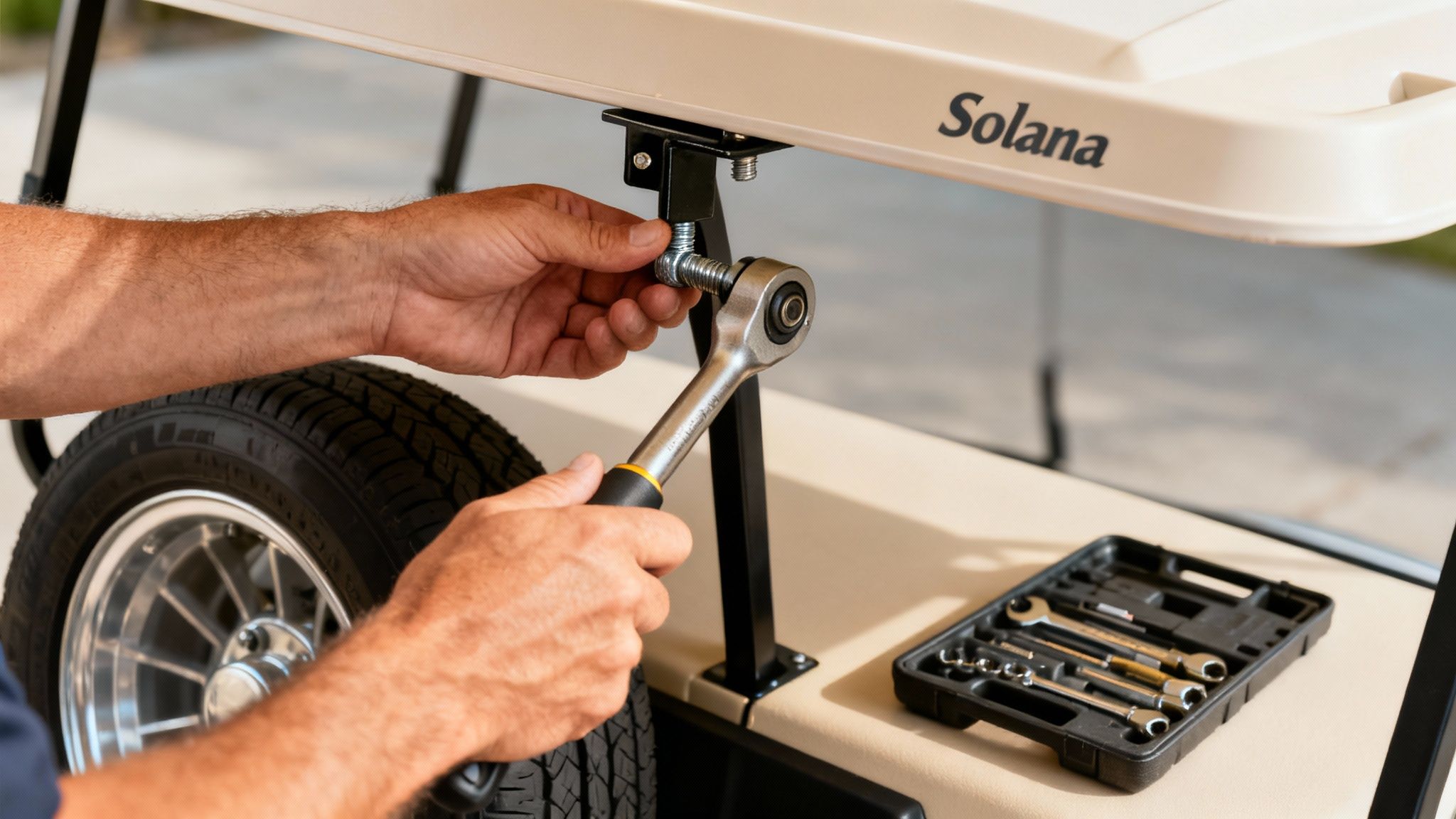
- Check All Fasteners: The vibrations from daily driving can work bolts loose over time. Give the hardware connecting the roof to the support struts a gentle tightening to make sure everything is secure and rattle-free.
- Look for Cracks: Pay close attention to the areas around bolt holes and along the edges. Spotting a tiny stress crack early, especially on plastic roofs, means you can address it before it spiders across the whole panel.
- Inspect for Sun Damage: On plastic canopies, a chalky or faded appearance is a dead giveaway of UV degradation. A quick spray with a UV-protectant product can add years to its life by slowing this process down.
To really get the most out of your roof, you might even adapt a comprehensive roof maintenance checklist to fit your cart's specific needs.
Proper Cleaning for Different Materials
How you clean your roof depends entirely on what it's made of. Using the wrong stuff can do more harm than good, so it’s crucial to match your cleaning method to the material.
A Critical Tip: Stay away from abrasive cleaners, harsh chemicals like acetone, and rough scouring pads on any type of roof. These will scratch surfaces, strip off protective UV coatings, and ultimately weaken the material itself.
For the vast majority of plastic and aluminum roofs, all you need is a bucket of mild, soapy water and a soft cloth or sponge. Give it a gentle wash, then rinse it thoroughly with clean water to get rid of any soap residue. It’s a simple step that keeps your fleet looking great and prevents grime from eating away at the finish.
Got Questions About Your Golf Cart Roof? We've Got Answers.
When you're outfitting a single cart or a whole fleet, questions are bound to pop up. It's just part of the process. Let's walk through some of the most common things we hear from owners and property managers to get you the right "dach golf cart" setup.
Choosing the Right Material for Your Climate
If you're anywhere near the coast or in a place where the sun is relentless, your choice of roof material is everything. For these tough environments, you really can't go wrong with ABS plastic or aluminum.
Standard plastics just don't hold up; they get brittle and fade fast under constant UV assault. ABS is a step up, offering much better resistance. But aluminum? It’s in a class of its own—it's completely immune to UV damage and laughs off the corrosive salty air you get near the ocean.
Think of it this way: investing a little more upfront for a UV-resistant or corrosion-proof roof saves you a ton in replacement costs and repair headaches later. It’s about fighting the elements before they win.
Compatibility and Performance Questions
Everyone wants to know if they can mix and match parts from different brands. It's a fair question, especially if you're looking to save a few bucks or find a unique style.
-
Can I put a roof from another brand on my Solana EV?
Honestly, we really don't recommend it. While some aftermarket roofs might look like they'll fit, they weren't built for the exact dimensions of a Solana EV frame. You'll likely end up with a bad fit, annoying rattles, and even potential safety problems. Sticking with OEM or certified parts is the only way to guarantee a perfect fit and keep your warranty intact. -
How much does roof weight affect performance?
The weight of the roof does have an impact, but it’s usually pretty small. A heavier roof, like a solid aluminum one, might slightly ding your battery range and acceleration. But for most day-to-day driving, the difference is almost unnoticeable—we're talking less than a 5% hit to your range. The trade-off for superior durability is almost always worth it.
More Than Just a Cover: Advanced Roof Features
These days, a golf cart roof is more than just a piece of plastic over your head. It's becoming a hub for cool tech and features that make the ride better.
Many of the newer roofs come with accessories built right in. You can find options with integrated Bluetooth speaker systems, interior LED dome lights, and even pre-wired setups for adding light bars. The biggest game-changer, though, is the solar roof. These have solar panels integrated directly into the top, constantly trickle-charging your batteries. This can seriously extend your range and cut down on how often you need to plug in.
Ready to top off your vehicle with a roof that’s as durable as it is well-designed? Check out the premium accessories and complete vehicle packages from Solana EV to make sure your investment is properly protected. Explore Solana EV Accessories