
When you start digging into what people are actually saying about Denago golf carts, you find a story of trade-offs. It's a classic tale of a newer brand shaking things up with great value and modern touches, but with some of the growing pains you might expect.
Owners often rave about the price, the sleek look, and getting a lithium battery right out of the gate. But on the flip side, you’ll hear some whispers of concern about how they hold up over the long haul and whether your local dealer will be there for you when you need them.
What Owners Really Think About Denago Golf Carts
If you search for "Denago golf carts reviews," you'll quickly see a brand that's made a real splash by putting together a very tempting package. They've found a sweet spot in the booming world of electric carts, which is really taking off as more people look for clean, quiet transportation.
Here in North America, we're the biggest piece of the pie, making up 44.7% of the global market. And within that, electric carts like Denago are king, accounting for a massive 75.4% of all sales. It's clear people want zero-emissions rides, and brands are scrambling to meet that demand. You can discover more insights on the growing golf cart market and see just how big this trend is.
I've cut through the marketing hype to give you the real scoop from people who've put their money down and have a Denago sitting in their garage. This is a summary of the good, the bad, and the things you absolutely need to know.
Common Themes in Denago Reviews
As you read through forums, dealer reviews, and Facebook groups, the same points come up again and again. People are genuinely drawn to Denago because it feels like a smarter, more budget-friendly choice compared to the big, established names, but without feeling like you're skimping on the important stuff.
The lithium-ion battery is a huge part of that appeal. Having it as a standard feature is a massive win for most buyers. They talk about getting more range and charging way faster than their buddies who are still dealing with old-school lead-acid batteries.
But it’s not all sunshine and rainbows. Some Denago golf carts reviews raise a red flag about the dealer experience. Getting parts or timely service isn't always a smooth process, which really underscores just how crucial it is to buy from a solid, local dealer you can trust. It seems like the cart itself offers a ton of value, but your long-term happiness might hinge entirely on the quality of your local support.
Key Takeaway: The general feeling is that Denago nails the value proposition. You get a lot of modern cart for your money. The biggest X-factor is your local dealer—their support can make or break your entire ownership experience.
To make it even clearer, I've boiled down all the owner feedback into a simple table. This gives you a quick snapshot of what people love and what they're cautious about.
Denago Golf Carts at a Glance: A Summary of Owner Feedback
This table sums up the most frequent comments we've seen from verified Denago owners. Think of it as the cheat sheet for understanding the brand's real-world reputation.
| What Owners Love | What Owners Caution |
|---|---|
| Excellent Value: Getting modern features like lithium batteries at a lower price point. | Dealer Support Varies: The quality of service and parts availability can be inconsistent. |
| Modern Styling: Sleek, updated designs that stand out from older models. | Long-Term Durability: Some questions remain about build quality over several years. |
| Standard Lithium Battery: A huge plus for performance, range, and convenience. | Fit and Finish: Minor issues like plastic panel gaps or trim inconsistencies are noted. |
| Street-Legal Ready: Many models come equipped with necessary safety features. | Aftermarket Parts: Fewer third-party accessory options compared to major brands. |
In a nutshell, if you find a fantastic local dealer and prioritize upfront cost and modern features, a Denago could be an excellent fit. But if you're more concerned with proven, long-term reliability and a vast support network, you'll want to weigh these points carefully.
How Denago Carts Perform in the Real World
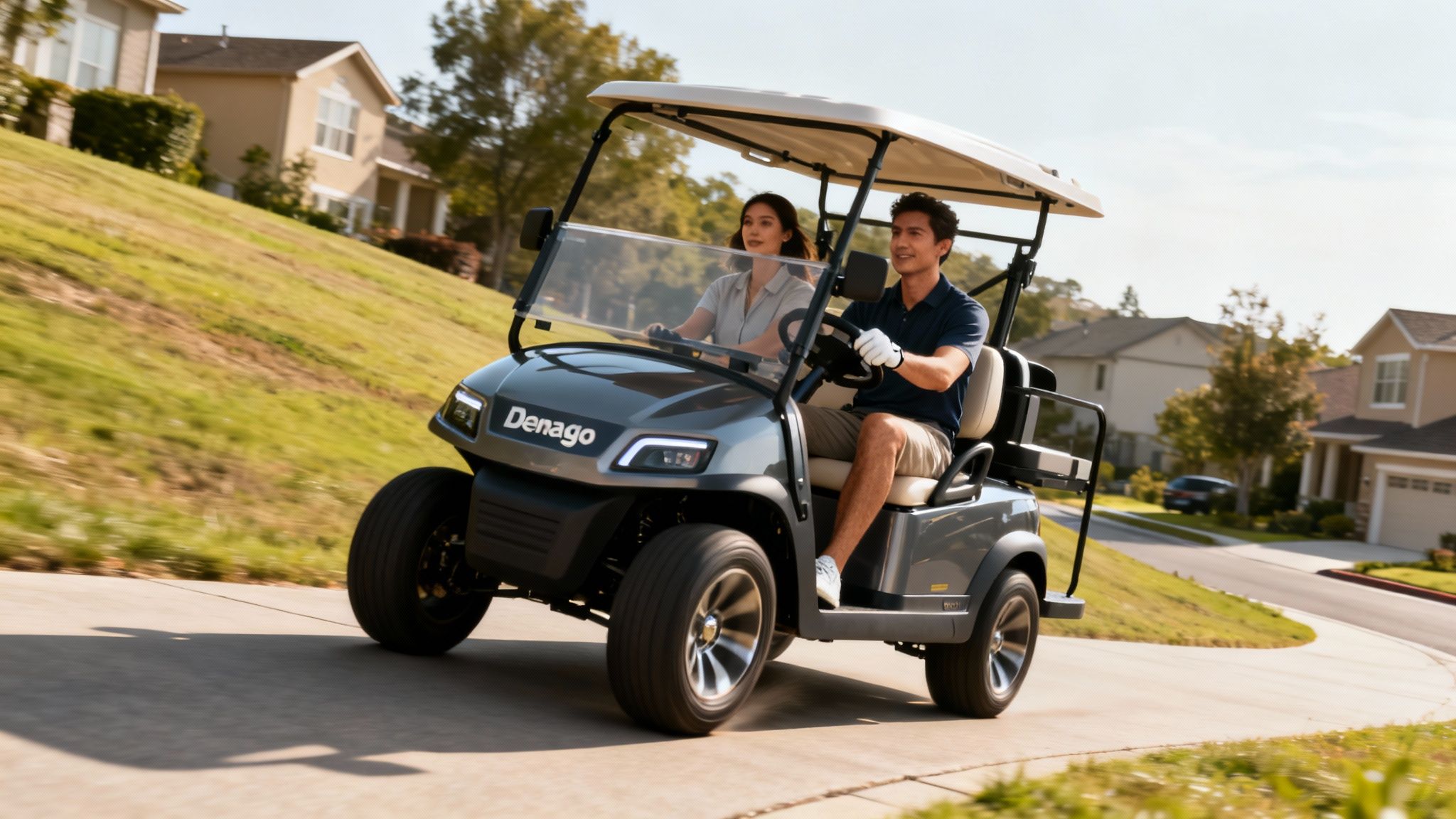
Spec sheets are one thing, but the real test is how a cart feels on the pavement. Does it groan up hills? Does it handle sharp turns in the neighborhood with confidence? When you dig into Denago golf carts reviews, you start to see a clear pattern: these carts deliver solid, reliable performance, especially for what they cost.
One of the first things owners mention is the peppy acceleration. That's the standard lithium battery and modern AC motor at work. Unlike older carts with DC motors that can feel like they're waking up from a nap, a Denago gives you that instant get-up-and-go. It's a responsive feel that makes you feel comfortable pulling into traffic or starting from a dead stop on an incline.
Power and Handling Insights
That motor isn't just for a quick start; it’s about having the muscle when you need it. I've seen countless comments from Denago owners who say their carts don't even break a sweat on neighborhood hills, even loaded with four people. On paved roads, the ride is generally described as smooth, with a suspension that finds a nice middle ground between being too stiff and too floaty.
Now, let's be realistic. The handling isn't going to feel like a high-end, premium cart. It’s perfectly suited for community streets and golf paths, but it’s not built for aggressive driving or rough trails. Think of it as a dependable family sedan, not a trail-rated SUV. It does its job exceptionally well in the environment it was designed for.
Owner Consensus: For everyday community driving, Denago carts have more than enough power. The zippy acceleration is a genuine highlight, and they climb hills without a problem, making them a really practical choice for most neighborhoods.
The All-Important Battery Range
A cart's range is everything, and this is an area where Denago's switch to standard lithium batteries really pays off. The advertised numbers are a good starting point, but what owners actually experience is what counts. Feedback consistently shows that a full charge provides plenty of juice for a typical day of running around—trips to the pool, visiting friends, or heading to the local store.
Of course, your mileage will vary. The range is always affected by a few key things:
- Passenger Load: A cart carrying four adults is going to work harder than a cart with just the driver.
- Terrain: Cruising on flat ground is a lot easier on the battery than tackling steep hills all day.
- Driving Style: A heavy foot on the pedal will drain the battery much faster than smooth, steady driving.
Even with these variables, you see very few complaints about range in Denago golf carts reviews. In fact, people on forums often rave about the modern batteries, smooth ride, and all the customization options, which adds up to a great value. In a booming market like Florida, which accounts for $123.6 million in sales (7% of the U.S. total), brands like Denago are becoming a common sight. You can explore the full U.S. golf cart market report to see just how big the industry is.
All in all, performance is a major reason people are happy with their purchase. For a more detailed look at what each model can do, our https://solanaev.com/denago-golf-carts/ gets into the specifics.
A Closer Look at Build Quality and Durability
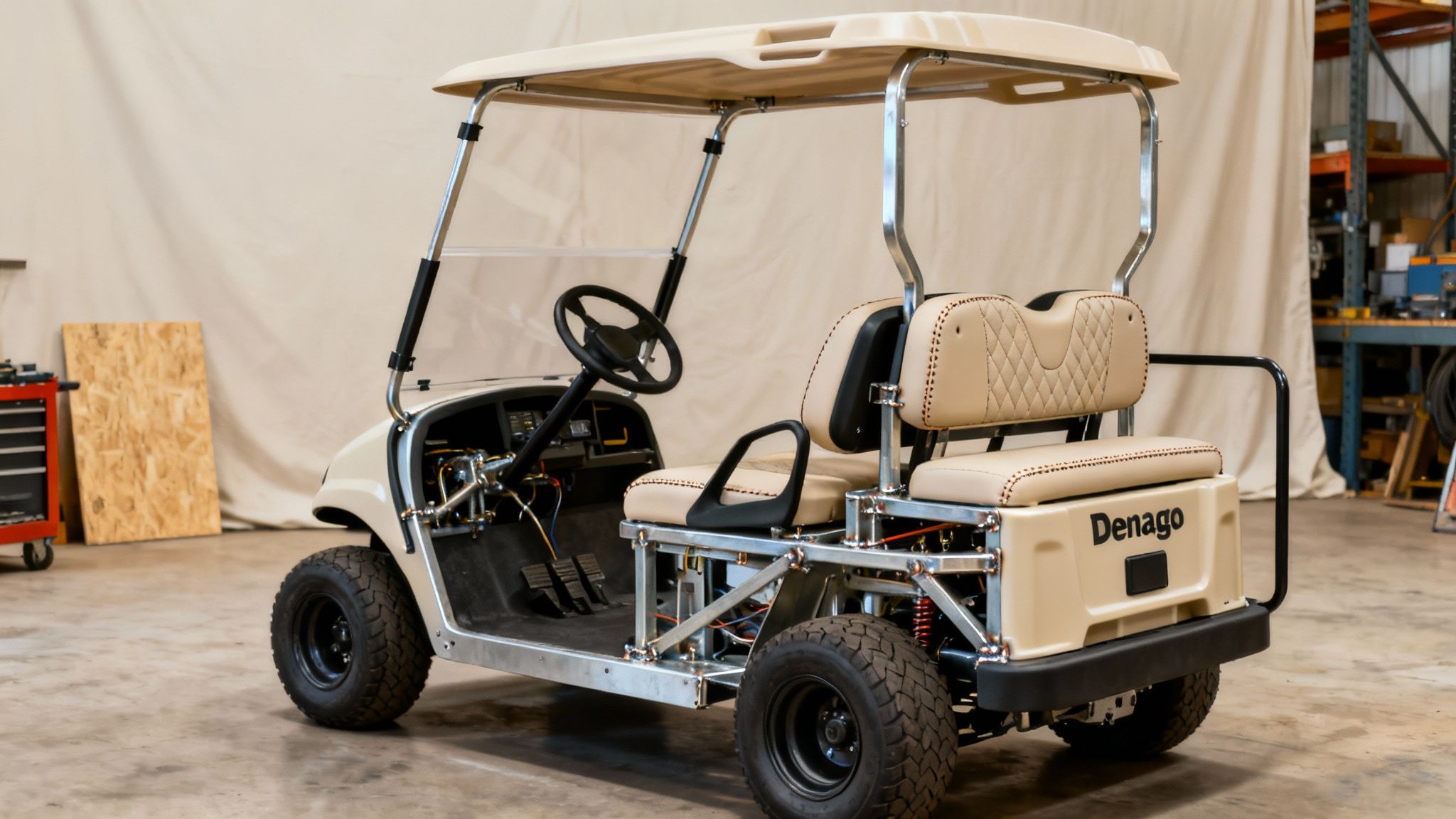
A golf cart’s real value isn't just its sticker price—it’s how well it stands up to the grind, season after season. Digging into Denago golf carts reviews, it's clear that build quality is a hot topic, and owner feedback paints a pretty clear picture. The consensus? Denago carts are built solidly for what you pay, delivering a reliable ride for everyday use around the neighborhood.
Most owners will tell you the overall construction feels functional and sturdy enough for its intended purpose. The frame, the literal backbone of the cart, gets good marks for being tough enough to handle daily trips and a full load of passengers without any trouble. That said, some reviews do bring up minor issues with fit and finish—things like small gaps between plastic body panels or trim that doesn't line up perfectly. These are usually cosmetic quirks, not deal-breakers, but definitely something to keep an eye out for when you're at the dealership.
Materials and Long-Term Wear
The materials Denago uses are a straight reflection of its price point. You get durable plastic body panels and practical upholstery, but you're not getting a luxury finish.
- Upholstery: The vinyl seats are fine for shorter trips, but some owners mention they can start showing wear—like small cracks or fading—a bit faster than what you'd see on premium brands. This is especially true if you live somewhere with a lot of intense sun.
- Frame Material: The majority of Denago frames are welded steel. Steel is strong, no doubt, but it can rust, especially if you're in a humid or coastal area. Keeping it clean and giving it a regular once-over is the best way to keep corrosion at bay. If rust is a major concern, it’s worth learning about the long-term advantages of an aluminum frame golf cart as a point of comparison.
- Components: Pay attention to the little things, like bolts and fasteners. A handful of reviews mention seeing some light surface rust on this hardware after being exposed to moisture over time.
Key Insight: Think of Denago's build quality as practical and dependable for the money. It might not have the high-end materials of a cart costing twice as much, but owners generally agree it’s a solid machine that holds up well when you take care of it.
Customization and Owner Upgrades
One real strength that keeps popping up in Denago golf carts reviews is how easy they are to personalize. Since the base cart is so affordable, many owners are happy to put a little extra money into upgrades that boost both looks and performance.
Some of the most popular mods are swapping out for premium wheels and tires, which does wonders for the cart’s appearance and can also smooth out the ride. Putting in a quality sound system is another go-to upgrade, turning a simple neighborhood runabout into a much more enjoyable cruise. These kinds of tweaks let owners put their own stamp on their Denago, making it truly their own.
Understanding the Dealer and Warranty Experience
Buying a golf cart isn't just about the vehicle itself. It’s about entering a relationship with the brand and, more critically, your local dealer. As I've dug through countless Denago golf carts reviews, one theme pops up again and again: the post-purchase experience is everything. You can have the best cart on the market, but if your local support is lacking, your long-term satisfaction is going to take a hit.
One thing that's clear from owner feedback is that the Denago dealer network is still in its growth phase. This means you'll see some real inconsistencies out there. Some folks rave about a seamless buying process with a dealer who’s on the ball, knowledgeable, and genuinely helpful. But then you hear from others who've struggled with communication, especially when trying to book a service appointment or track down a specific part. This makes vetting your dealer just as crucial as picking the right cart model.
Navigating Warranty Claims and Service
Think of your warranty as a safety net. Its real-world value, however, comes down to how well your dealer can handle a claim. Denago generally provides a limited warranty, but owners can't stress this enough: get every single detail in writing. The biggest complaints I see in reviews often circle back to service delays and parts availability. A cart that’s out of commission for weeks waiting on a replacement part can ruin the ownership experience fast.
Crucial Takeaway: Your dealer is your single point of contact for all warranty work. Finding an established dealership with a dedicated service department and a solid inventory of common parts is the single best thing you can do for a headache-free ownership.
Denago's standard coverage is often a one-year limited warranty, though you might find options to upgrade. This is a bit shorter than what some of the competition offers, where two years or more is becoming more common. You really need to understand the fine print, as not every component is covered for the same amount of time. To get a better sense of what a strong policy includes, it's worth learning what to look for in a comprehensive electric vehicle warranty.
Before you even think about signing the paperwork, pin your dealer down with some direct questions about their service operation:
- What's your average turnaround time for common repairs?
- Do you keep essential parts like controllers and chargers in stock right here?
- What's your exact process for handling a warranty claim?
The way they answer these questions will tell you everything you need to know about the support you’ll get after the sale. A dealer who gives you confident, straight answers is usually a sign you've found a reliable partner for your new Denago.
How Does Denago Stack Up Against Other Brands?
When you’re digging through Denago golf cart reviews, it’s only natural to wonder how they fit into the bigger picture. Instead of a generic ranked list, let's look at this from a more practical angle: your specific needs. The goal isn't to find the one "best" cart on the market, but to figure out if Denago is the best cart for you.
We'll pit Denago against some of the usual suspects, zeroing in on what owners really care about: battery tech, warranty, and of course, the price tag. This will help you see exactly where Denago shines and where a competitor might be a smarter choice.
Finding Denago's Place in the Lineup
Think of Denago as the value-packed contender that’s not afraid to compete with the big guys. It goes head-to-head with brands like Icon and Evolution, which also cater to buyers who want modern features without the steep cost of legacy names like Club Car or E-Z-GO.
Denago's main draw is simple: it strikes a fantastic balance between affordability and the features you actually need, especially its standard lithium battery.
While a brand like Evolution might lean into a more luxurious feel with premium add-ons, Denago keeps its focus on delivering a solid, functional cart that gets the job done well. It's a smart approach, especially as electric carts continue to dominate, now holding 75.4% of the market share. If you're curious about where the industry is heading, you can learn more about golf cart market dynamics and the tech driving neighborhood transportation.
This strategy makes Denago a perfect fit for anyone who values practicality over brand prestige.
A Quick Analogy: If Evolution is the fully-loaded, top-tier trim of a popular car, Denago is the smartly equipped base model. You get the great engine (the lithium battery) and all the essential tech, but you're not paying extra for leather seats you don't really need.
The Head-to-Head Comparison
So, how does Denago really compare on the points that matter most? Let's break it down.
1. Price and Bang for Your Buck
Right out of the gate, Denago is almost always one of the most budget-friendly choices. You can often find their base models priced between $7,000 and $9,500. That's a compelling number when you see competitors like Icon starting around $8,000–$11,000 and Evolution pushing into the $9,500–$14,500+ range. If your main goal is to get a brand-new, lithium-powered cart without breaking the bank, Denago should be at the top of your list.
2. What Comes Standard?
This is where Denago makes a really strong case for itself. While many other brands offer lithium batteries as a pricey upgrade, Denago makes them standard. That’s a huge plus. On the flip side, brands like Solana EV and Evolution tend to bake more premium features into their standard packages—think upgraded seats, slick digital touchscreens, or beefier suspension systems. It all comes down to what you're willing to pay for.
3. The Warranty Question
Here’s the trade-off. Denago typically comes with a 1-year limited warranty, which, frankly, is on the shorter end of the spectrum. Competitors like Icon and Evolution often step up with 2-year or even longer limited warranties. This is a big deal if long-term peace of mind is high on your list. You really have to ask yourself if the upfront savings are worth the potential risk of covering repairs yourself after that first year.
Your Pre-Purchase Inspection and Test Drive Checklist
Reading Denago golf carts reviews is a fantastic starting point, but it's no substitute for getting your hands on the real thing. When you walk into a dealership, you want to have a plan. This isn't just a casual look-see; it's a focused inspection that lets you make a decision based on firsthand experience, not just what you've read online.
Think of yourself as an inspector for a few minutes. Before you even think about turning the key, do a slow walk-around. Run your hand along the body panels—do they feel solid? Are the gaps between them even and tight? Get down and look at the frame, especially where the suspension components are welded on. You're looking for clean, consistent welds, which are a good indicator of solid manufacturing.
This visual guide breaks down the three pillars of a smart golf cart purchase: the battery, the features you need, and the warranty that backs it all up.
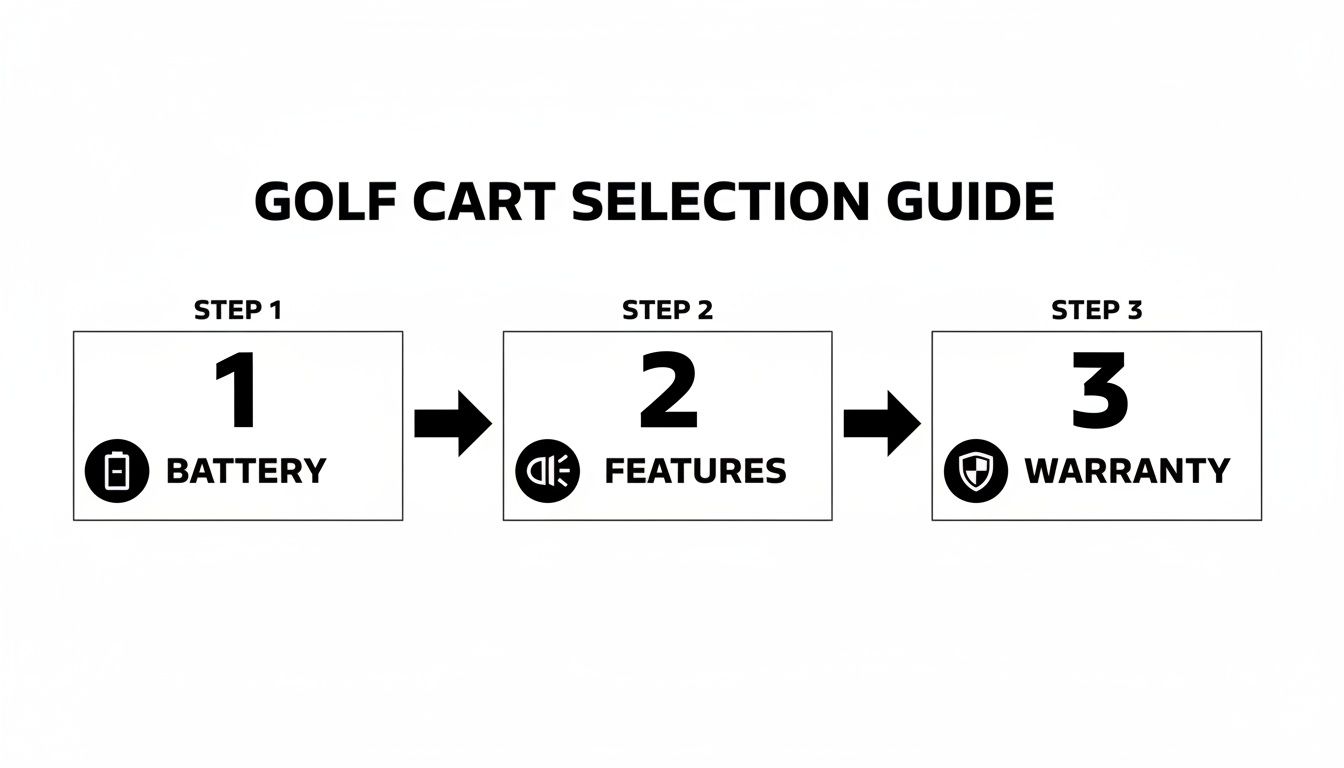
Use this as a mental map. Your inspection should always start with the heart of the cart before you get lost in the bells and whistles.
On-the-Lot Inspection Checklist
Before firing it up for a test drive, run through this quick checklist. These five minutes can tell you almost everything you need to know about the cart’s build quality and condition right off the bat.
- Battery and Electrical: Pop the seat and take a look at the lithium battery. You want to see clean, tight terminals and neatly managed wiring, not a rat's nest. Cycle through every single light: headlights (both high and low beams), tail lights, brake lights, and every turn signal.
- Controls and Comfort: Hop in the driver's seat. How does the upholstery feel? Is it sturdy or flimsy? Honk the horn. Check that the digital display is bright and easy to read. Grab the steering wheel and give it a little wiggle—there shouldn't be much slop or play in it.
- Tires and Suspension: Give the tires a quick check for proper inflation and any weird wear patterns. Then, go to each corner of the cart and push down hard. The suspension should compress smoothly and pop right back up without any extra bouncing.
Your Test Drive Script
Okay, now for the fun part. Once you're cleared to drive, follow this simple script to get a true feel for how the cart performs in the real world.
Pro Tip: Find out if there's a small hill or an incline nearby where you can test the cart. This is the single best way to feel the motor's torque and see how the battery delivers power when it's actually working hard.
- Stop-and-Go Acceleration: From a dead stop, press the pedal smoothly. The cart should take off instantly, with no lurching or hesitation. It should feel responsive.
- Braking Performance: Get up to a moderate speed and apply the brakes firmly. The cart needs to stop in a straight line without pulling you to the left or right.
- Turning and Handling: Make a few tight turns at a low speed, first one way, then the other. Listen for any groans, creaks, or clunks from the steering or suspension. The cart should feel stable and predictable, not tippy.
Got Questions About Denago Carts? Let's Get Them Answered.
After digging through Denago golf cart reviews, a few questions probably keep popping into your head. Let's tackle the most common ones I hear from buyers, so you can feel confident in your decision.
Where Are Denago Carts Actually Made?
This is one of the first things people ask about any newer brand, and it's a smart question. Denago, like many others in the golf cart world, uses a global manufacturing approach to keep their prices competitive.
The nuts and bolts of it are that the main manufacturing and parts are produced in China. From there, the carts are shipped over to the U.S. for the final assembly and a round of quality checks. This two-step process allows Denago to offer a cart at an attractive price while still making sure it meets American standards before it lands on the dealer's lot.
What's the Real Story with the Denago Warranty?
Warranty is a big deal, and honestly, it’s an area you need to scrutinize. Denago typically provides a 1-year limited warranty. I'll be blunt: that's on the shorter side of the spectrum. Many established brands offer two years or even longer.
This warranty usually covers the big-ticket items like the frame, powertrain, and battery, but the specific terms can vary. It is absolutely crucial that you get the exact warranty details for your specific model, in writing, from your dealer. Zero in on the coverage for the lithium battery—it's the most expensive and important component you've got.
A Pro Tip: Always ask if you can buy an extended warranty. The upfront cost might seem like a lot, but for the peace of mind it buys you over several years of daily use, it can be a very worthwhile investment.
Can I Drive a Denago on the Street Right After I Buy It?
For the most part, yes. Many Denago models are built from the ground up to be street-legal Low-Speed Vehicles (LSVs). This means they roll off the assembly line with all the required safety gear for public roads.
You can expect to find features like:
- Headlights, taillights, and working brake lights
- Turn signals for both front and rear
- A horn and a set of rearview mirrors
- A Department of Transportation (DOT)-approved windshield
But here’s the catch: not every single cart they make is an LSV. Before you sign anything, double-check with the dealer that the exact model you're eyeing meets all your local and state laws for street use. A five-minute conversation now can save you a world of trouble later.
At Solana EV, we believe a well-informed buyer is a happy owner. If you're exploring your options, we invite you to check out our premium lineup of street-legal electric vehicles and see a new standard in performance and style at https://solanaev.com.