
If you've been keeping an eye on the electric vehicle space, you've probably noticed that "golf carts" aren't just for golf anymore. A new brand, Denago, is making waves by offering a compelling mix of modern style, high-end features, and a price tag that makes you look twice. These aren't your grandpa's old course cruisers; they're fully street-legal vehicles built for getting around your neighborhood, managing a property, or just enjoying a quiet, emissions-free ride.
Why Denago Is Turning Heads in the EV World
The personal transport landscape is changing, fast. That quiet whir of an electric motor is quickly becoming the go-to sound for community travel, and the classic golf cart has evolved right along with it. Today, these vehicles are all about versatile, eco-friendly local transportation, and Denago is positioning itself right in the middle of this shift.
This isn't just about being "green"—it's about pure practicality. Think about it: families in planned communities need an easy way to get to the pool, and resort managers need a reliable fleet to move guests. This demand for efficient, low-speed vehicles has blown the market wide open.
A Market on the Rise
The explosive growth in this industry explains how a newer brand like Denago could gain traction so quickly. The global golf cart market, where Denago EV operates, hit an estimated USD 2.06 billion in 2024 and is expected to soar to USD 3.21 billion by 2033. That’s not just a small bump; it’s a clear signal that people want convenient, sustainable transport options for their communities, campuses, and even some urban areas.
With North America leading the charge at a massive 44.7% market share and electric models making up over 75% of all sales, Denago's decision to focus on feature-packed electric carts was a smart one. You can dig into the full research on golf cart market trends to see the numbers for yourself.
Denago’s strategy is refreshingly simple: give buyers the features they actually want—like lithium batteries and street-legal components—right from the start. They’ve cut out the nickel-and-diming that often comes with customizing a cart from one of the older, established brands.
What Sets Denago's Approach Apart
Instead of making you pay extra for every little upgrade, Denago builds premium features directly into their standard models. The whole idea is to give you a better vehicle from the moment you drive it off the lot.
Here’s what that looks like in practice:
- Lithium Power is Standard: Forget about checking water levels in old lead-acid batteries. Every Denago comes with a maintenance-free lithium-ion battery. That means a longer lifespan, quicker charging, and consistent power that doesn't fade as the battery drains.
- Street-Legal Right Out of the Box: Their carts are designed from the ground up as Low-Speed Vehicles (LSVs). They already have all the required safety gear, like headlights, turn signals, brake lights, and seatbelts.
- Modern Tech and Design: These carts just look current. With clean, modern lines and digital dashboards, they appeal to anyone who wants their ride to be as stylish as it is functional.
By sticking to these principles, Denago isn't just selling another golf cart. They're offering a complete, modern package for anyone looking to get around their community with ease.
Finding Your Fit in the Denago Model Lineup
Choosing the right Denago golf cart isn’t just about picking a vehicle; it's about finding a partner for your lifestyle. Think of it this way: you wouldn't take a sports car on a camping trip. The same logic applies here. You need to match the cart's strengths to your daily routine.
Thankfully, Denago makes this pretty simple by offering two clear model lines: the Nomad and the Rover. Each is built for a different kind of user and a different type of terrain.
So, before you dive into specs, take a moment to think about how you'll really use it. Will it be for laid-back evening cruises around the neighborhood? Or maybe for hauling the kids and their gear to the community pool? On the other hand, maybe your property is a little more rugged, with some hills and gravel paths that demand more muscle. Nailing this down first is the key to getting the right cart.
This decision tree gives a great visual of how people land on an eco-friendly choice like a Denago for local trips instead of a traditional car.

As you can see, the journey toward a Denago usually starts with wanting a smarter, more sustainable way to get around close to home.
The Nomad Series: Your Neighborhood Navigator
The Denago Nomad is the classic neighborhood electric vehicle, through and through. It has a 2+2 seating setup, which means two seats facing forward and a bench in the back that faces rearward. That rear seat is the Nomad's secret weapon—it flips down to create a handy little utility bed, perfect for groceries, pool bags, or gardening supplies.
The standard Nomad has a lower ride height, which makes it incredibly easy for everyone, from kids to grandparents, to hop in and out. If you live in a community with paved streets and your trips are mostly on flat ground, the Nomad is a comfortable and seriously practical choice. For those who want a bit more presence and a better view of the road, the Nomad XL gives you the same versatile seating but adds a factory lift kit and bigger tires for a more aggressive look.
The Rover Series: Built for a Bit More Adventure
If your daily environment is a little less predictable, the Denago Rover series is ready to step up. The flagship Rover XL comes lifted from the factory and gives all four passengers their own comfortable, forward-facing seat. This is a huge deal for group outings—no more riding backward! It makes conversations easier and the ride more enjoyable for everyone.
That extra ground clearance makes the Rover a natural fit for uneven ground, gravel paths, or properties with a few hills. And for bigger families or even light commercial use at a resort, Denago recently launched the Rover XXL. It’s a six-passenger model that keeps the all-forward-facing seat design, turning it into an impressive people-mover without losing that rugged, premium Rover feel. You can learn more about what makes a great family vehicle in our guide to the best 4-seater electric golf cart options.
Comparing Denago Nomad vs Rover
To make the choice even clearer, this table cuts right to the chase, comparing the key specs and ideal uses for Denago's most popular models.
| Feature | Denago Nomad | Denago Rover |
|---|---|---|
| Ideal Use Case | Neighborhood cruising, paved roads, family errands | Larger properties, varied terrain, group transport |
| Seating | 4-person (2 forward, 2 rear-facing) | 4 or 6-person (all forward-facing) |
| Stance | Standard height or lifted (XL model) | Lifted with higher ground clearance |
| Key Advantage | Versatile rear seat flips into a utility bed | Enhanced passenger comfort with all forward-facing seats |
Ultimately, whether you lean toward the Nomad or the Rover, you're getting the same core Denago promise: a high-quality, feature-packed cart. Your final decision really just comes down to matching the vehicle’s design to your daily adventures.
What's Really Powering Your Denago?
When you look at a golf cart, it's easy to focus on the flashy paint jobs and comfortable seats. But what truly makes or breaks the experience is the technology humming away underneath. The core components—the battery, the motor, the controller—are what determine how a cart feels, how it performs on hills, and how much work you have to put into keeping it running.
Denago made some specific engineering choices that directly impact the day-to-day reality of owning one of their carts. Let's pull back the curtain and look at the key pieces of tech that define the Denago ride.
The Heart of the Cart: The Lithium-Ion Battery
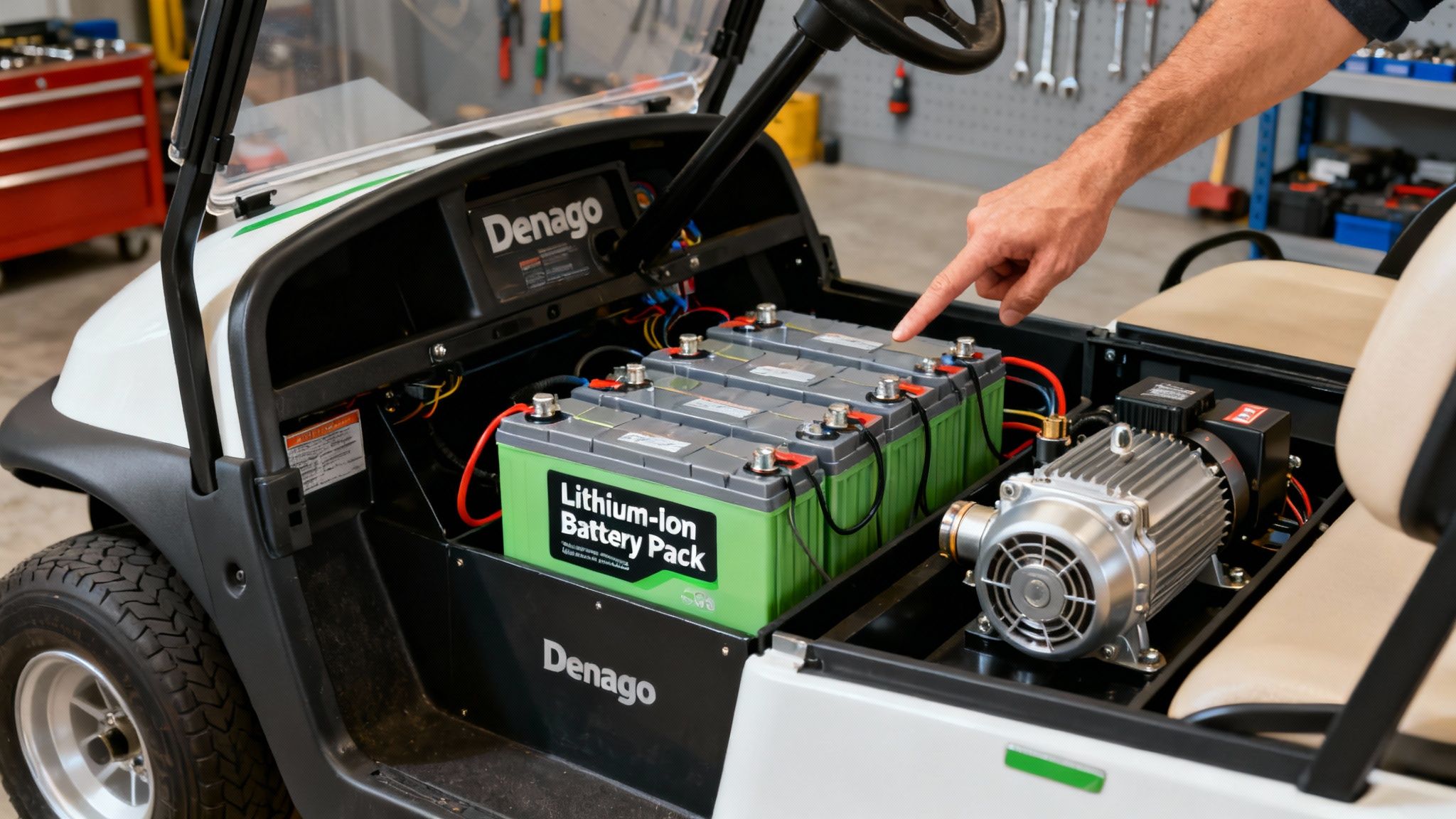
Every single Denago rolls off the line with a lithium-ion battery as standard equipment. This is a huge deal. It’s probably the most important feature separating these carts from base-model competitors still using old-school, heavy lead-acid batteries.
Think of it this way: lead-acid batteries are like the pack of eight D-cells you'd put in a boombox from the 90s. They're heavy, they take forever to charge, and you can feel the power fade long before they're actually dead. Denago's lithium battery is like the one in your smartphone—lightweight, quick to charge, and it delivers consistent power right until the very end.
This modern battery tech gives you some real, tangible benefits:
- Zero Maintenance: Seriously. You never have to pop the seat to check water levels, a messy chore that’s a constant headache with lead-acid systems.
- Faster Charging: A full charge only takes about 4 to 6 hours. You can plug it in at night and have it ready to go by morning, every time.
- Longer Lifespan: Lithium batteries are built to last through far more charge cycles, which means you get years of reliable service before needing a replacement.
- Consistent Power: The cart feels just as peppy with 20% battery as it does with 100%. No more sluggishness as your charge gets low.
The brain behind the battery is a sophisticated controller. To really understand how these work together, it’s worth reading up on what a battery management system is and why it's so vital for keeping the battery safe and healthy for the long haul.
The Muscle Behind the Motion: The AC Drive Motor
Getting that power to the wheels is a job for the AC (Alternating Current) drive motor, another standard feature across the Denago lineup. The term might sound a bit technical, but its real-world benefits are simple: power and efficiency.
AC motors are champs at producing torque, which is the twisting force that gets you moving. It’s what you feel when you press the pedal and the cart takes off, especially when climbing a hill.
Imagine trying to push a loaded wheelbarrow up a steep driveway. That initial grunt you need to get it rolling? That’s torque. An AC motor gives your cart that "grunt" effortlessly, so it can tackle inclines without wheezing or slowing to a crawl, even when loaded with people.
Pairing a standard lithium battery with a standard AC motor is Denago's one-two punch. The high-torque motor gets a steady stream of high-quality power, which translates into a ride that’s smooth, responsive, and surprisingly capable.
It’s not just about hills, either. AC motors deliver smoother acceleration on flat ground and are brushless, meaning fewer moving parts to wear out over time. That adds up to lower maintenance down the road.
Everyday Convenience and Safety Features
Denago didn't just stop with the powertrain. They baked in some thoughtful features that make the carts easier and safer to live with every day.
The onboard charger is a perfect example. Instead of dealing with a clunky, separate charging brick, you just use a regular extension cord and plug the cart directly into any standard 110V wall outlet. It makes topping off the battery incredibly simple.
Once you’re in the driver's seat, a bright digital dashboard gives you all your vitals—speed, battery level, mileage—in one clean display. Most models even come with a backup camera, which is a lifesaver when backing into a tight garage spot or navigating a busy parking lot. It’s these little touches that make the cart feel less like a utility vehicle and more like a modern, user-friendly machine.
Weighing the Pros and Cons of a Denago
Alright, let's get down to brass tacks. To figure out if a Denago is the right cart for you, we need to look at both sides of the coin. Every brand has its high points and its trade-offs, and Denago is no exception. This is an honest look at what they do well and where you might want to pause for thought, so you can make a choice with your eyes wide open.
First, let's dig into what has people so excited about this brand.
The Upside: What Denago Gets Right
The single biggest reason people are flocking to Denago is the sheer value packed into every cart. They've built their entire strategy around giving you the premium stuff as standard, not as a pricey add-on you have to haggle for.
Think of it this way: you're getting a fully loaded vehicle right off the showroom floor. You don't have to tack on thousands of dollars to get the features you actually want.
- Standard Lithium & AC Motor: This is the headliner. A powerful, efficient AC motor paired with a long-lasting, maintenance-free lithium battery used to be a major upgrade. With Denago, it's just how they come. That’s a huge win, both financially and for day-to-day convenience.
- Street-Legal Ready: These aren't old-school golf course carts that have been retrofitted. Denagos are built from the start to be Low-Speed Vehicles (LSVs). That means all the safety gear—headlights, turn signals, mirrors, seatbelts, even a VIN—is already there, which makes getting it registered for road use a whole lot easier.
- Modern Looks: Let's face it, these carts just look good. They have a clean, automotive feel with stylish wheels and a dashboard that doesn't feel like it's stuck in the 90s. If you want something that looks and feels current, Denago delivers.
It seems like Denago’s whole game plan is to make buying a cart simpler and more transparent. By baking in all the high-demand features, they’ve cut out the complicated and often expensive customization process you’ll find with the legacy brands.
The Other Side: Potential Drawbacks to Keep in Mind
Of course, no brand is flawless. There are a few realistic things to consider, mostly related to the fact that Denago is still a relatively new player in the game. These aren't necessarily deal-breakers, but they are important context.
The main thing to be aware of is the brand's age. Denago hasn't been around for 50+ years like Club Car or E-Z-GO. They don't have that decades-long history or the massive, deeply established service network that comes with it.
Here’s where that might matter to you:
- Dealer Network: Denago is growing its dealer footprint fast, but depending on where you live, the nearest authorized dealer might be a bit of a drive. This is something to think about for test drives, the initial purchase, and any future service needs.
- Long-Term Track Record: Early reports and reviews are very positive, but they simply don't have the decades of data on reliability and parts availability that the old guard has. For some buyers, that long history provides a sense of security a newer brand just can't offer yet.
- Custom Aftermarket Parts: You can find plenty of universal accessories that will fit just fine. However, the ecosystem of model-specific aftermarket parts—custom body kits, lift kits, etc.—is still catching up to the vast catalogs available for the big-name brands.
In the end, it's a trade-off. With a Denago, you get incredible features and value right out of the box. The flip side is that you’re buying into a newer brand that's still carving out its place in the market. For a lot of people, the pros here are a clear winner, but it's a calculation every buyer needs to make for themselves.
Breaking Down the Cost of Ownership
When you're shopping for any vehicle, the sticker price is just the first chapter of the story, and Denago golf carts are no exception. To get the full financial picture, you have to look at the total cost of ownership—that’s the initial purchase, long-term maintenance, and any savings you'll see down the road.
Think of it like buying a new refrigerator. One might have a lower price tag, but if it's an energy hog, it'll end up costing you more over its lifetime. Denago really leans into this idea, building its value around smart, long-term savings.
The Initial Investment
Denago has managed to position its carts very competitively in the market, especially when you look at the premium features that come standard. Of course, final pricing will depend on your local dealer, but here’s a general idea of what to expect for new models:
- Denago Nomad Models: These usually land somewhere between $7,900 and $8,500.
- Denago Rover Models: You'll typically see these ranging from $9,900 to $12,000, based on whether you go for the 4-seater or 6-seater.
What’s great is that these prices often bake in features that are pricey add-ons with other brands, like lithium batteries and street-legal kits. This “all-inclusive” approach makes budgeting a whole lot simpler, since you’re not getting nickel-and-dimed for the stuff you actually need. To see how these numbers stack up, our guide breaks down the full cost of an electric golf cart.
Long-Term Savings and Warranty Insights
This is where owning a Denago really starts to pay off. The biggest savings come from two places: the battery and the motor. Every single Denago cart comes with a maintenance-free lithium battery, which immediately gets rid of the headaches and costs that come with old-school lead-acid systems.
Owning a cart with a standard lithium battery means no more buying distilled water, no more cleaning corrosive acid residue, and no more worrying about replacing a heavy, underperforming battery pack every few years.
A huge chunk of any electric cart's long-term cost is tied to its power source. To really get a handle on the total cost, it's worth understanding battery lifespan, particularly for the kind used in modern EVs. Denago offers a solid 5-year warranty on its batteries, which gives you some serious peace of mind.
On top of that, the electric AC motor is practically maintenance-free. You can forget about oil changes, spark plugs, and fuel filters. That alone cuts annual service costs way down compared to gas carts. This kind of reliability is exactly why the market is booming. The global golf cart industry was valued at USD 1.88 billion in 2023 and is projected to hit USD 3.29 billion by 2032. This explosive growth is being fueled by demand for low-maintenance, street-legal electric carts just like the ones Denago builds.
Your Guide to Buying and Maintaining a Denago
So, you’re seriously considering a Denago golf cart? Good choice. But buying one is more than just picking a color. This is your road map to navigating the process, from finding a solid dealer and getting a feel for the cart on a test drive, to keeping it in great shape for the long haul.
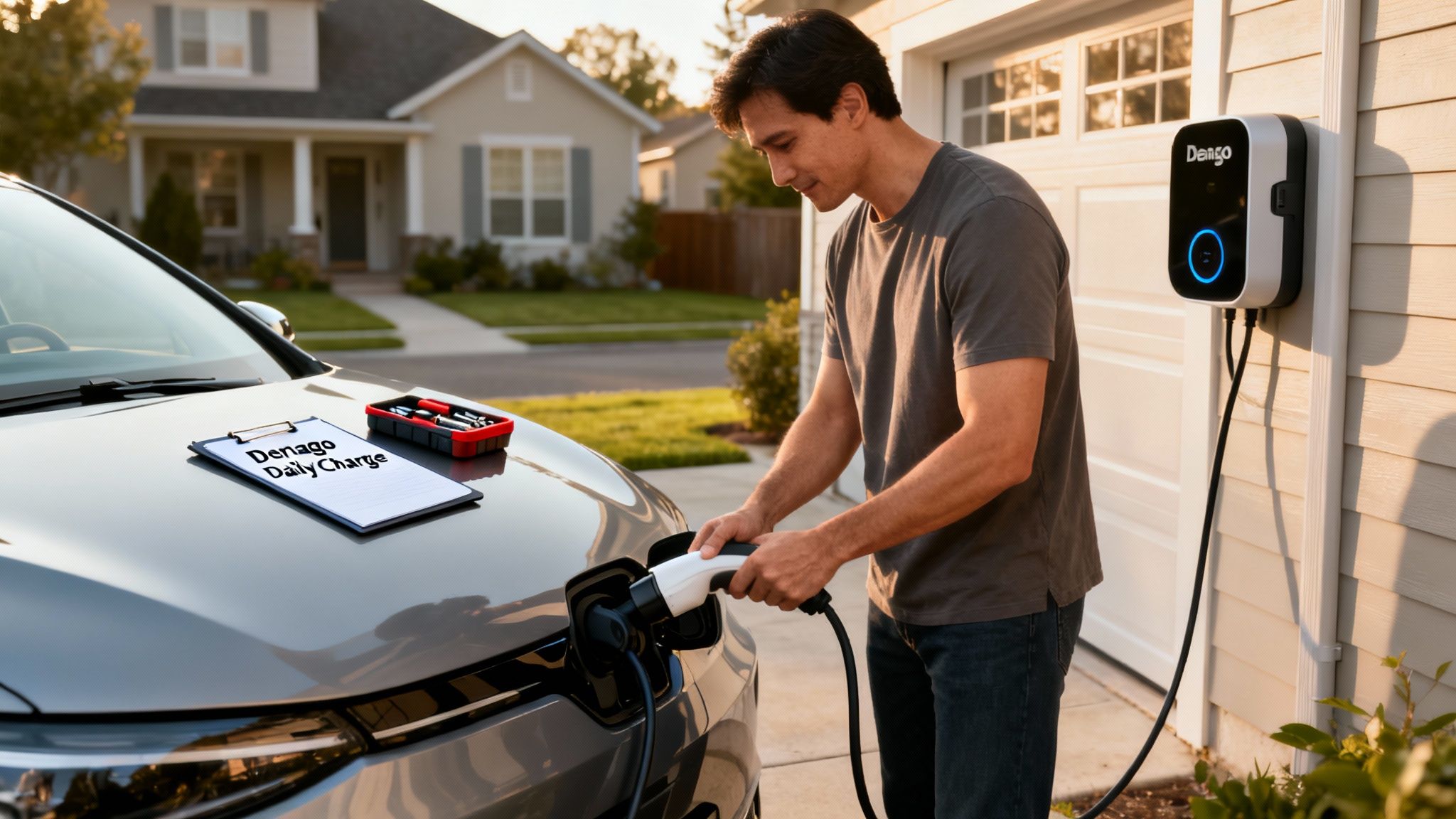
Once you’ve zeroed in on a model like the Nomad or Rover, the first step is finding an authorized Denago dealer. A quick search on the official Denago website will point you to the nearest one. Stick with official dealers—it's the only way to guarantee your warranty is honored, get advice from people who actually know the product, and make sure your new ride is set up correctly from day one.
Finding a Dealer and Taking a Test Drive
When you get to the dealership, do more than just admire the shiny paint. This is your chance to figure out if they’ll be a good partner for you and your cart. Think of it less like a sales pitch and more like an interview.
Here are a few things you’ll want to ask about:
- Customization Options: What can you add right away? Ask about sound systems, enclosures, or other accessories and if they can be installed before you take it home.
- Delivery Logistics: How does it get to your house? Clarify the delivery process, how long it takes, and what it costs.
- Service and Support: What happens when you need help? Find out where you’ll go for warranty work or routine service.
- Registration Help: Can they make the street-legal process easier? See if they offer help with the local DMV registration and titling.
The test drive is where you get a real feel for the machine. Pay attention to the little things. Punch it from a standstill to feel that instant torque from the AC motor—it should be smooth, not jerky. If you can find a hill, see how it climbs. Test the brakes and see how tight it can turn. You need to be sure it feels nimble and safe for your neighborhood.
Simple Maintenance for Long-Term Health
One of the best parts about going electric with a Denago is the minimal upkeep. Forget oil changes and engine tune-ups. That said, a little bit of care goes a long way in keeping your cart running like new.
Your main job is managing the battery. Denago’s lithium batteries are completely maintenance-free, so you’ll never have to mess with checking water levels like in the old lead-acid days.
The golden rule for lithium battery health is simple: don't leave it sitting at 100% or 0% for long. For everyday use, keeping it between 20% and 80% is the sweet spot. If you’re putting it away for the winter, aim for a 50% charge.
Beyond that, a few quick checks are all you need.
- Tire Pressure: Check it monthly. The right pressure gives you the best range, a smoother ride, and prevents uneven wear.
- Brake Check: Every so often, test the brakes in a clear, open area to make sure they still feel firm and responsive.
- Cleanliness: A regular wash does wonders. Rinsing off dirt and grime, especially from the undercarriage, prevents buildup and keeps everything looking sharp.
That’s pretty much it. Follow these simple steps, and you’ll protect your investment and ensure your Denago is always ready for the next ride.
Common Questions About Denago Golf Carts
To wrap things up, let's go through some of the questions that pop up most often when people are looking into Denago golf carts. We’ve pulled together the top queries to give you quick, straightforward answers, helping you iron out any last-minute details. Think of it as a final check-in before you decide if a Denago is the right fit for you.
We'll cover everything from street legality and real-world performance to what happens after you've made the purchase.
Are Denago Carts Street Legal Right Away?
Yes, they are. Denago builds its main models to be Low-Speed Vehicles (LSVs) straight from the factory. This means they roll off the assembly line with all the necessary safety gear already installed—headlights, taillights, turn signals, mirrors, a horn, and even an official Vehicle Identification Number (VIN).
Because they come factory-ready, the hard part is done. You'll still need to handle the registration and insurance just like you would with a car, following your local and state rules. A good dealer can usually point you in the right direction and make that process a lot smoother.
What Does the AC Motor Actually Do for Me?
Having an AC (Alternating Current) motor in your Denago isn't just a technical spec—it's something you'll feel every time you drive. You’ll notice it most when you head up a hill. The cart has more torque, so it doesn't strain or slow to a crawl, even with a full load of people. It also makes for a much smoother and quicker takeoff from a standstill.
The big win with AC motors is that they're brushless. This makes them more efficient and means they need way less maintenance over the years compared to older DC motors. For you, that translates to fewer trips to the shop and a more reliable cart.
This modern motor technology is a huge reason why a Denago golf cart feels so powerful and polished compared to the electric carts of the past.
What’s the Real-World Range I Can Expect?
While the official numbers can vary a bit, most owners find they can comfortably get between 30 and 50 miles on one full charge. For most people, that's more than enough for a few days of cruising around the neighborhood or resort without needing to plug in.
Of course, your mileage will vary based on a few things:
- Terrain: Constantly driving up and down hills will naturally use more juice than sticking to flat paths.
- Load: The more people and gear you have on board, the more energy it takes.
- Driving Habits: A lead foot will drain the battery faster than smooth, steady acceleration.
The good news is the standard lithium battery can get a full charge from empty in just 4 to 6 hours. Just plug it in overnight, and it’s ready to go again in the morning.
Can I Add Custom Features to My Denago Later On?
Absolutely. Denago carts are built with customization in mind, so they’re compatible with a ton of common aftermarket accessories. This makes it really easy to personalize your cart and make it perfect for how you plan to use it.
Your dealer is a great resource for adding custom parts, or you can find accessories from other manufacturers. People often add things like upgraded sound systems, custom wheels, all-weather enclosures for year-round use, or clever storage racks. It's always a smart idea to check with your dealer first to make sure any new parts are compatible and won’t void your warranty. This lets you truly make your Denago your own.
Ready to explore a modern, feature-packed electric vehicle for your community? At Solana EV, we offer a premium lineup of street-legal carts designed for performance, style, and reliability. Discover the perfect model for your lifestyle today.