
If you're looking for a 2 seat golf cart for sale, you're on the right track. These aren't just for the back nine anymore. For navigating a sprawling community, managing a large property, or just making a quick run to the local market, they're the perfect blend of easy and efficient. Think of it as your go-to ride for everything close to home.
Why a 2 Seater Is Often the Smartest Choice
The whole idea of a "golf cart" has completely changed. Sure, they still cruise the fairways, but you're just as likely to see them on neighborhood streets, resort pathways, and corporate campuses. This isn't just a fleeting trend; it’s a practical shift toward smarter local transportation.
Unlike their bigger 4 or 6-seat siblings, a 2 seat golf cart is all about agility. Its compact size makes it a breeze to park in tight spots, weave through crowded areas, and tuck away in the garage without a second thought. That kind of convenience is what makes it so useful for daily life.
The Perfect Mix of Practical and Personal
For couples, individuals, or anyone managing a property, a two-seater hits that sweet spot. You get all the transportation you need without hauling around empty seats. This focused design comes with some serious perks:
- Smarter on the Wallet: A smaller frame and fewer parts often mean a lower price tag right from the start, not to mention they're more energy-efficient to run.
- Easier Upkeep: With a more straightforward build, maintenance can be simpler, which helps keep the long-term cost of ownership down.
- Built for Your Life: It’s the ideal vehicle for a quick trip to the community pool, visiting a neighbor down the street, or handling yard work on your own.
This emphasis on personal, nimble transport is exactly why two-seaters lead the pack. Market research actually backs this up, showing that two-seater models make up the biggest slice of the pie, holding about 39.3% of the global market. Here in North America, they're even more popular, accounting for roughly 58% of all sales. You can dive deeper into these trends over at Future Market Insights.
It’s a Vehicle, Not Just a Toy
It's time to think of a modern 2 seat golf cart as a true local vehicle. Your search for one isn't just about finding a fun gadget; it's about choosing a practical, economical, and enjoyable way to get around. Now, let’s get into figuring out which one is the right fit for you.
What Features Actually Matter on a 2-Seat Golf Cart?
When you first start shopping for a 2 seat golf cart for sale, the spec sheet can look like a foreign language. Terms like "AC Motor," "Lithium-ion," and "Independent Suspension" get tossed around, but what do they really mean for your day-to-day use? Let's cut through the jargon and talk about what really makes a difference.
The Heart of the Cart: Battery and Range
Think of the battery as the fuel tank of your electric cart. The two main players you'll encounter are traditional Lead-Acid and modern Lithium-ion.
Lead-acid batteries are the old-school standard. They work, but they’re heavy, require regular maintenance (like checking and topping off water levels), and their power tends to fade as they discharge. It's a bit like an older-style tool battery that gets sluggish right before it dies.
Lithium-ion is the technology you’re used to in your smartphone. These batteries are completely maintenance-free, charge up much faster, and are significantly lighter. Best of all, they deliver consistent, full power right until the battery is empty, giving you a much more predictable and zippy ride. This choice directly impacts how and when you can use your cart.
A cart powered by a 51V/105Ah ECO Lithium Battery, for instance, can easily get you 30-50 miles on a single charge. That’s more than enough for a full day of running errands around the community, visiting friends, and even an impromptu trip to the pool without worrying about making it home.
The Muscle and the Ride: Motor and Suspension
If the battery is the heart, the motor is the muscle. You'll generally see two types: DC (Direct Current) and AC (Alternating Current). While older carts often use DC motors, newer, higher-quality models almost always feature an AC motor. They're more efficient, offer better torque for climbing hills, and provide smoother acceleration.
A 6.3kW AC motor, for example, gives you that extra oomph to tackle steep driveways or hilly roads without slowing to a crawl. It’s a feature you'll be thankful for every time you encounter an incline.
But all that power needs a good suspension to keep the ride comfortable. Cheaper carts often use a basic leaf-spring system—the same kind found on old trucks. It's functional, but you'll feel every bump and crack in the road. A more advanced independent suspension lets each wheel absorb bumps individually. It's the difference between a jarring, shaky ride and gliding smoothly over imperfections in the pavement.
The takeaway is simple: An AC motor paired with a good independent suspension is the gold standard for performance and comfort. This combination gives you the power to go anywhere in your community and the smooth ride to actually enjoy the trip.
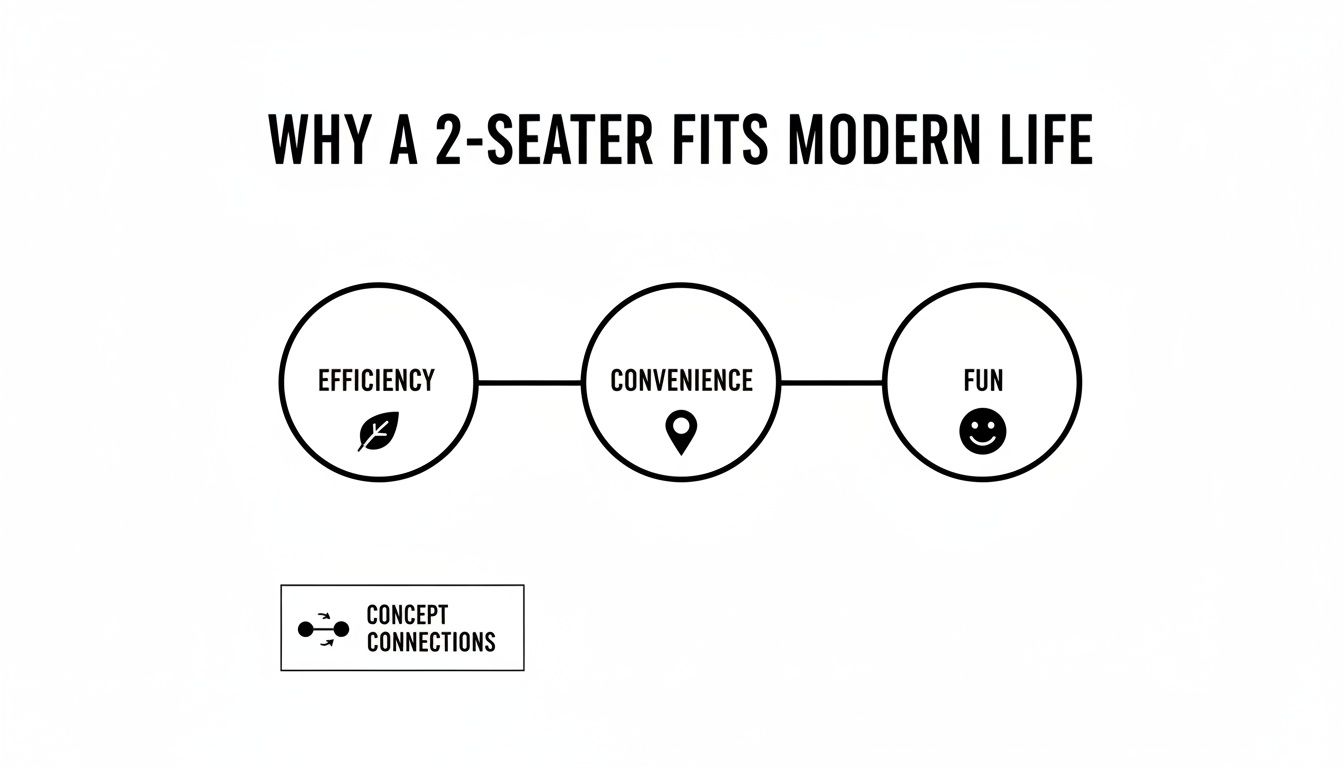
This quick diagram shows how these key features come together to create a vehicle that’s perfect for modern life—efficient, convenient, and just plain fun.
Speed, Safety, and Street-Legal Rules
Top speed is another huge consideration, especially if you want to drive on public roads. A standard golf cart is typically limited to around 15 mph. To be classified as a street-legal Low-Speed Vehicle (LSV), however, a cart must be capable of reaching speeds between 20 and 25 mph. This isn't about racing; it's about being able to safely keep up with the flow of neighborhood traffic.
But getting street-legal status involves more than just speed. Your cart will need a specific set of safety equipment, including:
- DOT-approved windshield and seatbelts
- Headlights, taillights, brake lights, and turn signals
- Side and rearview mirrors
- A horn
To give you a clearer picture, here’s a quick-glance table of the key specs we've discussed.
Key Specifications Snapshot for 2-Seat Golf Carts
This table helps you quickly see the typical ranges for key features, making it easier to compare models and understand what you're looking for.
| Specification | What It Means for You | Typical Range for 2-Seaters |
|---|---|---|
| Battery Type | Determines range, maintenance, and overall weight. Lithium-ion offers the best performance. | Lithium-ion (e.g., 51V/105Ah) or Lead-Acid |
| Motor Type | Affects acceleration, hill-climbing ability, and efficiency. AC motors are superior. | AC Motor (e.g., 6.3kW) or DC Motor |
| Top Speed | Crucial for street-legal (LSV) use. Must be 20-25 mph to keep up with traffic. | 15-25 mph |
| Range | How far you can go on a single charge. Lithium batteries provide the longest range. | 25-50 miles |
| Suspension | Dictates ride comfort. Independent suspension is much smoother than leaf spring. | Independent Front Suspension or Leaf Spring |
Understanding these core features helps you see past the sticker price and focus on what will give you the best ownership experience. And while these are the most common features you'll see, it's always a good idea to explore the different types of golf carts available to get a full sense of your options.
Street Legal Cruiser or Off-Road Companion
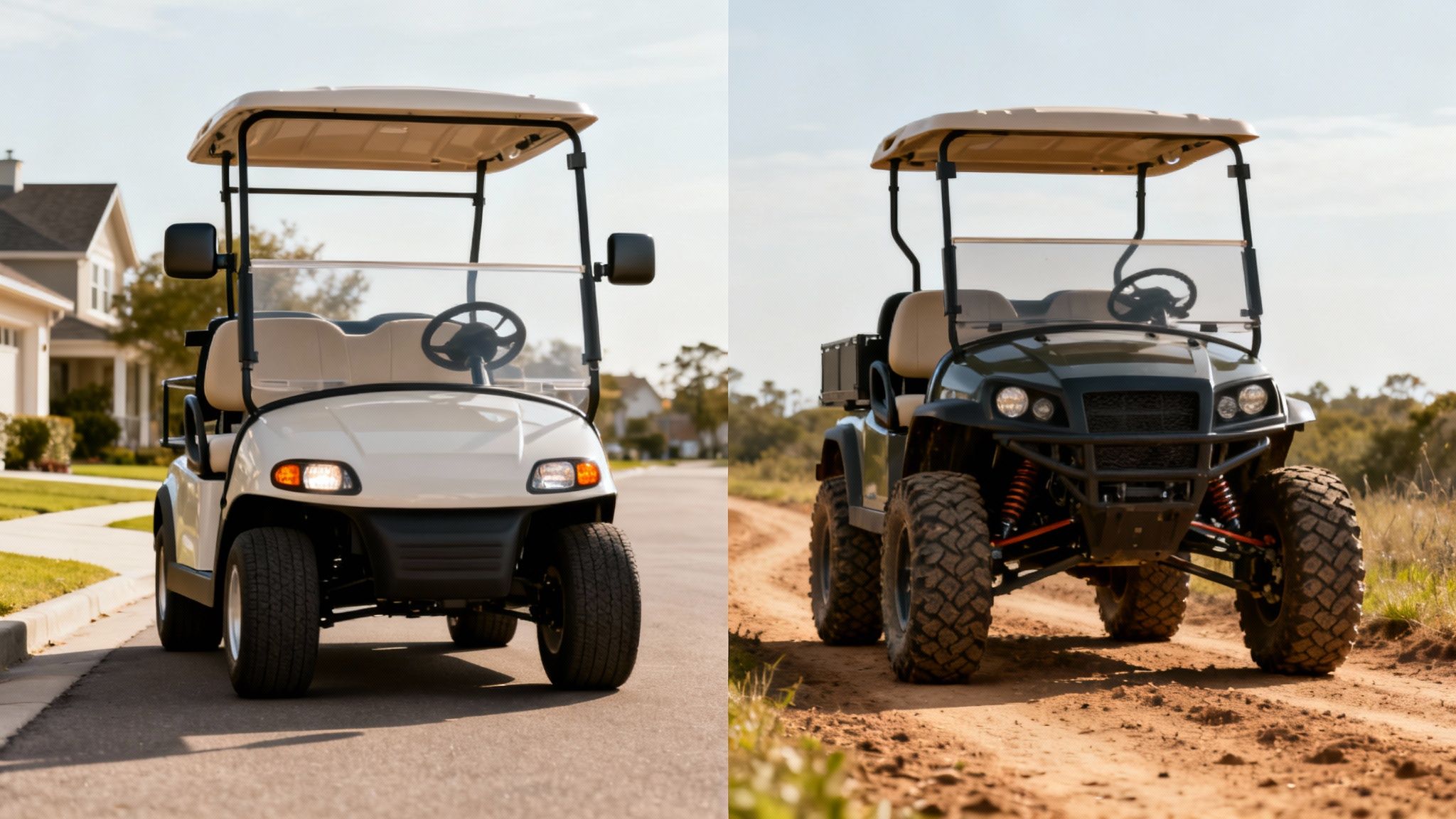
Before you even start looking at models, there's one simple question you need to answer: where are you planning to drive this thing? This is the critical fork in the road. Getting this right means you’ll end up with a cart that feels perfectly suited to your lifestyle.
One path leads you to what's known as a street-legal Low-Speed Vehicle (LSV). Think of this as less of a traditional "golf cart" and more of a compact, neighborhood electric car. It's the perfect fit for cruising around gated communities, heading to the clubhouse, or running quick errands without firing up your full-size vehicle.
The other path takes you toward a rugged off-road companion. This is for the person who needs a tough, no-nonsense machine for managing a large property, navigating private trails, or getting work done outdoors. It’s a workhorse, built for durability and capability, not for paved-road politeness. Your answer here will shape every other decision you make.
The Street-Legal Community Vehicle
If you picture yourself driving on public roads, you’re in the market for an LSV. These vehicles are designed for roads with posted speed limits of 35 mph or less, but they have to meet strict federal safety standards to get there.
The National Highway Traffic Safety Administration (NHTSA) sets the rules, and they're not optional. To be truly street-legal, a cart must be equipped with:
- A proper Vehicle Identification Number (VIN)
- DOT-approved headlights, taillights, turn signals, and a horn
- Seatbelts for both passengers
- Rearview and side-view mirrors
- A top speed that falls between 20 and 25 mph
Once a vehicle meets these criteria, it can be registered, plated, and insured just like your car. It becomes a legitimate vehicle for all your local trips, offering amazing convenience for those short jaunts where a big car feels like overkill.
If this sounds like the right direction for you, it's worth digging into the details. You can get the full rundown in our complete guide to street legal golf carts.
The Capable Off-Road Workhorse
On the other hand, if your cart will spend its life exclusively on private land, your focus shifts entirely. Forget about VINs and turn signals; you need to prioritize rugged, real-world performance.
An off-road 2-seater is a completely different beast. You'll want to look for features like a lifted suspension to clear rocks and ruts, and aggressive, knobby tires that can bite into dirt, mud, and grass. A heavy-duty frame is also a must-have to absorb the abuse of uneven terrain.
These machines are all about function. They often come with powerful AC motors that deliver the low-end torque needed to climb steep hills or tow a small utility trailer. It's the perfect tool for property maintenance, light farm work, or just exploring your own slice of the outdoors. You're trading street-legal niceties for pure, unadulterated capability.
A Look at Top 2-Seater Models from Solana EV
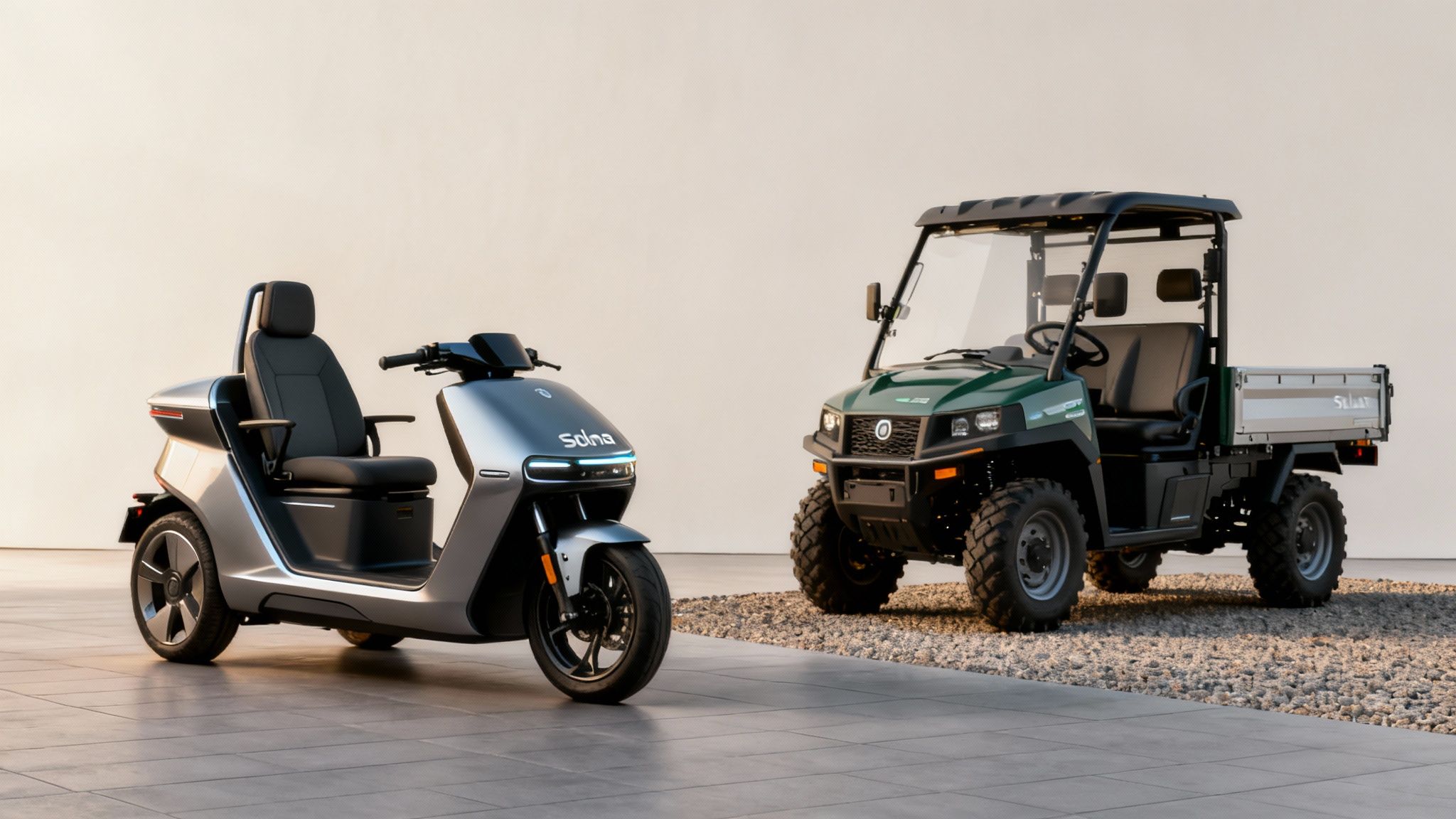
It’s one thing to understand the difference between an LSV and an off-road model on paper, but seeing how those differences play out in real life is what really matters. When you’re looking for a 2 seat golf cart for sale, concrete examples are the best way to match your needs to the right machine.
Let's dive into two distinct models from Solana EV—the sleek XA and the rugged F—to see how they’re built for completely different worlds. This isn't about a dry feature list. It's about seeing how the design choices and engineering translate into real-world performance, whether you're cruising through the neighborhood or getting work done on your property. By comparing these two, you'll get a much clearer picture of which path is right for you.
The Solana XA: Modern Community Cruising
The Solana XA is the perfect example of a stylish, street-legal LSV. It was designed from the ground up for someone who wants great performance but doesn’t want to sacrifice on looks. Picture this as your go-to ride for a sunny afternoon trip to the community pool or a quiet evening drive to a friend's house.
Its design is clean and modern, meant to look right at home next to today's cars, not like a relic from the golf course. More importantly, it’s fully loaded with all the safety and legal features needed for road use:
- Full LED Lighting: Bright headlights, taillights, and turn signals keep you visible day and night.
- DOT-Approved Windshield: Meets the same safety standards required for road-going vehicles.
- Automotive-Style Comforts: Little things like a digital display and genuinely comfortable seating make every trip a pleasure.
The XA is engineered for smooth, paved roads. The focus here is on a quiet, comfortable ride and the efficiency you need for zipping around town. This is the cart for anyone who wants a sophisticated, fun, and hassle-free way to get around their community.
The Solana F: A Workhorse Built to Last
On the other end of the spectrum, you have the Solana F. This is a no-nonsense, purpose-built utility vehicle. Think of it as a tough, dependable partner for managing a large property, hauling gear, or tackling rough terrain where a standard cart would quickly fall apart.
The philosophy behind the Solana F is simple: function over form. Every single part, from the heavy-duty frame to the beefed-up suspension, is chosen for its strength and ability to handle uneven ground. It’s a true workhorse.
This model is all about raw capability. It comes with features like a versatile cargo bed, higher ground clearance for rolling over obstacles, and a powerful AC motor that provides the low-end torque needed to climb steep hills or pull a heavy load. While you can certainly use it for getting around a large estate, its main job is to work hard, day in and day out.
Deciding between a lifestyle cart like the XA and a utility machine like the F is a huge step in the buying process. You can explore more in-depth comparisons in our complete golf carts review.
Making It Yours: The Buying and Ownership Journey
Alright, you’ve picked out the perfect 2 seat golf cart and are ready to pull the trigger. Making the purchase official can seem like a big step, but a little prep work makes it a breeze. Let's walk through what to expect, from financing to finding the right dealer, so you can move from the showroom to your driveway feeling totally confident.
For many buyers, financing is the way to go. Just like buying a car, dealers usually offer financing plans that let you spread the cost out over time. This can make a higher-end cart with all the bells and whistles much more attainable without having to pay a huge sum all at once.
Why Buying From an Authorized Dealer Matters
Where you buy your cart is just as critical as which one you choose. You might see deals from private sellers or big-box stores, but going with an authorized dealer gives you a level of expertise and peace of mind you just won't get anywhere else. These folks live and breathe golf carts.
When you work with a strong dealer network, like the one Solana EV has built, you’re getting more than just a vehicle. You're getting:
- Expert Guidance: Dealers know their products inside and out. They’ll help you connect the dots between the features on the spec sheet and how you’ll actually use the cart.
- Reliable Service: These are the pros who will handle your maintenance and repairs. They have the right tools and access to genuine parts to keep your cart in top shape.
- Warranty Support: If something goes wrong, your dealer is your first call. They handle all the warranty claims for you, saving you a massive headache.
Think of a good dealer as your partner for the long haul. They’re not just there to make a sale; they're the ones who will support you and protect your investment for years to come. That peace of mind is priceless.
Looking Beyond the Price Tag: Total Cost of Ownership
The sticker price is just the beginning. To understand the real cost, you need to think about maintenance, fuel (or electricity), and any potential repairs down the road. This is where modern electric carts really shine, offering a huge financial advantage over gas models.
With an electric cart, forget about oil changes, spark plugs, and fuel filters. Your main running cost is just the tiny bit of electricity it takes to charge it. It's no wonder the global golf cart market is booming, with experts forecasting it could hit $3.68 billion by 2035. This growth is being supercharged by the efficiency and low-maintenance appeal of electric vehicles. You can dig into the market trends over at Grand View Research.
Ultimately, this trend tells us one thing: buyers are getting smarter. They want long-term savings and reliability, making a well-built electric cart from a reputable dealer a truly sound investment.
Answering Your Top Questions About 2-Seat Golf Carts
Even after digging into all the features and models, you probably still have a few practical questions rattling around. When you're looking for a 2-seat golf cart for sale, getting straight answers to these last few details can be the difference between a good purchase and a great one.
Let's walk through some of the most common questions we hear. Think of this as the final check-in before you pull the trigger, covering everything from real-world performance and legal rules to long-term care.
What Is the Real-World Range of a 2-Seat Electric Golf Cart?
This is the big one, and the honest answer is: it depends. The advertised range is a solid benchmark, but what you actually get on a single charge is shaped by how and where you drive. It's just like the MPG sticker on a car—your mileage will vary.
Several things can affect your cart's real-world range:
- Battery Tech: Modern Lithium-ion batteries, like the ones in Solana EV models, are a game-changer. They deliver consistent power and a much more predictable range than older lead-acid technology.
- The Terrain: It takes a lot more juice to climb steep hills than it does to cruise along a flat, paved path.
- The Load: How much weight are you carrying? The combined weight of passengers and any gear makes the motor work harder, which pulls more from the battery.
- Your Driving Style: Aggressive acceleration and constant stop-and-go driving will drain the battery faster than smooth, steady cruising.
With all that in mind, a quality 2-seat golf cart with a good lithium battery can realistically get you 30 to 50 miles on one charge. For most people, that's more than enough for a few days of zipping around the community.
Do I Need Insurance for a Street-Legal 2-Seat Golf Cart?
Yes, you absolutely do. This one is not up for debate. If your cart is a street-legal Low-Speed Vehicle (LSV) and you plan to drive it on public roads, it has to be insured. State and local laws treat an LSV just like any other car on the road.
You’ll need to carry, at minimum, liability insurance and have proof of it ready when you register the vehicle with the DMV. It's a critical step for staying legal and protecting yourself financially if an accident happens.
The good news? LSV insurance is often significantly cheaper than a standard auto policy. It's a good idea to call your insurance agent to see what kind of coverage options are available for your new cart.
How Much Maintenance Does an Electric 2-Seat Golf Cart Require?
One of the best parts of going electric is how little maintenance is involved. If you're used to gas-powered vehicles with their oil changes, spark plugs, and fuel filters, you'll find an electric cart refreshingly simple.
For the most part, routine care just means:
- Checking the tire pressure regularly.
- Keeping an eye on the brakes for wear.
- Making sure all your lights and safety gear are working.
Historically, the biggest maintenance headache was the battery. Old lead-acid batteries needed constant monitoring and topping off with distilled water. But today’s Lithium-ion batteries are virtually maintenance-free. A yearly check-up with your dealer is always smart, just to make sure everything is in top shape. It's also helpful to debunk common electric vehicle myths to feel even more confident in your choice.
Can I Customize My 2-Seat Golf Cart After I Buy It?
Of course! Making the cart your own is half the fun. Most dealers offer a whole catalog of accessories that let you personalize your ride.
You can really go all out to match your style and needs. Some of the most popular upgrades include premium wheels, custom-upholstered seats, Bluetooth sound systems, and even unique body wraps or paint jobs. You can also add practical accessories like extra storage racks, cargo boxes, or beefed-up LED light bars for a custom look and better night-time visibility.
Ready to find the perfect 2-seat golf cart that fits your life? At Solana EV, we offer a range of stylish, high-performance models designed for modern living. Explore our lineup and connect with a dealer near you to start your journey. https://solanaev.com