
At its core, an aluminum frame golf cart is simply a vehicle built around a chassis made from aluminum instead of the more traditional steel. This one design choice makes the cart more efficient, exceptionally durable in coastal areas, and a whole lot easier to handle. It’s a modern take on golf cart design, prioritizing long-term performance and owner satisfaction.
Why Your Cart's Frame Is Everything
When you're shopping for a new golf cart, it’s easy to get caught up in the color, the seats, or the stereo system. But the most critical decision you'll make is one you can't even see: the frame. The frame is the cart's skeleton. It's the bedrock that supports the motor, the batteries, the body—absolutely everything. Getting this choice right is the first step toward buying a cart that will serve you well for years to come.
In the world of golf carts, the big showdown is between aluminum and steel. While both get the job done, their fundamental properties are worlds apart. Steel has been the old-school standard, known for its brute strength and lower upfront cost. But it has a serious Achilles' heel: rust. In humid climates or salty coastal air, a steel frame will inevitably start to corrode, leading to structural weakness, costly repairs, and a much shorter lifespan.
This is where an aluminum frame golf cart really shines.
The Undeniable Advantages of Aluminum
The standout feature of aluminum is its inherent resistance to rust. Unlike steel, aluminum naturally forms a protective oxide layer when exposed to air, acting like a permanent, self-healing shield against corrosion. For anyone living near the ocean or in a damp environment, this alone makes it the hands-down winner.
But the benefits don't stop there. Aluminum is also remarkably lighter than steel, and that weight difference creates a cascade of positive effects across the entire vehicle:
- Better Efficiency: Less weight means the motor doesn't have to work as hard. For electric carts, this directly translates to longer battery range on a single charge.
- Nimble Handling: A lighter cart just feels more responsive. It's easier to steer and maneuver through tight turns on the course or around the neighborhood.
- Less Ground Impact: The lower overall weight is much gentler on delicate golf course greens, lawns, and landscaped areas.
This quick comparison really brings the differences between aluminum and steel into focus.
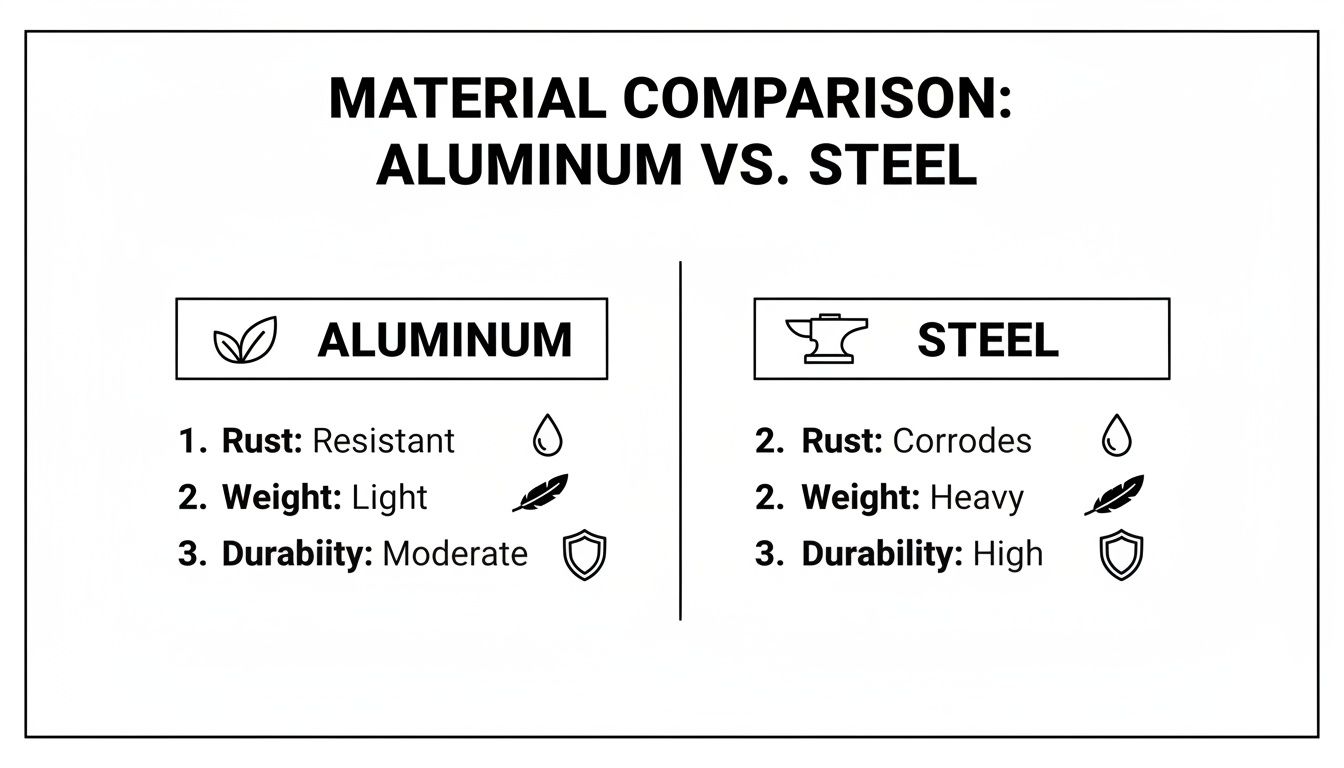
As the golf cart market—expected to hit USD 7.2 billion by 2035—continues to grow, more and more buyers are choosing aluminum. They're realizing that the trade-off between a slightly higher initial cost and superior long-term value is well worth it.
There's another practical perk, too. A lighter frame means the cart can handle more weight from passengers and gear. To get a better handle on this, it's helpful to understand what payload capacity is and why it matters.
To make the choice even clearer, here's a side-by-side look at how these two materials stack up.
Aluminum vs Steel Frame Golf Carts at a Glance
This table breaks down the core differences to help you quickly see which frame material best suits your needs.
| Feature | Aluminum Frame | Steel Frame |
|---|---|---|
| Corrosion | Naturally rust-proof, ideal for coastal/humid areas | Prone to rust and corrosion, requires maintenance |
| Weight | Lightweight, improving range and handling | Heavy, which can strain the motor and batteries |
| Strength | Excellent strength-to-weight ratio for everyday use | Very strong but adds significant bulk |
| Upfront Cost | Typically higher | Generally lower |
| Long-Term Value | High, due to durability and low maintenance | Lower, due to potential rust damage and repairs |
| Turf Impact | Gentler on grass and sensitive surfaces | Can cause more compaction and wear |
Ultimately, while steel might save you a little money upfront, an aluminum frame is a smarter investment in the long-term reliability and performance of your golf cart.
The Three Unbeatable Advantages of an Aluminum Frame
When you really dig into what separates a good golf cart from a great one, the conversation almost always lands on the frame. The choice between aluminum and steel isn't just a small engineering detail—it's a foundational decision that gives the owner three massive, game-changing benefits. These advantages all work together to create a cart that’s more durable, efficient, and frankly, a lot more enjoyable to own over the long haul.
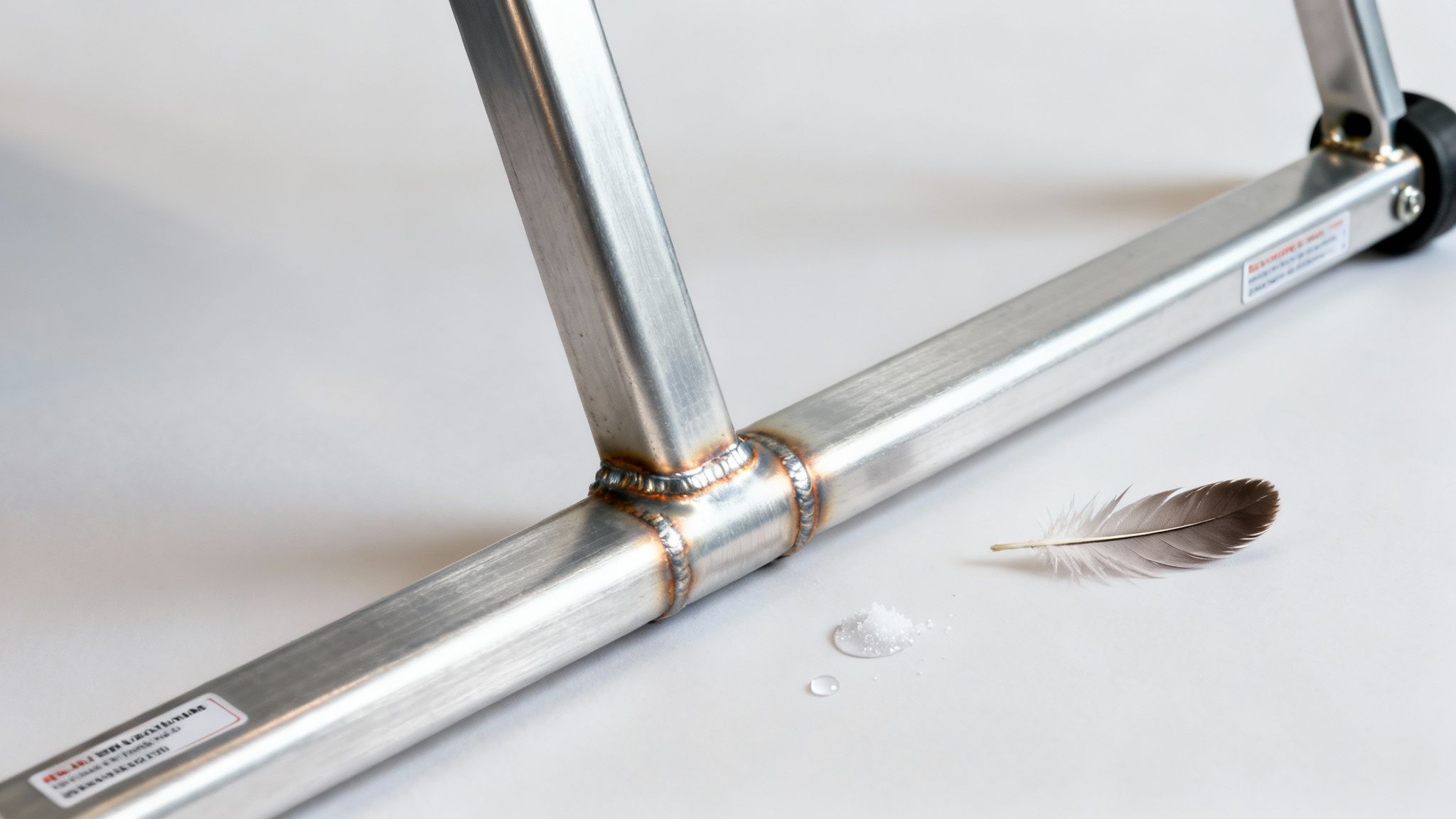
The first and most famous perk is aluminum's natural immunity to rust. You can think of it as a metal with its own built-in, self-healing shield. The moment aluminum is exposed to air, it instantly forms a tough, invisible layer of aluminum oxide. This layer creates a permanent barrier, stopping moisture and salt from ever touching the metal underneath.
For anyone living near the coast or in a humid, swampy climate, this isn't just a nice-to-have; it's a dealbreaker. In those environments, a steel frame can start showing ugly signs of rust and decay in just a couple of years.
Featherlight Yet Mighty
The second advantage is just how light it is. An aluminum frame golf cart weighs significantly less than its steel counterpart—often by 30% or more. This isn't just about making the cart easier to push if your battery ever dies; it has a real, noticeable impact on how the cart performs every single day.
Less weight means the motor doesn't have to work as hard, which translates directly to quicker acceleration and nimbler, more responsive handling. It’s like the difference between running in heavy work boots versus a pair of lightweight sneakers; it takes far less effort to get moving and change direction. This lightness is also much kinder to delicate turf, reducing soil compaction on pristine golf course greens and manicured lawns.
The push for lighter, more efficient vehicles is a huge driver in the North American market. Top brands are increasingly turning to aluminum to hit performance targets and squeeze every last drop of range out of their electric models.
Debunking the Strength Myth
Finally, let's tackle a common misconception head-on: the idea that "lightweight" must also mean "weak." While it's true that steel is denser, modern engineering has given us aircraft-grade aluminum alloys with an incredible strength-to-weight ratio. These advanced materials provide all the structural integrity you need to handle daily abuse, heavy loads, and rough terrain—all without the dead weight of steel.
This trend is hard to miss in North America, where major players like Club Car, E-Z-Go, and Yamaha have embraced aluminum frames. Their shift reflects a clear market demand for electric vehicles that are both tough and efficient, a combination where aluminum truly shines. You can explore more insights into golf cart market trends to see just how much this material is shaping the entire industry.
By going with an aluminum frame, manufacturers are building a cart that is:
- Corrosion-Proof: Built to last in any weather without rusting away.
- Efficient: Needs less power to move, which means longer battery life.
- Strong and Durable: Engineered to hold up for decades without structural fatigue.
These three core benefits—rust immunity, low weight, and surprising strength—are exactly why an aluminum frame has become the gold standard for anyone looking for long-term value and top-tier performance.
How a Lighter Frame Supercharges Performance and Range
The choice between an aluminum and steel frame goes far beyond just rust-proofing your cart. It’s a decision that fundamentally changes how the vehicle performs day in and day out. For electric models, in particular, an aluminum frame's lighter weight translates directly into a more energetic, efficient, and enjoyable ride. This isn't just a minor adjustment—it's a complete upgrade to your driving experience.
Think about it like a cyclist picking a bike. A heavy, steel-framed beach cruiser is perfectly fine for a lazy roll along a flat path. But if you want speed, need to climb hills, or plan on covering some real distance, the lightweight racing bike is always the winner. That cyclist on the racing bike uses far less energy to go faster and farther.

This exact same principle applies to an electric golf cart. Your motor is the engine, and the battery is your fuel tank. A heavier frame demands more power from the battery just to get going and keep its speed, draining that "tank" much more quickly.
The Ripple Effect of Reduced Weight
By cutting down the overall weight—often by 30% or more compared to steel—an aluminum frame kicks off a chain reaction of performance benefits. You can feel the difference every time you step on the accelerator.
- Quicker Acceleration: With less mass to get moving, the motor can get your cart up to speed much faster. The result is a zippier, more responsive feel right from a dead stop.
- More Miles Per Charge: This is the big one. Since the motor doesn't have to work as hard, it sips power instead of guzzling it. This efficiency boost directly extends your cart’s driving range, letting you travel farther on a single charge.
- Improved Handling: A lighter vehicle is naturally more nimble. It feels more agile when cornering, is easier to steer, and just gives you a better sense of control.
The link between weight and efficiency is a basic law in electric vehicle design. A lighter cart not only goes farther but also puts less long-term stress on key components like the motor, suspension, and tires.
This drive for efficiency is a huge reason the electric golf cart market is booming. The U.S. electric segment alone blew past USD 1 billion in market revenue in 2024, and the lightweight advantage of aluminum frames is a key part of that trend, delivering the battery range modern buyers expect.
At the end of the day, a lighter frame means you can explore your community or cruise around a large property without constantly glancing at your battery gauge. For a deeper look into getting the most out of your vehicle, check out our guide on how to improve your electric golf cart range. An aluminum frame is simply the best foundation for maximizing every single charge.
Long-Term Ownership: Aluminum Frame Care and Repair
One of the best things about owning a golf cart with an aluminum frame is just how little it asks from you. When you look at the long-term picture, the experience is all about simplicity and peace of mind, mostly because aluminum naturally stands up to the biggest enemy of any outdoor vehicle: rust.
This built-in corrosion resistance means you can forget about the constant worry and expensive rust-proofing treatments that steel frames need. If you live anywhere near the coast or in a humid climate, this isn't just a minor perk—it’s a huge deal. It saves you real time and money over the life of your cart, and a simple cleaning is usually all it takes to keep the frame looking great.
What About Repairs?
A question I hear a lot is, "What happens if the frame actually gets damaged?" It's a fair point. It's true that welding aluminum requires a more specialized touch than working with steel.
But let's be realistic: major structural damage to a golf cart frame is incredibly rare during normal use. These things are built tough, designed to handle the bumps and knocks of daily life on the course or around the neighborhood.
The truth is, the guaranteed, everyday benefit of never having to deal with rust far outweighs the tiny chance you might need a complex weld someday. For almost every owner out there, the frame will be the most dependable, hassle-free part of their cart. For tips on keeping the rest of your cart running smoothly, our complete guide to golf cart maintenance is a great resource.
The durability of an aluminum frame means that with proper care, it can last for decades. Unlike bolted steel frames that can weaken over time, a high-quality aluminum chassis is built for the long haul.
A Simple Inspection Checklist
Even though an aluminum frame is incredibly low-maintenance, a quick look-over every few months is a smart habit. It’s a simple routine that helps you spot any potential issues early and ensures your cart’s foundation stays solid.
Here’s a quick checklist of what to look for:
- Check the Welds: Take a close look at the welded joints. You're looking for any signs of cracking or stress. It's highly unlikely you'll find anything, but it's the most important area to check.
- Look for Dents or Bends: If you've had a significant bump or impact, check the main frame rails for any obvious bending or deep dents that could affect the cart's structural integrity.
- Inspect Mounting Points: Give the spots where the suspension, body, and motor attach to the frame a quick check. Make sure everything is secure and there are no signs of unusual wear or looseness.
Putting Aluminum to the Test in the Real World
Spec sheets and technical jargon are one thing, but where an aluminum frame golf cart really shines is out in the wild. The advantages of a lighter, corrosion-proof chassis aren't just abstract ideas; they solve real problems for cart owners in all sorts of environments. From salty beach towns to massive resorts, an aluminum frame proves its mettle day in and day out.
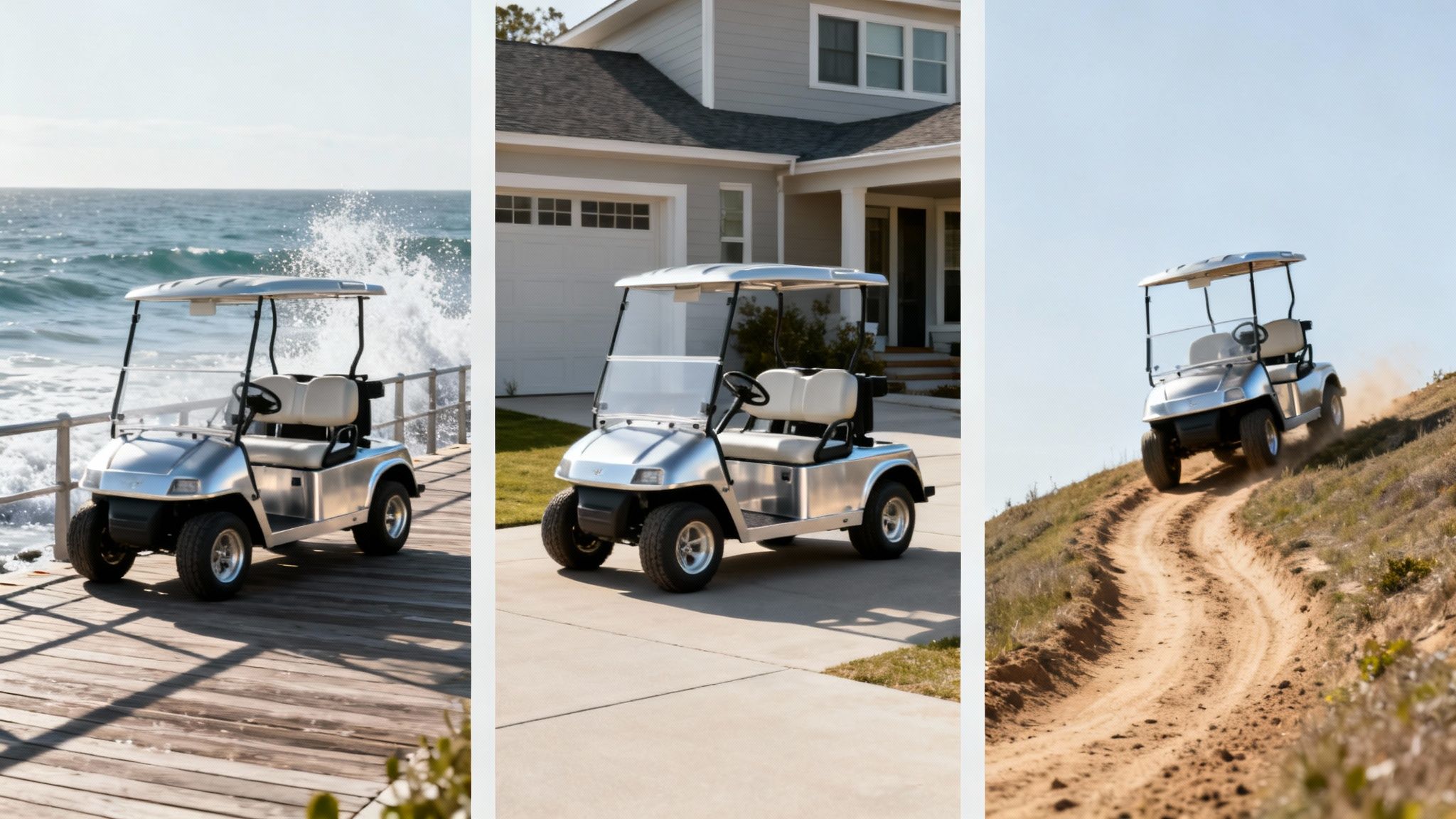
Let's look at a few common scenarios where having an aluminum frame isn't just a nice-to-have feature—it’s a game-changer that completely transforms the experience. These examples show how the frame's core properties meet specific, practical needs.
Coastal Living and Humid Climates
If you live anywhere near the coast, you know the air itself is out to get your metal possessions. That salty mist is brutally corrosive and can chew through a steel frame in just a handful of years, leaving you with rust, a weakened structure, and a hefty repair bill.
This is where an aluminum frame is the undisputed champion. It’s naturally immune to rust, shrugging off the harshest seaside conditions without breaking a sweat. For coastal dwellers, this isn't a luxury; it's a necessity that saves thousands in future repairs and prevents the heartbreak of watching your investment slowly rust away.
Large Residential and Commercial Properties
Think about what it takes to run a sprawling resort, a university campus, or a large gated community. Golf carts are workhorses, constantly on the move from sunup to sundown. In that kind of setting, every ounce of efficiency counts. This is where the lighter weight of an aluminum frame really pays off.
- Goes the Extra Mile: Less weight means the motor works less. That translates directly into more distance covered on a single charge, keeping your fleet on the move longer and cutting down on time spent plugged into a wall.
- Easier on Parts: A lighter cart puts less stress on everything from the suspension and tires to the motor itself. The result is fewer breakdowns and a longer operational life for the entire vehicle.
For property managers, choosing an aluminum frame is just smart business. The initial cost is easily balanced out by lower electricity bills, reduced maintenance budgets, and a fleet that simply lasts longer.
Off-Road and Varied Terrain
When you venture off the pavement, a lighter cart is your best friend. Trying to navigate soft sand or a muddy trail is all about staying on top of the surface, not sinking into it. The reduced weight of an aluminum cart gives you that crucial advantage.
Plus, when it comes to climbing hills, every pound is a penalty. A lighter vehicle needs less juice to conquer steep grades, which means better performance and more battery left for the rest of your adventure. That nimble feeling also makes it a breeze to weave around rocks and roots on a trail, giving you a more responsive and enjoyable ride. Whether you're cruising the beach or exploring a wooded path, the aluminum frame delivers agility when you need it most.
Why Solana EV Is All-In on Aluminum
It's one thing to understand the benefits of an aluminum frame in theory, but it's another to see a brand stake its entire reputation on it. For Solana EV, the choice to build every single cart on an all-aluminum chassis isn't just a marketing bullet point—it's the core of our engineering philosophy. We see it as a promise to build a better electric vehicle from the ground up, translating the real-world advantages of rust immunity, better efficiency, and a longer life into real value for our customers.
What does that actually mean for an owner? It means you get a golf cart that’s truly built for the long haul. By engineering rust and corrosion right out of the equation, a Solana EV cart keeps its structural integrity and holds its value for years, even if you live in a salty, humid coastal area.
Performance That Starts at the Core
This focus on a light but strong foundation has a direct impact on how the cart drives. The lower overall weight lets the electric motor work smarter, not harder. You'll feel it in the quicker, more responsive acceleration, and you'll see it in the extended driving range you get from a single charge.
This efficiency gives you the freedom to go farther with total confidence, whether you're navigating a sprawling resort property or just exploring your local community.
A brand's choice of materials tells you everything you need to know about their priorities. Choosing a high-quality, welded aluminum frame over a cheaper, bolted steel one is a clear statement about investing in durability and the owner's long-term satisfaction.
Of course, a great frame is just one part of the electric vehicle experience. Owners will also need dependable EV charging cables to keep their carts ready to go.
Ultimately, Solana EV's commitment to an aluminum frame golf cart isn't about finding shortcuts. It's about building a superior cart that delivers an exceptional ownership experience from day one and for many years to come.
A Few Final Questions About Aluminum Golf Carts
When you're getting close to a decision, a few last-minute questions always pop up. It's smart to have all the facts straight. Here are some of the most common things people ask about aluminum frames right before they buy.
Aren't Aluminum Frame Carts More Expensive Than Steel Ones?
Looking at the sticker price, you might see that an aluminum frame golf cart costs a little more upfront. But that's only half the story. The real question is about the total cost over the years you own it.
Think of it this way: aluminum's built-in resistance to rust means you dodge a whole category of expenses. You won't be paying for rust repairs, special protective coatings, or the constant worry that comes with a steel frame, especially if you live near the coast. A single major rust repair on a steel cart can easily wipe out any initial savings, making the aluminum option the smarter financial choice over time.
Is an Aluminum Frame Really Strong Enough for Off-Roading or Heavy Loads?
For sure. It’s a common myth that heavier means stronger. The truth is, modern golf cart manufacturers aren't using the same aluminum as a soda can; they're using high-strength, aircraft-grade aluminum alloys designed for serious stress.
While steel is technically denser, the strength-to-weight ratio of these advanced aluminum alloys is incredible. They provide all the backbone you need for rough trails and big loads without dragging around unnecessary pounds.
In fact, the lighter weight actually gives you an edge off-road. The cart is more nimble, and there's less strain on the suspension, making it a better, more durable choice for demanding environments.
Does an Aluminum Frame Actually Make a Real Difference in Battery Range?
Yes, and it’s a difference you’ll feel every day. In an electric vehicle, weight is the enemy of range. Every ounce the motor has to push takes a toll on the battery. By cutting the frame's weight by as much as 30-40% compared to steel, an aluminum cart simply needs less juice to get going and keep moving.
That energy saving translates directly into more miles on a single charge. While the exact increase depends on things like hills and how much you're carrying, owners consistently find they can go noticeably farther before it's time to plug in.
Ready to feel the difference a solid, rust-proof foundation makes? The entire Solana EV lineup is built on an all-aluminum frame for better performance and a longer life. Explore our models today.