
Once reserved for the quiet greens of a golf course, the gentle hum of an electric cart is now a familiar sound on neighborhood streets and even in bustling downtowns. The market for street legal golf cart sales is booming, turning these fun little vehicles into a serious, eco-friendly option for getting around town.
It's not as simple as just slapping a license plate on any old cart, though. This is about a whole new class of vehicle built to meet specific safety standards for use on public roads.
Why Street Legal Carts Are Taking Over The Road
The move from fairway cruiser to neighborhood commuter is no accident. These vehicles, which are officially known as Low-Speed Vehicles (LSVs), hit a sweet spot of convenience, green-friendly operation, and pure fun that a traditional car just can't match for local trips. This shift is a huge reason why the market is attracting so much attention. We dive deeper into this journey in our article on the evolution of the modern golf cart.
This isn't just a fleeting trend; it's a sign of how we're rethinking local transportation. The global market is surging, with some projections showing it could hit $2,454 million by 2025. That kind of growth is driven by real people looking for smart, sustainable ways to get around their communities. You can find more details about this growing market and its projections.
Key Drivers of Popularity
So, what's really fueling this incredible growth? A few key things are convincing people to ditch their second car for a street-legal cart:
- Eco-Friendly Operation: The vast majority of LSVs are electric. That means zero emissions, a smaller carbon footprint for your daily errands, and a much quieter ride.
- Unmatched Convenience: They're absolutely perfect for those quick trips—running to the grocery store, dropping the kids at the community pool, or just zipping over to a neighbor's house. In planned communities and beach towns, they're a way of life.
- Lower Operating Costs: Forget gas stations. And maintenance? It's minimal. The overall cost of owning and running an LSV is a fraction of what you'd spend on a standard car.
Think of a street-legal golf cart as the perfect middle ground between a bicycle and a car. You get the fresh-air freedom of a bike but with the practical features and safety you need for the road. It's an ideal fit for modern community living.
This guide will walk you through everything you need to know, from making sense of confusing local laws to choosing the perfect model that fits how you live.
Navigating State and Local LSV Laws
Before you start picturing yourself cruising down the boulevard in a new golf cart, let's pump the brakes for a second. The world of street legal golf cart sales isn't the Wild West; it's a structured system of federal, state, and even local laws designed to keep everyone safe. Getting this right from the start is the difference between freedom on four wheels and a frustrating legal headache.
At the very foundation of these rules is the federal government's official classification: the Low-Speed Vehicle (LSV). This isn't just a fancy name—it's a specific category created by the National Highway Traffic Safety Administration (NHTSA) that comes with a non-negotiable set of requirements. Think of these federal standards as the universal building code for every street-legal cart, no matter which state you call home.
This federal code mandates that any vehicle sold as an LSV must come from the factory with a specific package of safety features. This checklist is what truly separates a road-ready LSV from a standard golf course runabout.
The Federal LSV Safety Checklist
To legally wear the LSV badge, a cart must be manufactured with a whole suite of Department of Transportation (DOT) approved equipment. These aren't aftermarket add-ons; they are integrated components crucial for safe, legal operation.
- Proper Lighting: This means factory-installed headlights, taillights, brake lights, and turn signals. You have to see and be seen.
- Mirrors: A full set of rearview and side-view mirrors is mandatory, giving you a complete picture of your surroundings.
- Seat Belts: Every single seat must have its own DOT-approved seat belt. No exceptions.
- AS-1 or AS-5 Glazing Windshield: A shatter-resistant, automotive-grade windshield is required to protect you from road debris.
- Vehicle Identification Number (VIN): Just like a car, every LSV gets a unique 17-digit VIN. This is essential for proper titling, registration, and insurance.
And here’s the big one: speed. A vehicle can only be classified as an LSV if its top speed is capped between 20 and 25 miles per hour. This speed limit is the defining feature that ensures these vehicles stick to the low-speed environments they were built for.
This diagram really clarifies how the legal status, safety gear, and market growth all tie together to define what a street-legal cart is today.
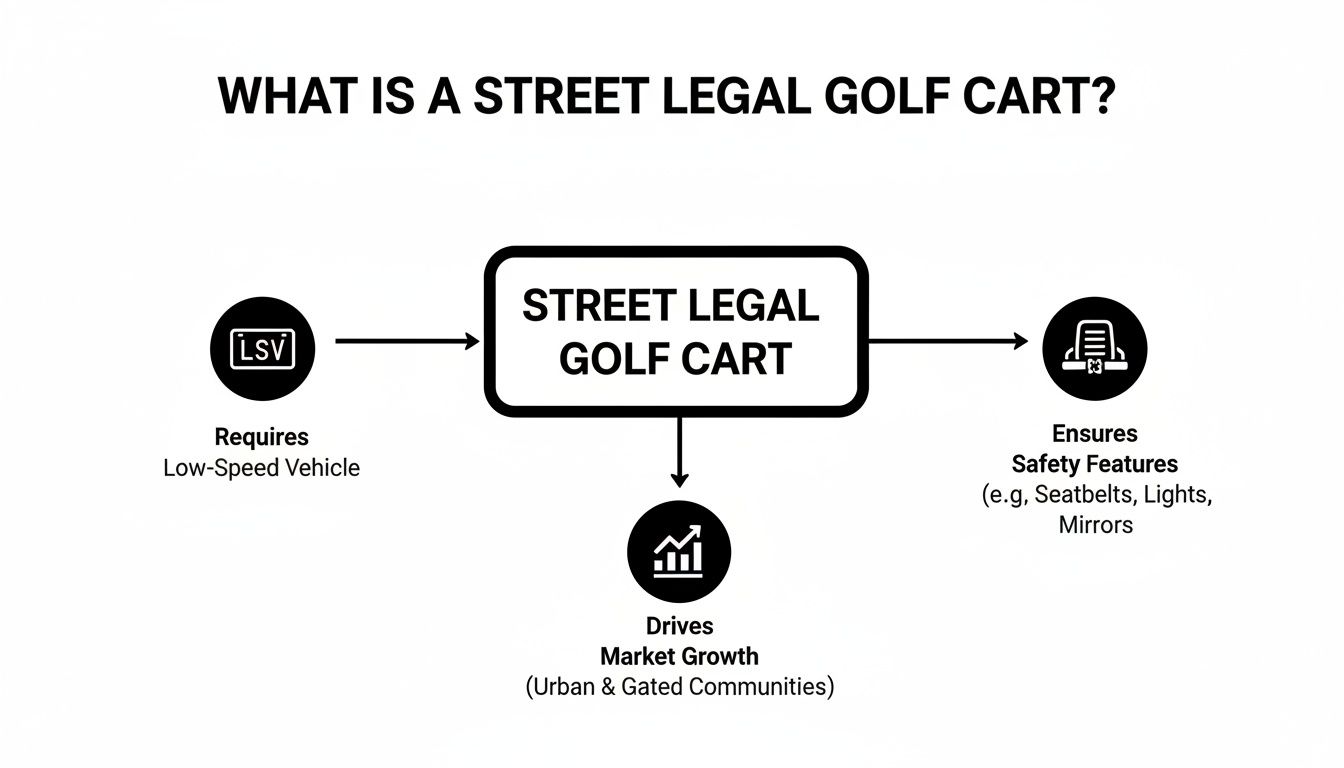
As you can see, the official LSV designation is the core, supported by mandatory safety equipment and fueled by incredible market demand.
State and Local Laws: The Final Word
While federal rules set the baseline for what an LSV is, it's your state and local laws that dictate where and how you can actually use it. This is where you need to pay close attention. Most states give the green light for LSVs on roads with posted speed limits of 35 mph or less, but the specifics can vary wildly from one town to the next.
A common trap people fall into is assuming that a federally compliant LSV is automatically legal to drive anywhere. The reality is that your city, county, or even your homeowner's association has the final say on where you can drive, what insurance you need, and who can be behind the wheel.
What's perfectly fine for a retirement community in Florida might get you a ticket in a California beach town. That's why doing a little local homework is the most important step you can take before buying.
State-by-State Street Legal Golf Cart Regulation Snapshot
To give you a clearer picture of how much regulations can differ, here’s a quick comparison of a few states where LSVs are popular. This table provides a snapshot of the key legal requirements you'll encounter.
| State | VIN & Title Required | Driver's License Needed | Allowed Roads (Typical) | Insurance Mandate |
|---|---|---|---|---|
| Florida | Yes | Yes | Roads with speed limits of 35 mph or less | Yes (Personal Injury Protection and Property Damage Liability) |
| California | Yes | Yes | Roads with speed limits of 25 mph or less in most areas | Yes (Minimum liability coverage) |
| Arizona | Yes | Yes | Roads with speed limits of 35 mph or less | Yes (Proof of financial responsibility required) |
As you can see, the core requirements for licensing, insurance, and road access are all handled at the state level, and sometimes even more locally. Before you make a purchase, your first calls should be to your local DMV and city hall. Getting the official rules for your specific area ensures your new ride will be a source of fun, not fines.
Choosing Between Electric and Gas Power
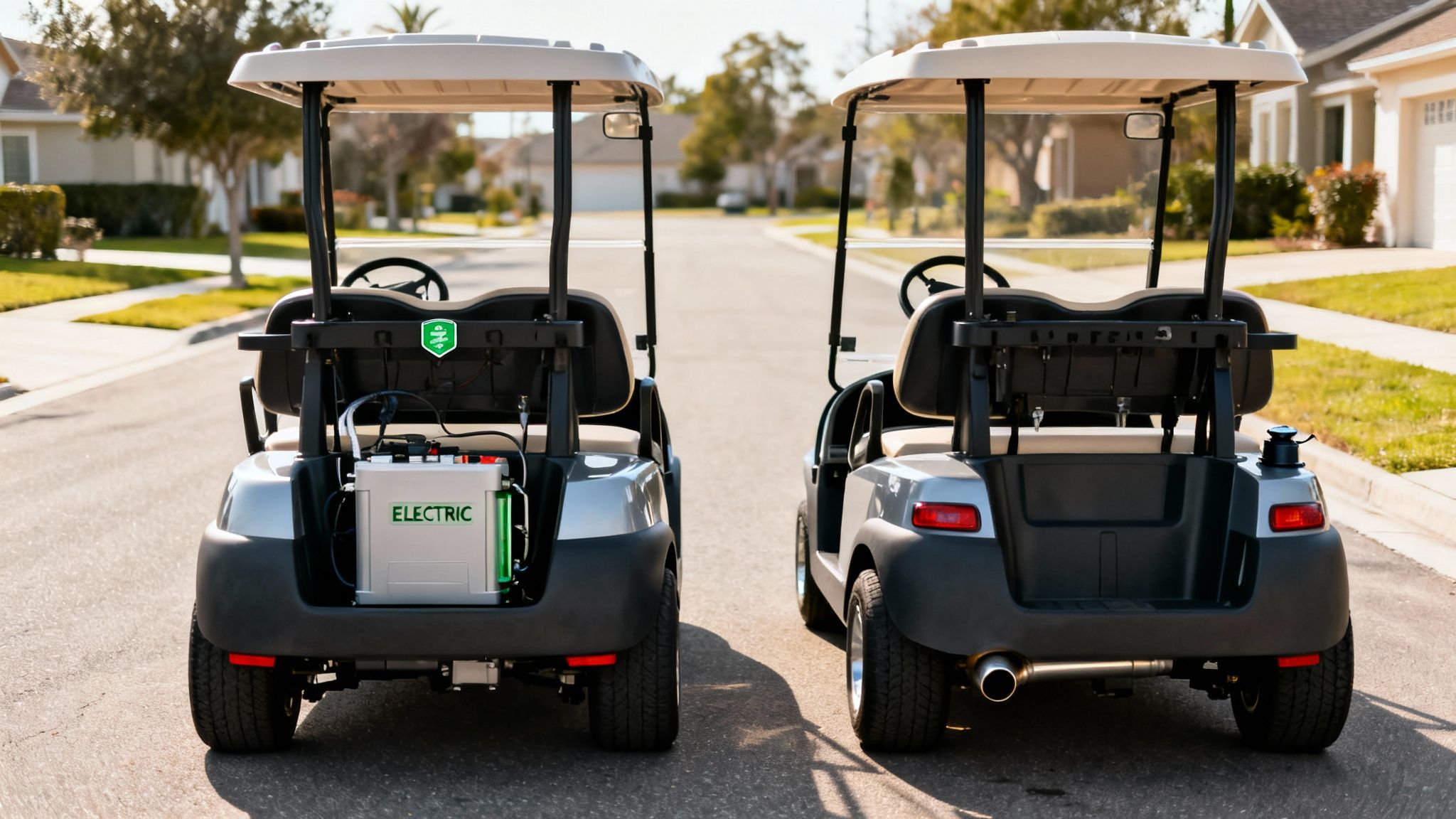
Alright, you’ve sorted out the local laws. Now for the fun part: deciding what’s going to power your new ride. This is probably the biggest choice you'll make, as going with electric or gas fundamentally changes what it’s like to own and drive your cart every single day.
It's no secret that the market has a clear favorite. Electric carts are everywhere now, and for good reason. For most people using their LSV in a neighborhood or a planned community, electric is just a better experience—it’s quiet, there are no fumes, and you can forget about most of the mechanical upkeep.
This isn't just a hunch; the numbers are overwhelming. Electric models account for a staggering 81.81% of all unit sales globally. This shift is happening because people appreciate the lower running costs and cleaner ride. In fact, you can expect maintenance expenses to be cut by as much as 50% compared to a gas cart. That's a huge long-term win for your wallet. If you want to dive into the data, you can read more about this global trend in street legal cart sales.
The Quiet Power of Electric Carts
Think of an electric street-legal cart as the neighborhood-sized version of a Tesla. You press the pedal, and you get instant, silent power. That smooth, quick acceleration is perfect for the kind of stop-and-go driving you do around the community. Plus, your neighbors will thank you. That quiet operation is a game-changer in peaceful residential areas where a sputtering gas engine would stick out like a sore thumb.
The battery is the heart of any electric cart, and it’s where you’ll see the biggest differences in technology and price.
- Lead-Acid Batteries: This is the old-school, traditional option. They’ll save you some money upfront, but they demand regular attention, like topping off water levels. You can expect them to last about 3-5 years before needing a replacement.
- Lithium-Ion Batteries: This is the new standard, and for good reason. Lithium batteries are lighter, charge up way faster, and last much longer—often 8-10 years or more. They are completely maintenance-free and deliver consistent power from a full charge down to empty. Yes, they cost more initially, but they make up for it.
For most drivers, the higher upfront cost of a lithium-ion battery pays for itself over time through sheer convenience and a much longer lifespan. It’s an investment in a better, hassle-free ownership experience.
When Gas Power Still Makes Sense
So, is there still a place for gas-powered carts? Absolutely. Think of them as the rugged pickup trucks of the golf cart world. They are the go-to choice for heavy-duty work or for use in places where plugging in just isn’t practical.
If you have a large property to cover, live in a rural area, or need a cart for commercial work where it has to run all day, gas is tough to beat. You get more range on a tank of fuel, and you can refuel in minutes instead of waiting hours for a charge.
Of course, that utility comes with downsides. You’ll have to deal with engine noise, exhaust fumes, and the kind of maintenance you’d expect from a small engine—oil changes, spark plugs, filters, and so on.
Still on the fence? We put together a detailed guide to help you choose between an electric or gas golf cart. At the end of the day, the right answer really just depends on how and where you plan to use it.
Finding the Right Brand and Dealer
Choosing the right street-legal golf cart is a huge step, but honestly, it's only half the battle. The dealership you buy from is going to be your partner for the long haul, and that relationship can make or break your entire ownership experience.
Think of it this way: the cart is the fun part, but the dealer is your lifeline for service, support, and just general peace of mind down the road. A poor post-sale experience can ruin the excitement of a new ride, fast.
What Separates a Great Dealer from a Good One
When you start looking around, you'll see tons of places with street legal golf cart sales. The trick is to look beyond the slick sales pitch and see what’s really going on behind the scenes. A top-notch dealership invests its time and money into what happens after you’ve already paid for the cart.
Here’s what you should be looking for as proof of a quality operation:
- Factory-Certified Technicians: This is a big one. It means the people working on your cart were actually trained by the company that built it. They know every nut and bolt, which is critical for getting diagnostics right the first time.
- Genuine Parts on Hand: A great dealer keeps a healthy stock of Original Equipment Manufacturer (OEM) parts. Using the real deal ensures your cart runs like it's supposed to and, just as importantly, keeps your warranty valid.
- No-Hassle Warranty Support: If something breaks, the last thing you want is a dealer who gives you the runaround. A good one will handle the warranty claim for you and make the process painless.
A dealership’s service bay is its true report card. A clean, organized shop with busy, certified technicians is one of the best indicators that you’re in the right place. It shows a commitment to quality and long-term customer care.
Key Brands and Innovators to Watch
The golf cart world has its established giants and some really exciting newcomers shaking things up. Getting to know the major players will help you zero in on what you really want.
- The "Big Three": You’ve probably heard of them—Club Car, E-Z-GO, and Yamaha. These are the legacy brands. They’ve been around for decades, earning a reputation for rock-solid engineering and reliability. They also have huge dealer networks, which is a plus.
- Innovative Newcomers: Then you have brands like Solana EV, which are making waves by focusing on modern designs, packing in advanced tech like lithium batteries, and offering premium, car-like features right out of the box.
Questions to Ask Any Potential Dealer
Before you even think about signing papers, you need to go in armed with a few key questions. How they answer will tell you everything you need to know about their business. Treat it like you're interviewing them for a job—because you are. To get a sense of what a truly modern, customer-focused dealership looks like, it helps to understand effective strategies for selling vehicles online.
Your Dealer Interview Checklist:
- Are your service techs actually certified by the manufacturer?
- Do you handle all warranty work in-house, or do I have to go somewhere else?
- What’s your typical turnaround time for basic service, like a battery check or tire rotation?
- Can I see your parts department? Do you stick to OEM parts?
- What kind of support or training do you offer new owners after the sale?
- Can you point me toward some recent customer reviews or let me speak with a reference?
Finding a great partner is pretty straightforward. Just start your search for a golf cart dealership near you and use this checklist to screen your top choices. A little extra diligence now will save you a world of headaches later and ensure you have a trusted expert in your corner for years to come.
Finding the Right Cart for Your Lifestyle
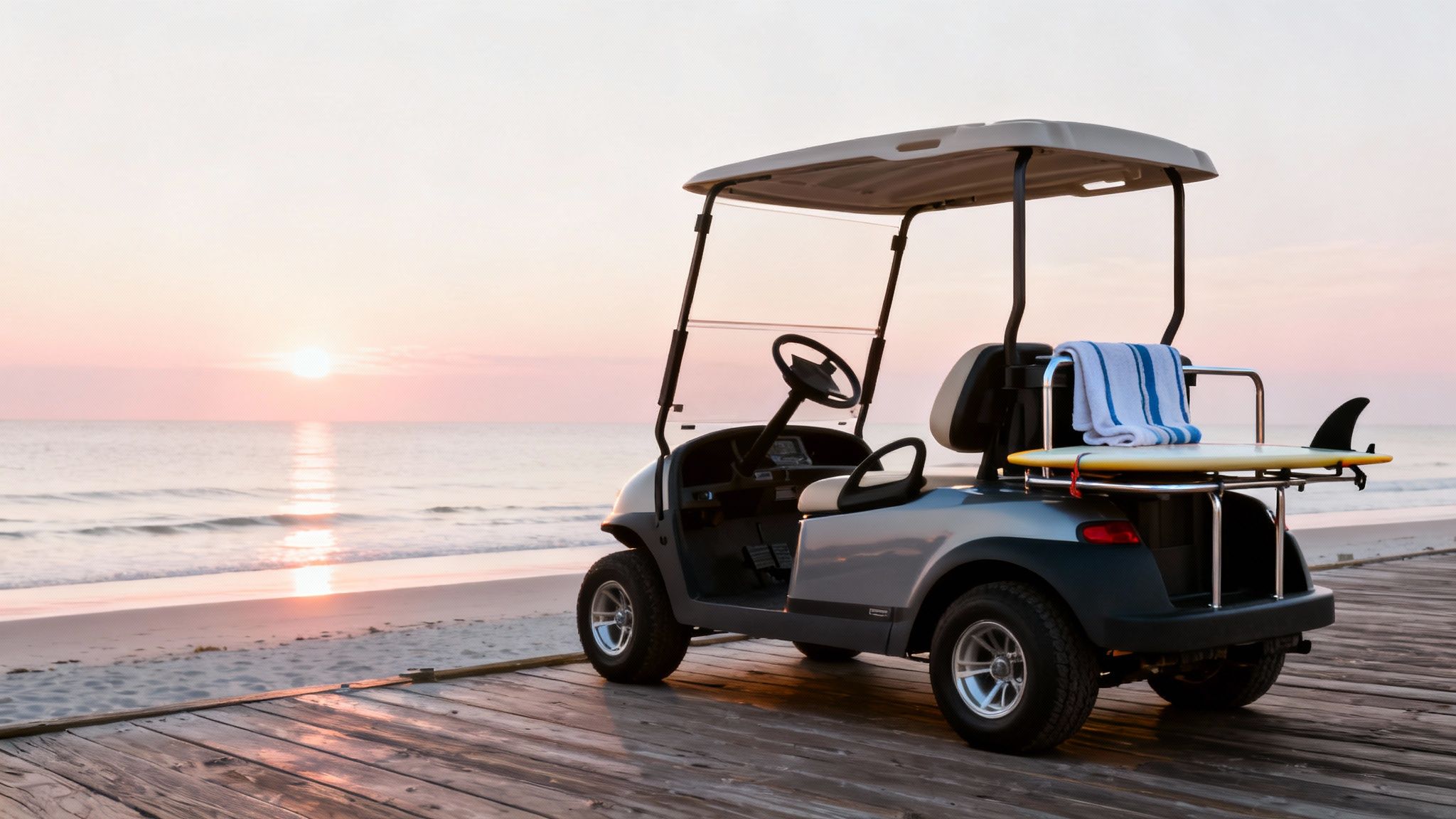
A street-legal golf cart is so much more than just a vehicle. It’s an extension of your daily life. The features that make a cart perfect for a quiet, gated community are worlds apart from what a beach town resident or a commercial property manager needs. The secret to a great purchase is looking past the spec sheet and really picturing how you’ll use it day-to-day.
Think of it like buying a good pair of shoes. You wouldn't wear hiking boots to a wedding, and you definitely wouldn't wear dress shoes on a muddy trail. It's the same idea here—the best street-legal cart is the one built for your specific environment and routine.
This very idea of personalization is what's fueling the incredible growth in street legal golf cart sales. The North American market is huge, with the U.S. alone hitting a value of $998.7 million in 2023. This boom isn't just about golfing; it’s about how versatile these Low-Speed Vehicles (LSVs) are for cruising through neighborhoods, across university campuses, and even around healthcare facilities. You can get a deeper look into the factors driving the U.S. golf cart market here.
For Gated Community Residents
Life in a planned community is all about convenience, comfort, and connection. Here, your golf cart is less of a utility tool and more of your social shuttle—getting you to a neighbor's barbecue or down to the clubhouse for dinner.
You’ll want to prioritize features like:
- Passenger Space: A four or even six-seater is practically a must-have for accommodating family, friends, and grandkids.
- Premium Comfort: Look for plush, contoured seating, plenty of cup holders, and a smooth suspension. The ride should feel more like a luxury car, not a piece of equipment.
- Aesthetic Appeal: This is where you can show off your style. Custom paint, premium wheels, and high-end upholstery let you make the cart your own.
For Coastal Town Cruisers
If your daily life involves sand, sun, and salty air, your cart needs to be built for the coast. The beach environment is notoriously tough on vehicles, so durability is every bit as important as looks. Your cart becomes your beach buggy, your grocery-getter, and your ride to the local coffee shop.
Here’s what to look for:
- Corrosion Resistance: An aluminum frame isn't just a nice-to-have; it’s essential to prevent rust from the salt-heavy air.
- Practical Storage: You're hauling more than people. Rear flip seats that convert into a cargo bed are a game-changer, as are roof racks for surfboards and built-in coolers for beach days.
- Durable Upholstery: Insist on marine-grade vinyl seats. They're built to resist fading from the sun and are a breeze to wipe down after a sandy trip.
Choosing a cart for your lifestyle is really about anticipating your needs. A community resident needs a comfortable "people mover," while a coastal dweller needs a resilient "gear hauler." When you align the features with your daily life, you get so much more value and enjoyment out of your investment.
For Commercial and Campus Use
For businesses, resorts, or sprawling properties, a street-legal cart is a workhorse, plain and simple. It has to be reliable, efficient, and tough enough to handle demanding tasks all day, every day. The focus here shifts sharply from luxury to pure function and long-term durability.
Top considerations for work applications include:
- Utility Features: A heavy-duty cargo bed is non-negotiable for maintenance crews, groundskeepers, or housekeeping staff.
- Extended Battery Range: These carts can't quit mid-shift. High-capacity lithium batteries are usually the best bet for their longer range and quicker charging times.
- Heavy-Duty Build: Everything needs to be tougher. An upgraded suspension, rugged tires, and a reinforced frame are critical to handle constant use and heavy loads.
By thinking through your unique environment and what your days actually look like, you can navigate the world of street legal golf cart sales with confidence and find the perfect vehicle to complement your life.
Understanding the Total Cost of Ownership
When you start looking at street legal golf cart sales, it’s natural to get fixated on the sticker price. But if you want to be a smart buyer, you need to look at the bigger picture: the Total Cost of Ownership (TCO). This isn't just about what you pay today; it's about every single dollar you'll spend from the moment you drive it off the lot to the day you eventually sell it.
Think of it like planning a big vacation. The airline ticket is the first big expense, but you also have to account for hotels, meals, and activities. The initial price of the cart is just your ticket to ride—the real financial journey has just begun.
Financing Your New Ride
Most people don't walk in and pay cash for a new vehicle, and street-legal golf carts are no exception. Just about every dealer will have financing plans ready to go, allowing you to break down the cost into predictable monthly payments that are much easier to manage.
These loans work a lot like a standard car loan, with typical terms running anywhere from 24 to 60 months. Your credit score and the length of the loan will determine your interest rate. If you're looking for different ways to get into a cart, it's also worth exploring micromobility leasing and financing options for potentially greater flexibility.
Insurance: A Non-Negotiable Expense
This is a big one, and it catches a lot of new owners by surprise. Your homeowner's insurance policy will not cover your street-legal golf cart on a public road. Period. Once it has a VIN and a license plate, the law sees it as a Low-Speed Vehicle (LSV), and you have to treat it just like a car.
You are legally required to carry a specific LSV or auto insurance policy. At a minimum, this will include:
- Liability Coverage: Protects you financially if you cause an accident that results in injury or property damage.
- Collision Coverage: Pays for repairs to your own cart if you're in a crash.
- Comprehensive Coverage: Covers you for things other than collisions, like theft, vandalism, or storm damage.
Don't make the mistake of skipping this step. Driving without the right insurance isn't just a financial gamble—it's illegal. Before you sign on the dotted line, get a few insurance quotes so you can factor that monthly cost into your budget. An accident without proper coverage could be financially devastating.
Planning for Long-Term Upkeep
Beyond the monthly loan and insurance payments, your cart is going to need regular care and maintenance. The smart move is to budget for these predictable costs right from the start so you’re never caught off guard.
For an electric cart, the biggest long-term expense you’ll face is replacing the batteries.
- Lead-Acid Batteries: These are the old-school, cheaper-upfront option. You can expect to replace them every 3-5 years at a cost of $800 to $1,500.
- Lithium-Ion Batteries: They cost more when you buy the cart, but they are a game-changer for longevity. A good lithium pack can last 8-10 years or even longer, often making it the more cost-effective choice over the life of the vehicle.
Don't forget the other routine stuff, either. You’ll need new tires every few years, plus brake checks and regular service for the electrical system. When you map out every piece of the puzzle—the purchase price, financing, insurance, and maintenance—you get a clear, honest picture of what it really costs to own and enjoy your street-legal golf cart for years to come.
Got Questions? We've Got Answers
It's totally normal to have a few last-minute questions before you dive into buying a street-legal cart. From the nitty-gritty legal stuff to the practical side of owning one, let's clear up some of the most common things people ask.
Just How Fast Do These Things Go?
One of the biggest distinctions between a regular golf cart and a street-legal Low-Speed Vehicle (LSV) is speed. To meet federal standards, an LSV has to be able to reach at least 20 mph but can't go faster than 25 mph.
This specific speed window is what makes them safe for public roads. It's just fast enough to keep up with traffic in neighborhoods and on streets where the speed limit is 35 mph or less, without becoming a danger to yourself or others.
Can I Just Upgrade My Old Golf Cart to Be Street Legal?
While it’s technically possible, it’s a real headache and often costs more than you'd think. It's not just a matter of slapping on a few lights and mirrors.
To get a standard cart up to code, you’d have to install a whole list of Department of Transportation (DOT) approved gear:
- Headlights, taillights, and turn signals
- DOT-approved seat belts for every single seat
- A shatter-resistant windshield and proper rearview mirrors
- A horn that's loud enough to be heard
Even after all that work, you still have to get a new Vehicle Identification Number (VIN), pass a state inspection, and then tackle the DMV for a title and registration. Honestly, for most people, buying a cart that was built from the factory as a street-legal LSV is much easier, safer, and guarantees it will pass inspection.
Do I Need a Special License to Drive a Street-Legal Cart?
Nope, no special license needed. But you absolutely must have a valid driver's license to drive one on a public road.
The law treats these vehicles like a small car, not a toy. You have to follow all the same traffic laws as everyone else.
Think of it this way: An LSV is a registered motor vehicle, not just a beefed-up fairway cruiser. That means stopping at stop signs, using your turn signals, and yielding the right-of-way. Fail to do so, and you can get a ticket and points on your license, just like in your car.
What's Involved in Maintaining One?
The maintenance really comes down to whether you go with gas or electric, but electric models are far more common and way easier to care for.
For an electric cart, you're mostly just looking at basic upkeep like checking the tire pressure and inspecting the brake pads. The biggest task is battery care. If you have older lead-acid batteries, you'll need to top them off with distilled water regularly. But if you opt for modern lithium-ion batteries, they are completely maintenance-free.
Ready to explore a new way to get around your community? Solana EV offers a premium lineup of stylish, reliable, and fully street-legal electric carts designed to fit your lifestyle. Discover the perfect model for you at https://solanaev.com.