
Sustainable transportation isn't just a nice-to-have anymore; it's become a smart, strategic move for any modern property. When you switch to an electric fleet—whether it’s low-speed vehicles (LSVs), e-bikes, or full-size EVs—you’re doing more than just going green. You’re directly improving the guest experience, boosting your operational efficiency, and building a powerful, forward-thinking brand. This guide is your roadmap to get it done right, from the initial idea to a successful rollout.
Why Going Green With Your Fleet is No Longer Optional
For resorts, gated communities, and large recreation properties, how people get around is a huge part of their overall experience. Let’s be honest, traditional gas-powered vehicles are becoming a liability. They’re noisy, their fuel costs are unpredictable, and they leave a significant environmental footprint.
Making the switch to sustainable transport is like upgrading your property's entire circulatory system. It becomes cleaner, quieter, and far more in tune with what today’s eco-conscious guests and residents actually want. This isn't just about following a trend; it's a solid business decision that solves real logistical headaches while opening up new ways to make money and market your property.
Build a Brand That Looks to the Future
In a crowded market, your brand’s reputation is everything. Committing to sustainability sends a crystal-clear message: your property is modern, responsible, and built for the future. It’s a powerful way to stand out and attract the growing number of people who genuinely care about environmental impact.
Think about the immediate advantages:
- A Better On-Site Experience: Electric vehicles are nearly silent. That means less noise pollution and a more peaceful, relaxing atmosphere for everyone on your property.
- Smarter Operations: Forget high fuel bills and constant maintenance. EVs have far fewer moving parts than gas engines, which translates directly to lower running costs and a healthier bottom line.
- A Powerful Public Image: Highlighting your green initiatives is fantastic for public relations. It builds your reputation as an industry leader and generates positive buzz.
"A sustainable transportation plan is not just another amenity. It becomes a core part of your property’s identity. It shows you’re committed to the well-being of your community and the environment, creating value that lasts long after a guest checks out."
Thinking Beyond Your Property Lines
The choice to adopt greener transport has an impact that reaches far beyond your front gate. The transportation sector is responsible for nearly 20% of global carbon emissions, so every small change really does contribute to a massive global solution. As governments push for decarbonization, properties that get ahead of the curve are setting themselves up for long-term success.
By integrating sustainable transportation solutions, you’re actively contributing to cleaner air and a healthier planet. In this guide, we'll walk through the practical side of things—how to choose the right vehicles, understand the costs and ROI, and build the infrastructure you'll need to support your new fleet.
Choosing the Right Vehicles for Your Green Fleet
Alright, we’ve covered the “why” of going green. Now it’s time to get practical and talk about the “how”—specifically, which vehicles will actually make up your sustainable fleet. The secret isn't finding one magic-bullet vehicle. It’s about building a versatile team of transportation options, where each one has a specific job to do.
Think of your property as its own little ecosystem. You wouldn't use a dump truck for a quick trip to the store, right? The same logic applies here. You need different tools for different tasks—some for heavy lifting, some for zipping around on quick errands, and others for giving guests a chance to explore. A one-size-fits-all approach just falls flat. The real key is matching a vehicle’s strengths to your property’s unique needs, both for your staff and your guests.
Your main business goals will point you in the right direction, whether you're focused on creating an unforgettable guest experience, making your operations more efficient, or cementing your reputation as an eco-conscious brand.
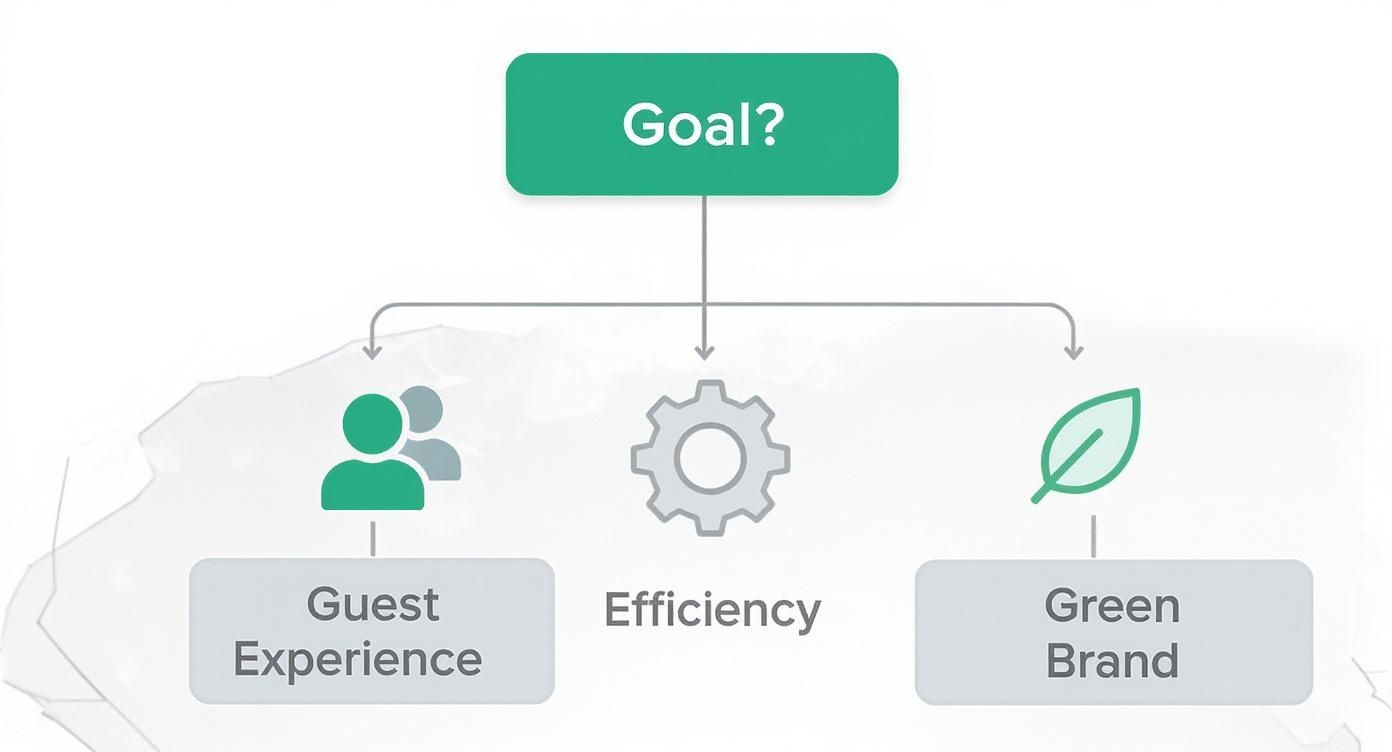
This simple chart really clarifies things. Once you know what you’re trying to achieve—better service, smoother operations, or a stronger green image—the path to choosing the right vehicles becomes much clearer.
Full-Size Electric Vehicles: The Power Players
Let's start with the heavy hitters: full-size Electric Vehicles (EVs). These are your sedans, SUVs, and even trucks that deliver the same kind of performance you'd expect from their gas-guzzling cousins, but with absolutely zero tailpipe emissions. Their biggest advantage is their sheer versatility. They can handle tasks on your property and then hit the public roads without missing a beat.
An EV is your go-to when a job involves longer distances or higher speeds. They’re perfect for:
- Executive Transport: Picking up VIPs from a local airport in style and silence.
- Supply Runs: Making trips into town for supplies without spending a dime on fuel.
- Security Patrols: Covering a large property quickly and quietly, especially at night.
The shift to electric is happening fast. The global EV market is on a tear, with projections showing sales could top 20 million units a year by 2025. This isn't just a trend; it's a fundamental change in how businesses are thinking about their fleets. You can get a deeper look at the growth of eco-friendly transport in this insightful market analysis on sganalytics.com.
Low-Speed Vehicles: The Versatile Workhorses
Often mistaken for basic golf carts, Low-Speed Vehicles (LSVs) are actually in a class of their own. These are street-legal electric vehicles built for roads with speed limits of 35 mph or less, making them the perfect solution for self-contained environments like resorts, sprawling campuses, and gated communities. They are the quiet, efficient, and surprisingly capable workhorses every green fleet needs.
LSVs truly shine in roles where constant stop-and-go travel is the name of the game. Their small size and nearly silent motors mean they can navigate areas with lots of foot traffic without being a nuisance.
When you use LSVs for maintenance, housekeeping, and guest transport, you're not just cutting costs—you're dramatically reducing noise pollution across your property. It’s the definition of doing more with less: less energy, less noise, and a much smaller environmental footprint.
E-Bikes and Shuttles: The Guest Experience Enhancers
A great sustainable fleet goes beyond just day-to-day operations; it should actively make the guest experience better. This is where electric bikes (e-bikes) and electric shuttles come in. They turn transportation from a chore into a genuine amenity.
Electric shuttles are fantastic for creating easy, predictable transit loops. Think of them as your own private, eco-friendly bus system connecting key spots like the main lodge, pools, restaurants, and parking lots. Guests no longer have to drive short distances, which cuts down on traffic and makes the entire property safer and more pleasant to walk around.
E-bikes, on the other hand, offer a sense of freedom and discovery. You’re giving guests the power to explore your property on their own terms, turning a simple ride into a memorable activity. Better yet, this is more than just an amenity—it’s a potential new revenue stream through rentals.
- Offer Guided Tours: Map out scenic routes and lead guided e-bike tours.
- Create Rental Packages: Bundle e-bike rentals with picnic baskets or other add-ons.
- Promote Wellness: Market e-bikes as a fun, accessible fitness option for guests of all ages.
By thoughtfully blending these different vehicle types, you create a complete transportation ecosystem. It’s about building a balanced fleet that works together to make your property run smoother, be more enjoyable for guests, and operate in a way you can be proud of.
Comparing Sustainable Vehicle Options Head-to-Head
To make the decision a little easier, it helps to see how these vehicle types stack up against each other. Each one has a sweet spot where it really shines.
| Vehicle Type | Average Cost | Typical Range | Passenger Capacity | Infrastructure Need |
|---|---|---|---|---|
| Full-Size EV | $40,000 – $80,000+ | 200 – 350+ miles | 4 – 7 | Level 2 or DC Fast Charging |
| Low-Speed Vehicle (LSV) | $12,000 – $25,000 | 25 – 50 miles | 2 – 8 | Standard 110v or Level 2 |
| Electric Shuttle | $50,000 – $150,000+ | 40 – 100+ miles | 8 – 14+ | Level 2 or DC Fast Charging |
| E-Bike | $1,500 – $5,000 | 20 – 60 miles | 1 | Standard 110v Outlet |
This table gives you a snapshot of what to expect in terms of investment, performance, and infrastructure. As you can see, the right choice really depends on the job at hand—from a single-rider e-bike for guest adventures to a high-capacity shuttle for moving groups efficiently.
Understanding the True Cost and ROI of Going Green
When you're thinking about investing in sustainable transportation, the numbers have to work. It’s easy to get sticker shock looking at the upfront price of an electric vehicle compared to a gas-powered one, but that’s only a small part of the financial story. To really get the full picture, you have to look past the purchase price and dig into the Total Cost of Ownership (TCO).
TCO is a bit like an iceberg. The price tag is just the tip you see sticking out of the water. The real mass—the bulk of the cost—lies underneath in the day-to-day expenses of fuel, maintenance, and repairs. This is where electric vehicles completely flip the script and prove their long-term value.
Deconstructing the Total Cost of Ownership
The financial argument for going electric really boils down to two huge advantages: rock-bottom fuel costs and drastically lower maintenance needs. When you add up these savings over the life of a vehicle, the difference is staggering.
Think about your current fuel budget for a minute. Now, imagine slashing it by 70% or more. That's not an exaggeration; it's a typical outcome when you swap gasoline for electricity. The cost to run an EV on a per-mile basis is just a fraction of what it costs to fuel a gas engine, delivering immediate and predictable savings every single day.
Maintenance is the other big win. A traditional combustion engine is a maze of hundreds of moving parts—belts, spark plugs, filters, and various fluids that all need constant attention and replacement. An electric motor, on the other hand, is beautifully simple with very few moving parts.
What does that mean for your operations?
- No more oil changes. This nagging, recurring expense and operational headache is just gone.
- Fewer parts to break. With no exhaust system, starter motor, or transmission fluid to worry about, the list of things that can go wrong shrinks dramatically.
- Less brake wear and tear. EVs use something called regenerative braking, where the motor itself helps slow the vehicle down. This takes a huge load off the brake pads, making them last significantly longer.
Put it all together, and you're looking at a much leaner operational budget. That's money you can put back into your business, whether it's enhancing the guest experience or expanding other amenities.
Calculating Your Environmental Dividend
Of course, the return on your investment isn't just measured in dollars and cents. It's also about the positive impact you're making on the environment. Greening your fleet is one of the most direct and visible ways to shrink your property's carbon footprint, and that "green dividend" is a powerful marketing tool and a genuine point of pride.
Let's make this tangible. The average passenger vehicle spews out about 4.6 metric tons of carbon dioxide every year.
If you switch a small fleet of just 10 gas-powered maintenance vehicles to electric LSVs, you could stop over 46 metric tons of CO2 from hitting the atmosphere annually. To put that in perspective, that’s like planting over 750 new tree seedlings and letting them grow for a full decade.
This isn't some fuzzy, abstract idea. It's a measurable, reportable achievement that proves a real commitment to sustainability—a story you can share with guests, residents, and stakeholders to build a brand that’s truly built for the future.
Leveraging Incentives to Accelerate Your ROI
As if the operational savings weren't enough, governments at the federal, state, and local levels are offering a whole range of incentives to sweeten the deal. These programs are designed to lower that initial financial hurdle, making it easier than ever to invest in a green fleet.
These incentives come in a few different flavors:
- Federal Tax Credits: The U.S. government often provides major tax credits for buying new, qualified commercial clean vehicles, which can chop thousands of dollars off your initial outlay for each vehicle.
- State and Local Rebates: Many states, and even some cities, have their own rebate programs that you can often stack on top of federal incentives for even bigger savings.
- Grants for Charging Infrastructure: You can also find numerous grant programs aimed specifically at helping businesses build out their EV charging stations, often covering a huge chunk of the equipment and installation costs.
Trying to navigate all these programs can feel a bit overwhelming, but the savings are absolutely worth the effort. A knowledgeable partner like Solana EV can help you pinpoint every available incentive in your area, making sure you don't leave any money on the table. By combining the long-term operational savings with these powerful incentives, the decision to go green becomes more than just an environmental choice—it becomes a clear and decisive financial win.
Building Your EV Charging Infrastructure
An electric fleet is only as good as the charging network that keeps it running. It's the lifeline of your whole sustainable transport system. Without reliable, easy-to-access power, even the most advanced vehicles are just expensive lawn ornaments. Putting this infrastructure in place isn’t just about plugging in a few cords; it’s about creating a smart, efficient ecosystem that keeps your operation humming.
The whole game is about understanding the different kinds of chargers, putting them in the right spots, and managing your power usage to keep costs down. A well-planned charging network means your vehicles are always ready to go, whether it’s for a 6 a.m. maintenance run or a late-night shuttle for a guest.
Demystifying Charger Types
Let's get one thing straight: not all chargers are the same. Each type has a specific job, kind of like how you wouldn't use a sledgehammer to hang a picture frame. Matching the right charger to what the vehicle actually does is the first, most crucial step to an efficient setup.
Here’s a quick rundown of the three main levels you'll encounter:
- Level 1 Chargers: These are the most basic, plugging right into a standard 120-volt wall outlet. They're slow—adding only about 3-5 miles of range per hour—so they're best for things that can sit and charge all night, like e-bikes or an LSV that only gets used occasionally.
- Level 2 Chargers: This is the real workhorse for most resorts and communities. Running on 240 volts (think of your clothes dryer outlet), a Level 2 charger can add a solid 20-60 miles of range per hour. This makes them ideal for overnight fleet charging and as a fantastic amenity for guests to top up their own EVs.
- DC Fast Chargers: These are the big guns. They can pump hundreds of miles of range into a vehicle in less than an hour. While they come with a higher price tag, they're absolute lifesavers for high-turnover vehicles like airport shuttles or for guests who need a quick charge before hitting the road again.
To really nail your transition to an electric fleet, you have to get a handle on the local codes and nuances. That means mastering the specific EV Charger Installation Requirements in your area.
Strategic Placement for Optimal Flow
Where you put your chargers is just as important as which ones you buy. Bad placement can create traffic jams and headaches for both your staff and your guests. The real goal is to weave charging stations into the natural, daily flow of your property.
Think about these key spots:
- Central Fleet Hub: Set up a dedicated "home base" where your maintenance and staff vehicles can park and charge overnight. This keeps them out of guest sightlines and guarantees they’re fully powered for the next day's shift.
- High-Traffic Guest Areas: Install Level 2 chargers in prime parking spots—near the lobby, restaurants, the spa, or other key attractions. It’s a high-value perk for any guest driving an EV.
- Staging and Valet Zones: Put chargers right where your shuttles and transport vehicles wait between trips. This opens the door for "opportunity charging"—grabbing a quick top-up during downtime to extend their service hours.
"A thoughtful charging plan anticipates needs. It ensures that power is available exactly where and when it's needed, turning potential downtime into productive charging time and keeping your entire operation moving seamlessly."
Smart Charging and Solar Integration
Modern charging infrastructure is much more than a simple power outlet. With smart charging technology, you can actually control when and how your fleet powers up. This lets you schedule charging for off-peak hours when electricity is cheapest, which can slash your energy bills.
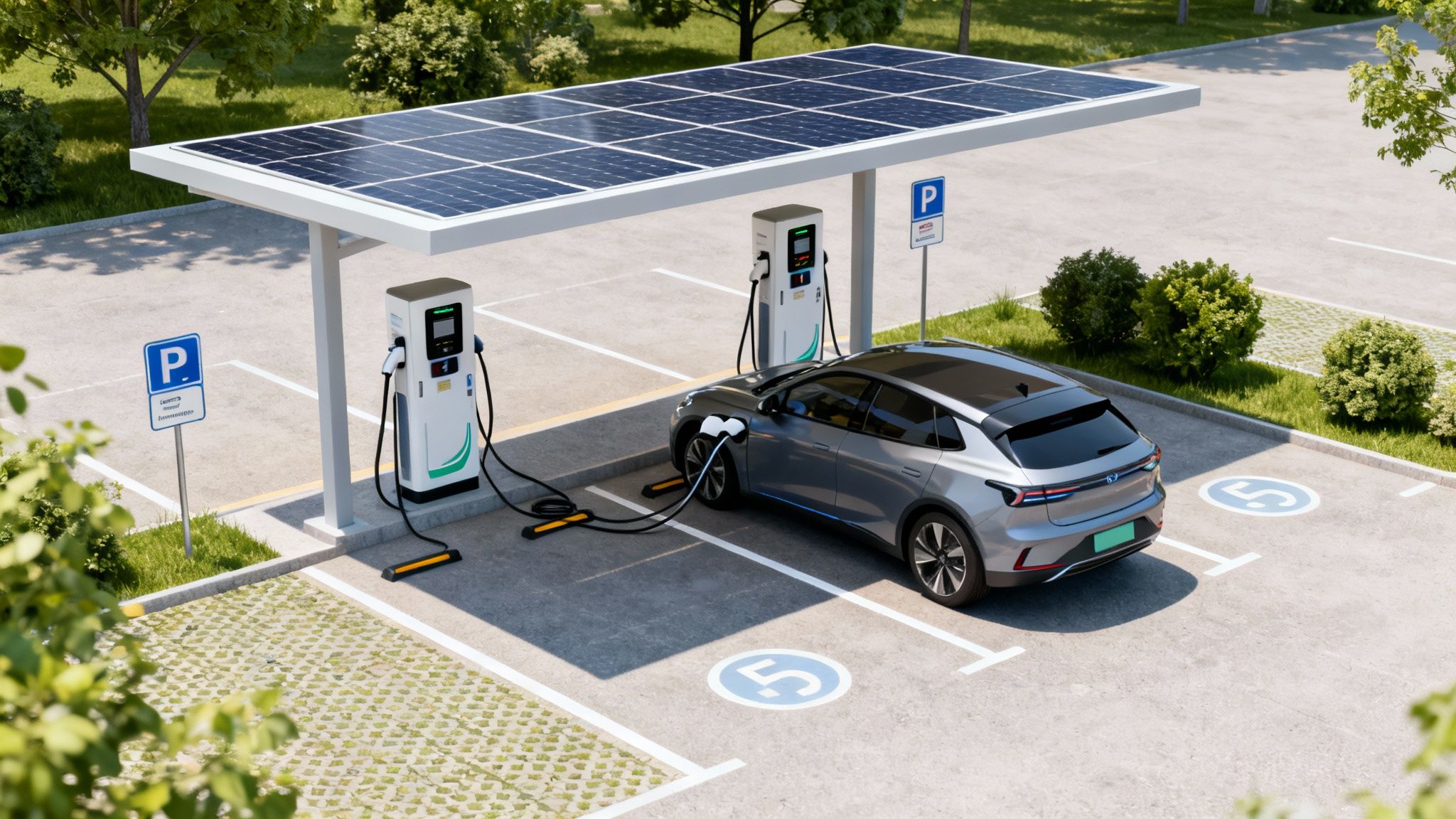
For properties that want to go all-in on sustainability, integrating solar power is the final frontier. Imagine pairing solar canopies over your parking lots with your charging stations. You’d be generating your own clean, free electricity on-site. This not only protects you from fluctuating energy prices but also creates a truly resilient and self-sufficient transportation ecosystem.
To get deeper into the nuts and bolts, you can learn more about planning your electric vehicle charging infrastructure for long-term success.
Managing Your Fleet for Peak Performance
So, you’ve got your new fleet of sustainable vehicles on the property. That’s a huge step, but the journey doesn’t end there. Getting the vehicles delivered is one thing; making sure they run smoothly day in and day out is where the real work—and the real payoff—begins.
Effective management isn't about watching over every driver's shoulder. It’s about building a smart, simple system that keeps your fleet efficient, extends the life of your vehicles, and delivers a flawless experience for your guests and staff. This is how you turn a collection of individual vehicles into a powerhouse operational asset.
Harnessing Technology for Smarter Operations
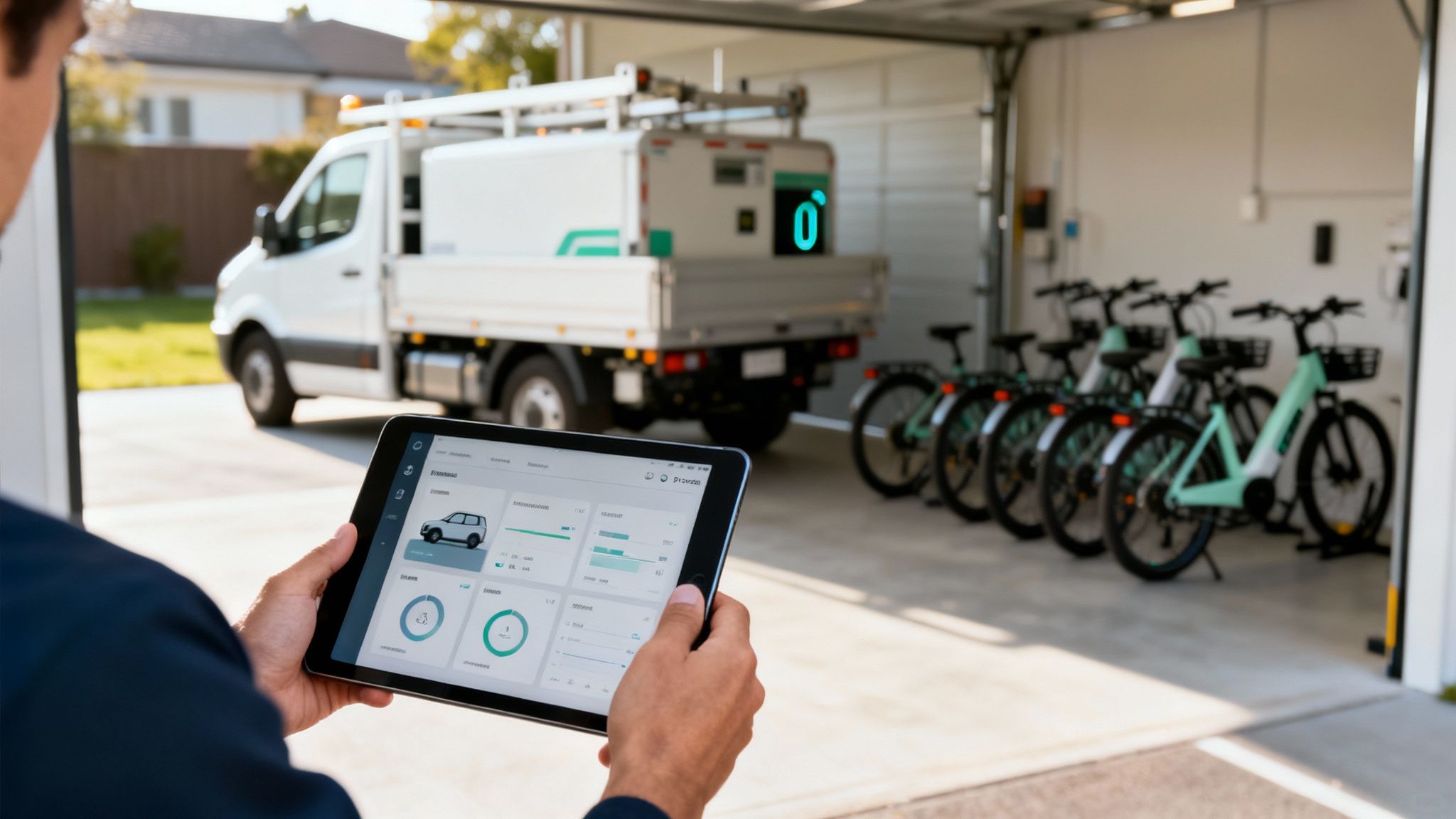
Not too long ago, fleet management was all about paper logs and clipboards. Thankfully, those days are over. Modern fleet management software gives you a real-time command center, offering a complete picture of your entire operation from a single screen. For a green fleet, this kind of tech is a game-changer.
Think about what these platforms can do for you:
- Live Vehicle Tracking: Need to find a maintenance cart or see where the guest shuttle is? GPS tracking shows you the exact location of every vehicle, instantly.
- Battery Health Monitoring: You can keep an eye on the battery level of every single EV. This makes it easy to cycle vehicles onto chargers and ensures no one ever gets stuck with a dead battery.
- Usage Analytics: Dive into the data to see which vehicles are used the most, how far they typically travel, and how much energy they consume. This is gold for optimizing routes and making sure every vehicle is pulling its weight.
This insight allows you to shift from a reactive, "fix-it-when-it-breaks" mindset to a proactive strategy driven by real data. If you're ready to see how these systems work, exploring the full picture of electric vehicle fleet management is a great next step.
Establishing Clear Operational Protocols
Technology is a powerful tool, but your team is what makes it all work. The daily habits of your staff have a direct impact on the safety and lifespan of your fleet, which makes solid training an absolute must.
Proper training isn’t just a safety measure; it's a core maintenance strategy. When your team understands how to operate and care for the vehicles correctly, you drastically reduce wear and tear, prevent common errors, and extend the life of your investment.
Start by creating straightforward protocols for the most important tasks. This includes standardized charging procedures to keep your batteries healthy—like avoiding deep discharges and always using the right charger. It's also smart to implement simple pre-trip inspections, where staff give the tires and brakes a quick check before they head out.
The New Rules of Preventative Maintenance
One of the best things about going electric is how much simpler maintenance becomes. Say goodbye to oil changes, spark plugs, and finicky exhaust systems. The service schedule for an EV is much friendlier, but "less maintenance" definitely doesn't mean "no maintenance."
A solid preventative maintenance plan for your sustainable transportation options just focuses on a few different key areas:
- Battery Care: Make it a habit to check battery connections and follow the manufacturer’s advice for long-term storage, especially if you have an off-season.
- Tire and Brake Checks: Regenerative braking is great for reducing wear and tear on brake pads, but they (and the tires) still need a regular look-over.
- Software Updates: Modern EVs get software updates just like your phone. Staying on top of these updates is important, as they often include performance boosts and efficiency improvements.
By sticking to a simple but consistent schedule, you’ll ensure your fleet stays safe, reliable, and running at its best for years to come.
Finding the Right Partner to Power Your Transition
Making the switch to an electric fleet can feel like a massive project, but you don't have to go it alone. The right partner does more than just sell you vehicles; they become an extension of your team, guiding you through every step from the drawing board to daily operations. It's less about finding the cheapest sticker price and more about finding a true ally who gets the unique operational DNA of your property.
This is where the rubber really meets the road. A great partner helps you connect your big-picture goals with their specific products. They can show you exactly how the Solana F utility vehicle is a perfect fit for your groundskeeping crew, or how the whisper-quiet Solana XA could completely change your security patrol operations. This kind of hands-on guidance ensures you’re getting the right tools for the right job, every single time.
More Than Just a Transaction
A top-notch provider offers support that goes way beyond the initial sale. Their expertise is a huge asset when you're mapping out charging infrastructure, hunting down tax credits, and getting your staff up to speed. They’ve seen what works (and what doesn't) on other properties, helping you sidestep common mistakes and see a faster return on your investment.
Think of it this way: you’re not just buying a bunch of carts; you’re adopting a whole new way of operating. A strong partner gives you the playbook and the ongoing support to make sure that new system runs like a well-oiled machine. This means help with installation and, crucially, preventative maintenance plans to keep your fleet in top shape.
A true partnership is the difference between simply owning electric vehicles and building a transportation ecosystem that actually works for your property. It ensures your investment is successful, scalable, and keeps delivering value for years.
The Power of a Strong Dealer Network
One of the biggest advantages any manufacturer can offer is a solid, well-supported dealer network. These local dealers are your people on the ground, ready to provide hands-on help and quick service whenever you need it. They know your region inside and out, from local permitting rules to the specific environmental challenges your property might face.
This local knowledge is a game-changer for a few key reasons:
- Expert Planning: A local dealer can walk your property with you, helping design the most efficient charging layout and figuring out the best deployment strategy for your fleet.
- Seamless Installation: They handle the headaches of delivery and setup, making sure your vehicles and charging stations are installed correctly and safely right from the start.
- Ongoing Service and Support: When a vehicle needs a tune-up or a quick fix, having a local expert who can be there in a flash is essential for keeping your operations running smoothly.
Ultimately, choosing a provider with a strong dealer network like Solana EV means you’re never left scrambling for answers. You get a dedicated local expert who is invested in your success, ensuring your sustainable transportation options not only meet but exceed your operational needs and guest expectations for the long haul.
Answering Your Key Questions About Sustainable Transportation
Switching to a green fleet is a big decision, and it’s smart to have a few questions before you dive in. We get these all the time from property managers, so let's clear up some of the most common points to help you move forward with confidence.
What’s the Real Lifespan of a Commercial EV Battery?
You can expect a quality, commercial-grade lithium-ion battery to last 8-10 years, and often even longer. Think of it less like a standard car battery and more like a long-term power plant for your vehicle.
Of course, a few things influence that lifespan, like how often the vehicles are used, the climate, and your charging routines. The good news is that modern batteries are incredibly low-maintenance and deliver steady power right up until the end of their life. Any reputable partner will back their batteries with a solid warranty and provide a management system to help you get the most out of them.
What Does It Actually Cost to Install a Commercial Charging Station?
The cost can swing quite a bit, mostly depending on the type of charger you choose and what your property's current electrical setup looks like. For a standard Level 2 charger, you might be looking at anywhere from a few thousand dollars to over $10,000 for the full installation.
But here’s the key: don't get sticker shock. There are some fantastic federal and state tax credits available that can take a huge bite out of that initial cost. A good partner won’t just sell you a charger; they’ll perform a full site assessment and help you find every incentive you qualify for, making the whole project much more affordable.
Think of charging stations as more than just hardware—they're a powerful new amenity. Reliable charging is a massive perk for guests and the backbone of a smooth-running fleet. The value it adds goes far beyond the initial price tag.
Are Low-Speed Vehicles Actually Street Legal?
Absolutely. Low-Speed Vehicles (LSVs) are federally regulated and perfectly legal on most public roads that have a speed limit of 35 mph or less.
They’re built with safety in mind and come standard with all the required features: headlights, turn signals, mirrors, seatbelts—the works. While they are a fantastic fit for resorts, planned communities, and large campuses, it's always a good idea to double-check local rules. An experienced dealer can handle all of that for you, ensuring your fleet is 100% compliant from day one.
Ready to figure out which sustainable transportation options are the right fit for your property? The team at Solana EV is here to help you build a fleet that works for you. Discover our full lineup of vehicles today.