
A standard electric golf cart is deliberately pokey, with most models topping out around 15 mph for safety on the course. But if you want to make an electric golf cart fast, you're looking at a balanced upgrade of its core systems—a process that can get you hitting speeds of 25 mph or more. It's all about transforming a gentle cruiser into something with a bit more punch.
Why Your Stock Golf Cart Is So Slow
Ever feel like your brand-new golf cart is more of a leisurely stroll than a spirited drive? There's a simple reason for that: it was designed that way on purpose. Manufacturers build standard golf carts with safety, reliability, and gentle cruising over predictable turf in mind, not zipping down the street.
This intentional design choice creates a built-in performance ceiling. Key components are chosen to deliver just enough power for its intended job, which keeps costs down and ensures a safe, low-speed ride for golfers. Getting real speed isn't about slapping on one magic part; it’s about understanding that your cart is a complete, interconnected system.
To build a truly fast electric golf cart, you have to look at it as a balanced ecosystem where every part influences the others. Think of it like a performance orchestra—the motor might be the powerful brass section, but it’s not going to sound great without a skilled conductor (the controller) and a well-fed string section (the batteries).
The Core Components Holding Your Cart Back
Four key areas work in tandem to either limit or unlock your cart's potential. Upgrading them in harmony is the secret to building a vehicle that's not just fast, but also reliable and safe to handle at those higher speeds.
- The Motor: This is the heart of your cart, determining raw power and rotational speed.
- The Controller: Think of this as the brain. It regulates how much juice from the batteries actually gets to the motor.
- The Batteries: This is your fuel tank, providing the voltage and amperage needed for high-performance demands.
- Gearing and Tires: These are the mechanical parts that take the motor's power and actually put it down on the pavement.
This concept map shows how these essential components all connect back to the central golf cart system.
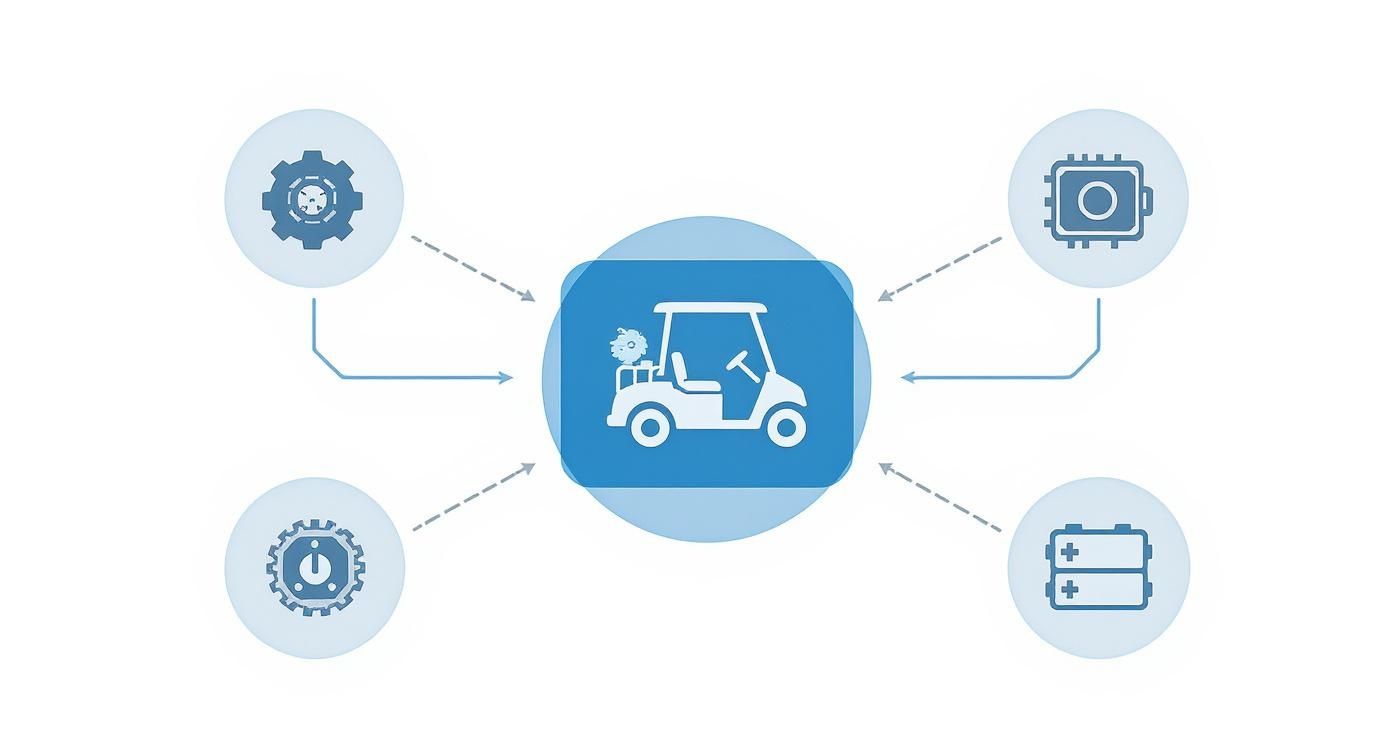
As the infographic shows, no single component works alone; they're all interconnected pieces of a whole performance puzzle. The growing demand for faster, more versatile carts is fueling some serious market growth. The global electric golf cart market was valued at USD 1.55 billion and is projected to hit USD 2.58 billion by 2033. You can dig into more insights about this market growth on Grand View Research.
The Power Duo: Motor and Controller Upgrades
If you're serious about making your electric golf cart fast, the first place you need to look is its powertrain. I like to think of the motor as the heart of the cart and the controller as its brain. This duo is the command center for your cart's speed and acceleration, and upgrading them together is hands-down the most effective way to unlock some serious performance.
A beefier motor can spin faster and generate more torque, but it's not going to do much good if the controller can't feed it enough juice. On the flip side, a high-end controller can't magically make a weak motor perform beyond its physical limits. For real speed, they have to work in perfect harmony.
Choosing the Right Motor for Speed
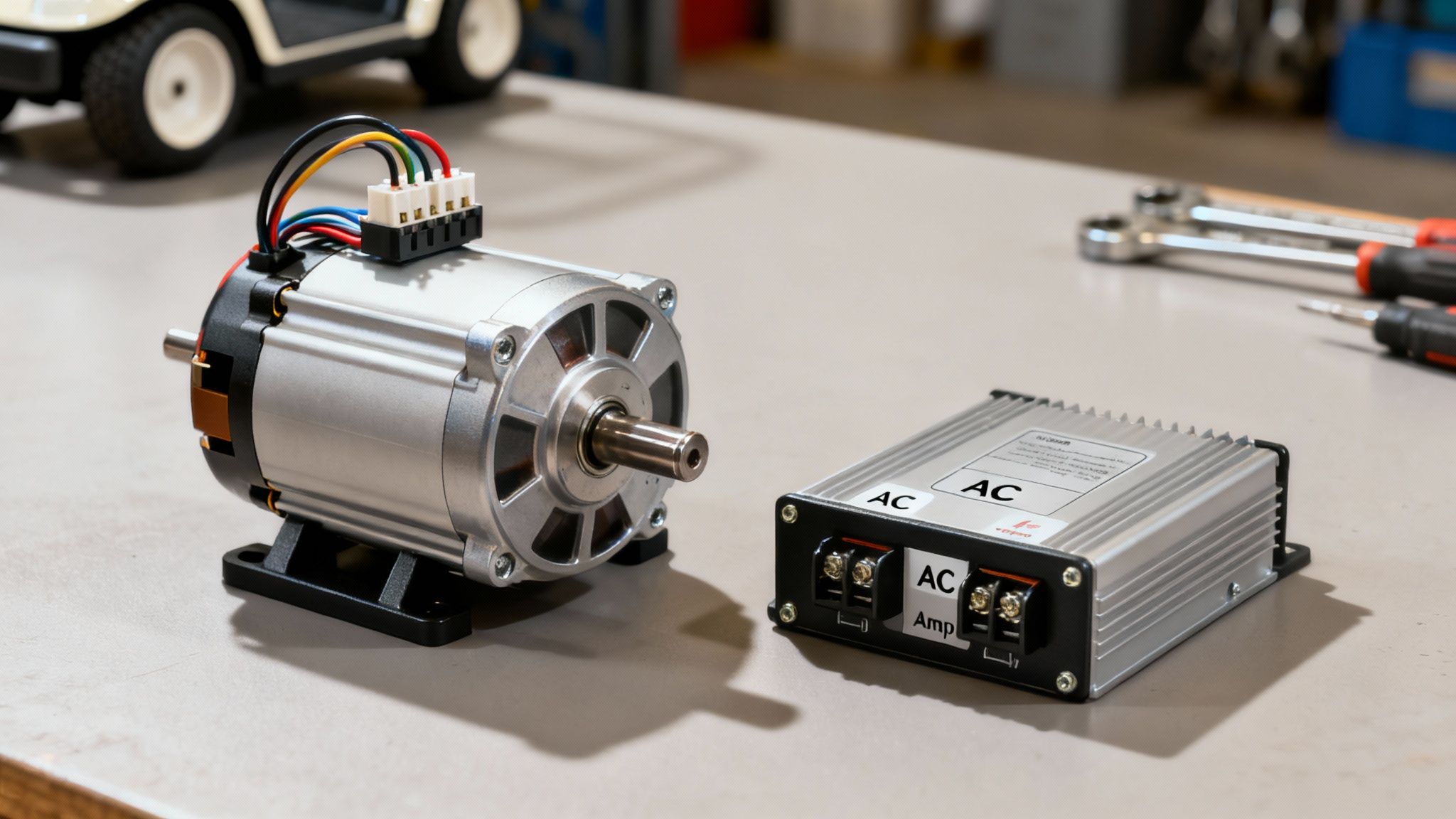
The motor is what physically gets the wheels turning, so its design has a direct line to your top speed. In most high-performance builds these days, Alternating Current (AC) motors are the clear favorite over the older Direct Current (DC) motors, and for good reason. AC motors are typically more efficient, need less maintenance, and can hit higher RPMs—which translates directly into a faster golf cart.
Think of your motor as an athlete. A DC motor is like a sprinter: incredibly powerful off the line but has a definite top speed they just can't push past. An AC motor, however, is more like a marathon runner who is not only powerful but also incredibly efficient, able to hold high speeds for longer without getting gassed or wasting energy. That efficiency is precisely why AC motors are the go-to for speed demons.
You can get a deeper dive into what separates these two technologies in this guide to high-performance golf cart motors.
Key Takeaway: AC motors give you better efficiency, higher potential RPMs, and superior heat management. This makes them the obvious choice for anyone building a fast electric golf cart, delivering both the raw grunt for acceleration and the endurance for a higher top speed.
But remember, a powerful AC motor is only half the story. It needs a "brain" that can actually keep up.
To better illustrate the differences, let's break down how these two motor types stack up against each other.
AC vs DC Motors Key Performance Differences
This table offers a side-by-side comparison to help you see exactly how AC and DC motors differ when it comes to speed, maintenance, and overall performance.
| Feature | AC Motor | DC Motor |
|---|---|---|
| Efficiency | Higher, wastes less energy as heat | Lower, less efficient, especially at low speeds |
| Top Speed | Higher RPM potential | Limited by brush and commutator design |
| Acceleration | Smooth and powerful across the speed range | Strong initial torque, but can fade |
| Maintenance | Brushless design, virtually maintenance-free | Brushes require periodic inspection and replacement |
| Regen Braking | More effective and efficient | Possible, but less efficient than AC systems |
| Cost | Generally higher initial cost | Lower initial cost |
As you can see, while a DC motor might save you a few bucks upfront, the AC motor is the superior choice for anyone prioritizing speed, efficiency, and a maintenance-free experience.
Why a Controller Upgrade Is Not Optional
The controller acts as the electronic gatekeeper, managing the flow of electricity from the batteries to your motor. The stock controller that came with your cart was designed to deliver a safe, conservative amount of amperage to protect the original, low-powered motor. The second you install a high-performance motor, that stock controller becomes an instant bottleneck.
It's like trying to fill a swimming pool with a garden hose. You've got all the water you need (your batteries) and a massive pool to fill (your new motor), but that tiny hose (the stock controller) is severely limiting how fast you can get the job done. Upgrading to a high-amperage controller is like swapping that garden hose for a fire hose—it lets a massive, controlled surge of power flow right to the motor, unleashing its full potential.
An aftermarket controller with a higher amperage rating—think 500 amps or more—is absolutely essential. It makes sure the motor gets all the electricity it's asking for, giving you that neck-snapping acceleration and the power needed to hit and hold those high speeds. Without this upgrade, you're not just leaving performance on the table; you're also risking overheating and frying both components.
Fueling Your Speed With Better Batteries
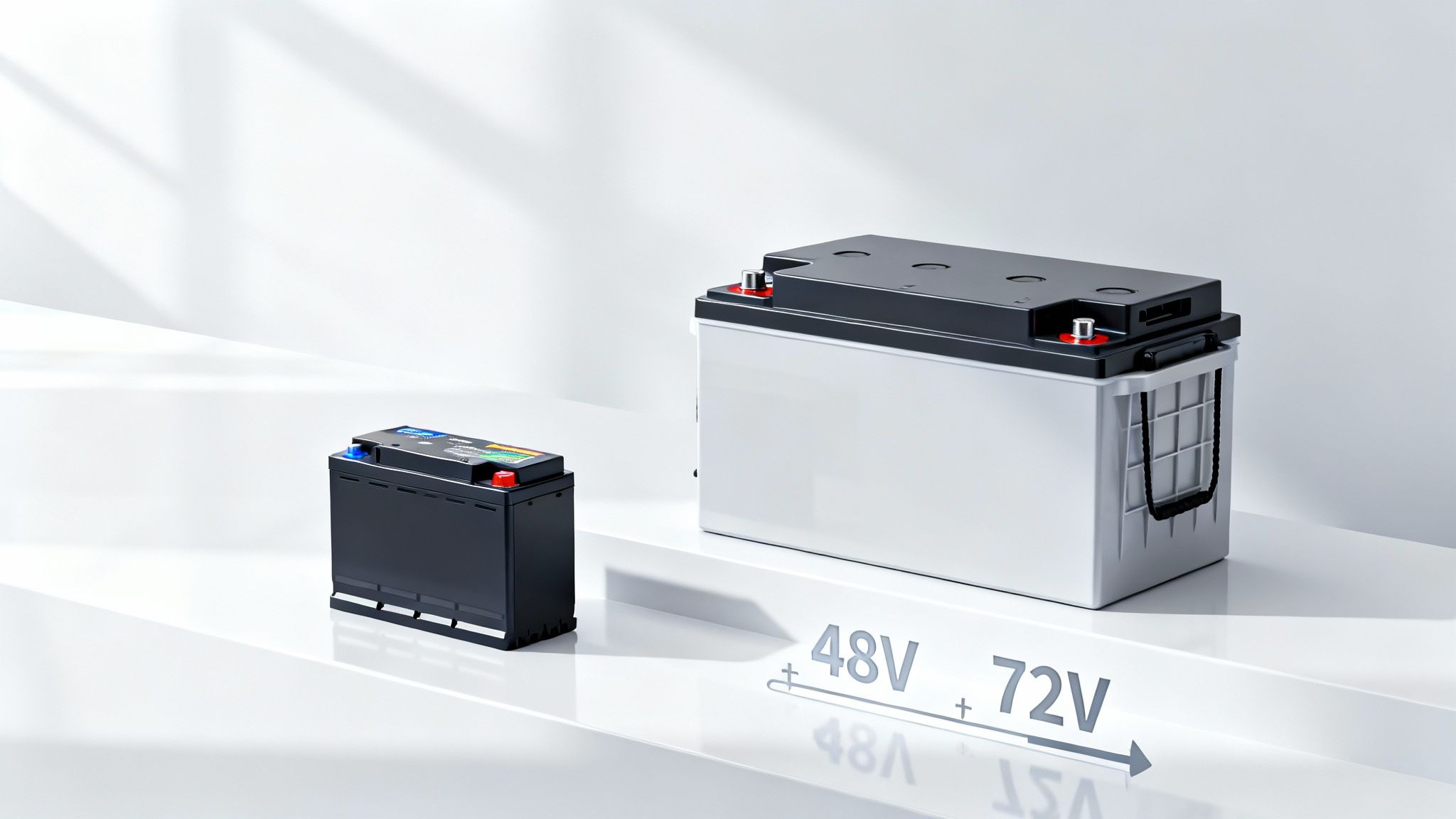
A powerful motor and a high-end controller are great starting points, but they’re just hungry components without the right power source. In an electric golf cart, your batteries are the fuel tank. If you're serious about building a genuinely fast cart, a battery system upgrade isn't just a good idea—it's essential.
Let’s use a simple analogy: think of your cart's electrical system as a garden hose. Amperage is the volume of water moving through the hose, but voltage is the pressure. Crank up the pressure, and the water shoots out faster and harder. It’s the exact same principle with your cart. More voltage means more electrical "pressure" forcing power into the motor.
This is why jumping from a standard 36V or 48V system to a more muscular 72V setup feels so dramatic. The higher voltage makes the motor spin faster and gives you that neck-snapping acceleration, boosting both your top speed and how quickly you can reach it.
The Lithium Advantage Over Lead-Acid
The type of battery you choose is just as critical as its voltage. For years, the only real option was the classic, heavy lead-acid battery. But for anyone chasing speed today, modern lithium-ion batteries are the clear winner for two huge reasons.
First up is weight. Lithium packs are dramatically lighter than their old-school lead-acid cousins—we're often talking a difference of hundreds of pounds. Just like in a race car, dropping that much weight makes a world of difference. The cart feels lighter on its feet, accelerates harder, and handles more nimbly because it simply takes less energy to move less mass.
The second advantage is how they deliver power. Lead-acid batteries are notorious for "voltage sag," where the power they put out noticeably drops as they drain. A lithium battery, however, delivers consistent, rock-solid voltage right until it's nearly depleted.
This means you get that "fresh off the charger" punchy acceleration for almost your entire ride. Your cart feels just as quick at 30% charge as it does at 90%, not just for the first ten minutes.
Choosing the Right Battery Foundation
Making the switch to a higher-voltage lithium battery pack is one of the single most effective upgrades you can make for speed. You get the one-two punch of a massive weight reduction and a steady stream of high-pressure power, creating the perfect foundation for a performance motor to really shine. To get a deeper dive into the specifics, check out the benefits of a golf cart lithium battery conversion.
At the end of the day, your battery pack is where all the magic starts. By investing in a high-voltage lithium system, you’re making sure your motor never starves for the energy it needs to deliver the thrilling speed you're looking for.
Putting Power to the Pavement With Gears and Tires
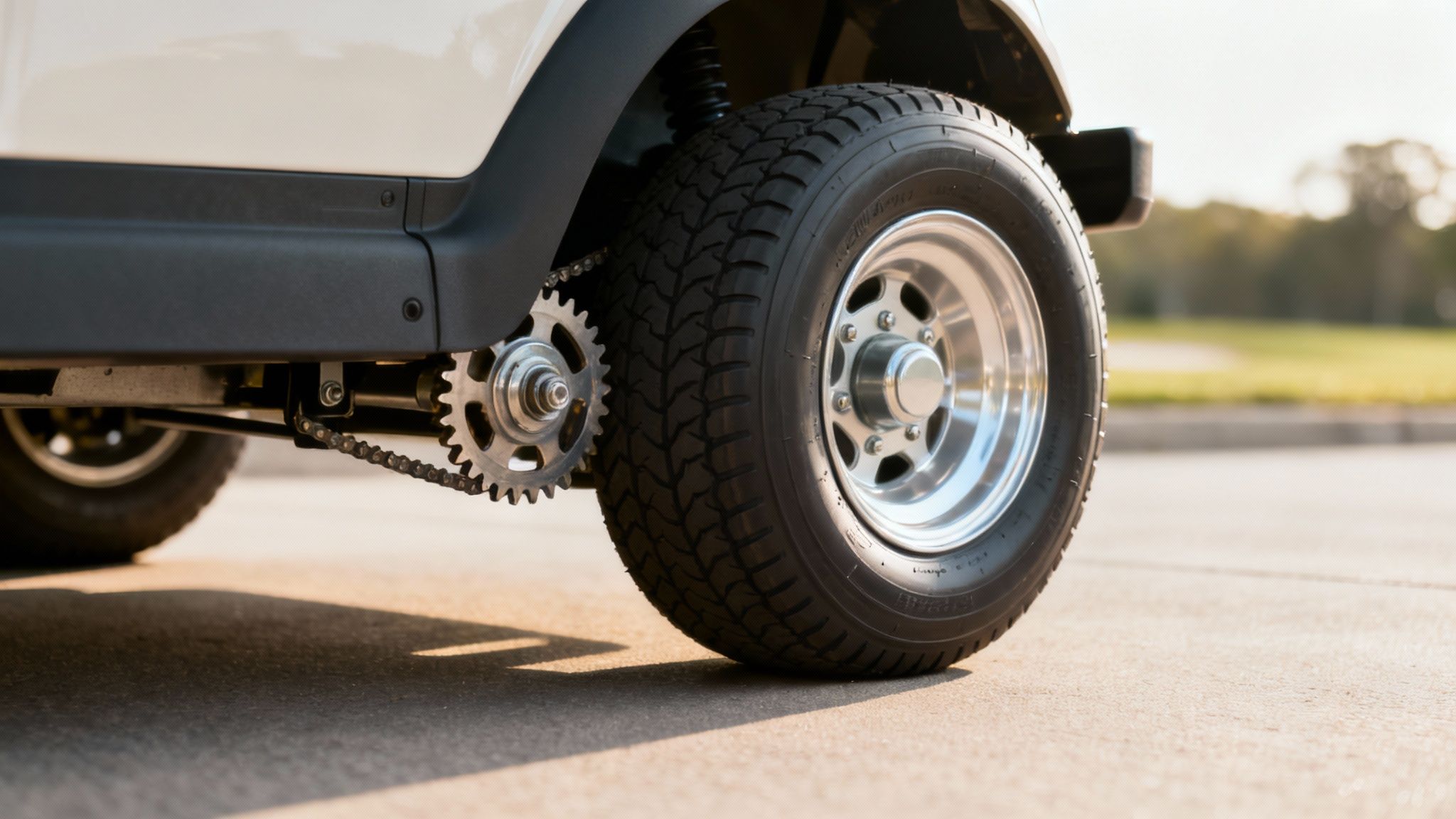
Okay, so you've got a beefed-up motor and a battery pack that means business. Now what? All that potential energy is useless until you can get it to the ground. This is where the mechanical side of the equation comes in, and it’s where the rubber literally meets the road. Your cart’s gearing and tires are the final, crucial pieces in the speed puzzle.
Think about a 10-speed bike. When you click into a low gear, you can crawl up a steep hill without much effort, but you won't be breaking any speed records. Shift into a high gear on a flat stretch, and every push of the pedal sends you flying. A golf cart's differential and gear ratio operate on that exact same principle, translating the motor's spin into wheel speed.
Finding the Right Gear Ratio for Speed
Most golf carts roll off the factory line with a standard gear ratio, something around 12:1. This is a good middle-of-the-road setup that gives you enough torque for hills and a decent, but not thrilling, top speed. If you really want to open it up, you'll need to swap in a high-speed gear set. These kits change the ratio to a numerically lower number, like 8:1 or even a very aggressive 6:1.
What does that do? It means the motor doesn't have to spin nearly as many times to turn the wheels once. The direct result is a much higher top speed on flat ground. But, just like with the bicycle, there’s always a trade-off. High-speed gears will noticeably reduce your cart's torque, which means you'll lose that punchy, off-the-line acceleration and struggle more on inclines.
The Trade-Off: High-speed gears sacrifice low-end torque for a higher top speed. If you live in a hilly area, an extreme speed gear set might leave your cart underpowered when you need it most.
It all comes down to where you drive. If your world is mostly flat, speed gears are an incredible upgrade. If you're dealing with hills, a more moderate gear set is the smarter play for solid all-around performance.
How Tire Size Affects Your Top Speed
Here's one of the easiest and most overlooked ways to get more speed: change your tires. It's simple physics, really. A taller tire covers more ground with every single rotation. Just by swapping out your stock 18-inch tires for a 20-inch or even a low-profile 23-inch set, you can add several miles per hour to your top end without touching a single wire.
But, you guessed it, this isn't a free lunch either. Larger tires effectively change your final drive ratio in the same way gears do, and that means a hit to your torque. The cart can feel a bit sluggish from a dead stop and will put more strain on the motor and controller when accelerating or climbing. A good golf cart tire size guide can help you figure out the sweet spot between size, speed, and torque.
Ultimately, building a fast cart is about creating a balanced system. The perfect combination of gears and tires is completely dependent on your motor's power, your battery voltage, and the terrain you'll be tackling. When you get these components working in harmony, you're making sure every ounce of power gets used to push your cart to its absolute limit.
The Hidden Speed Killers: Weight and Drag
Once you've got the motor and battery sorted, it's time to deal with the invisible forces trying to slow you down. Think of it this way: your motor is the athlete, but weight and drag are the extra hurdles you're forcing it to jump. Every extra pound your cart carries is energy that could’ve gone into pure speed.
This is where shedding weight and improving aerodynamics become crucial. These two factors are the silent partners in your quest for a fast electric golf cart, and ignoring them means you're leaving performance on the table.
The Impact of Lightweight Components
Reducing your cart's overall weight is one of the most direct paths to making it feel quicker and more nimble. It’s simple physics: the less mass you have to move, the less energy it takes. This lets your motor work smarter, not harder, leading to snappier acceleration and a higher top speed. You’ll especially feel the difference right off the line.
Every single part adds to the total weight, but making a few smart swaps can add up to a huge performance boost.
- Lithium Batteries: This is the big one. Ditching old-school lead-acid batteries for a modern lithium pack can slash over 250 pounds from your cart. That's a game-changing reduction you'll feel instantly.
- Aluminum Frames: Carts built with a lightweight aluminum chassis already have a head start over those with heavier steel frames.
- Minimalist Accessories: Take a hard look at what you really need. Removing heavy, non-essential add-ons like a bulky rear seat or a hefty cargo box can trim even more weight.
This "less is more" approach isn't just a niche for speed demons. Across the board, from resorts to airports, there's a growing demand for lighter, more efficient vehicles. In fact, 1 to 4-seater electric carts command the largest market share, which points to a clear preference for agile designs. You can dig into more of these electric golf cart market trends to see where things are headed.
Why Aerodynamics Still Matter
Okay, a golf cart isn't a Formula 1 car, but at a certain point, air resistance (or drag) absolutely starts to matter. A standard cart's boxy shape is an aerodynamic mess. As you pick up speed, it effectively becomes a parachute, forcing your motor to fight against the wind.
At speeds above 20 mph, air resistance becomes a significant force. A more streamlined design can help your cart slice through the air more easily, allowing it to maintain its top speed with less effort.
Even small tweaks can make a difference. Lowering the cart, for example, reduces the amount of air getting trapped underneath, which cuts down on drag. Adding a sloped windshield or choosing a body with smoother curves can help you squeeze out that extra mile per hour. It just goes to show that making an electric golf cart fast is about being clever with physics, not just overpowering the problem.
How to Choose a Fast Electric Golf Cart
Knowing what makes a golf cart tick is one thing, but actually using that knowledge when you’re ready to buy or upgrade is a whole different ballgame. It's easy to get distracted by a cool paint job or fancy seats, but if you want real speed, you have to look under the hood—so to speak.
This means digging into the spec sheet, past the advertised top speed, and figuring out what’s really powering the machine. The shift to electric carts is massive, and they now dominate the global market. You can read more about the rise of the electric golf cart market to see just how fast it's expanding. More options are great, but it also means you need to be a smarter shopper.
Your Performance and Safety Checklist
Think of a fast electric cart as a complete package. What good is blistering speed if you can't control it? A truly great cart is thrilling to drive but also safe and predictable. Your checklist needs to cover both sides of that coin.
Here’s what you should be looking for:
- Motor Type: Don't settle for less than an AC motor. They're just plain better for high-speed carts, offering more efficiency and higher RPMs.
- Controller Amperage: A bigger controller lets more juice flow to the motor. Aim for 500 amps or more to avoid creating a power bottleneck.
- Battery System: The gold standard right now is a 72-volt lithium-ion battery pack. This setup gives you the voltage you need for serious speed and cuts down on weight significantly.
- Braking System: If a cart can break 20 mph, standard drum brakes just won't cut it. Hydraulic disc brakes are a must-have for safety.
Speed demands safety. A fast cart must have a braking and suspension system that is purpose-built to handle the increased forces and speeds you plan to achieve.
Beyond those core parts, look for an upgraded suspension. It’s critical for keeping the cart stable and manageable when you're moving quickly. And if you plan on driving anywhere near public roads, things like proper headlights, brake lights, and turn signals are non-negotiable.
Of course, a great cart is just one part of the equation for a perfect day on the links. Checking out other essential golf gear and tips can take your entire game to the next level. By focusing on both performance and safety, you'll end up with a fast cart that’s a blast to drive, not a liability.
Got Questions About Golf Cart Speed? We’ve Got Answers.
When you start thinking about making a golf cart faster, a lot of practical questions pop up. It’s smart to get a handle on the legal side of things, as well as the technical and performance details, before you dive in. Let's tackle some of the most common questions to give you clear, straight-up answers.
How Fast Can I Legally Drive My Electric Golf Cart?
Right out of the box, most golf carts are capped at speeds under 20 mph. But if you're looking to take it on the road, you can modify it to become a Low-Speed Vehicle (LSV).
An LSV is legally allowed to hit speeds up to 25 mph on public roads where the speed limit is 35 mph or less. To earn that street-legal status, your cart needs to be outfitted with essential safety gear: headlights, turn signals, mirrors, seatbelts, and a registered Vehicle Identification Number (VIN).
Should I Just Upgrade the Cart I Already Have?
Upgrading your current cart can be a great way to get more speed, but it’s not as simple as just swapping out the motor. Think of it as a complete system overhaul. If you drop in a high-powered motor without supporting it, you’re just asking for trouble.
To handle the extra power, you'll need to upgrade the controller, solenoid, all the high-amperage cables, and the battery pack. Everything has to work together.
Crucial Tip: More speed creates more force. Upgrading your brakes to hydraulic discs and beefing up the suspension isn't optional—it's essential for staying in control. Don't even think about skipping these safety upgrades.
Do Lithium Batteries Actually Make a Golf Cart Faster?
They absolutely do, and for a couple of key reasons. First off, lithium batteries are a game-changer when it comes to weight. They are way lighter than old-school lead-acid batteries, which slashes the cart's overall weight and gives you a noticeable boost in acceleration. A lighter cart is just plain quicker off the line.
Second, lithium batteries maintain a steady voltage level as they drain. This is huge. It means your cart delivers top-end power almost until the battery is empty, eliminating that frustrating slowdown you get with lead-acid batteries as they lose their charge. Your cart will feel just as zippy at the end of a ride as it did at the start.
Ready to experience the ultimate in speed, style, and safety? The premium, street-legal electric vehicles from Solana EV are engineered for performance from the ground up. Explore our lineup and find the perfect high-speed cart for your lifestyle at https://solanaev.com.