
Welcome to the world of golf carts—it's a lot bigger than you might think. These days, your options stretch way beyond the fairways. When you break it down, the main types of golf carts fall into a few key buckets based on their power source (electric vs. gas), what they're built for (street-legal vs. off-road), and how much you can tweak them (utility vs. custom). The first step to finding the perfect cart is figuring out exactly what you'll be using it for.
Your Guide to Choosing the Right Golf Cart
Think of this guide as your personal roadmap. We'll walk through the essential types of golf carts to help you feel confident in your choice. We'll start with the biggest decision right out of the gate: the whisper-quiet hum of an electric cart versus the raw power and range of a gas model. From there, we'll get into the more specialized rides, from street-legal carts made for zipping around the neighborhood to rugged off-road machines built for the trail.
This is your personal consultation, arming you with the know-how to match a cart to your lifestyle, whether it's for weekend fun, tough jobs, or just getting around town.
Making the Right Choice for Your Needs
The golf cart market today is surprisingly diverse. The days of cookie-cutter carts are long gone. Now, you can find vehicles designed for very specific jobs and terrains, which makes picking the right one more important than ever.
Before you go any further, ask yourself these three core questions:
- Power Source: Are you looking for quiet, eco-friendly operation, or do you need the extended range and muscle of a gas engine?
- Primary Use: Will this be for leisurely cruises around the community, hard work on a big property, or tackling unpaved trails?
- Customization: Do you just need a simple, functional vehicle, or do you want a personalized ride with unique features that show off your style?
This decision tree gives you a great visual for figuring out which type of cart best fits your needs, based on how you answer those questions.
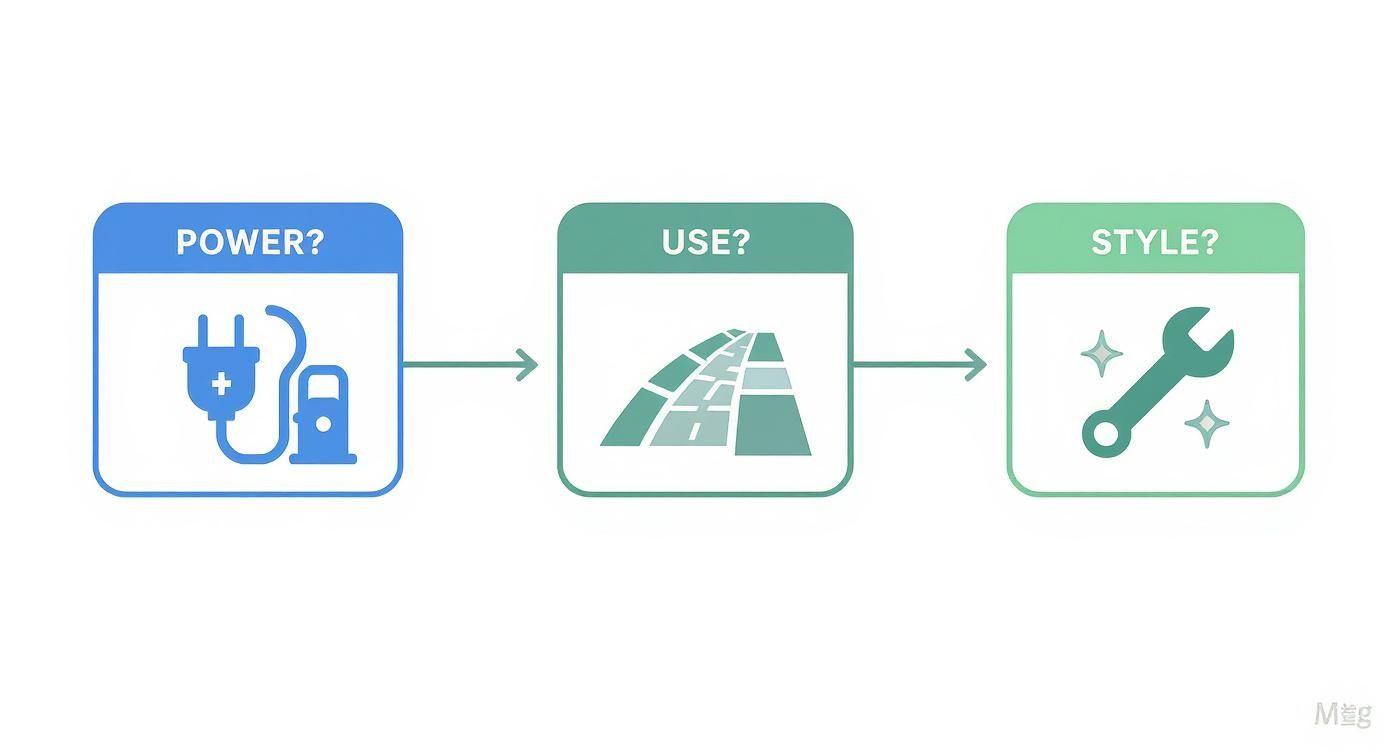
As you can see, your journey starts with that fundamental choice between electric and gas. From there, the path splits depending on whether you'll be sticking to the pavement or venturing off-road. Each branch leads to a category of cart that's perfectly suited for a specific purpose.
Now, let's dive into the details of each one.
Electric vs. Gas: The Foundational Choice
When you’re starting your search for a golf cart, the very first fork in the road is deciding on the power source. Think of it like choosing between a sleek, modern EV and a classic, rugged pickup truck. Each has a completely different feel, a unique purpose, and a set of trade-offs that will shape your entire experience, from daily upkeep to how it handles a steep hill.
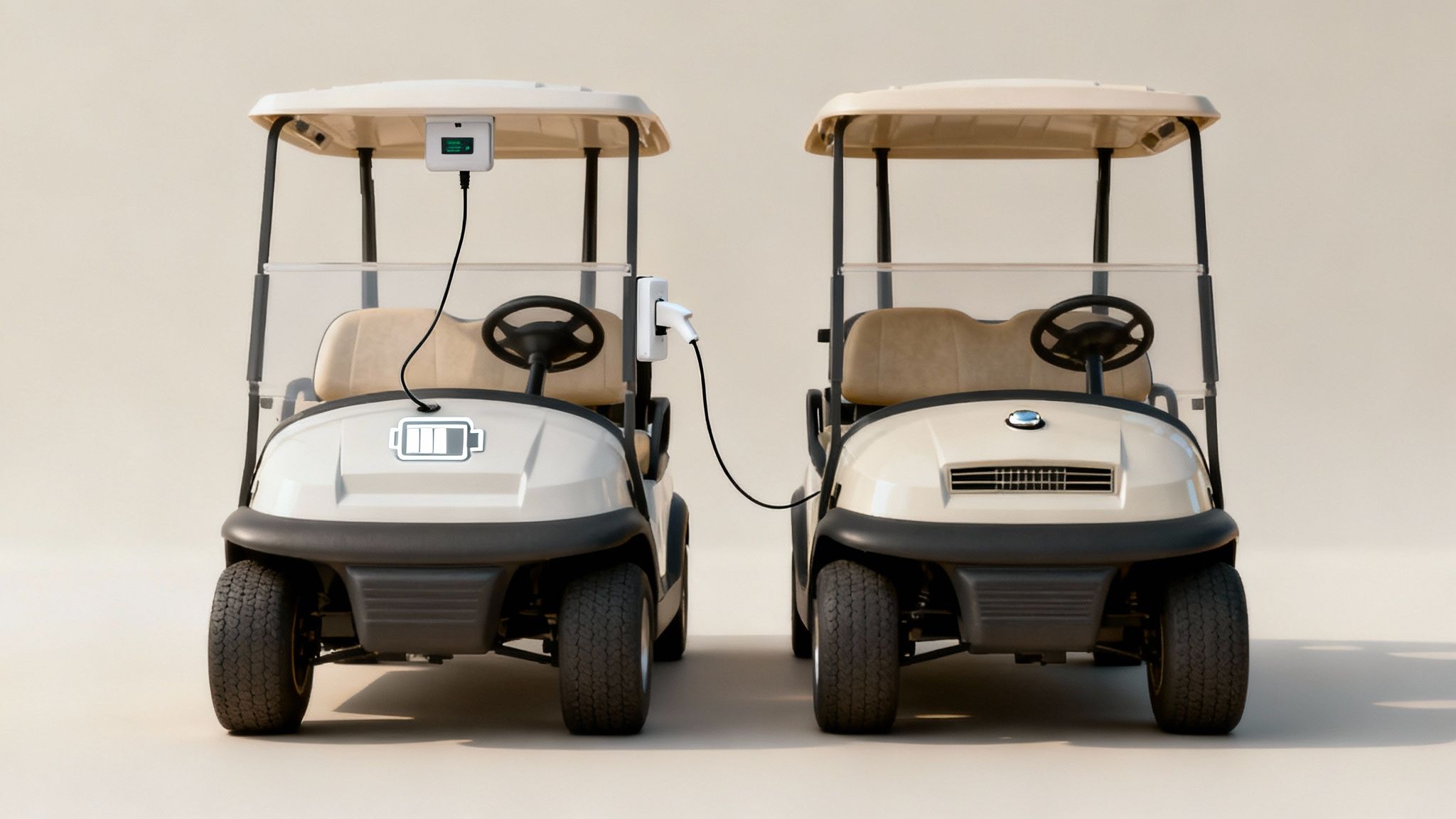
An electric golf cart glides along almost silently, making it a perfect neighbor in a quiet community or for those early morning rounds on the course. They produce zero emissions and offer the dead-simple convenience of plugging into a standard wall outlet. This low-maintenance, eco-friendly approach is why electric models have become so incredibly popular.
In fact, the global golf cart market is overwhelmingly electric, with battery-powered models holding the lion's share of the market. This isn't just a fad; it’s a shift driven by a bigger focus on sustainability and tougher rules on emissions. You can see the data for yourself in this comprehensive industry report on Grandview Research.
The Quiet Power of Electric Carts
Electric carts get their juice from deep-cycle batteries, which are engineered to deliver a steady stream of power over a long time. The technology here has come a long way, giving you more choices than ever before.
You'll mainly run into two types of batteries:
- Lead-Acid Batteries: This is the old-school, traditional option. They’re easier on the wallet upfront but come with homework—you have to regularly check water levels. They also have a shorter lifespan, typically needing replacement every 4-6 years.
- Lithium-Ion Batteries: This is the modern upgrade. Lithium batteries are lighter, require absolutely no maintenance, and charge in a fraction of the time. They also last much, much longer—often 8-10 years or more—which can make them the smarter financial choice over the long haul.
For anyone who values convenience and consistent performance, a lithium-powered cart is a no-brainer. Unlike lead-acid models that get sluggish as they drain, a lithium cart gives you full power right until the battery is nearly empty.
The Rugged Reliability of Gas Carts
On the other side, you have the gas-powered golf cart—the undisputed workhorse. Powered by a small but mighty internal combustion engine, these machines are all about raw power and endurance. They've got more torque, which you'll definitely feel when climbing steep inclines or hauling a heavy load.
The biggest practical advantage? Range and refueling. Instead of waiting hours to recharge, you just fill up the tank and you're good to go in minutes. This makes gas carts the go-to choice for demanding jobs on large properties, farms, or any scenario where the cart needs to run all day without a long break.
Choosing between the two can be tough. It really boils down to how you plan to use your cart every day. Here’s a quick breakdown to help you compare them side-by-side:
Electric vs Gas Golf Cart Comparison
| Feature | Electric Golf Cart | Gas Golf Cart |
|---|---|---|
| Performance | Quiet, smooth acceleration. Less torque for hills. | Louder, more powerful. Excellent torque for towing. |
| Maintenance | Minimal. Battery upkeep (lead-acid) or none (lithium). | Regular. Oil changes, filter replacements, tune-ups. |
| Range & Fueling | Limited by battery charge. Recharging takes hours. | Longer range. Refueling takes minutes at any gas pump. |
| Upfront Cost | Generally lower, but lithium models can be pricey. | Typically higher initial cost than lead-acid models. |
| Operating Cost | Low. Electricity is cheaper than gasoline. | Higher. Gas prices, oil, and maintenance parts add up. |
| Environmental | Zero emissions, eco-friendly. | Produces emissions and has a carbon footprint. |
| Best For | Neighborhoods, golf courses, quiet environments. | Large properties, commercial use, hilly terrain. |
Ultimately, there's no single "best" option—just the best option for you.
For a deeper dive into which powertrain is right for your specific situation, check out our detailed guide on choosing between an electric or gas golf cart.
Street-Legal Carts: Taking Your Ride on the Road
Ever wished you could just hop in your golf cart for a quick run to the store? Or maybe cruise down to a friend's house in the neighborhood on a sunny afternoon? That's exactly the kind of freedom a street-legal golf cart unlocks.
These aren't your average fairway cruisers. Officially, they're called Low-Speed Vehicles (LSVs), and they're specifically built to bridge the gap between a recreational cart and a regular car, allowing you to legally drive on many public roads. Think of it like the difference between a dirt bike and a street-legal motorcycle—they might look similar, but only one has the right equipment to safely share the road with other traffic.
The Checklist for Getting Road-Ready
So, what does it take for a golf cart to earn its LSV license to drive? It's all about a specific package of Department of Transportation (DOT)-approved safety gear. This isn't a matter of simply slapping on a few lights; it’s a full upgrade to make the cart safe and predictable for everyone else on the road.
To be considered street-legal, a cart absolutely must have:
- Headlights, Tail Lights, and Brake Lights: Essential for being seen, day or night.
- Turn Signals (Front and Rear): So other drivers know where you're headed.
- Rearview and Side-View Mirrors: Giving you a full picture of your surroundings.
- A Horn: A must-have for alerting pedestrians and other drivers.
- DOT-Approved Seatbelts: A critical safety feature for every single passenger.
- A Windshield: Usually made from automotive-grade safety glass.
- A Vehicle Identification Number (VIN): This is non-negotiable for registration, titling, and insurance.
These aren't just suggestions. Each piece of equipment is mandatory for an LSV classification and plays a huge role in making sure the cart can safely integrate into local traffic.
Knowing the Limits: Speed and Street Rules
Beyond the physical upgrades, LSVs have to stick to some important performance rules. The biggest one is speed. A vehicle can only be classified as an LSV if it can reach a top speed of at least 20 mph but no more than 25 mph. This is the sweet spot that allows it to keep up with traffic on smaller roads without becoming a danger.
It's crucial to remember that while federal guidelines set the foundation, state and local laws dictate exactly where you can drive. Most jurisdictions restrict LSVs to roads with a posted speed limit of 35 mph or less.
This means you’re clear to cruise through most residential neighborhoods, downtown areas, and master-planned communities. You just won't be taking it on the interstate.
Before you buy or convert a cart, always check with your local DMV or city hall to get the specific rules for your area. If you're serious about hitting the pavement, our in-depth article offers a complete guide to understanding https://solanaev.com/street-legal-golf-carts/ and all the steps involved. Knowing the requirements is the first step toward getting on the road safely and legally.
2. Off-Road and Utility Carts Built for Tougher Tasks
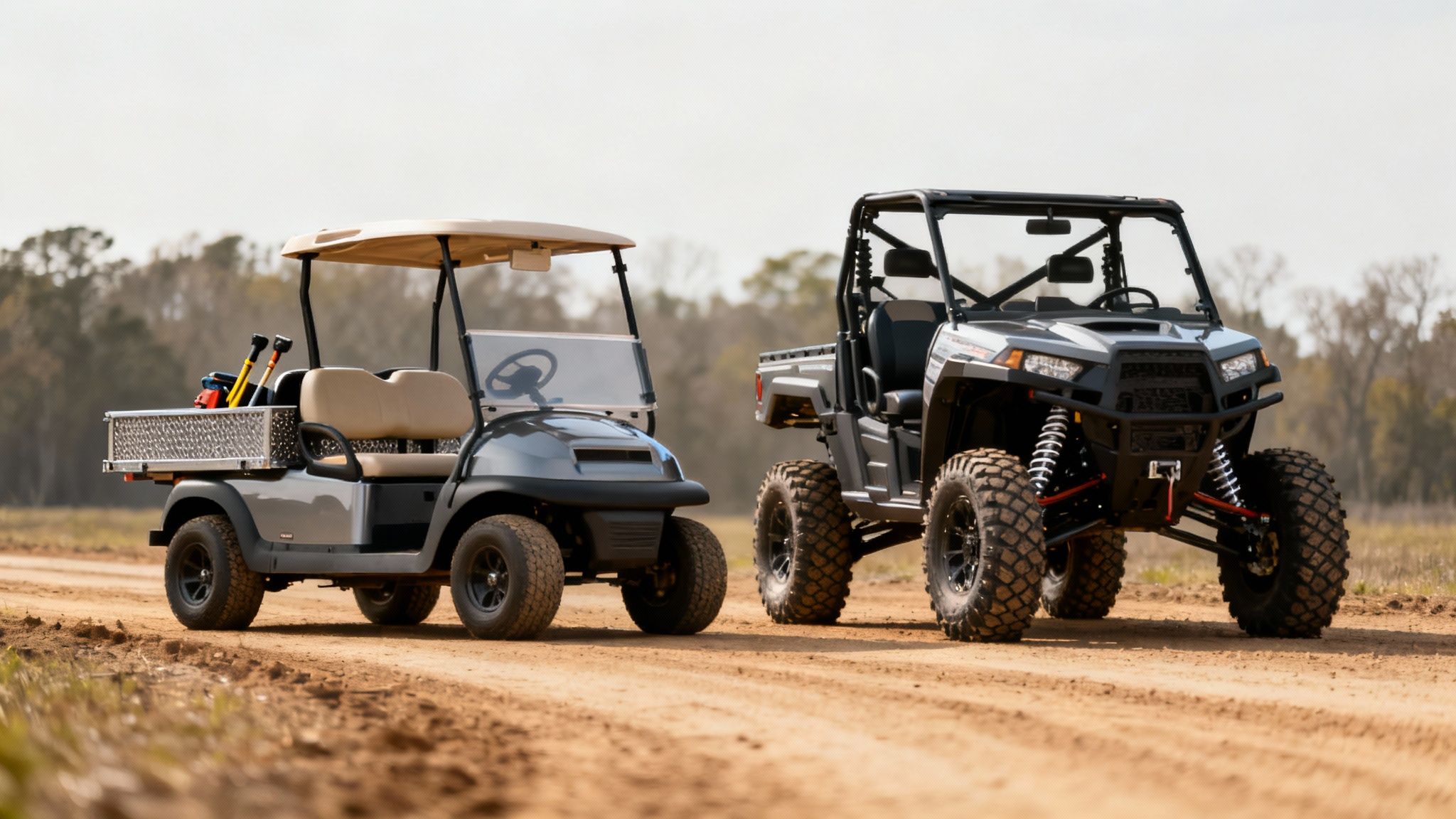
When the manicured fairways end and rugged trails begin, a standard golf cart just won't cut it. The same goes for when your to-do list involves more than just a round of golf. This is where off-road and utility carts come in—specialized vehicles engineered from the ground up to handle demanding jobs and unpaved paths.
Think of them as the heavy lifters and adventurous explorers of the golf cart world. A utility cart is like a compact pickup truck, all about work and getting things done. An off-road cart, on the other hand, is closer to a small ATV, built for fun and adventure.
The Workhorse: Utility Carts
Utility carts are the unsung heroes you see on large properties, farms, event venues, and sprawling commercial campuses. They trade a bit of polish for pure, unadulterated function, focusing on power and practicality above all else. Their design philosophy is simple: get the job done, no matter what needs to be hauled or towed.
Their core features are all about strength and capacity:
- Reinforced Cargo Beds: These aren't flimsy plastic tubs. Utility beds are often made of steel or heavy-duty polymers, ready to handle tools, bags of feed, or construction debris without buckling.
- Higher Towing Capacities: With beefier motors and stronger frames, they can easily pull trailers filled with equipment or other heavy loads.
- Durable Frames: The chassis itself is built to withstand the constant stress of heavy use—something a recreational cart would never endure.
Picture a facilities manager at a resort loading up a cart with landscaping supplies. Or a farmer using one to move feed across acres of bumpy pasture. That’s the natural habitat of a utility cart, making them indispensable for anyone with serious work to do.
What really sets utility models apart is their focus on torque over top speed. They are geared lower to provide the raw pulling power needed for heavy loads and steep inclines, prioritizing grunt work over a fast cruise.
The Explorer: Adventure-Ready Off-Road Carts
While utility carts are all about work, off-road carts are built to play. These are for the enthusiasts who see a dirt path and think, "Let's go." They take the basic golf cart platform and transform it into a surprisingly capable trail machine, ready to tackle mud, rocks, and uneven terrain.
This transformation comes from a few key upgrades. A lifted suspension is usually the first thing you'll notice, giving the cart several extra inches of ground clearance to get over obstacles. That lift also makes room for much larger, aggressive all-terrain tires with deep, chunky treads that bite into loose surfaces for incredible traction.
To muscle through those tough conditions, these carts almost always have more powerful motors and upgraded controllers to deliver instant torque. This trifecta of clearance, traction, and power is what lets them confidently navigate wooded trails or cruise across sprawling rural properties. For anyone whose adventures start where the pavement ends, an off-road cart is the perfect companion.
Custom and Luxury Carts: Designing Your Dream Ride
For some people, a golf cart is just a way to get around. For others, it's a blank canvas waiting for a personal touch—much like a car enthusiast sees potential in a classic hot rod frame. This is where the world of custom and luxury carts really shines, letting you transform a standard vehicle into something that’s uniquely yours.
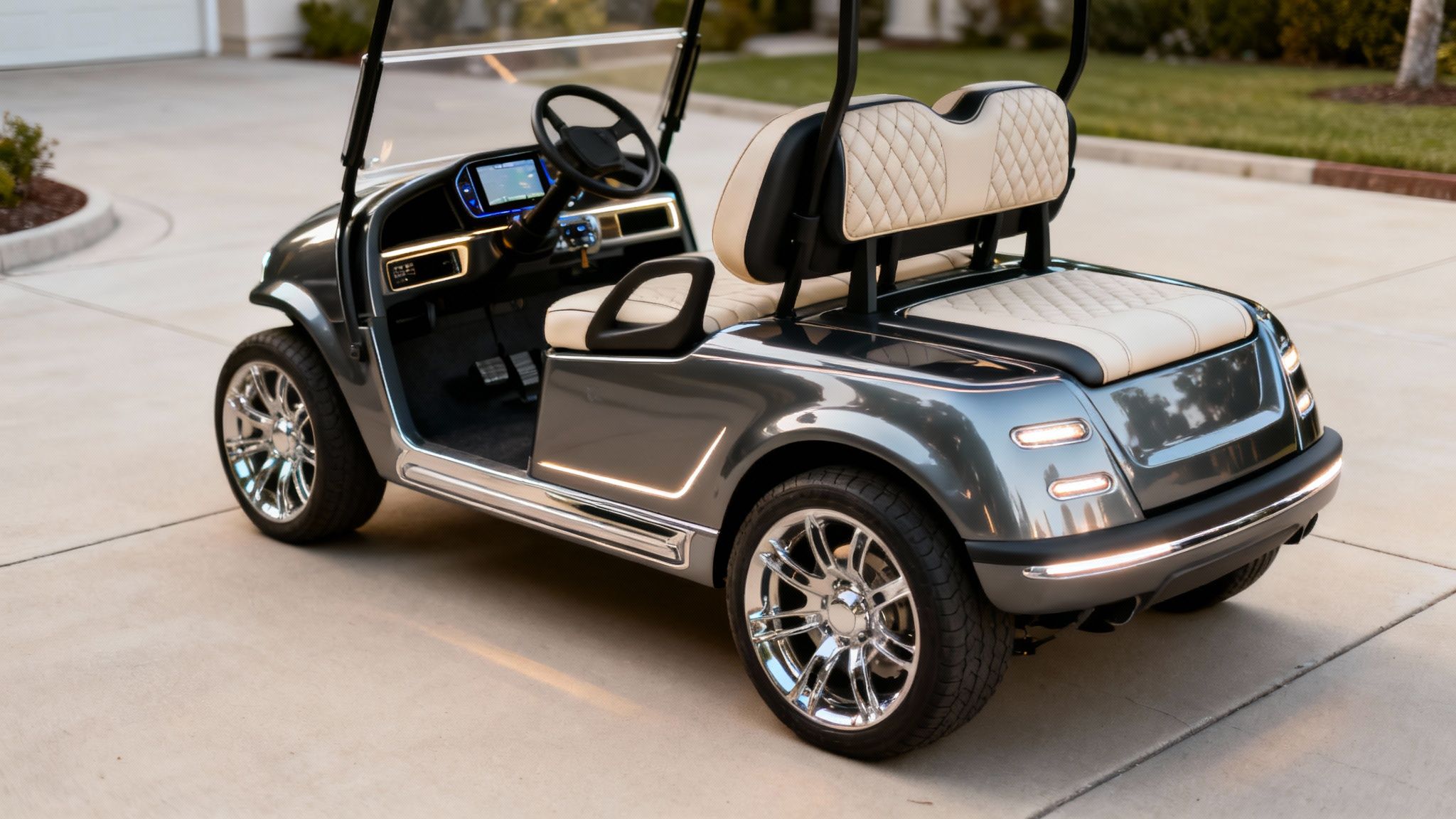
The path to a custom cart often begins with simple visual upgrades. These first steps are all about aesthetics—making the cart look and feel like it belongs to you. Think a bold custom paint job, premium stitched seats that you'd expect to find in a luxury car, and eye-catching alloy wheels that totally change its profile.
But it doesn't stop there. The real fun begins when you start exploring high-tech modifications that boost both performance and style.
Elevating Your Ride with Modern Tech
Today’s custom carts are packed with some seriously cool technology. These aren't just gadgets for the sake of it; they're upgrades that add a layer of convenience, entertainment, and modern sophistication to your daily drives.
Some of the most popular tech add-ons include:
- Integrated Bluetooth Sound Systems: Why not turn your cart into a mobile soundstage? Powerful, weather-resistant speakers can make any trip more enjoyable.
- Digital Dashboards and Displays: Swapping out old-school analog gauges for a sleek digital screen gives you a clear view of your speed, battery life, and other vital info.
- LED Lighting Kits: This is where you can really get creative. Underbody glows, custom headlights, and interior ambient lighting create a one-of-a-kind look, especially after sunset.
These aren't just cosmetic tweaks. They completely change the driving experience, blurring the line between a practical golf cart and a comfortable, feature-rich modern car.
The Pinnacle of Style and Comfort
If you want to skip the step-by-step build, you can jump straight into the luxury segment. This is where premium brands offer carts with automotive-grade quality and comfort right from the factory. These are built for people who want the best, period.
We're talking top-tier materials, advanced suspension systems for an incredibly smooth ride, and exclusive design features you won't find anywhere else. These carts truly set the standard for what a golf cart can be.
If you're curious about what's possible at the high end, checking out what goes into luxury custom golf carts can give you some amazing ideas.
Ultimately, whether you go for a ground-up custom build or a factory-direct luxury model, this category proves one thing: practical transportation can also be an incredible expression of your personal style.
Understanding the Modern Golf Cart Market
Let's be clear: golf carts aren't just for golf anymore. They’ve officially broken out of the country club and are now a common sight in planned communities, on sprawling university campuses, and at busy resorts. This isn't just a quirky trend—it’s a real shift in how we think about getting around locally.
This explosion in popularity is being driven by a simple need for smarter, greener ways to make short trips. When you just need to pop down to the community pool or visit a neighbor, firing up a full-sized car feels like overkill. Electric golf carts have stepped in as the perfect answer—they're quiet, produce zero emissions, and are just plain pleasant to drive around the neighborhood.
And it’s not just for personal use. All sorts of businesses and institutions now depend on these vehicles. Think about campus security making their rounds, maintenance crews tending to large properties, or hospitality staff shuttling guests around a resort. Carts offer a practical, budget-friendly way to move people and gear efficiently.
The Market Outlook and Key Trends
The numbers tell the same story. The global golf cart market was valued at around USD 1.9 billion in 2023. By 2033, it's expected to hit USD 3.5 billion. That's a steady compound annual growth rate (CAGR) of about 6.7%, with electric models leading the charge. You can dig deeper into these market projections to see the full picture.
This growth signals that investing in a quality golf cart is more than just buying a vehicle; it’s adopting a forward-thinking transportation solution. The market is increasingly focused on innovation and long-term value.
Looking ahead, the industry isn't standing still. We're seeing some really interesting tech being integrated into these carts. Solar panels on the roof to extend battery life are becoming more common, and for commercial fleets, smart management systems are changing the game. These kinds of advancements are making modern golf carts smarter and more useful, cementing their place far beyond the 18th hole.
Got Questions? We've Got Answers
You've made it this far, which means you're probably wrestling with a few final questions. That's a good thing! Getting these details sorted out is the last step before you find the perfect cart. Let's tackle some of the most common questions we get from people just like you.
What’s the Real Difference Between a Golf Cart and a Street-Legal LSV?
Think of it like this: a standard golf cart is built for the quiet, controlled environment of a golf course. It's designed to cruise under 20 mph and doesn't need all the bells and whistles for public roads.
A Low-Speed Vehicle (LSV), on the other hand, is a golf cart that's been beefed up to meet federal safety standards. To be considered "street-legal," it must have:
- Headlights, taillights, and turn signals
- Mirrors and a windshield
- Seat belts for all passengers
- A unique Vehicle Identification Number (VIN)
LSVs are engineered to drive on roads with speed limits of 35 mph or less, though the cart itself usually tops out at 25 mph. Always, and I mean always, check your local city and state rules, because the regulations can change from one town to the next.
How Long Will My Electric Golf Cart Batteries Actually Last?
This one really boils down to the type of battery powering your ride. The two main players are traditional lead-acid and modern lithium-ion, and they're worlds apart.
Your classic lead-acid batteries are the old-school workhorses. With diligent maintenance—like topping off water levels and keeping them clean—you can expect to get 4-6 years out of a set.
Lithium-ion batteries are the new gold standard. They're a set-it-and-forget-it solution that requires basically zero maintenance and will last you 8-10 years, sometimes even longer. They cost more upfront, but when you factor in their lifespan and hassle-free nature, they often end up being the smarter investment.
Can I Turn My Regular Golf Cart into an Off-Road Machine?
You absolutely can! It's a popular project for a reason. Common upgrades include a lift kit to get more ground clearance, beefy all-terrain tires that can grip anything, and a more powerful motor to muscle over obstacles.
But here's a word of caution from experience: if you plan on doing some serious off-roading on a regular basis, you're much better off buying a purpose-built off-road model from the get-go. These carts are engineered from the ground up with tougher frames and heavy-duty suspension designed to take a beating day in and day out. A modified standard cart might get you there, but a factory model is built to thrive there.
Ready to explore premium, street-legal electric vehicles that combine style, performance, and sustainability? Solana EV offers a full lineup of carts designed for any lifestyle, from community cruising to commercial utility. Discover the perfect model for you.