
So, you’re thinking about buying a used golf cart. Smart move. You can get a fantastic ride for a fraction of the cost of a new one, but you have to know what you’re looking for. The first step, before you even glance at a single listing, is to figure out exactly what you need it for.
Is this going to be your quiet cruiser for trips to the community pool, or do you need a workhorse to haul gear across your property? Answering that one question will steer your entire search, especially when it comes to the big decision: gas or electric?
Your Smart Start to Finding the Right Used Golf Cart
A good deal isn't just about the price tag; it's about finding the right cart for you. It all comes down to being honest about how you'll use it.
Are you navigating a quiet, gated community where noise is a big deal? Or are you tackling hilly terrain and need that extra muscle? The answer will point you directly toward either a gas or electric model, as they each have their own strengths and weaknesses.
To get a quick sense of the differences, this table breaks it down.
Electric vs Gas Golf Cart Quick Comparison
| Feature | Electric Golf Cart | Gas Golf Cart |
|---|---|---|
| Noise Level | Virtually silent, great for neighborhoods. | Engine noise similar to a small car or lawnmower. |
| Maintenance | Simpler; mainly battery care and checks. | More complex; requires oil changes, spark plugs, filters. |
| Performance | Quick, smooth acceleration but less range. | Longer range and more power for hills/towing. |
| Operating Cost | Lower; charging is cheaper than gasoline. | Higher; fuel costs can add up. |
| Environmental | Zero emissions, more eco-friendly. | Produces emissions. |
This comparison should give you a solid starting point. An electric cart is perfect for quiet residential use, while a gas cart often wins out for range and heavy-duty tasks.
This visual guide neatly summarizes the main things you need to balance: your intended use, your preferred power source, and your budget.
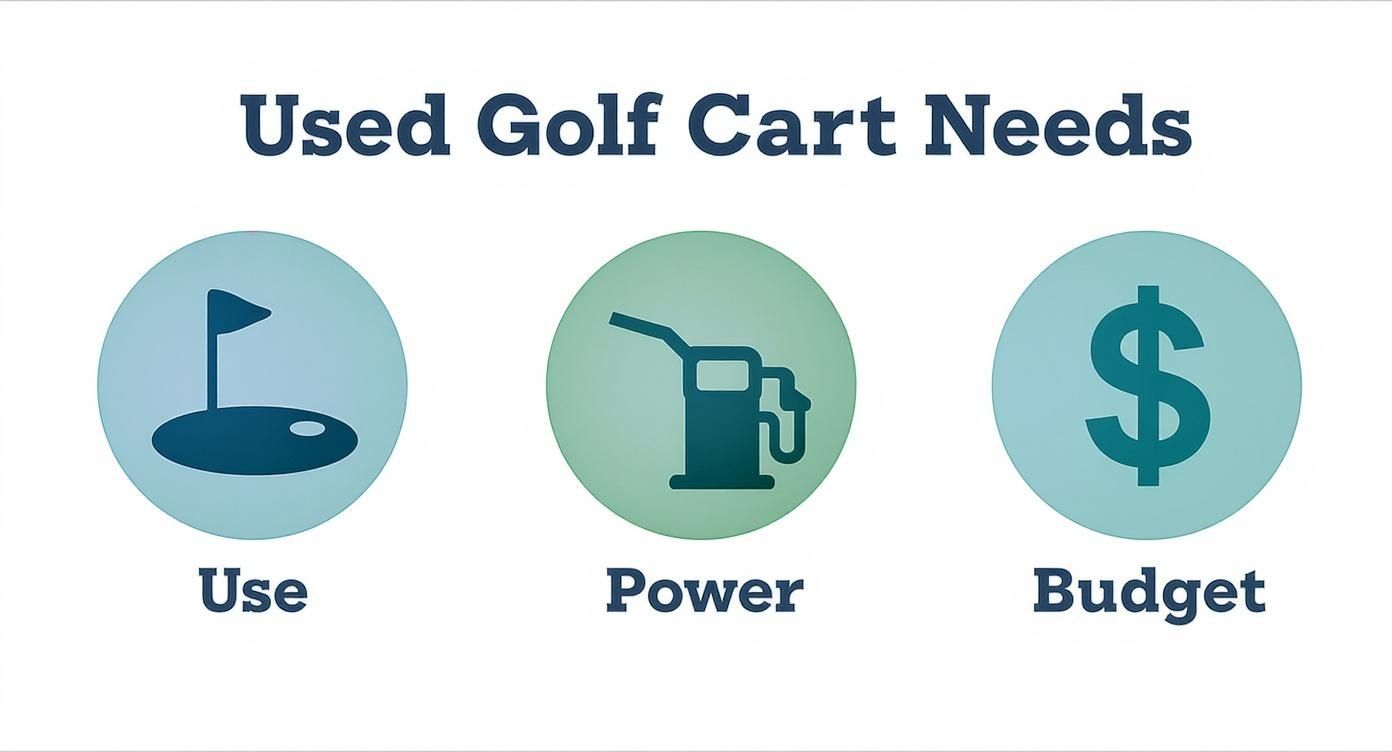
Nailing down these three things is the secret to finding a cart that you'll be happy with for years to come.
Define Your Budget and Power Needs
Once you know what you'll be using the cart for, you can set a realistic budget. And remember, the sticker price is just the beginning.
You have to think about potential immediate costs. For an electric cart, that could mean a new set of batteries, which isn't cheap. For a gas model, you might need a full tune-up right away. A well-maintained cart might cost a bit more upfront, but it can save you a ton on surprise repair bills later. A good way to get a feel for the market is to browse a quality selection of used golf carts for sale to see what's out there.
The demand for pre-owned carts is huge. The market was recently valued at USD 976.6 million, with the U.S. making up about 95% of that revenue. That means you have a lot of options, but it also means you need to be a savvy shopper.
Key Takeaway: The best deals aren't just about the lowest price. They're about finding a reliable cart that perfectly matches how you plan to use it, preventing future headaches and unexpected costs. A little prep work now ensures you get years of enjoyment from your purchase.
Choosing Between Electric and Gas Power
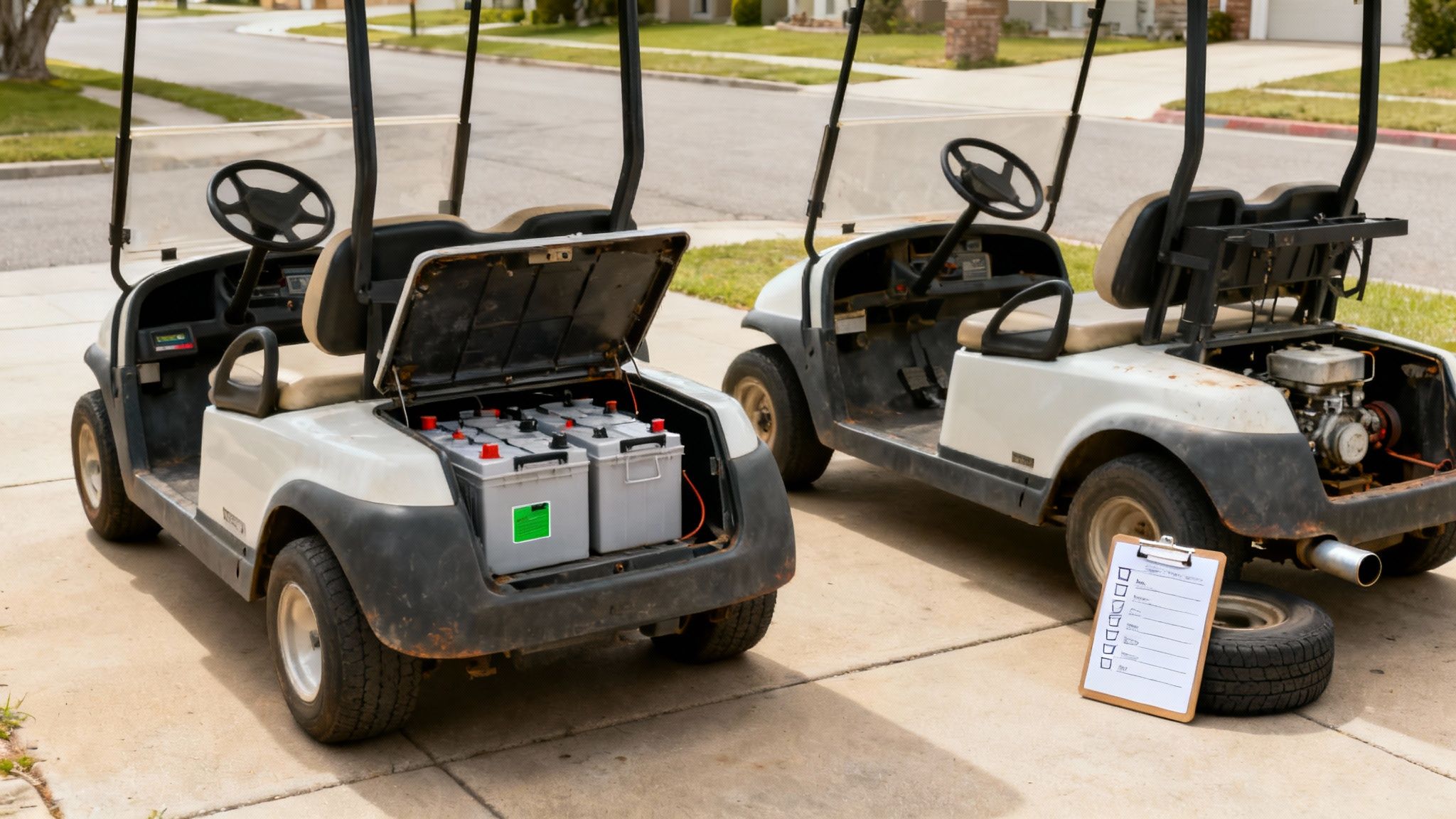
When you start shopping for a used golf cart, your first big decision is a classic one: gas or electric? This isn't just about how it sounds; this choice ripples through everything from daily use and maintenance costs to where you're even allowed to drive it.
Think about your own lifestyle. If you're in a quiet, gated community with noise rules, an electric cart is practically your only choice. Its silent operation is a must-have. On the other hand, if you need a tough utility vehicle for a large, hilly property, the raw torque and longer range of a gas model is tough to beat.
The market is definitely leaning one way. Electric carts are gaining ground globally, thanks to being cleaner and cheaper to run. With no emissions and lower "fuel" costs, they're becoming the go-to for many buyers. This trend directly impacts what you'll find on the used market and for how much. According to a report from Future Market Insights, this shift is only expected to grow.
The Heart of an Electric Cart: The Batteries
When you’re looking at a used electric cart, you’re not really buying the cart itself—you’re buying its batteries. The battery pack is the single most expensive part, and its health is everything. It dictates the cart's performance, its range, and a huge chunk of your future budget.
A completely new set of batteries can set you back anywhere from $800 to over $2,000. That’s a massive potential expense you need to factor into your negotiations. Never, ever just take the seller's word for it. You have to get your own eyes on them.
Here's what to look for:
- Find the Age: Look for a date stamp right on the battery terminal. It’s usually a letter for the month (A=Jan, B=Feb, etc.) and a number for the year (e.g., G-2 means July 2022). Anything over five years old is living on borrowed time.
- Check for Corrosion: A little white or bluish crust around the terminals is okay, but heavy buildup is a bad sign. It often points to poor maintenance and can cause all sorts of electrical gremlins.
- Look for Bulging Cases: If the plastic sides of the batteries are swollen or warped, walk away. That's a definite sign they are shot and need immediate, costly replacement.
Pro Tip: Ask the seller about their maintenance routine. Did they regularly top off the water (for lead-acid types) and keep the connections clean? A slightly older but well-cared-for battery pack can be a much smarter purchase than a neglected, younger set.
Evaluating a Gas Engine's Reliability
With a gas cart, it’s all about the engine. These things are generally built like tanks, but a neglected one can quickly turn into a money pit. You don't need to be a professional mechanic, but you do need to know the basic warning signs.
First, just start it up and listen. A healthy engine should fire up quickly and settle into a smooth, steady idle. If you hear any sputtering, knocking, or loud rattling, that’s your cue to be concerned.
Next, check the exhaust. A small puff of smoke at startup can be normal, but if you see persistent blue or black smoke, it’s signaling serious internal problems. Don't forget to peek underneath for any fresh oil drips on the ground.
For a more detailed breakdown, we’ve put together a full guide on choosing between an electric or gas golf cart.
The Hands-On Pre-Purchase Inspection Checklist
Alright, this is where the rubber meets the road. Never, ever buy a used golf cart based on pictures alone. A thorough hands-on inspection is your best defense against buying someone else's expensive headache. This is what separates a smart buyer from a sorry one.
We're going to do more than just kick the tires. The goal here is to focus on the critical mechanical and structural parts that most people gloss over—the very things that can cost a fortune to fix later. Think of yourself as a detective, searching for clues the seller might not even know exist.
Start with the Foundation: The Frame and Chassis
Before you even think about the batteries or motor, get down and look underneath the cart. The frame is its skeleton, and a compromised one is an absolute deal-breaker. This is especially true if you're in a coastal area where salty air just loves to eat away at metal.
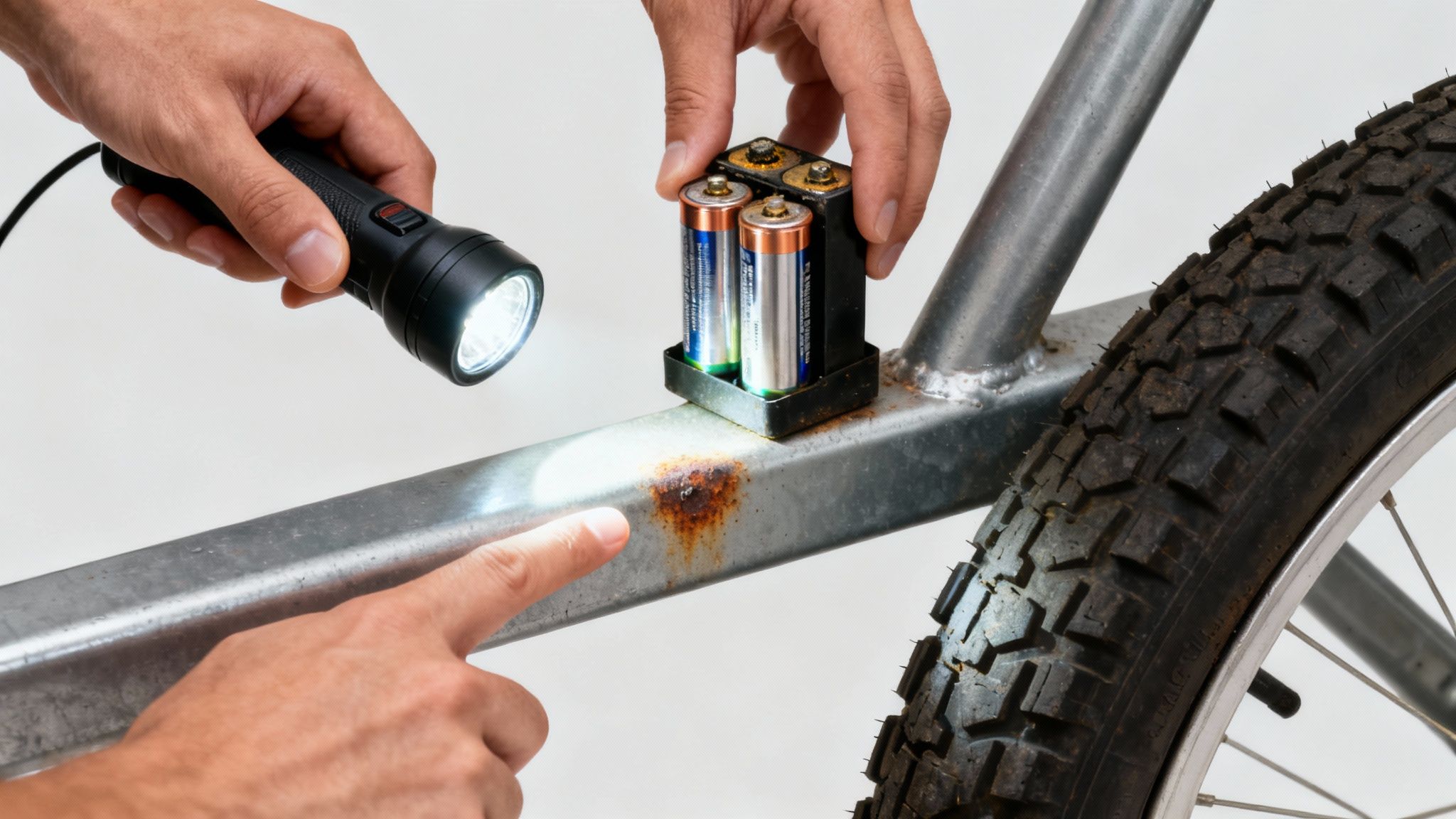
You're not just looking for surface rust. You’re hunting for the deep, flaky stuff that signals real structural weakness. Pay close attention to the weld points and anywhere the suspension connects to the frame. Here's a pro tip: bring a small screwdriver and gently poke any suspicious-looking spots. If the metal feels soft or flakes away easily, that's a huge red flag.
On electric carts, also give the battery tray area a careful look. Battery acid leaks can wreak havoc on the frame over time, causing it to weaken and corrode.
Reading the Story the Tires Tell
A cart's tires can tell you an incredible story about its past life. Uneven wear isn't just a sign you'll need new tires soon; it's a classic symptom of deeper problems with the alignment or suspension.
Here’s what to look for:
- Wear on one edge (inner or outer): This almost always points to a bent tie rod or a serious alignment issue. It’s a good bet the cart pulls to one side when you drive it.
- Scalloped or "cupped" wear: If the tread has a bumpy, uneven pattern, it’s a telltale sign of worn-out shocks or other suspension parts. That cart has likely had a very bouncy ride for a long time.
- Wear down the center: This one is simpler. It usually just means the tires were consistently over-inflated. It's less of a mechanical red flag, but still worth noting.
Remember, replacing a set of tires is a moderate expense. Fixing the suspension or alignment problems that caused the weird wear can be a whole lot more expensive.
Check the Brakes, Steering, and Suspension
Now it's time to get a feel for how the cart handles. You can learn a lot before you even turn the key.
Push down hard on each corner of the cart. Does it bounce once and settle? Or does it keep bouncing like a pogo stick? That excessive bouncing is a dead giveaway for shot shock absorbers.
Next, stand in front of the cart and grab the top of a front tire. Try to wiggle it back and forth. You shouldn't feel much play or hear any clunking noises. If you do, you could be looking at worn-out wheel bearings or steering linkage components.
Key Insight: A subtle wobble in the steering wheel or a grinding noise when you first tap the brakes are early warnings of expensive repairs down the line. These aren't issues that "just go away." Make a note of them and use them as bargaining chips.
When assessing the cart's exterior, knowing how to effectively remove car scratches can help you determine if the blemishes you see are easy fixes or permanent damage. Finally, don't forget to double-check the batteries—a failing pack is the single biggest potential expense. To go in prepared, review our guide on understanding golf cart battery lifespan so you know exactly what a good set looks like.
How to Conduct a Meaningful Test Drive

The test drive is your best shot at finding out what's really going on with a used golf cart. Don't just take it for a quick spin around the block—this is a diagnostic session. You need to have a mental checklist ready to test its acceleration, braking, steering, and overall power.
A fresh coat of paint and some shiny new seat covers can easily hide a worn-out motor or dying batteries. This is your chance to feel how the cart performs under real-world conditions, which is how you’ll separate the well-cared-for gems from the duds.
Assessing Acceleration and Braking
First things first, find a nice, flat stretch of pavement. Press the accelerator pedal down smoothly. How does it feel? You're looking for a smooth, quiet takeoff without any lurching or hesitation. Any odd whirring, grinding, or clunking noises as you pick up speed are immediate red flags.
Now, let's check the brakes. Get the cart up to a decent clip and then apply the brakes firmly—don't slam them, but be decisive. You're listening and feeling for two specific things:
- Pulling: Does the cart pull hard to one side? If it veers left or right, you've got an imbalance in the braking system. That's a safety hazard and a sign of bigger problems.
- Noise: Are the brakes squealing or grinding? Those are the tell-tale sounds of brake pads or shoes that are on their last legs.
A healthy cart will come to a straight, quiet stop. Anything less warrants some serious questions.
Crucial Tip for Electric Carts: Before you even turn the key, check the battery meter. Make a mental note of the charge level. After you've driven around for a good 10-15 minutes, check it again. If you see a massive drop, you're looking at a weak battery pack that can't hold a charge—and that's one of the most expensive repairs you can face.
Testing Steering and Power Under Load
Once you're comfortable with the basics, find an open area where you can do some real maneuvering. Try making a few tight figure-eight turns, going both left and right. The steering should feel tight and responsive. If it feels loose, wobbly, or you hear clunking noises while turning, you're likely dealing with worn-out steering components or suspension issues.
Next up is the true test of strength: find the biggest hill nearby and drive straight up it. This is where a weak motor or battery pack will reveal itself. The cart should climb steadily without a dramatic loss of speed. If it struggles and slows to a crawl, that powertrain is not going to cut it, and you'll be frustrated every time you face an incline. This simple hill test has saved countless people from making a bad purchase.
Negotiating the Price with Confidence
Alright, you've done the inspection and taken it for a spin. Now it’s time to talk money. The goal here isn't to lowball or be aggressive; it's to land on a fair price that reflects the cart's true condition, warts and all.
Before you ever talk to the seller, your first move is to do some homework. Get a solid idea of the fair market value for that specific make, model, and year in your area. Jump on online marketplaces, check what local dealers are asking, and get a realistic price range in your head.
This research is your anchor. It gives you a strong starting point before you even begin to factor in the specific issues you found during your inspection.
Turning Your Findings Into Bargaining Chips
Remember that list of issues you made? Every single item—from tired batteries to scuffed-up tires—is a potential negotiation point. The trick is to present these not as complaints, but as real-world costs you'll have to eat once you own the cart. This keeps the conversation constructive, not confrontational.
For instance, instead of just saying, "The batteries are old," which can put a seller on the defensive, frame it as a future expense. Try something like, "I've factored in that the batteries will need replacing soon, and that's about a $1,200 job. My offer reflects that upcoming cost."
This approach shows you're a serious buyer who has done their homework, and that your offer is based on logic and real numbers.
Pro Tip: Always tie a flaw to a specific dollar amount. Vague statements like "it needs some work" are easy for a seller to brush off. But when you can say, "A new set of tires and an alignment will cost me X," your position becomes much more compelling.
Here’s how you can frame common issues during the negotiation:
- Tires with uneven wear: "I noticed the tires are wearing unevenly, which points to an alignment issue. My offer accounts for needing a new set of tires plus the alignment service to fix the root problem."
- Cosmetic damage: "The scratches on the side panel are pretty deep. I'll need to set aside some money for bodywork to get that sorted out."
- Weak brakes: "The brakes felt a bit soft on the test drive. To make sure it's safe for my family, I'm factoring the cost of a full brake service into what I can offer."
Common Questions About Buying a Used Golf Cart
After you've kicked the tires and taken a test drive, you’re bound to still have a few nagging questions. It’s totally normal. Getting straight answers to these last few things can be the difference between buying a gem and buying a headache.
Let’s tackle some of the most common questions that pop up right before making a final decision.
What Is Considered High Hours on a Used Golf Cart?
This is a great question, but the answer really depends on whether you're looking at a gas or electric cart. They're two completely different animals.
For a gas cart, the hour meter is your best friend. Once you see a number creeping over 1,000 hours, you’re looking at a machine that’s been put through its paces. It doesn’t mean it’s a bad cart, but you’ll want to see rock-solid proof of regular maintenance before even thinking about making an offer.
With an electric cart, you can pretty much ignore the hour meter. It’s all about the batteries. I’d much rather buy a five-year-old cart with a brand-new set of Trojan batteries than a two-year-old cart with the original set that was never properly cared for. Battery health is everything.
How Much Should I Budget for Immediate Repairs?
Always, always have a little cash set aside for unexpected fixes when buying used. It’s just smart. A good rule of thumb is to have an extra 10-20% of the purchase price ready to go. This "just-in-case" fund keeps you from being blindsided by a problem the seller "forgot" to mention.
So, what are the most common surprises?
- A Full Battery Replacement: This is the big one for electric carts. A new set can easily run you $800 to over $2,000, so you need to know what you're getting into.
- A New Set of Tires: Worn-out tires are incredibly common. Budget around $200 to $400 for a fresh set.
- Tune-Up or a New Charger: A gas engine might just need a basic tune-up to run smoothly, and an older electric cart might come with a tired charger that needs replacing.
Having that money ready means you can get your cart running perfectly from day one. As you think about future upkeep, it's also helpful to start understanding the difference between OEM and aftermarket parts, as this choice will affect your long-term repair costs.
Are Dealer-Refurbished Carts Worth the Extra Money?
They definitely can be, especially if you’re someone who values peace of mind. A professionally refurbished cart isn't just a quick power wash and some tire shine. You're buying a cart that’s been thoroughly gone through.
The Bottom Line: You're paying a premium for certainty. A good refurbished cart often comes with brand new batteries and tires, and it's been inspected from top to bottom by a mechanic who knows what to look for.
Plus, many dealers will offer a 30 or 90-day warranty. You’ll never get that from a private seller on Facebook Marketplace. You’re essentially paying a bit more upfront to dramatically lower your risk of getting stuck with an expensive, immediate repair.
Ready to find a reliable electric vehicle that fits your lifestyle without the guesswork? At Solana EV, we offer a premium selection of new and expertly-vetted electric vehicles designed for performance and style. Explore our models and discover the perfect ride for your community, property, or adventures at https://solanaev.com.