
Sooner or later, every golf cart owner faces the same question: what’s it going to cost to replace these batteries? The short answer is that the average golf cart battery replacement cost can fall anywhere between $600 to over $6,000. That's a huge range, and it all boils down to the type of battery technology you decide to go with.
Think of it this way: traditional lead-acid batteries are your budget-friendly upfront option, while modern lithium batteries are a bigger initial investment that pays off down the road.
Your Quick Guide to Battery Replacement Costs
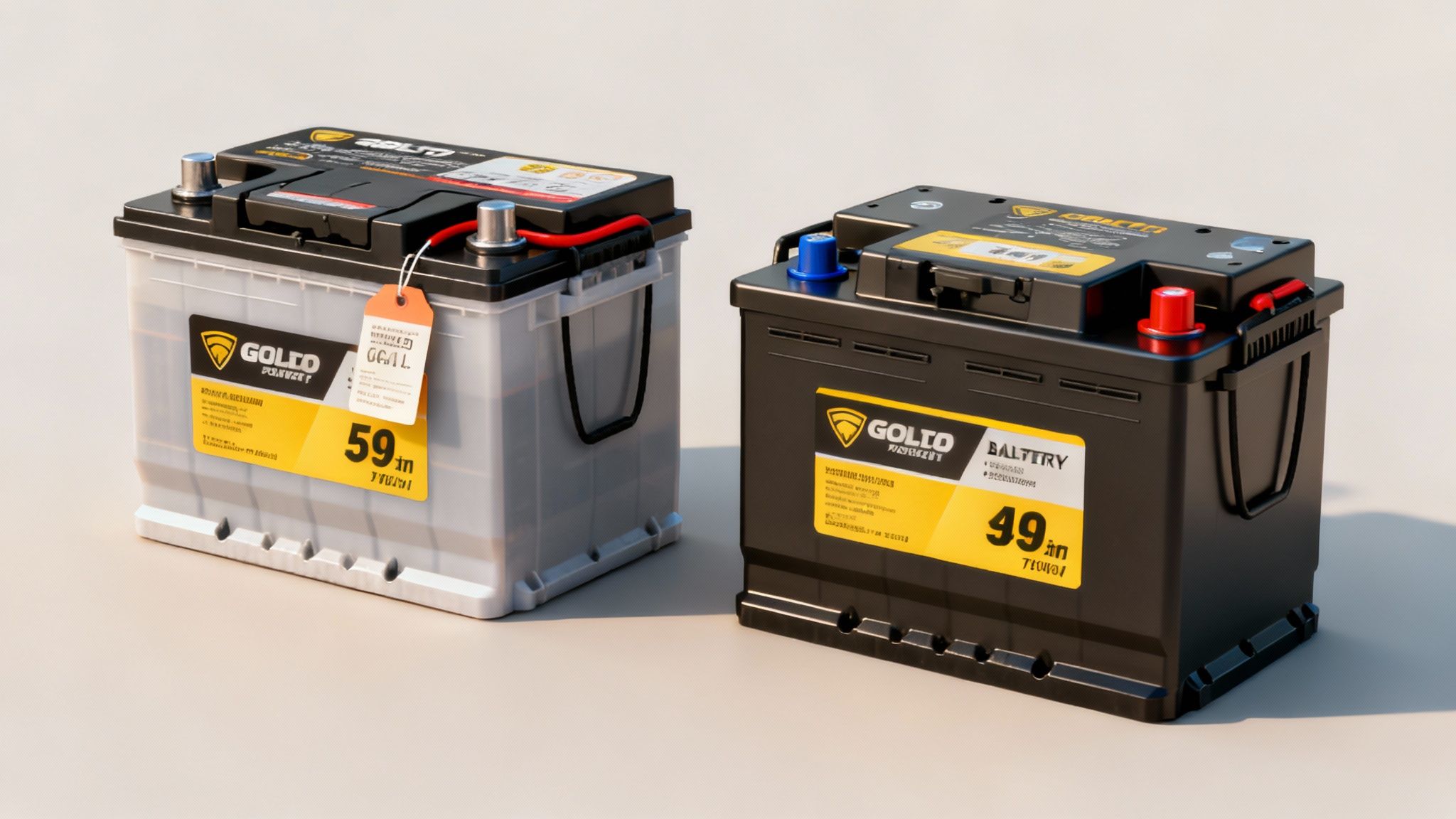
When your golf cart starts feeling sluggish or can't hold a charge like it used to, the battery pack is almost always the culprit. But figuring out the replacement cost isn't as simple as picking a single price tag. It's a lot like choosing between a standard gas car and a newer electric vehicle; one has a lower sticker price, but the other promises long-term savings on fuel and maintenance.
The Two Main Players: Lead-Acid and Lithium
For most golf cart owners, the decision really comes down to two main battery types.
Flooded lead-acid (FLA) batteries are the old-school, reliable workhorses. They’ve been around forever and are by far the most affordable choice to get you back on the course. A full set for a standard 48V cart will typically run you between $600 and $1,200. The trade-off? They need regular maintenance (like checking water levels) and only last about 3 to 5 years before you have to do it all over again.
On the other side of the aisle, you have lithium-ion batteries. These are the modern upgrade, and the price reflects that. Expect to pay anywhere from $1,200 to over $6,000 for a lithium setup. It's a steep price, but they can last 3 to 5 times longer than lead-acid, require absolutely zero maintenance, charge up faster, and even make your cart feel zippier by shedding hundreds of pounds. If you want to dive deeper, you can explore the latest battery pricing data to see a full breakdown.
The core decision is simple: pay less now with lead-acid and plan for more frequent replacements and hands-on maintenance, or invest more upfront in lithium for a hassle-free, long-term solution.
To help you see the differences at a glance, I've put together a simple table. This should give you a clear snapshot of what to expect from each option, making it easier to line up your budget with your long-term goals.
Quick Cost Comparison: Lead-Acid vs. Lithium Batteries
| Feature | Lead-Acid Batteries | Lithium-Ion Batteries |
|---|---|---|
| Upfront Cost | $600 – $1,200 | $1,200 – $6,000+ |
| Expected Lifespan | 3–5 Years | 8–10+ Years |
| Maintenance | Regular Watering Required | Maintenance-Free |
| Performance | Steady Decline Over Time | Consistent Power Output |
Ultimately, the table highlights the fundamental trade-off. Lead-acid is easy on the wallet today, while lithium is an investment in simplicity and performance for years to come.
How Battery Type and Voltage Shape Your Total Cost
Picking new batteries for your golf cart is a lot like choosing an engine for a car. Your decision is going to have a direct ripple effect on performance, how long they last, and, of course, the final golf cart battery replacement cost.
The two main players in the game—the old-school lead-acid and the modern lithium-ion—are priced worlds apart, and for very good reasons. Getting a handle on what makes them different is the first real step to figuring out a realistic budget.
The Lowdown on Lead-Acid Battery Costs
For years, lead-acid batteries have been the go-to standard, mostly because they're easy on the wallet upfront. But not all lead-acid batteries are created equal. You’ll run into a couple of different variations, and each has its own price tag and level of upkeep.
The most common and cheapest option is the flooded lead-acid (FLA) battery. You can usually snag a full set for somewhere between $600 and $1,200. Think of them as the trusty workhorses of the golf cart world. The trade-off for the low price is that they need regular babysitting—you have to check and top off the water levels to keep them from dying an early death.
Take one step up and you'll find Absorbent Glass Mat (AGM) batteries. These are sealed and maintenance-free, so you can forget about adding water. A complete set will typically run you between $800 and $1,400. You're essentially paying a bit more for convenience, but their underlying technology and lifespan are only a slight improvement over their flooded cousins.
Why Lithium Batteries Have a Higher Upfront Cost
Lithium-ion batteries are a whole different beast. They represent a massive leap in technology, and the price tag definitely reflects that. A single lithium battery pack powerful enough for a golf cart will set you back anywhere from $1,200 to over $4,000.
It's a classic case of "you get what you pay for." This higher initial spend gets you a battery that often lasts 3 to 5 times longer than any lead-acid option, requires zero maintenance, and delivers noticeably better performance on the course.
Here’s a good way to think about it: buying lead-acid is like getting a budget appliance you know you’ll be replacing in a few years. Investing in lithium is like buying a premium, high-efficiency model that’s engineered to run for a decade or more.
The price of a lithium battery also climbs with its capacity. If you want more range between charges for covering long distances or tackling hilly terrain, you'll be looking at batteries on the higher end of that price spectrum.
How Your Cart's Voltage Factors Into the Price
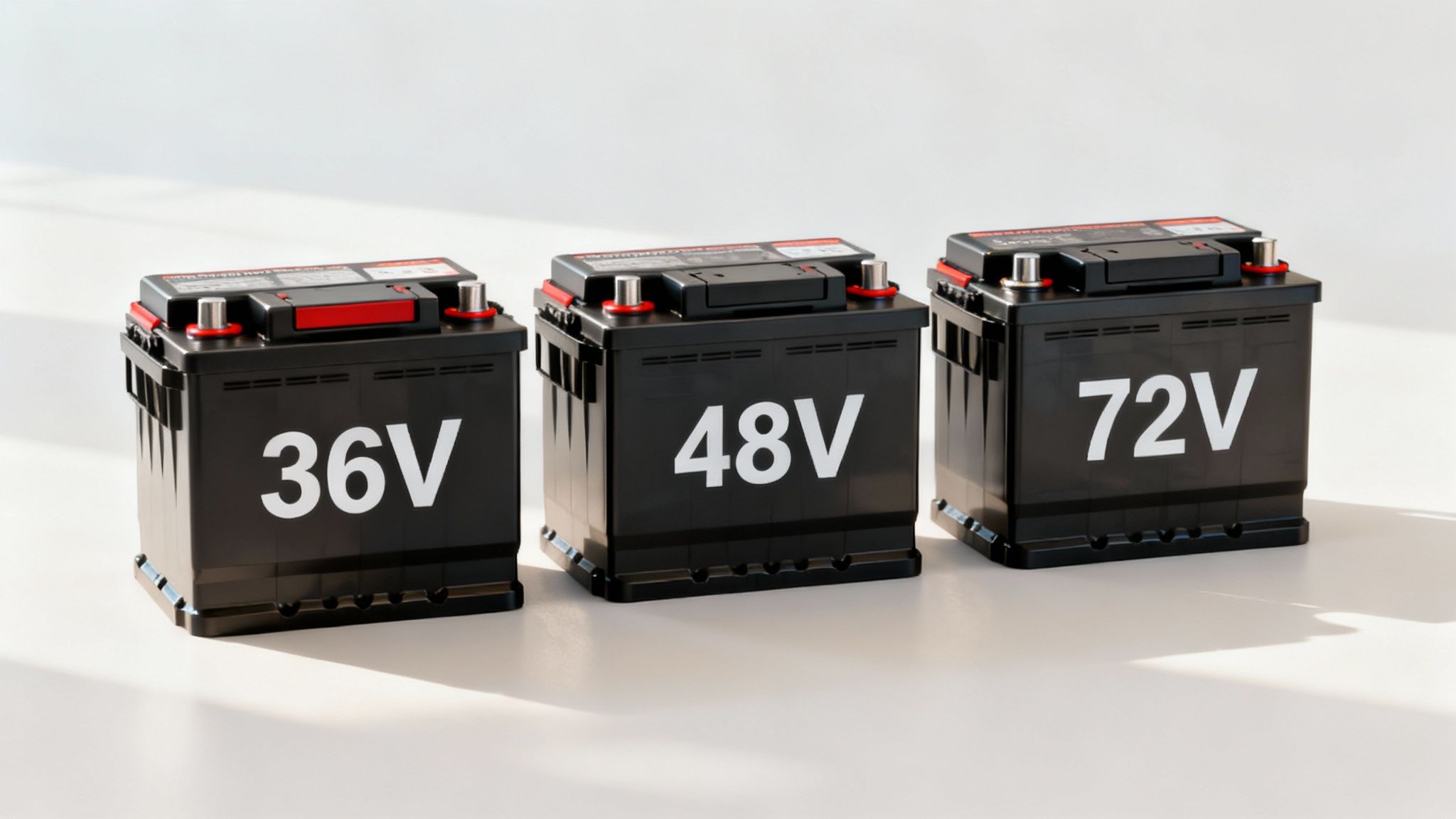
Beyond the battery chemistry, your cart's electrical system has a big say in the final bill. Most golf carts run on a 36-volt (36V), 48-volt (48V), or, in some of the beefier models, a 72-volt (72V) system. The rule of thumb is simple: a higher voltage system needs more power, which means a higher cost.
Let's break that down:
- 36V System: This setup, often found in older carts, needs six 6V batteries. It's usually the cheapest configuration to replace.
- 48V System: This is the most common system out there, typically powered by six 8V batteries or four 12V batteries. The golf cart battery replacement cost for a 48V system is really the industry standard.
- 72V System: Reserved for newer, more powerful carts, this system demands six 12V batteries. It’s the priciest of the bunch because of the sheer number and voltage of the batteries required.
At the end of the day, the combination of the battery type you pick and the voltage your cart needs will determine your bottom line. A 36V lead-acid setup will be your most budget-friendly path, while a 72V lithium conversion will be the biggest investment you can make.
Uncovering the Hidden Costs of Battery Replacement
The sticker price for a new set of batteries is just the starting line when it comes to your total golf cart battery replacement cost. It’s a lot like buying a printer; the machine itself seems reasonable, but the real cost comes from the ink cartridges over time. Several other expenses can pop up, and knowing about them ahead of time can save you from a nasty surprise.
It's a classic rookie mistake to think your spending is done once you've bought the batteries. These "hidden" costs aren't really hidden, they're just easy to overlook, and they're absolutely essential for a safe, successful installation that protects your investment.
This chart breaks down three of the most common additional expenses you’ll likely run into.
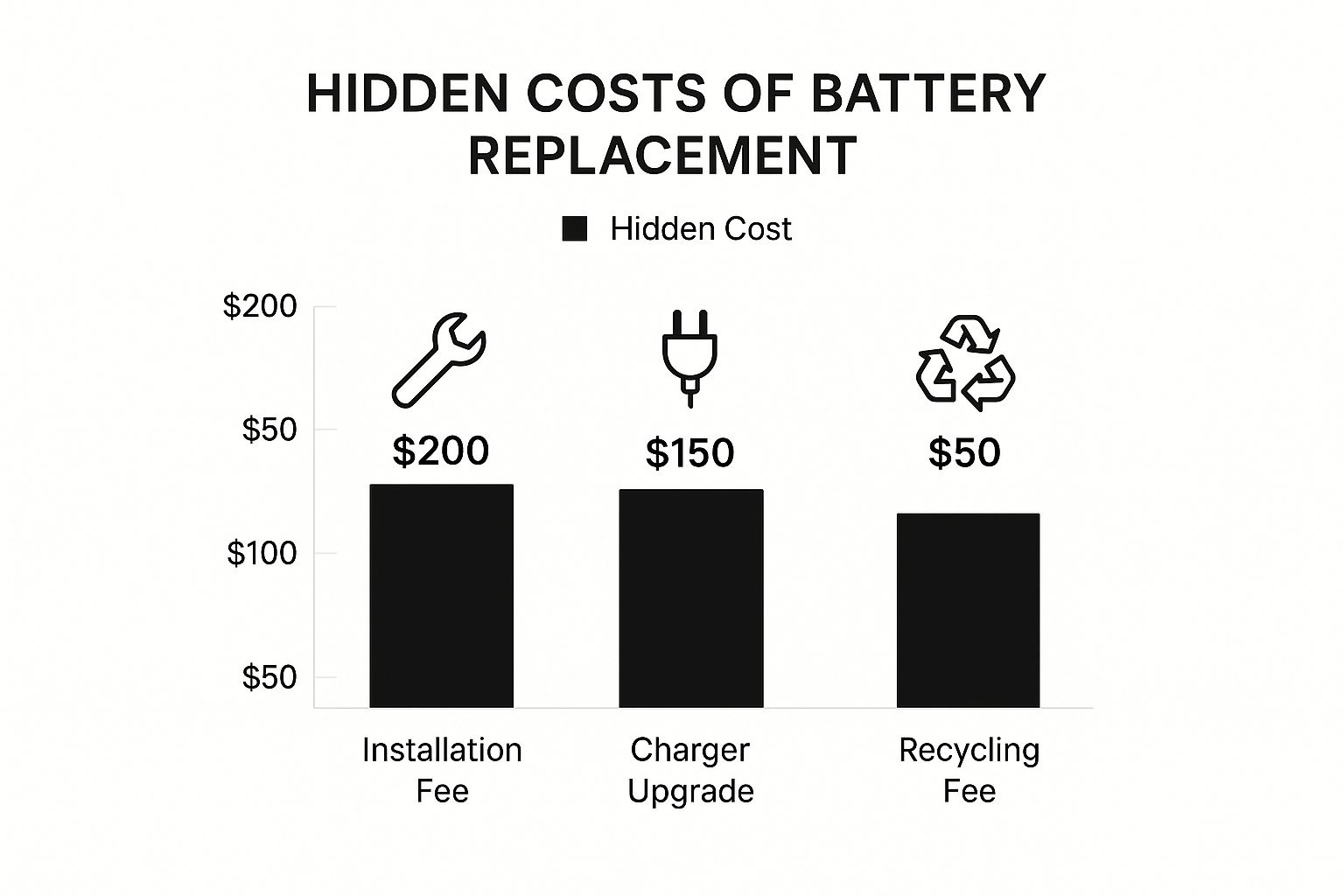
As you can see, things like professional installation, a new charger, and recycling fees can easily tack on hundreds of dollars to your final bill.
Beyond the Batteries Themselves
When you're putting together a budget, you have to think bigger than just the battery pack. One of the most common additions is professional installation. Sure, you can try to DIY it, but hiring a technician to do the heavy lifting and handle the wiring will run you anywhere from $100 to $300. That fee is more than just labor—it's peace of mind that the job is done right.
Then there’s your charger. This is a big one, especially if you’re making the leap from old-school lead-acid to a modern lithium-ion setup. Lithium batteries need a completely different charging algorithm, and your old lead-acid charger just can't do it. A new, compatible charger will add another $200 to $500 to the total. Trying to cheap out and use your old charger is a recipe for disaster; you'll damage your expensive new battery and instantly void the warranty. Think of it as a mandatory upgrade, not an optional one.
Small Parts That Add Up
It's amazing how quickly the little things can pile up. Depending on the age and condition of your cart, you might need a few extra odds and ends to get the job done right.
- New Cables and Connectors: Battery cables don't last forever. Corrosion and fraying are common, and bad cables mean poor connections and wasted power. A new set is a smart move, usually costing between $50 and $150.
- Mounting Hardware: If you're switching battery types—say, from six small batteries to one large lithium pack—you'll probably need new mounting brackets or a tray to hold it securely. You can't just let it slide around in there.
- Disposal Fees: Those old lead-acid batteries are considered hazardous waste. You can't just toss them in the trash. Most shops or retailers will charge a core fee or recycling fee of about $10 to $30 per battery to make sure they're disposed of properly.
Individually, these might seem like small-ticket items, but they absolutely contribute to the overall project cost. Factoring them in from the beginning is a key part of managing your investment and extending your new golf cart battery lifespan.
Calculating the True Value of Lead-Acid vs. Lithium
It’s easy to get sticker shock when you see the price of a lithium golf cart battery. The low upfront cost of a traditional lead-acid set can feel like the smarter, safer bet. But the real golf cart battery replacement cost isn't just what you pay today; it’s what you'll spend over the entire life of your cart.
Think of it like buying a cheap printer. The printer itself is a bargain, but the ink cartridges cost a fortune and you have to replace them constantly. A better printer might cost more initially, but its efficient ink usage saves you a ton of money down the road. That’s the exact situation we’re looking at with golf cart batteries.
A Decade of Ownership: The Financial Breakdown
Let's break down the numbers over a 10-year period, a typical lifespan for a well-cared-for golf cart. A standard set of lead-acid batteries will generally last you 3 to 5 years. That means you're almost guaranteed to buy new batteries at least twice, and possibly even three times, within that single decade.
In contrast, a quality lithium-ion battery is built to last 10 years or more. This simple fact completely flips the script on which option is actually cheaper.
Over a decade, a single lithium battery purchase often ends up being significantly cheaper than buying multiple sets of lead-acid batteries, once you factor in replacement cycles, maintenance, and energy costs.
To really see the difference, let’s map out a hypothetical 10-year projection. This isn't just about the purchase price—it includes those nagging little costs that come with lead-acid, like buying distilled water and dealing with less efficient charging.
10-Year Total Cost Of Ownership Projection
Here’s a simplified look at how the costs might stack up over ten years for a common 48V system.
| Cost Factor | Lead-Acid (10-Year Total) | Lithium-Ion (10-Year Total) |
|---|---|---|
| Initial Purchase | $1,000 | $2,200 |
| Replacement #1 (Year 4) | $1,000 | $0 |
| Replacement #2 (Year 8) | $1,000 | $0 |
| Maintenance Supplies | $200 (Distilled water, cleaners) | $0 |
| Total Estimated Cost | $3,200 | $2,200 |
As you can see, the lead-acid option could easily cost you $1,000 more over the life of your cart. Taking this long-term view is essential to making a sound financial decision. For a deeper dive into the process, check out our complete guide on upgrading your golf cart to lithium.
Beyond the Numbers: The Benefits You Can Feel
The financial savings are a huge part of the equation, but they don't tell the full story. Switching to lithium brings a level of performance and convenience that lead-acid simply can't match.
All told, choosing lithium-ion over lead-acid often leads to a 50-70% reduction in long-term costs when you account for replacements, maintenance, and electricity. A lithium system is also incredibly light—shaving 60-70 pounds off your cart’s total weight. This weight reduction translates directly into quicker acceleration, sharper handling, and more power to climb steep hills without slowing down.
When you're weighing your options, it's worth looking at high-quality deep-cycle brands like Rolls Surrette Batteries on the lead-acid side to ensure you're making a fair comparison. Ultimately, the choice comes down to a simple trade-off: save a little money now, or save a lot more money—and get a better-performing cart—for years to come.
Smart Ways to Save on Your Battery Replacement
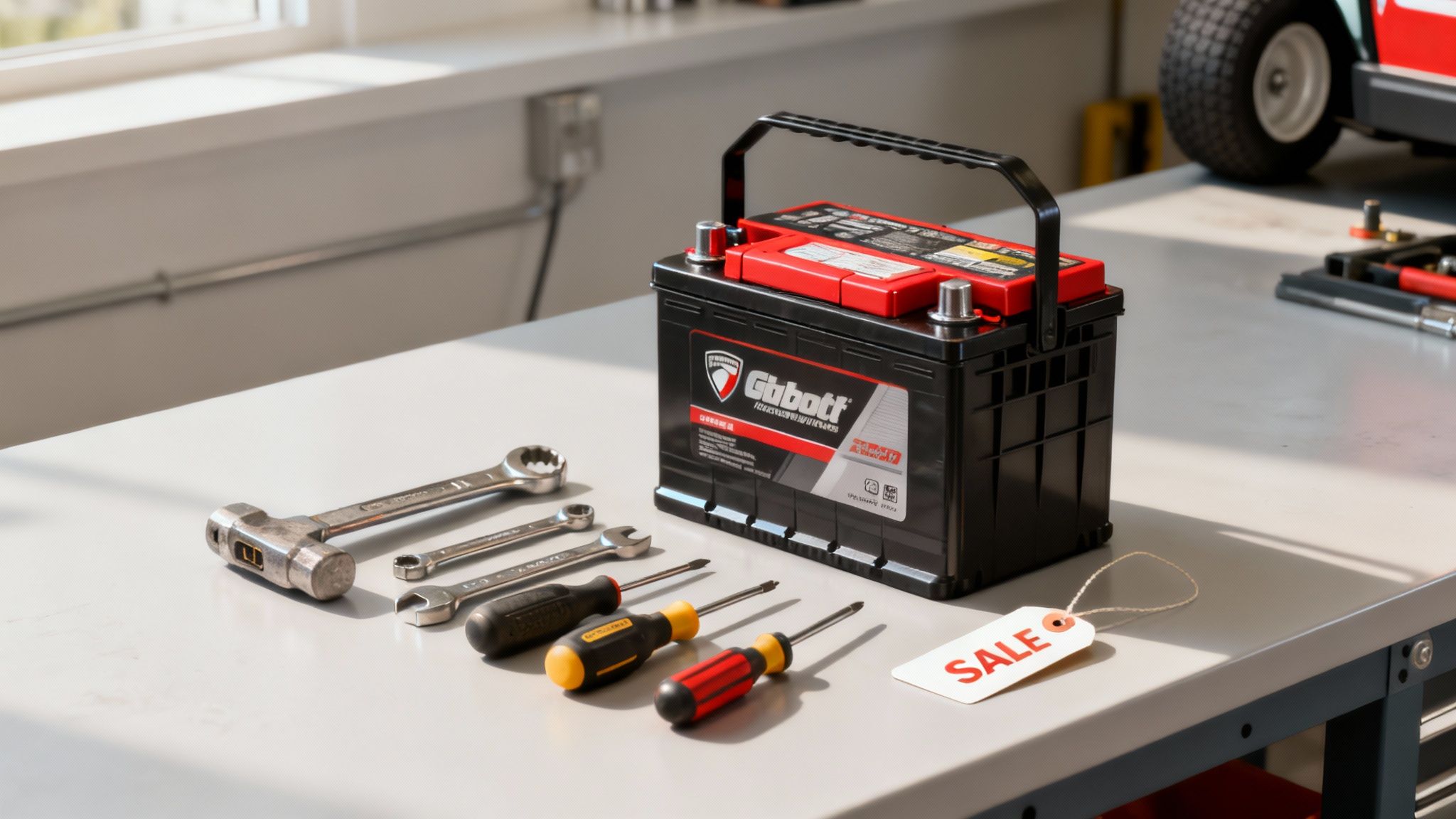
A new set of batteries is a major purchase, there's no doubt about it. But a higher golf cart battery replacement cost doesn't automatically equal better quality. With a bit of know-how and smart shopping, you can land a fantastic deal without compromising on performance or leaving yourself stranded.
It really comes down to thinking strategically. You can save hundreds of dollars just by timing your purchase right or considering a DIY install. Let's walk through some of the most effective ways to keep that cash in your wallet.
Weighing the Pros and Cons of DIY Installation
One of the most immediate ways to slash the cost is to install the batteries yourself. Doing so can easily save you $100 to $300 in labor fees right off the bat. If you're handy with basic tools and have a healthy respect for electrical safety, swapping out a battery pack is a very doable weekend project. But it's not for everyone.
Before you roll up your sleeves, ask yourself these questions:
- Safety First: We're dealing with heavy batteries filled with corrosive acid. You absolutely need gloves, eye protection, and a solid understanding of the right order to disconnect everything to prevent a dangerous short circuit.
- Got the Right Tools? You'll need a good socket wrench set, a wire brush to scrub the terminals clean, and maybe even a battery carrier strap to hoist those heavy lead-acid batteries out.
- How Complex is the Job? Swapping an old set of lead-acid batteries for a new one is pretty straightforward. But if you're upgrading to lithium, you might be looking at new wiring, different mounting brackets, and a new charger—a much more involved process.
If you have any hesitation at all, paying a professional is money well spent. You get peace of mind knowing the job was done right.
Finding the Best Deals and Maximizing Value
Beyond the installation, you can find some serious savings by just being a smart shopper. Don't jump on the first set of batteries you see. A little bit of homework goes a long way here.
Look for reputable brands that offer a good balance between price and performance. Sure, the premium brands have a certain reputation, but plenty of mid-tier manufacturers deliver excellent longevity and solid warranties without the eye-watering price. Speaking of warranties, compare them closely. A longer warranty is a great sign that the company stands behind its product.
Keep an eye out for seasonal sales. Retailers often run discounts during the off-season (think late fall and winter) or around big holiday weekends like Black Friday or Memorial Day when they're trying to move inventory.
Ultimately, the best way to save money on batteries is to make the ones you have last as long as possible. Proper care is the number one cost-saving strategy. Simple things like keeping the terminals clean, following the right charging procedures, and topping off water levels in lead-acid batteries can add years to their life. For a full rundown, check out our guide on golf cart battery maintenance—it’s got a complete checklist to help you protect your investment.
Got Questions About Battery Costs? We've Got Answers
When it's time to think about the golf cart battery replacement cost, a lot of questions pop up. It’s a big investment, and you want to get it right. Let's walk through some of the most common things cart owners ask, so you can make a smart choice for your budget and how you use your cart.
Getting the facts straight will help you sidestep common mistakes and ensure you get the best bang for your buck, whether you're sticking with tried-and-true lead-acid batteries or making the jump to lithium.
How Do I Know When My Golf Cart Batteries Are Dying?
Your golf cart will usually give you some pretty clear signals when its batteries are on their last legs. The biggest giveaway is a major drop in performance. All of a sudden, your cart can’t finish a full 18 holes, or it groans its way up hills that used to be a breeze.
That loss of power and range is the classic sign of old batteries that just can't hold a charge like they used to. Here are a few other red flags to look out for:
- Shorter Run Times: You feel like you're constantly reaching for the charger.
- Sluggish Acceleration: The zippy "get up and go" is gone, and now it feels like you're pulling a trailer.
- Visible Damage: Take a peek under the seat. If you see bulging or cracked battery cases, heavy corrosion on the terminals, or any sign of acid leaks, it's time.
- Charging Problems: The batteries are taking forever to charge, or your charger keeps showing an error.
If you’re nodding along to any of these, a battery replacement is definitely in your near future.
Can I Just Replace One Bad Battery and Keep the Rest?
This is probably one of the most common questions we hear, especially from folks looking to save a few bucks. The short answer is a hard no. Mixing old and new batteries is a recipe for disaster that will tank your cart's performance and kill your new batteries faster.
Imagine a rowing team where one person is fresh and the others are exhausted. The strong rower has to pull way harder to make up for the others, and they’ll burn out in no time. It's the same with your batteries.
An imbalanced battery pack forces the new batteries to overwork, trying to compensate for the weaker, older ones. This constant strain causes them to charge and discharge unevenly, which drastically shortens the lifespan of the very batteries you just paid for.
You end up wasting money on new batteries only to have them wear out prematurely. For the best performance and longest life, always replace the entire set at once. This ensures they all work together in perfect harmony, sharing the load equally.
Is It Worth Upgrading an Older Golf Cart to Lithium?
Absolutely. In fact, switching an older cart to lithium is often one of the best upgrades you can possibly make. It can breathe new life into your vehicle, making it feel quicker and more powerful than it did the day it rolled off the assembly line. The higher initial golf cart battery replacement cost is almost always worth it in the long run.
A lithium battery is a featherweight compared to lead-acid, often cutting over 200 pounds from your cart's total weight. That difference is huge—you'll feel it immediately in faster acceleration, nimbler handling, and better overall efficiency. As a bonus, you can wave goodbye to the tedious chores of checking water levels and scrubbing terminals.
Should I Install New Batteries Myself or Hire a Pro?
If you're comfortable working with electrical systems and have the right tools, a DIY installation is definitely possible. If you're just doing a simple swap—taking out an old lead-acid set and dropping in a new one—the process is fairly straightforward.
But if you're upgrading to lithium or feel even a little bit hesitant, we strongly recommend calling in a professional. A pro will make sure every connection is torqued down correctly, the new battery is securely mounted, and your charger is programmed to work with the new system. This is especially important for lithium conversions, which often need new wiring or a different charging port. A little extra for professional installation buys you a lot of peace of mind, protecting your big investment.
Ready to upgrade your ride with a reliable, high-performance electric vehicle? Explore the full range of street-legal golf carts and off-road models at Solana EV and discover the perfect fit for your lifestyle. Visit us today at https://solanaev.com.
I really like your writing style, excellent info , appreciate it for putting up : D.