
Imagine a workhorse that never gets tired, runs silently, and costs pennies to fuel. That’s the electric utility cart in a nutshell. These incredibly versatile vehicles are quickly becoming the go-to tool for all sorts of industries, from busy logistics hubs and sprawling farms to quiet resort properties.
Your Modern Workhorse: The Electric Utility Cart

Think of an electric utility cart as the Swiss Army knife of on-site transportation. It’s built tougher than a standard golf cart but is far more agile and cheaper to run than a full-sized truck. More and more businesses are swapping their loud, gas-guzzling vehicles for these clean, quiet, and efficient electric solutions.
At their core, these carts do one thing really well: they move people, gear, and materials with zero fuss and zero emissions. They fill that perfect gap where larger vehicles are just too clumsy or outright banned. Whether it’s a maintenance crew zipping across a university campus or a groundskeeper hauling supplies at a resort, these carts are made for the grind.
Why Is Everyone Making the Switch?
The move to electric utility carts isn't just a fleeting trend—it's a smart business decision with real, measurable benefits. Their quiet hum is a massive plus for noise-sensitive places like hospitals, residential communities, and indoor warehouses. Plus, their zero-emissions operation helps companies hit sustainability goals and keeps the air clean for employees.
The day-to-day advantages are just as convincing.
- Lower Running Costs: Electricity is way cheaper than gas. And with an electric motor, you can say goodbye to oil changes, spark plugs, and finicky exhaust systems. That means fewer maintenance headaches and lower bills.
- Do-Anything Versatility: These carts can be set up for almost any job you can think of. Need a cargo box, a flatbed, or more seats for your crew? There’s a configuration for that.
- Built for Safety: Many models come loaded with safety features like headlights, taillights, turn signals, and solid braking systems, making them safe to operate even in crowded areas.
In short, an electric utility cart is more than just a vehicle. It's a strategic tool that boosts efficiency, slashes long-term costs, and aligns with modern green initiatives.
More Than Just a Battery and Wheels
It helps to understand what makes them tick. Gas engines are a jumble of complex parts, but an electric powertrain is wonderfully simple: a battery pack, a motor, and a controller. That simplicity is precisely why they're so reliable and easy to maintain.
This guide will walk you through everything you need to know about these modern workhorses. We'll break down the different types, explain which technical specs actually matter, and show you how to pick the perfect cart for your needs. By the time we're done, you'll understand everything from battery tech to basic upkeep, feeling confident you're investing in a machine that works as hard as you do. The right electric utility cart can truly become an essential part of your daily operations.
Finding the Right Cart for the Job
Picking the right electric utility cart isn't about what looks best—it's about matching the machine to the mission. Let's be honest, not all carts are built the same. Grabbing the wrong one is a fast track to inefficiency and daily frustration.
Think of it like this: you wouldn't use a tiny screwdriver to hammer a nail. The same logic applies here. Each type of cart has a specific job it was designed to do well. Understanding these key differences is the first step to making a smart investment that will actually make your life easier.
Breaking Down the Different Cart Models
To find the perfect fit, it helps to look at carts based on what they're built to do. Most of them fall into a few main categories, with each one shining in a different type of environment.
The most common models are the jack-of-all-trades, adaptable enough for a wide range of tasks. This flexibility is a huge reason why these vehicles are popping up everywhere. To get a feel for the different setups, you can explore various electric work carts and see how they're tailored for specific jobs.
Here’s a quick look at the most common types you’ll run into.
Personnel Carriers
These are your people-movers. Think of them as the go-to solution for shuttling staff, clients, or visitors across a large property without anyone breaking a sweat.
- Key Feature: Multiple rows of forward-facing seats.
- Best For: Resorts, sprawling corporate campuses, airports, and big event venues where moving groups is the main goal.
Cargo Box Carts
Meet the workhorse of the fleet. This is the pickup truck of the utility cart world, featuring a secure, contained bed at the back. It’s perfect for hauling tools, supplies, and other gear without anything bouncing out.
- Key Feature: A sturdy cargo box with high walls.
- Best For: Maintenance crews, landscaping teams, and warehouse logistics where you're moving lots of loose items.
Flatbed Carts
Got big, bulky, or weirdly shaped items to move? The flatbed is your best friend. Its completely open design gives you maximum flexibility for those oversized loads that just won’t fit anywhere else.
- Key Feature: An open, unobstructed bed with no side rails.
- Best For: Nurseries moving potted trees, construction sites hauling lumber, or any job involving awkward cargo.
To help you visualize how these carts stack up, it's useful to look at what sets them apart.
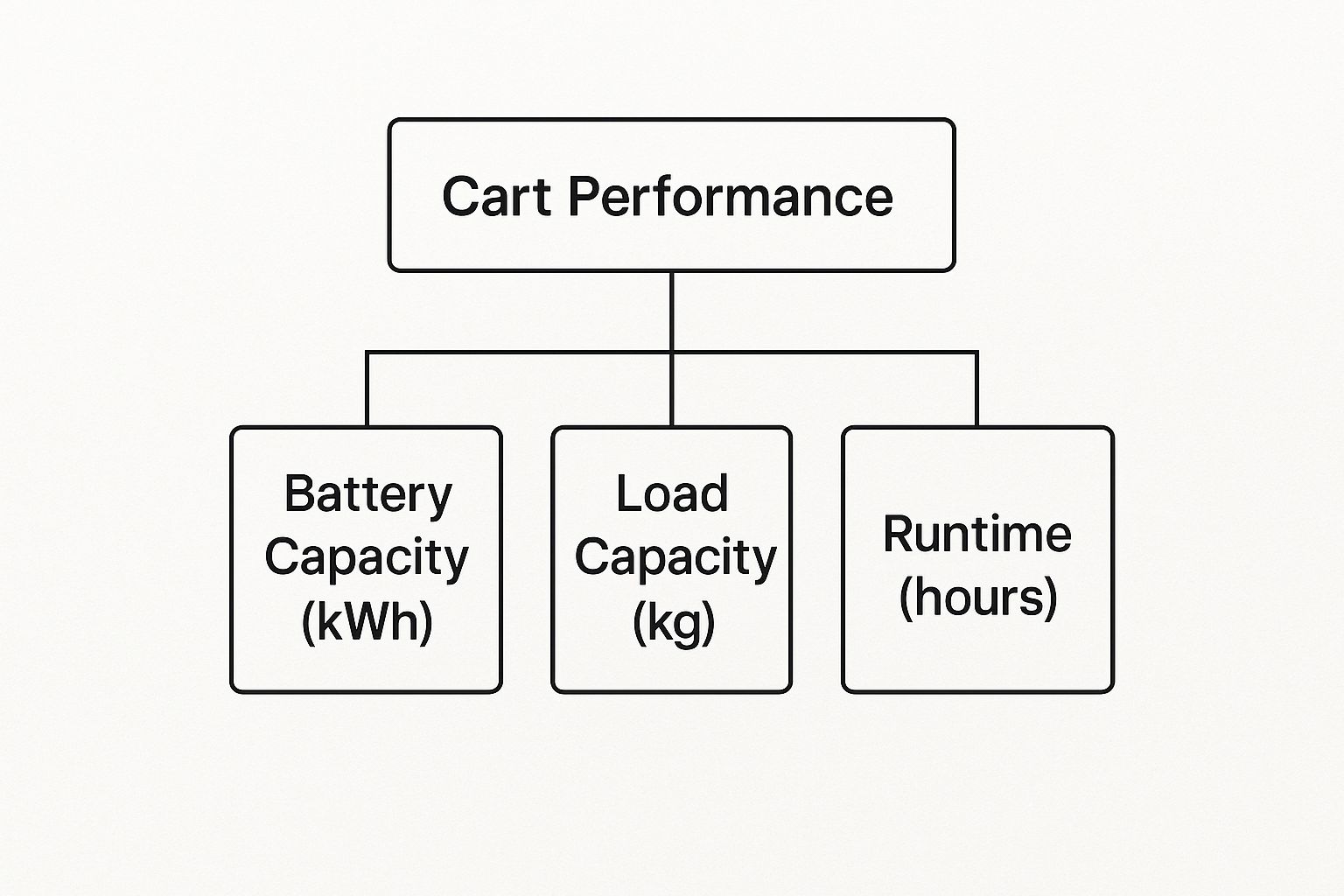
This really just boils down to a few key performance metrics. Battery capacity, load capacity, and runtime are the big three. Nailing the right balance between them is what makes a cart a valuable asset instead of a constant headache.
To put it all together, this table shows how different cart types are deployed across various industries.
Electric Utility Cart Types and Common Applications
| Cart Type | Primary Function | Common Industries & Use Cases |
|---|---|---|
| Personnel Carrier | Transporting people | Hospitality, Airports, Universities, Large Event Venues |
| Cargo Box Cart | Hauling contained materials & tools | Maintenance, Agriculture, Warehousing, Landscaping |
| Flatbed Cart | Moving large or irregular items | Construction, Nurseries, Manufacturing, Groundskeeping |
| Specialized Carts | Performing a specific task | Healthcare (Ambulance), Food Service, Housekeeping |
As you can see, the function of the cart directly aligns with the daily demands of the industry.
Specialized Carts for Unique Roles
Sometimes, a general-purpose vehicle just won't cut it. That's where specialized carts come into play, built from the ground up for a very specific job.
These custom-built models often include integrated features that streamline workflows and save a ton of time.
- Housekeeping Carts: Come equipped with built-in compartments for clean linens, cleaning supplies, and trash.
- Food Service Carts: Often feature insulated containers to keep food hot or cold on the go.
- Emergency Response Carts: Can be outfitted with mounts for first-aid kits, stretchers, or even firefighting gear.
Opting for a specialized cart means your team has everything they need in one efficient vehicle. No more awkward, makeshift solutions. This kind of thoughtful planning is what really boosts productivity and keeps everyone safer on the job.
What to Look for Under the Hood
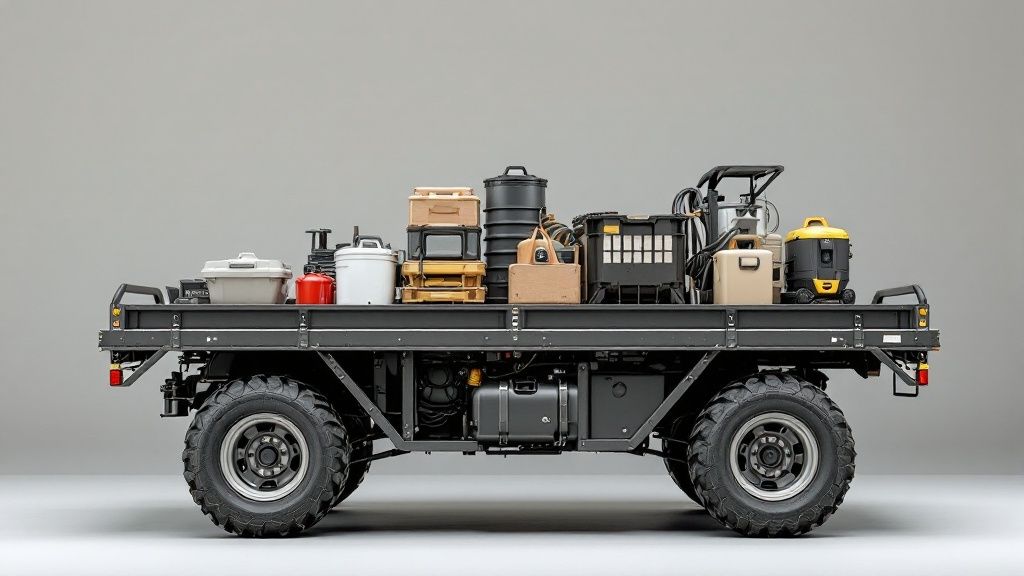
To really figure out what separates a great electric utility cart from an average one, you've got to look past the paint job. The real story is told by the components working together under the surface. These are the core parts that determine the vehicle's power, longevity, and just how much work it can actually handle, day in and day out.
Think of it like buying a new power tool. Sure, the color and grip are nice, but it's the motor, battery, and build quality that tell you whether it’ll get the job done or just give up under pressure. Let's start with the heart of any electric vehicle: the battery.
The Great Battery Debate: Lead-Acid vs. Lithium-Ion
The battery isn't just another part; it's the powerhouse that defines your cart's daily performance and its long-term value. For years, lead-acid batteries were the only game in town. They are the tried-and-true, more affordable option upfront, but that lower price tag comes with some serious trade-offs in maintenance and lifespan.
On the other hand, lithium-ion batteries are a massive leap forward. They're lighter, charge way faster, and need practically zero maintenance—no more topping off water levels. While they cost more initially, their dramatically longer lifespan often makes them the smarter financial choice over time. If your operation needs a cart that's always ready to roll, a lithium-ion battery is the clear winner. You can dive deeper into this topic in our guide to the best lithium batteries for golf carts, as the same principles apply here.
The choice between lead-acid and lithium-ion is a classic case of short-term savings versus long-term performance. A lithium battery delivers consistent power from 100% all the way down to empty, while a lead-acid battery’s performance noticeably weakens as it drains.
That consistent power is huge for staying productive through a long workday. It means your cart has the same get-up-and-go on its last run of the day as it did on its first.
Chassis and Suspension: The Unsung Heroes of Durability
A powerful battery doesn't mean much if the cart's frame can't handle the daily grind. The chassis is the skeleton of your utility cart, and its strength is non-negotiable. I always recommend looking for models built with welded steel frames, which are far more durable than the bolted-together alternatives you sometimes see.
The suspension system is just as crucial. A solid suspension does more than just give you a comfortable ride; it protects the vehicle's frame, its components, and even its cargo from the jarring impacts of rough terrain. High-quality shock absorbers and leaf springs ensure the cart can carry heavy loads without bottoming out or feeling unstable.
- Welded Steel Frames: Offer far better rigidity and can withstand years of heavy use without flexing or cracking.
- Heavy-Duty Suspension: Allows the cart to navigate uneven ground smoothly, protecting both the operator and the load.
Think of the chassis and suspension as the foundation of a house. A weak foundation will compromise everything sitting on top of it, no matter how impressive it looks.
Turning Specs Into Real-World Capability
When you're shopping for an electric utility cart, you'll be hit with a list of technical specs. Two of the most important are payload capacity and towing capacity. These numbers tell you exactly how much muscle the cart really has.
Payload capacity is the total weight the cart can carry, including people and whatever you've loaded in the bed. Towing capacity, naturally, tells you how much weight it can pull behind it—a key spec for any job that involves trailers.
Here’s a quick comparison to put it all into context:
| Specification | Light-Duty Cart | Heavy-Duty Cart |
|---|---|---|
| Payload Capacity | 500 – 800 lbs | 1,000 – 3,000 lbs |
| Towing Capacity | 1,000 – 1,500 lbs | 3,000 – 5,000+ lbs |
| Typical Use Case | Moving staff on a campus | Hauling equipment on a job site |
The growing demand for these capable vehicles is obvious. The U.S. electric golf cart market, which often overlaps with utility vehicles, was valued at USD 529.4 million and is on track to hit USD 886.7 million by 2033. This growth is overwhelmingly driven by battery-electric models, which hold a commanding 72.5% of the market. It’s clear that businesses are voting with their wallets for efficient, powerful electric solutions.
The Real-World Benefits of Going Electric
Deciding to switch to an electric utility cart isn't just about getting with the times; it’s a smart business decision with real, practical benefits you’ll notice right away. We're talking about direct impacts on your budget, your daily workflow, and even the overall feel of your workplace. The advantages go way beyond just being "green"—they show up as cash in your pocket and a smoother operation.
The moment you put an electric cart next to a gas-powered one, the financial logic starts to click. The most obvious win is kissing fuel costs goodbye. Forget about unpredictable gas prices. You’re just plugging into a wall outlet, which turns a volatile operational expense into a small, predictable line item on your utility bill.
This move from the gas pump to the electrical outlet is a big reason these vehicles are catching on. The global utility carts market, which sits at USD 0.42 billion, is expected to climb to USD 0.65 billion by 2033. This isn't just a blip; it's a clear signal that more businesses are seeing the undeniable financial and operational perks of going electric. You can dig deeper into this market growth on businessresearchinsights.com.
Slashing Your Maintenance Budget
Fuel is just the beginning. The real long-term savings come from maintenance, or rather, the lack of it. A gas engine is a complicated beast full of moving parts that need constant care—oil changes, new filters, spark plugs, and exhaust work. An electric motor? It’s beautifully simple, with basically just one major moving part.
That simplicity means fewer headaches and lower costs.
- No More Oil Changes: You can cross that messy, recurring task off your to-do list for good.
- Fewer Breakdowns: With less to wear out, electric carts are just plain more reliable, which means less time in the shop.
- Longer Gaps Between Service: The maintenance you do need is less frequent and generally simpler.
This all adds up to more than just savings on parts and labor. It means your carts are out there working, keeping your team productive instead of sitting idle.
The quiet hum of an electric utility cart is one of its most powerful yet overlooked features. It fosters a more professional and pleasant atmosphere for staff, customers, and anyone else on-site.
Quieter Operations for a Better Environment
Picture this: your crew needs to do some work at a resort or hospital at 6 AM. A sputtering gas engine is going to wake people up and create a nuisance. An electric cart, on the other hand, glides by almost silently. This means your team can work early in the morning or late at night without disturbing anyone.
This near-silent operation is a total game-changer in places where noise is a problem:
- Hospitality: Staff can move luggage or deliver supplies without waking up paying guests.
- Warehouses: Getting rid of engine noise makes it easier for workers to communicate, which is a big plus for safety.
- Campuses: Maintenance can happen during class hours without disrupting lectures.
Bringing in technology like electric carts is a key part of modernization for SMBs, as it directly boosts efficiency and makes a business more competitive. Shifting to quieter, cleaner vehicles shows you're serious about creating a better work environment.
Zero Emissions and a Healthier Workplace
Finally, the environmental upside doubles as a major workplace benefit. Electric utility carts have zero tailpipe emissions. This is absolutely critical if you're using them indoors, like in a warehouse or convention center, where gas fumes can create a real health hazard for employees.
By choosing electric, you’re doing more than hitting a sustainability goal. You're building a cleaner, healthier, and safer space for your people to work in. That kind of commitment can do wonders for team morale and positions your company as a responsible, forward-thinking leader.
Keeping Your Cart Running Like New
You’ve made a serious investment in an electric utility cart, and just like any other crucial piece of equipment, it needs a little TLC to keep performing at its peak. The great news? It's a whole lot easier than dealing with a gas engine. A few simple, consistent checks are all it takes to prevent breakdowns, stretch the life of your vehicle, and sidestep costly repairs later on.
Think of it as a quick health check-up for your workhorse. When you spot the small stuff early, you ensure your cart stays safe, dependable, and ready to go. This proactive mindset is what keeps your operations humming and protects your investment for years.
The Heart of the Matter: Battery Care
Let's be clear: the battery is the single most important part of your electric cart. How you treat it directly impacts its lifespan and day-to-day performance. Whether you're working with traditional lead-acid or modern lithium-ion batteries, your charging habits are everything.
If you have lead-acid batteries, you'll need to pop the caps and check the water levels regularly, topping them off with distilled water when needed. Letting them run dry is a surefire way to cause permanent damage. On the other hand, lithium-ion batteries are a true "set it and forget it" solution—no water checks, no fuss.
No matter which type you have, these rules always apply:
- Don't Run It Empty: Try to avoid deep discharging the battery. The best practice is to plug it in after each day of solid use.
- Stick to the Right Charger: Always use the charger that came with the cart or one specifically approved by the manufacturer. Mismatched chargers can do more harm than good.
- Keep the Terminals Clean: Give the terminals a quick look for any corrosion, which is more common on lead-acid models. A quick scrub with a wire brush keeps the connection strong.
The biggest mistake I see owners make is lazy charging. Just treat your cart's battery like you treat your phone—plug it in regularly and don't let it sit dead for weeks. That one habit can literally add years to its life.
Your Simple Maintenance Checklist
Beyond the battery, a handful of other areas need a quick once-over. These checks are fast, straightforward, and can be handled by anyone on your team in a few minutes. Making this part of a daily or weekly pre-start inspection is the easiest way to stay on top of it. Many of these principles are the same for recreational vehicles, which you can read about in our guide to golf cart maintenance.
1. Tire Pressure and Condition
Just like with your car, the right tire pressure is a game-changer. Low pressure kills your range and efficiency by making the motor work harder, draining the battery faster. Too much pressure makes for a jarring ride and causes uneven wear.
- Check the pressure weekly with a basic tire gauge.
- Look over the tires for any obvious cracks, punctures, or bald spots.
- Make sure you still have enough tread for solid grip, especially in wet conditions.
2. Brakes and Lights
Safety is non-negotiable. A brake failure or a burnt-out headlight can turn a small issue into a major accident, particularly in a busy workplace.
- Test the brakes. Do they feel firm and responsive?
- Listen for any weird grinding or squealing sounds—that’s a classic sign of worn pads.
- Flick on the lights. Take 10 seconds to make sure the headlights, taillights, and turn signals all work.
This simple routine ensures your electric utility cart isn't just running, but running safely. A well-maintained vehicle is one you can count on, day in and day out.
Making the Right Buying Decision
Alright, let's get you from just browsing to buying with total confidence. Choosing the right electric utility cart isn't about getting the one with the most bells and whistles. It's about finding the workhorse that perfectly fits into your daily grind. A little structure up front will make sure you’re investing in an asset, not a headache.
The best place to start is with a simple, honest look at your needs. This exercise helps you cut through all the marketing hype and focus on what actually matters for your crew and your site.
Define Your Daily Mission
First things first: what's the toughest job this cart will have to do? Vague ideas lead to bad buys, so really think about its most demanding day.
- What's the heaviest load you'll ever need to haul? This sets your minimum payload capacity. I always tell people to add a 20% buffer so you're not constantly redlining the motor and straining the frame.
- What kind of ground will you cover? Cruising on smooth warehouse concrete is a world away from navigating muddy, hilly terrain. Rougher ground calls for better suspension and a beefier motor, plain and simple.
- How many hours a day will it be running? This is all about battery life. If your cart is going to be in constant motion from dawn till dusk, you’ll want to look at high-capacity lithium-ion options that can handle fast charging and deliver consistent power.
Nailing these answers down helps you prioritize the must-have features and stops you from overpaying for extras you'll never touch.
A classic mistake I see is people buying for the average day. But what happens on a tough day? The cart fails you. Always plan for your peak demand, not your daily routine.
Finalizing Your Purchase
Once you’ve got your core requirements sorted, a few final details will help you lock in the perfect choice and protect your investment for the long haul. A big piece of the puzzle is how you’ll pay for it. Many businesses find that an equipment financing loan is a smart way to get the gear they need without draining their cash reserves.
Don't forget to look at the support behind the machine. A solid manufacturer's warranty is non-negotiable—it's your safety net against defects. Just as important is having a good local dealer who can actually get you parts and service when you need them.
Finally, you'll have to weigh buying new versus used. A brand-new cart gives you the latest tech and a full warranty, but a well-maintained used model can be a fantastic deal. The electric utility vehicle market is booming, valued at USD 21.35 billion in 2025 and expected to reach USD 26.33 billion by 2030. This means you'll find plenty of great options, whether new or pre-owned. If you're interested in the market data, you can learn more about the electric utility vehicle market. With a healthy market like this, you can definitely find the perfect electric utility cart that meets your needs and fits your budget.
Got Questions? We've Got Answers
Even with all the specs and details laid out, you probably still have a few practical questions rattling around. That’s completely normal. Let's dig into some of the most common things people ask when they're thinking about adding an electric utility cart to their fleet.
How Fast Do These Things Actually Go?
You won't be breaking any land speed records, and that's by design. Most electric utility carts top out between 15 and 25 mph. This is the sweet spot—fast enough to zip across a large property or campus efficiently, but not so fast that it becomes a hazard around pedestrians.
Keep in mind, you should always check your local rules. Some communities have specific speed limits for these types of vehicles, especially if you plan on driving it on public roads.
What’s the Real-World Range on a Single Charge?
This is a classic "it depends" question, but I can give you a solid ballpark. You can generally expect to get somewhere between 30 to 50 miles from a full battery.
But what does it depend on? A few key things:
- Battery Type: Lithium-ion batteries almost always give you more consistent, longer-lasting power compared to traditional lead-acid ones.
- The Job: Hauling heavy loads or climbing steep hills will naturally drain the battery faster. It’s just physics.
Is It Okay to Use an Electric Utility Cart in the Rain?
Absolutely. Modern carts are built to handle the elements, and their critical electrical parts are sealed up tight to keep water out. So, a little rain won't stop your workday.
That said, they aren't submarines. It’s best to avoid driving through deep puddles or blasting the motor and battery with a pressure washer. A little common sense goes a long way in keeping the electronics happy for years to come.
How Long Am I Sidelined While It Charges?
Charging time really comes down to the battery technology you choose. If you go with the old-school lead-acid batteries, be prepared for an overnight charge—typically 8 to 10 hours to go from empty to full.
This is where lithium-ion batteries really shine. They charge up much faster, often in just 3 to 5 hours. For busy operations where you can't afford a lot of downtime, that quick turnaround is a game-changer.
Ready to find the perfect electric vehicle for your needs? The team at Solana EV is here to help you explore models that deliver performance, durability, and style. Visit us to learn more at https://solanaev.com.