
So, you’ve decided to take your rig off the pavement. That's where the real fun begins. But before you hit the trail, it's crucial to understand that off road vehicle accessories are more than just cosmetic add-ons. They're the tools that transform a stock truck or SUV into a machine truly capable of tackling tough terrain.
Think of it this way: factory vehicles are built for the average driver. Off-road accessories are what customize it for your adventures, whether that means adding rugged tires for better grip, a suspension lift for more clearance, or armor to protect vital parts. Getting this right is the secret to a safe, successful, and downright awesome trip.
Building Your Ultimate Off-Road Rig
Welcome to the world of off-roading, where the right gear can make the difference between a frustrating day and an epic adventure. The market for accessories is massive and can feel overwhelming, but don't worry. This guide is your roadmap to building a more capable, safer, and more reliable rig, one smart upgrade at a time.
Whether you're just getting started or you're a seasoned pro planning your next big build, think of this as your blueprint for making strategic investments that pay off on the trail.
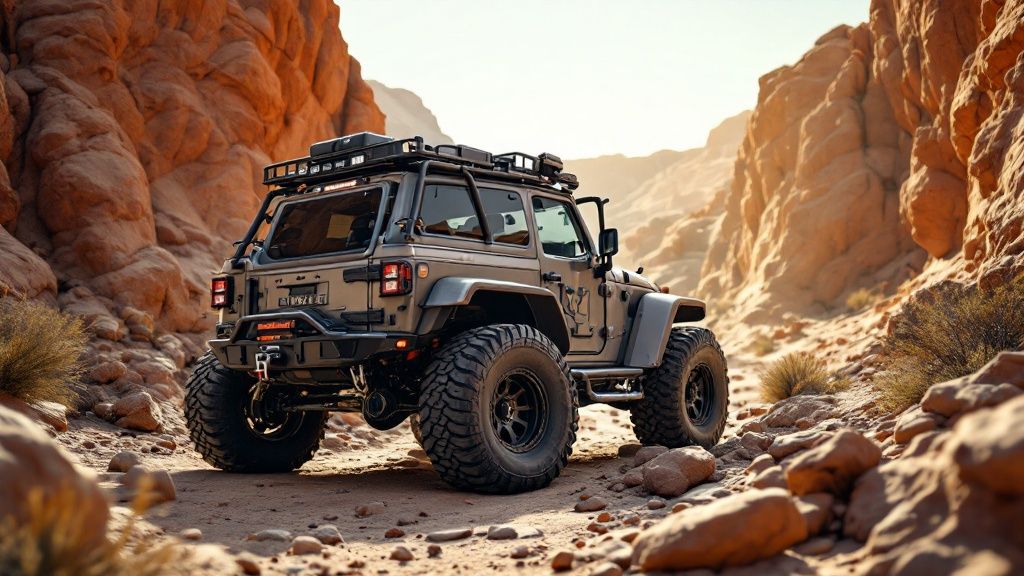
Why Purposeful Upgrades Matter
Anyone can bolt on a bunch of accessories, but the real art is in creating a cohesive system. Each part should work with the others. For example, slapping on bigger tires without a suspension lift is asking for trouble with clearance. Likewise, adding a heavy steel bumper without beefing up your springs will leave your front end sagging.
It's all about synergy. A recent survey proves this point: 70% of off-roaders say their first priority is tires and wheels, which makes sense. But right behind that are lift kits (49%) and other suspension upgrades (42%)—the very components needed to support those bigger tires.
Instead of just giving you a shopping list, we’re going to dig into why certain upgrades are so important. We'll break them down into four key areas:
- Protection & Armor: Your vehicle's shield against rocks, stumps, and whatever else the trail throws at you.
- Performance & Suspension: The heart of your rig's ability to maintain traction, clear obstacles, and provide a decent ride.
- Recovery & Safety: The gear that gets you—or a buddy—out of a tough spot when things go sideways.
- Lighting & Utility: Essential for extending your adventures past sundown and adding practical functionality.
Thinking in these categories helps you build a well-rounded vehicle that’s ready for anything. If you're still deciding on a base vehicle, our utility vehicle comparison is a great place to see how different models perform right out of the box.
A Community Built on Customization
The drive to personalize and improve a rig is what the off-road community is all about. It's no surprise that a massive 57% of enthusiasts prefer to install their own modifications. There’s a powerful DIY spirit in this world, and for good reason—working on your own vehicle builds a deeper connection and a better understanding of how it all works.
This guide is written in that same spirit. We want to give you the knowledge to make smart choices, whether you're turning the wrenches yourself or directing a shop. It’s about seeing how purposeful off road vehicle accessories come together to boost performance and give you the confidence to push your boundaries and explore further.
Understanding the Core Accessory Categories
Before you start bolting gear onto your rig, it helps to think about off road vehicle accessories in a few key groups. This simple mindset shift is the difference between randomly buying cool-looking parts and strategically building a truly capable machine. Each category serves a specific purpose, and they all have to work together to improve how your vehicle performs and keeps you safe on the trail.
Think of it like packing for a major expedition. You wouldn't just throw random items in a bag; you'd organize your gear into kits for shelter, food, first aid, and navigation. Your off-road build needs that same level of thought, with each accessory chosen for a clear purpose.
To make this easier, let's break down the main types of gear you'll encounter.
Core Off-Road Accessory Categories and Their Purpose
| Accessory Category | Primary Function | Example Accessories |
|---|---|---|
| Protection & Armor | Shields vulnerable vehicle components from trail damage. | Skid plates, rock sliders, steel bumpers |
| Performance & Suspension | Improves traction, handling, and ability to absorb impacts. | Lift kits, upgraded shocks, off-road tires |
| Recovery & Safety | Provides tools to get unstuck and handle emergencies. | Winches, traction boards, first-aid kits |
| Lighting & Electrical | Enhances visibility and powers essential equipment. | LED light bars, dual-battery systems, radios |
| Storage & Utility | Increases carrying capacity and organizes gear for trips. | Roof racks, bed racks, cargo drawers |
Each of these categories plays a vital role in building a well-rounded and reliable off-road vehicle.
Protection and Armor
This is your vehicle’s first line of defense. Just like a knight wouldn't ride into battle without a suit of armor, your rig needs protection to shield its vital organs from rocks, stumps, and other hazards. Without it, one bad line choice could leave you with a busted oil pan or a crushed rocker panel, miles from help.
Key pieces of armor include:
- Skid Plates: These are tough metal plates that bolt to your vehicle's underbelly, protecting critical parts like the engine oil pan, transmission, transfer case, and fuel tank.
- Rock Sliders: Mounted along the sides of your rig, these heavy-duty bars take the impact from rocks, preventing your doors and rocker panels from getting crushed on tight trails.
- Steel Bumpers: Aftermarket bumpers are worlds tougher than the plastic ones from the factory. They offer way better protection and give you solid mounting points for winches and recovery gear.
Performance and Suspension
If armor is the shield, then your suspension and performance parts are the muscles and joints. These upgrades completely change how your vehicle handles rough terrain, maintains traction, and soaks up big hits. A well-sorted suspension is probably the single most important modification you can make for real off-road capability.
Tires are a huge part of this equation. It’s not just about having aggressive tread; it’s about knowing how to adapt them to the ground you're on.
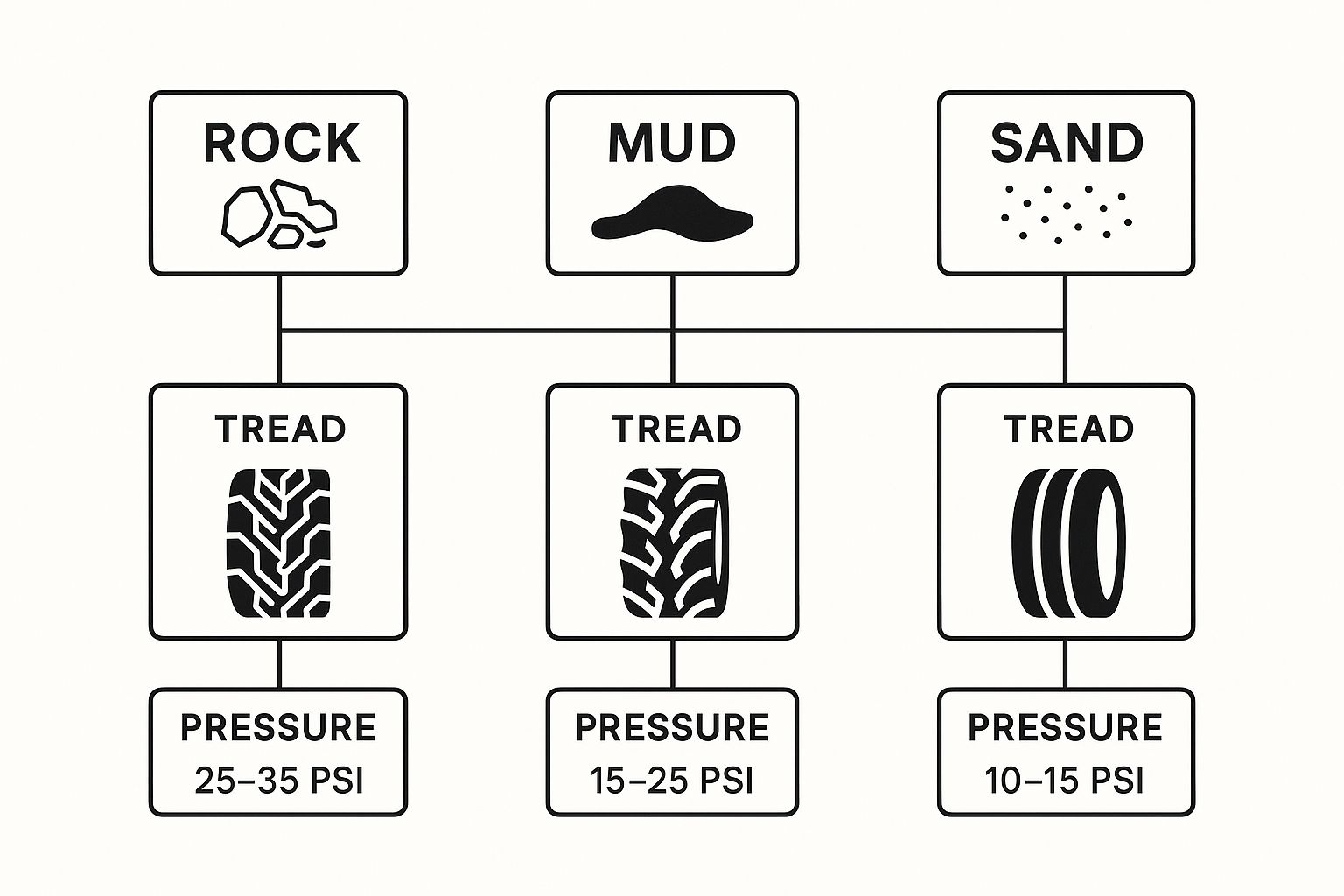
As you can see, something as simple as adjusting your tire pressure can make a world of difference in how your vehicle grips sand, mud, or rocks.
Recovery and Safety Gear
Sooner or later, you're going to get stuck. It’s not a matter of if, but when. This category covers all the gear you absolutely need to get yourself—or someone else—out of a bind. Being prepared for a recovery is just part of being a responsible off-roader.
Relying on someone else to have the right gear is a risky plan. A well-equipped vehicle carries its own recovery solutions, ensuring you can handle unexpected challenges with confidence and self-sufficiency.
Essentials here include things like winches, recovery straps, shackles, and traction boards. But safety gear also means having a solid first-aid kit, a fire extinguisher, and reliable communication—like a satellite messenger—for when you’re far beyond cell service.
Lighting and Electrical Systems
The fun doesn't have to stop just because the sun goes down. A good lighting and electrical system lets you navigate safely after dark and, just as importantly, reliably power all your other gear. Let's be honest, factory headlights just don't cut it when you're trying to pick a line on an unfamiliar trail at night.
This is where auxiliary lights like LED light bars, pod lights, and rock lights come into play. To power everything, you'll need a solid electrical system. Upgrades like a dual-battery setup are critical for running power-hungry accessories like a winch or a fridge without killing your starting battery.
Storage and Utility
Finally, you have to find a way to carry all that stuff! From camping gear and recovery tools to extra fuel and water, keeping things organized is crucial. This category is all about maximizing your vehicle's carrying capacity and making sure your equipment is secure and easy to get to when you need it.
Popular solutions include roof racks, bed racks for trucks, and all sorts of interior cargo systems and drawers. These are the off road vehicle accessories that truly enable longer, self-sufficient trips, turning your rig from a weekend toy into a mobile basecamp. The market for this gear is booming; valued at USD 8.1 billion in 2025, it's expected to hit USD 14.7 billion by 2035. You can read more about this growth on Future Market Insights.
Choosing the Right Protection and Armor
Out on the trail, your vehicle's armor is its first and last line of defense against the elements. It’s not just about looks; investing in solid protection is one of the smartest moves you can make. These crucial off road vehicle accessories are the shield that stands between a fun day out and expensive, trip-ending damage.
Think about it: your stock truck or SUV was built for pavement, where a pothole is the biggest worry. The backcountry is a different beast entirely, full of rocks, ledges, and stumps that can tear a vehicle apart. Good armor isn't just an accessory—it's essential insurance that lets you push your rig's limits with confidence.
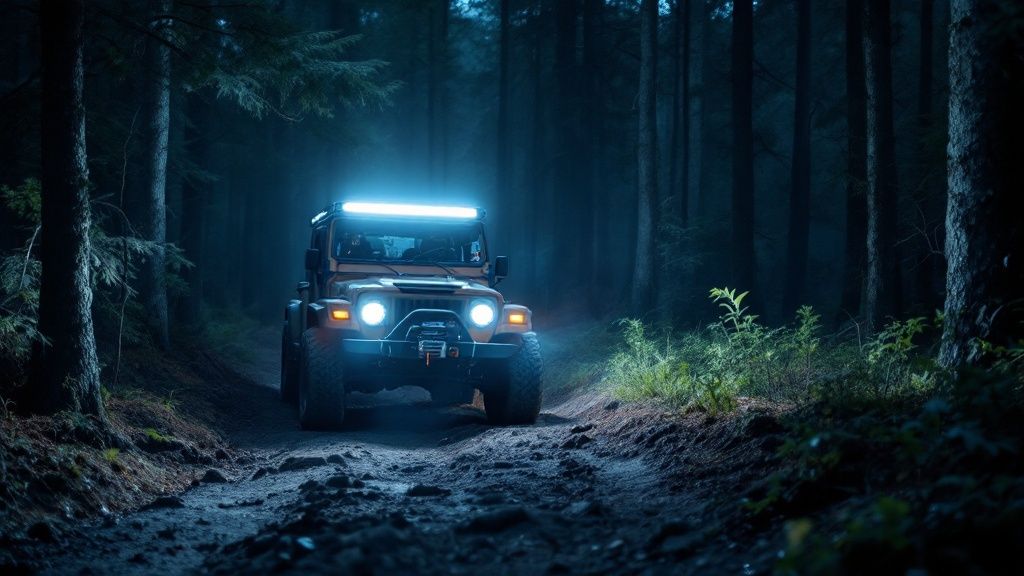
Essential Armor Components Explained
"Armor" isn't a single item but a system of parts designed to protect the most vulnerable areas of your rig. Each piece has a specific job, and together, they form a defensive shell that keeps you moving forward.
- Rock Sliders: These aren't just fancy side steps. Rock sliders are heavy-duty steel rails bolted directly to your vehicle’s frame, running along the sides right under the doors. They take the hit from rocks and ledges, protecting your rocker panels from getting crushed when you pivot around a tight obstacle.
- Skid Plates: Think of these as a helmet for your vehicle's underbelly. Skid plates are tough metal sheets covering critical parts like the engine oil pan, transmission, transfer case, and fuel tank. One unlucky encounter with a sharp rock can puncture any of these, leaving you stranded miles from anywhere.
- Upgraded Bumpers: The plastic bumpers that come from the factory are designed for parking lot bumps, not trail impacts. Steel or aluminum off-road bumpers, however, are built to take a real hit. They also dramatically improve your approach and departure angles, so you can tackle steeper climbs and descents without burying your nose or tail in the dirt.
Material Matters: Steel Versus Aluminum
When you start shopping for armor, the big question is always steel or aluminum. Each has its pros and cons, and the best choice really boils down to your vehicle, your budget, and the kind of trails you love to run. There’s no single right answer, just the one that’s right for your setup.
Choosing your armor material is a classic trade-off between ultimate strength and overall vehicle weight. Prioritize steel for extreme rock crawling where heavy impacts are guaranteed, but consider aluminum for overland builds where every pound counts against your payload capacity.
Let's break down the differences to help you decide.
| Feature | Steel Armor | Aluminum Armor |
|---|---|---|
| Durability | The undisputed king of strength. It resists deep gouges and can take a beating without deforming. | Lighter and naturally corrosion-resistant, but it's a softer metal and more likely to get damaged by sharp impacts. |
| Weight | It's heavy. The extra weight can affect your fuel economy and may require suspension upgrades to manage properly. | Significantly lighter. This helps preserve your payload capacity for gear and puts less strain on your suspension. |
| Cost | Generally more affordable to buy. If you do manage to break it, it's also much easier to find someone who can weld and repair it. | More expensive upfront. The material itself costs more, and it requires specialized techniques to weld and fabricate. |
For hardcore rock crawlers who are constantly grinding their rigs on obstacles, steel's brute strength and lower price tag usually win out. On the other hand, for overlanders building a rig for long-distance travel, the weight savings from aluminum is huge—it means more capacity for fuel, water, and gear.
This kind of serious investment is common in the off-road world. In fact, surveys show 32% of enthusiasts are willing to spend between $1,000 and $4,999 on modifications to get their vehicles trail-ready. It's all about buying capability and peace of mind for when you're far from home.
Upgrading Performance and Suspension
If vehicle armor is the shield, then the suspension is what gives your rig its soul on the trail. This entire system of springs, shocks, and linkages is what dictates how your vehicle moves, how it flexes over a gnarly rock garden, and how it keeps the tires planted when the terrain gets tricky. A well-thought-out suspension upgrade is, without a doubt, the single most impactful modification you can make. It’s what separates a good rig from a truly great one.
Think of your stock suspension like a decent pair of running shoes. They’re fine for the pavement and predictable surfaces, but you wouldn’t trust them on a treacherous mountain trail. Swapping in a specialized off-road suspension is like lacing up a pair of high-end hiking boots with serious ankle support and aggressive tread. It gives you the stability, traction, and resilience to tackle whatever the trail throws at you with confidence. These are the off road vehicle accessories that truly define capability.
The market for these parts is booming, which tells you just how important they are to enthusiasts. The global exterior car accessories market is on track to jump from USD 53.8 billion in 2025 to nearly USD 89.5 billion by 2032. This growth, tracked by firms like Persistence Market Research, points to a massive demand for customized, high-performance vehicles.
Demystifying Suspension Lifts
A suspension lift kit is often the first thing on an enthusiast's shopping list. The goal seems simple: get the vehicle’s body and frame higher off the ground. This gives you better ground clearance and, just as importantly, makes room for bigger, more aggressive tires.
But it's about much more than just height. A quality lift kit is engineered to improve wheel travel—the total distance a wheel can move up and down. The more travel you have, the better your tires can stay glued to the ground over uneven terrain, which is absolutely critical for maintaining traction and stability.
A classic rookie mistake is just going for maximum height. An excessively tall lift can throw off your vehicle's center of gravity, making it handle poorly on the road and significantly increasing the risk of a rollover. For most people, a modest lift of 2-4 inches is the sweet spot, giving you a perfect blend of improved clearance and stable, predictable performance.
Shocks and Tires: The Unsung Heroes
While the lift kit gives you the height, the real magic comes from the shock absorbers and tires. Shocks are what control the compression and rebound of your springs, stopping your truck from bouncing all over the place like a pogo stick after hitting a bump. Upgraded off-road shocks are built to take a beating, handling repeated, harsh impacts without overheating and losing their effectiveness—a problem known as "shock fade."
And tires? They are your one and only connection to the trail. No other upgrade provides a more immediate and noticeable improvement in traction. Picking the right tire means finding the right balance of tread pattern, size, and construction for the kind of terrain you drive on most.
- All-Terrain (A/T) Tires: These are the jack-of-all-trades. They have an aggressive enough tread for most moderate trails but are still quiet and comfortable on the highway. This makes them perfect for a daily driver that also serves as a weekend warrior.
- Mud-Terrain (M/T) Tires: When the going gets tough, these are the tires you want. They feature massive, deep lugs designed to bite into mud, sand, and loose rock. Their off-road grip is second to none, but they are noticeably louder on pavement and tend to wear out faster.
Balancing Power and Efficiency
Performance upgrades don't stop with the suspension. Engine mods like cold air intakes and performance exhaust systems can give you a nice little bump in horsepower and torque, which definitely helps when you're trying to turn a set of big, heavy tires.
Don't forget about the electrical system that powers it all. If you’re running a powerful winch or a bank of off-road lights, you have to be sure your battery can handle the load. For a deeper dive, you can check out our guide on the best lithium batteries for golf carts, which explores options that deliver the reliable, high-amperage power needed for serious accessories.
In the end, upgrading your rig's performance and suspension is a delicate balancing act. It’s all about creating a cohesive system where the tires, shocks, springs, and other components all work together in harmony. By investing in quality parts and focusing on a balanced setup, you’ll build a vehicle that isn't just more capable, but also safer and a lot more fun to drive, no matter where the trail takes you.
Equipping Your Rig for Recovery and Safety
Sooner or later, every off-roader gets stuck. It’s not a matter of if, but when. This is the moment your investment in proper recovery and safety gear really proves its worth. These specific off road vehicle accessories aren't just for looks; they are the absolute essentials that can get you home when you're miles from anywhere.
Being prepared for the inevitable is what separates a smart off-roader from a stranded one. It's about being self-reliant and having the right tools to get yourself—or a buddy—out of a jam safely and without a lot of drama. The right prep turns a potential disaster into just another great trail story.
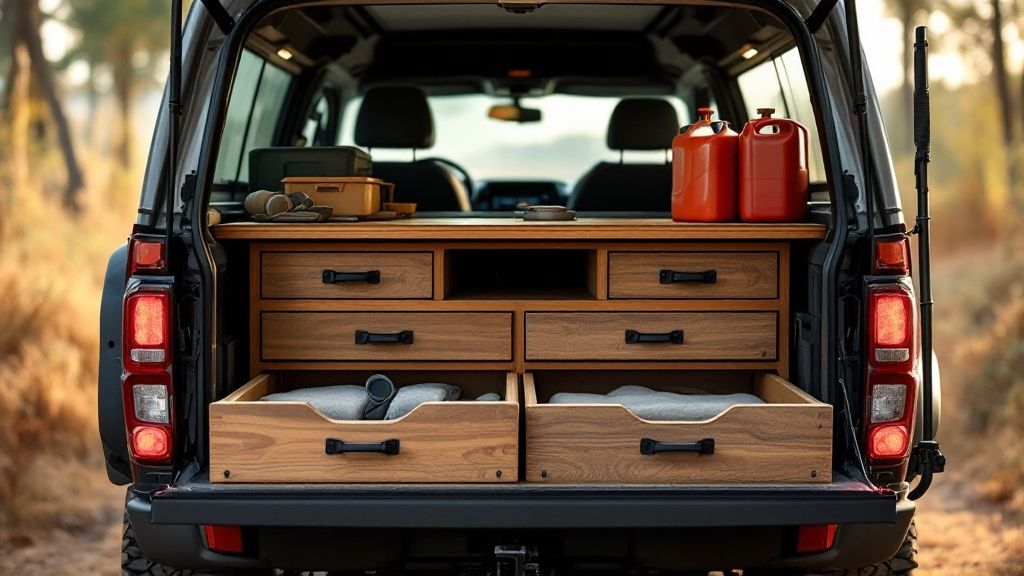
The Foundation of Self Recovery
Think of your recovery kit as your get-out-of-jail-free card for the trail. While you can fill your rig with countless gadgets, a few core pieces are completely non-negotiable. Without them, you're honestly just asking for trouble.
It seems the community agrees. Recent survey data shows that a winch is one of the top accessory buys for 37% of off-roaders, which tells you that experienced drivers know self-recovery isn't optional.
Here are the absolute must-haves for any real recovery situation:
- Winch: This is your ace in the hole. A good electric winch can drag your vehicle out of deep mud, up a slick rock face, or over an obstacle that you just can't drive over.
- Recovery Straps: Don't confuse these with simple tow straps. A kinetic recovery strap is built to stretch, storing up energy to gently "pop" a stuck vehicle free without the violent, frame-damaging jolt of a static rope.
- Traction Boards: Simple, but brilliant. These boards give your tires something to grab onto in mud, sand, or snow. Just wedge them under your spinning wheels, and you can often drive right out.
Choosing the Right Winch
Picking a winch might seem complicated, but it really comes down to a simple, time-tested formula. The goal is to get one with enough muscle to pull your vehicle when it's fully loaded and buried to the axles in muck.
As a solid rule of thumb, choose a winch with a pulling capacity of at least 1.5 times your vehicle's Gross Vehicle Weight (GVW). So, if your rig weighs 6,000 lbs loaded up, you'll want a winch rated for at least 9,000 lbs to make sure it can do the job without burning out.
Once you’ve got the capacity figured out, you have to decide between classic steel cable and modern synthetic rope.
| Line Type | Primary Advantages | Key Considerations |
|---|---|---|
| Steel Cable | Incredibly tough and stands up well to being dragged over rocks and rough ground. It's also the more budget-friendly option. | It’s heavy and can store a frightening amount of energy if it snaps. You also have to keep it oiled to prevent rust and kinks. |
| Synthetic Rope | Way lighter and much safer—if it breaks, it just falls to the ground without whipping. It's also easier to handle and repair on the trail. | More vulnerable to abrasion and damage from the sun. It costs more upfront than steel. |
For most weekend warriors and serious enthusiasts, the huge safety advantage and light weight of synthetic rope make it well worth the extra cost.
Beyond the Basics: Safety Gear
Being truly prepared is about more than just getting unstuck. It means having the gear to handle any emergency, from a minor cut to a major incident. These are the things people often forget but are priceless when things go sideways.
Every well-equipped rig should have these three things, no exceptions:
- Comprehensive First-Aid Kit: I'm not talking about a little box of band-aids. Get a real kit designed for the outdoors that can handle everything from bad cuts and sprains to burns and fractures.
- Fire Extinguisher: Vehicle fires are rare, but they happen fast. Keep a properly rated ABC fire extinguisher mounted somewhere you can grab it in a hurry.
- Reliable Communication: Your cell phone is useless on most trails. A satellite messenger or a ham radio is often the only way you’ll be able to call for help in a real emergency.
Kitting out your vehicle with the right recovery and safety gear buys you peace of mind. It gives you the confidence to push a little further and explore those remote places, knowing you can handle whatever the trail throws at you.
Don't Let Sundown End Your Adventure
Your time on the trail shouldn't be dictated by the sun. Let's be honest, some of the best off-roading happens after dark, under the stars. This is exactly where a good set of auxiliary lights and smart utility systems come into play, turning your rig from a daylight-only machine into a true 24/7 adventure vehicle. These aren't just gadgets; they're essential off road vehicle accessories for safely extending your trail time and powering the gear that makes multi-day trips possible.
Your stock headlights? Think of them as a basic keychain flashlight. They're fine for the street, but for serious trail work, they just don't cut it. Upgrading your lighting is like trading that keychain light for a professional-grade setup, with different tools for every job, from blasting light down a long, dark trail to illuminating your entire campsite. It's no surprise that 52% of off-roaders say lights and light bars are one of their top accessory picks.
Lighting Up the Night
Off-road lighting is all about strategy—it's not a one-size-fits-all deal. Different lights throw different patterns of light, and knowing the difference is the key to creating a setup that actually works for you. The real goal is to layer your lighting, combining various patterns to kill blind spots and give you a crystal-clear view of the terrain ahead.
- Spot Beams: These are your long-distance champs. They throw a tight, focused beam of light way down the trail, perfect for spotting obstacles at high speeds or checking out what’s far ahead.
- Flood Beams: Just the opposite, flood beams create a wide, short-range wash of light. They’re fantastic for seeing what’s right off to the sides of your vehicle and double as great work lights for setting up camp or making a trailside repair.
- Combo Beams: The best of both worlds. Most popular LED light bars use a combo pattern, with flood-style LEDs on the ends and spot-style LEDs in the middle. It’s a great all-around choice that gives you both distance and width.
A killer lighting setup almost always uses a mix of different lights. A big combo light bar on the roof can handle general illumination, while a pair of smaller spot-beam "pods" on the bumper can punch through fog and dust right where you need to see.
Powering Your Gear with Utility Systems
Once you start piling on the accessories—lights, a winch, a fridge, radios—your stock electrical system is going to cry for help. This is where utility upgrades become absolutely critical. They make sure you can run all your gear without worrying about killing your starting battery and getting stranded in the middle of nowhere.
The heart of any serious overland electrical system is a dual-battery setup. This brilliant solution isolates your engine’s starting battery from your "house" battery, which powers everything else. You can run your fridge and camp lights all night and still have total confidence that your truck will start right up in the morning.
Another absolute game-changer is an on-board air compressor. It lets you quickly air down your tires for way better traction and a smoother ride on the trail, and then—just as crucially—air them back up to safe highway pressures for the drive home. It's a huge convenience that improves both your rig's performance and its safety. While many accessories are pure function, you can find options that blend capability with personal flair, much like the world of custom golf cart accessories where personalization is a huge part of the fun.
Expanding Your Storage and Functionality
Finally, utility gear also includes the hardware that lets you carry everything you need for those bigger, more ambitious trips. Roof racks and bed racks are the foundation for hauling bulky essentials like rooftop tents, recovery gear, and extra fuel.
This push for more capability is driving huge growth in the market. The U.S. off-road vehicle (ORV) industry was valued at around USD 11.82 billion in 2025 and is on track to hit USD 17.72 billion by 2034. That booming demand shows just how many people are looking to get out and explore, and it's fueling constant innovation in the accessories that make it all possible.
Got Questions About Off-Road Gear?
Jumping into the world of off road vehicle accessories can feel a bit overwhelming at first. There are a ton of options, and everyone seems to have a different opinion. Let's cut through the noise and tackle some of the most common questions I hear from people just getting started.
What Are The First Three Mods I Should Actually Buy?
It's easy to get carried away, but if you're new to this, your first moves should be about building a solid foundation for capability and safety. Forget the crazy light bars for now and focus on these three game-changers:
- Good All-Terrain Tires: Seriously, this is the single best upgrade you can make. The stock tires on most trucks and SUVs are designed for pavement. A quality set of all-terrains will give you a massive boost in traction on everything from loose dirt to slick mud, completely changing how your vehicle feels on the trail.
- A Solid Recovery Kit: Don't even think about leaving the pavement without a way to get yourself out of a jam. At a minimum, you need a kinetic recovery rope (not a tow strap!), a couple of proper shackles, and a set of traction boards. This is your get-out-of-jail-free card.
- Rock Sliders: Think of these as body armor for the most vulnerable part of your vehicle—the rocker panels right below your doors. One bad line choice can lead to a crunched rocker and a multi-thousand-dollar repair bill. Sliders are cheap insurance against expensive damage.
Nail these three first, and you'll have a rig that's far more capable and resilient than when it rolled off the lot.
Do I Really Need a Suspension Lift?
This is a classic question. For just cruising down maintained fire roads, you probably don't need a lift. But if you're serious about getting into more technical terrain, a modest 2-3 inch suspension lift is one of the best investments you can make.
A quality lift does two essential things. First, it gives you more ground clearance, which is your best friend when trying to get over rocks and ruts without smashing your undercarriage. Second, and just as important, it creates the room you need to fit larger, more aggressive tires.
A huge mistake I see all the time is people thinking bigger is always better. A massive 6-inch lift might look cool, but it can wreck your vehicle's on-road handling and stability. For most people, a well-designed 2-3 inch system is the sweet spot, giving you a major boost in off-road performance without turning your daily driver into a nightmare on the highway.
How Do I Pick The Right Winch?
Choosing a winch is actually pretty straightforward once you know the formula. The rule of thumb that has served the off-road community for decades is simple: find a winch with a pulling capacity that's at least 1.5 times your vehicle's gross vehicle weight (GVW).
So, let's say your rig, loaded up with all your gear and passengers, weighs in at 6,000 lbs. You'd do the math (6,000 x 1.5) and find you need a winch rated for at least 9,000 lbs. This buffer ensures your winch has the muscle to pull your vehicle out of a sticky situation—like being bogged down in deep mud—without burning out.
At Solana EV, we get it. The pull of adventure and the need for a vehicle that can keep up is in our DNA. Our lineup is built from the ground up to deliver a top-tier experience, whether you're managing a large property or just escaping for the weekend. See how our electric vehicles combine performance, style, and rugged durability for your next adventure at https://solanaev.com.