
Most advice about 4 plus 2 seating starts and ends with the arithmetic: four seats plus two seats equals six passengers. That answer is technically correct, but it's a poor buying guide. In an electric recreational vehicle, the fundamental question is whether those extra positions provide usable access, suitable restraints, acceptable comfort, enough payload, and legal operation for the route you plan to run.
A six-seat rating can describe rear-facing flip seats, compact auxiliary positions, or a forward-facing arrangement with a different wheelbase and cargo compromise. A resort manager moving guests with bags has a different requirement from a gated-community household carrying adults for a short trip. Treat the label as the beginning of the evaluation, not the conclusion.
Table of Contents
- Rethinking the 4 Plus 2 Concept
- Engineering the Extra Two Seats
- Comparing Rear Seat Configurations
- Legal and Practical Safety Checks
- Choosing the Right Solana EV Model
- Maximizing Value in Your Purchase
Rethinking the 4 Plus 2 Concept
A common assumption is that 4 plus 2 means six equivalent seats. It doesn't. In product packaging, the phrase usually describes four primary forward-facing occupants with two additional positions added elsewhere in the cabin. Those positions may be useful, but they may not offer the same legroom, visibility, entry path, or cargo relationship as the main seats.
That distinction matters most for operators. A property manager who counts six passengers without checking the seating geometry can discover that luggage blocks access, rear passengers board awkwardly, or the vehicle becomes difficult to use on repeated guest runs. Seating layout affects cabin width, legroom, ingress, restraint placement, visibility, and usable cargo volume, as discussed in research on autonomous-vehicle package planning.
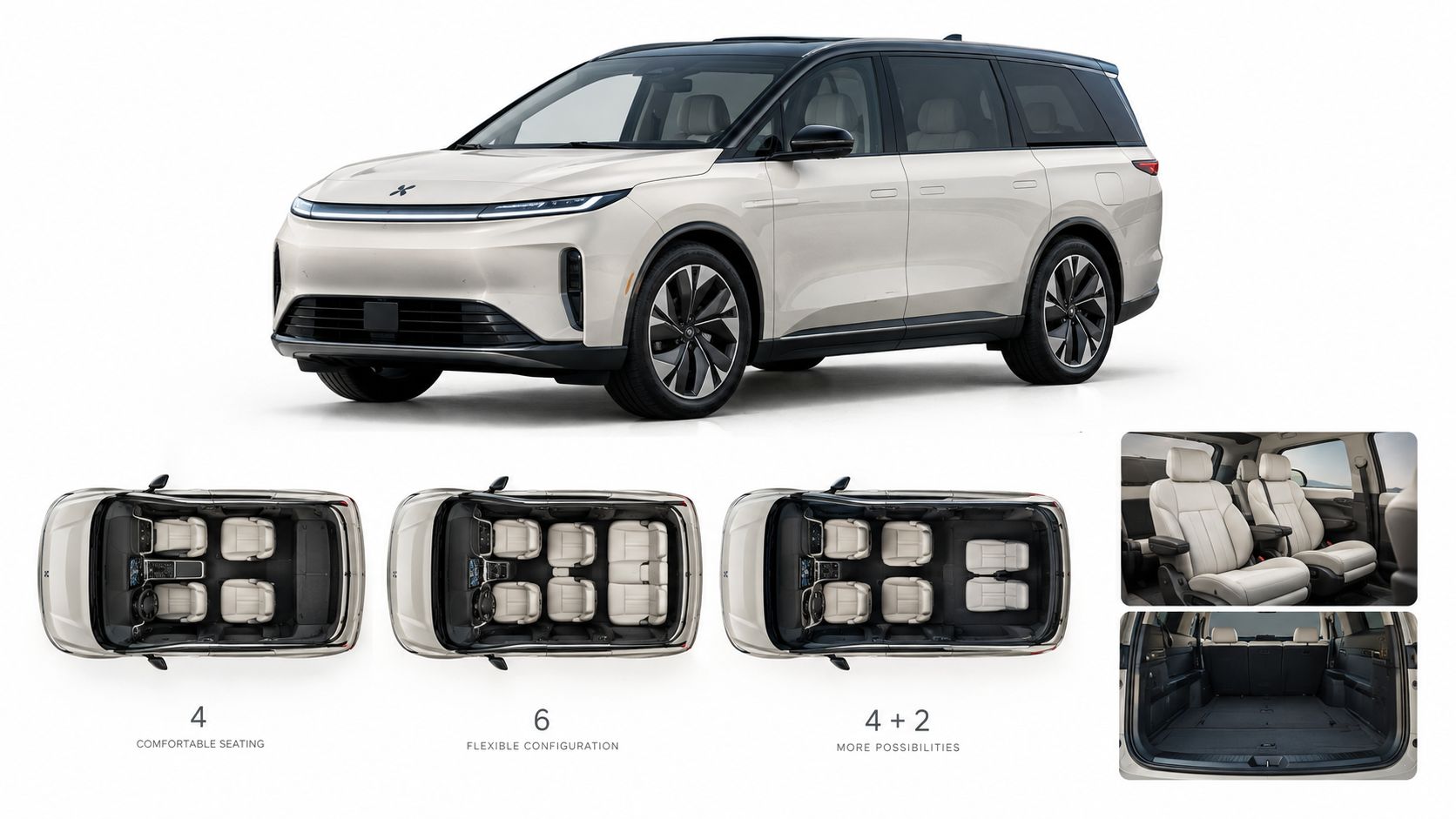
Capacity is not a seating experience
The additional two seats commonly appear as rear flip seats or compact auxiliary seating. They can be valuable for short-distance circulation, guest transfers, or occasional family use. They may be less appropriate for longer journeys, larger adults, or trips where every passenger needs equal forward visibility and straightforward entry.
The arithmetic remains useful. 4 plus 2 equals 6, and the result doesn't change when the expression is written in another numeral system, a point illustrated by the history of number systems and mathematical notation. Product planning, however, requires more than the total. Ask:
- Who will occupy the rear positions? Adults, children, staff, or occasional guests?
- Which direction do they face? Forward-facing and rear-facing seats create different visibility and comfort conditions.
- What happens to cargo space? Folding seats may provide utility that fixed seats cannot.
- How will passengers board? A seat that looks practical on a specification sheet may be inconvenient in daily operation.
Before comparing vehicles, define the operating configuration. A useful specification should state the rated occupancy, the intended passenger profile, the seat orientation, the available cargo position, and the route conditions. For a deeper explanation of the load issue, see Solana EV's guide to payload capacity.
Practical rule: Never approve a six-passenger vehicle from the seat count alone. Inspect the actual rear seating, then test it with representative passengers and the cargo they'll carry.
Engineering the Extra Two Seats
Adding two occupants changes the vehicle's operating demands. The extra passengers increase total mass, which raises rolling resistance, tire loading, braking demand, suspension deflection, and energy consumption. Those effects become more noticeable on inclines, loose terrain, and routes with frequent stops and starts.
The relevant comparison is not between a four-seat and six-seat brochure. It's between the vehicle's rated limits and the load you'll place on it. The technical reference on electric recreational-vehicle capacity describes the arithmetic increase from four occupants to six as 50% relative to a four-person baseline, calculated as (\frac{6-4}{4}=0.50), and explains why the added payload must be assessed against the gross vehicle weight rating, axle limits, brakes, tires, suspension, steering, and thermal limits of the motor and power electronics. See the vehicle payload and ergonomic engineering reference.
Geometry determines whether the seats work
Seat placement is an engineering decision, not decorative packaging. Designers need to verify hip-point spacing, knee clearance, shoulder room, seat width, seat depth, backrest angle, and seat-pan angle. Seat-belt anchorage must also suit the occupant position, while step-in height and rear access determine whether passengers can board without climbing over another seating area.
A compact rear arrangement may preserve a narrower vehicle envelope, but the compromise can appear in legroom, shoulder room, visibility, or access. Foldable seats offer another trade-off. They can convert passenger capacity into cargo utility, but their hinges, latches, mounting points, and folded position must be checked as part of the complete package.
Payload controls the practical passenger count
Fleet managers should separate three values in every specification:
- Rated occupant capacity, the number of positions the manufacturer identifies.
- Maximum permissible combined payload, covering passengers, luggage, equipment, and accessories.
- Expected range under a defined load condition, rather than relying only on an unloaded configuration.
That separation prevents a frequent purchasing error. Buyers see six seats and assume the vehicle can carry six full-size adults plus equipment without affecting handling or range. The chassis still has to support the combined mass, the brakes still have to manage it, and the tires still have to carry it.
A functional plus-two arrangement is one that remains controlled, comfortable, and within its operating limits when the vehicle carries the people and equipment your route actually requires.
For resort use, test the vehicle on its real surface and gradient. For a community, evaluate repeated stops, passenger turnover, and curb transitions. For trail access, examine loose terrain and incline performance. A seat that works for occasional short trips may not suit a daily shuttle cycle.
Comparing Rear Seat Configurations
The rear seating design usually determines whether a 4 plus 2 vehicle feels like a passenger carrier or a utility platform with occasional extra seats. Buyers often encounter rear-facing flip seats, forward-facing fold-down seats, and arrangements that fold flat for cargo. These designs aren't interchangeable.
Rear-facing flip seats can provide quick access for short trips and can make the vehicle adaptable around a property. They may limit rear visibility and expose passengers to a different ride experience from those in the forward-facing row. Forward-facing seats generally offer a more familiar passenger orientation, but they can require additional length or reduce the space available for cargo.
The practical differences
| Configuration | Visibility | Cargo Flexibility | Best Use Case |
|---|---|---|---|
| Rear-facing flip seats | Rear passengers face away from the direction of travel, which can change their view and the driver's rearward sight picture | Often folds toward a utility position, depending on the design | Short guest transfers and occasional extra passengers |
| Forward-facing fold-down seats | Gives rear passengers a forward view and a more conventional seating position | Can preserve cargo utility when folded, subject to the hinge and deck design | Regular passenger movement with periodic cargo needs |
| Fixed or extended six-seat arrangement | May provide a consistent passenger layout, but the body and wheelbase can affect maneuverability | Usually less flexible when seats remain installed | Repeated people-moving where passenger capacity takes priority |
The right choice depends on duty cycle. A golf community may value simple boarding and occasional cargo conversion. A resort may prioritize guest comfort and predictable loading. A maintenance team may prefer seats that fold quickly and leave a usable platform for supplies.
A rear seat also changes the vehicle's operating envelope. The added seating can affect wheelbase, turning behavior, rear overhang, and the driver's view around the vehicle. These details matter in narrow paths, crowded resort entrances, and gated-community streets.
Inspect the conversion mechanism
Don't judge cargo flexibility from the word “folding.” Ask to operate the seat yourself. Check whether the folded structure stays secure, whether the resulting platform is level enough for the intended equipment, and whether passengers can access the seats without moving cargo first.
The design also needs to match the route. A rear-facing position may be acceptable for slow private-property circulation but less appealing for longer street travel. A fixed forward-facing row may work well for a dedicated shuttle but waste capacity when the vehicle spends much of the day hauling supplies.
Solana EV's resource on golf cart back seats is useful when comparing the basic seating and conversion concepts. The important point is to compare the complete layout, not just the marketing name.
What to ask the dealer
Request a physical demonstration with the seats in both passenger and cargo positions. Measure the boarding path, look over the driver's shoulder, and check how much usable deck remains after the seats are folded. If the vehicle will carry adults, have representative adults sit in every position rather than relying on a showroom glance.
A strong specification should state whether the rear seats face forward or backward, whether all positions have appropriate restraint equipment, how the seats convert, and what cargo configuration remains available. If those answers are unclear, the “plus two” label isn't specific enough for a fleet purchase.
Legal and Practical Safety Checks
Six seats on paper don't automatically authorize six adults on every road. Legal operation depends on the vehicle's classification, the road or property where it will travel, and the requirements imposed by the relevant jurisdiction. A vehicle used solely on private property may face a different operating framework from one advertised for public streets.
Payload creates a second practical limit. One golf-cart listing reports a six-person capacity and a 1,137-pound maximum load, while another reports a 1,000-pound load capacity, as shown in the available six-seat vehicle listing. Those figures demonstrate why operators must calculate passengers and cargo together, rather than treating the seat count as the complete answer.
Verify the vehicle before purchase
Use a written checklist and ask the dealer to identify the documentation supporting each answer. Don't assume that an open-cab vehicle, a low-speed classification, or a six-seat rating carries the same requirements in every location.
- Seat restraints: Verify that every passenger position has suitable, certified seat belts and that the belt anchorage matches the seating direction.
- Vehicle equipment: Confirm the presence and operation of required lighting, mirrors, turn signals, reflectors, and braking equipment for the intended operating environment.
- Classification and licensing: Check the local low-speed-vehicle or other applicable rules, including registration, driver licensing, and road-access requirements. Solana EV's guide to low-speed vehicle requirements provides a starting point, but local authorities and insurers should make the final determination.
- Weight limits: Record the gross vehicle weight rating, axle limits, tire load rating, and maximum combined passenger-and-cargo load. Include batteries, accessories, luggage, and equipment in the calculation.
- Insurance: Ask the insurer whether the policy covers the vehicle's maximum occupancy, intended roads, passengers, and commercial or property-management use.
- Open-cab rules: Review any local helmet or occupant-protection requirements that apply to an open vehicle.
Separate legal use from practical use
A vehicle can satisfy a stated equipment requirement and still be a poor operational choice. Rear-facing passengers may experience different comfort and visibility conditions. Six occupants with luggage may leave little useful payload. A route with steep grades, loose surfaces, or frequent braking can expose limitations that a flat showroom drive won't reveal.
Operating test: Load the vehicle with representative passengers and cargo, then run the route you intend to serve. Check boarding time, sightlines, braking feel, turning clearance, and stability before committing to a fleet specification.
Keep the records. Save the manufacturer's capacity documentation, the vehicle identification details, insurance confirmation, registration information, and any local approval. Train drivers not to exceed the combined load limit, and make passenger loading part of the daily inspection rather than an occasional reminder.
Choosing the Right Solana EV Model
The right purchase starts with the route, not the number printed beside the seats. A resort shuttle needs predictable passenger access and luggage handling. A campus vehicle may need a balance between people-moving and equipment transport. A gated-community vehicle may spend more time on short circulation trips, where compact packaging and easy boarding matter most.
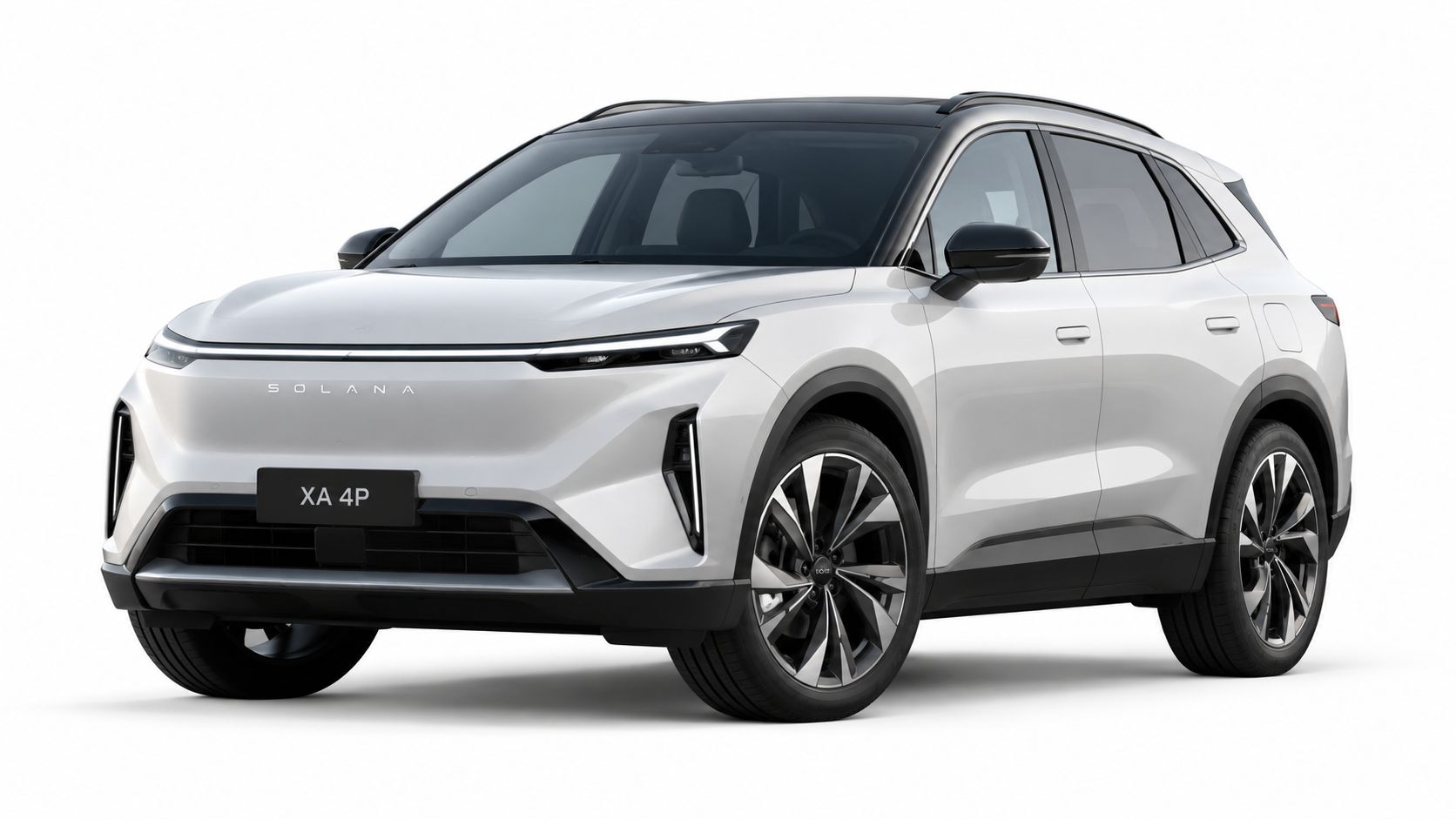
Solana EV's XA 4P and F 4P are configured for four passengers, while the G 2P and G Utility are configured for two. That makes the 4 plus 2 question a matter of selecting the correct platform and approved seating approach, not just adding positions because a listing suggests they will fit. Confirm the exact configuration, payload documentation, restraint equipment, and local road eligibility for the vehicle you're considering.
Match the platform to the duty cycle
For regular six-person transport, start with a chassis and seating package designed for that mission rather than adapting a four-person vehicle beyond its documented limits. For mixed use, a foldable rear arrangement may deliver more value than permanently installed seats. For cargo-heavy work, a smaller passenger configuration may be safer and more productive.
Feature choices can also affect daily usability. Solana EV models include technology such as Apple CarPlay and Android Auto, and the brand describes its vehicles as using aluminum chassis construction. Those features may support a refined passenger experience, but they don't replace the checks that determine seating safety, payload, and legal operation.
A practical buying conversation should answer:
- Which seating package is approved for the selected chassis?
- What is the maximum combined passenger and cargo load?
- Which positions face forward or backward?
- What cargo volume remains with all seats occupied?
- What equipment and documentation support street use in the target jurisdiction?
The answers should appear in writing on the quote or specification sheet. That prevents a sales conversation about “six seats” from quietly becoming a different configuration at delivery.
Here's a visual overview of how a premium electric vehicle can be presented for passenger and utility use:
For fleet buyers, the deciding factor is often flexibility. If the vehicle will alternate between guest transport and light utility work, prioritize a seating system that converts securely and predictably. If it will carry six adults repeatedly, prioritize access, restraints, payload, and route performance over entertainment features or exterior styling.
Maximizing Value in Your Purchase
A 4 plus 2 vehicle earns its place when it handles more than one daily task without creating an unsafe compromise. A resort may use the rear positions for guest movement during busy periods, then fold them for supplies. A gated-community household may value the same conversion for passengers one day and equipment the next. The value comes from controlled flexibility, not from claiming the highest possible seat count.
Ask the dealer to document the approved configuration, payload, maintenance plan, warranty coverage, financing terms, replacement parts, and training support. If the vehicle must be delivered or relocated, review affordable car moving costs as part of the broader acquisition budget rather than treating transport as an afterthought.
The most effective purchase process is practical:
- Define the route: Include grades, surfaces, road access, passenger turnover, and cargo.
- Test the full load: Use representative occupants and equipment.
- Confirm compliance: Get written answers for registration, insurance, restraints, and required equipment.
- Plan service: Identify parts availability, inspections, battery care, and driver training.
A flexible vehicle can reduce pressure to maintain separate passenger and utility units, but only if the seating conversion, payload, and operating rules support the actual job. The “plus two” should improve mobility without erasing cargo utility or safety margin.
Solana EV offers electric recreational vehicles for neighborhood, resort, campus, and off-road mobility, including the XA and other configured platforms that should be evaluated by seating, payload, and intended use. Visit Solana EV to review the lineup, locate a dealer, and discuss a 4 plus 2 setup that fits your passengers, cargo, route, and local requirements.